“Ere upon ages and eras of old, aye, upon these grey steel cliffs, these roving meadows of violet bloom and the scent of the towerpine borders, these waning isles of lore and leisure, these isles of the Ro’Edyne, nearer to the stars than I.”
Chapter 1
Tales of The Antique Ro’Edyne
Ro’Edyne stands among the oldest civilized territories of southern Vandyrus, though the true age of its earliest foundations remains disputed even within the higher imperial archives. Long before the modern provincial cultures of Vandyrus emerged from tribal isolation, the southern continental belts of Ro’Edyne had already entered successive ages of hydraulic engineering, monumental construction, and interregional administration. The oldest preserved records of Tykon’Mach, the City of Steel, speak casually of caravan routes crossing territories now claimed by the Vulsan sea, suggesting that the continental arrangement of Vandyrus itself differed considerably during the earliest recognized periods of Ro’Edyne expansion. Unlike the harsher northern territories of Vandyrus, the Ro’Edyne regions developed within warm subtropical climatic belts fed by dense river systems, inland rainfall currents, and stabilized coastal weather patterns.
The Southern Gardens
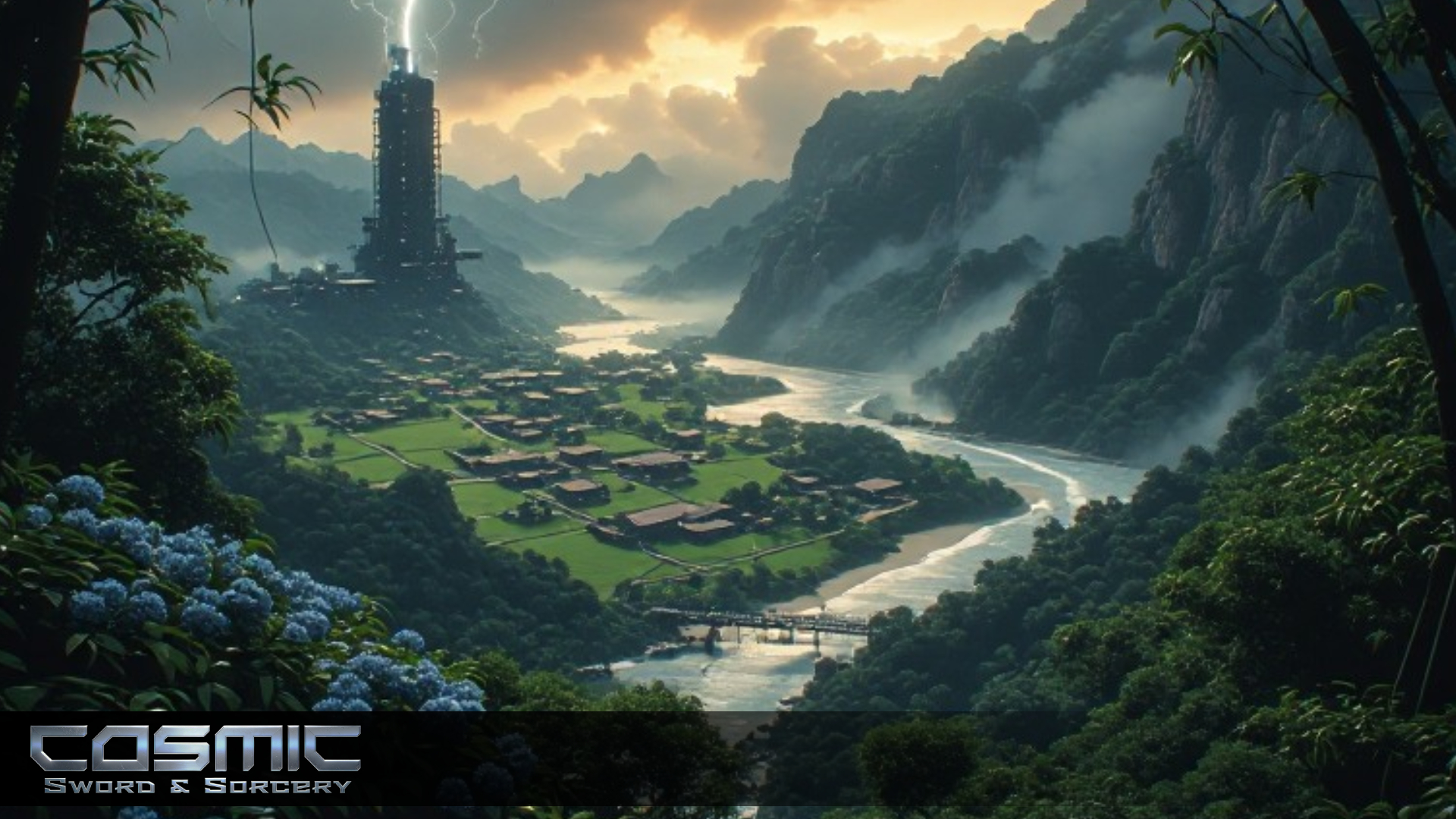
Great fern valleys, mountain jungles, flooded terraces, acacia groves, and engineered watercourses dominated the southern reaches of the continent. Later foreign visitors frequently compared portions of Ro’Edyne to the old garden-worlds of the inner Vandyrian systems, owing to the unusual integration between civic infrastructure and surrounding ecological systems. Rivers, cliffs, terraces, and monumental architecture were rarely treated as separate domains within Ro’Edyne planning doctrine.
Ro’Edyne maintained uninterrupted alignment with the Greater Vandyrian Empire and its spheres across multiple recognized Ages, becoming one of the principal southern continuity-states upon Vandyrus. Though many lesser planetary cultures viewed the civilization as anomalous or impossibly advanced, such disparity was largely the result of uneven imperial integration across the world itself. While isolated northern and interior territories continued to experience cyclical collapse, localized warfare, and infrastructural decline, Ro’Edyne retained direct access to orbital commerce, interstellar administration, imperial transit networks, and offworld educational systems. Spaceports, aerial transit lanes, holographic civic systems, synthetic administrative intelligences, and orbital trade infrastructure were commonplace throughout the greater metropolitan corridors of the southern territories.
This disparity produced a considerable cultural divide between Ro’Edyne and the surrounding planetary civilizations. Contemporary accounts from outer provincial visitors frequently describe the southern cities as disorienting or unreal, comparing them less to conventional planetary capitals and more to independent imperial worlds transplanted onto the surface of Vandyrus itself. The common imperial citizen of Ro’Edyne possessed greater practical access to interstellar movement than many noble houses beyond the southern territories. Travel between worlds, off-system employment transfer, and imperial civil placement were regarded as ordinary aspects of metropolitan life.
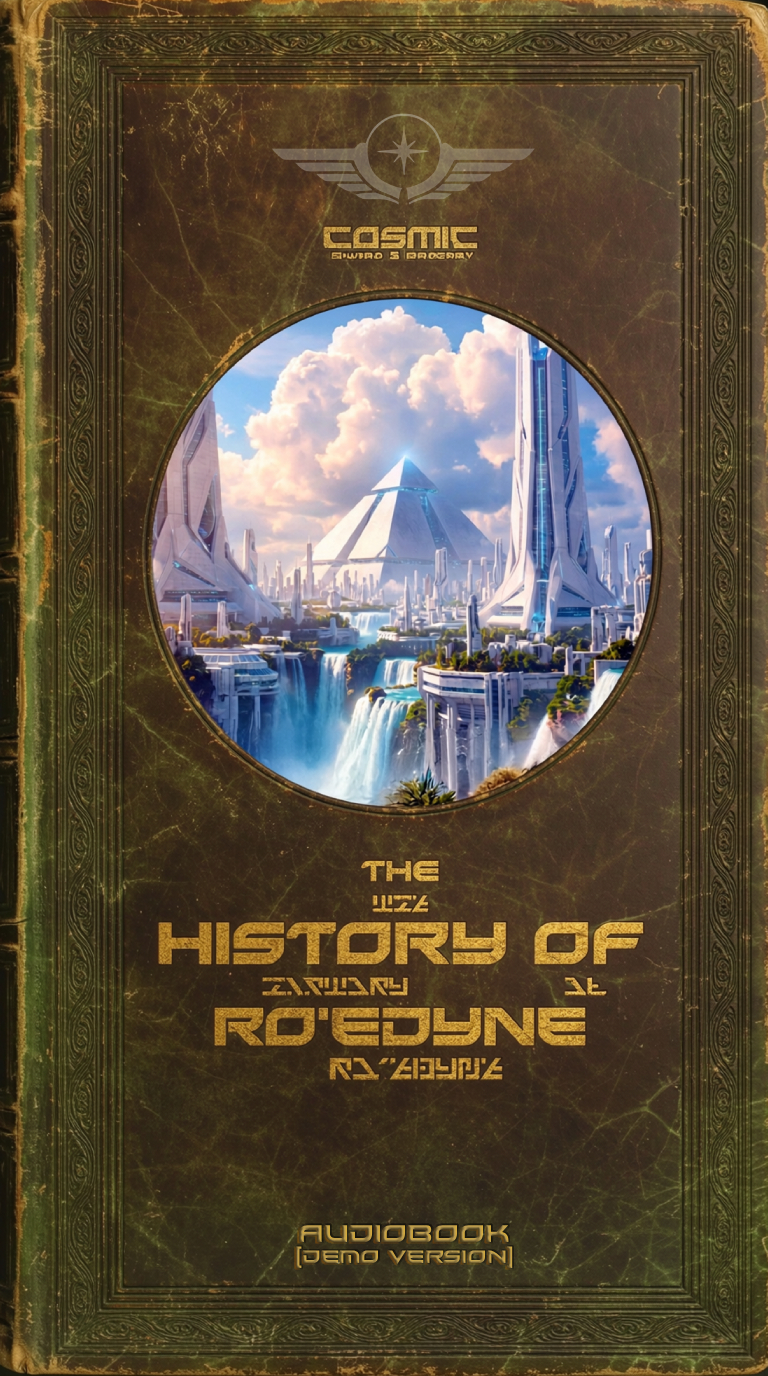
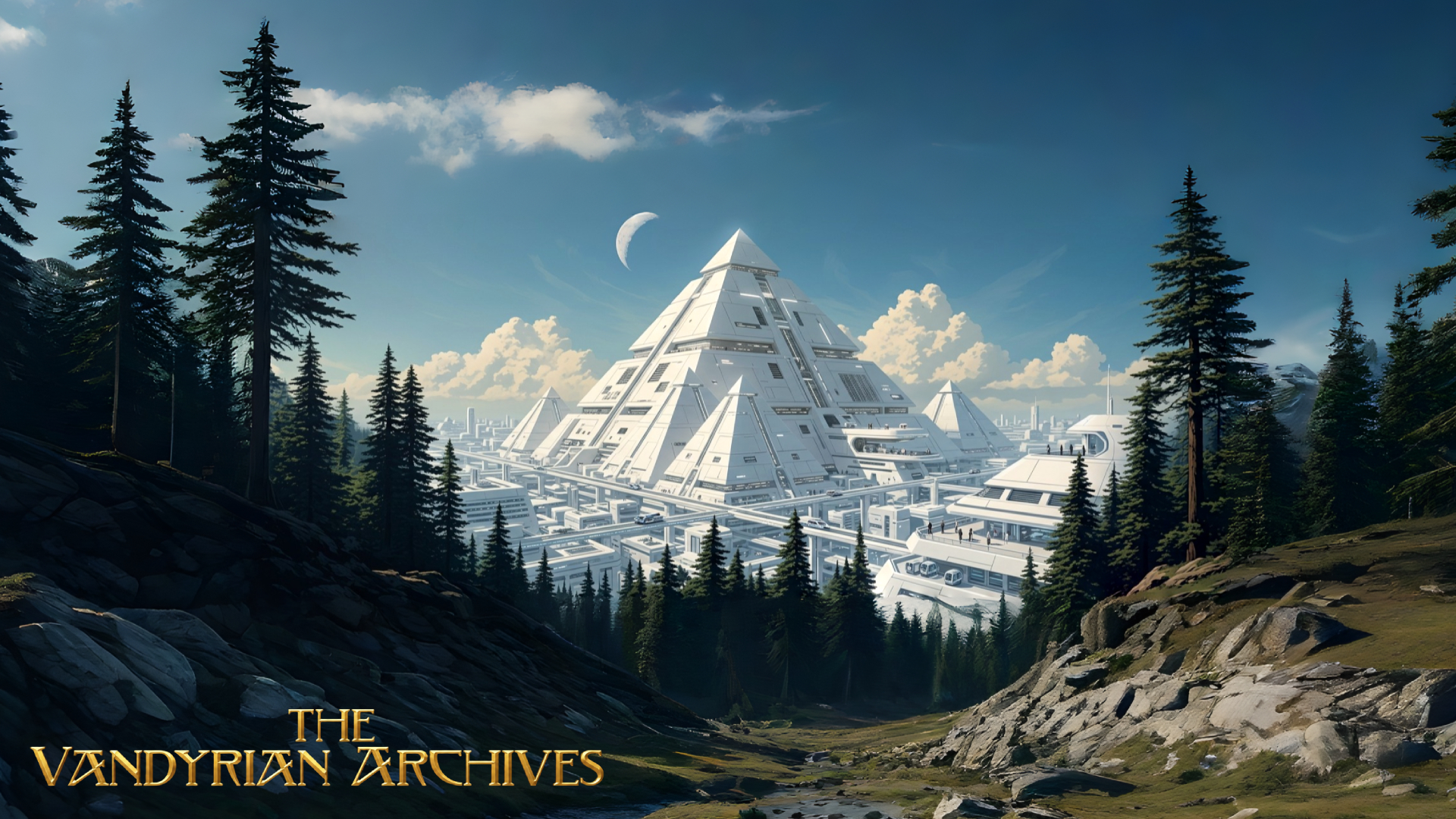
The great cities of Ro’Edyne developed according to continuity principles preserved across immense spans of time. Monumental stepped pyramids, elevated water structures, white alloy civic towers, sacred administrative complexes, and vertically integrated terrace districts became recurring architectural constants throughout nearly every recognized Ro’Edyne Age. Rather than abandoning older forms during periods of technological advancement, the civilization continuously refined and re-integrated ancestral structural geometries into newer civic systems.
By the later imperial periods, spaceports themselves resembled ceremonial temple districts, while orbital administrative towers retained proportions and visual motifs traceable to some of the oldest surviving southern records. At the center of the southern territories stood Tykon’Mach, the City of Steel, oldest among the major Ro’Edyne metropolitan continuities and among the most historically significant urban centers ever established upon Vandyrus. Imperial archive estimates place portions of the city at over four hundred thousand years in age, though deeper geological and structural surveys conducted beneath the lower administrative strata suggest that sections of the region may predate even the earliest recognized Ranar imperial periods.
Ages Preserved
Successive civilizations rebuilt, expanded, and restructured the city repeatedly across the Ages until the distinction between original foundation and later construction became effectively impossible to determine. Ro’Edyne’s longevity profoundly shaped its cultural psychology. Unlike younger imperial worlds driven by expansionary ambition or dynastic competition, the southern territories increasingly viewed civilization itself as an act of preservation against time, erosion, and planetary instability. Historical memory, environmental continuity, cartographic preservation, and ancestral civic maintenance became central pillars of Ro’Edyne administrative culture. The civilization produced some of the most extensive archival systems in the known imperial spheres, preserving territorial, climatic, and demographic records stretching across periods many outer systems considered mythological.
Among the more unusual features of Ro’Edyne culture was the persistence of extremely ancient linguistic and ceremonial structures alongside highly advanced administrative systems. Ancient Vandyrian remained preserved within liturgical, musical, and governmental contexts long after regional dialects evolved into simplified provincial forms. Many of the oldest surviving ceremonial songs of the southern territories continued to be performed in archaic sung dialects whose grammatical structures were already considered ancient during the later imperial periods themselves.
Though formally aligned to the greater imperial structure, Ro’Edyne maintained considerable regional distinctiveness throughout its history. The southern territories developed reputations for philosophical conservatism, monumental civic aesthetics, environmental ceremonialism, and unusually long continuity traditions compared to younger imperial systems. Foreign administrators often remarked that Ro’Edyne behaved less like a frontier world and more like an ancient inner imperial state whose civilization simply happened to exist upon Vandyrus.
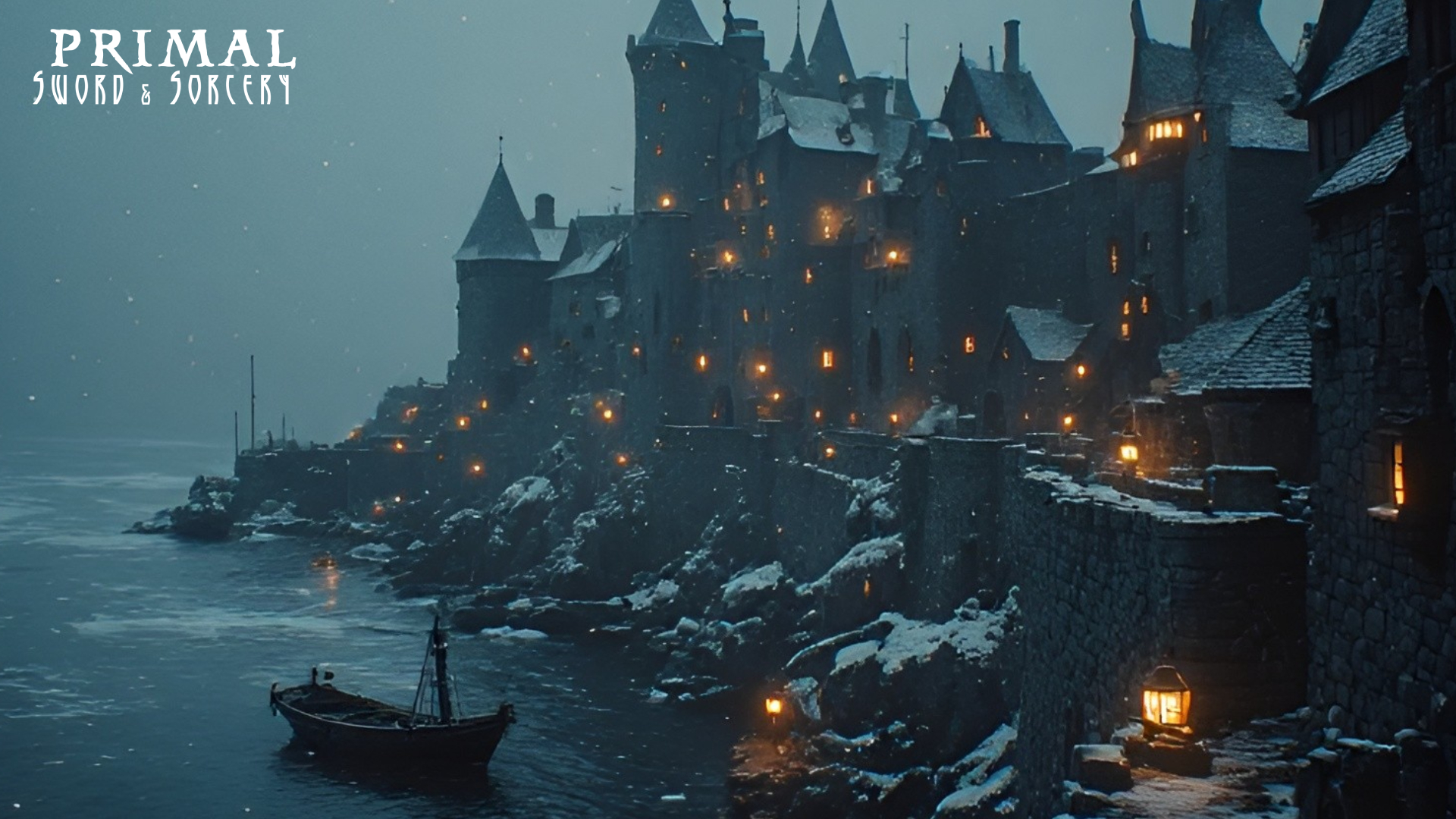
Upon the northern shores of Roedon, where grey seas gnaw endlessly at black stone and cold winds descend from the northern waters without mercy, stands the city-state of Prandwir.
To travelers arriving by ship, the city appears almost melancholy at first sight. Its towers are low compared to the mountain dens of Vulsa. Its walls lack the grand arrogance of southern kingdoms. Even its harbor seems restrained, more practical than beautiful. Yet those who dismiss Prandwir as merely another northern port quickly discover their error. Prandwir survives where greater kingdoms have vanished.
The city occupies the final living remnant of ancient Panultimir, once among the greatest realms of northern Roedon. Long before the modern age, before the sea consumed entire coastlines and before the Cataclysm shattered the world, Panultimir ruled a vast territory stretching far beyond the modern city’s borders. Today little remains of that old kingdom. The northern territories are gone beneath cold waters. Ancient roads terminate abruptly at sea cliffs. Watchtowers stand isolated upon lonely islands where once they overlooked inland valleys. Entire provinces survive only as names preserved in weathered manuscripts. The sea won that war long ago. Prandwir remains.
As a result, the modern city carries a peculiar character uncommon elsewhere in Roedon. It is neither fully living nor entirely historical. The past is never distant here. It protrudes from the ground in the form of shattered walls, collapsed foundations, forgotten crypts, and half-submerged causeways revealed during low tide. Fisherfolk routinely recover worked stone older than many kingdoms. Builders uncover buried chambers while digging cellars. Every generation discovers another fragment of Panultimir hidden beneath the streets. This strange inheritance has made Prandwir one of the most respected centers of archaeological study in northern Roedon.
Unlike the treasure hunters and tomb robbers who infest many ancient sites throughout the world, Prandwir’s scholars have cultivated a more disciplined reputation. The city’s modest university lacks the size and prestige of the great institutions of Vulsa, yet among historians, cartographers, archivists, and antiquarians it enjoys considerable respect. Scholars from across Roedon travel north to examine recovered inscriptions, compare regional histories, and debate the mysteries of the drowned kingdom. Officially, the university concerns itself with preservation and scholarship. Unofficially, nearly every student eventually develops a talent for climbing through forbidden ruins. The distinction between archaeologist, explorer, historian, smuggler, and thief becomes remarkably flexible in Prandwir. Many of the city’s greatest discoveries originated from expeditions that would appear highly questionable under stricter legal scrutiny. Ancient vaults, flooded crypts, collapsed keeps, forgotten tunnels, and offshore ruins have yielded relics that now occupy university collections. Entire academic careers have been built upon discoveries recovered from locations where ownership remains disputed, uncertain, or quietly ignored.
The citizens themselves rarely concern themselves with such details. If a forgotten ruin contains knowledge, someone ought to retrieve it. If that someone profits handsomely along the way, so much the better. This practical attitude extends naturally into commerce. Prandwir possesses one of the finest natural harbors in northern Roedon, and its ports serve as the true heart of the city. Massive quantities of timber, fish, stone, ore, books, textiles, tools, and imported goods pass through its docks each season. The harbor never achieves the overwhelming scale of the southern trade capitals, yet it compensates through consistency. Ships arrive from Roedon, Vulsa, the western islands, and distant northern settlements. Merchant captains value Prandwir precisely because it remains dependable. The harbor masters are competent. The warehouses are secure. The tariffs are reasonable. The city rarely indulges in the sort of political madness that ruins trade elsewhere. As a result, commerce flourishes. Large stone quays extend into dark waters crowded by merchant vessels. Cranes creak against the skyline. Dockworkers shout through fog and rain. Seabirds circle overhead. Lanterns burn through long northern evenings while cargo moves steadily from ship to warehouse and back again.
Beyond the docks spreads the Grand Market, the economic center of the city. Merchants from across northern Roedon gather beneath canvas awnings and timber halls to trade goods from every corner of the known world. The atmosphere is less extravagant than the great southern bazaars but considerably more honest. Buyers come expecting fair prices rather than elaborate performances and most leave satisfied. One may purchase ship fittings, imported spices, historical manuscripts, navigational instruments, maps, furs, jewelry, preserved foods, and recovered relics from Panultimir itself. Entire streets specialize in antiquities. Some are genuine. Some are not. The experienced learn quickly.
Yet perhaps the city’s most charming institution emerges only after sunset. As evening descends and the larger market closes, Prandwir’s Night Market awakens. Smaller than its daytime counterpart but no less active, it occupies a tangled maze of narrow streets illuminated by lantern light and hearth fires. Here gather sailors, smugglers, students, explorers, fortune seekers, wandering scholars, musicians, storytellers, and traders dealing in goods too unusual or specialized for ordinary commerce. Rare books change hands here. Recovered artifacts appear without explanation. Maps are purchased quietly. Expeditions are organized over cups of hot wine. A traveler may spend an evening listening to a university lecturer debate history with a sea captain while an alleged tomb robber attempts to sell both of them a relic of questionable authenticity. No one finds this unusual. It is simply Prandwir.
Among all its accomplishments, perhaps the city’s most overlooked treasure remains its library. This is partly Prandwir’s own fault. The city exists in the shadow of Vulsa. To the east rise the legendary libraries of the Ornithane Lords, immense tower archives whose collections have become famous throughout the northern world. Their reputation is deserved. Their holdings are vast. Their scholars are formidable. Consequently, many travelers assume there is little reason to visit Prandwir’s library. This assumption is unfortunate. While Prandwir’s collection lacks the scale of Vulsa’s great towers, it compensates through focus, accessibility, and extraordinary regional specialization. The librarians have spent centuries gathering materials related to northern Roedon, Panultimir, maritime history, archaeology, cartography, and exploration. Records lost elsewhere often survive here. Forgotten journals rest upon shelves beside navigational charts centuries old. Entire collections of local history exist nowhere else in the world.
The librarians themselves maintain cordial relations with their counterparts in Vulsa, and books have traveled between the two regions for generations. Scholars exchange correspondence. Copies are commissioned. Treatises are shared. Knowledge crosses the sea more frequently than armies ever did. As a result, the library has become an unexpected bridge between Roedon and Vulsa, preserving a scholarly relationship that has endured through wars, dynastic changes, and shifting political borders. Visitors expecting some provincial archive often leave surprised. Many return. Some never leave.
For that is the peculiar strength of Prandwir. It is not the largest city. It is not the richest. It is not the most powerful. Its towers are modest. Its weather is miserable. Its skies are often grey and its stones perpetually damp. Yet beneath that humble exterior survives a city devoted to memory. A harbor built atop a graveyard of kingdoms. A market thriving among ruins. A university perpetually wandering into forgotten tombs. A library preserving voices long swallowed by the sea. Prandwir endures not because it escaped history, but because it learned how to live beside it. In the cold north of Roedon, that may be a greater achievement than empire itself.
To understand Prandwir, one must first understand Panultimir. The modern city-state, proud though it may be, is little more than a distant echo of that ancient realm. Even the House of Prandwir, whose patronage, wealth, and determination rebuilt civilization upon these shores nearly seven centuries ago, would have seemed provincial beside the power of the Great Kingdom. The nobles who founded modern Prandwir deserve every honor afforded to them, for without their efforts the northern coast would likely remain abandoned ruin and seabird haunt. Yet in the measure of deep history, their accomplishments belong only to the most recent chapters of a story that began thousands of years earlier.
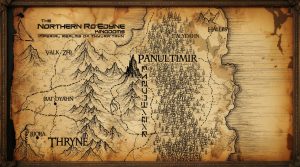
Long before the restoration of civilization, before the sinking of the northern realms, before the impacts that followed the Cataclysm, and indeed before the Cataclysm itself, this place stood at the heart of a kingdom whose scale is difficult for modern folk to comprehend. Panultimir was not merely a city, nor even a fortress realm. It was the greatest settlement of the Northern Ro’Edyne Kingdoms, a mountain-bound metropolis formed from three immense cities that gradually expanded until their walls, roads, markets, and districts merged into a single continuous urban landscape. From afar the kingdom appeared as a crown of black stone rising from the mountains, its towers visible for leagues across the northern territories.
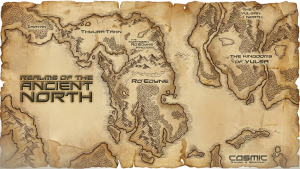
In those distant ages the geography of the world was profoundly different. The northern seas had not yet swallowed the coastlands. Vast territories now lying beneath dark waters still stood above the waves. Great land bridges connected southern Ro’Edyne to the northern expanses and western kingdoms collectively remembered in surviving records as Thyuratahn. Roads stretched northward for hundreds of miles. Merchant caravans crossed fertile valleys that no longer exist. Entire provinces now known only through fragments of maps once flourished beneath the authority of Panultimir. The realms occupying these northern territories became known collectively as the Northern Ro’Edyne Kingdoms. There were many of them. Some ruled valleys. Some commanded coastlines. Others governed mountain passes or riverlands. Each possessed its own banners, traditions, noble houses, and ambitions. Yet among all these kingdoms there stood one power whose dominance was so complete that later historians often speak of the others only in relation to it. That power was Panultimir.
The ancient chroniclers referred to Panultimir simply as The Great Highland City. The title was not ceremonial exaggeration. Panultimir dwarfed its contemporaries in wealth, population, influence, and knowledge. While neighboring kingdoms measured prosperity through harvests, tribute, or military strength, Panultimir accumulated all three while also becoming the intellectual and cultural center of the entire northern world. Its markets attracted merchants from every direction. Its guild halls regulated crafts throughout the surrounding kingdoms. Its schools trained generations of architects, masons, navigators, scribes, engineers, and artisans whose works could be found across the breadth of Ro’Edyne.
The city possessed libraries so extensive that entire noble families dedicated themselves solely to copying and preserving manuscripts. Great archival halls extended beneath the mountains themselves, their vaults containing histories, legal records, maps, engineering treatises, genealogies, and works of philosophy gathered over centuries. Scholars traveled vast distances seeking access to collections unavailable anywhere else in the known world. The scribes of Panultimir became so respected that their copies of important works were often considered more valuable than the originals from which they were transcribed. Records from distant kingdoms were brought north for preservation. Merchant fleets deposited logs and charts within its archives. Noble houses entrusted dynastic histories to its librarians. It was said that if a thing was written anywhere within the northern world, a copy could eventually be found upon the shelves of Panultimir.
Nor was the kingdom devoted solely to scholarship. Panultimir stood equally as a center of industry and craftsmanship. Vast foundries burned day and night. Forges rang with the sounds of hammer and anvil. Master smiths produced arms, tools, architectural components, and ornamental works sought throughout the northern territories. Entire districts specialized in individual trades, from stonework and glassmaking to shipbuilding and metallurgy. The black stone architecture for which the kingdom later became famous was itself the product of generations of artisans refining techniques that allowed them to shape mountain rock into structures of astonishing scale and durability. The wealth generated by these industries flowed through guild halls, merchant consortiums, banking houses, and trade exchanges that connected nearly every significant settlement north of Ro’Edyne.
Magic and arcane study flourished alongside these pursuits. Surviving accounts speak of colleges dedicated to the examination of ancient forces, observatories constructed upon mountain peaks, and scholarly societies whose members debated the mysteries of creation beneath vaulted ceilings lined with silver and crystal. Much of this knowledge would later be lost during the disasters that followed, but fragments remain preserved within surviving archives, enough to hint at intellectual traditions whose sophistication exceeded anything found in the region today. The arts likewise enjoyed extraordinary patronage. Theaters, amphitheaters, galleries, music halls, and public forums occupied entire districts. Festivals lasting weeks drew visitors from across the northern kingdoms. Poets competed for noble sponsorship. Sculptors decorated plazas with monuments of black stone and silver. Musicians traveled between the three cities performing before audiences numbering in the thousands. Even centuries later, many surviving cultural traditions throughout northern Ro’Edyne can trace their origins directly to Panultimir.At the physical heart of the kingdom stood the Three Fortresses. Each occupied its own massive hillside district, and each functioned almost as a city unto itself. Constructed from black mountain stone, these colossal strongholds housed royal residences, military garrisons, industrial facilities, libraries, administrative halls, archives, and temples. Their walls rose above the surrounding city like mountains carved by deliberate hands. Generations of rulers expanded and reinforced them until they became among the most formidable structures in the northern world. The First Fortress served as the principal seat of governance, where kings, ministers, diplomats, and administrators directed the affairs of the kingdom. The Second Fortress dominated industry and military production, containing vast forges, workshops, warehouses, and armories. The Third Fortress became renowned for scholarship and preservation, housing some of the greatest libraries ever assembled within the northern realms. Though all three served overlapping functions, each developed its own identity, traditions, and institutions.
Above them all rose the Silver Tower. Modern historians continue to debate its exact height. Some descriptions undoubtedly exaggerate. Yet every surviving account agrees that it stood as the tallest structure in the northern kingdoms. Clad partially in reflective silver alloy, the tower could be seen from astonishing distances when sunlight struck its upper reaches. More remarkable still was the great docking platform constructed near its summit. There, according to numerous records, airships arrived from distant territories carrying merchants, dignitaries, scholars, and cargo. For many travelers the Silver Tower served as their first glimpse of Panultimir, appearing upon the horizon like a second mountain crowned in metal and light. To captains approaching from the south it became the symbol of arrival itself, a beacon announcing that they had reached the Great Highland City of the north.
The kingdom’s archives would ultimately become among its greatest legacies. As disaster gradually consumed the northern world, enormous efforts were undertaken to preserve what knowledge could be saved. Manuscripts, records, maps, and treatises were evacuated from endangered districts and relocated to increasingly secure repositories. Some found their way into isolated mountain strongholds. Others were dispersed among surviving kingdoms. Entire caravans were dedicated solely to the transport of books and records. Librarians became refugees. Archivists became explorers. Scribes became guardians of civilization itself. Centuries later, portions of these collections would eventually reach the libraries of modern Prandwir, where they remain among the city’s most treasured possessions. Though only a fraction of the original holdings survive, they constitute one of the most significant historical collections in northern Ro’Edyne.
Yet for all its greatness, Panultimir could not escape the fate that ultimately claimed the northern realms. The world changed. Seas advanced. Earthquakes shattered ancient roads. The Cataclysm brought devastation upon a scale beyond comprehension. Impacts followed. Coastlines disappeared. Entire provinces vanished beneath the waters. Trade routes collapsed. Kingdoms failed. One by one the neighboring realms of the north disappeared from history. Panultimir endured longer than most. Then it too began to fall. Its towers crumbled. Its districts emptied. Its population fled southward or vanished into the growing chaos of a changing world. The great roads became broken trails. The Silver Tower collapsed. Libraries burned or were abandoned. Fortresses once crowded with life became silent monuments overlooking a dying kingdom.
Today almost nothing remains visible upon the surface. Ruins lie scattered among the mountains. Foundations emerge from the earth where storms expose them. Forgotten tunnels descend into darkness. Fragments of walls appear upon lonely islands that were once hilltops overlooking inland valleys. The sea has claimed much. Time has claimed more. Yet Panultimir has never truly vanished. Its archives survive. Its roads linger beneath the soil. Its influence echoes through northern culture. Its memory remains preserved within songs, heraldry, traditions, and half-forgotten customs practiced by folk who no longer remember their origin.
Above all, Panultimir endures within Prandwir, the final settlement standing upon lands that once belonged to the Great Highland City. The modern city may be smaller. It may be poorer. It may possess only a fraction of the power once wielded by the ancient kingdom. Yet every library shelf, every recovered manuscript, every expedition into the ruins serves as a reminder that Prandwir is not merely built atop the bones of Panultimir. It is the last surviving heir of the greatest highland city the northern lands ever knew, a lone candle still burning long after the sun that lit it has vanished beyond the horizon.
There exists considerable confusion among the populace regarding the northern parlance and the terminology derived therefrom. Such confusion is understandable. The words themselves possess common origins, have evolved across many centuries, and have survived the collapse of kingdoms, migrations of peoples, and the gradual corruption of language that accompanies long ages. While the finer peculiarities of northern speech must await treatment elsewhere, certain distinctions should be established from the outset.
The term Antique Ro’Edyne refers specifically to the peoples who inhabited these lands prior to the Sundering and the catastrophes associated with the Coming of Doom. The designation is historical rather than ethnic. It serves to distinguish the ancient inhabitants from those later populations who would claim descent from them. It is also the manner in which those ancient peoples most commonly referred to themselves when speaking of their deep ancestral heritage, hence the frequent inclusion of the word “antique” within scholarly works.
The Ro’Edyne, when spoken of more generally, refers to the peoples of the ancient civilization itself. This includes those who flourished during the pre-cataclysmic age, those who endured for a time after its collapse, and, in the modern north, those who continue to claim descent from that ancient stock. Whether such claims possess substantial merit remains a matter of ongoing debate among historians and genealogists alike.
Ro’Edyne, when employed as the principal subject of a sentence, often refers not merely to a people but to the civilization itself. In such usage the word denotes the ancient realms, dominions, institutions, and cultural inheritance associated with that civilization. References to southern gate complexes, northern kingdoms, imperial chronicles, arcane traditions, or the accumulated wisdom of forgotten ages generally employ the term in this broader civilizational sense.
Ro’Edon, frequently rendered simply as Roedon, refers to the land itself. It is the geographic designation applied to the continent and its associated territories. This distinction separates the historical civilization from the physical terrain upon which that civilization once stood. One may speak of Ro’Edyne banners, Ro’Edyne strongholds, Ro’Edyne titles, and Ro’Edyne farmers. Yet the soil beneath their feet remains Roedon.
Such distinctions, however, become less reliable once one leaves the company of scholars.
Across the north alone dozens of regional pronunciations persist. Rodahn, Ro’Eden, Rawa’Donna, Ro’Done, and countless other variations may be encountered depending upon the province, village, caravan route, fishing settlement, or hunting camp in question. Given sufficient time, one suspects every valley in the north shall eventually develop its own preferred corruption of the name.
Nevertheless, the distinctions presented herein remain the conventions most widely accepted by contemporary scholarship, and it is hoped they may serve to settle at least a portion of the enduring confusion surrounding the matter.
Thyuratahn, and Certain Geographical Misunderstandings
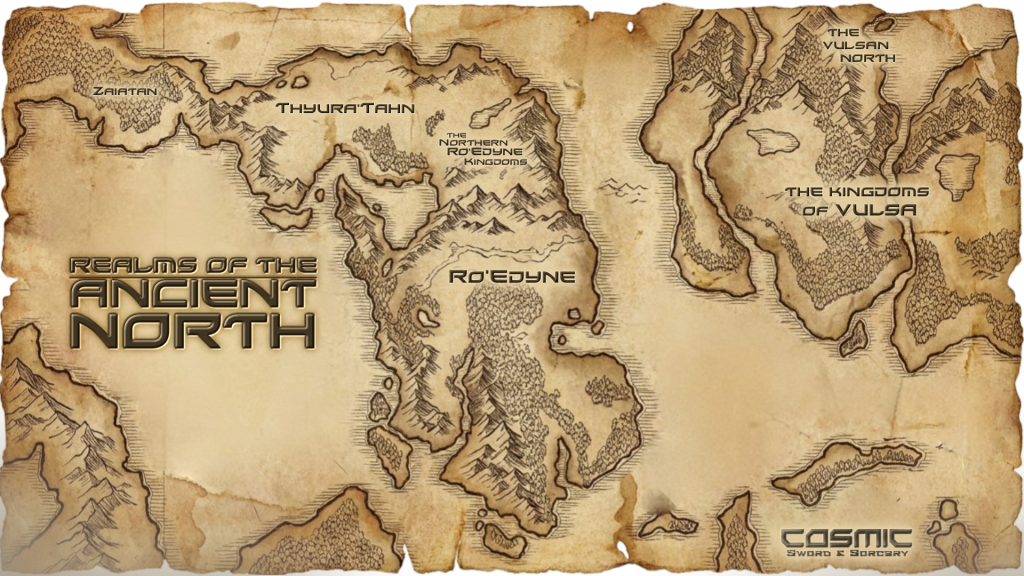
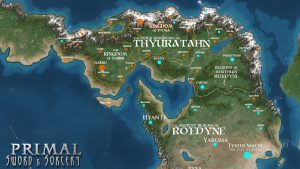
It has long been the habit of popular history to treat all territories lying north of ancient Ro’Edyne as though they constituted a single region. Such simplifications are understandable. They are also responsible for a remarkable quantity of confusion. The surviving records indicate that the geography of the ancient north was considerably more complex than many modern readers appreciate, and a proper understanding of the distinction between Ro’Edon, Northern Ro’Edyne, and Thyuratahn is essential to any serious discussion of the period.
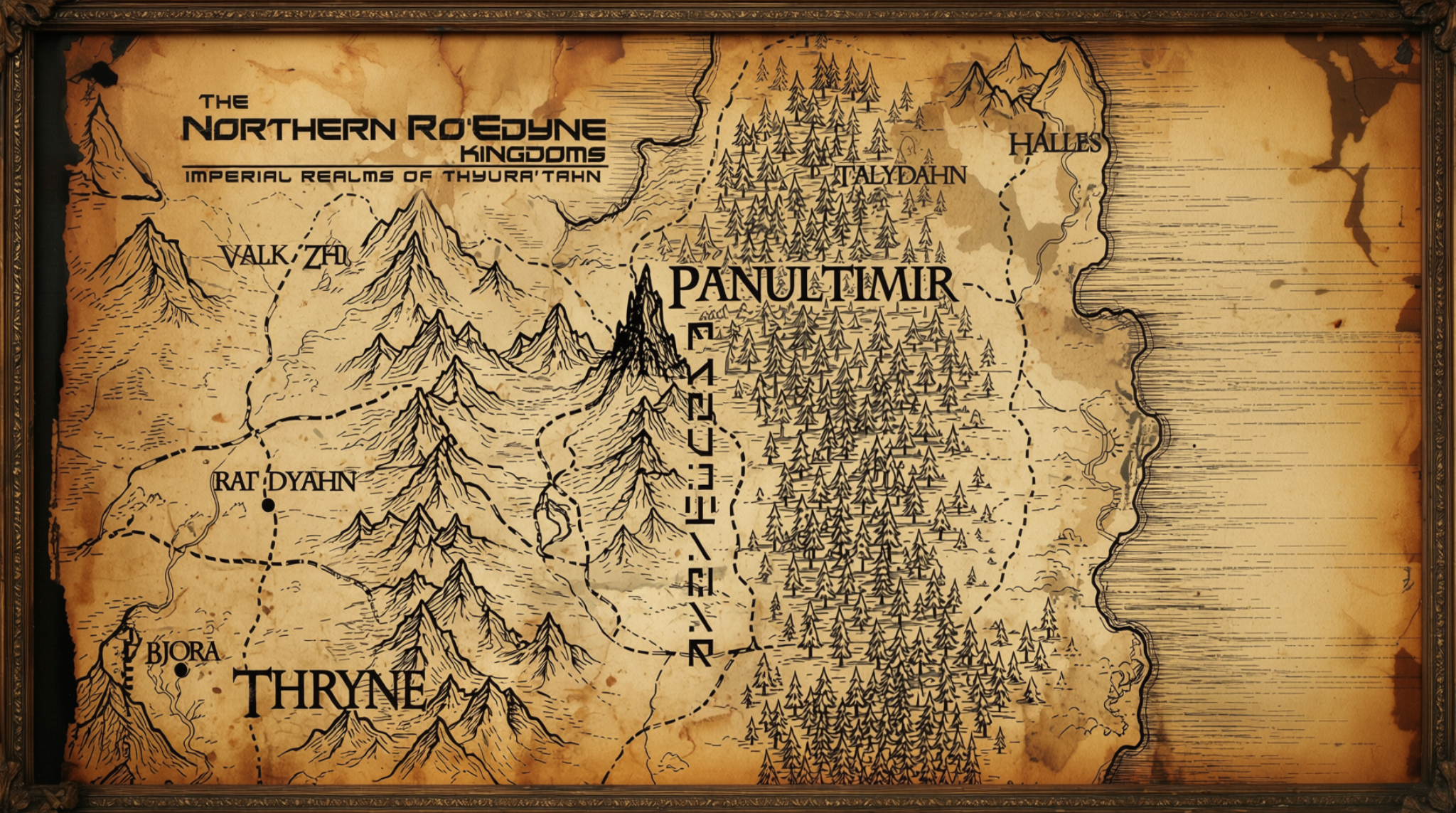
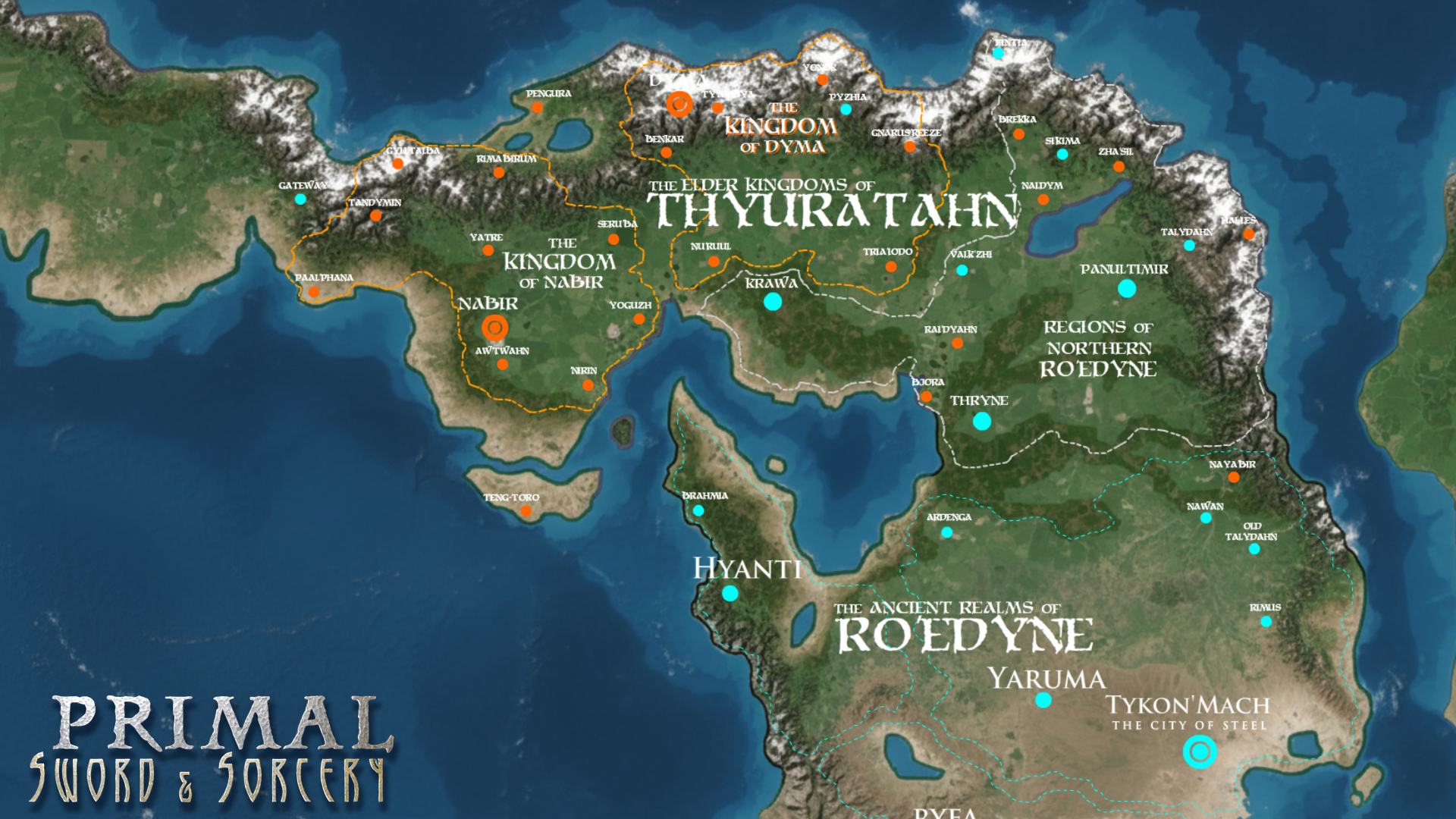
The continent of Ro’Edon formed the heartland of the Ro’Edyne civilization. Its great cities, administrative centers, trade networks, cultural institutions, and population centers occupied territories extending from the southern regions to the northern frontier. Among these northern territories stood Panultimir, Thiryne, Krawa, and numerous lesser settlements whose importance increased substantially during the later periods of expansion. These lands constituted the northernmost regions of Ro’Edyne proper. They belonged to the civilization, operated under its institutions, and participated directly in its political and economic systems.
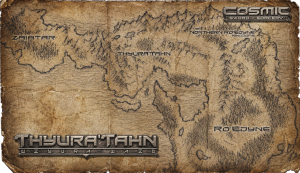
This fact has occasionally produced the mistaken assumption that Panultimir itself formed part of Thyuratahn. The surviving evidence suggests otherwise. Panultimir was not a Thyuratahn city. It was a Ro’Edyne city facing Thyuratahn. The distinction may appear subtle at first glance, yet it is among the most important geographical realities of the ancient north. Panultimir occupied a frontier position at the very edge of ordinary Ro’Edyne administration. Beyond its northern approaches began territories increasingly dominated by independent kingdoms, mountain domains, clan territories, and frontier states whose histories, while frequently intertwined with those of Ro’Edyne, remained their own.
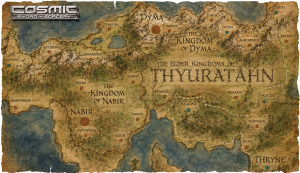
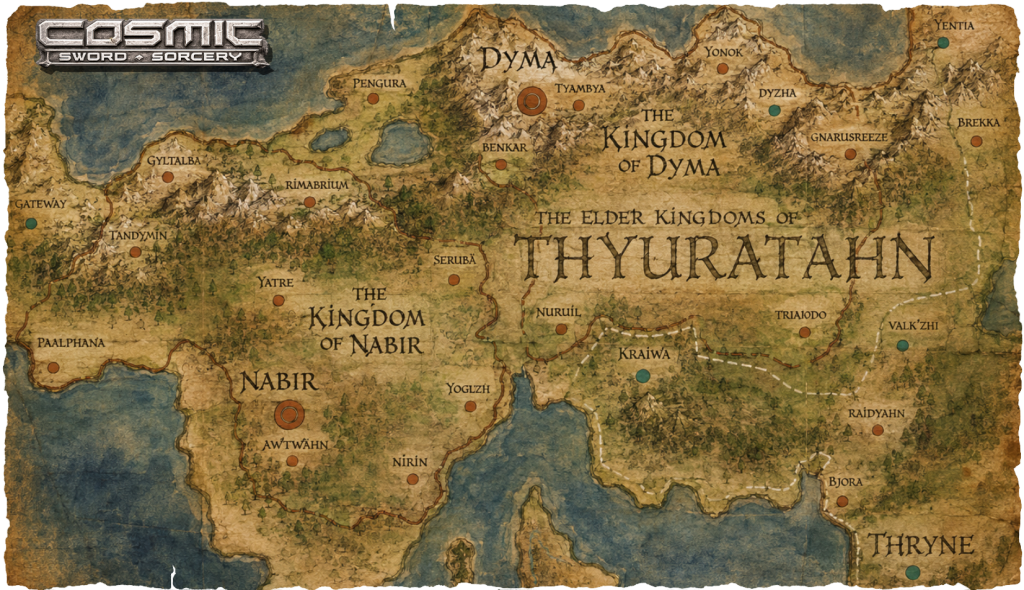
Beyond the northern frontier stretched the immense territorial expanse known as Thyuratahn. Modern descriptions often refer to it as a landbridge, though such terminology occasionally understates its scale. Thyuratahn was not merely a corridor connecting one region to another. It was a vast subcontinental territory containing its own kingdoms, cities, trade routes, cultural traditions, and political powers. The Kingdom of Nabir, the Kingdom of Dyma, and numerous lesser realms occupied substantial portions of these lands. During many periods they maintained close relations with Ro’Edyne. During others they pursued their own ambitions entirely independent of southern concerns. Their histories intersected frequently with those of Ro’Edyne, but they should not be mistaken for provinces of Ro’Edyne itself.
Panultimir consequently occupied a position of unusual importance. Virtually every major route connecting Ro’Edyne to Thyuratahn passed through or near the northern city. Merchants traveled through its gates. Diplomats conducted negotiations there. Military expeditions assembled within its districts. Explorers departed from its roads. Reports arriving from the northern kingdoms often reached the archives of Panultimir long before they reached any other repository within the southern territories. Over time the city became not merely a frontier settlement but the principal point of contact between two distinct worlds.
The situation becomes more complicated still when one considers that Thyuratahn was itself not the ultimate northern frontier. Surviving records speak of additional northern routes extending beyond the Elder Kingdoms toward the distant realms of Yiritahn and Londorais. These territories occupied the far northern reaches beyond the conventional limits of settlement and administration. Contemporary descriptions portray immense mountain ranges, isolated strongholds, severe climates, and populations whose customs frequently appeared strange even to seasoned travelers. Many accounts describe journeys measured not in days or weeks, but in seasons.
Particularly prominent within these northern traditions are references to the Elderbeards, ancient lords of the wolf clans who occupied portions of the high mountain territories beyond the settled frontiers. While later folklore frequently surrounds these clans with exaggeration, their repeated appearance throughout otherwise unrelated records suggests a political and cultural significance that should not be dismissed lightly. Surviving accounts describe powerful mountain domains, hereditary clan territories, and strongholds perched amidst some of the most inaccessible terrain known to the ancient world. Even during periods of imperial strength, these northern realms appear to have retained a distinct identity.
The eventual loss of Thyuratahn transformed the geography of the north beyond recognition. Most evidence suggests that substantial portions of the region disappeared prior to the Coming of Doom itself, though the exact sequence of events remains uncertain. Whatever the cause, the consequences proved profound. Routes that had once connected kingdoms vanished. Settlements became isolated. Trade networks collapsed. Entire regions disappeared beneath the sea, surviving only through surviving records, fragmentary maps, and the occasional archaeological discovery.
For this reason, modern readers must exercise caution when interpreting references to the ancient north. The geography visible today bears only partial resemblance to the geography known to the Ro’Edyne. Panultimir stood not within Thyuratahn but before it. Thyuratahn was not a province but a vast northern world unto itself. Beyond Thyuratahn lay still greater frontiers whose histories remain only partially understood. The ancient maps reveal a northern landscape considerably larger, more connected, and more complicated than the modern world might suggest.
Fortunately for historians, the records have proven somewhat more durable than the land itself.
The question of why so substantial a collection of Panultimir records resides within modern Prandwir rather than among the scattered remnants of the ancient northern capital itself is hardly new, nor is it unreasonable. To many observers, particularly those encountering the collections for the first time, the arrangement appears unusual. The explanation, however, is considerably less mysterious than popular speculation occasionally suggests.
The decision was entirely deliberate. During the early consolidation of the northern kingdoms, it became apparent that a substantial portion of the surviving records recovered from the Panultimir region remained vulnerable to deterioration, theft, weather damage, and the various forms of enthusiastic mishandling frequently practiced by treasure hunters who mistake archives for vaults. Following consultation with regional scholars and archivists, the Crown ordered that surviving collections judged of exceptional historical value be transferred to secure repositories within Prandwir, where suitable facilities existed for their preservation, cataloguing, and study. While the policy was not universally celebrated at the time, subsequent centuries have demonstrated its wisdom with considerable clarity.
Thousands of documents, maps, correspondence records, census accounts, land charters, trade agreements, expedition journals, military inventories, linguistic studies, and historical chronicles survived that might otherwise have vanished forever. Modern understanding of northern history depends heavily upon these collections, many of which exist nowhere else. Entire periods of regional development would remain poorly understood without their preservation. Numerous settlements known today only through archival references would likely have disappeared from historical memory altogether had their records not been transferred and maintained.
The transfer has occasionally attracted criticism from those who maintain that such materials ought properly to remain nearer their place of origin. While such sentiments possess a certain romantic appeal, one may reasonably observe that documents preserved within secure archival repositories demonstrate a significantly greater tendency toward long-term survival than documents left unattended beneath collapsing ruins exposed to weather, vermin, opportunistic collectors, and the passage of centuries. History has repeatedly demonstrated that preservation and sentiment are not always compatible objectives.
A more curious criticism emerges periodically from certain foreign commentators, particularly among portions of the Tymere-speaking world. According to this school of thought, the preservation of the Panultimir Archives constitutes evidence of northern insecurity. The argument generally proceeds from the assumption that Roedon possesses little meaningful history of its own and therefore seeks legitimacy through exaggerated attachment to ancient records. This interpretation has never enjoyed significant popularity among those who have actually visited the archives. The position becomes difficult to maintain while standing amidst several hundred thousand surviving documents, many of which predate entire contemporary states.
His Majesty has expressed particular dissatisfaction with such claims over the years, regarding them as examples of ignorance elevated to confidence. While royal language on the subject is traditionally more colorful than is appropriate for archival publication, the underlying sentiment remains understandable. The Kingdom of Prandwir did not preserve the Panultimir Archives because Roedon lacks history. The Kingdom preserved the Panultimir Archives because Roedon possesses history, and a considerable quantity of it besides. Indeed, one might reasonably suggest that preserving records remains among the more reliable methods of demonstrating the existence of a historical tradition. The alternative approach, favored by some critics, appears to involve dismissing documents without reading them, a methodology whose scholarly value remains difficult to assess. While such practices may save time, they rarely improve accuracy.
It should further be noted that the archives themselves constitute only a fraction of the surviving historical material associated with the ancient north. Archaeological remains, recovered inscriptions, architectural foundations, road systems, harbor works, fortifications, and numerous secondary collections continue to provide valuable information regarding the development of the region across successive ages. The Panultimir Archives merely represent the largest surviving concentration of such material and therefore attract a disproportionate share of attention.
Consequently, when one encounters the assertion that Roedon possesses no history, it is generally advisable to inquire whether the speaker has consulted any of the available records. The answer frequently proves illuminating. Should uncertainty persist, the archives remain open to qualified scholars, visiting researchers, and any sufficiently determined individual willing to spend several months examining the evidence firsthand. The collection occupies multiple wings, several annexes, and an alarming quantity of shelf space. Those intending a comprehensive review may therefore wish to bring provisions.
It has long been the habit of popular history to present the matter as settled. Such confidence is admirable, though not always justified. Closer examination of the surviving evidence reveals a situation rather more intricate than many introductory accounts would suggest. The common assumption holds that civilizations succeed one another in an orderly progression. A kingdom rises, flourishes, declines, and is replaced by another. That successor in turn experiences a similar fate, and thus history proceeds neatly from one age to the next. Such a model possesses undeniable appeal. It is easily taught, readily understood, and accommodates the limited patience of most audiences.
Unfortunately, the surviving records suggest that reality rarely exhibits the same consideration.
The difficulty emerges from the increasing recognition that many civilizations once believed entirely separate appear to have existed concurrently. Histories that seem isolated when examined individually reveal unexpected connections when compared against one another. Archives recovered from distant regions frequently reference events, institutions, and peoples described elsewhere under entirely different names. Diplomatic correspondence preserved in one collection occasionally aligns with military records preserved in another. Trade manifests found thousands of leagues apart sometimes describe the same commodities moving through the same networks during the same periods. Such discoveries have become increasingly difficult to dismiss as coincidence. This realization has complicated many traditional assumptions regarding chronology. A kingdom considered unimaginably ancient within one historical tradition may prove contemporary with another civilization entirely unknown to earlier scholars.
Likewise, cultures once believed unique to a particular region occasionally reveal striking parallels elsewhere. The result is an emerging awareness that history resembles less a sequence of isolated stories and more an immense tapestry whose individual threads cross and reconnect in ways not immediately visible from a local perspective. The problem becomes especially apparent whenever attempts are made to assemble histories extending beyond regional boundaries. A scholar concerned solely with Ro’Edon may construct a reasonably coherent account of local events.
Difficulties emerge when those records are compared against collections maintained elsewhere. Calendars differ. Dynastic systems differ. Methods of dating differ. Entire historical periods appear under multiple names depending upon which source one consults. Events believed separated by centuries occasionally prove contemporary, while incidents traditionally grouped together sometimes reveal substantial chronological separation. What initially appears contradictory often proves merely incomplete. For this reason, increasing numbers of historians have adopted the convenient expression “Vandyrian Archives” when discussing the collective body of surviving historical material. The phrase should not be interpreted as referring to any single institution, repository, or collection. Rather, it serves as a useful description for the vast assortment of records preserved throughout the known world. The Archives of Panultimir, the collections maintained within Prandwir, surviving imperial repositories, monastic libraries, merchant registries, royal vaults, archaeological records, and countless lesser collections all contribute fragments to a larger historical inheritance whose full extent remains uncertain.
It should therefore be understood that references to Vandyrian Archives do not imply the existence of some singular grand library gathering all knowledge beneath one roof. Such notions belong more properly to speculative conversation than established scholarship. Historians occasionally indulge in discussions regarding what might be learned were every surviving collection assembled and examined together, though such conversations generally produce additional questions rather than definitive answers.
Nevertheless, the concept remains valuable. The records preserved within Panultimir do not exist in isolation. The collections maintained within Prandwir do not exist in isolation. Nor do the archives of distant kingdoms, forgotten principalities, ancient monasteries, or vanished courts. Each preserves only a fragment of the larger historical record. Yet when viewed collectively, they increasingly suggest that the histories of many peoples may form part of a broader civilizational continuum extending far beyond the limits of any single nation or age.
Readers should not be discouraged if this appears excessively complicated. Historians have reached much the same conclusion. Indeed, one increasingly suspects that the greatest obstacle facing modern scholarship is not a shortage of evidence, but rather the growing abundance of it. Each new discovery seems less inclined to resolve existing questions than to reveal the existence of additional ones. For the present, scholars continue their efforts with what patience they can muster. New collections are recovered. Old records are reexamined. Fragments once dismissed as irrelevant are compared against materials from distant archives. Slowly, and often reluctantly, a larger picture begins to emerge. Whether future generations will possess a clearer understanding of these matters remains to be seen.
For the moment, however, we continue sorting the shelves.
Among the many repositories of knowledge maintained throughout the northern realms, few possess a reputation equal to that of the Archives of Panultimir. Situated within the upland mountains of the Kingdom of Prandwir upon the Isles of Roedon, the institution occupies a location as unusual as its history. Unlike the larger archival complexes of the southern cities, the Panultimir Archives stand isolated among high ridges, ancient forests, and winding mountain roads that become increasingly difficult to traverse during the winter months. Visitors frequently remark upon the remoteness of the site, though this isolation has proven one of the principal reasons for its survival. The origins of the structure remain the subject of ongoing debate. Archaeological examination suggests that portions of the foundation substantially predate the modern kingdom itself. Most scholars believe the central tower around which the archives were later constructed originally served as a military installation of some form.
Whether this installation functioned as a watchtower, signal station, frontier fortification, or administrative outpost remains uncertain. The surviving foundations are consistent with several possibilities, while the loss of many contemporary records has prevented a definitive conclusion. What appears beyond dispute is that the site occupied a position of strategic significance during the final centuries preceding the Coming of Doom.
The destruction of the ancient world altered the northern landscape profoundly. Entire regions vanished. Trade routes disappeared. Settlements were abandoned or destroyed. Yet the upland position of the future archives spared it from much of the devastation that afflicted lower territories. While the surrounding civilization collapsed, the mountain stronghold endured. Damaged but standing, isolated but accessible, the structure remained among the few surviving installations capable of supporting long-term occupation during the difficult centuries that followed. As northern society gradually recovered, the site acquired a new purpose. The practical advantages that had once recommended it as a military position now recommended it equally for preservation. Its elevation offered protection from flooding. Its remoteness discouraged looting. Its stone construction provided unusual durability.
Most importantly, it stood upon stable ground at a time when much of the surviving population remained preoccupied with the immediate demands of survival. The earliest custodians of the collection recognized these advantages and began transferring surviving records recovered from the surrounding regions into the complex. Over subsequent centuries the institution expanded repeatedly. Additional wings were constructed. Storage vaults were excavated into the surrounding stone. Cataloguing chambers, reading halls, preservation facilities, and secure repositories gradually transformed the old stronghold into one of the most important historical collections in the north. Although modest in size compared to the vast archival complexes maintained elsewhere within the Kingdom of Prandwir, the Panultimir Archives acquired a distinct reputation owing to the unusual character of their holdings. Many collections preserve copies. The Panultimir Archives preserve originals.
The institution houses surviving charters, census records, correspondence collections, trade accounts, administrative ledgers, maps, legal documents, military records, and countless other materials associated with the ancient northern territories. In numerous cases these documents represent the earliest surviving versions known to scholars. Entire fields of northern historical research depend heavily upon collections preserved within the archives. Without them, substantial portions of Roedon’s pre-cataclysmic and early post-cataclysmic history would remain poorly understood.
The archives also serve as a physical reminder of continuity across the ages. More than seven thousand two hundred years have passed since the Coming of Doom. Kingdoms have risen and fallen. Dynasties have appeared and vanished. Borders have shifted repeatedly. Yet the old mountain stronghold remains occupied. Though altered extensively by generations of archivists, builders, scholars, and custodians, portions of the original structure continue to form the heart of the complex. Visitors entering the oldest halls frequently pass through stonework whose origins may extend to the final centuries of the ancient world itself.
Today the Archives of Panultimir function as both historical repository and scholarly institution. Researchers from throughout the northern realms travel to the site in pursuit of records unavailable elsewhere. Historians, genealogists, linguists, archaeologists, and chroniclers regularly consult its collections. While its remote location continues to present logistical challenges, many archivists regard the isolation as a small price to pay for seven millennia of uninterrupted preservation. Whether viewed as a library, a fortress, a monument, or a relic of another age, the Archives of Panultimir remain among the most enduring institutions of post-cataclysmic Roedon. Their survival stands as a testament not merely to the durability of stone, but to the determination of successive generations who understood that civilizations endure only so long as their memory does.
Governance on Illynar exists primarily at the local level. Villages, agricultural districts, market communities, and regional settlements continue to conduct most of their affairs through established custom, lineage relationships, and communal recognition. Elders, prominent landholders, hereditary families, and respected adjudicators remain the primary arbiters of disputes, resource allocation, and local administration. Authority is rarely concentrated within permanent institutions and instead emerges from reputation, continuity, and the demonstrated ability to maintain stability within a given community.
This arrangement reflects both history and circumstance. Illynar developed as an agricultural world characterized by dispersed settlement patterns, regional variation, and relatively low urban concentration. Large centralized bureaucracies never became necessary for most aspects of daily life. Communities learned to govern themselves according to local conditions, creating a political culture that values familiarity, precedent, and practical outcomes over rigid administrative procedure.
As a result, governance often appears informal to outside observers. Disputes are commonly resolved through negotiation, mediation, and customary practice rather than extensive legal codification. Agreements are witnessed publicly and reinforced through communal expectation. Authority figures maintain influence not because they command substantial enforcement apparatuses, but because their judgment is broadly regarded as legitimate by those affected by it. Above this local framework sits the Mesian government, which serves as the principal intermediary between regional administration and the wider Kydahni state. Though presented publicly as an indigenous political authority, its continued position depends heavily upon alignment with broader Kydahni objectives. The arrangement allows local governance to remain recognizable and familiar while providing Kydahn with a stable administrative structure through which oversight can be exercised without the costs of direct rule.
Kydahn’s interest in maintaining this arrangement is substantial. Following successive political settlements, territorial losses, and postwar realignments, Illynar remains the only vassal world still formally administered under Kydahni authority. Other holdings have long since passed into different relationships, become economically autonomous, or fallen under the influence of larger powers.
As a result, Illynar occupies a position within Kydahni political thought far greater than its modest appearance might suggest. It is not merely an agricultural world. It is the last remaining expression of Kydahn’s authority beyond its own borders. Yet even this authority exists within limits. The modern balance of power places significant constraints upon Kydahni behavior.
Though legally recognized as sovereign administrator of Illynar, Kydahn operates under extensive scrutiny from Thanator. Following the calculations, penalties, and political settlements that concluded earlier eras of conflict, Kydahn retained the right to administer a single vassal world. This concession reflected both its historical status as a former throne world and the mitigating circumstances surrounding its conduct during the Tyr System conflicts. Nevertheless, the privilege remains conditional rather than absolute.
Thanator’s interest is not rooted in humanitarian concern but in strategic stability. The greater power remains deeply suspicious of espionage networks, proxy conflicts, political agitation, and the cultivation of regional unrest. Any attempt by Kydahn to transform Illynar into a platform for renewed influence, covert expansion, or political maneuvering would invite immediate scrutiny. Consequently, Kydahni administrators operate within carefully understood boundaries. They are permitted to govern, but not to consolidate. They may supervise, but not militarize. They may administer, but not expand. This unusual arrangement produces a layered political structure.
Most Illynarians experience governance through local custom, regional councils, Mesian authorities, and community institutions rather than through direct contact with distant powers. The practical realities of daily life remain overwhelmingly local. Yet every level of governance ultimately exists within a larger framework of oversight. Local elders answer to regional structures. Regional structures answer to Mesian authorities. Mesian authorities answer to Kydahn. Kydahn, in turn, remains subject to constraints imposed by powers greater than itself.
The result is a system that has proven remarkably durable. Local communities retain the flexibility necessary to adapt to changing agricultural conditions, seasonal realities, and regional concerns while larger political forces discourage fragmentation, militarization, or unchecked consolidation. Illynar remains neither independent nor tightly controlled. Instead, it occupies a carefully maintained middle ground in which local custom governs daily life, Kydahn preserves its final vassal holding, and Thanator ensures that neither develops ambitions beyond the boundaries established by the wider equilibrium.