


Custom, Stewardship, & Layered Authority
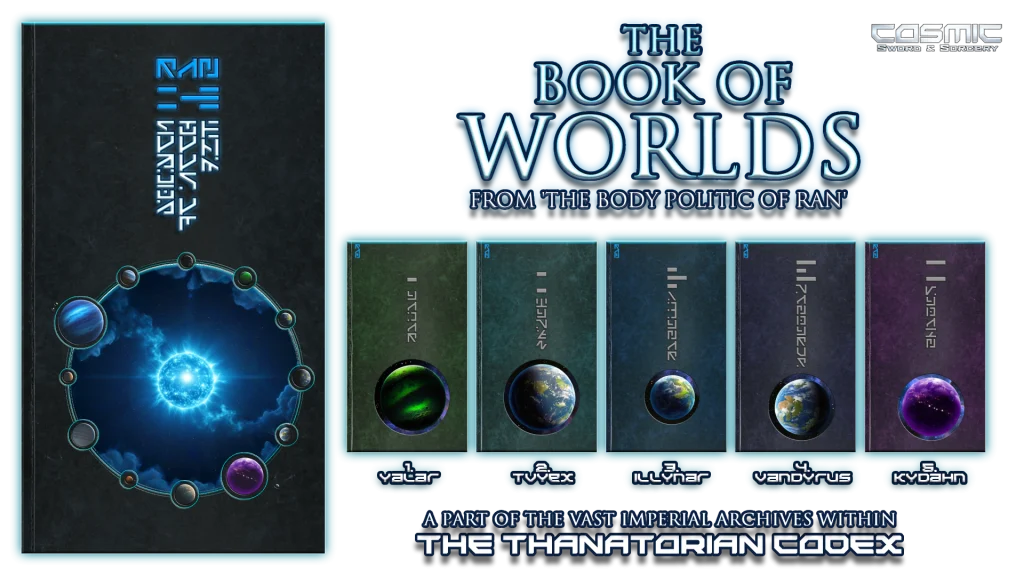
Governance on Illynar exists primarily at the local level. Villages, agricultural districts, market communities, and regional settlements continue to conduct most of their affairs through established custom, lineage relationships, and communal recognition. Elders, prominent landholders, hereditary families, and respected adjudicators remain the primary arbiters of disputes, resource allocation, and local administration. Authority is rarely concentrated within permanent institutions and instead emerges from reputation, continuity, and the demonstrated ability to maintain stability within a given community.
This arrangement reflects both history and circumstance. Illynar developed as an agricultural world characterized by dispersed settlement patterns, regional variation, and relatively low urban concentration. Large centralized bureaucracies never became necessary for most aspects of daily life. Communities learned to govern themselves according to local conditions, creating a political culture that values familiarity, precedent, and practical outcomes over rigid administrative procedure.
As a result, governance often appears informal to outside observers. Disputes are commonly resolved through negotiation, mediation, and customary practice rather than extensive legal codification. Agreements are witnessed publicly and reinforced through communal expectation. Authority figures maintain influence not because they command substantial enforcement apparatuses, but because their judgment is broadly regarded as legitimate by those affected by it. Above this local framework sits the Mesian government, which serves as the principal intermediary between regional administration and the wider Kydahni state. Though presented publicly as an indigenous political authority, its continued position depends heavily upon alignment with broader Kydahni objectives. The arrangement allows local governance to remain recognizable and familiar while providing Kydahn with a stable administrative structure through which oversight can be exercised without the costs of direct rule.
Kydahn’s interest in maintaining this arrangement is substantial. Following successive political settlements, territorial losses, and postwar realignments, Illynar remains the only vassal world still formally administered under Kydahni authority. Other holdings have long since passed into different relationships, become economically autonomous, or fallen under the influence of larger powers.
As a result, Illynar occupies a position within Kydahni political thought far greater than its modest appearance might suggest. It is not merely an agricultural world. It is the last remaining expression of Kydahn’s authority beyond its own borders. Yet even this authority exists within limits. The modern balance of power places significant constraints upon Kydahni behavior.
Though legally recognized as sovereign administrator of Illynar, Kydahn operates under extensive scrutiny from Thanator. Following the calculations, penalties, and political settlements that concluded earlier eras of conflict, Kydahn retained the right to administer a single vassal world. This concession reflected both its historical status as a former throne world and the mitigating circumstances surrounding its conduct during the Tyr System conflicts. Nevertheless, the privilege remains conditional rather than absolute.
Thanator’s interest is not rooted in humanitarian concern but in strategic stability. The greater power remains deeply suspicious of espionage networks, proxy conflicts, political agitation, and the cultivation of regional unrest. Any attempt by Kydahn to transform Illynar into a platform for renewed influence, covert expansion, or political maneuvering would invite immediate scrutiny. Consequently, Kydahni administrators operate within carefully understood boundaries. They are permitted to govern, but not to consolidate. They may supervise, but not militarize. They may administer, but not expand. This unusual arrangement produces a layered political structure.
Most Illynarians experience governance through local custom, regional councils, Mesian authorities, and community institutions rather than through direct contact with distant powers. The practical realities of daily life remain overwhelmingly local. Yet every level of governance ultimately exists within a larger framework of oversight. Local elders answer to regional structures. Regional structures answer to Mesian authorities. Mesian authorities answer to Kydahn. Kydahn, in turn, remains subject to constraints imposed by powers greater than itself.
The result is a system that has proven remarkably durable. Local communities retain the flexibility necessary to adapt to changing agricultural conditions, seasonal realities, and regional concerns while larger political forces discourage fragmentation, militarization, or unchecked consolidation. Illynar remains neither independent nor tightly controlled. Instead, it occupies a carefully maintained middle ground in which local custom governs daily life, Kydahn preserves its final vassal holding, and Thanator ensures that neither develops ambitions beyond the boundaries established by the wider equilibrium.