


“The Antique Ro’Edyne”
“Ere upon ages and eras of old,
aye, upon these grey steel cliffs,
these roving meadows of violet bloom
and the scent of the towerpine borders,
these waning isles of lore and leisure,
these isles of the Ro’Edyne,
nearer to the stars than I.”
Chapter 1
Tales of The Antique Ro’Edyne
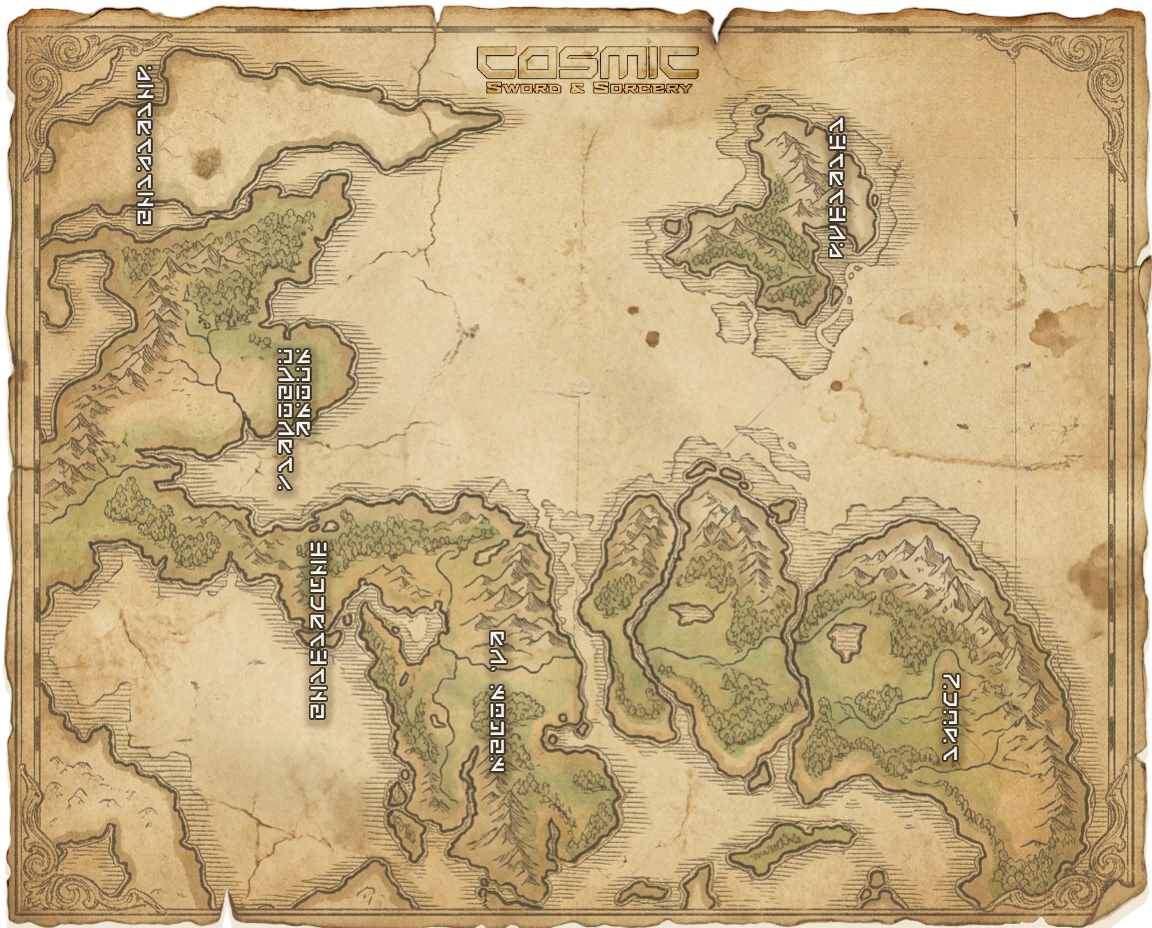
Ro’Edyne stands among the oldest civilized territories of southern Vandyrus, though the true age of its earliest foundations remains disputed even within the higher imperial archives. Long before the modern provincial cultures of Vandyrus emerged from tribal isolation, the southern continental belts of Ro’Edyne had already entered successive ages of hydraulic engineering, monumental construction, and interregional administration. The oldest preserved records of Tykon’Mach, the City of Steel, speak casually of caravan routes crossing territories now claimed by the Vulsan sea, suggesting that the continental arrangement of Vandyrus itself differed considerably during the earliest recognized periods of Ro’Edyne expansion. Unlike the harsher northern territories of Vandyrus, the Ro’Edyne regions developed within warm subtropical climatic belts fed by dense river systems, inland rainfall currents, and stabilized coastal weather patterns.
The Southern Gardens
Great fern valleys, mountain jungles, flooded terraces, acacia groves, and engineered watercourses dominated the southern reaches of the continent. Later foreign visitors frequently compared portions of Ro’Edyne to the old garden-worlds of the inner Vandyrian systems, owing to the unusual integration between civic infrastructure and surrounding ecological systems. Rivers, cliffs, terraces, and monumental architecture were rarely treated as separate domains within Ro’Edyne planning doctrine.
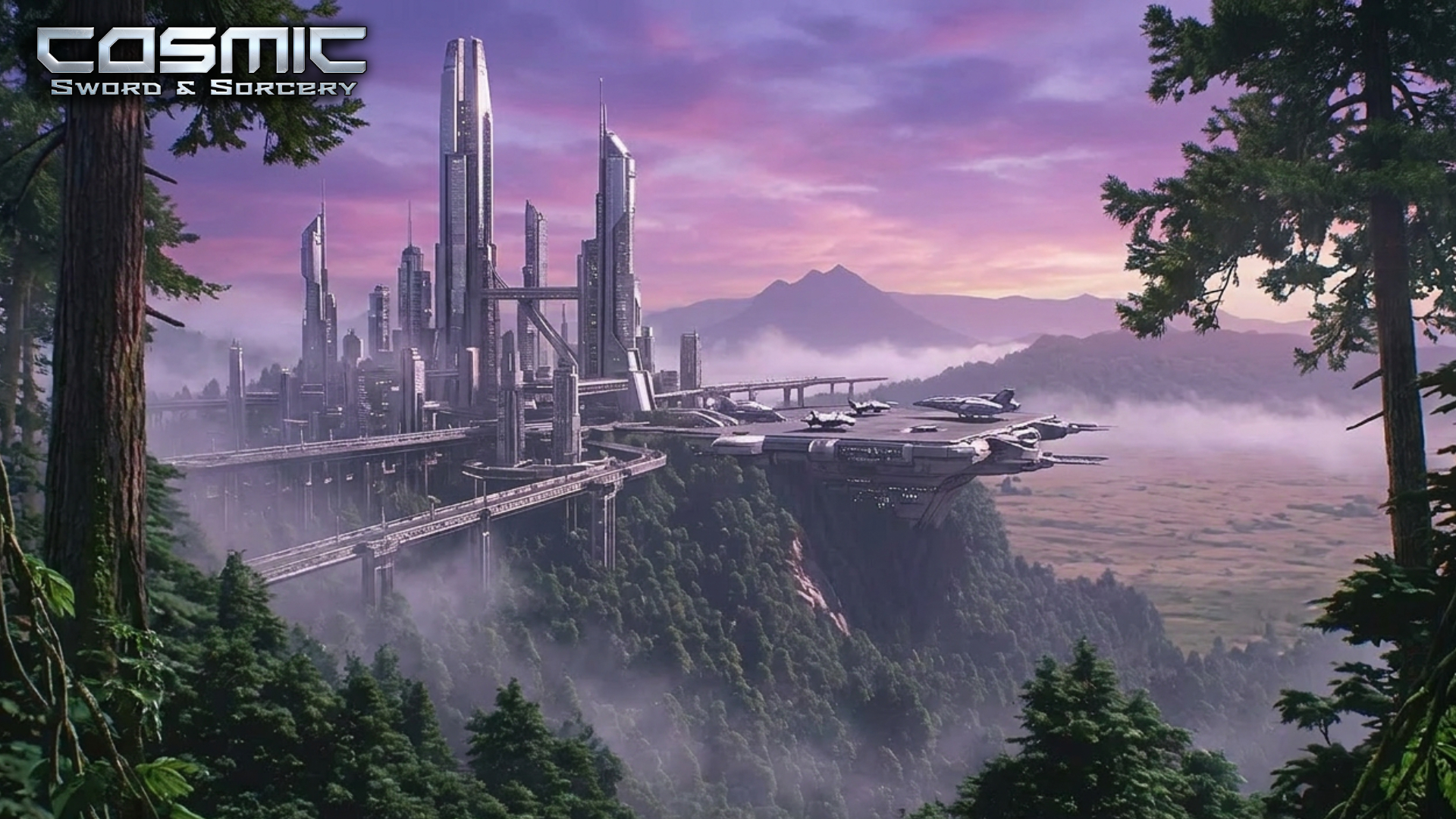
Ro’Edyne maintained uninterrupted alignment with the Greater Vandyrian Empire and its spheres across multiple recognized Ages, becoming one of the principal southern continuity-states upon Vandyrus. Though many lesser planetary cultures viewed the civilization as anomalous or impossibly advanced, such disparity was largely the result of uneven imperial integration across the world itself. While isolated northern and interior territories continued to experience cyclical collapse, localized warfare, and infrastructural decline, Ro’Edyne retained direct access to orbital commerce, interstellar administration, imperial transit networks, and offworld educational systems. Spaceports, aerial transit lanes, holographic civic systems, synthetic administrative intelligences, and orbital trade infrastructure were commonplace throughout the greater metropolitan corridors of the southern territories.
This disparity produced a considerable cultural divide between Ro’Edyne and the surrounding planetary civilizations. Contemporary accounts from outer provincial visitors frequently describe the southern cities as disorienting or unreal, comparing them less to conventional planetary capitals and more to independent imperial worlds transplanted onto the surface of Vandyrus itself. The common imperial citizen of Ro’Edyne possessed greater practical access to interstellar movement than many noble houses beyond the southern territories. Travel between worlds, off-system employment transfer, and imperial civil placement were regarded as ordinary aspects of metropolitan life.
The great cities of Ro’Edyne developed according to continuity principles preserved across immense spans of time. Monumental stepped pyramids, elevated water structures, white alloy civic towers, sacred administrative complexes, and vertically integrated terrace districts became recurring architectural constants throughout nearly every recognized Ro’Edyne Age. Rather than abandoning older forms during periods of technological advancement, the civilization continuously refined and re-integrated ancestral structural geometries into newer civic systems.
By the later imperial periods, spaceports themselves resembled ceremonial temple districts, while orbital administrative towers retained proportions and visual motifs traceable to some of the oldest surviving southern records. At the center of the southern territories stood Tykon’Mach, the City of Steel, oldest among the major Ro’Edyne metropolitan continuities and among the most historically significant urban centers ever established upon Vandyrus. Imperial archive estimates place portions of the city at over four hundred thousand years in age, though deeper geological and structural surveys conducted beneath the lower administrative strata suggest that sections of the region may predate even the earliest recognized Ranar imperial periods.
Ages Preserved
Successive civilizations rebuilt, expanded, and restructured the city repeatedly across the Ages until the distinction between original foundation and later construction became effectively impossible to determine. Ro’Edyne’s longevity profoundly shaped its cultural psychology. Unlike younger imperial worlds driven by expansionary ambition or dynastic competition, the southern territories increasingly viewed civilization itself as an act of preservation against time, erosion, and planetary instability. Historical memory, environmental continuity, cartographic preservation, and ancestral civic maintenance became central pillars of Ro’Edyne administrative culture. The civilization produced some of the most extensive archival systems in the known imperial spheres, preserving territorial, climatic, and demographic records stretching across periods many outer systems considered mythological.
Among the more unusual features of Ro’Edyne culture was the persistence of extremely ancient linguistic and ceremonial structures alongside highly advanced administrative systems. Ancient Vandyrian remained preserved within liturgical, musical, and governmental contexts long after regional dialects evolved into simplified provincial forms. Many of the oldest surviving ceremonial songs of the southern territories continued to be performed in archaic sung dialects whose grammatical structures were already considered ancient during the later imperial periods themselves.
Though formally aligned to the greater imperial structure, Ro’Edyne maintained considerable regional distinctiveness throughout its history. The southern territories developed reputations for philosophical conservatism, monumental civic aesthetics, environmental ceremonialism, and unusually long continuity traditions compared to younger imperial systems. Foreign administrators often remarked that Ro’Edyne behaved less like a frontier world and more like an ancient inner imperial state whose civilization simply happened to exist upon Vandyrus.
From The Ornithane Halls