To view this content, you must be a member of HTH Studios’s Patreon at $10 or more
 Unlock with Patreon
Already a qualifying Patreon member? Refresh to access this content.
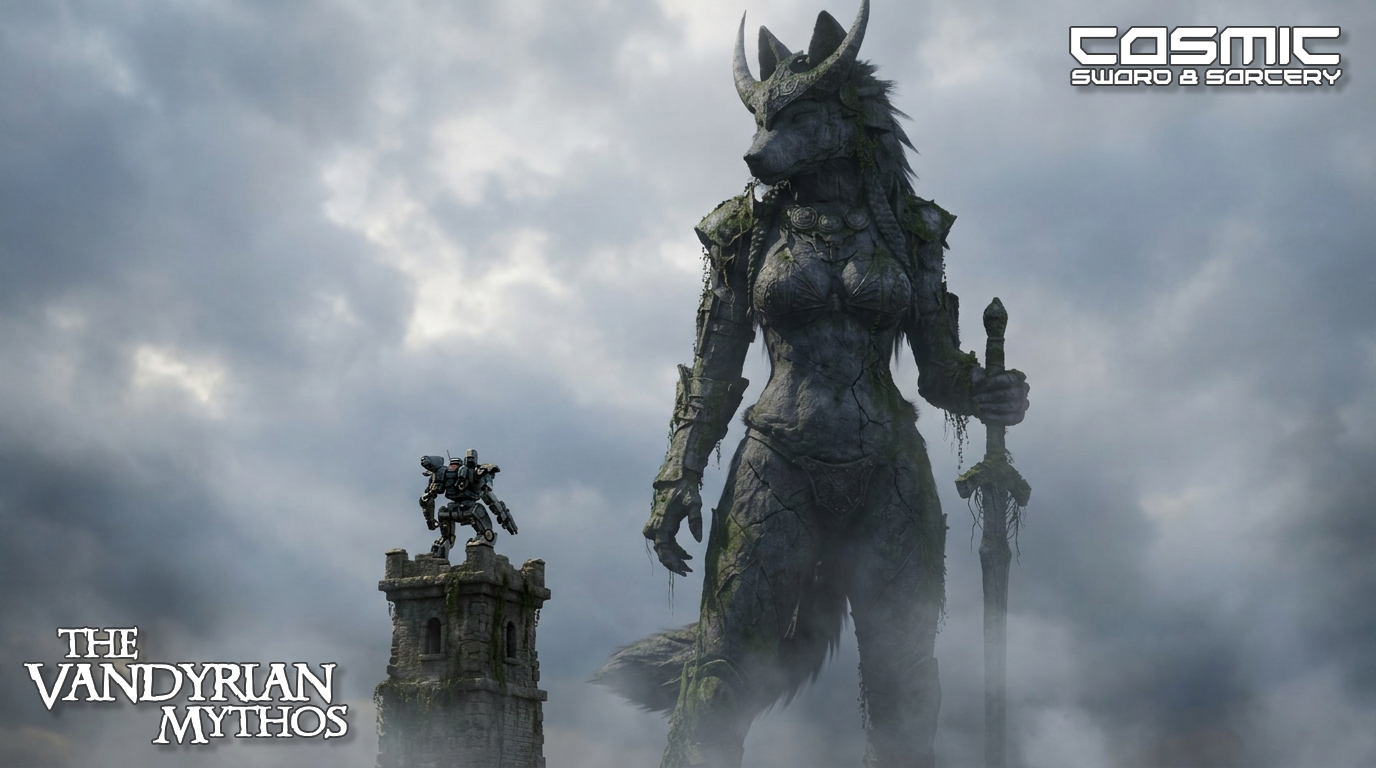
Here, along the contested borders of empire, the world lay wracked beneath the cold regard of targeting arrays. Green lightning crawled the western skies, the herald of a war goddess who had never asked for prayer or offering from those who would die under her name. Belief was a luxury for lesser gods. Hers demanded only that warriors stand, bleed, and be measured against the final geometry of her wrath.
From the blackened outlines of the cities it was plain that most had fled. Those who remained had learned the price of the arrays: their blood filled the terraces of the arcologies in dark, cooling pools, and the smoke that rose from the wreckage carried the stink of fused concrete and cooked meat. The goddess did not care. She moved through the ruin as she always had, older than the empires that claimed these lands and indifferent to the machines that now marked her coming.
In the high places the survivors watched the skies and counted the remaining batteries. They knew the next strike would not come as myth or omen, but as a calculated fall of fire—precise, terminal, and absolute. Still they waited. In the end, even the targeting arrays answered to something older than code, and the goddess would have her due whether the living believed or simply stood long enough to be named among the dead.
West of the Greater Nolphimeus, the cobbles still ran dark with blood that no one had yet scraped away. Bodies lay where the fighting had ended them—some stacked in the concrete pits where construction had stalled months before, others simply left against the low walls, blackening under ash. The air itself had turned foul enough that the remaining soldiers spoke little and spat often. What the Heathen War Queens of the Vandyrians had left behind was not a city but a tally, and the small remnant stood upon the broken levels of the outer wall to make it.
Three of them had become the last who could still give orders, though none had earned the place by any measure the old Nolphimeus would have recognized. Rank had come the only way it still came when whole cohorts were cut down in a single night: by surviving the officers who had held it before. Tynn Pralma stood at the center of the three, still in the scarred plate he had worn through the eight promotions that had carried him here. He did not speak. He watched the pits being filled and remembered the lectures his grandfather and every officer above him had given—that “total war” was only the lie a commander told when he needed others to die for a border that would not hold. The Vandyrians had never needed to tell that lie. They had simply brought the thing down upon the spine of the world and left the rest to count what remained.
To his left stood Yalran Guul, the sleeve of his coat knotted above the stump where his arm had been taken at the shoulder. He kept his jaw tight and said nothing; language felt like a thing that would only make the smell worse. On the right, Volkzhi Mirs leaned against the parapet with his remaining eye half-lidded against the grit, the ruined side of his mouth showing the gaps where teeth had been knocked free. Of the three hundred and ninety who had once sworn the grey oath and stood ready for the Vandyrian host, these were the ones who had not been carried off or burned where they fell. The two wolves could already smell what was coming on the wind from the west. They had not been part of the betrayal. They had only been left to live with it.
It was the swine-priest who broke the silence. Bronnabus Leer still wore the soot-stained vestments of Oor’Us, the Nolphian war-goddess, and he spoke as if the walls had not already been breached once. “Now is the hour to act, my lords,” he said. “Now is the hour to make ready. The demon-queen of the Vandyrian filth is drawn westward by the schemes of our departed General Ny’Momph. She will not look back. We must not sit idle while the gods still grant us breath.”
Yalran Guul turned his head just far enough to fix the priest with the hard stare of a wolf who had already spent every soft word he owned. “Then put on your armor,” he said, teeth bared, “and pick up a sword.” The other two did not smile.
Below them the pits were nearly full, and the ash kept falling. The three who remained on the wall already knew the next blow would not wait for their preparations.
Somewhere beyond the western ridges the targeting arrays still turned, patient and precise. Something older than either god or machine was already gathering the lion-hordes and the black-wolf slayers beneath a single banner. If the gods still believed in anything at all, they were leading their thrice-refined enemy straight into the teeth of the capran hordes—the same goat-demons the previous generation had summoned, settled, and turned loose against the green-eyed bitch of the empire.
Bronnabus Leer could not let the silence hold. “Vandyria makes war upon the horned heathen,” he said. “We must act. Strike! Please!”
Tynn Pralma’s patience snapped. He seized the priest by the front of his soot-stained vestments, lifted him clear of the parapet, and drove him face-first into the stone. The sound that left Leer was half squeal, half choke.
“With what!?!” Pralma roared. “What league? What nation? What army? Strike the fangs of industrial murder with the likes of this?” His free hand swept the wall and the broken levels below, where a few hundred exhausted soldiers still dragged the dead. “Look at them.”
Volkzhi Mirs caught his wrist before the blow could fall a second time. The remaining eye cut toward the soldiers who could hear every word. When he spoke it was through cracked fangs, low and final. “We wait. For riders and word. We let the dead burn. We have little else.”
Leer pushed himself up, wiping blood and grit from his lip. “Begging your pardon, my lord. I would never wish to argue tactics with you.”
“Aye,” Mirs said. His own gumline still wept thick red. “But your damned goddess of the sword well did. Look at that now. And she expects to sit at the table.”
“Our divine goddess makes of the world complex plans—”
“And the heathen bitch of the Vandyrians laughs at your mighty winged queen,” Yalran Guul cut in. His remaining arm was knotted tight against his side. Patience had already frayed past the point of courtesy. They had entered the city three hours earlier. It had taken them that long to reach the wall. From the high place little remained that was worth defending. This would not be a city they could save. The generals of their age had known it. Now the soldiers hauling corpses into the pits knew it as well.
Pralma shoved past the priest. Guul followed and spat once at the hoof of Leer’s boot. The swine-priest stayed where he was, devout and practical still. Oor’Us had never let any city truly fall; a city was only the blood and will of its people. It was a comforting thought. An arrow took him through the skull. The arrowhead punched through the back of the eye socket. Leer clutched at the ruined face, voice climbing into a pitched squeal, then dropped into convulsion and filth upon the stone. The others had already started down the stairs. They came back at a run, ignored the twitching priest, and tore the shaft free. Inside the black cylinder a single scrap of hide carried one word. “RUN!”
Artillery and gunfire from afar cut down those who fled. The roads out of the city became killing ground under sustained fire, and the columns of refugees and broken companies were destroyed in turn before they could clear the outer districts. Beasts fell in the open, and those who dropped their burdens to run faster only made clearer targets against the ash and the dust.
Long black carriers descended from the sky and released a greater host. The craft hung low over the ruins, their ramps dropping troops and the heavier machines of the Vandyrian advance into the streets already choked with the dead. The new arrivals moved with the same measured pace as those already closing from the west, and the chant that had come with the lions and the wolves and the horned warriors rose again beneath them.
Explosive hellfire at scale cut down the remaining walls. Sections of the outer defenses that had not yet fallen were reduced in successive bursts, the stone giving way in sheets and the defenders still upon them vanishing into the rubble. The carriers and the ground formations worked in concert, and the city that had once measured its strength by the height of its fortifications found those fortifications no longer standing between the enemy and the streets.
They entered the city amidst explosions and screaming. Capran warriors and black-wolf slayers moved through the breaches while the lion-hordes secured the principal roads, and the sound of the advance mixed with the cries of those still trapped among the falling buildings. Horns broke the stained glass of the Temple of the Winged Goddess, the shards falling among the benches and the altars as the host passed through the doors that no longer held.
Many tried to flee. Some tried to surrender. It made no difference. Those who ran were overtaken in the alleys and on the open ground beyond the last standing structures. Those who laid down their arms or raised empty hands were cut down with the same professional indifference shown to the walls and the batteries. Organized resistance had ceased within the first hour, but the killing continued until the light began to fail.
“The city fell in less than an hour.
By nightfall Vandyria walked the emptied streets.
By morning the host had already moved on, leaving only ash, the cooling pits, and the silence of a small civilization that had once believed itself brazen enough to survive her notice.”
Locked In The Dark
Tricks of the Trade
This End Up
She Who Gasps Last
Unbridled Letters
Service with a Smile
The One Who’s Into Books
‘About Last Night’
Slight of Hand
Hair of the Dog
Someone’s Feeling Lucky
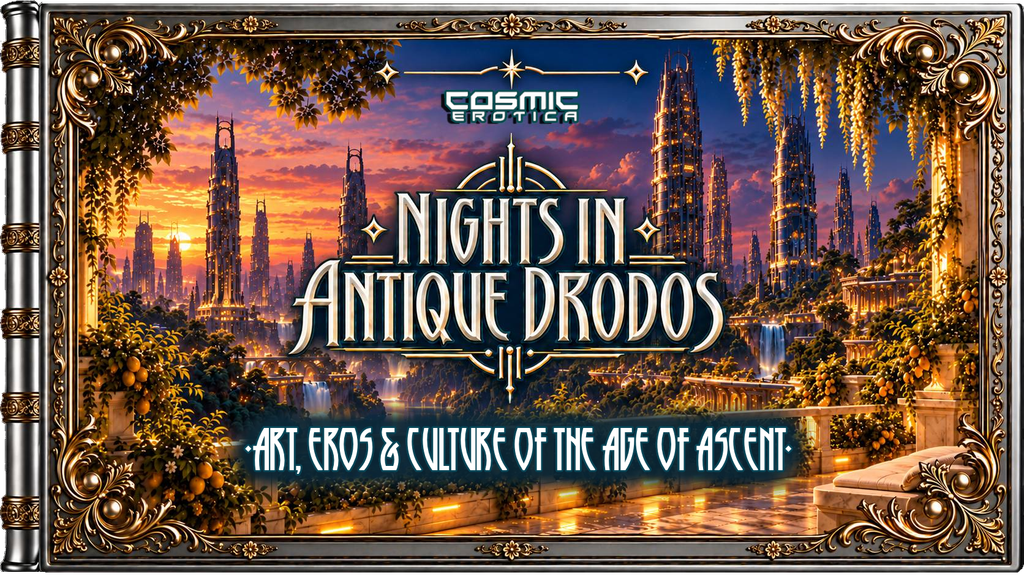
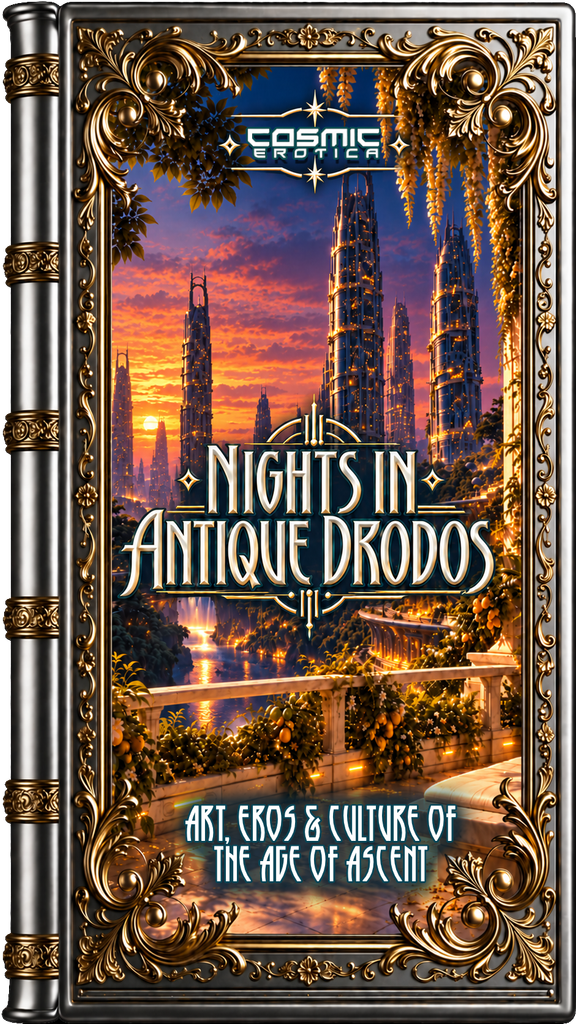
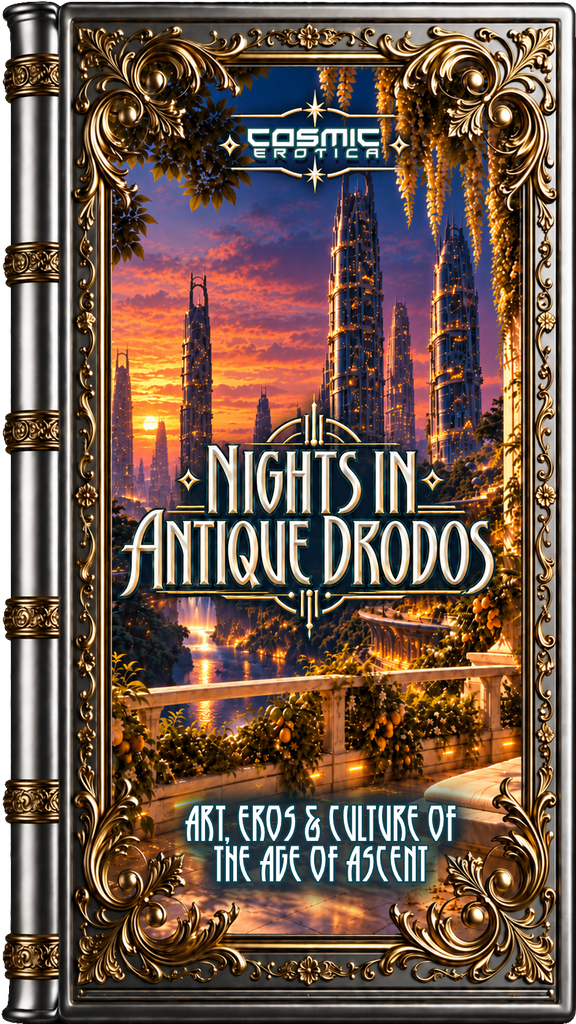
The jungles of Thanator stretched across much of the small moon’s surface, a vast and ancient wilderness of towering trees, tangled vegetation, and steaming valleys where the perpetual struggle for survival had continued for millions of years. Beneath the sprawling canopy, enormous reptiles moved through the undergrowth, while great predatory birds circled above the treetops, their distant cries mingling with the incessant chorus of insects and unseen creatures. Here, beneath the dense foliage, monstrous subterranean arthropods burrowed through the damp earth, while immense horned chameleons concealed themselves among the trunks and branches, their watchful eyes following the movements of passing animals. The jungle was a place of extraordinary abundance, its immense botanical diversity sustaining an equally formidable population of predators, scavengers, and lesser creatures.
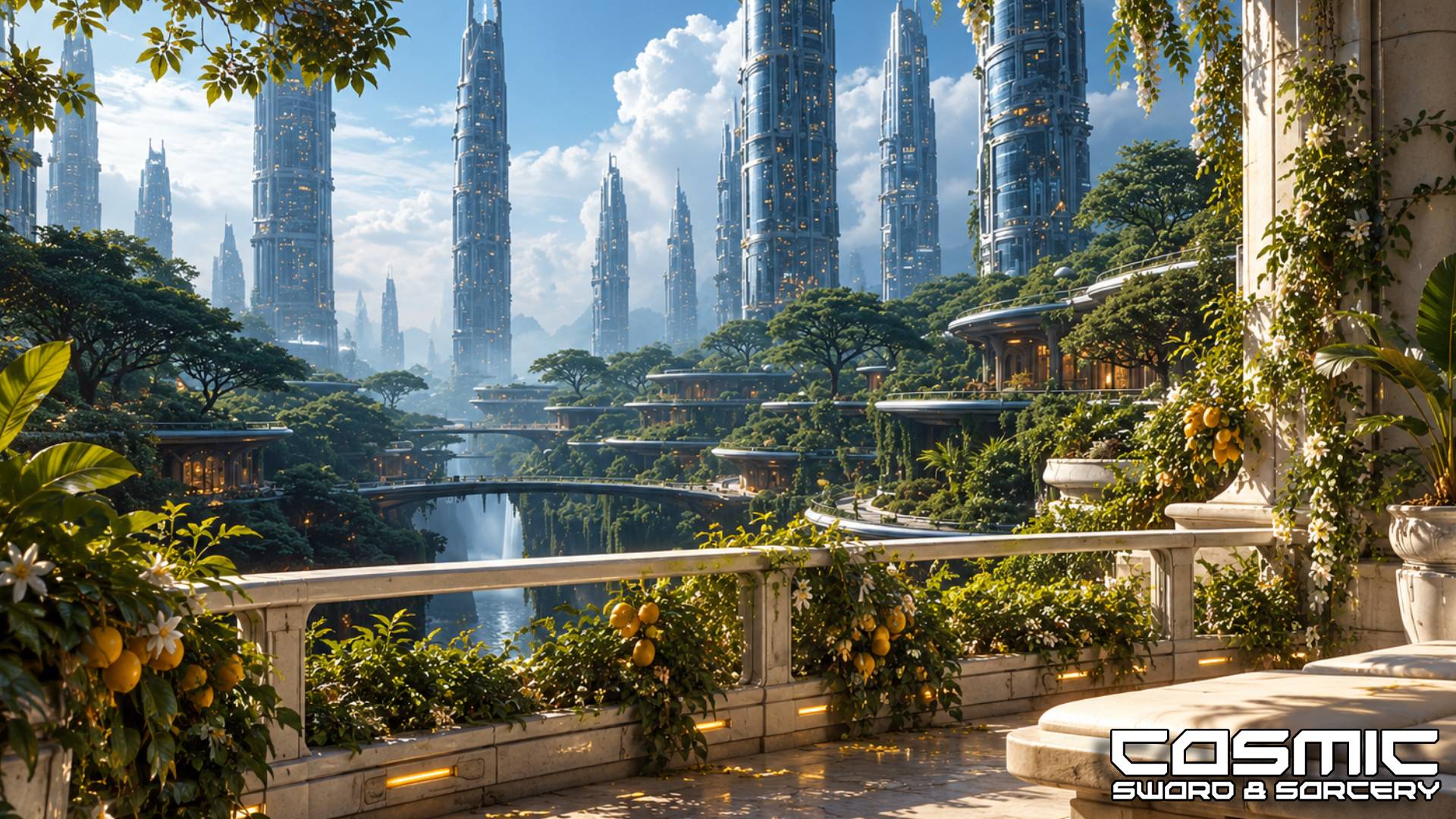
Great rivers wound through the interior, disappearing beneath curtains of foliage before emerging into broad, sunlit basins where the forest opened briefly to the sky. Yet above this seemingly endless green wilderness, something altogether different rose upon the horizon. Far beyond the mist-shrouded canopy, three immense spires of polished alloy, reinforced stone, and glittering glass reached toward the heavens, their towering silhouettes visible long before the sprawling structures at their foundations could be discerned. These were the ancient towers of Drodos, among the oldest works of engineering upon Thanator, constructed millions of years before the arrival of the colonists who now called them home.
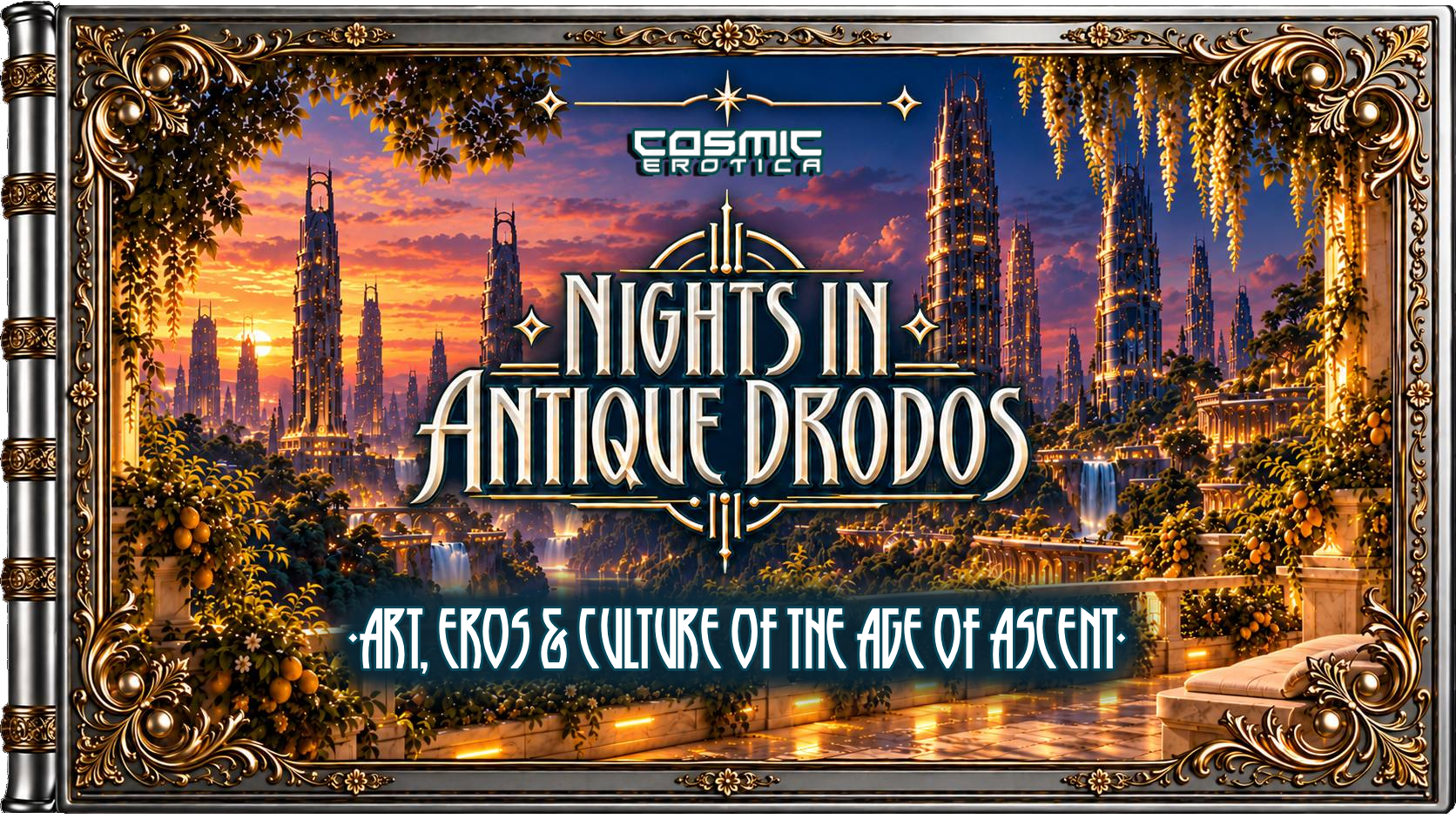
As the jungle gradually gave way to the cultivated outskirts of the settlement, the true magnitude of Drodos became apparent. The three completed spires rose from an immense complex of interconnected foundations, terraces, enclosed thoroughfares, and fortified platforms, each tower possessing the dimensions of a city in its own right. Their colossal façades reflected the golden sunlight, while vast expanses of exceptionally resilient glass revealed the gardens, galleries, and inhabited levels within. Broad architectural bands encircled the towers at intervals, supporting landscaped terraces where flowering vines, carefully tended trees, and productive agricultural plots flourished hundreds of feet above the forest floor.
Elevated passages linked sections of the complex, while the lower approaches were protected by successive layers of defensive barriers, controlled entrances, and security installations intended to keep the surrounding wilderness firmly beyond the inhabited precincts. Beyond the three completed towers, two additional spires were slowly taking shape against the distant sky, their unfinished frameworks rising above enormous construction platforms. Great mechanical assemblies moved along their exposed structures, continuing the ancient architectural program that had already given Drodos its extraordinary skyline. Though incomplete, these two rising giants promised to enlarge the city considerably, their immense skeletal forms standing in stark contrast to the finished brilliance of the original three.
Within the protective embrace of the completed spires, Drodos presented a remarkable contrast to the untamed world beyond its walls. The roar of the jungle diminished beneath the hum of machinery, the distant passage of aerial transports, and the innumerable sounds of a growing colonial population going about its daily affairs. Sunlight poured through the great transparent façades, illuminating residential galleries, cultivated terraces, public concourses, and gardens suspended high above the surrounding wilderness. Along the elevated walkways, residents passed between commercial establishments and private dwellings, while far below, the great agricultural and industrial systems of the city continued their tireless work.
The three towers formed the living heart of Drodos, each an immense self-contained refuge whose strength and sophistication had proved indispensable to the earliest generations of settlers. Yet the wilderness had never entirely surrendered its claim upon the heights. Beyond the thick glass and reinforced parapets, great winged predators still passed between the towers, and the enormous horned chameleons of Thanator occasionally scaled the exterior structures in search of exposed prey.
For all its beauty, prosperity, and ancient engineering, Drodos remained a fortified island of civilization rising above a world that had possessed its own savage dominion long before the first colonists arrived, while the two unfinished spires beyond stood as monumental evidence that the city, and the civilization growing within it, had only begun to ascend.
Classification:
Ancient Metropolitan Arcology Complex
Location:
Thanator, Ran System
Historical Periods:
Precolonial Construction Era; Early Colonial Period; Age of Ascent; Ascension Wars; Golden Age of Thanator; Imperial Age
Civilizational Significance:
Principal Center of Commerce, Prosperity, and Cultural Development
Among the great metropolitan centers of Thanator, few possessed an antiquity, continuity of habitation, or enduring civilizational significance comparable to the ancient city of Drodos. Its origins extended millions of years before the arrival of the first colonial populations, placing its earliest foundations within the immense precolonial construction programs undertaken by the autonomous engineering fleets responsible for establishing much of the original habitation infrastructure throughout the Ran System.
These extraordinary mechanical enterprises, operating across periods of time almost incomprehensible to the civilizations that would eventually inherit their works, erected vast metropolitan structures in anticipation of future settlement.
Drodos was among the most important surviving achievements of this endeavor, distinguished by the completion of three colossal arcology spires prior to the arrival of the colonists. Each tower represented an independent metropolitan structure of extraordinary capacity, incorporating reinforced structural systems, vast transparent façades, internal agricultural facilities, residential districts, industrial infrastructure, and extensive provisions for environmental isolation and security.
Together, these three completed spires constituted one of the earliest fully operational urban foundations available to the emerging civilization of Thanator, establishing an architectural and infrastructural inheritance whose importance would persist across millions of years of subsequent development.
The arrival of the first colonial populations transformed Drodos from an ancient construction achievement into one of the principal foundations of permanent settlement upon Thanator. At this early stage, the small moon remained overwhelmingly dominated by its native jungles, a vast and remarkably productive biosphere inhabited by formidable reptiles, immense predatory birds, subterranean arthropods, and numerous other dangerous organisms.
Foremost among the threats confronting the earliest inhabitants were the enormous horned chameleons, some exceeding twenty feet in length, whose climbing abilities, speed, predatory intelligence, and extraordinary projectile tongues allowed them to threaten exposed residents even upon the elevated terraces of fortified metropolitan structures.
Against such conditions, the preexisting security of Drodos was invaluable. Its immense structural strength, exceptionally resilient glass, controlled approaches, and successive defensive barriers furnished the colonists with an established refuge from which permanent habitation, agriculture, commerce, and industrial development could proceed.
Although its fortifications would undergo substantial refinement as the settlers confronted the realities of their environment, the city provided a degree of immediate security and metropolitan organization that the young colony could not otherwise have readily reproduced.
During the Thanatorian Age of Ascent, Drodos emerged as one of the foremost centers of colonial prosperity, commercial development, and architectural expansion. This comparatively peaceful period was characterized by sustained industrial growth and the establishment of the second phase of great arcologies, constructed through the increasingly sophisticated engineering capabilities of the colonial population itself. The distinction between these later structures and the original precolonial spires was of considerable historical importance, representing the transition from a civilization primarily inhabiting an inherited metropolitan infrastructure toward one increasingly capable of reproducing and extending such achievements through its own resources.
At Drodos, this transformation became especially visible through the construction of two additional arcology spires, whose immense frameworks rose beyond the three completed towers and gradually altered the skyline of the ancient settlement. The continued expansion of the metropolis reflected the growing population, productive capacity, commercial demands, and technological confidence of the developing Thanatorian civilization.
The city itself developed into an increasingly elaborate environment of interconnected metropolitan districts, elevated thoroughfares, cultivated terraces, residential galleries, commercial establishments, and extensive botanical installations. Great architectural bands encircled the immense spires, providing foundations for agricultural gardens, flowering vegetation, and landscaped public spaces suspended hundreds of feet above the surrounding jungle.
Within these protected environments, urban life flourished in marked contrast to the dangerous wilderness beyond the city’s fortified boundaries. Commercial activity expanded alongside the growth of residential populations, while the concentration of specialized industries, skilled labor, administrative services, and increasingly complex markets established Drodos as a principal center of economic exchange. Its importance was not limited to the production and distribution of material goods, for the city’s accumulated infrastructure also supported the development of cultural institutions, ceremonial traditions, recreational activities, and an increasingly sophisticated metropolitan society.
The great fertility celebrations associated with the upper gardens and public precincts of Antique Drodos belonged to this wider tradition of communal observance, illustrating the relationship between the city’s agricultural foundations, social identity, and cultivated prosperity.
The enduring economic importance of Drodos derived from its exceptional combination of antiquity, infrastructure, productive capacity, and accumulated institutional continuity. Unlike the many settlements founded during successive periods of colonial expansion, Drodos possessed a metropolitan foundation already established upon the arrival of the first inhabitants, allowing commercial institutions and supporting industries to develop around an unusually durable concentration of urban resources. Over successive generations, its residential districts, agricultural systems, manufacturing establishments, transport facilities, and markets became increasingly interdependent, forming a metropolitan economy whose influence extended far beyond the immediate boundaries of the original three spires.
As additional settlements appeared throughout Thanator, Drodos retained a privileged position within the developing commercial order, serving as a focal point for the exchange of manufactured goods, agricultural products, technical expertise, specialized services, and the accumulated wealth of an expanding civilization. Its prosperity was therefore neither confined to a single industry nor dependent upon one period of political ascendancy, but arose from the sustained concentration of economic activity across an exceptionally long historical continuum.
The significance of Drodos as the commercial center of Thanator was strengthened by the city’s equally important cultural influence. Wealth accumulated within the metropolis supported increasingly elaborate forms of public architecture, private consumption, leisure, artistic production, and civic ceremony, establishing standards of metropolitan refinement that extended outward into the wider colonial society. The city’s luxurious elevated residences, cultivated botanical environments, ornamental goods, distinctive fashions, and sophisticated consumer industries represented the material expression of this prosperity. Such developments also demonstrated the increasingly pronounced distinction between the raw conditions of early colonial survival and the mature urban society that emerged during the Age of Ascent.
Drodos was no longer simply a fortified settlement from which the surrounding wilderness might be confronted. It had become a major center of consumption, cultural production, commercial sophistication, and social prestige, whose population could enjoy the benefits of an extraordinarily advanced urban environment while the civilization beyond its ancient foundations continued expanding across Thanator.
Throughout its long development, Drodos occupied a position of exceptional cultural significance within Thanatorian society. Its extraordinary antiquity furnished the metropolis with a historical authority unavailable to most younger settlements, while its sustained prosperity allowed successive generations to preserve, reinterpret, and expand the traditions associated with the earliest periods of colonization. The relationship between the ancient structures and their inhabitants became a defining feature of the city’s identity, for its population occupied an urban environment whose original engineering history extended millions of years beyond the recorded experience of the colonial civilization itself.
In this respect, Drodos embodied both inheritance and achievement: the monumental infrastructure of an earlier technological undertaking, and the cumulative accomplishments of the Ranar populations who transformed that inheritance into a flourishing cultural and commercial center. Its architecture, ceremonial observances, consumer traditions, artistic life, and metropolitan customs consequently acquired a continuity extending far beyond the duration of individual political administrations or periods of economic development.
The preservation of this cultural identity was particularly significant as Thanator approached the great conflicts that would conclude the Age of Ascent. The outbreak of the Ascension Wars terminated the preceding period of relative peace and introduced the opening struggles of what would eventually become System War One, fundamentally altering the political and military circumstances of the Ran System.
Yet the historical importance of Drodos was not confined to the comparatively prosperous era immediately preceding these events. Its deeper significance rested upon the extraordinary duration of its metropolitan development and its established role as a center of Thanatorian economic and cultural life. The political transformation of the system, the emergence of increasingly powerful institutions, and the eventual expansion of Thanatorian authority into a far greater imperial structure belonged to historical developments occurring upon foundations already centuries and millennia old.
Drodos had been an ancient city before those struggles began, and its commercial and cultural traditions constituted an essential part of the civilizational inheritance carried into the succeeding ages.
By the emergence of the Golden Age of Thanator and the subsequent expansion of its imperial civilization, Drodos already possessed a metropolitan history of extraordinary duration. Its commercial importance, architectural sophistication, and cultural influence had been established long before the Empire attained the immense technological, industrial, and territorial scale that would characterize its mature development. In the wider historical record, the city consequently represented a rare continuity between the earliest habitation of Thanator and the vastly greater civilization that ultimately arose from the Ran System.
The immense industrial enterprises, monumental engineering projects, and expanding imperial institutions of later ages belonged to a society whose historical foundations included the agricultural terraces, commercial districts, fortified spires, and cultivated public spaces of Antique Drodos. Although the scale of subsequent Thanatorian development would eventually surpass the circumstances of the original colonial metropolis by extraordinary orders of magnitude, the antiquity of Drodos and the durability of its institutional inheritance continued to distinguish it from later urban centers.
The city was thus more than an architectural relic, a colonial capital of commerce, or an enduring monument to precolonial engineering. It represented one of the central continuities of Thanatorian civilization, maintaining its association with prosperity, cultural refinement, economic exchange, and metropolitan achievement across an immense sequence of historical transformations. Its three original spires, inherited from the autonomous construction fleets, stood at the beginning of this history; the later expansion of its arcologies, commercial institutions, and cultural establishments reflected the growing capabilities of the civilization that occupied them.
From the dangerous jungles of the earliest colonial period through the relative prosperity of the Age of Ascent, the conflicts preceding imperial consolidation, and the subsequent grandeur of the Golden Age, Drodos remained inseparable from the historical identity of Thanator itself. Long before the Empire extended its authority across distant worlds, before its industrial achievements attained their greatest scale, and before its political institutions acquired the dimensions of an interstellar civilization, Drodos had already stood for millions of years as an enduring center of Thanatorian commerce, prosperity, and culture.
Late Last Night
Drinks with Sutaal
Rhythm & Heat
The Drodosian Way
Some Like It Endless

INDEX
BY ESSAY
All books in the project will be updated with New Entries:
Check back for additional content

INDEX
BY ESSAY
All books in the project will be updated with New Entries:
Check back for additional content
INDEX
NEXT
VI. Literacy Profile
VII. Cosmological Orientation
VIII. Demographic Composition
IX. Migratory Structures
X. Peripheral Lineages
XI. Riverine Anomalies
XII. Expansionary Pressure
XIII. Planetary Synthesis