


Time & Changes
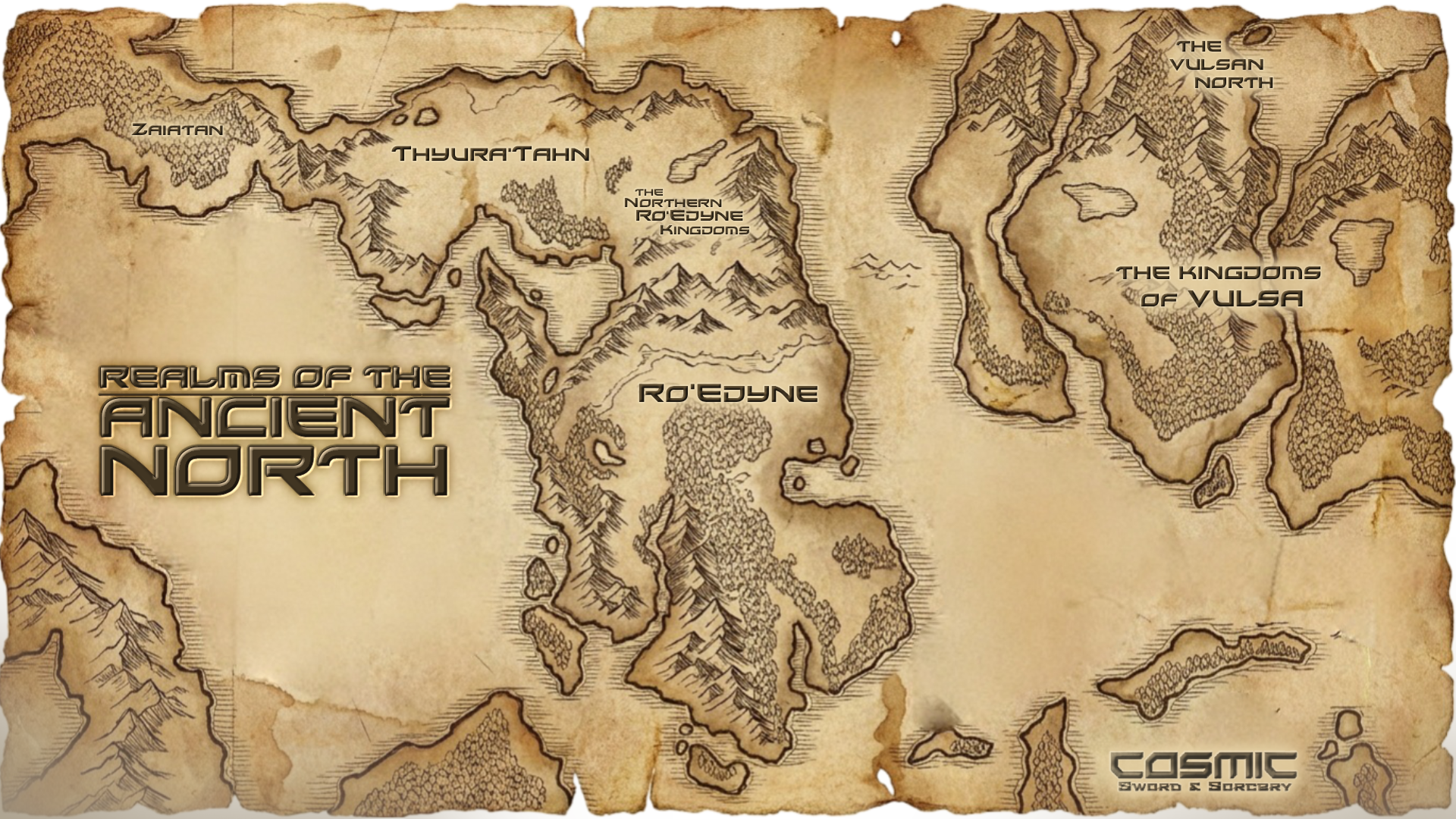
Before the Cataclysm, Ro’Edyne bore almost no resemblance to the colder continental territories that would later emerge from the long planetary collapse. The modern age remembers Ro’Edyne as a realm of pine-choked valleys, cold mountain rain, misted escarpments, and immense northern timberlands stretching across broken terrain shaped by geological violence and climatic instability. Yet the older Ages record an entirely different world. The southern territories of ancient Vandyrus existed beneath far warmer atmospheric conditions, their continental belts wrapped in immense humid jungles, sweeping inland grasslands, drowned mangrove deltas, and subtropical floodplains whose scale dwarfed many later kingdoms entirely.
The environmental conditions of the southern Ages produced ecosystems of extraordinary biological density.
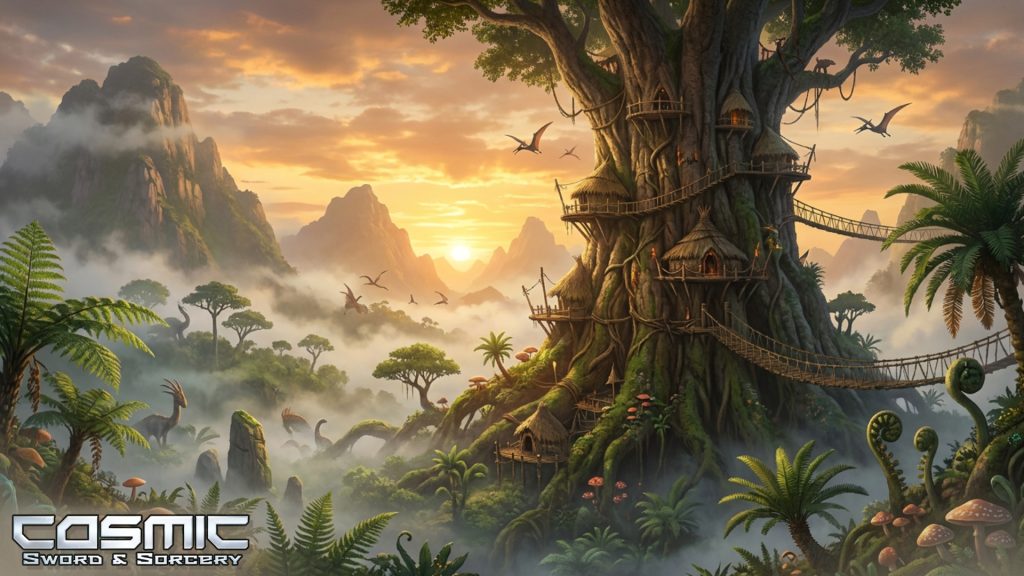
Vast herds of towering saurian megafauna migrated across the grasslands beyond the major metropolitan corridors, while predatory species dominated the river systems, marshes, and interior jungles. Diplodocus moved through the southern floodplains in migratory groups large enough to alter entire river courses through repeated passage alone. Stegosaurian species occupied the drier inland plains and elevated fern valleys. Spinosaurids and Baryonyx variants prowled the swamps, estuaries, and deep river channels where the dense vegetation concealed movement even from advanced aerial reconnaissance systems. Much of this megafauna vanished during the planetary instability surrounding the Cataclysm, surviving only within isolated ecological pockets hidden deep beyond the modern frontiers.
The Emerald Divide
The central territories of ancient Ro’Edyne became especially infamous throughout the later imperial periods due to the enormous equatorial jungles occupying the continental interior. These forests stretched for immense distances uninterrupted by civilization, forming layered canopies so dense that even advanced orbital imaging systems frequently failed to penetrate them with consistency. Atmospheric interference, thermal distortion, biological overgrowth, and strange electromagnetic anomalies rendered large portions of the interior effectively unreadable to long-range scanning technologies. Imperial surveys often described the jungles as resistant to observation itself. Mapping expeditions disappeared with enough regularity that the phenomenon became institutionalized within southern administrative planning.
Numerous patrols, scientific ventures, military reconnaissance groups, and exploratory expeditions entered the central jungles across multiple Ages seeking to determine the true extent of the interior territories. Many transmitted partial findings before vanishing entirely. Some recovered recordings described enormous unidentified lifeforms moving beneath the canopy layers, cyclopean ruins reclaimed by vegetation, collapsed transit systems buried beneath roots and mud, and isolated populations living wholly detached from greater imperial authority. Others simply ceased communication without explanation. The southern archives preserve hundreds of fragmented reports concerning the interior regions, though very few offer coherent conclusions.
Even during the height of Ro’Edyne’s technological sophistication, vast portions of the continent remained fundamentally unknown. The southern reaches beyond the major metropolitan zones were dominated not by cities but by unstable ecological regions shaped continuously by water movement. Great grasslands merged into drowned flood marshes and mangrove forests stretching toward the southern coasts where the land itself fractured into chains of unstable islands, tidal wetlands, and shifting mud territories.
These regions proved catastrophically difficult for large-scale naval invasion. Shorelines altered constantly through flooding, erosion, and tectonic instability, while thick mangrove systems rendered conventional landing operations nearly impossible. Foreign strategists throughout the imperial periods often concluded that the southern coasts functioned less as viable invasion corridors and more as natural defensive labyrinths hostile to organized military movement altogether.
The island chains themselves remained sparsely inhabited despite repeated attempts at settlement and development. Violent storms, unstable ground conditions, dense predator populations, and tidal irregularities prevented sustained urbanization across much of the southern archipelagos. Small ceremonial outposts, fisheries, weather stations, and military observation facilities existed intermittently, though many required continual reconstruction simply to remain operational.
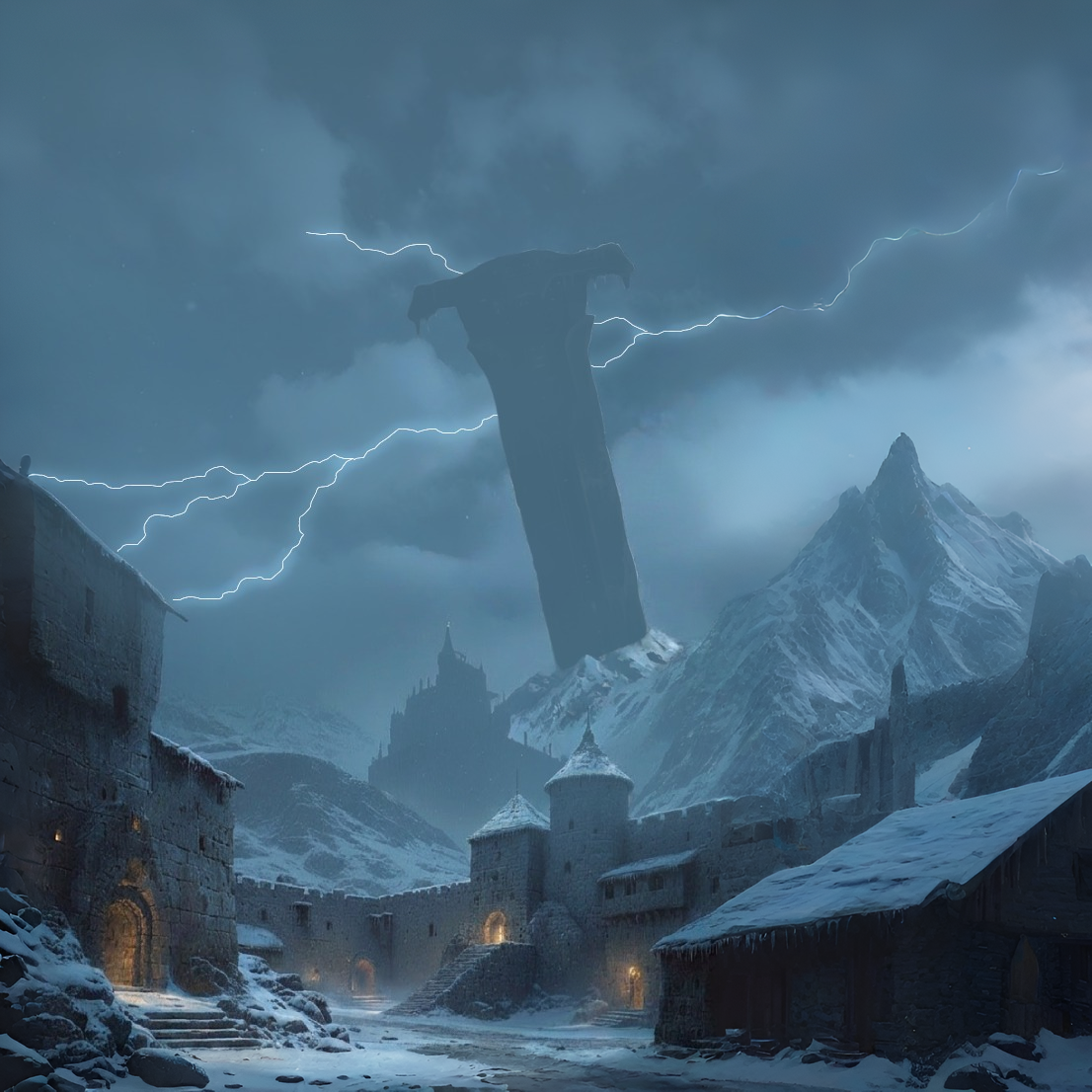
Certain older records imply that portions of these southern islands submerged and re-emerged repeatedly across successive Ages, contributing to the widespread Ro’Edyne belief that Vandyrus itself was never geologically stable in the manner of the greater inner imperial worlds. The northern territories of pre-Cataclysmic Ro’Edyne more closely resembled fragments of the landscape recognized today, though even these regions existed in far more primeval forms. Great redwood forests occupied isolated northern mountain belts where colder climates prevailed along the highest elevations.
These forests, immense even by later standards, remained largely confined to northern highlands during the earlier Ages and had not yet spread southward across the continent. The colder climates that would eventually allow the pine forests of the modern era to dominate most of Ro’Edyne had not yet emerged. Instead, the northlands existed as transitional territories where alpine forests, stone highlands, river valleys, and elevated grass plains intersected beneath cooler skies.
Before the rise of the later imperial continuity-states, numerous highland kingdoms occupied these northern regions. Their settlements were often constructed atop cliffs, elevated plateaus, and fortified ridges overlooking the lower plains below. Unlike the immense metropolitan continuities of the southern civic belts, these northern polities developed around defensive isolation, mountain trade, and territorial autonomy. Great grazing beasts migrated seasonally from the southern grasslands into the northern elevations, shaping both the economy and military structures of many early highland cultures. Some of the oldest surviving northern myths speak of enormous horned herd-creatures darkening entire valleys during migratory seasons, accompanied by predators large enough to threaten fortified settlements directly. The climatic transformation that followed the Cataclysm permanently altered these ancient ecological balances. Cooling atmospheric systems, ash dispersal, tectonic upheaval, orbital instability, and long-term environmental collapse reshaped the continent over immense spans of time. The jungles receded. The southern wetlands collapsed or hardened into colder marsh territories. Redwood species expanded far beyond their former isolated northern ranges. Grasslands gave way to colder forests, rocky highlands, and harsher continental weather systems. Entire migratory ecosystems disappeared. River systems changed course. Inland seas receded or flooded. Mountain ranges fractured and rose where fertile valleys once stood.
Bones of the Elder World
By the later post-Cataclysmic eras, only fragments of the old southern world remained visible beneath the transformed landscape. Fossilized remains of gigantic saurian species emerged from canyon walls and frozen escarpments. Buried transit corridors surfaced beneath root systems kilometers from any known ruins. Ancient flood-control structures stood stranded high above dried valleys whose rivers had vanished tens of thousands of years earlier.
The people of later Vandyrus inherited a broken continent haunted constantly by evidence that the world itself had once been fundamentally different. For this reason, many later scholars of Ro’Edyne regarded the Cataclysm not merely as a civilizational collapse but as the death of an entire planetary age. The destruction was not limited to governments, empires, or cities. Whole climates vanished. Entire ecological epochs disappeared alongside the civilizations that once inhabited them.
The ancient warm south of Vandyrus — the jungled Ro’Edyne of the great Ages — survived afterward only in fragmented archive records, ceremonial songs, geological anomalies, and the impossible ruins buried beneath the forests of the modern world.