

Into The Lost Realms
The discovery of the southern Ro’Edyne archives, independent from the surviving Vandyrian imperial record systems, opened numerous unsettling points of comparison between later restoration histories and realms previously dismissed as allegorical, ceremonial, or wholly mythic in nature. Civilizations such as the great fortress nations of the Ataratoz and the distant northern realms of Zarhanda emerged repeatedly across otherwise unrelated historical strata separated by immense spans of time.
Though never fully rediscovered in any complete archaeological sense, these lost powers persisted through fragmented cartography, dynastic references, military accounts, migratory records, and obscure archive correspondences preserved deep within the southern vault systems. They left treaties, trade corridors, battlefield records, astronomical observations, and territorial disputes embedded throughout the long chronology of elder Vandyrus, suggesting that many civilizations once regarded as purely legendary may instead represent the shattered remnants of continuity-states whose worlds vanished beneath the planetary upheavals of the collapse ages, leaving modern history to glimpse them only faintly across the abyss of time.
Among the older Vulsan tribal cycles, Zarhanda is described as the location of the Gates Beyond, a northern island-realm where fallen warriors were granted continued dominion among their ancestors and retained council with the living world. Later folkloric interpretations increasingly transformed Zarhanda into a spiritual or funerary concept, though earlier records appear markedly less symbolic in tone.
More ancient references describe Zarhanda not merely as an afterlife construct, but as a physical northern territory associated with knowledge acquisition, advanced healing practices, directed light weaponry, and crystalline matrix systems beyond the understanding of later restoration-age cultures. Several surviving fragments from the southern archive traditions refer to Zarhanda specifically as an island nation aligned in kinship with Ro’Edyne “amidst stellar reckoning,” a phrase whose precise meaning remains disputed among contemporary scholars.
Some later Londorai natural philosophers proposed that these northern accounts may preserve distorted memory traces of an earlier continuity-state predating the later Ro’Edyne imperial periods entirely. Others argue that Thyuratahn may instead represent a northern administrative or scientific branch of the broader southern civilization whose records became fragmented following successive continental collapses and marine inundations across the northern shelves. No consensus presently exists.
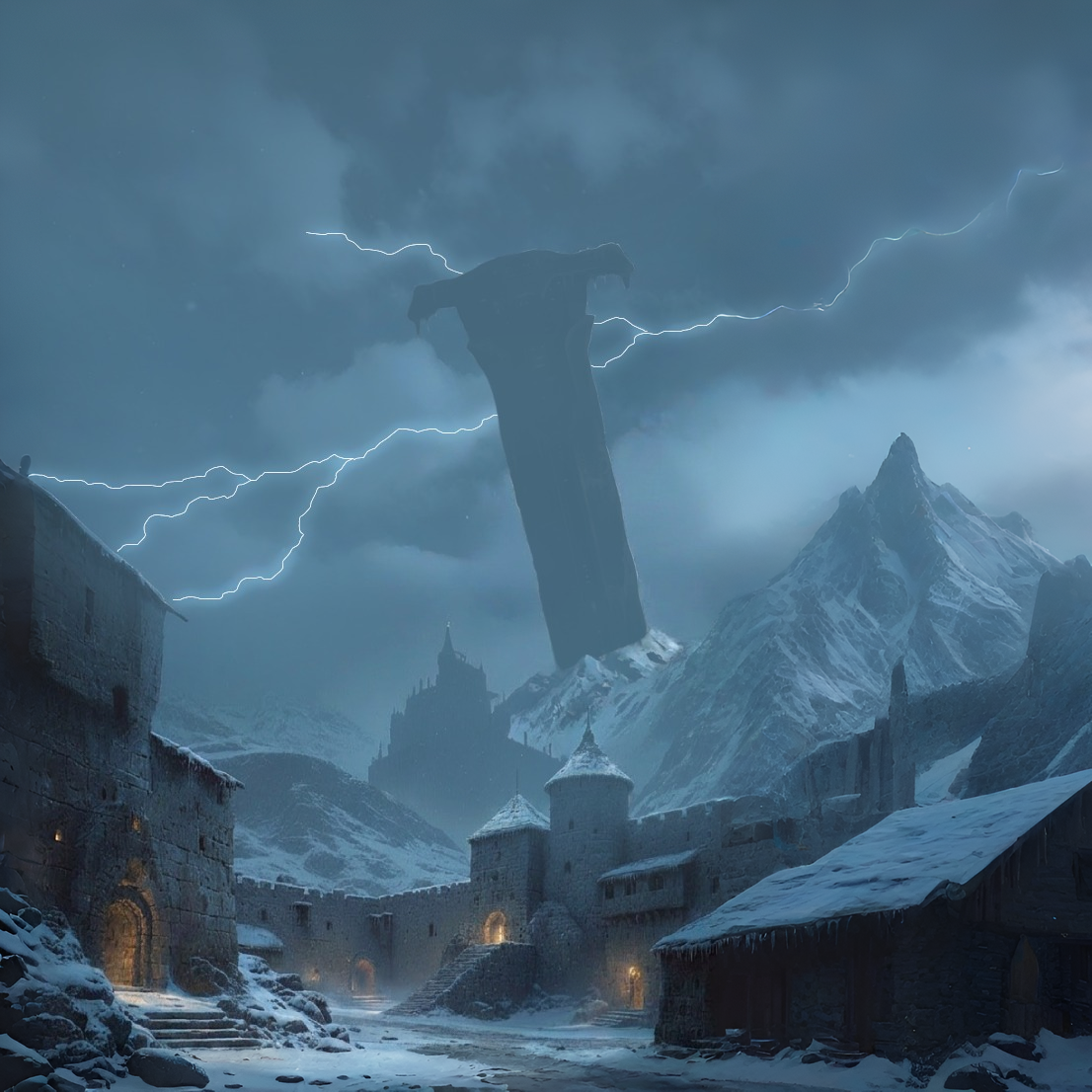
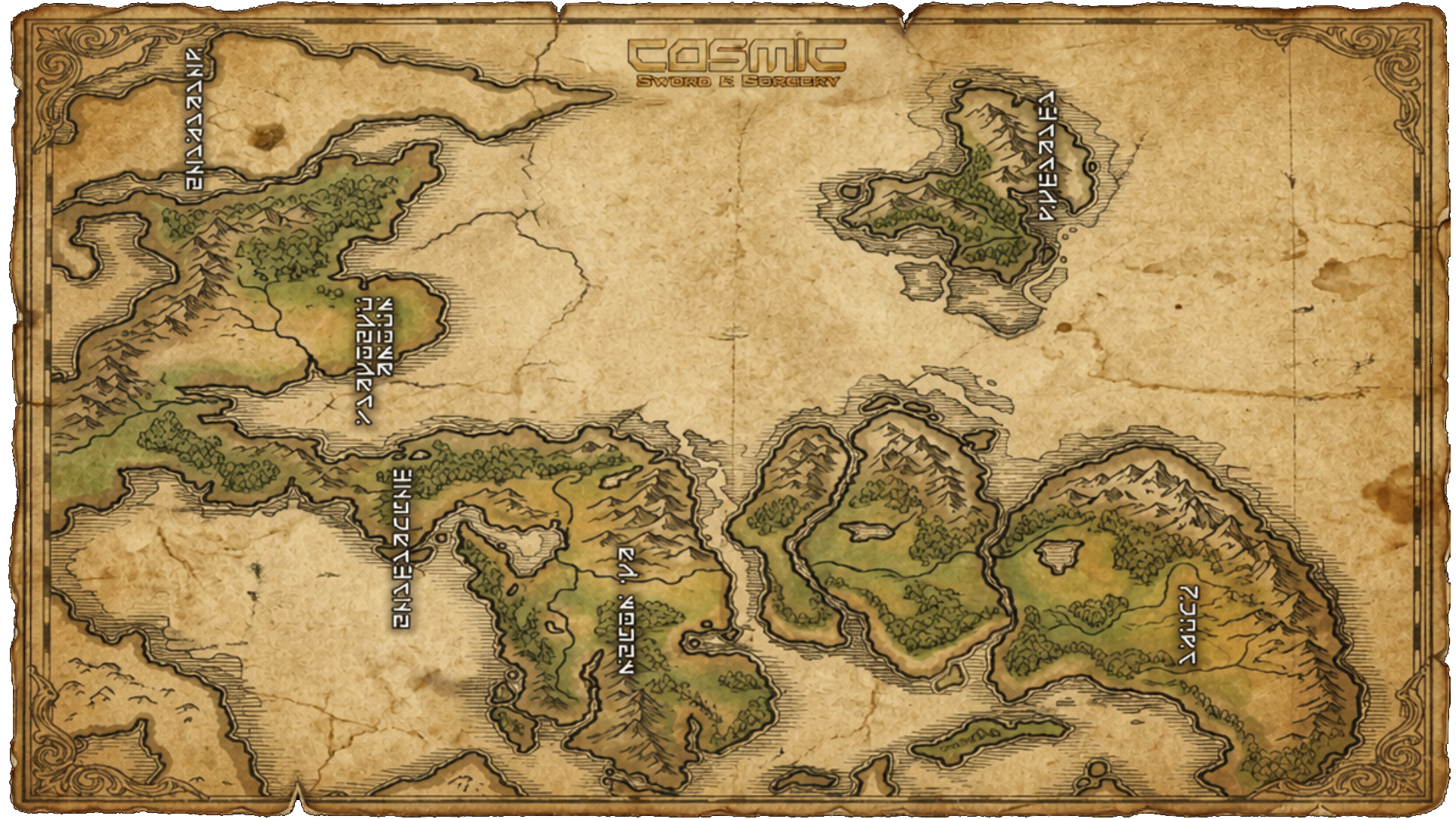
Positionally, Zarhanda appears to have existed well beyond the primary continental reaches of both Thyuratahn and Ro’Edyne proper, situated far to the north amidst the colder outer seas beyond the Vulsan territories and eastward of the elder Londorai spheres. Surviving geographic references consistently associate the region with freezing climates, violent northern waters, volcanic shelf instability, and long seasonal darkness unlike the warmer central dominions further south. Later post-cataclysmic accounts frequently describe the island as barren, storm-ridden, or partially wastelanded, though earlier records suggest this condition may represent the aftermath of successive collapse periods rather than the original state of the territory.
The isolation of Zarhanda, combined with its apparent association with unusually advanced knowledge systems and surviving pre-collapse continuities, likely contributed heavily to its gradual transformation within later Vulsan traditions from a distant northern island-state into a mythologized realm of the dead and ancestral beyond.