“Vandyria departed the lowland kingdoms much as she had first entered them…
Her black war-skiff drifted silently from the misted shallows while the silver wolf-sigil upon her armored breast caught the first light of morning. Around her gathered the survivors of the Vandyrian war band, moving with the quiet efficiency that had characterized the campaign from its opening days. There were no songs of triumph, no speeches proclaiming conquest, and no ceremonies beyond the practical accounting expected of successful hunters returning from distant lands. The dead belonged to the lowlands. The spoils belonged to those who had earned them. Among the trophies loaded aboard lay the ear of Lord Tulvus, taken as proof that the final hunt had indeed been concluded. His sword accompanied it, together with the many silver ornaments stripped from his household, his ceremonial shields, his sabers, and the armor of those champions whose equipment had demonstrated sufficient quality to merit preservation. What held little value was abandoned where it fell. What possessed craftsmanship worthy of remembrance was divided among the war band according to ancient custom before the remainder was secured within the holds of the waiting skiffs.
By the time the morning sun had fully risen, little remained upon the shore beyond abandoned campfires and the fading tracks of departing vessels. The flotilla then departed the conquered shores, rendezvousing days later with the greater Vandyrian fleet waiting beyond the horizon. There, beneath banners already weathered by campaigns fought upon worlds whose names had long since vanished even from memory, Vandyria recounted the hunt before the assembled captains of her own black-wolf folk. The campaign had proven profitable. The enemy had fought with courage. The trophies were worthy. The worlds themselves had yielded precisely the measure their first reconnaissance had predicted.It is said that among those listening were elder lion-lords of the Primal Empire who had warned that this scattered collection of realms would resist longer than most. Whether spoken in jest or genuine admiration, the account records that Vandyria merely laid the trophies before them and answered that difficult prey was, after all, the only kind worth pursuing.”
By the time the lord and his household reached the great hall, the young princeling had already installed himself comfortably within it, one boot resting upon a carved chair, the fortress’ finest brandy held carelessly in one paw while he conversed with the surviving guards as though entertaining honored guests rather than broken veterans. Every soul present disliked the little aristocrat with remarkable consistency. Still, Tulvus accepted the sight with exhausted resignation rather than surprise. If disaster truly had ended, it seemed only fitting that politics should immediately arrive to reclaim what the battlefield had left unfinished.
Kal’Nyus proved incapable of sensing the mood surrounding him. His questions arrived in eager succession, each more foolish than the last, all circling the same subject. Had they truly slain the Wolf Queen? Had anyone confirmed the body? Had they dragged her somewhere secure? Had anyone thought to separate the head from the shoulders, simply to be certain? The veterans answered only with brief acknowledgements, neither encouraging nor correcting him. They themselves possessed no answers beyond what Tulvus had witnessed upon the battlefield. They had seen the arrow strike. They had seen her fall. They had seen enough to believe the matter finished. Beyond that, certainty became increasingly difficult to measure. The prince, however, required no such restraint. Possessing the confidence unique to those who had survived none of the campaign they discussed, he gradually transformed polite inquiry into self-congratulation, lifting the bottle in broad gestures while congratulating the assembled commanders as though their triumph somehow reflected the wisdom of the royal court that had remained comfortably distant from the fighting.
The hall accepted his speech with remarkable silence. Servants continued removing shattered furniture. Masons quietly measured cracked columns. Physicians crossed the chamber carrying fresh bandages and bowls of steaming water stained pink by recent use. No applause greeted the prince’s declarations. No cups rose in celebration. The campaign had consumed too many years and too many lives for victory to resemble the cheerful endings favored by poets. Tulvus scarcely listened. His attention wandered toward the great western windows overlooking smoke-blackened rooftops and distant hills slowly disappearing beneath evening mist. Somewhere beyond those ridges rested battlefields still crowded with the unburied. Somewhere farther still lay the place where the emerald-eyed queen had finally fallen. He raised the bottle once more, deciding that silence paired considerably better with good brandy than with speeches.The first horn echoed faintly enough that many mistook it for another hunting party returning from the western forests. The second carried farther, lower and longer, causing nearly every veteran present to lift their heads instinctively before conscious thought had caught up with old habit.
A third answered from much farther south. Then came the sound that none within the hall had expected—or wished—to hear again. Boots struck stone in frantic succession. Doors burst open. Breathless messengers stumbled across the threshold, scarcely able to force words through exhausted lungs. The report itself needed only three words before every cup lowered and every conversation ceased.
“Vandyria is attacking!”.
For several heartbeats the chamber simply stood motionless. No one shouted. No one denied the possibility. Tulvus looked first toward Jan’Rymus, then toward the surviving thanes, discovering precisely the same expression mirrored upon every weathered face. None of them believed such a thing should have been possible. None of them, however, possessed sufficient confidence to dismiss it outright. Three years had educated them thoroughly regarding impossible things. Kal’Nyus alone appeared offended by the very suggestion. Tossing his cloak back with theatrical confidence, he strode toward the center of the chamber wearing the expression of one preparing to rescue lesser intellects from unnecessary panic. He laughed openly, pointing toward the frightened messenger before turning dramatically toward the assembled veterans, as though addressing nervous recruits rather than warriors who had survived the campaign he had observed only from comfortable palaces.
“Lads,” he declared, lifting the bottle high as though offering a toast, “don’t let her get inside your heads. Look at yourselves. They send one female carrying a sword, and already seasoned warriors tremble as though the realms themselves were ending. Let me ask you something.” His grin broadened while he swept one arm grandly across the hall, delighting in the sound of his own voice. “At the end of the day, she is only one female. Tell me honestly. what can one female do?”
The final syllable had scarcely escaped his lips before steel erupted cleanly through his chest. The broadsword drove entirely through his body with such force that his paws left the floor, the bottle slipping from nerveless fingers to shatter across the stone beneath him. For one impossible instant nobody moved. Kal’Nyus stared downward in bewilderment at the blood spreading across embroidered silks before his voice disappeared forever beneath the blade that had opened him. Behind the suspended princeling stood Vandyria. The silver-and-steel crown rested crookedly upon dark fur matted with smoke and dried blood.
The arrow that Tulvus himself had watched bury into her still protruded from the wound, snapped shorter than before yet unmistakably present. Emerald eyes surveyed the chamber with almost casual irritation while the fool impaled upon her sword instinctively clutched the blade, desperately attempting to free himself. She answered the effort by wrenching the weapon backward in one brutal motion. Fingers scattered across the floor before the prince collapsed to his knees, clutching foolishly with pulsing crimson stumps at ruined hands that no longer obeyed him.
Then she spoke: “Any other stupid questions?”
Tulvus could not entirely suppress the bitter laugh that escaped his throat. Not amusement. Recognition. Of course… of course. The impossible had merely been delayed again!
Kal’Nyus looked upward, still trying to form words through lungs rapidly filling with blood, when Vandyria stepped past him with almost contemptuous indifference. One smooth sweep of the broadsword removed his head entirely. It bounced once across the polished stone before disappearing into the central fountain with a hollow splash, while the body remained upright for one absurd heartbeat longer before collapsing face-first beside it. The corpse came to rest as the prince himself had lived—ignoble, undignified and entirely convinced until the final instant that the world revolved around him. Vandyria flicked the remaining blood from her blade with practiced ease before resting its point lightly against the floor. Around her, the hall remained frozen between disbelief and terror. She allowed the silence to linger only long enough to become uncomfortable before slowly turning her gaze across every surviving commander gathered within Mi’Zhaat. Her eyes eventually settled upon Tulvus himself. Neither hatred nor triumph occupied her expression. Only the faintest suggestion of exhausted amusement. Then, she charged in! Blade swinging, eyes of emerald Hellfire and a voice raw with the intent of carnage.
Panic broke the spell immediately. Half the hall fled for the gates without waiting for orders, only to discover that every obvious avenue of escape already belonged to the Vandyrians. Warriors hidden among the tree lines, concealed within drifting evening mist and buried patiently along the approaches emerged together as though answering some silent summons. Others chose to stand beside Tulvus and draw steel, convincing themselves that dying with weapons in their hands remained preferable to fleeing beneath arrows. Their courage altered nothing. The slaughter unfolded with the same ruthless efficiency that had characterized every previous encounter with the Wolf Queen.
Within six weeks the organized resistance of Ul’Zhandoma ceased to exist.
The wider continental conflict lingered another six years, though by then it resembled little more than the careful accounting of victories already secured through patience, reconnaissance and relentless momentum.
Long afterward, historians would remember Mi’Zhaat not as the place where Vandyria died, but as yet another place where the world discovered that reports concerning the death of the War Goddess possessed an unfortunate habit of arriving far too early.
Mi’Zhaat remained standing, though only by the sort of stubbornness usually reserved for old fortresses and older grudges. Smoke continued to drift through fractured rafters where the fires refused to surrender entirely, while servants, masons and physicians crossed one another through the battered halls in the quiet rhythm of a household attempting to remember what normality had once resembled. Lord Tulvus accepted his drink without ceremony, draining nearly half the vessel before lowering it with the satisfaction of one whose body had forgotten comfort long enough to resent being reminded of it.
Around him the surviving thanes gradually removed armor that had become more familiar than ordinary clothing, revealing fresh bandages beneath older scars in a layered history of three years’ uninterrupted campaigning. No celebration emerged despite the certainty that the Dark Wolf Queen had finally fallen. Instead, conversation wandered naturally toward the same question every survivor eventually reached after catastrophe. How, in all the cursed realms, had matters unraveled so completely? Tulvus possessed no patience for comforting lies any longer. The answer, as far as he was concerned, had begun three years earlier with a council of exceedingly intelligent fools congratulating themselves upon what they believed the cleverest political maneuver of their generation.
At the time, every kingdom upon the continent had watched the others with equal measures of suspicion and opportunity. Alliances shifted as readily as weather, treaties rarely survived the rulers who signed them, and every lord imagined himself one brilliant stratagem away from becoming master of his neighbors. It was under precisely those conditions that someone proposed inviting the Vandyrians into the conflict. They were foreigners. Their numbers appeared limited. Their reputation for warfare had grown almost mythical beyond the western seas, yet they possessed neither land nor titles within Ul’Zhandoma itself. The calculation appeared almost elegant. Employ an outside power to destroy one’s greatest rival, reward them handsomely for services rendered, and then watch them depart carrying wealth rather than territory. Looking back upon that council now, Tulvus struggled to decide whether arrogance or ignorance had been the greater crime. The plan had required every participating ruler to believe himself cleverer than an empire whose history already stretched backward farther than most kingdoms upon the continent could trace their own bloodlines. Such confidence now seemed almost insulting in retrospect.
The negotiations themselves had appeared encouraging enough that even cautious advisers relaxed their guard. The Vandyrian commander had inspected their weapons, their fortifications and the curious laser crystals prized by the local artificers with what many interpreted as restrained fascination. Noble houses congratulated themselves quietly. If the foreigners admired such devices, then surely they possessed nothing comparable themselves. Tulvus remembered those conversations with increasing disgust. They mistook observation for envy. They mistook silence for uncertainty. Most disastrously of all, they mistook disciplined professionalism for political simplicity. Vandyria herself had asked remarkably few questions throughout the negotiations, allowing ambitious rulers to fill every silence with explanations they had never actually been asked to provide.
Only one inquiry truly lingered in Tulvus’ memory. Could the opposing kingdoms match these weapons?
The answer had come quickly, confidently, and with no suspicion whatsoever that anything of consequence had just occurred.
No. They could not. The assembled thanes had smiled at one another, believing they had demonstrated superiority. In truth they had merely revealed the technological ceiling of the entire continent.
Only much later did the surviving commanders begin recognizing what that answer had truly purchased. The Vandyrians had never required lengthy negotiations because they had not arrived seeking employment in the first place. They had arrived seeking information. Every fortress inspected, every supply caravan observed, every demonstration of military technology and every discussion regarding rival kingdoms formed pieces of a reconnaissance operation so complete that the continent practically mapped itself before them. While local rulers negotiated contracts, Vandyria quietly evaluated infrastructure. While kings debated payment, she measured roads, rivers, ports, industry and the practical capacity for sustained resistance. The Mi’Zhaati believed they were hiring a mercenary commander. The Vandyrians were conducting a strategic survey of an entire political ecosystem. By the time the first contracts had been signed, the decision had already ceased being whether to participate in the war. The only remaining question concerned whether Ul’Zhandoma represented a worthwhile acquisition.
The first victories seemed to justify every decision. Vandyria struck with astonishing speed against precisely the enemies her employers had identified, collapsing defensive lines that generations of local warfare had failed to break. Entire campaigns ended within weeks. Strongholds previously considered unconquerable fell one after another beneath methods nobody upon the continent had anticipated.
Celebration spread throughout the allied courts. Toasts were offered to the wisdom of those who had secured foreign assistance. Songs praised political foresight rather than battlefield courage. Then, almost imperceptibly at first, events ceased following anyone’s expectations. The Fulmis regime disappeared with suspicious efficiency, yet before its neighbors could divide the spoils another allied kingdom found itself descending into unexplained disorder. Nanchuma faltered from within despite no obvious invading army. Elsewhere, border disputes erupted where none had existed before. Supply routes vanished. Garrisons stopped reporting. Rulers awoke to discover provinces no longer answered their own messengers. Every disaster appeared isolated until enough of them accumulated that no honest observer could continue pretending coincidence explained the pattern.
Tulvus eventually came to understand that the war everyone believed themselves fighting had ended almost before it began. The campaigns consuming the next three years belonged entirely to Vandyria. Every kingdom, allied or hostile, gradually became little more than terrain through which her larger designs advanced. Some rulers surrendered and disappeared anyway. Others resisted bravely only to discover they had been strategically irrelevant since the opening months of the conflict. Armies marched heroically toward objectives whose importance had evaporated weeks earlier. Entire noble houses exhausted themselves defending borders the Vandyrians had already chosen not to cross because more valuable targets lay elsewhere. It was a campaign of relentless initiative, where every local power remained perpetually one season behind events already unfolding beyond their understanding. Tulvus found no comfort in recognizing the pattern so late. Understanding a trap after spending three years inside it represented knowledge of the most useless sort.
The discussion finally dissolved beneath the distant sound of hunting horns echoing from the western highlands. Every veteran in the chamber recognized the arrival before the heralds announced it, and the collective weariness proved almost theatrical. Prince Kal’Nyus, beloved nephew of the king, had arrived to congratulate the victors. The younger nobles straightened their clothing from habit more than enthusiasm, while Tulvus merely reached again for his drink with the expression of one informed that another siege had somehow begun before the previous one had properly concluded. Kal’Nyus possessed just enough royal blood to command obedience, just enough privilege to mistake ceremony for authority, and just little enough experience that genuine soldiers regarded his opinions as one more unavoidable hardship imposed by the crown.
Tulvus muttered that he intended to finish his drink before entertaining royalty, then ordered that the prince be kept waiting if necessary. The command carried no real expectation of success. Some nuisances possessed an uncanny talent for arriving precisely where they were least wanted, and Kal’Nyus had elevated that talent into something approaching an inherited right.
“It is Her! The Dark Wolf Queen! Heathen Vandyrian Witch!”
“It is Her! The Dark Wolf Queen! Heathen Vandyrian Witch!”
Chapter 1
Three years of campaigning had stripped the victory of every luxury normally afforded such a thing. Lord Tulvus and the seven surviving thanes of his household rode not as conquerors returning beneath banners of triumph, but as weary beasts scarcely held upright by habit alone. Armor that had once carried polished heraldry now bore the soot of burning cities, the rust of neglected rain, and enough dried blood that none among them could have said with certainty whose still clung stubbornly within the seams. Behind them lay abandoned fortresses, shattered alliances, two celebrated proclamations announcing the death of the Dark Wolf Queen that history had already mocked, and enough corpses to bury the ambitions of an entire generation of princes. This time, however, was different. This time Tulvus himself had watched the arrow strike home. He had watched it bury itself through the emerald-eyed foreign she-wolf’s chest with such violence that even her impossible momentum had faltered. No bard had reported it. No frightened courier had exaggerated it. He had seen it with his own eyes. At long last, after three grinding years spent chasing the nightmare from province to province, the accursed Vandyrian female had finally been brought low.
Even certainty, however, possessed a strange weight after living too long beside impossible things. The road toward Mi’Zhaat stretched beneath exhausted horses whose gait had become little more than instinct, while no rider found much enthusiasm for conversation beyond the occasional curse muttered toward the weather, the campaign, or existence itself. Jan’Rymus eventually broke the silence, the long-snouted wolf adjusting the leather strap beneath his eyepatch as sweat collected beneath its edge. The old adviser possessed the unfortunate habit of speaking practical truths before anyone wished to hear them, and Tulvus had endured enough of those for one lifetime already. The fortress would be waiting. The thanes would expect answers. The surviving households would demand reassurance. The kingdoms would wish to hear precisely how the infamous Dark Wolf Queen had met her end. Tulvus wanted none of it. He wanted strong drink, clean bandages, several uninterrupted days of sleep, and perhaps the luxury of allowing someone else to carry history upon their shoulders for once. Unfortunately, history possessed an irritating tendency to arrive precisely when one had grown least interested in entertaining it.
Their progress northward stirred old conversations as naturally as turning soil exposed forgotten bones. Tulvus’ bitterness soon found its familiar target, and the old argument resumed almost of its own accord. Three years earlier the assembled lords had congratulated themselves upon a scheme they believed worthy of poets, imagining they might lure a distant Vandyrian captain into their struggle, arm her with promises, point her toward a troublesome rival, and dismiss her once the unpleasant work had been completed. Such arrogance now seemed almost theatrical in retrospect. Nalikus, youngest among the surviving thanes and still carrying dried blood where half an ear had recently ceased belonging to him, defended the memory of his late father with predictable stubbornness. Tulvus answered with equal conviction. He no longer cursed the Vandyrians for accepting the invitation nearly so much as he cursed those foolish enough to extend it. There existed mistakes born from desperation, mistakes born from ignorance, and mistakes so spectacularly arrogant they deserved to become cautionary tales recited to every future ruler who believed themselves the cleverest creature seated at their own council table. Inviting the Vandyrians into Ul’Zhandoma had become precisely such a lesson.
No argument lingered long before collapsing beneath the greater exhaustion hanging over them all. Even Jan’Rymus wisely abandoned further attempts at mediation once Tulvus’ temper settled into the dangerous calm that preceded harsher decisions. The lord’s gaze drifted across each surviving adviser in turn, measuring them with the same expression one might reserve for cracked shields after surviving a siege. Many voices that had once filled those councils no longer existed to defend themselves. Others perhaps would soon envy the dead. War possessed a cruel habit of simplifying administrative questions, and Tulvus had reached the stage where he increasingly suspected poor counsel ought to carry penalties nearly equal to treason. None of the riders found much appetite to challenge that sentiment. They simply continued toward Mi’Zhaat beneath gathering clouds, allowing the silence to reclaim the road while each privately wondered whether peace would feel any different from the war that had consumed the better part of their lives.
The fortress announced itself long before its walls rose above the hills. Smoke still drifted lazily upward from blackened towers where the fires refused entirely to surrender despite nearly two weeks of effort. Packs of hunting dogs, released before the assault and never fully gathered again, bounded across the approaches to greet familiar riders with far greater enthusiasm than any servant remaining within the walls could summon. Tulvus scarcely acknowledged them. His attention settled instead upon the gatehouse, where the scars of Vandyria’s visit remained displayed with almost ceremonial stubbornness. Mi’Zhaat had survived, certainly, but survival and dignity were separate matters entirely. Stone could be repaired. Burned timber replaced. Broken glass recast.
Reputation proved considerably more troublesome. Every traveler passing those gates now entered beneath monuments celebrating precisely how completely one determined foreign commander had humiliated an entire noble house. The first such monument still hung exactly where she had left it. Boarthane Fulbus remained nailed upright against the great doors by a shaft so absurdly thick it resembled a stripped sapling more than an arrow. The missile had entered beneath the unfortunate swine’s tail, burst cleanly through his body and embedded itself deep enough into the ancient timbers that no one had yet bothered attempting its removal. Worse still had been the purpose. Fulbus had never been intended as an execution. He had served as an alarm bell. His panicked screams drew guards from every corner of the courtyard exactly as intended, whereupon Vandyria’s concealed marksmen harvested them before most had properly understood why they had been summoned.
Once the trap had fulfilled its purpose, a second bolt fitted with a brutal armor-piercing head had crossed the yard and entered neatly through Fulbus’ eye, silencing both the screaming and any remaining illusion that mercy had accompanied the assault. Twelve days beneath the summer heat had completed what the bolts had begun. His lips had swollen black, his flesh sagged against the wood, and clouds of flies now ruled the gate more faithfully than any captain assigned its defense.
Walking those halls required no storyteller to recount what had followed, for the fortress itself preserved the memory in splintered timber, smoke-blackened ceilings and broken stone. Servants spoke in whispers of burning chambers where the Vandyrian queen had deliberately trapped herself alongside defenders simply to force them into panic before emerging alive through smoke no sensible warrior would willingly enter. Others pointed toward collapsed flooring where desperate guards attempting escape from the upper galleries had instead discovered steel rising upward to meet them from below. Bookshelves still leaned awkwardly where climbing blades had torn through polished wood, while shattered banisters overlooked courtyards that had become graveyards for those hurled downward during the fighting. Every chamber described the same impossible rhythm. She had never attempted to defend ground. She had attacked motion itself, forcing everyone around her to react until the fortress no longer belonged to its owners but to her momentum. Mi’Zhaat had ceased being a stronghold the moment its defenders accepted the pace she imposed upon the battle.
The dead themselves had become unwilling chroniclers of that truth. Duke Gaimis, celebrated throughout the western marches as perhaps the finest swordswolf in the kingdom, had not fallen gloriously upon the battlements where later songs preferred to place him. Tulvus found him beneath the fortress instead, deep within the wine cellars where the struggle had evidently descended in desperate confusion. His greatsword still rested beside him, its edge black with drying blood and nicked badly enough to testify that it had not surrendered cheaply. The duke himself lay face down across the stone steps leading toward the lower vaults. Both wrists had been severed cleanly, his final crawl ending only a short distance from the widening pool that had claimed him.
The stone beneath his muzzle remained dark where blood and broken teeth had collected together. No witness remained to explain precisely how the duel had unfolded, nor did Tulvus particularly desire one. Some deaths carried instruction. Others carried only humiliation. He quietly ordered the body removed before wandering chroniclers found cause to ask uncomfortable questions regarding how one of the kingdom’s greatest champions had truly met his end.
Elsewhere the fortress offered little improvement. Lord Tanjule’Pyrete had been discovered where the upper galleries overlooked the central hall, surrounded by shattered masonry and enough dead retainers to suggest that his household had attempted a final stand. Whatever defense they organized had ended almost immediately after the Vandyrians introduced a weapon none within Mi’Zhaat had ever before encountered. Survivors struggled even now to describe the devices coherently. Some insisted they had been alchemical bombs. Others swore they were enchanted stones. Tulvus himself had seen only enough to understand that the compact metal cylinders had been launched from curious wrist-mounted engines carried beneath the Vandyrian forearms. They sailed through the air with deceptive grace before bursting apart with a violence entirely disproportionate to their size, hurling iron fragments through shields, timber and flesh alike.
Tanjule’Pyrete had survived the initial blast only to lose both ankles to the storm of metal that followed. His retainers had attempted to drag him from the gallery while more of the infernal projectiles rained among them. None had escaped. Tulvus found the old lord where he had finally bled dry against a fractured pillar, fingers still dug so deeply into the stone that several claws had remained behind when the body was finally lifted. The longer Tulvus walked the halls, the less he believed he was surveying a battlefield and the more he felt he wandered through the aftermath of some carefully orchestrated demonstration. Nothing appeared random. Every collapsed stairwell had delayed reinforcements exactly where defenders most needed them. Every fire had forced soldiers toward corridors already claimed by hidden marksmen. Every barricade had encouraged retreat into chambers that became killing grounds moments later. Even the placement of the dead suggested deliberate instruction.
Captains had been left where every passing guard would recognize them. Household champions occupied places impossible to ignore. Officers who commanded respect had not merely been killed but displayed as undeniable proof that rank, reputation and lineage purchased no immunity from Vandyrian steel. The fortress itself had become a lesson, each chamber another page in a campaign written not with proclamations but with architecture, smoke and blood. Tulvus found himself hating that realization more than the destruction surrounding him, for it meant the Wolf Queen had not simply conquered Mi’Zhaat. She had ensured that every survivor would spend the remainder of his life remembering precisely how she had done it.
Tulvus lingered longer than he intended before the ruined audience hall, saying nothing while servants quietly resumed work around him. Everywhere he looked he found evidence that the campaign had indeed reached its conclusion. The destruction before him represented the last savage breath of a dying enemy, nothing more. The arrow through her chest had settled the account at last. Whatever songs wandering minstrels might someday compose about the Dark Wolf Queen, they would now possess an ending.
Empires survived remarkable things.
Legends endured even longer.
Flesh did not.
For the first time in three years Lord Tulvus permitted himself the dangerous luxury of believing that tomorrow belonged once again to the living rather than to the impossible.
“After the war against the Valusians, still thirsting for blood ‘the bitch queen of the ancient empire’ went rogue to pursue the hunt, on grounds neither enemy nor ally, and these entirely unsuspecting of their role as nothing but prey, to the goddess of war.”
“After the war against the Valusians, still thirsting for blood ‘the bitch queen of the ancient empire’ went rogue to pursue the hunt, on grounds neither enemy nor ally, and these entirely unsuspecting of their role as nothing but prey, to the goddess of war.”
Introduction
“The Vandyrian mythos, that version which is held within the Imperial Archives under seal and long scrutiny, is itself the residual form of countless earlier traditions. What survives is the core that successive ages of archival labor refused to surrender, preserved even after the worlds upon which these events occurred had ceased to answer any call.
The records speak of places unknown to the present age: Traphedus, Garavalpi, Aremendjia, Nolphimeus, and its ancient enemy Krida. Their locations, peoples, and histories have otherwise turned to sand. Of some, history preserves little more than the oldest surviving attestations: here the Vandyrians reigned; here the hosts of Canis snatched victory from the flames of defeat.
What follows is therefore no simple reconstruction, but the latest surviving link in an immeasurably older chain of reconstructions. These stories had already passed through forgotten languages, archives, empires, and traditions before the oldest records now available were themselves compiled. This edition draws principally upon forms preserved during the Elder Empire, while recognizing that even those accounts were inherited from sources already ancient and incomplete. Names shift between strata; realms migrate across surviving charts; territories remembered as contiguous in one age appear divided by seas or voids in another. The translation is imperfect because continuity itself is imperfect, and no surviving authority can determine where preservation ends and alteration begins. Most of these accounts unfold upon worlds whose identities can no longer be established.
The geography of the Primal Empire is almost entirely lost, and later charts preserve few of the names found within these oldest traditions. The reader therefore encounters something akin to the history of a vanished continent whose coastlines, rivers, and mountains can no longer be compared against any surviving map.
The account may preserve the name of a battlefield, a kingdom, a pass through which an army marched, or a city before whose walls an ancient host was broken, yet nothing remains against which these claims may be independently measured.
“After the war against the Valusians, still thirsting for blood ‘the bitch queen of the ancient empire’ went rogue to pursue the hunt, on grounds neither enemy nor ally, and these entirely unsuspecting of their role as nothing but prey, to the goddess of war.”
“After the war against the Valusians, still thirsting for blood ‘the bitch queen of the ancient empire’ went rogue to pursue the hunt, on grounds neither enemy nor ally, and these entirely unsuspecting of their role as nothing but prey, to the goddess of war.”
Introduction
Introduction
“The Vandyrian mythos, that version which is held within the Imperial Archives under seal and long scrutiny, is itself the residual form of countless earlier traditions. What survives is the core that successive ages of archival labor refused to surrender, preserved even after the worlds upon which these events occurred had ceased to answer any call.
The records speak of places unknown to the present age: Traphedus, Garavalpi, Aremendjia, Nolphimeus, and its ancient enemy Krida. Their locations, peoples, and histories have otherwise turned to sand. Of some, history preserves little more than the oldest surviving attestations: here the Vandyrians reigned; here the hosts of Canis snatched victory from the flames of defeat.
What follows is therefore no simple reconstruction, but the latest surviving link in an immeasurably older chain of reconstructions. These stories had already passed through forgotten languages, archives, empires, and traditions before the oldest records now available were themselves compiled. This edition draws principally upon forms preserved during the Elder Empire, while recognizing that even those accounts were inherited from sources already ancient and incomplete. Names shift between strata; realms migrate across surviving charts; territories remembered as contiguous in one age appear divided by seas or voids in another. The translation is imperfect because continuity itself is imperfect, and no surviving authority can determine where preservation ends and alteration begins. Most of these accounts unfold upon worlds whose identities can no longer be established.
The geography of the Primal Empire is almost entirely lost, and later charts preserve few of the names found within these oldest traditions. The reader therefore encounters something akin to the history of a vanished continent whose coastlines, rivers, and mountains can no longer be compared against any surviving map.
The account may preserve the name of a battlefield, a kingdom, a pass through which an army marched, or a city before whose walls an ancient host was broken, yet nothing remains against which these claims may be independently measured.
Only the stories remain.”
“It is Her! The Dark Wolf Queen! Heathen Vandyrian Witch!”
“It is Her! The Dark Wolf Queen! Heathen Vandyrian Witch!”
Chapter 1
1
Three years of campaigning had stripped the victory of every luxury normally afforded such a thing. Lord Tulvus and the seven surviving thanes of his household rode not as conquerors returning beneath banners of triumph, but as weary beasts scarcely held upright by habit alone. Armor that had once carried polished heraldry now bore the soot of burning cities, the rust of neglected rain, and enough dried blood that none among them could have said with certainty whose still clung stubbornly within the seams. Behind them lay abandoned fortresses, shattered alliances, two celebrated proclamations announcing the death of the Dark Wolf Queen that history had already mocked, and enough corpses to bury the ambitions of an entire generation of princes. This time, however, was different. This time Tulvus himself had watched the arrow strike home. He had watched it bury itself through the emerald-eyed foreign she-wolf’s chest with such violence that even her impossible momentum had faltered. No bard had reported it. No frightened courier had exaggerated it. He had seen it with his own eyes. At long last, after three grinding years spent chasing the nightmare from province to province, the accursed Vandyrian female had finally been brought low.
Even certainty, however, possessed a strange weight after living too long beside impossible things. The road toward Mi’Zhaat stretched beneath exhausted horses whose gait had become little more than instinct, while no rider found much enthusiasm for conversation beyond the occasional curse muttered toward the weather, the campaign, or existence itself. Jan’Rymus eventually broke the silence, the long-snouted wolf adjusting the leather strap beneath his eyepatch as sweat collected beneath its edge. The old adviser possessed the unfortunate habit of speaking practical truths before anyone wished to hear them, and Tulvus had endured enough of those for one lifetime already. The fortress would be waiting. The thanes would expect answers. The surviving households would demand reassurance. The kingdoms would wish to hear precisely how the infamous Dark Wolf Queen had met her end. Tulvus wanted none of it. He wanted strong drink, clean bandages, several uninterrupted days of sleep, and perhaps the luxury of allowing someone else to carry history upon their shoulders for once. Unfortunately, history possessed an irritating tendency to arrive precisely when one had grown least interested in entertaining it.
Their progress northward stirred old conversations as naturally as turning soil exposed forgotten bones. Tulvus’ bitterness soon found its familiar target, and the old argument resumed almost of its own accord. Three years earlier the assembled lords had congratulated themselves upon a scheme they believed worthy of poets, imagining they might lure a distant Vandyrian captain into their struggle, arm her with promises, point her toward a troublesome rival, and dismiss her once the unpleasant work had been completed. Such arrogance now seemed almost theatrical in retrospect. Nalikus, youngest among the surviving thanes and still carrying dried blood where half an ear had recently ceased belonging to him, defended the memory of his late father with predictable stubbornness. Tulvus answered with equal conviction. He no longer cursed the Vandyrians for accepting the invitation nearly so much as he cursed those foolish enough to extend it. There existed mistakes born from desperation, mistakes born from ignorance, and mistakes so spectacularly arrogant they deserved to become cautionary tales recited to every future ruler who believed themselves the cleverest creature seated at their own council table. Inviting the Vandyrians into Ul’Zhandoma had become precisely such a lesson.
No argument lingered long before collapsing beneath the greater exhaustion hanging over them all. Even Jan’Rymus wisely abandoned further attempts at mediation once Tulvus’ temper settled into the dangerous calm that preceded harsher decisions. The lord’s gaze drifted across each surviving adviser in turn, measuring them with the same expression one might reserve for cracked shields after surviving a siege. Many voices that had once filled those councils no longer existed to defend themselves. Others perhaps would soon envy the dead. War possessed a cruel habit of simplifying administrative questions, and Tulvus had reached the stage where he increasingly suspected poor counsel ought to carry penalties nearly equal to treason. None of the riders found much appetite to challenge that sentiment. They simply continued toward Mi’Zhaat beneath gathering clouds, allowing the silence to reclaim the road while each privately wondered whether peace would feel any different from the war that had consumed the better part of their lives.
The fortress announced itself long before its walls rose above the hills. Smoke still drifted lazily upward from blackened towers where the fires refused entirely to surrender despite nearly two weeks of effort. Packs of hunting dogs, released before the assault and never fully gathered again, bounded across the approaches to greet familiar riders with far greater enthusiasm than any servant remaining within the walls could summon. Tulvus scarcely acknowledged them. His attention settled instead upon the gatehouse, where the scars of Vandyria’s visit remained displayed with almost ceremonial stubbornness. Mi’Zhaat had survived, certainly, but survival and dignity were separate matters entirely. Stone could be repaired. Burned timber replaced. Broken glass recast.
Reputation proved considerably more troublesome. Every traveler passing those gates now entered beneath monuments celebrating precisely how completely one determined foreign commander had humiliated an entire noble house. The first such monument still hung exactly where she had left it. Boarthane Fulbus remained nailed upright against the great doors by a shaft so absurdly thick it resembled a stripped sapling more than an arrow. The missile had entered beneath the unfortunate swine’s tail, burst cleanly through his body and embedded itself deep enough into the ancient timbers that no one had yet bothered attempting its removal. Worse still had been the purpose. Fulbus had never been intended as an execution. He had served as an alarm bell. His panicked screams drew guards from every corner of the courtyard exactly as intended, whereupon Vandyria’s concealed marksmen harvested them before most had properly understood why they had been summoned.
Once the trap had fulfilled its purpose, a second bolt fitted with a brutal armor-piercing head had crossed the yard and entered neatly through Fulbus’ eye, silencing both the screaming and any remaining illusion that mercy had accompanied the assault. Twelve days beneath the summer heat had completed what the bolts had begun. His lips had swollen black, his flesh sagged against the wood, and clouds of flies now ruled the gate more faithfully than any captain assigned its defense.
Walking those halls required no storyteller to recount what had followed, for the fortress itself preserved the memory in splintered timber, smoke-blackened ceilings and broken stone. Servants spoke in whispers of burning chambers where the Vandyrian queen had deliberately trapped herself alongside defenders simply to force them into panic before emerging alive through smoke no sensible warrior would willingly enter. Others pointed toward collapsed flooring where desperate guards attempting escape from the upper galleries had instead discovered steel rising upward to meet them from below. Bookshelves still leaned awkwardly where climbing blades had torn through polished wood, while shattered banisters overlooked courtyards that had become graveyards for those hurled downward during the fighting. Every chamber described the same impossible rhythm. She had never attempted to defend ground. She had attacked motion itself, forcing everyone around her to react until the fortress no longer belonged to its owners but to her momentum. Mi’Zhaat had ceased being a stronghold the moment its defenders accepted the pace she imposed upon the battle.
The dead themselves had become unwilling chroniclers of that truth. Duke Gaimis, celebrated throughout the western marches as perhaps the finest swordswolf in the kingdom, had not fallen gloriously upon the battlements where later songs preferred to place him. Tulvus found him beneath the fortress instead, deep within the wine cellars where the struggle had evidently descended in desperate confusion. His greatsword still rested beside him, its edge black with drying blood and nicked badly enough to testify that it had not surrendered cheaply. The duke himself lay face down across the stone steps leading toward the lower vaults. Both wrists had been severed cleanly, his final crawl ending only a short distance from the widening pool that had claimed him.
The stone beneath his muzzle remained dark where blood and broken teeth had collected together. No witness remained to explain precisely how the duel had unfolded, nor did Tulvus particularly desire one. Some deaths carried instruction. Others carried only humiliation. He quietly ordered the body removed before wandering chroniclers found cause to ask uncomfortable questions regarding how one of the kingdom’s greatest champions had truly met his end.
Elsewhere the fortress offered little improvement. Lord Tanjule’Pyrete had been discovered where the upper galleries overlooked the central hall, surrounded by shattered masonry and enough dead retainers to suggest that his household had attempted a final stand. Whatever defense they organized had ended almost immediately after the Vandyrians introduced a weapon none within Mi’Zhaat had ever before encountered. Survivors struggled even now to describe the devices coherently. Some insisted they had been alchemical bombs. Others swore they were enchanted stones. Tulvus himself had seen only enough to understand that the compact metal cylinders had been launched from curious wrist-mounted engines carried beneath the Vandyrian forearms. They sailed through the air with deceptive grace before bursting apart with a violence entirely disproportionate to their size, hurling iron fragments through shields, timber and flesh alike.
Tanjule’Pyrete had survived the initial blast only to lose both ankles to the storm of metal that followed. His retainers had attempted to drag him from the gallery while more of the infernal projectiles rained among them. None had escaped. Tulvus found the old lord where he had finally bled dry against a fractured pillar, fingers still dug so deeply into the stone that several claws had remained behind when the body was finally lifted. The longer Tulvus walked the halls, the less he believed he was surveying a battlefield and the more he felt he wandered through the aftermath of some carefully orchestrated demonstration. Nothing appeared random. Every collapsed stairwell had delayed reinforcements exactly where defenders most needed them. Every fire had forced soldiers toward corridors already claimed by hidden marksmen. Every barricade had encouraged retreat into chambers that became killing grounds moments later. Even the placement of the dead suggested deliberate instruction.
Captains had been left where every passing guard would recognize them. Household champions occupied places impossible to ignore. Officers who commanded respect had not merely been killed but displayed as undeniable proof that rank, reputation and lineage purchased no immunity from Vandyrian steel. The fortress itself had become a lesson, each chamber another page in a campaign written not with proclamations but with architecture, smoke and blood. Tulvus found himself hating that realization more than the destruction surrounding him, for it meant the Wolf Queen had not simply conquered Mi’Zhaat. She had ensured that every survivor would spend the remainder of his life remembering precisely how she had done it.
Tulvus lingered longer than he intended before the ruined audience hall, saying nothing while servants quietly resumed work around him. Everywhere he looked he found evidence that the campaign had indeed reached its conclusion. The destruction before him represented the last savage breath of a dying enemy, nothing more. The arrow through her chest had settled the account at last. Whatever songs wandering minstrels might someday compose about the Dark Wolf Queen, they would now possess an ending.
Empires survived remarkable things.
Legends endured even longer.
Flesh did not.
For the first time in three years Lord Tulvus permitted himself the dangerous luxury of believing that tomorrow belonged once again to the living rather than to the impossible.
Chapter 2
2
Mi’Zhaat remained standing, though only by the sort of stubbornness usually reserved for old fortresses and older grudges. Smoke continued to drift through fractured rafters where the fires refused to surrender entirely, while servants, masons and physicians crossed one another through the battered halls in the quiet rhythm of a household attempting to remember what normality had once resembled. Lord Tulvus accepted his drink without ceremony, draining nearly half the vessel before lowering it with the satisfaction of one whose body had forgotten comfort long enough to resent being reminded of it.
Around him the surviving thanes gradually removed armor that had become more familiar than ordinary clothing, revealing fresh bandages beneath older scars in a layered history of three years’ uninterrupted campaigning. No celebration emerged despite the certainty that the Dark Wolf Queen had finally fallen. Instead, conversation wandered naturally toward the same question every survivor eventually reached after catastrophe. How, in all the cursed realms, had matters unraveled so completely? Tulvus possessed no patience for comforting lies any longer. The answer, as far as he was concerned, had begun three years earlier with a council of exceedingly intelligent fools congratulating themselves upon what they believed the cleverest political maneuver of their generation.
At the time, every kingdom upon the continent had watched the others with equal measures of suspicion and opportunity. Alliances shifted as readily as weather, treaties rarely survived the rulers who signed them, and every lord imagined himself one brilliant stratagem away from becoming master of his neighbors. It was under precisely those conditions that someone proposed inviting the Vandyrians into the conflict. They were foreigners. Their numbers appeared limited. Their reputation for warfare had grown almost mythical beyond the western seas, yet they possessed neither land nor titles within Ul’Zhandoma itself. The calculation appeared almost elegant. Employ an outside power to destroy one’s greatest rival, reward them handsomely for services rendered, and then watch them depart carrying wealth rather than territory. Looking back upon that council now, Tulvus struggled to decide whether arrogance or ignorance had been the greater crime. The plan had required every participating ruler to believe himself cleverer than an empire whose history already stretched backward farther than most kingdoms upon the continent could trace their own bloodlines. Such confidence now seemed almost insulting in retrospect.
The negotiations themselves had appeared encouraging enough that even cautious advisers relaxed their guard. The Vandyrian commander had inspected their weapons, their fortifications and the curious laser crystals prized by the local artificers with what many interpreted as restrained fascination. Noble houses congratulated themselves quietly. If the foreigners admired such devices, then surely they possessed nothing comparable themselves. Tulvus remembered those conversations with increasing disgust. They mistook observation for envy. They mistook silence for uncertainty. Most disastrously of all, they mistook disciplined professionalism for political simplicity. Vandyria herself had asked remarkably few questions throughout the negotiations, allowing ambitious rulers to fill every silence with explanations they had never actually been asked to provide.
Only one inquiry truly lingered in Tulvus’ memory. Could the opposing kingdoms match these weapons?
The answer had come quickly, confidently, and with no suspicion whatsoever that anything of consequence had just occurred.
No. They could not. The assembled thanes had smiled at one another, believing they had demonstrated superiority. In truth they had merely revealed the technological ceiling of the entire continent.
Only much later did the surviving commanders begin recognizing what that answer had truly purchased. The Vandyrians had never required lengthy negotiations because they had not arrived seeking employment in the first place. They had arrived seeking information. Every fortress inspected, every supply caravan observed, every demonstration of military technology and every discussion regarding rival kingdoms formed pieces of a reconnaissance operation so complete that the continent practically mapped itself before them. While local rulers negotiated contracts, Vandyria quietly evaluated infrastructure. While kings debated payment, she measured roads, rivers, ports, industry and the practical capacity for sustained resistance. The Mi’Zhaati believed they were hiring a mercenary commander. The Vandyrians were conducting a strategic survey of an entire political ecosystem. By the time the first contracts had been signed, the decision had already ceased being whether to participate in the war. The only remaining question concerned whether Ul’Zhandoma represented a worthwhile acquisition.
The first victories seemed to justify every decision. Vandyria struck with astonishing speed against precisely the enemies her employers had identified, collapsing defensive lines that generations of local warfare had failed to break. Entire campaigns ended within weeks. Strongholds previously considered unconquerable fell one after another beneath methods nobody upon the continent had anticipated.
Celebration spread throughout the allied courts. Toasts were offered to the wisdom of those who had secured foreign assistance. Songs praised political foresight rather than battlefield courage. Then, almost imperceptibly at first, events ceased following anyone’s expectations. The Fulmis regime disappeared with suspicious efficiency, yet before its neighbors could divide the spoils another allied kingdom found itself descending into unexplained disorder. Nanchuma faltered from within despite no obvious invading army. Elsewhere, border disputes erupted where none had existed before. Supply routes vanished. Garrisons stopped reporting. Rulers awoke to discover provinces no longer answered their own messengers. Every disaster appeared isolated until enough of them accumulated that no honest observer could continue pretending coincidence explained the pattern.
Tulvus eventually came to understand that the war everyone believed themselves fighting had ended almost before it began. The campaigns consuming the next three years belonged entirely to Vandyria. Every kingdom, allied or hostile, gradually became little more than terrain through which her larger designs advanced. Some rulers surrendered and disappeared anyway. Others resisted bravely only to discover they had been strategically irrelevant since the opening months of the conflict. Armies marched heroically toward objectives whose importance had evaporated weeks earlier. Entire noble houses exhausted themselves defending borders the Vandyrians had already chosen not to cross because more valuable targets lay elsewhere. It was a campaign of relentless initiative, where every local power remained perpetually one season behind events already unfolding beyond their understanding. Tulvus found no comfort in recognizing the pattern so late. Understanding a trap after spending three years inside it represented knowledge of the most useless sort.
The discussion finally dissolved beneath the distant sound of hunting horns echoing from the western highlands. Every veteran in the chamber recognized the arrival before the heralds announced it, and the collective weariness proved almost theatrical. Prince Kal’Nyus, beloved nephew of the king, had arrived to congratulate the victors. The younger nobles straightened their clothing from habit more than enthusiasm, while Tulvus merely reached again for his drink with the expression of one informed that another siege had somehow begun before the previous one had properly concluded. Kal’Nyus possessed just enough royal blood to command obedience, just enough privilege to mistake ceremony for authority, and just little enough experience that genuine soldiers regarded his opinions as one more unavoidable hardship imposed by the crown.
Tulvus muttered that he intended to finish his drink before entertaining royalty, then ordered that the prince be kept waiting if necessary. The command carried no real expectation of success. Some nuisances possessed an uncanny talent for arriving precisely where they were least wanted, and Kal’Nyus had elevated that talent into something approaching an inherited right.
Chapter 3
3
By the time the lord and his household reached the great hall, the young princeling had already installed himself comfortably within it, one boot resting upon a carved chair, the fortress’ finest brandy held carelessly in one paw while he conversed with the surviving guards as though entertaining honored guests rather than broken veterans. Every soul present disliked the little aristocrat with remarkable consistency. Still, Tulvus accepted the sight with exhausted resignation rather than surprise. If disaster truly had ended, it seemed only fitting that politics should immediately arrive to reclaim what the battlefield had left unfinished.
Kal’Nyus proved incapable of sensing the mood surrounding him. His questions arrived in eager succession, each more foolish than the last, all circling the same subject. Had they truly slain the Wolf Queen? Had anyone confirmed the body? Had they dragged her somewhere secure? Had anyone thought to separate the head from the shoulders, simply to be certain? The veterans answered only with brief acknowledgements, neither encouraging nor correcting him. They themselves possessed no answers beyond what Tulvus had witnessed upon the battlefield. They had seen the arrow strike. They had seen her fall. They had seen enough to believe the matter finished. Beyond that, certainty became increasingly difficult to measure. The prince, however, required no such restraint. Possessing the confidence unique to those who had survived none of the campaign they discussed, he gradually transformed polite inquiry into self-congratulation, lifting the bottle in broad gestures while congratulating the assembled commanders as though their triumph somehow reflected the wisdom of the royal court that had remained comfortably distant from the fighting.
The hall accepted his speech with remarkable silence. Servants continued removing shattered furniture. Masons quietly measured cracked columns. Physicians crossed the chamber carrying fresh bandages and bowls of steaming water stained pink by recent use. No applause greeted the prince’s declarations. No cups rose in celebration. The campaign had consumed too many years and too many lives for victory to resemble the cheerful endings favored by poets. Tulvus scarcely listened. His attention wandered toward the great western windows overlooking smoke-blackened rooftops and distant hills slowly disappearing beneath evening mist. Somewhere beyond those ridges rested battlefields still crowded with the unburied. Somewhere farther still lay the place where the emerald-eyed queen had finally fallen. He raised the bottle once more, deciding that silence paired considerably better with good brandy than with speeches.The first horn echoed faintly enough that many mistook it for another hunting party returning from the western forests. The second carried farther, lower and longer, causing nearly every veteran present to lift their heads instinctively before conscious thought had caught up with old habit.
A third answered from much farther south. Then came the sound that none within the hall had expected—or wished—to hear again. Boots struck stone in frantic succession. Doors burst open. Breathless messengers stumbled across the threshold, scarcely able to force words through exhausted lungs. The report itself needed only three words before every cup lowered and every conversation ceased.
“Vandyria is attacking!”.
For several heartbeats the chamber simply stood motionless. No one shouted. No one denied the possibility. Tulvus looked first toward Jan’Rymus, then toward the surviving thanes, discovering precisely the same expression mirrored upon every weathered face. None of them believed such a thing should have been possible. None of them, however, possessed sufficient confidence to dismiss it outright. Three years had educated them thoroughly regarding impossible things. Kal’Nyus alone appeared offended by the very suggestion. Tossing his cloak back with theatrical confidence, he strode toward the center of the chamber wearing the expression of one preparing to rescue lesser intellects from unnecessary panic. He laughed openly, pointing toward the frightened messenger before turning dramatically toward the assembled veterans, as though addressing nervous recruits rather than warriors who had survived the campaign he had observed only from comfortable palaces.
“Lads,” he declared, lifting the bottle high as though offering a toast, “don’t let her get inside your heads. Look at yourselves. They send one female carrying a sword, and already seasoned warriors tremble as though the realms themselves were ending. Let me ask you something.” His grin broadened while he swept one arm grandly across the hall, delighting in the sound of his own voice. “At the end of the day, she is only one female. Tell me honestly. what can one female do?”
The final syllable had scarcely escaped his lips before steel erupted cleanly through his chest. The broadsword drove entirely through his body with such force that his paws left the floor, the bottle slipping from nerveless fingers to shatter across the stone beneath him. For one impossible instant nobody moved. Kal’Nyus stared downward in bewilderment at the blood spreading across embroidered silks before his voice disappeared forever beneath the blade that had opened him. Behind the suspended princeling stood Vandyria. The silver-and-steel crown rested crookedly upon dark fur matted with smoke and dried blood.
The arrow that Tulvus himself had watched bury into her still protruded from the wound, snapped shorter than before yet unmistakably present. Emerald eyes surveyed the chamber with almost casual irritation while the fool impaled upon her sword instinctively clutched the blade, desperately attempting to free himself. She answered the effort by wrenching the weapon backward in one brutal motion. Fingers scattered across the floor before the prince collapsed to his knees, clutching foolishly with pulsing crimson stumps at ruined hands that no longer obeyed him.
Then she spoke: “Any other stupid questions?”
Tulvus could not entirely suppress the bitter laugh that escaped his throat. Not amusement. Recognition. Of course… of course. The impossible had merely been delayed again!
Kal’Nyus looked upward, still trying to form words through lungs rapidly filling with blood, when Vandyria stepped past him with almost contemptuous indifference. One smooth sweep of the broadsword removed his head entirely. It bounced once across the polished stone before disappearing into the central fountain with a hollow splash, while the body remained upright for one absurd heartbeat longer before collapsing face-first beside it. The corpse came to rest as the prince himself had lived—ignoble, undignified and entirely convinced until the final instant that the world revolved around him. Vandyria flicked the remaining blood from her blade with practiced ease before resting its point lightly against the floor. Around her, the hall remained frozen between disbelief and terror. She allowed the silence to linger only long enough to become uncomfortable before slowly turning her gaze across every surviving commander gathered within Mi’Zhaat. Her eyes eventually settled upon Tulvus himself. Neither hatred nor triumph occupied her expression. Only the faintest suggestion of exhausted amusement. Then, she charged in! Blade swinging, eyes of emerald Hellfire and a voice raw with the intent of carnage.
Panic broke the spell immediately. Half the hall fled for the gates without waiting for orders, only to discover that every obvious avenue of escape already belonged to the Vandyrians. Warriors hidden among the tree lines, concealed within drifting evening mist and buried patiently along the approaches emerged together as though answering some silent summons. Others chose to stand beside Tulvus and draw steel, convincing themselves that dying with weapons in their hands remained preferable to fleeing beneath arrows. Their courage altered nothing. The slaughter unfolded with the same ruthless efficiency that had characterized every previous encounter with the Wolf Queen.
Within six weeks the organized resistance of Ul’Zhandoma ceased to exist.
The wider continental conflict lingered another six years, though by then it resembled little more than the careful accounting of victories already secured through patience, reconnaissance and relentless momentum.
Long afterward, historians would remember Mi’Zhaat not as the place where Vandyria died, but as yet another place where the world discovered that reports concerning the death of the War Goddess possessed an unfortunate habit of arriving far too early.
Epilogue
Epilogue
“Vandyria departed the lowland kingdoms much as she had first entered them…
There were no songs of triumph, no speeches proclaiming conquest, and no ceremonies beyond the practical accounting expected of successful hunters returning from distant lands. The dead belonged to the lowlands. The spoils belonged to those who had earned them. Among the trophies loaded aboard lay the ear of Lord Tulvus, taken as proof that the final hunt had indeed been concluded. His sword accompanied it, together with the many silver ornaments stripped from his household, his ceremonial shields, his sabers, and the armor of those champions whose equipment had demonstrated sufficient quality to merit preservation. What held little value was abandoned where it fell. What possessed craftsmanship worthy of remembrance was divided among the war band according to ancient custom before the remainder was secured within the holds of the waiting skiffs.
By the time the morning sun had fully risen, little remained upon the shore beyond abandoned campfires and the fading tracks of departing vessels. The flotilla then departed the conquered shores, rendezvousing days later with the greater Vandyrian fleet waiting beyond the horizon. There, beneath banners already weathered by campaigns fought upon worlds whose names had long since vanished even from memory, Vandyria recounted the hunt before the assembled captains of her own black-wolf folk. The campaign had proven profitable. The enemy had fought with courage. The trophies were worthy. The worlds themselves had yielded precisely the measure their first reconnaissance had predicted.It is said that among those listening were elder lion-lords of the Primal Empire who had warned that this scattered collection of realms would resist longer than most. Whether spoken in jest or genuine admiration, the account records that Vandyria merely laid the trophies before them and answered that difficult prey was, after all, the only kind worth pursuing.”
Cry Vandyria!
“Come from the mountains, Come out of the night! The wolves are gathering, By fang and by right!
___
The old kings slumber, Their crowns are dust and bone. Steel remembers, The strong shall claim the throne.
___
Break every fortress, Tear down every wall! If fate stands before us— Then fate shall fall!
___
No chain shall bind us, No tyrant command. We answer only To blood and blade in hand.
___
If they would bar us, Then let them make their stand. The weak may bargain— The strong make their demands.
___
Raise up your axes! Raise them to the sky! Better to conquer Than kneel and die!”
___
“Follow me! Take the whole wide world! Not for gold, Not for glory, But because it waits to burn!”
___
If you would follow, Stand fast and true! If you would challenge— Then come with steel and I’ll make room for you.
From these conditions emerged the foundation of Kydahni civilization itself. The White Wolves were not forged through conquest, territorial expansion, or dynastic certainty. They were shaped by movement, adaptation, memory, and survival. Their earliest institutions developed not to govern worlds, but to navigate uncertainty. Their first authorities managed relationships rather than territories. Their first political structures emphasized continuity over possession.
By the closing centuries of the Caravan Ages, however, these institutions had ceased to represent merely the survival mechanisms of a displaced people. The flotillas, Broker Houses, enclaves, legal authorities, information networks, financial systems, and transport infrastructure together constituted a civilization of immense scale whose political influence was increasingly difficult to distinguish from conventional power. The Kydahni still lacked the territorial state that surrounding civilizations associated with sovereignty, but they no longer lacked the means through which sovereignty was ordinarily exercised.
The resulting identity differed fundamentally from that of neighboring powers. While many civilizations defined themselves through geography, the Kydahni defined themselves through persistence. Their sense of continuity did not depend upon a particular world, government, or ruling house. It depended upon the survival of the people and the systems that connected them. A port could close without closing the route. An enclave could be expelled without destroying the community. A government could collapse without erasing the obligations recorded beneath it. A House could lose property in one jurisdiction while possessing relationships, assets, archives, and credit extending through dozens more. The Kydahni increasingly understood themselves not as a people awaiting the restoration of conditions enjoyed by territorial civilizations, but as a civilization whose own institutions had rendered many of those conditions unnecessary. They had spent generations learning how to possess the advantages of permanence without becoming dependent upon permanent possession.
Yet success gradually changed the scale upon which these principles operated. As Kydahni populations moved deeper into the Core Worlds, migration increasingly became concentration. Enclaves that had once functioned primarily as temporary points of exchange grew into substantial communities. Broker Houses established permanent offices alongside ancient dynastic institutions. Financial interests accumulated around major ports, industrial centers, entertainment districts, transport exchanges, and administrative capitals. Kydahni specialists entered increasingly sophisticated professions, while their legal representatives became familiar presences within commercial and political disputes. Flotillas continued to arrive from the outer networks, feeding populations already established within the Core and carrying with them additional wealth, labor, information, commodities, technical expertise, and family connections. What earlier ages had distributed across enormous distances was beginning to accumulate within the richest and most politically consequential region of the Vandyrian spheres.
With concentration came a corresponding change in Kydahni power. Silver had always been among their preferred instruments, but silver increasingly traveled beside steel. The later caravans were already far better armed than their predecessors, and the Houses entering the Core possessed sufficient wealth to acquire guards, vessels, weapons, fortified commercial properties, private security formations, and the increasingly formidable defensive apparatus required to protect assets of enormous value. This did not yet constitute the great military civilization of later Kydahn. The distinction remained important. The White Wolves had not abandoned brokerage in favor of conquest. Rather, they had reached the point at which their commercial and social position could justify the organized use of force in its own defense. A House capable of financing dynasties, transporting strategic commodities, maintaining communities across several systems, and carrying generations of accumulated wealth was no longer content to entrust its security entirely to whichever foreign ruler happened to possess jurisdiction over the nearest port. For the first time on a significant scale, Kydahni influence could arrive with contracts in one hand and armed capability behind the other.
This development alarmed portions of the Core Worlds, particularly those aristocracies already suspicious of Kydahni commercial influence. To them, the transformation appeared obvious and dangerous. The itinerant merchants had become financiers. The financiers had become institutional powers. Those institutional powers now possessed populations, law, intelligence, infrastructure, foreign relationships, extraordinary capital, and an increasing capacity to defend themselves. Critics warned that the White Wolves were acquiring the functional components of statehood without accepting the geographic limitations ordinarily imposed upon states. A territorial dynasty could be contained by borders, blockaded through known approaches, stripped of provinces, or defeated through seizure of its capital. What, precisely, constituted the equivalent pressure point against a civilization whose assets and population existed across the territories of numerous other powers? The very adaptations that had allowed the Kydahni to survive the Caravan Ages now made their growing power deeply unsettling to those accustomed to understanding political threats through maps.
The mistake of these early opponents was assuming that their alarm would necessarily be shared throughout the Core. The Core Worlds were vast, ancient, wealthy, and governed through the immense architecture of the Imperial Systema, but they were hardly politically unified. Dynasties competed. Aristocracies resented one another. Commercial blocs sought advantages over neighboring systems. Old rivalries survived beneath Imperial administration, and local interests frequently mattered more than abstract solidarity between Core powers. The arrival of wealthy Kydahni Houses therefore produced opportunity alongside fear. A ruler whose rival condemned Kydahni financiers might welcome them simply to gain access to capital his rival had rejected. A port threatened by a neighboring commercial center could offer the White Wolves favorable terms and watch caravan traffic redirect toward its own markets. Industrial interests wanted transport. Aristocrats wanted credit. Courts wanted luxuries. Governments wanted intermediaries. Merchants wanted access to networks reaching beyond their own political horizons. And some simply enjoyed the satisfaction of watching an old enemy become furious as Kydahni silver flowed into the treasury next door.
Consequently, attempts to present the expanding Kydahni presence as a common threat repeatedly encountered a simple political reality: enormous portions of the Core Worlds were making money from them. In many regions the White Wolves were not intruders but valued clients, creditors, commercial partners, transport providers, entertainers, suppliers, legal intermediaries, investors, and increasingly important constituents of local economic life. Roughly half the surrounding powers might regard deeper Kydahni integration with enthusiasm or at least practical approval, even while others regarded precisely the same development as intolerable. The disagreement itself benefited the Houses. Every attempt to restrict them created another jurisdiction willing to attract the business being driven away. Every aristocracy that denounced their influence strengthened the bargaining position of an aristocracy prepared to welcome it. The political fragmentation of the Core transformed hostility from an existential barrier into another market condition to be appraised.
The Kydahni understood the significance of this division immediately. Their security no longer depended solely upon convincing suspicious powers that they were harmless. They could make themselves valuable to competing powers and allow those powers’ own interests to defend the relationship. A dynasty contemplating confiscation might discover that neighboring governments were eager to receive the displaced capital. A commercial restriction could enrich a rival port. Expelled specialists could strengthen another industrial center. A House denied access to one court could finance its competitor. The old Caravan principle of departure had therefore acquired vastly greater consequences within the Core Worlds. When the Kydahni had possessed little, expulsion had meant survival elsewhere. Now that they controlled substantial capital, expertise, traffic, and institutional relationships, their departure could alter the balance between the powers that remained behind.
This environment also changed the Kydahni themselves. Generations of operating around foreign authority had taught them how institutions worked; residence within the Core brought them into sustained contact with institutions operating at the highest levels of Imperial civilization. Their Houses learned not merely how to negotiate with rulers, but how rulers were made, constrained, financed, embarrassed, protected, and replaced. Their lawyers encountered ancient bodies of Imperial law. Their financiers entered markets of previously unimaginable scale. Their information networks penetrated societies whose political rivalries generated endless demand for discreet intermediaries. Their armed retainers encountered military traditions considerably more sophisticated than those of the peripheral territories through which earlier caravans had traveled. Their offspring increasingly grew up not upon the margins of great civilizations, but within their capitals, surrounded by the machinery of power and increasingly conscious that nothing within that machinery was inherently inaccessible to them.
Thus the closing of the Caravan Ages did not represent the abandonment of Kydahni identity but its maturation into something capable of pursuing power on an entirely different scale. The habits remained recognizable: Appraisal, mobility, contractual continuity, information discipline, institutional redundancy, commercial aggression, guarded memory, and the preference for becoming indispensable before becoming dominant. What changed was the environment in which those habits now operated. The White Wolves had entered the richest political arena available to them carrying the accumulated institutional experience of generations spent surviving among foreign powers. They now possessed enough wealth to influence those powers, enough population to become a political constituency within them, enough information to understand their divisions, and increasingly enough steel to ensure that silver did not stand undefended.
This distinction explains much about the civilization they would later become. The Kydahni tendency toward networks, influence structures, brokerage systems, logistical integration, and indirect forms of authority can all be traced to the conditions of their origin. Long before they ruled empires, they learned to survive within them. Long before they commanded worlds, they mastered the spaces between them.
The Core Worlds would provide the next transformation, because there the White Wolves encountered something the Caravan Ages had never offered them in sufficient concentration: the possibility that the civilization between civilizations might cease merely passing through the structures of power and begin acquiring a permanent place among those who controlled them.
By the time the White Wolves eventually ascended to positions of power, the psychological and institutional foundations of their civilization had therefore already been established. Beneath the imperial grandeur, the executive dynasties, the armies, and the silver towers of later ages remained the enduring legacy of the caravan peoples: a civilization that never forgot what it meant to be unwanted, and which consequently dedicated itself to becoming impossible to remove. The White Wolves entered the Core without a Throneworld and without a recognized place among its ancient dynasties, but they no longer entered it as refugees dependent upon the tolerance of their hosts. They arrived as an immense migrant civilization carrying its own law, wealth, institutions, networks, memory, and increasingly its own capacity for violence. Some among the Core saw what that might eventually mean and recoiled. Others looked upon the same rising power, calculated what might be gained from it, and opened the gates.
By the final centuries of the Caravan Ages, the Kydahni could no longer be adequately described as scattered migratory populations. Their communities remained dispersed across enormous regions, but the institutions connecting those communities had grown increasingly sophisticated, standardized, and permanent. Great flotillas traveled established circuits between foreign states. Broker Houses maintained commercial relationships spanning generations. Diasporic enclaves provided fixed points of exchange without severing themselves from the mobile population. Kydahni law followed individuals across jurisdictions, while archives, financial ledgers, route records, communications networks, and shared systems of obligation preserved continuity between populations separated by extraordinary distances. What had begun as survival without territory had matured into something far greater: a civilization whose geography consisted not of borders, but of connections.
The scale of this civilization was frequently underestimated by the territorial powers surrounding it. No map displayed a Kydahni state. No continuous frontier marked the limits of Kydahni authority. No single throneworld contained the majority of their population or institutions. Viewed from within any individual kingdom, the White Wolves might appear merely as a prosperous enclave, a familiar merchant population, a visiting flotilla, or several influential commercial families. Only when the totality of these communities was considered together did their true scale become apparent. Kydahni populations existed across hundreds of jurisdictions while remaining connected through shared law, finance, genealogy, culture, information, transportation, and obligation. Their civilization had become enormous without ever becoming territorially contiguous.
This condition produced one of the great paradoxes of the late Caravan Ages. The Kydahni possessed comparatively little sovereign territory, yet increasingly operated infrastructure upon which territorial civilizations depended. They maintained routes between powers that rarely communicated directly. Their Houses extended credit across political boundaries. Their flotillas moved populations and commodities between otherwise disconnected markets. Their enclaves served as points of contact between local economies and networks extending far beyond them. Their archives preserved agreements after the governments that signed them had disappeared. Their information systems could recognize political changes across regions faster than many established authorities could communicate with their own distant possessions. The White Wolves remained guests almost everywhere, yet the systems maintained by those guests had become part of the ordinary functioning of interstellar civilization.
Nor were the Kydahni any longer merely adapting themselves to foreign institutions. Increasingly, foreign institutions adapted themselves to the Kydahni. Ports created procedures specifically for caravan traffic. Governments recognized Kydahni arbiters because doing so simplified disputes they had little ability to resolve themselves. Merchants learned Kydahni commercial practices in order to gain access to wider markets. Dynasties cultivated relationships with particular Broker Houses because those relationships could provide resources unavailable through formal diplomacy. Settled populations came to depend upon regular flotilla arrivals, while isolated regions measured prosperity partly according to their proximity to established Kydahni routes. A civilization once permitted to exist because it was useful had made its usefulness structural.
Yet the greatest transformation occurred among the White Wolves themselves. The endless movement of the Caravan Ages had created populations capable of imagining community at scales that no longer required physical proximity. A Kydahni born aboard a flotilla beyond one imperial frontier could possess obligations, relatives, commercial partners, legal protections, and cultural affiliations extending through territories he or she had never personally visited. Houses separated by vast distances nevertheless participated within common systems. Enclaves destroyed in one generation could be remembered and reconstructed by populations living elsewhere. The civilization had ceased to depend upon the continued existence of any particular settlement, route, government, or region. The Kydahni had become a people distributed across civilizations without becoming divisible by them.
It was during this late period that movement toward the Core Worlds accelerated dramatically. The reasons were numerous and rarely coordinated from any single authority. The Core offered extraordinary concentrations of wealth, population, industry, political influence, and commercial opportunity. Ancient routes increasingly terminated there. Broker Houses expanded their operations inward. Existing enclaves attracted relatives, specialists, merchants, laborers, entertainers, financiers, and craftsmen from more distant populations. Flotillas altered their circuits to service growing markets. Infrastructure followed traffic, and additional traffic followed infrastructure. What began as commercial migration gradually became demographic convergence.
The scale of that convergence was unprecedented in Kydahni history. Individual flotillas arrived carrying populations comparable to cities. Smaller caravans merged into established circuits. Houses relocated portions of their archives and commercial operations inward while retaining networks extending far beyond the Core. Entire communities followed routes opened generations earlier by merchants and intermediaries. The White Wolves did not enter the Core Worlds as a single invading host, nor did they arrive under the command of a sovereign ruler. They came through a thousand ports, a thousand contracts, a thousand enclaves, and a thousand migrations, carrying with them the accumulated institutions of the Caravan Ages.
Thus the first great age of Kydahni history ended not with the abandonment of the caravan civilization, but with its concentration. The White Wolves entered the Core Worlds as an immense migrant people already possessing sophisticated law, finance, industry, transportation, information networks, social institutions, commercial Houses, and a civilizational identity capable of surviving without territorial unity. They did not yet possess a throne. They did not yet possess a recognized homeland. They did not yet possess the territorial authority enjoyed by the ancient dynasties among whom they now increasingly lived.
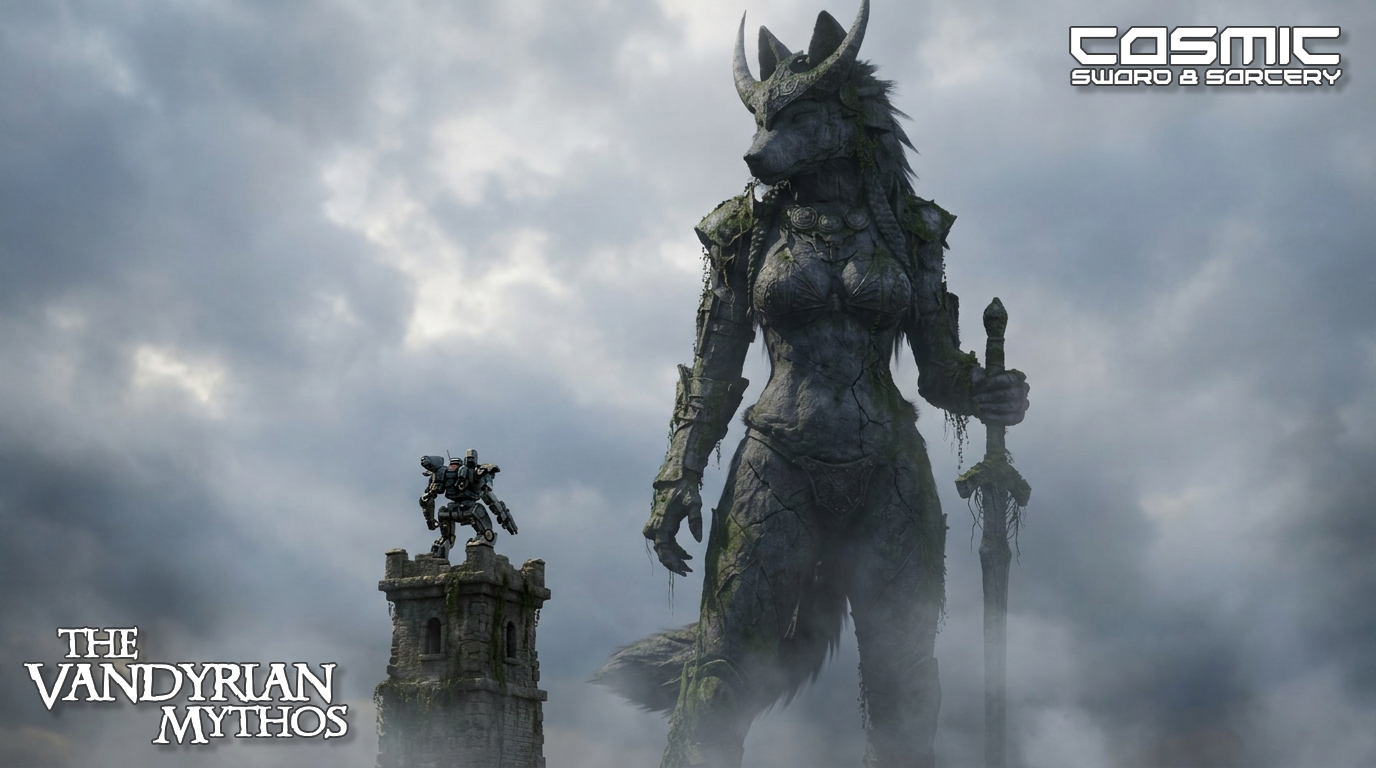


 Unlock with Patreon