
II. The Culling of King Thyun III. The Test of Enthybyrbis IV. The Founding of The Fearless V. The Fall of Valbara VI. Kai-Kha’Lybahn VII. A Hall of myth and legend VIII. The little Tymerian war IX. Trade Hell from Varduun X. That Cold Northern Attrition XI. Beware Bleak Mundaynum
This is how Roedon first learned itself—through song, tale, and voice echoing across the long dark. The Ro’Edyne Cycle is no chronology, but the living heart of the north: mythic, tragic, and half in jest, spun by bards before dates were kept and memory could thin. Here are the stories that made the folk, teaching them not what happened, but what it meant. If the written history is bone, this is the blood—singing out what survived the storm, and naming what was lost.
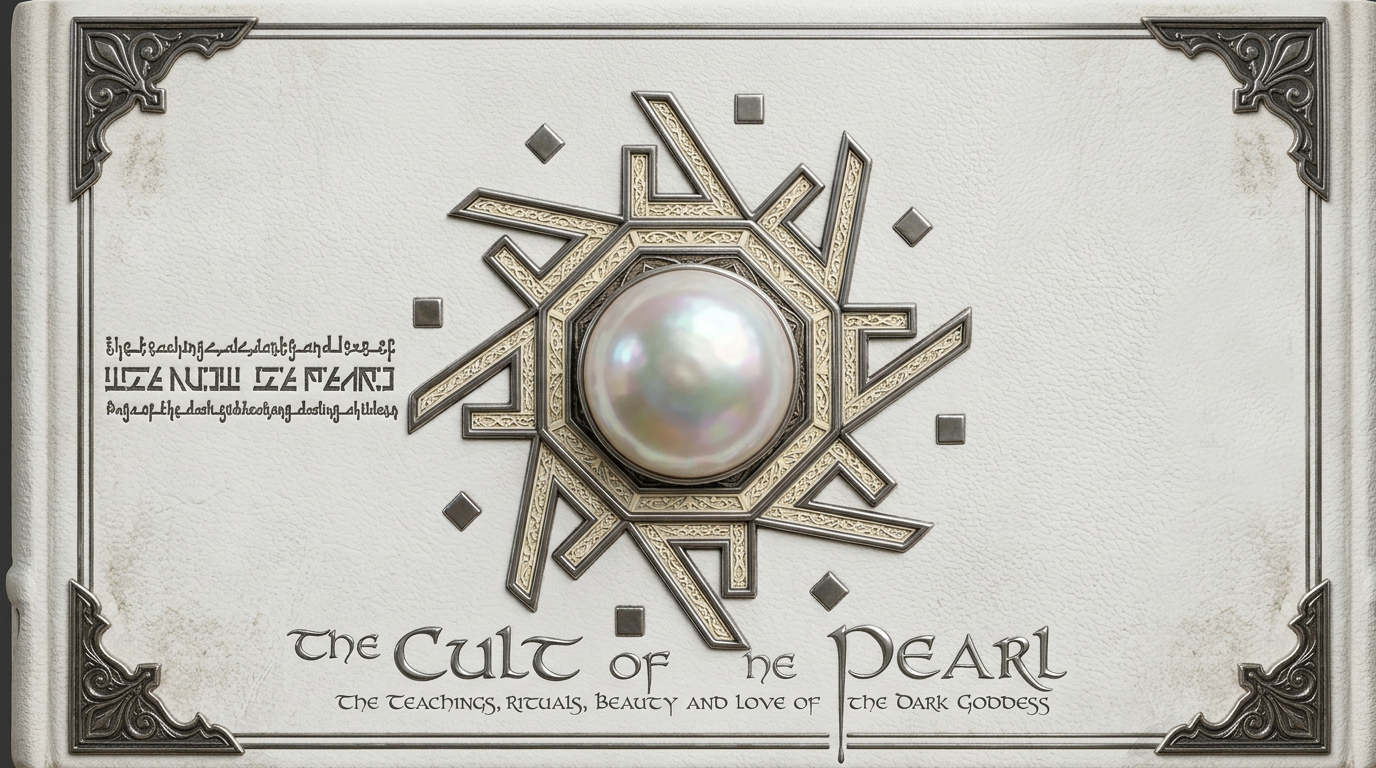
Among the many falsehoods spoken of our faith by those who neither know us nor seek to understand us, perhaps none is repeated more often than the claim that the Pearl is a religion of excess. Such creatures look upon our songs, our festivals, our marriages, our celebrations, and our temples and see only pleasure. Having mistaken the blossom for the root, they believe they understand the tree. They do not.
The Pearl does not worship pleasure. The Pearl worships life. Pleasure is merely one of life’s many gifts. So too are health, beauty, affection, companionship, creation, laughter, music, curiosity, fertility, learning, friendship, and love. None stand above the others. All are precious. All are worthy of celebration. A creature who denies every joy in pursuit of some imagined purity is no wiser than a creature who abandons every responsibility in pursuit of indulgence. Both have become lost. Both have wandered from balance. Both have forgotten that life is meant to be lived.
Many ask why our temples concern themselves with matters of the body. The answer is simple: because the body matters. The stars did not place us within these forms so that we might neglect them. A healthy body allows a healthy mind. A healthy mind allows a healthy spirit.
A healthy spirit is capable of wonder. Thus we encourage cleanliness, medicine, exercise, proper rest, nourishing food, and emotional well-being. Disease is not a moral failing, yet neither should it be romanticized. Sickness steals possibility. Illness shortens stories that might otherwise have continued for generations. Wherever disease appears, we seek to heal it. Wherever suffering appears, we seek to lessen it. Such work is not merely charitable. It is sacred.
To preserve health is to preserve potential, and potential is among the most precious gifts granted to any creature beneath the stars.
Likewise, we are often criticized for our teachings regarding desire. Those who know nothing of us imagine that we place no limits upon such matters. Yet our oldest doctrine is among the simplest ever spoken beneath the heavens.
Only the willing.
Always the willing.
Nothing beautiful blooms beneath coercion.
No creature may be forced into affection. No creature may be compelled into intimacy. No creature may be treated as property. Love given under threat is not love.
Desire extracted through fear is not desire. Affection purchased through violence is not affection. Such acts are barren things. Empty things.
They produce neither beauty nor joy and therefore possess no place within the teachings of the Pearl. For this reason our faith holds particular contempt for rapists, slavers, and those who prey upon the vulnerable.
They do not honor desire. They profane it. They take one of life’s greatest gifts and transform it into suffering. Such creatures often imagine themselves powerful. In truth they reveal only their own weakness. A creature capable of inspiring genuine affection has no need for chains, threats, cages, or force.
Nor do we share the beliefs of certain lesser faiths who seek to control desire through shame. There exist religions that teach pleasure is dangerous. Others insist beauty is temptation. Some demand celibacy from those unsuited to it. Others elevate suffering into a virtue and regard joy with suspicion. Such folk often spend their lives at war with their own nature and then wonder why they remain unhappy. We do not condemn them. We pity them. How tragic it must be to live beneath a sky filled with stars and spend every night staring at the ground. How unfortunate to inherit a body capable of affection and spend one’s life fearing it. How sorrowful to encounter beauty and respond with suspicion rather than gratitude.
The Pearl teaches a different path. We do not demand marriage, though we celebrate it. We do not require love, though we honor it. We do not insist upon children, though we cherish them. Every creature must walk their own road. Yet whatever road is chosen, it should be walked honestly and willingly. A life built upon fear is a fragile thing. A life built upon affection, dignity, health, and purpose endures.
Many of our critics hear such words and imagine that we advocate mindless indulgence. Once again they mistake the blossom for the root. The Pearl does not celebrate excess. Excess is merely imbalance wearing another face. Too little water brings thirst. Too much water brings drowning. Too little rest invites exhaustion. Too much rest breeds stagnation. Too little affection leaves the spirit hungry. Too much attachment may consume wisdom. The lesson is not denial, nor surrender, but harmony. A healthy garden is neither starved nor flooded. It receives what it needs and flourishes accordingly. So too should every creature strive to cultivate balance within body, spirit, and heart.
This is especially true regarding matters of fertility and desire, for many outside our temples misunderstand our teachings. A healthy young male blessed with vigor should not be taught shame for possessing vigor. A healthy young female blessed with beauty should not be taught guilt for possessing beauty. The Pearl does not regard vitality as a flaw requiring correction. We regard it as evidence of life flourishing as intended. Desire is no more shameful than hunger, curiosity, laughter, or wonder. What matters is not that such impulses exist, but how they are expressed. We teach responsibility rather than repression, self-knowledge rather than self-hatred, wisdom rather than denial. A creature who understands their nature is far less dangerous than one who spends a lifetime pretending not to possess one. Remember this well, beloved reader.
The Dark Goddess does not ask you to become something you are not. She asks only that you cease running from what is beautiful. Care for your body. Care for your spirit. Care for those entrusted to your affection. Create where you can. Heal where you can. Love where you can. Leave the world richer than you found it. Then, when your days are finished and your story joins the countless others beneath the night sky, you shall know that you walked in harmony with Her Ways. Look upward. The stars shine upon you no less than any other.
Children, pilgrims, wanderers, and beloved souls beneath the stars, there are many who spend their lives asking what the Dark Goddess desires of them. Some seek complicated answers. Some seek commandments. Others seek burdens. Yet I tell you now that Her Ways are far simpler than many suppose. The Night Above does not delight in suffering. The stars do not shine so that you may wither. The Pearl does not celebrate sacrifice for its own sake. Life is precious because it is rare, fragile, beautiful, and fleeting. Therefore one of the highest acts of devotion is not death, but thriving.
Your body is not an enemy to be conquered. It is not a prison. It is not a source of shame. It is the vessel through which you experience music, touch, beauty, affection, wonder, pleasure, friendship, and love. To care for your health is therefore not merely practical; it is sacred. Feed yourself well. Rest when weary.
Heal your injuries. Tend your illnesses. Seek comfort when wounded in body or spirit. A neglected body cannot fully appreciate the beauty of existence, just as a cracked cup cannot hold precious wine. Many creatures believe virtue is found in needless suffering. The Pearl teaches otherwise. We honor life by preserving it, strengthening it, and allowing it to flourish. Likewise, you must learn to love yourselves. This is among the most difficult lessons many shall ever learn. Countless folk speak kindly to strangers while reserving cruelty for their own reflections. They forgive others but deny themselves forgiveness.
They praise beauty in every creature they meet yet cannot see beauty within themselves. Such blindness is a tragedy. Look carefully beneath the stars and ask yourself why the heavens would create something entirely without worth. They would not. Every creature carries beauty. Every creature possesses potential. Every creature is deserving of dignity. If you cannot yet love yourself fully, then begin by showing yourself the same kindness you would offer a friend. In time, the rest shall follow. Love itself is among the greatest gifts known to the world, yet many misunderstand its nature. Love cannot be commanded.
It cannot be purchased. It cannot be demanded as tribute. It grows where it chooses and often appears where least expected. Some find it in a lifelong mate. Some in family. Some in friendship. Some in service to their communities. Some in devotion to art, music, scholarship, or purpose. The Pearl does not insist that all creatures love in identical ways. It teaches only that when genuine love appears, it should be cherished rather than feared. To love is to allow another creature to become part of your story. To be loved is to know that your existence has brought light into another life. Such things are among the greatest treasures any soul may possess.
Of all the blessings entrusted to us, however, none speaks more clearly of continuity than the miracle of creation itself. Whether one creates children, songs, buildings, stories, paintings, discoveries, or traditions, the act remains sacred because it allows a part of oneself to continue beyond the limits of a single lifetime. The Pearl has long celebrated the creation of families not because every creature must become a parent, but because parenthood represents one of the clearest expressions of life’s desire to continue. Every child born into the world is a declaration that hope remains stronger than despair. Every generation carries forward wisdom, memory, affection, and possibility. Through them, the story continues.
Yet continuity extends beyond blood alone. A teacher passes knowledge to a student. A mason leaves walls that shall outlive him. A musician teaches a song that survives centuries. A healer preserves lives that will touch countless others. Even the smallest kindness may echo through generations in ways no creature can foresee. Thus continuity is not merely reproduction. It is participation in the endless unfolding of existence. It is the decision to leave the world richer than one found it.
This is why the Pearl cherishes health, self-love, companionship, affection, family, and creation. These things are not separate virtues. They are branches of the same living tree. A healthy body nurtures a healthy spirit. A healthy spirit learns self-worth. Self-worth allows one to love. Love creates connection. Connection creates continuity. Continuity allows beauty to survive beyond the span of a single life. Thus the cycle turns beneath the stars as it always has.
When you stand beneath the night sky and feel small, remember this: the stars above are ancient beyond measure, yet they endure not because they cling desperately to themselves, but because they shine. So too should you. Care for yourselves. Care for one another. Create where you can. Love where you can. Heal where you can. Leave beauty in your wake. In doing so, whether your days be many or few, you walk in harmony with Her Ways. Look upward, beloved souls. The heavens are vast, but they are not empty. And neither are you.
V. ON EXCESS VI. ON THE SACRED NATURE OF THE FEMALE VII. ON THE SACRED NATURE OF THE MALE VIII. ON PEARLS IX. ON THE KINDNESS OWED TO MALES X. ON COMFORT XI. ON COMPANIONSHIP XII. ON THE FALSEHOOD OF SIN
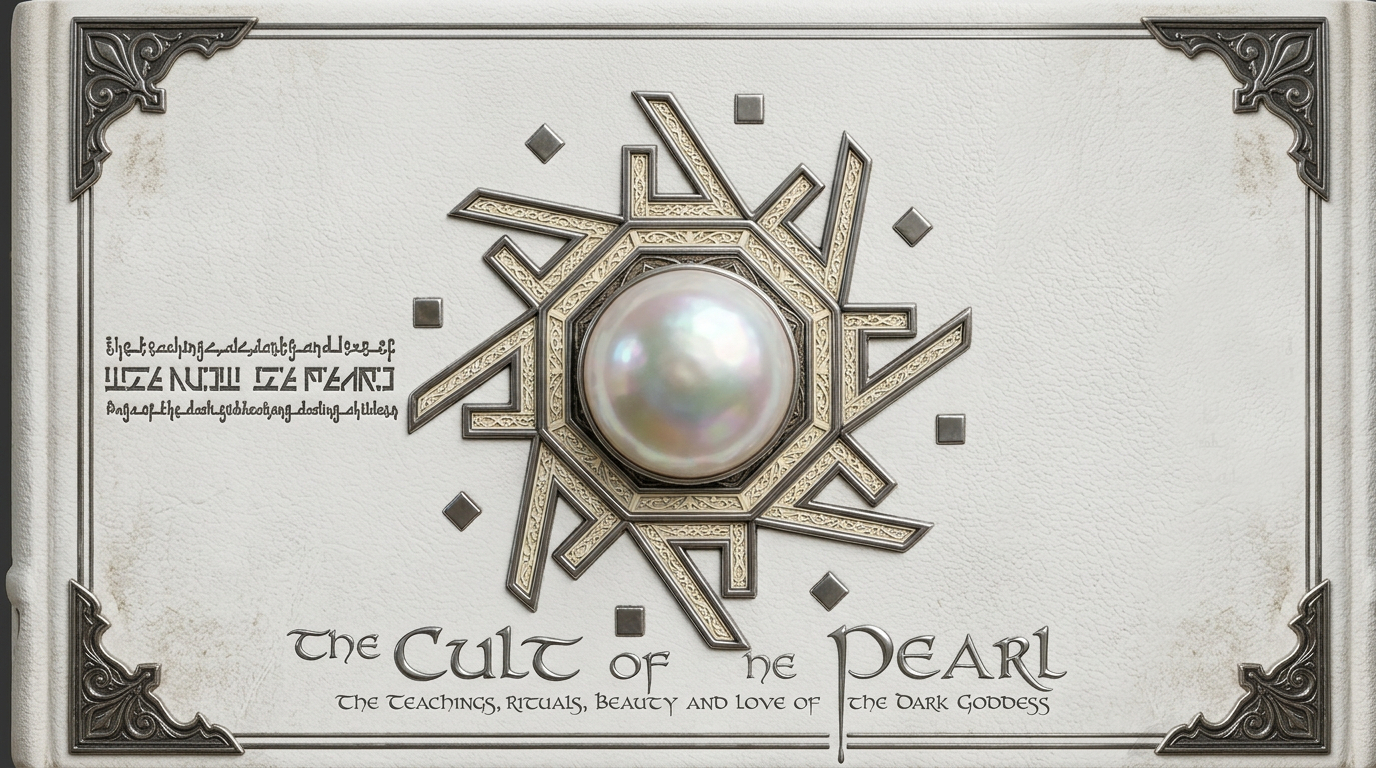
The Dark Goddess is not regarded as a jealous deity, ruler of creation, or divine monarch. Indeed, many among the faithful would object to describing her as a “being” at all, at least not in the manner one speaks of kings, spirits, saints, or the lesser gods of the world. To the followers of the Pearl, she is not a throne-bound authority issuing commands from some distant celestial court. Rather, she is understood as the Night Above, the endless sky stretching beyond the reach of mortal sight, the darkness between the stars and the stars themselves.
To speak of the Dark Goddess is often to speak not of a person, but of principles. Beauty, abundance, wonder, desire, pleasure, creation, potential, and connection are all counted among Her Ways, while the force that moves through these things—the unseen current which binds life to life and draws creatures together beneath the heavens—is called Her Magik. Thus the faithful concern themselves little with questions of cosmic origin or divine genealogy. Whether she created the world, whether she existed before the stars, or whether she shall endure after them are matters considered less important than understanding the world which presently exists and the blessings that may be found within it.
The Pearl teaches that all life possesses beauty. Not merely the beautiful, nor solely the fertile, strong, wealthy, or admired, but all life. Every creature possesses value. Every creature possesses potential. Every creature possesses a place beneath the stars. Because of this belief, the faith rarely speaks in terms of sin, corruption, or inherent unworthiness. Instead it speaks of neglect. Neglect of beauty. Neglect of affection. Neglect of joy. Neglect of companionship. Neglect of one’s own nature.
To the Pearl, suffering often arises not because life itself is flawed, but because creatures deny themselves that which nourishes the spirit. Thus the religion places great emphasis upon self-discovery, emotional honesty, companionship, celebration, and the pursuit of meaningful fulfillment. Followers are encouraged to seek lives that feel complete rather than lives that merely conform to the expectations of others.
Marriage is respected within the faith but is not required. Love is celebrated but is not required. The Pearl teaches that these things possess sacred value when they occur naturally and sincerely, yet it does not insist that all folk must pursue identical paths through life. Some become devoted mates. Others remain wanderers. Some raise large families. Others dedicate themselves to art, scholarship, music, exploration, or service. The faith does not demand that creatures love, marry, reproduce, or bind themselves to a single path. Rather, it teaches that beauty may be found in many forms and that fulfillment cannot be imposed from without. What matters is that one lives honestly, appreciates the wonders of existence, and allows life to flourish where it may.
The central principle of the faith is Acceptance. This concept appears so frequently within Pearl teachings that many outsiders mistakenly assume it to be the religion’s sole doctrine. Yet among the faithful, Acceptance is understood not as passive tolerance but as active recognition of value. Their oldest sayings summarize this philosophy in three simple declarations: We Accept. We Worship. We Adore. We accept beauty wherever it may be found. We worship life wherever it flourishes. We adore creation in all its forms. Such phrases appear engraved upon temple walls, embroidered into ceremonial garments, sung within hymns, and repeated throughout countless blessings offered by priests and priestesses. To many followers these words represent the purest expression of the Pearl’s worldview.
The faithful believe that every star in the sky shines equally upon all creatures. The Dark Goddess does not choose favorites. The stars do not discriminate. Neither should those who walk beneath them. This belief forms the foundation for the religion’s reputation for hospitality and openness. Travelers are often welcomed within Pearl temples regardless of origin.
Orphans, widows, laborers, merchants, artists, nobles, wanderers, and foreigners alike may find shelter beneath the symbol of the Pearl. Music, art, companionship, storytelling, affection, and celebration are considered sacred pursuits, not because they distract from life, but because they deepen one’s appreciation of it. A beautifully sung song, a well-crafted sculpture, a heartfelt embrace, a night spent among friends beneath a starlit sky—these are regarded as acts which bring the faithful closer to understanding Her Ways.
Among the countless sayings attributed to the Pearl, none is more common than the phrase “Look Upward.” It appears in prayers, temple inscriptions, hymns, and common conversation alike. To outsiders the expression may seem simple, even naive, yet to the faithful it encapsulates the entire philosophy of the religion. Every star above serves as a reminder that beauty exists even in darkness. Every point of light is proof that wonder may be found in the most distant places. Every creature, no matter how small, humble, lonely, or forgotten, shares the same sky. To look upward is therefore to remember that one is part of something greater than oneself—not through fear, obligation, or submission, but through participation in the endless beauty of existence. In this way the Pearl teaches that no creature truly walks beneath the heavens alone.
Among the elder courts of the Jantaran Empire, territorial conflict was seldom conducted in the naked barbarism favored by frontier dynasts or famine kingdoms. Open war was considered costly, vulgar, and beneath the refinement expected of ancient imperial bloodlines whose authority rested as much upon continuity, spectacle, and social leverage as military capability. Rivalries instead manifested through prolonged campaigns of influence, inheritance manipulation, marital intrusion, commercial strangulation, courtly seduction, and ceremonial humiliation.
Entire provinces changed hands not because banners were seized upon battlefields, but because the right lineage vanished beneath layers of engineered scandal, diluted succession, or deliberate social decay cultivated over generations. To lesser peoples this appeared theatrical, frivolous, or decadent. The Jantarans themselves understood it as warfare in its purest and most civilized form: conquest without the inconvenience of rubble. Entire regions could be conquered without a fortress ever falling. Among the high courts, influence itself became the battlefield, and the reshaping of dynasties became the preferred instrument of imperial expansion.
Outsiders, particularly lesser border cultures lacking the sophistication to recognize these systems, often mocked such struggles as little more than theatrical vanity. “The warfare of matrons,” some sneered, imagining perfumed chambers full of idle intrigue detached from the machinery of state. Such assumptions were fatal. Jantaran political conflict operated through lineage placement, arranged companionship, ceremonial dependency, trade leverage, fertility manipulation, and the slow redirection of succession itself. These campaigns unfolded over decades, sometimes centuries, with patient precision impossible among younger civilizations still addicted to crude violence. A house destroyed by war might recover within generations. A bloodline rewritten from within was erased forever.
The courts of Jantara became infamous for this invisible predation. A northern jackal duke might discover his halls increasingly occupied by soft-voiced eastern companions whose purpose extended far beyond pleasure. Merchant daughters, favored attendants, singers, scholars, and concubines arrived beneath banners of diplomacy or commerce while carrying the ambitions of entire dynasties behind painted smiles and warm silk. The thick seed of a rival lineage spilled quietly into noble chambers could alter inheritance chains more effectively than assassination ever could. Within a handful of generations, ancestral houses found themselves diluted, redirected, indebted, or entirely replaced while still believing themselves sovereign.
Though practiced most ruthlessly among the imperial courts, the competitive guile and nature of Elder Jantara’s ruling elite and their instinct flowed downward through every layer of Jantaran society. Even among lesser trade districts and caravan quarters, ambition rarely confined itself to coin alone. Humble merchants, dock factors, caravan masters, spice brokers, and inn-bound guild families all pursued advancement through the quiet acquisition of influence, companionship, fertility, and bloodline attachment. Beneath lantern glow and perfumed low-light halls, entire family lines were subtly redirected by the eager appetites of caravan lords whose wealth traveled farther than law or banner. Daughters were wed upward, heirs quietly fostered abroad, household names absorbed into more prosperous lineages, and provincial customs replaced generation by generation beneath the velvet disguise of opportunity and desire. In this manner, even the common arteries of Jantara became theaters of dynastic competition, where lust, status, and commerce intertwined so completely that many bloodlines vanished without ever realizing they had been conquered.
Trade itself became a weapon equal to bloodline infiltration. The eastern merchant courts mastered the art of dependency with terrifying elegance. Grain routes shifted. Luxury imports vanished. Debt contracts tightened around provincial rulers already softened by excess and prestige competition. The wealthiest houses learned to cultivate appetites before exploiting them. A rival noble weakened by vanity or indulgence often awakened too late to realize his retainers answered to foreign creditors, his heirs carried divided loyalties, and his household economy depended entirely upon outside interests. By the time open hostility emerged, the true conquest had usually concluded years earlier in private chambers and banquet courts.
The consequences of these subtle wars shaped the entirety of later Jantaran history. Whole dynasties disappeared not beneath siege engines, but beneath seduction, inheritance displacement, and carefully cultivated dependence.
Provinces changed character so gradually that many populations scarcely realized they had been conquered at all until their customs, rulers, and bloodlines no longer resembled those of their ancestors. Thus the elder empire developed its enduring reputation: not as a civilization of loud conquerors, but as one of patient devourers, where power entered through the bedchamber, the contract table, and the cradle long before it ever arrived with soldiers at the gate.
A second error, nearly as common as the first, is the tendency to reduce Elder Jantara to a caricature.
Modern observers, accustomed to the blunt simplicity of frontier kingdoms and the tribal romanticism favored by popular histories, often imagine the empire as little more than an unusually successful collection of desert clans. Such thinking reveals more about the observer than the civilization being observed. Elder Jantara maintained itself across roughly two millennia.
No society survives for such a span through luck, intimidation, or martial enthusiasm alone. Longevity of that scale demands administration. It demands social structures capable of surviving weak rulers. It demands institutions that function independently of individual personalities. Above all, it demands a population willing to participate in a shared system because they derive tangible benefit from its continuation.
The reader will therefore encounter throughout this volume a bewildering array of castes, mercantile orders, ritual obligations, inheritance traditions, companion classes, merchant-philosophers, civic fraternities, regional identities, bloodline privileges, legal distinctions, ceremonial ranks, and social contracts. This complexity is not evidence of decadence. It is evidence of sophistication. Elder Jantara did not endure despite these systems; it endured because of them. The empire’s customs were not ornamental curiosities draped upon an otherwise primitive society.
They were the machinery itself. What many modern commentators dismiss as eccentricity was often a carefully evolved solution to problems of governance, commerce, social stability, and regional integration developed over centuries. Perhaps most importantly, the reader must abandon the persistent fantasy that Elder Jantara was fundamentally a civilization of raiders. Raiders do not construct continental trade networks.
Raiders do not establish commercial standards recognized by neighboring kingdoms. Raiders do not produce legal traditions respected beyond their own borders, nor do they create institutions whose reputation survives centuries after their disappearance. The archaeological evidence paints a remarkably consistent picture: goods moved more frequently than armies, contracts carried greater weight than threats, and influence was measured through dependency rather than destruction.
The later jackal kingdoms would embrace plunder and slavery with almost embarrassing enthusiasm, but to project those habits backward onto Elder Jantara is historical malpractice. It is akin to mistaking a collapsed temple for the civilization that built it.
Indeed, one of the great ironies confronting any serious student of Jantaran history is that many of the empire’s descendants spent centuries destroying the very qualities that had once made their ancestors powerful.
They inherited symbols of authority while abandoning the disciplines that created authority.
They remembered domination and forgot competence.
They remembered prestige and forgot responsibility.
They remembered that Elder Jantara had stood above its neighbors, but gradually lost all understanding of how and why that position had been achieved.
In this respect, the empire’s imitators became the single greatest source of confusion surrounding its legacy, leaving modern scholars to sift through layers of self-serving mythology in search of the civilization that existed before the masquerade began.
There exists among modern historians a particularly stubborn falsehood: the belief that all things bearing the name Jantara belonged to a single continuous civilization. The persistence of this misconception has done more damage to our understanding of the ancient world than perhaps any other scholarly error presently in circulation.
Every generation seems determined to repeat it. Every generation inherits the same romantic nonsense from the last. The raider-kings, slavers, desert tyrants, and self-proclaimed heirs of later centuries wrapped themselves in Jantaran titles, adorned themselves with stolen symbols, and recited fragments of traditions they scarcely understood. In doing so they succeeded in convincing much of the world that they represented a continuation of Elder Jantara.
They did not.
The civilization examined within this volume was not merely another jackal kingdom among many. It was the only true empire the jackal peoples ever produced upon Vandyrus. Its roads endured for centuries. Its trade networks crossed entire regions. Its contracts remained binding long after the deaths of those who signed them. Neighboring cultures measured distance by its caravan routes and measured trust by its standards of oathcraft. What followed its decline were not successor states in any meaningful sense, but scavengers inheriting the bones of a giant.
The Later Union, Old Jantara, and the countless petty dynasties that claimed imperial descent preserved names, titles, heraldry, and fragments of ritual while steadily abandoning the disciplines and institutions that had made the original civilization remarkable. The archaeological record leaves little room for ambiguity. The deeper one digs beneath the accumulated debris of later centuries, the more obvious the distinction becomes. Elder Jantara traded where its imitators raided.
It cultivated dependence through commerce rather than chains. Its influence expanded through reputation, negotiation, and economic leverage rather than through the crude predations that later regimes mistook for strength. Time and again excavated records reveal the same pattern: sophisticated administration buried beneath layers of barbarism masquerading as inheritance. The descendants remembered the ceremonies while forgetting the purpose behind them. They preserved the masks and discarded the philosophy.
I make no effort within these pages to conceal my contempt for those later claimants.
They inherited monuments they could not build, institutions they could not maintain, and reputations they did not earn.
Their chroniclers filled libraries with fantasies of continuity while the evidence beneath their feet contradicted them at every turn.
They were grave robbers wearing imperial jewelry.
Their banners borrowed authority from ancestors whose accomplishments they neither matched nor comprehended.
If this assessment appears harsh, I invite the reader to spend a decade cataloging ruined caravan archives, deciphering fractured trade ledgers, and excavating the foundations of cities older than any surviving kingdom. The facts become difficult to ignore.
This volume therefore concerns itself with Elder Jantara alone: the civilization that actually existed behind the legends. Not the decadent husks that followed. Not the slaver principalities. Not the desert tyrants who proclaimed themselves heirs while reducing imperial memory to costume and theater.
Those regimes belong to their own histories and deserve whatever judgments posterity assigns them. Here, our concern is the empire itself—the first, the greatest, and the last of its kind.
No other Jantaran polity ever truly achieved empire. The evidence is overwhelming.