The Imperial Threshold
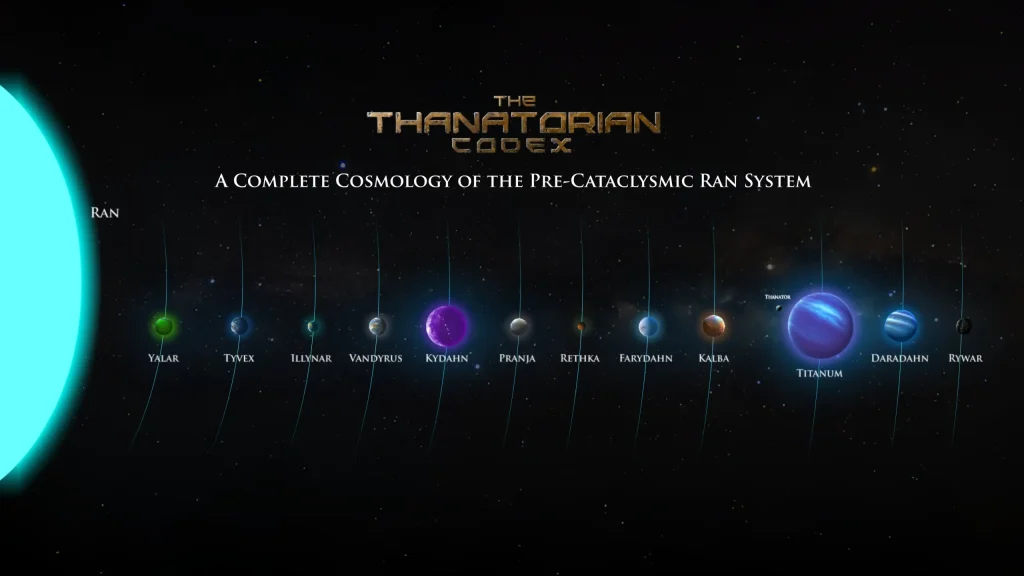
Vandyrus occupied a unique position within the greater imperial structure, not because it controlled the fleet yards that surrounded it, but because it hosted them. The orbital anchorages, drydocks, refit stations, and naval infrastructure belonged to the Empire itself. Their command chains ran outward toward the throne worlds and central administrations, not downward toward the planet below. Vandyrus supplied the raw materials, labor, and strategic location upon which those installations depended, while much of its native population observed the constant traffic of warships and industrial fleets from settlements that remained comparatively primitive by imperial standards. The contrast was striking: vast orbital industries of steel and administration hanging above a world where brick-built towns, tribal domains, and regional kingdoms continued much as they always had.
Within imperial records, Vandyrus was recognized as a threshold world. This designation arose not from its ecology, population, or cultural significance, but from its position within the practical machinery of imperial governance. Beyond Vandyrus the density of administration diminished noticeably. Patrol routes became less predictable. Communication delays lengthened. Supply networks became increasingly dependent upon local arrangements and regional initiative. Vandyrus therefore represented the last point at which the Empire could reliably assume the presence of its own institutions without substantial qualification. It marked the transition between direct administration and the vast frontier beyond. The importance of the world was therefore concentrated less upon its surface and more upon what surrounded it. The orbital fleet yards served as one of the Empire’s principal logistical and military staging grounds at the edge of consistently governed space. Administrators, quartermasters, naval officers, and commercial authorities passed through its stations in enormous numbers. To many within the bureaucracy, Vandyrus represented the final outpost of dependable order before the scattered frontier worlds beyond. Ships departing its anchorages moved outward into regions where imperial authority often became a matter of local interpretation rather than immediate enforcement.
On the surface, however, the imperial presence was remarkably limited. The Empire maintained strategic strongholds rather than comprehensive control.
The greatest of these was Ro’Edyne, whose administrative, commercial, and diplomatic functions made it the true center of imperial activity upon the planet. Far to the north stood Ataratoz, a secondary but significant center devoted to scientific inquiry, regional diplomacy, and the continued expansion of imperial understanding regarding the northern realms beyond Thuratahn. Together these enclaves provided the Empire with what it required: ports, intelligence, research, trade access, and stable points of contact. The vast majority of the planet existed outside direct administration. This arrangement reflected both necessity and intent. Vandyrus was an immense and hazardous world whose geography, climate, and ecosystems imposed severe practical limits upon expansion. Large portions of the planet remained difficult, dangerous, or economically unnecessary to occupy. The Empire had little interest in transforming the world into another core province when the resources it desired could be obtained through a comparatively small network of fortified administrative centers. The objective was utility rather than assimilation.
As a result, much of Vandyrus remained culturally distinct from the worlds that governed it. The populations of the interior and frontier regions were aware of imperial authority, traded with imperial interests, and occasionally served imperial purposes, yet rarely regarded themselves as participants in a larger imperial identity. The throne worlds existed as distant centers of power whose influence arrived through merchants, officials, explorers, and warships rather than through daily governance.
For many communities, the Empire was something encountered at ports, markets, and administrative compounds rather than something experienced as a continuous presence.