


The Last Harbor of Panultimir
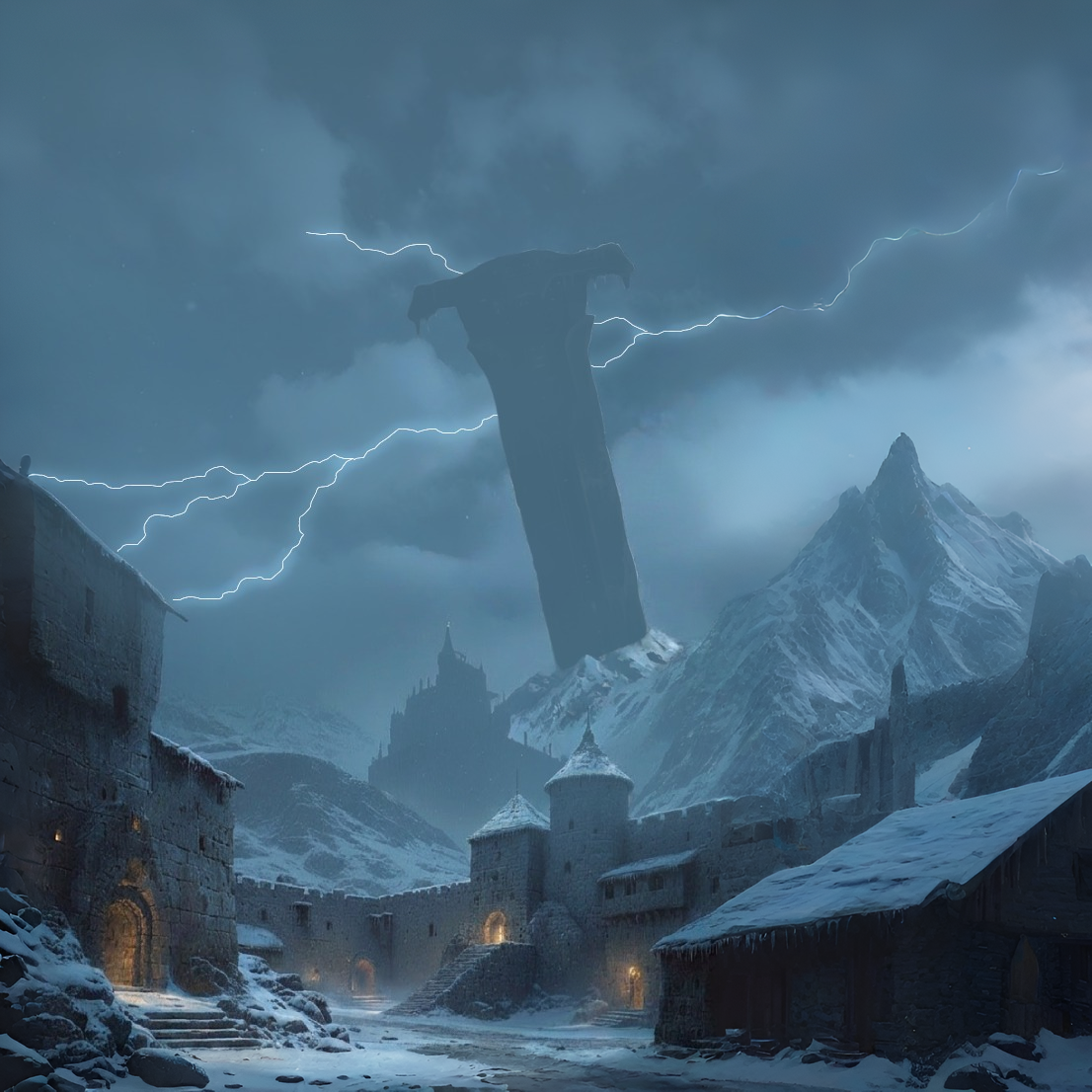
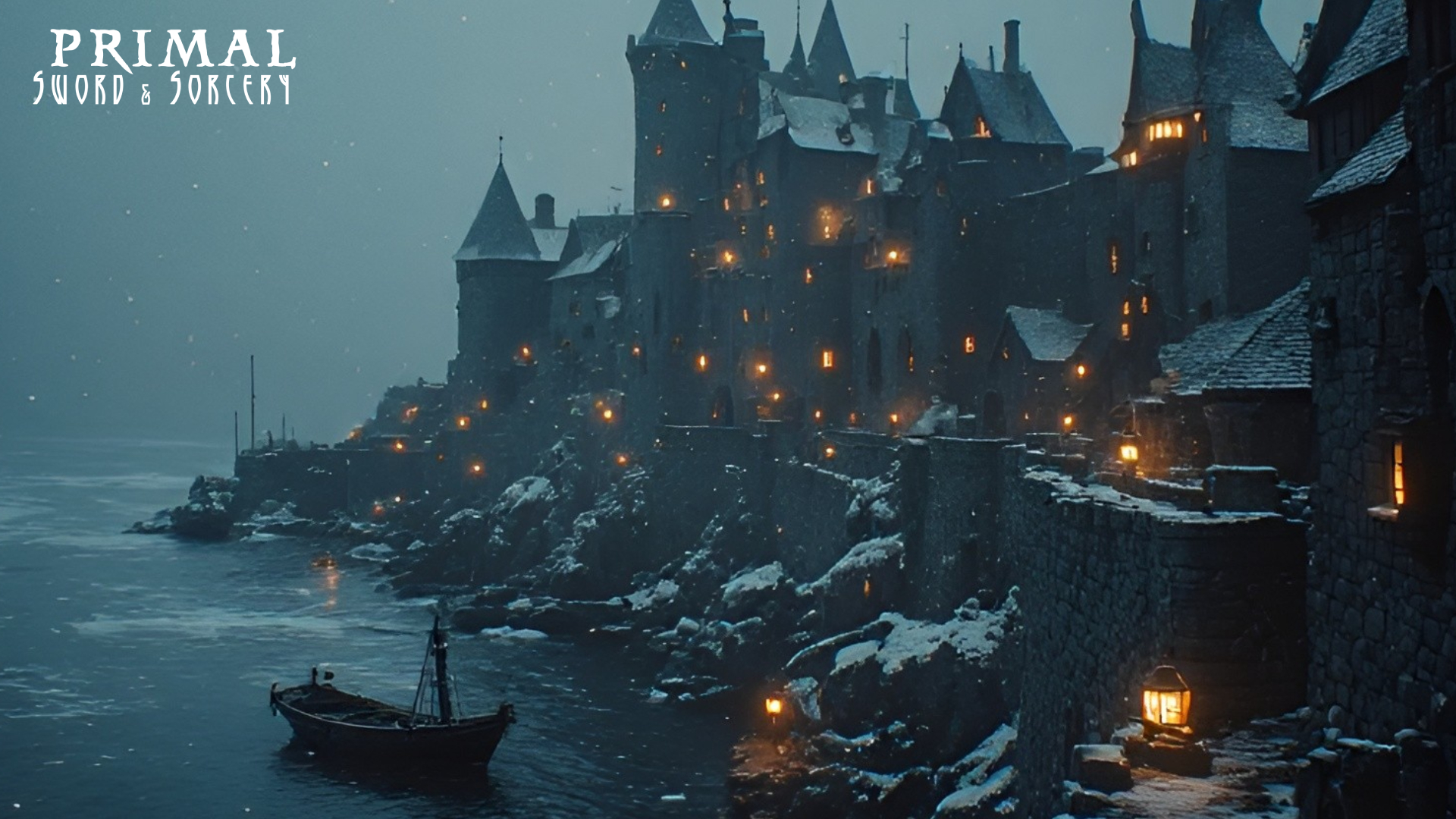
Upon the northern shores of Roedon, where grey seas gnaw endlessly at black stone and cold winds descend from the northern waters without mercy, stands the city-state of Prandwir.
To travelers arriving by ship, the city appears almost melancholy at first sight. Its towers are low compared to the mountain dens of Vulsa. Its walls lack the grand arrogance of southern kingdoms. Even its harbor seems restrained, more practical than beautiful. Yet those who dismiss Prandwir as merely another northern port quickly discover their error. Prandwir survives where greater kingdoms have vanished.
The city occupies the final living remnant of ancient Panultimir, once among the greatest realms of northern Roedon. Long before the modern age, before the sea consumed entire coastlines and before the Cataclysm shattered the world, Panultimir ruled a vast territory stretching far beyond the modern city’s borders. Today little remains of that old kingdom. The northern territories are gone beneath cold waters. Ancient roads terminate abruptly at sea cliffs. Watchtowers stand isolated upon lonely islands where once they overlooked inland valleys. Entire provinces survive only as names preserved in weathered manuscripts. The sea won that war long ago. Prandwir remains.
As a result, the modern city carries a peculiar character uncommon elsewhere in Roedon. It is neither fully living nor entirely historical. The past is never distant here. It protrudes from the ground in the form of shattered walls, collapsed foundations, forgotten crypts, and half-submerged causeways revealed during low tide. Fisherfolk routinely recover worked stone older than many kingdoms. Builders uncover buried chambers while digging cellars. Every generation discovers another fragment of Panultimir hidden beneath the streets. This strange inheritance has made Prandwir one of the most respected centers of archaeological study in northern Roedon.
Unlike the treasure hunters and tomb robbers who infest many ancient sites throughout the world, Prandwir’s scholars have cultivated a more disciplined reputation. The city’s modest university lacks the size and prestige of the great institutions of Vulsa, yet among historians, cartographers, archivists, and antiquarians it enjoys considerable respect. Scholars from across Roedon travel north to examine recovered inscriptions, compare regional histories, and debate the mysteries of the drowned kingdom. Officially, the university concerns itself with preservation and scholarship. Unofficially, nearly every student eventually develops a talent for climbing through forbidden ruins. The distinction between archaeologist, explorer, historian, smuggler, and thief becomes remarkably flexible in Prandwir. Many of the city’s greatest discoveries originated from expeditions that would appear highly questionable under stricter legal scrutiny. Ancient vaults, flooded crypts, collapsed keeps, forgotten tunnels, and offshore ruins have yielded relics that now occupy university collections. Entire academic careers have been built upon discoveries recovered from locations where ownership remains disputed, uncertain, or quietly ignored.
The citizens themselves rarely concern themselves with such details. If a forgotten ruin contains knowledge, someone ought to retrieve it. If that someone profits handsomely along the way, so much the better.
This practical attitude extends naturally into commerce. Prandwir possesses one of the finest natural harbors in northern Roedon, and its ports serve as the true heart of the city. Massive quantities of timber, fish, stone, ore, books, textiles, tools, and imported goods pass through its docks each season. The harbor never achieves the overwhelming scale of the southern trade capitals, yet it compensates through consistency. Ships arrive from Roedon, Vulsa, the western islands, and distant northern settlements. Merchant captains value Prandwir precisely because it remains dependable. The harbor masters are competent. The warehouses are secure. The tariffs are reasonable. The city rarely indulges in the sort of political madness that ruins trade elsewhere. As a result, commerce flourishes. Large stone quays extend into dark waters crowded by merchant vessels. Cranes creak against the skyline. Dockworkers shout through fog and rain. Seabirds circle overhead. Lanterns burn through long northern evenings while cargo moves steadily from ship to warehouse and back again.
Beyond the docks spreads the Grand Market, the economic center of the city. Merchants from across northern Roedon gather beneath canvas awnings and timber halls to trade goods from every corner of the known world. The atmosphere is less extravagant than the great southern bazaars but considerably more honest. Buyers come expecting fair prices rather than elaborate performances and most leave satisfied. One may purchase ship fittings, imported spices, historical manuscripts, navigational instruments, maps, furs, jewelry, preserved foods, and recovered relics from Panultimir itself. Entire streets specialize in antiquities. Some are genuine. Some are not. The experienced learn quickly.
Yet perhaps the city’s most charming institution emerges only after sunset. As evening descends and the larger market closes, Prandwir’s Night Market awakens. Smaller than its daytime counterpart but no less active, it occupies a tangled maze of narrow streets illuminated by lantern light and hearth fires. Here gather sailors, smugglers, students, explorers, fortune seekers, wandering scholars, musicians, storytellers, and traders dealing in goods too unusual or specialized for ordinary commerce. Rare books change hands here. Recovered artifacts appear without explanation. Maps are purchased quietly. Expeditions are organized over cups of hot wine. A traveler may spend an evening listening to a university lecturer debate history with a sea captain while an alleged tomb robber attempts to sell both of them a relic of questionable authenticity. No one finds this unusual. It is simply Prandwir.
Among all its accomplishments, perhaps the city’s most overlooked treasure remains its library. This is partly Prandwir’s own fault. The city exists in the shadow of Vulsa. To the east rise the legendary libraries of the Ornithane Lords, immense tower archives whose collections have become famous throughout the northern world. Their reputation is deserved. Their holdings are vast. Their scholars are formidable. Consequently, many travelers assume there is little reason to visit Prandwir’s library. This assumption is unfortunate. While Prandwir’s collection lacks the scale of Vulsa’s great towers, it compensates through focus, accessibility, and extraordinary regional specialization. The librarians have spent centuries gathering materials related to northern Roedon, Panultimir, maritime history, archaeology, cartography, and exploration. Records lost elsewhere often survive here. Forgotten journals rest upon shelves beside navigational charts centuries old. Entire collections of local history exist nowhere else in the world.
The librarians themselves maintain cordial relations with their counterparts in Vulsa, and books have traveled between the two regions for generations. Scholars exchange correspondence. Copies are commissioned. Treatises are shared. Knowledge crosses the sea more frequently than armies ever did. As a result, the library has become an unexpected bridge between Roedon and Vulsa, preserving a scholarly relationship that has endured through wars, dynastic changes, and shifting political borders. Visitors expecting some provincial archive often leave surprised. Many return. Some never leave.
For that is the peculiar strength of Prandwir. It is not the largest city. It is not the richest. It is not the most powerful. Its towers are modest. Its weather is miserable. Its skies are often grey and its stones perpetually damp. Yet beneath that humble exterior survives a city devoted to memory. A harbor built atop a graveyard of kingdoms. A market thriving among ruins. A university perpetually wandering into forgotten tombs. A library preserving voices long swallowed by the sea. Prandwir endures not because it escaped history, but because it learned how to live beside it. In the cold north of Roedon, that may be a greater achievement than empire itself.