Category: Lore

  • On the Matter of the Northern Ro’Edyne Kingdoms

    On the Matter of the Northern Ro’Edyne Kingdoms

    Thyuratahn, and Certain Geographical Misunderstandings

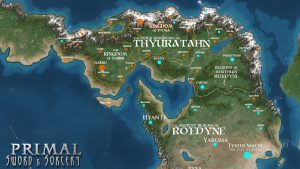
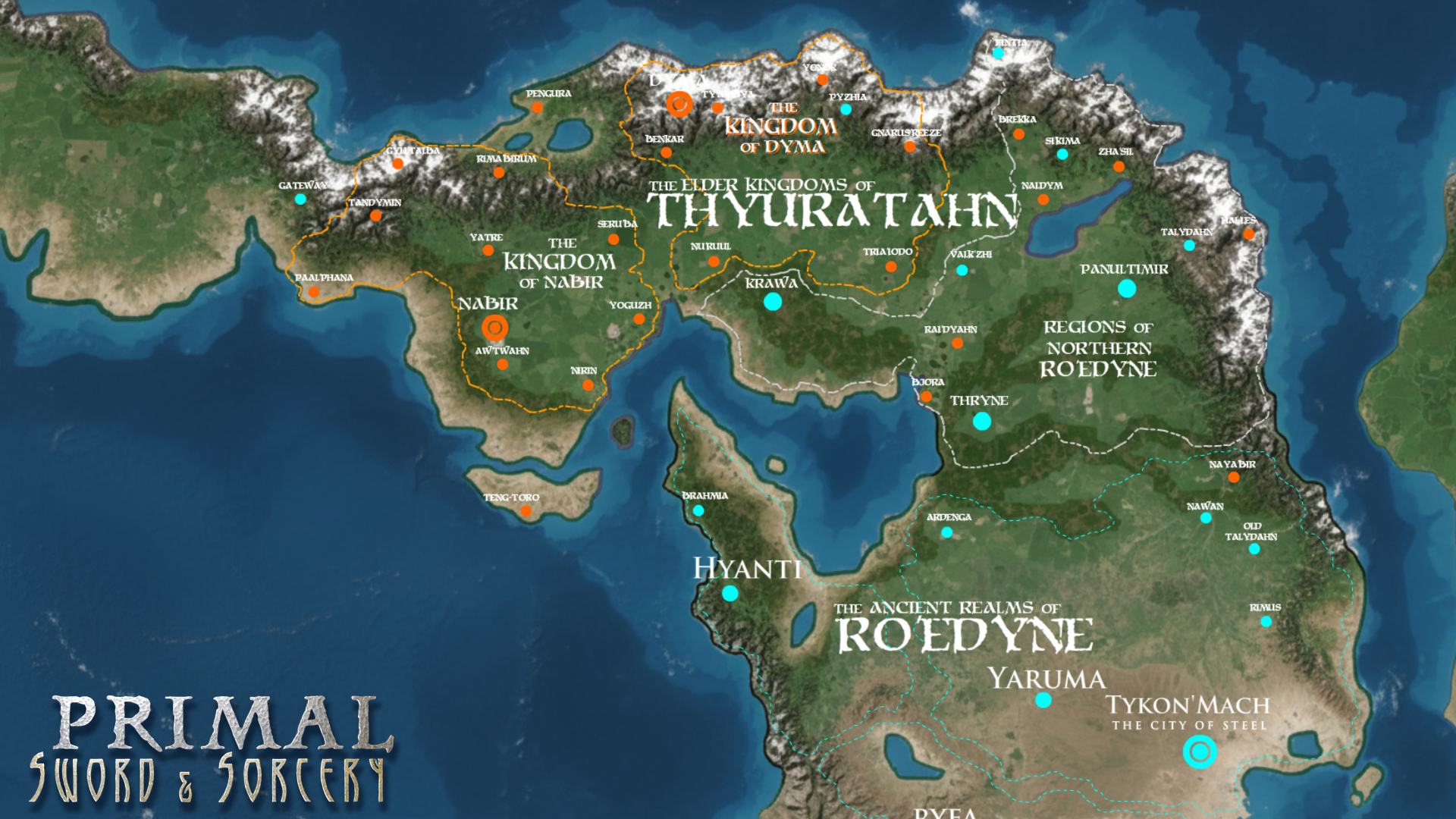
    It has long been the habit of popular history to treat all territories lying north of ancient Ro’Edyne as though they constituted a single region. Such simplifications are understandable. They are also responsible for a remarkable quantity of confusion. The surviving records indicate that the geography of the ancient north was considerably more complex than many modern readers appreciate, and a proper understanding of the distinction between Ro’Edon, Northern Ro’Edyne, and Thyuratahn is essential to any serious discussion of the period.

    The continent of Ro’Edon formed the heartland of the Ro’Edyne civilization. Its great cities, administrative centers, trade networks, cultural institutions, and population centers occupied territories extending from the southern regions to the northern frontier. Among these northern territories stood Panultimir, Thiryne, Krawa, and numerous lesser settlements whose importance increased substantially during the later periods of expansion. These lands constituted the northernmost regions of Ro’Edyne proper. They belonged to the civilization, operated under its institutions, and participated directly in its political and economic systems.

    This fact has occasionally produced the mistaken assumption that Panultimir itself formed part of Thyuratahn. The surviving evidence suggests otherwise. Panultimir was not a Thyuratahn city. It was a Ro’Edyne city facing Thyuratahn. The distinction may appear subtle at first glance, yet it is among the most important geographical realities of the ancient north. Panultimir occupied a frontier position at the very edge of ordinary Ro’Edyne administration. Beyond its northern approaches began territories increasingly dominated by independent kingdoms, mountain domains, clan territories, and frontier states whose histories, while frequently intertwined with those of Ro’Edyne, remained their own.

    Beyond the northern frontier stretched the immense territorial expanse known as Thyuratahn. Modern descriptions often refer to it as a landbridge, though such terminology occasionally understates its scale. Thyuratahn was not merely a corridor connecting one region to another. It was a vast subcontinental territory containing its own kingdoms, cities, trade routes, cultural traditions, and political powers. The Kingdom of Nabir, the Kingdom of Dyma, and numerous lesser realms occupied substantial portions of these lands. During many periods they maintained close relations with Ro’Edyne. During others they pursued their own ambitions entirely independent of southern concerns. Their histories intersected frequently with those of Ro’Edyne, but they should not be mistaken for provinces of Ro’Edyne itself.

    Panultimir consequently occupied a position of unusual importance. Virtually every major route connecting Ro’Edyne to Thyuratahn passed through or near the northern city. Merchants traveled through its gates. Diplomats conducted negotiations there. Military expeditions assembled within its districts. Explorers departed from its roads. Reports arriving from the northern kingdoms often reached the archives of Panultimir long before they reached any other repository within the southern territories. Over time the city became not merely a frontier settlement but the principal point of contact between two distinct worlds.

    The situation becomes more complicated still when one considers that Thyuratahn was itself not the ultimate northern frontier. Surviving records speak of additional northern routes extending beyond the Elder Kingdoms toward the distant realms of Yiritahn and Londorais. These territories occupied the far northern reaches beyond the conventional limits of settlement and administration. Contemporary descriptions portray immense mountain ranges, isolated strongholds, severe climates, and populations whose customs frequently appeared strange even to seasoned travelers. Many accounts describe journeys measured not in days or weeks, but in seasons.

    Particularly prominent within these northern traditions are references to the Elderbeards, ancient lords of the wolf clans who occupied portions of the high mountain territories beyond the settled frontiers. While later folklore frequently surrounds these clans with exaggeration, their repeated appearance throughout otherwise unrelated records suggests a political and cultural significance that should not be dismissed lightly. Surviving accounts describe powerful mountain domains, hereditary clan territories, and strongholds perched amidst some of the most inaccessible terrain known to the ancient world. Even during periods of imperial strength, these northern realms appear to have retained a distinct identity.

    The eventual loss of Thyuratahn transformed the geography of the north beyond recognition. Most evidence suggests that substantial portions of the region disappeared prior to the Coming of Doom itself, though the exact sequence of events remains uncertain. Whatever the cause, the consequences proved profound. Routes that had once connected kingdoms vanished. Settlements became isolated. Trade networks collapsed. Entire regions disappeared beneath the sea, surviving only through surviving records, fragmentary maps, and the occasional archaeological discovery.

    For this reason, modern readers must exercise caution when interpreting references to the ancient north. The geography visible today bears only partial resemblance to the geography known to the Ro’Edyne. Panultimir stood not within Thyuratahn but before it. Thyuratahn was not a province but a vast northern world unto itself. Beyond Thyuratahn lay still greater frontiers whose histories remain only partially understood. The ancient maps reveal a northern landscape considerably larger, more connected, and more complicated than the modern world might suggest.

    Fortunately for historians, the records have proven somewhat more durable than the land itself.
  • On the Matter of the Panultimir Archives

    On the Matter of the Panultimir Archives

    and Their Preservation Within Prandwir

    The question of why so substantial a collection of Panultimir records resides within modern Prandwir rather than among the scattered remnants of the ancient northern capital itself is hardly new or even uncalled for. The inquiry is understandable. To many observers, particularly those encountering the collections for the first time, the arrangement appears unusual. The explanation, however, is considerably less mysterious than popular speculation occasionally suggests.

    The decision was entirely deliberate. During the early consolidation of the northern kingdoms, it became apparent that a substantial portion of the surviving records recovered from the Panultimir region remained vulnerable to deterioration, theft, weather damage, and the various forms of enthusiastic mishandling frequently practiced by treasure hunters who mistake archives for vaults. Following consultation with regional scholars and archivists, the Crown ordered that surviving collections judged of exceptional historical value be transferred to secure repositories within Prandwir, where suitable facilities existed for their preservation, cataloguing, and study. While the policy was not universally celebrated at the time, subsequent centuries have demonstrated its wisdom with considerable clarity.

    Thousands of documents, maps, correspondence records, census accounts, land charters, trade agreements, expedition journals, military inventories, linguistic studies, and historical chronicles survived that might otherwise have vanished forever. Modern understanding of northern history depends heavily upon these collections, many of which exist nowhere else. Entire periods of regional development would remain poorly understood without their preservation. Numerous settlements known today only through archival references would likely have disappeared from historical memory altogether had their records not been transferred and maintained.

    The transfer has occasionally attracted criticism from those who maintain that such materials ought properly to remain nearer their place of origin. While such sentiments possess a certain romantic appeal, one may reasonably observe that documents preserved within secure archival repositories demonstrate a significantly greater tendency toward long-term survival than documents left unattended beneath collapsing ruins exposed to weather, vermin, opportunistic collectors, and the passage of centuries. History has repeatedly demonstrated that preservation and sentiment are not always compatible objectives.

    A more curious criticism emerges periodically from certain foreign commentators, particularly among portions of the Tymere-speaking world. According to this school of thought, the preservation of the Panultimir Archives constitutes evidence of northern insecurity. The argument generally proceeds from the assumption that Roedon possesses little meaningful history of its own and therefore seeks legitimacy through exaggerated attachment to ancient records. This interpretation has never enjoyed significant popularity among those who have actually visited the archives. The position becomes difficult to maintain while standing amidst several hundred thousand surviving documents, many of which predate entire contemporary states.

    His Majesty has expressed particular dissatisfaction with such claims over the years, regarding them as examples of ignorance elevated to confidence. While royal language on the subject is traditionally more colorful than is appropriate for archival publication, the underlying sentiment remains understandable. The Kingdom of Prandwir did not preserve the Panultimir Archives because Roedon lacks history. The Kingdom preserved the Panultimir Archives because Roedon possesses history, and a considerable quantity of it besides.

    Indeed, one might reasonably suggest that preserving records remains among the more reliable methods of demonstrating the existence of a historical tradition. The alternative approach, favored by some critics, appears to involve dismissing documents without reading them, a methodology whose scholarly value remains difficult to assess. While such practices may save time, they rarely improve accuracy.

    It should further be noted that the archives themselves constitute only a fraction of the surviving historical material associated with the ancient north. Archaeological remains, recovered inscriptions, architectural foundations, road systems, harbor works, fortifications, and numerous secondary collections continue to provide valuable information regarding the development of the region across successive ages. The Panultimir Archives merely represent the largest surviving concentration of such material and therefore attract a disproportionate share of attention.

    Consequently, when one encounters the assertion that Roedon possesses no history, it is generally advisable to inquire whether the speaker has consulted any of the available records. The answer frequently proves illuminating.

    Should uncertainty persist, the archives remain open to qualified scholars, visiting researchers, and any sufficiently determined individual willing to spend several months examining the evidence firsthand. The collection occupies multiple wings, several annexes, and an alarming quantity of shelf space. Those intending a comprehensive review may therefore wish to bring provisions.

  • On the Matter of Civilizational Archives

    On the Matter of Civilizational Archives

    Imperial History, and the Difficulties Therein

    It has long been the habit of popular history to present the matter as settled. Such confidence is admirable, though not always justified.
    Closer examination of the surviving evidence reveals a situation rather more intricate than many introductory accounts would suggest. The common assumption holds that civilizations succeed one another in an orderly progression. A kingdom rises, flourishes, declines, and is replaced by another. That successor in turn experiences a similar fate, and thus history proceeds neatly from one age to the next. Such a model possesses undeniable appeal. It is easily taught, readily understood, and accommodates the limited patience of most audiences.

    Unfortunately, the surviving records suggest that reality rarely exhibits the same consideration.


    The difficulty emerges from the increasing recognition that many civilizations once believed entirely separate appear to have existed concurrently. Histories that seem isolated when examined individually reveal unexpected connections when compared against one another. Archives recovered from distant regions frequently reference events, institutions, and peoples described elsewhere under entirely different names. Diplomatic correspondence preserved in one collection occasionally aligns with military records preserved in another. Trade manifests found thousands of leagues apart sometimes describe the same commodities moving through the same networks during the same periods. Such discoveries have become increasingly difficult to dismiss as coincidence. This realization has complicated many traditional assumptions regarding chronology. A kingdom considered unimaginably ancient within one historical tradition may prove contemporary with another civilization entirely unknown to earlier scholars.

    Likewise, cultures once believed unique to a particular region occasionally reveal striking parallels elsewhere. The result is an emerging awareness that history resembles less a sequence of isolated stories and more an immense tapestry whose individual threads cross and reconnect in ways not immediately visible from a local perspective. The problem becomes especially apparent whenever attempts are made to assemble histories extending beyond regional boundaries. A scholar concerned solely with Ro’Edon may construct a reasonably coherent account of local events.

    Difficulties emerge when those records are compared against collections maintained elsewhere. Calendars differ. Dynastic systems differ. Methods of dating differ. Entire historical periods appear under multiple names depending upon which source one consults. Events believed separated by centuries occasionally prove contemporary, while incidents traditionally grouped together sometimes reveal substantial chronological separation. What initially appears contradictory often proves merely incomplete. For this reason, increasing numbers of historians have adopted the convenient expression “Vandyrian Archives” when discussing the collective body of surviving historical material. The phrase should not be interpreted as referring to any single institution, repository, or collection. Rather, it serves as a useful description for the vast assortment of records preserved throughout the known world. The Archives of Panultimir, the collections maintained within Prandwir, surviving imperial repositories, monastic libraries, merchant registries, royal vaults, archaeological records, and countless lesser collections all contribute fragments to a larger historical inheritance whose full extent remains uncertain.

    It should therefore be understood that references to Vandyrian Archives do not imply the existence of some singular grand library gathering all knowledge beneath one roof. Such notions belong more properly to speculative conversation than established scholarship. Historians occasionally indulge in discussions regarding what might be learned were every surviving collection assembled and examined together, though such conversations generally produce additional questions rather than definitive answers.


    Nevertheless, the concept remains valuable. The records preserved within Panultimir do not exist in isolation. The collections maintained within Prandwir do not exist in isolation. Nor do the archives of distant kingdoms, forgotten principalities, ancient monasteries, or vanished courts. Each preserves only a fragment of the larger historical record. Yet when viewed collectively, they increasingly suggest that the histories of many peoples may form part of a broader civilizational continuum extending far beyond the limits of any single nation or age.

    Readers should not be discouraged if this appears excessively complicated. Historians have reached much the same conclusion. Indeed, one increasingly suspects that the greatest obstacle facing modern scholarship is not a shortage of evidence, but rather the growing abundance of it. Each new discovery seems less inclined to resolve existing questions than to reveal the existence of additional ones. For the present, scholars continue their efforts with what patience they can muster. New collections are recovered. Old records are reexamined. Fragments once dismissed as irrelevant are compared against materials from distant archives. Slowly, and often reluctantly, a larger picture begins to emerge. Whether future generations will possess a clearer understanding of these matters remains to be seen.

    For the moment, however, we continue sorting the shelves.


    from The Panultimir Archives

    A singular grand library gathering all knowledge beneath one roof.
  • The Archives of Panultimir

    The Archives of Panultimir

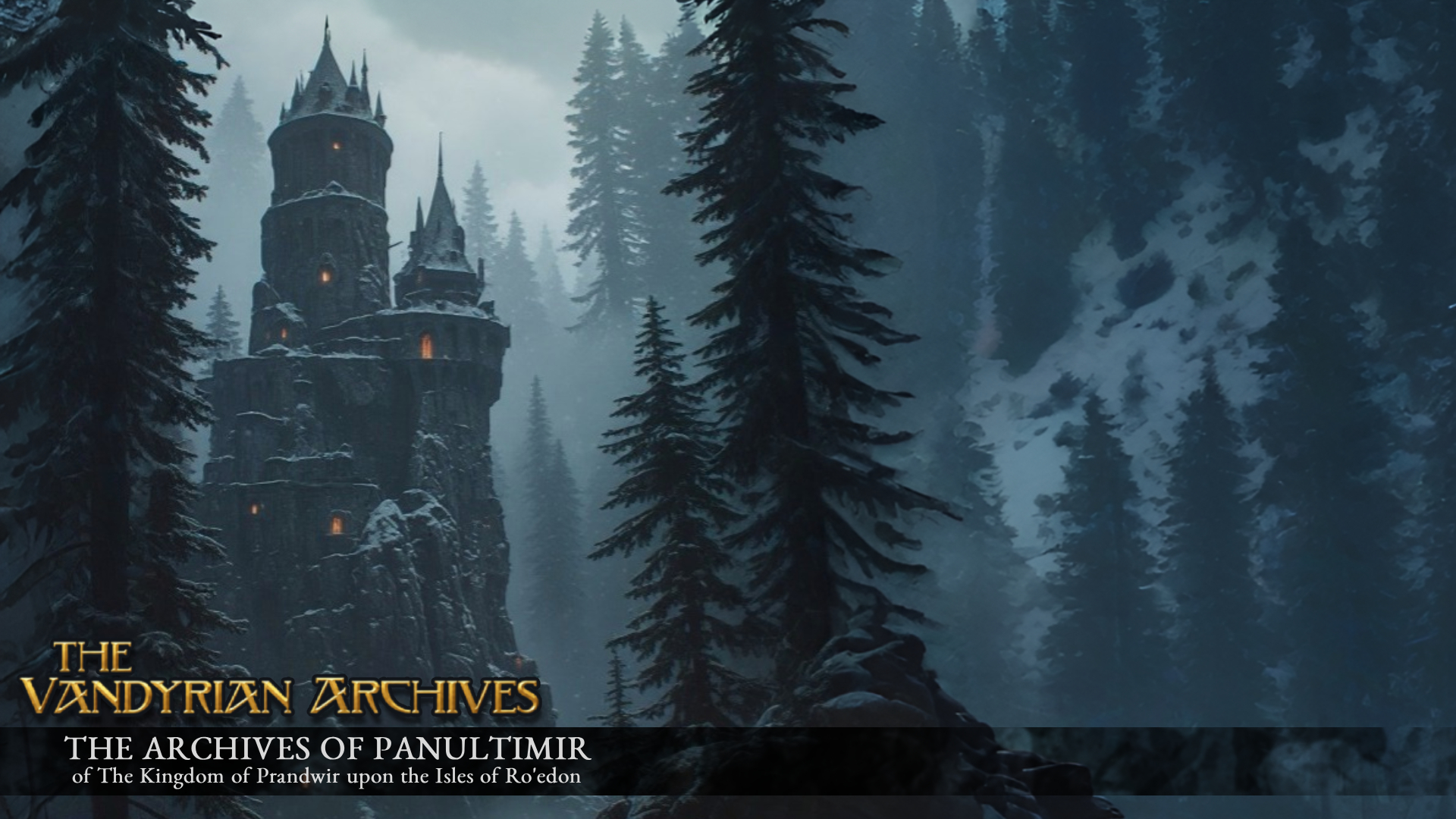
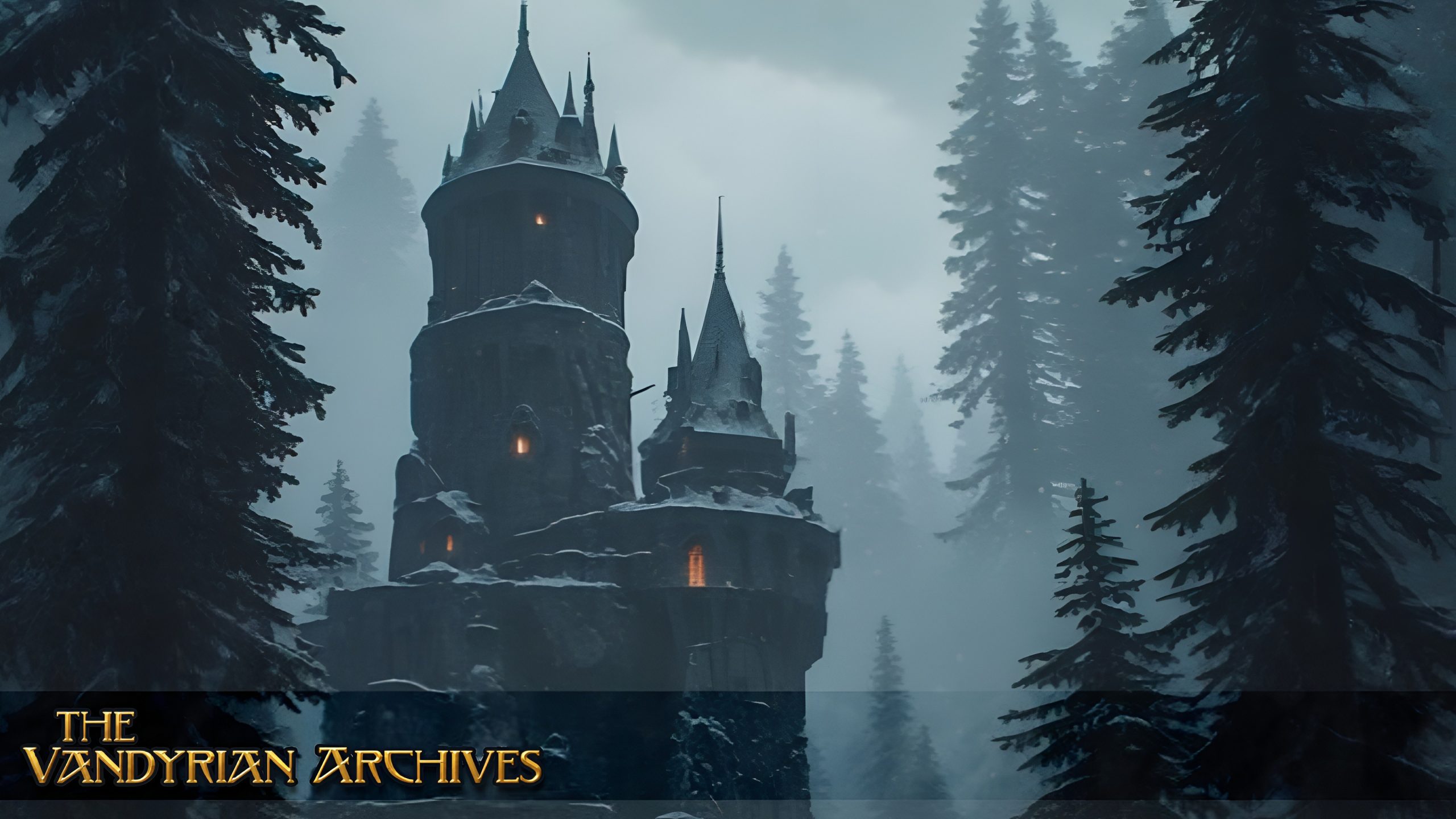
    Among the many repositories of knowledge maintained throughout the northern realms, few possess a reputation equal to that of the Archives of Panultimir. Situated within the upland mountains of the Kingdom of Prandwir upon the Isles of Roedon, the institution occupies a location as unusual as its history. Unlike the larger archival complexes of the southern cities, the Panultimir Archives stand isolated among high ridges, ancient forests, and winding mountain roads that become increasingly difficult to traverse during the winter months. Visitors frequently remark upon the remoteness of the site, though this isolation has proven one of the principal reasons for its survival.
    The origins of the structure remain the subject of ongoing debate. Archaeological examination suggests that portions of the foundation substantially predate the modern kingdom itself. Most scholars believe the central tower around which the archives were later constructed originally served as a military installation of some form.

    Whether this installation functioned as a watchtower, signal station, frontier fortification, or administrative outpost remains uncertain. The surviving foundations are consistent with several possibilities, while the loss of many contemporary records has prevented a definitive conclusion. What appears beyond dispute is that the site occupied a position of strategic significance during the final centuries preceding the Coming of Doom.


    The destruction of the ancient world altered the northern landscape profoundly. Entire regions vanished. Trade routes disappeared. Settlements were abandoned or destroyed. Yet the upland position of the future archives spared it from much of the devastation that afflicted lower territories. While the surrounding civilization collapsed, the mountain stronghold endured. Damaged but standing, isolated but accessible, the structure remained among the few surviving installations capable of supporting long-term occupation during the difficult centuries that followed.
    As northern society gradually recovered, the site acquired a new purpose. The practical advantages that had once recommended it as a military position now recommended it equally for preservation. Its elevation offered protection from flooding. Its remoteness discouraged looting. Its stone construction provided unusual durability.

    Most importantly, it stood upon stable ground at a time when much of the surviving population remained preoccupied with the immediate demands of survival. The earliest custodians of the collection recognized these advantages and began transferring surviving records recovered from the surrounding regions into the complex. Over subsequent centuries the institution expanded repeatedly. Additional wings were constructed. Storage vaults were excavated into the surrounding stone. Cataloguing chambers, reading halls, preservation facilities, and secure repositories gradually transformed the old stronghold into one of the most important historical collections in the north.
    Although modest in size compared to the vast archival complexes maintained elsewhere within the Kingdom of Prandwir, the Panultimir Archives acquired a distinct reputation owing to the unusual character of their holdings. Many collections preserve copies. The Panultimir Archives preserve originals.

    The institution houses surviving charters, census records, correspondence collections, trade accounts, administrative ledgers, maps, legal documents, military records, and countless other materials associated with the ancient northern territories. In numerous cases these documents represent the earliest surviving versions known to scholars. Entire fields of northern historical research depend heavily upon collections preserved within the archives.
    Without them, substantial portions of Roedon’s pre-cataclysmic and early post-cataclysmic history would remain poorly understood.


    The archives also serve as a physical reminder of continuity across the ages. More than seven thousand two hundred years have passed since the Coming of Doom. Kingdoms have risen and fallen. Dynasties have appeared and vanished. Borders have shifted repeatedly. Yet the old mountain stronghold remains occupied. Though altered extensively by generations of archivists, builders, scholars, and custodians, portions of the original structure continue to form the heart of the complex. Visitors entering the oldest halls frequently pass through stonework whose origins may extend to the final centuries of the ancient world itself.

    Today the Archives of Panultimir function as both historical repository and scholarly institution. Researchers from throughout the northern realms travel to the site in pursuit of records unavailable elsewhere. Historians, genealogists, linguists, archaeologists, and chroniclers regularly consult its collections. While its remote location continues to present logistical challenges, many archivists regard the isolation as a small price to pay for seven millennia of uninterrupted preservation. Whether viewed as a library, a fortress, a monument, or a relic of another age, the Archives of Panultimir remain among the most enduring institutions of post-cataclysmic Roedon. Their survival stands as a testament not merely to the durability of stone, but to the determination of successive generations who understood that civilizations endure only so long as their memory does.


    from The Panultimir Archives

  • Book I: High Thanator:
The Age of Dreams

    Book I: High Thanator: The Age of Dreams

    Book I: High Thanator: The Age of Dreams


    Followed by

    Vol 1: The Post Civilization Age
    Vol 2: The Reign of Dread
    Vol 3: The Fall Into History
    Vol 4: Darkness of The Long Decline
    Vol 5: Coming of A Feral Age

    Vol 1: Dawn of the Age of Terror
    Vol 2: The Nightmare of Civilization
    Vol 3: Lost Empire
    Vol 4: Misty Tales & Lost Cycles
    Vol 5: The Jungle Moon of Terror


  • NEW SERIES: “…From the Ornithane Hall”

    NEW SERIES: “…From the Ornithane Hall”


    These are The Chronicles that anchor a world.

    Each volume, whether written by calloused hand or ink-stained scholar, serves as a stone laid in the long road from myth to memory. Here, the passing of empires is recorded without flourish; the migrations, conflicts, bargains, and betrayals of peoples inscribed in forms meant to endure, not seduce. These books are not the domain of poets, nor the refuge of folk legend. They are a reckoning—plainspoken, methodical, and relentlessly grounded in what endures after rumor fades.

    is proud to present:

    The Histories and Accounts,
    Myths and Legends,
    Chronicles and logs
    of long lost misty tales in the oral,
    elder crystalline
    and high psychic tradition, All…..

    An Ongoing series of Radial Lore:


    HISTORIES & ACCOUNTS

    From the ancient Librarium archives of the realms:
    • THE HISTORIES OF ROEDON


    LEGENDS & LORE

    From the Vaults of The Ornithane Halls


    COMING SOON

    • THE CYPTIS/ARCODICES
    • BLACK BOOKS OF THE ORNITHANE HALL
    • THE BESTIARY OF DREAD THANATOR
    • RELICS
    • MAPS
    • ALCHEMIES
    • MYSTERIES
    • TALES

    &
    • TERRORS


    RELATED

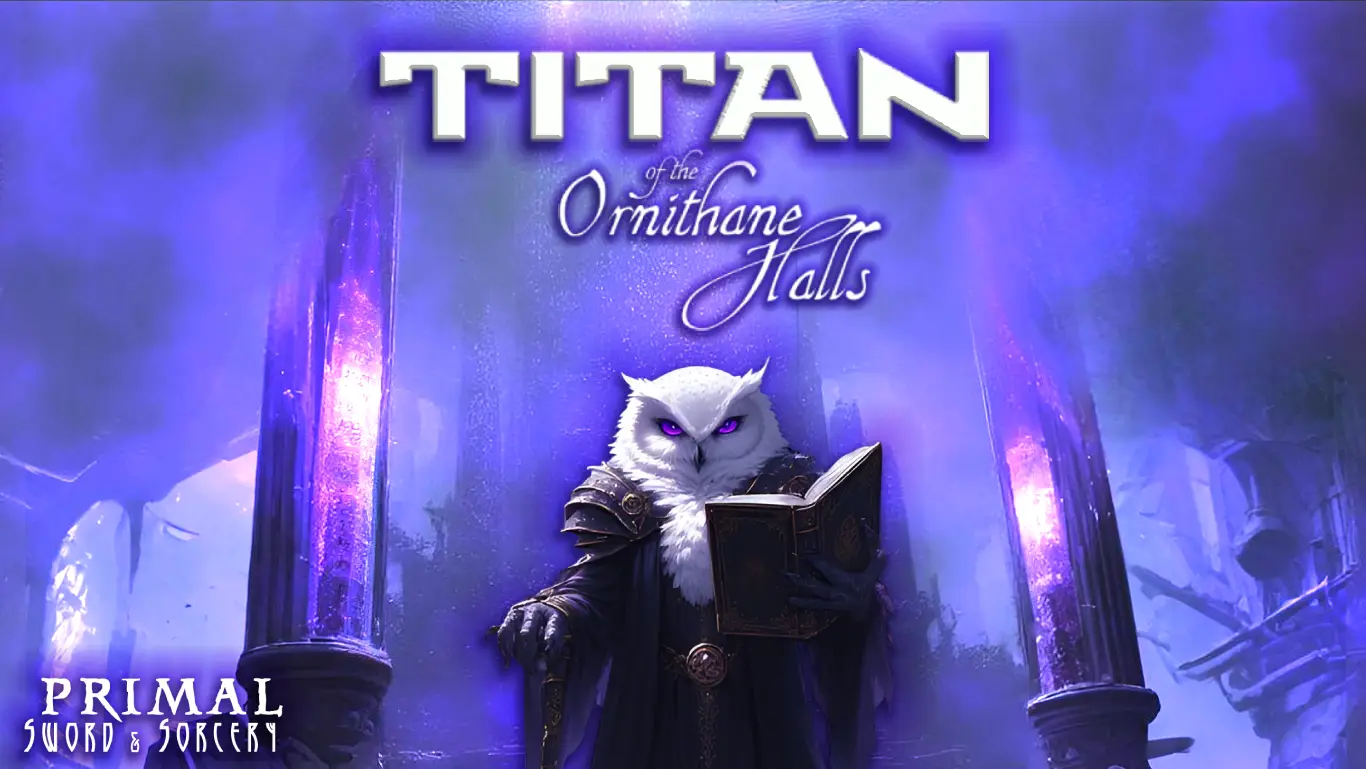
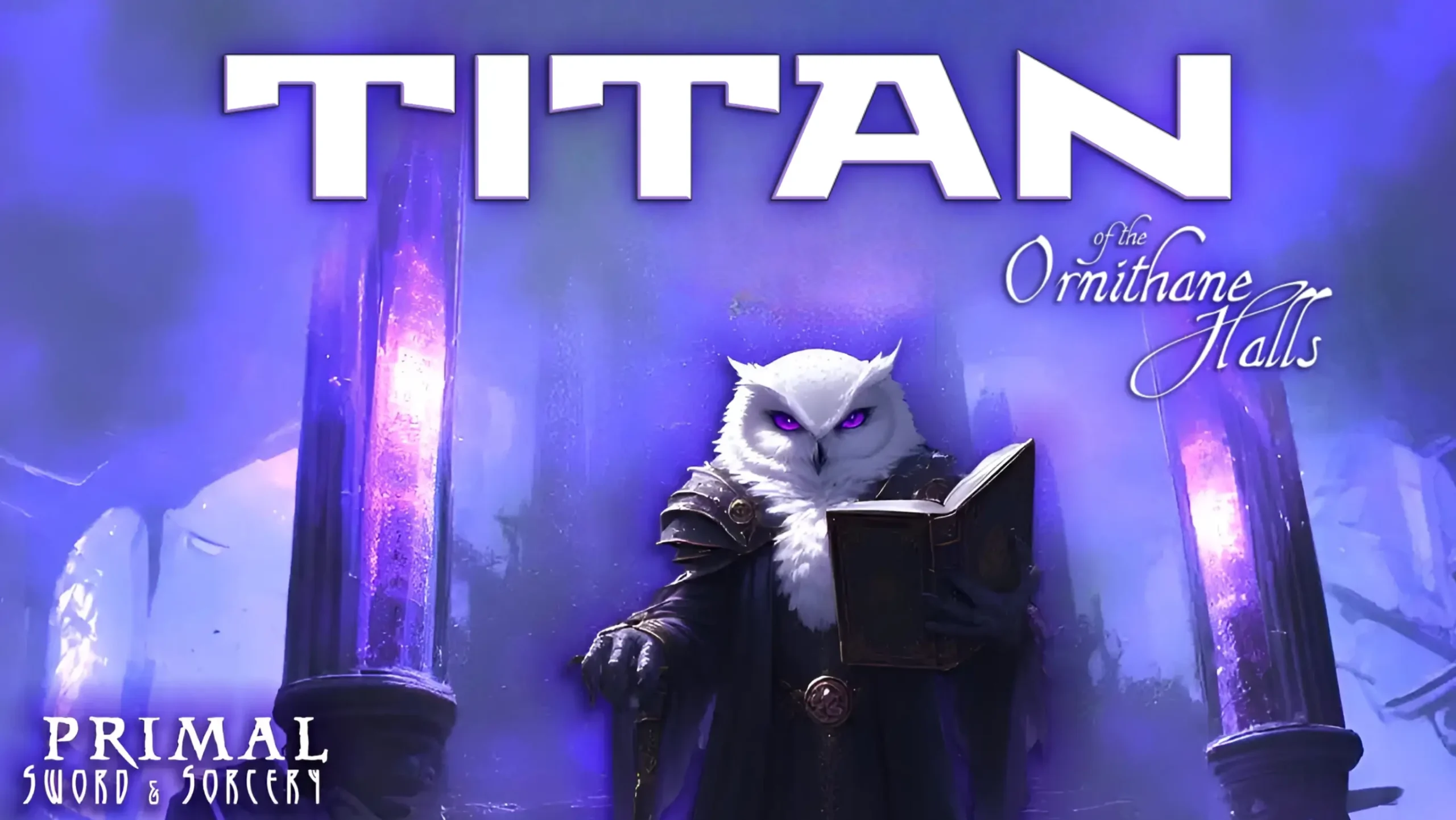
  • Titan of the Ornithane Halls

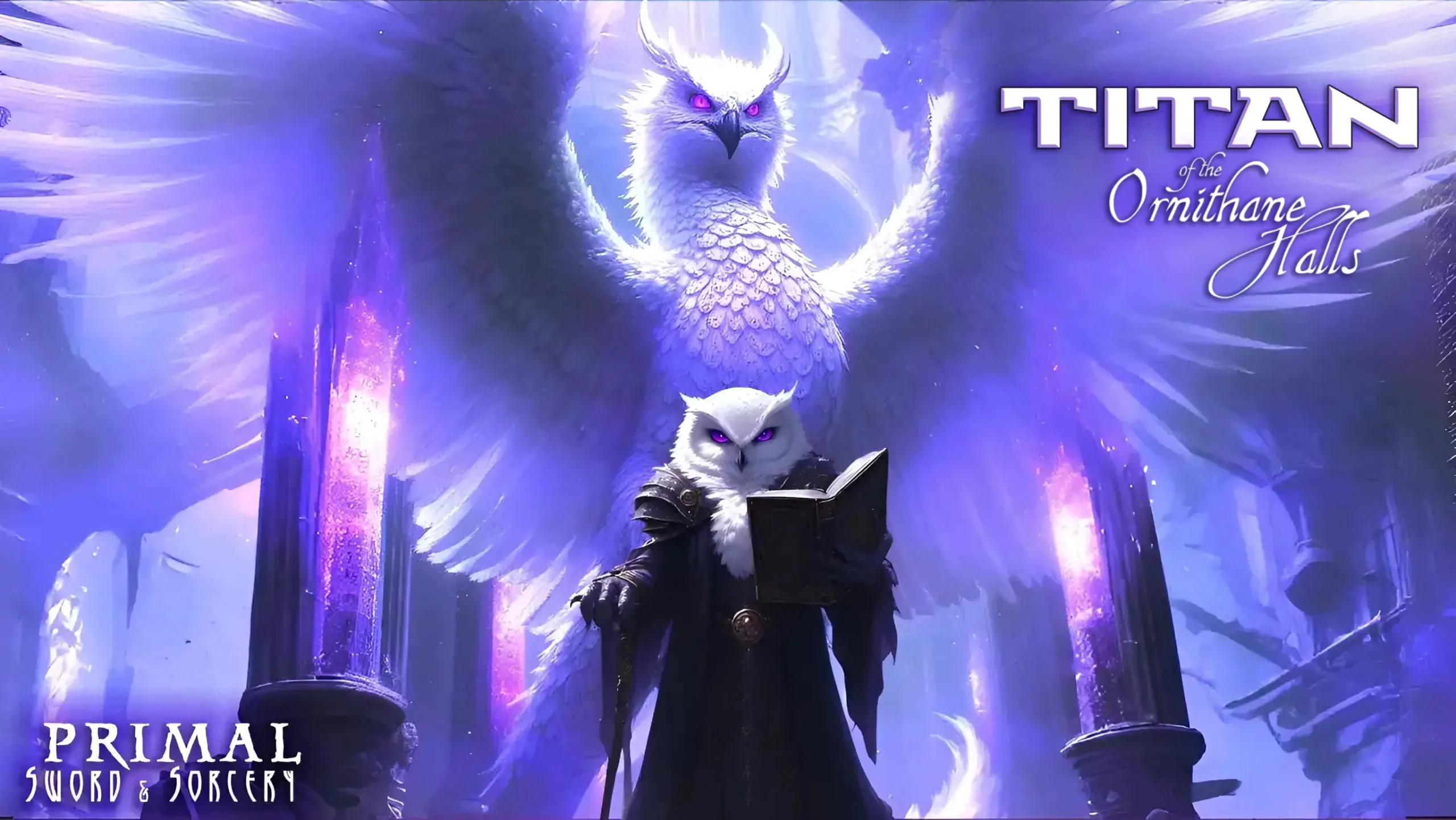
    Titan of the Ornithane Halls

    The crest of the Vulsan highlands gave way to the ice-wraithing peaks of razor white and endless brutal cold, through which a snow leopard girl ran barefoot through the frozen hellscape of northern Vulsa. Though born to the cold, she had never known it like this. The wind flayed her skin raw. Ice bit her pads until blood streaked the stone behind her. Her arms were crossed tight over her bared breast , not from modesty but to shield what little warmth remained.

    Behind her came laughter.

    Rats. Hounds. Masked raccoon handlers. Chains clinked. Knives rang. They had chased her through the night, chained her, broken her, and worse. Now they ran her for sport, calling out between laughs, savoring the way she stumbled and slipped.

    She ran until her lungs burned and her legs shook, until the land itself seemed to end.

    At the crown of a peak she stopped, stunned, sobbing, and saw it.

    A great tower of shimmering crystal stood there, impossibly tall, its facets catching moonlight like frozen fire. At its base, before doors larger than a temple gate, stood an old owl. He tottered. He muttered. He fumbled with a ring of keys, squinting as though locked out of his own home.

    She had nowhere else to go.

    She staggered to him, trembling, violated, desperate, and fell to her knees.
    “Sanctuary, sir,” she cried. “Please.”

    The old owl cocked his head.
    “Sanctuary?” he said mildly. “Oh no, not here. Far too cluttered, methinks.”

    He did not seem threatened. He did not seem to register her terror at all.

    “They’re coming,” she sobbed. “Slavers. My tribe is gone. I’m alone. They want to—”
    Her voice broke. She could not finish.

    The owl blinked and peered past her, into the snow and empty wind.
    “I see no one.”

    “They’re coming,” she said again, voice cracking. “Please.”

    “Well, if you’re not in need of a book,” he replied, distracted, “I’m afraid I cannot help you with—oh feathers, I’m terribly sorry, what did you say you were looking for in the index?”

    “No,” she cried. “Sanctuary. Please. I beg you.”

    “ ‘No Sanctuary,’ ” the owl murmured thoughtfully. “Hmm. Can’t say I’ve heard of that one. Sounds like a dire yarn.”

    Behind her, laughter carried on the wind.

    The owl leaned closer and whispered, not unkindly,
    “I’m sorry, my dear, but I am only the guardian of this librarium. The sum of all libraries and the Librarium entire. If you have need of a book, there are countless others inside who can help you.”

    She finally understood.

    She turned, and now she could see them—shapes moving fast over the ice, teeth flashing, voices raised.

    “Oh,” she said softly. “I wouldn’t trouble you… for anything but a recommendation.”

    The owl’s face brightened with relief.
    “Ah,” he said. “Why didn’t you say so?”

    The massive doors opened without him touching them, wider than mercy should allow.

    “Top floor,” he said. “Ask for Beatryx of Whondor, the all-seeing—if she hasn’t spotted you already.”
    He wrapped his scarf around her shoulders, covering her shaking body, and ushered her inside as the scoundrels closed in.

    She walked inside, looking back as the doors framed the pack of slavers closing in on the little owl steward, obliviously still chattering away with that knowing smile. He winked at her.
    “Oh,” he added pleasantly, “there is tea and cakes, if you desire—”

    “OLD BIRD!” a voice barked. “You’ve got something that belongs to us!”

    The doors slammed shut.

    The owl turned.

    “If you seek a book request,” he said calmly, “you’ll need to speak with old Julius, and I rather doubt he takes orders barked by riffraff.”

    “Fek off, owlette,” sneered a rat, twirling a hooked knife beneath a vulgar scrap of mustache.

    “We saw her go in,” growled the hound. “Now you bring her out, or we start getting violent.”

    “Oh dear,” the owl said, smacking his lips. “I don’t think that will work.”

    “I’m warning you,” the dog snarled. “Fetch the bitch or we kick in that door, nail her to the floor, Rape her what she’s worth, and burn this place to the ground with you muttering inside. Clear enough?”

    The owl smiled.

    “Perfectly.”

    With a sudden, ear-shattering screech—far louder than anything thrice the size of the old owl could make—he erupted in sheer, irrational defiance. The doors burst open—not outward, but inward, dragged by a force like gravity reversed. Shadows lashed out. Five screams became one.

    An ashen white gust pulled them in. The owl himself was drawn back into the shadows of the hall as though they had all been cast into the bellows of some ornate hell meant to confound both helion and heathen alike.

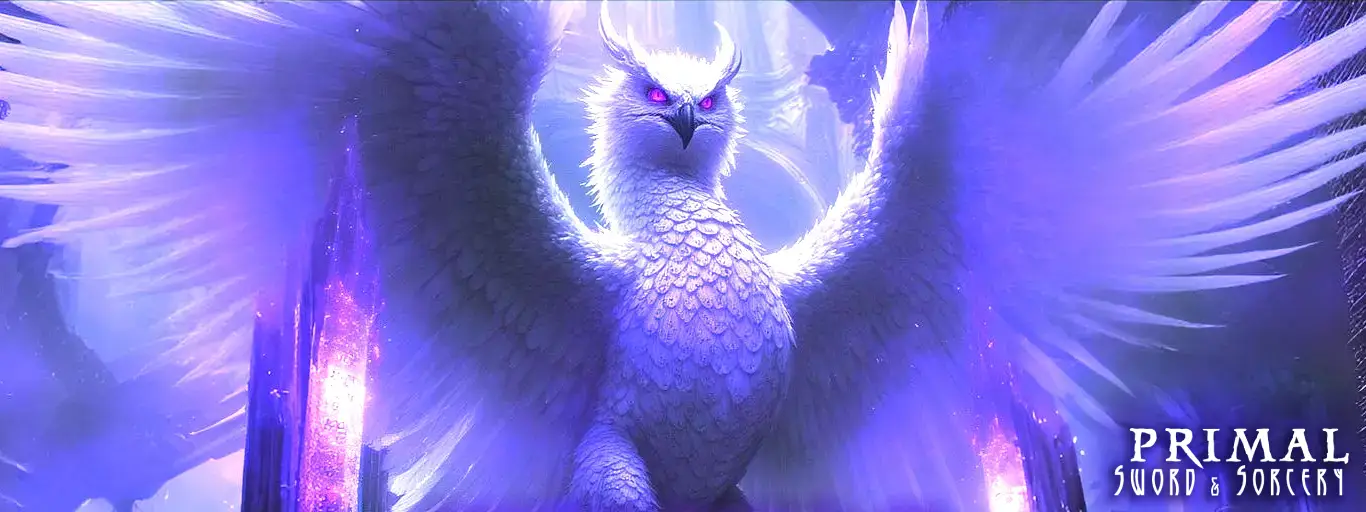
    Then, they saw what had come from somewhere far beyond to join them. In place of the steward now stood a horrible titan of a thing, for where the owl had stood moments before now towered a terror vast enough to dwarf the hall itself: a white dragonbird, horned, feathered, scaled, one eye ruined, the other burning violet with judgment. Its breath pulled the slavers from their feet as if they were dust—a beast known only to pre-cataclysmic lore as a Tytotitanus Voremithadrax.

    A roar shattered the nature of both the situation and reality itself. Where there had been a tottering old owl moments before now stood a terror already towering over them, standing atop the ruin of the largest hound and already swallowing the gurgling half of the other who had been pulled into the massive beast’s mouth when it had breathed them into the shadows of the hall. The rat screamed, and deep inside something snapped and countless ancestors recoiled in terror as the scale of verminous rodent to a beast of an owl matched that all-natural scale of silent predator and moist, shrieking prey.

    His ordeal did not last long; snatched from squealing, the rat was thrown into the air, then caught by the owl-dragon’s massive tongue—snakelike and covered in sharp, writhing, dark red tendrils that hissed with their own hunger—tendrils that sliced, split, silenced, and snapped back into the owl-dragon’s mouth in a second.

    By now, fear had taken the remaining two, but they both tripped on blood. They did not have time to attempt getting back up. A sweep of wings longer than a bridge sliced the boar into four even slabs of armored ham hock, while the wolf—now ended at the knees—shrieked as he was caught in mid-run, his torso crunched and he spat a chest-worth of blood as his head was pulled into the beast’s mouth, eyes darting as his mind raced for solutions that yielded only darkness and digestion most unkind—which I will not trouble you with here.

    From the tower above, the snow leopard girl watched with shaking hands as the doors slammed shut once more.


    Three days later, she left clothed, healed, provisioned, with a map leading her back toward Vulsan civility and far from coastal raiders: and the guardian slept in the loft study beneath a purple fez, tea cooling on a small table beside him.

    The Librarium endured.


  • The History of Roedon

    The History of Roedon

    This is the record kept in stone and ink, not song or sigh. Here is the unvarnished account—lineage, war, migration, and law—presented in the sober manner of those who must remember, not simply believe.

    Compiled from the earliest surviving fragments through the great succession wars of 5747 AC, this history aims for clarity, chronology, and the unromantic burden of fact. It is the Roedani scholar’s answer to legend: a ledger of what can be proved, traced, and disputed by the living, however dim the dawn from which it rises.


    The History of Roedon

    I. The Founding of The Northern Halls

    ••••

    II. The Cull of the Kinslayer

    •••

    III. Reckoning The White Witch

    ••

    IV. The Fearless

    •••••••••••••••••••

    V. The Fall of Valbara

    ••••••

    Vi. Legend of The Cystalkalibur

    ••••••••••••

    VII. A Hall of Myth and Legend

    viii. The little Tymerean War

    ••••••

    IX. Trade Hell from Varduun

    •••

    X. That Cold Northern Attrition

    ••••••

    XI. Beware Bleak Mundaynum


    I. The Founding of The Northern Halls

    After a wager of skill and reason was won against the elder-beards of the Londorai—whether by clever tongues, crooked dice, or the hand of fate itself—there was struck a common and good deal in the wake of a war whose name is lost. History forgets the weak and the petty, and the Londorai remember only victories, yet Roedon sings that the bargain was sealed not by crowns but by laughter, not by oaths but by necessity. Some say it was done together, shoulder to shoulder.

    Others mutter that it was the work of Rowes of Dayne alone, that queer hero of half-remembered tale, who in one telling bested the sky-king Arynn at arm-wrestle, and in another struck him blind and mocked him while the folk of Roedon learned to stand as one. There are songs where Arynn is made drunk on his own thunder, waking certain he had won, while Rowes stayed behind turning meat upon a spit and swearing all was as the sky-king remembered. Roedon prefers both versions and sees no need to choose.

    Thus it was that the silver-frozen halls of Londoraia, with their ermine thrones and star-bright gold, sent their giants south to carve a city from mountain bone, long, long ago—before the hill that would one day crown the heights of Den’Rydan had yet learned its name. These Londorai giants were of kin, tall and boisterous, and they walked the sea itself, wading deep through black water to drag the old rowendyre ships ashore, hauling whole peoples with them from the Eld’Hal, that ancestral north now lost to ice and oath alike.

    Liars and lions will tell you these works are Vandyrian dirt, relics of some dead empire, but they have yet to tilt a true rowendyre without snapping it like kindling. Here stand the northern forts, halls born of ships—wood of the sea set into living stone, not by spellcraft but by hand and law. Blocks taller than any stronghold were torn free and crushed until diamonds lined the great central terrace, the labor of the strongest Londorai males, while the towering wee girls pressed rubies from the same ruinous weight. The oldest halls were dug naked into the mountain, ships slid within them like bones into flesh, and the strongholds locked fast by giant swords driven deep—not as threat, nor as boast, but as covenant.

    For the vow was plain: if Londorai ever returned to make war, it would be against the enemies of the world, and Roedon would stand back to back with them. The giants drank, and the mirth of it shook the rafters of heaven and the highest halls on high. Then horns sounded from the frozen west. In less than nine days they had built what others would call a world, and after the revel they went stone-faced to answer that call. They were never seen again, for into myth they strode, and Roedon remembers them only by what they left standing.

    The females of the Londorai remained. It is said they stayed knowingly, and gave themselves to the males who had fought and lost for them, trusting that their own would one day return the favor. These were no dire giants, but a lesser, equally majestic kind of wolf—still tall, still proud, still enough that their blood runs thick in Roedon to this day, though few will admit it aloud.


    The Bard’s Song


    More Tales To Tell

    More Tales From The History of Roedon & The Ro’Edyne Cycle
    are in the process of being translated, archived, restored and preserved.

    Treat this page as an ongoing serial and check back for updates….


    Explore The Archives of The Vulsan Noble Owls
    An Ongoing Archival Series
    Enter The Realms of Roedon