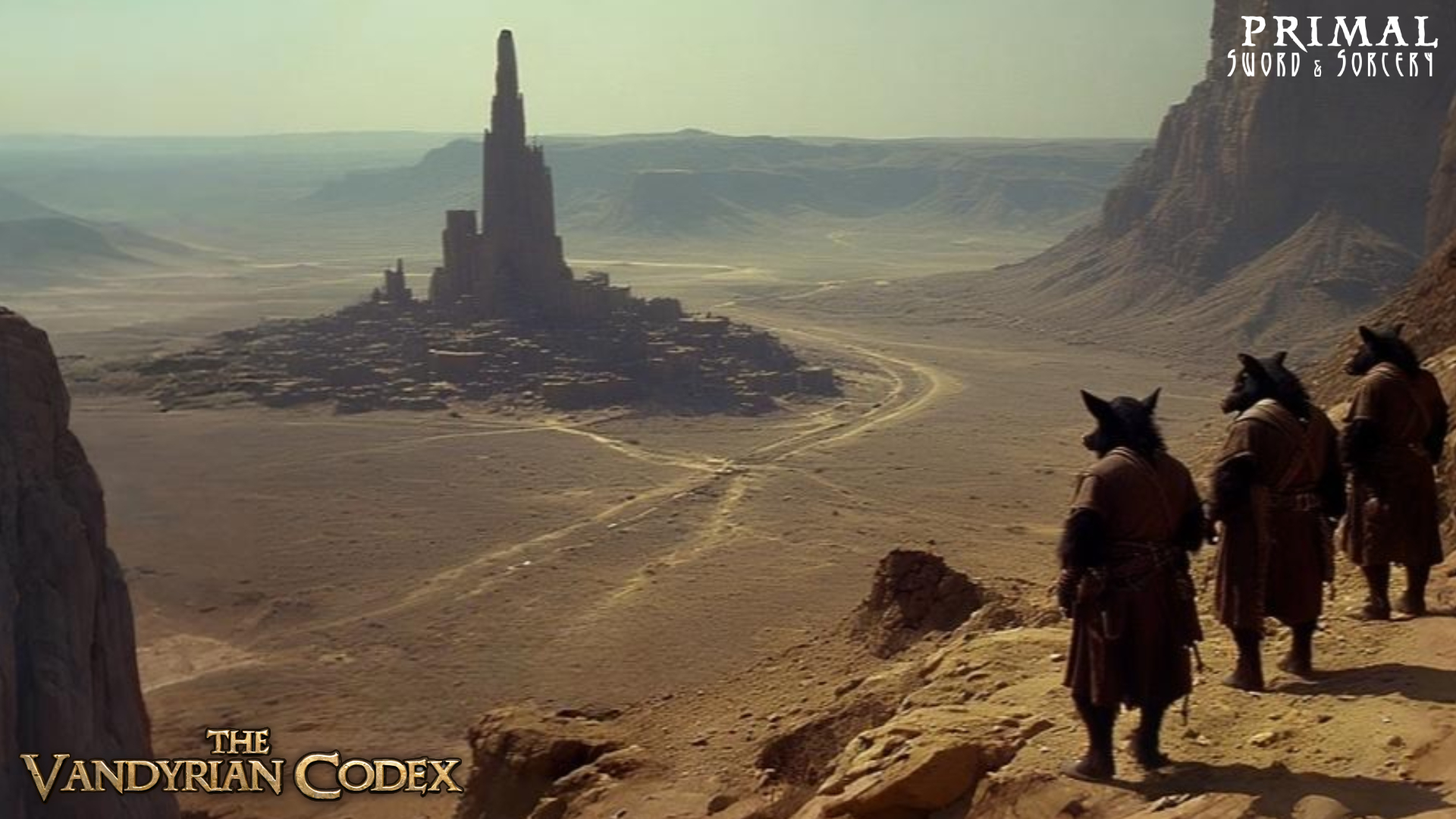
East of Kartonga, the so-called border with Varduun is a fiction; an absence of warning, law, or meaningful transition. The Kartongan wastes, for all their hazards, taciturn outland slavers, swaggering bravos with naked females on chains and freshly blooded steel on hip, the constant commerce of suffering, are still lands of sharpened barter & dangerous sneering bravado, ruled by appetite but anchored in something resembling a code.
Varduun is the antithesis. There is no frontier, no fort, no marker or ancient stone to signal entry into the Hyena Lands. One stumbles across, or is taken across, and the realization comes too late: all rules, even those of predation, become unreliable.
In the wastes, a lion may keep his sword sharp, his mind keener, and negotiate his way out of trouble or into power, but these old games die in Varduun. The hyenas eat everything—body, mind, and custom. Some bands are slavers, trading wretched lives to whatever kingdom or caravan will pay; others are feral packs, utterly mad, snapping up even their own kin.
Some are simply monstrous: sick with parasites, flesh warped, drooling, cackling, and yet keen enough to sense the scent of an outsider, to know how to bait and break a traveler. There is no shortage of fresh horrors in Varduun. Hyenas rut and feast without conscience or law, their alliances shifting, their minds as fractured as their bodies. Nothing survives long that is not hyena, and even that is no certainty.
The catastrophe is not just ecological but spiritual. No one warns you. No post stands, no trader utters a caution, no scent changes in the wind. The hyenas know, and they wait. Kartonga knows, and does not care. For any lion—indeed, for any outsider—caught on hyena ground, there is only one wisdom: stay armed, keep poison handy, and pray you are never taken alive.
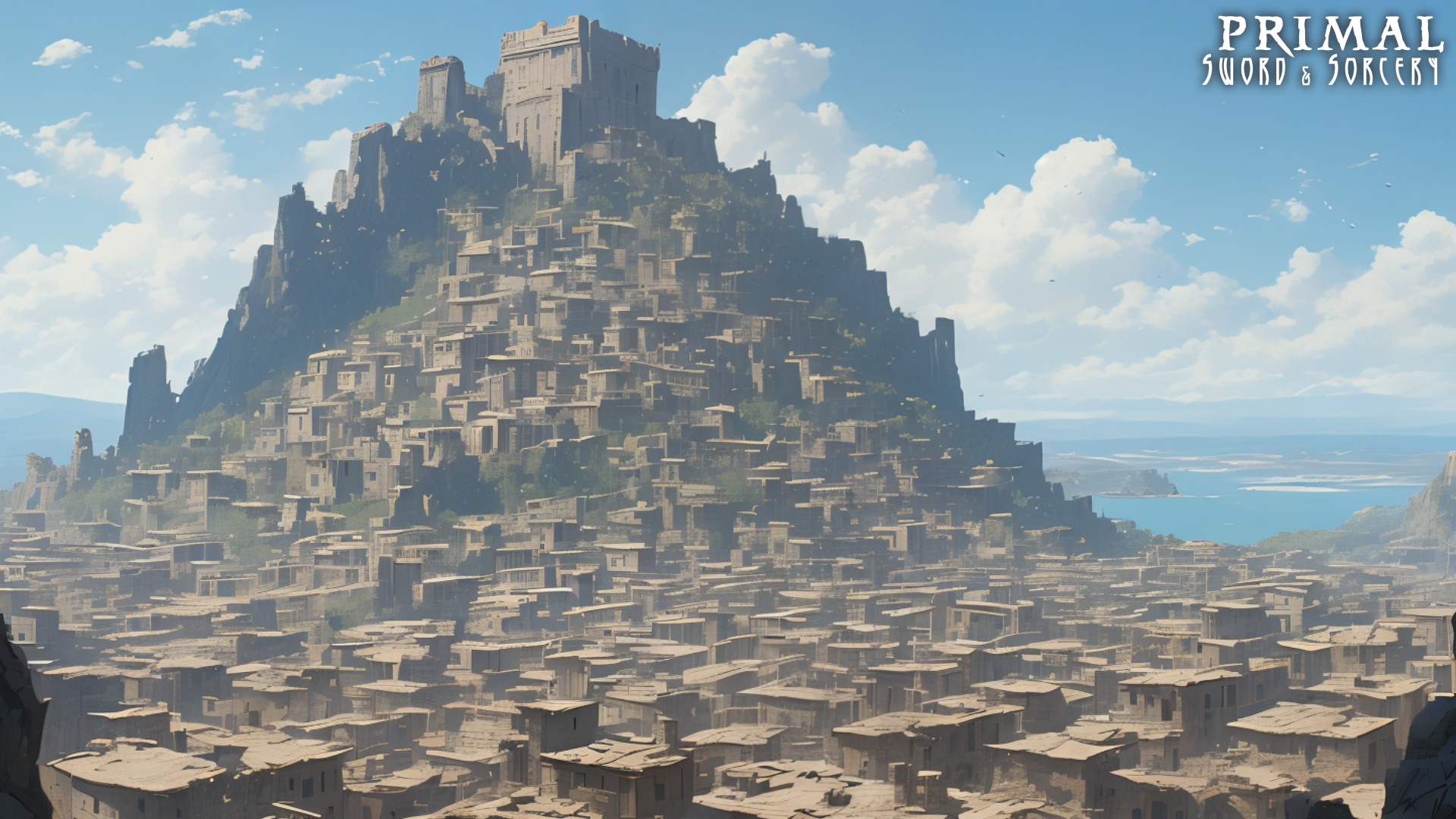
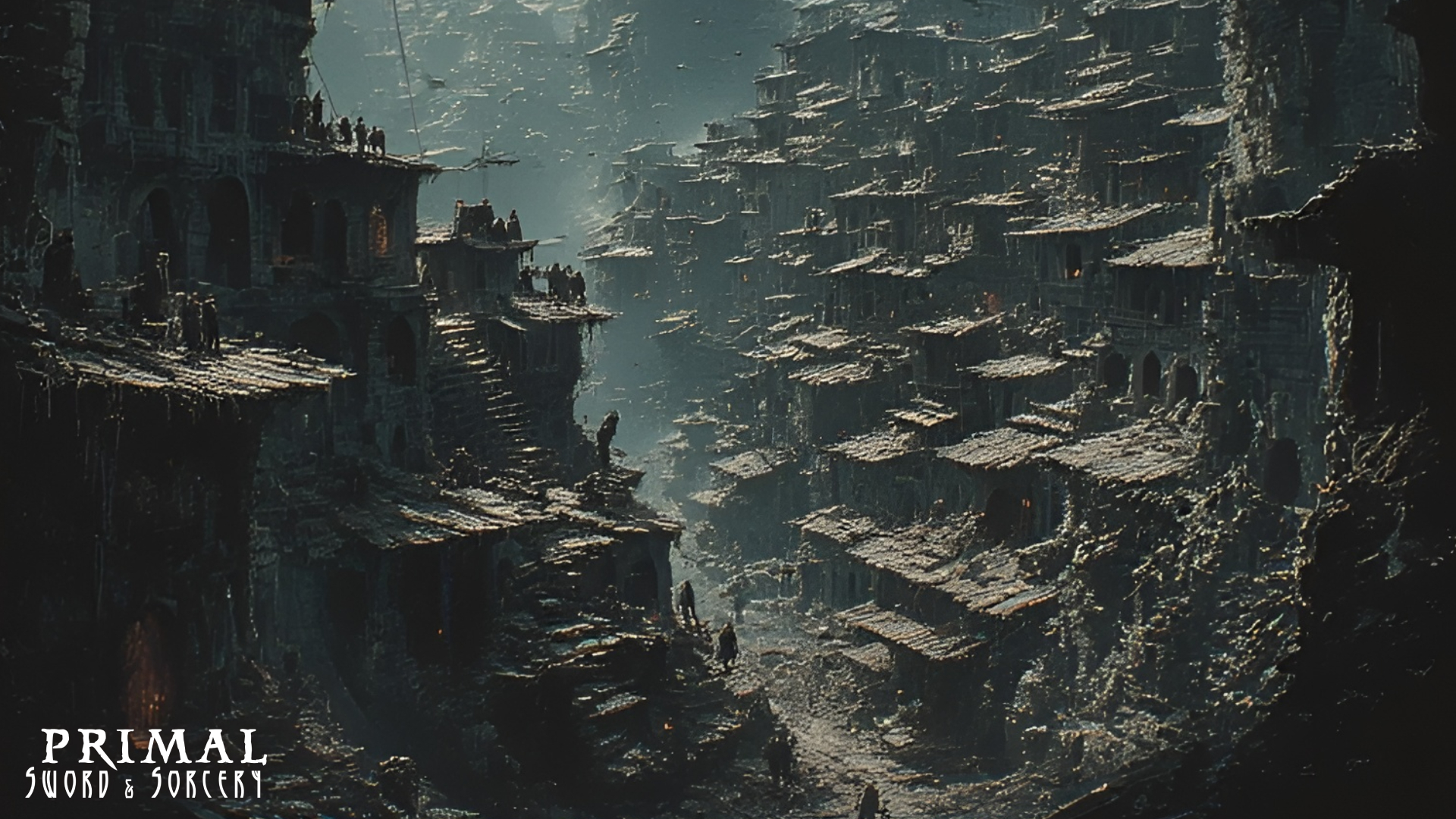
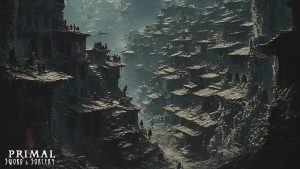
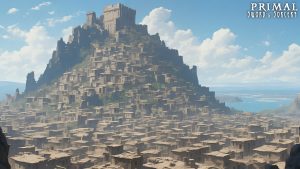
The coastal city that bears the same name exists in contrast to this interior decay, but not in contradiction. It has grown not by restoring the land, but by exploiting its condition. Built into the slope of a steep and stubborn hill, the city presents itself as a vertical accumulation of necessity rather than design. Its outer gates are heavy and deliberate, but once inside, structure gives way to density—layer upon layer of habitation, trade, concealment, and opportunism rising upward along carved terraces and half-collapsed foundations that predate any current occupation.
It is within this inherited skeleton that the ratfolk of central Kartonga have established their hold, not as rulers in the formal sense, but as those best suited to inhabit a place where certainty is impossible. Their dominance is practical, not ceremonial. They do not cleanse the city of its dangers; they navigate them. They do not unify its districts; they map the fractures and profit from them. In Tranga, survival favors those who can move through layers—social, physical, and economic—without becoming fixed in any one of them. The ratfolk excel here not through strength, but through continuity of presence. They are always there, in the walls, in the tunnels, in the exchanges that occur before any formal agreement is reached.
The city’s markets reflect this condition. The thieves’ quarter is not a district but a behavior that permeates every level of trade. Goods are not merely sold; they are circulated through hands that alter their value with each transaction, stripping origin and attaching new context. Poison makers operate openly, not because the city lacks law, but because the demand for quiet solutions is constant and widely understood. Their craft is not relegated to hidden dens but integrated into the economy itself, with mixtures tailored not only for killing, but for weakening, disorienting, or binding another to obligation. In Tranga, a poison is as likely to secure a contract as it is to end a life.
Financiers of a different kind move through this same structure—those who deal not in coin alone, but in leverage. Debt in Tranga is rarely written and never forgotten. It exists as a network of favors, threats, and mutual compromise, enforced not by a central authority but by the collective understanding that betrayal here is costly in ways that extend beyond the individual. Assassins and spies operate within this framework as extensions of that economy, their services indistinguishable from other forms of labor except in consequence. Information is traded alongside flesh and weaponry, and often proves more valuable than either.
The lower levels of the city, where the original structures are most intact, house the populations least visible to outsiders. Urchins move through these spaces with a familiarity that borders on instinct, acting as carriers of message, rumor, and stolen goods. They are not merely victims of circumstance but active participants in the city’s function, forming the connective tissue between its disparate elements. Above them, the trade in bodies continues with the same pragmatic tone that defines all else. Whores in Tranga are not set apart as a class of indulgence, but as another form of transaction within a system that values utility above all. Their position grants them access—to information, to influence, to survival—so long as they understand the terms under which they operate.
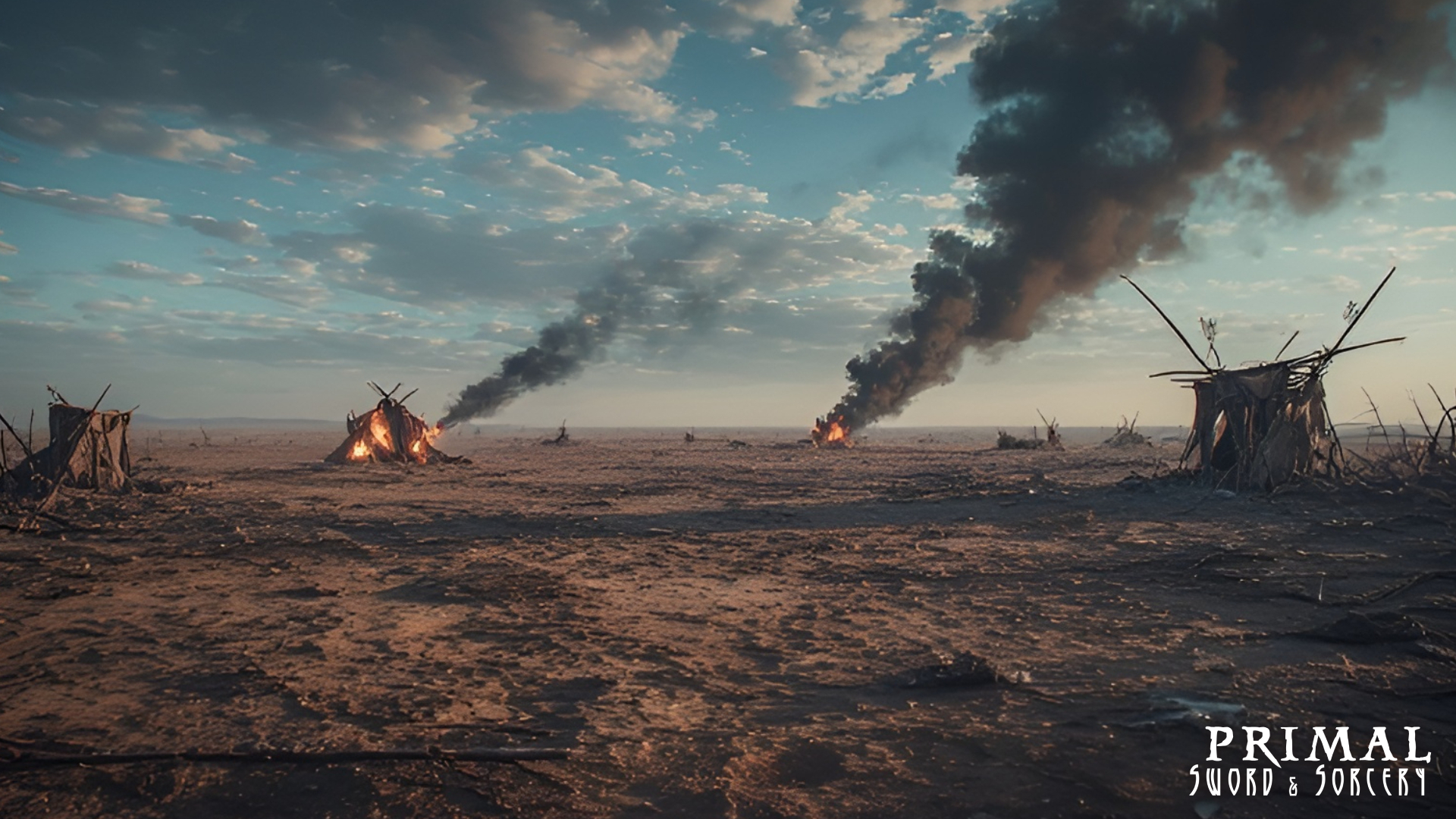
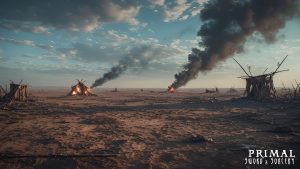
South of Old Kartong, the region of Tranga stands as a transitional scar rather than a settled province—a place where the authority of the city dissolves into dust, and where permanence itself is treated as a liability. The land is marked not by borders that hold, but by the remnants of attempts to impose them: collapsed tent-lines hardened into brittle husks, trade paths that shift with each season’s wind, and low stone outlines of structures that were never meant to endure. What remains is not abandonment in the pure sense, but a thinning of intention. Tranga is not empty. It is simply no longer claimed in any way that matters to those who understand how power functions in Kartonga.
The Outlands are not a poetic term for “foreign” nor a romantic catch-all for distant kingdoms. They are the parts of Vandyrus that exist outside civilization in the strictest political sense. Civilization, in the Vandyrian framework, means a named kingdom with confirmed borders, recognized authority, and the ability to enforce law over its territory. Every area falling beyond that territorial net belongs to the Outlands.
The Outlands are where settlement does not equal sovereignty. They are the scattered zones where old strongholds, ruined cities, forgotten trade hubs, half-functional forts, and entire den-sites still stand, but none of them fall beneath a modern banner. They’re fragments of previous ages that neither died nor fully rejoined the living world. Their existence is the direct consequence of the cataclysms, migrations, wars, and demographic collapses that shaped the map; the borders of the kingdoms tightened, but the ruins didn’t move.
Because no crown claims them, every population center in the Outlands follows its own law. Some are tribal. Some are criminal. Most are fractured. They are not “empty wilderness.” They are populated, often heavily—but the structure is improvisational: scavenger towns, bandit redoubts, mercenary havens, old frontier cities fallen out of political orbit, shrines turned into slums, collapsed den-cities whose lower halls still shelter life. Commerce and bloodshed operate side-by-side without any greater authority to stabilize them.
Nothing about them is arbitrary. They are an inevitable product of the map: every settlement left behind when boundaries shifted becomes an Outland node, and those nodes accumulate desperate folk the way a cracked cistern gathers runoff. Kingdoms tolerate them because they sit outside the borders; kingdoms fear them because they grow into nests of crime, militia, cultcraft, and off-the-books commerce.
The sun bled low across the Serengeti, a slow hemorrhage of gold and scarlet soaking into the dry grass. The spear stood driven deep into the earth, its shaft dark and slick with the last of the lions’ blood. Three great males lay sprawled in broken heaps around it—throats opened in single, perfect strokes, bellies still, manes flattened against cooling hides. Flies already hummed above them, tentative, respectful of the fresh kill.
In the center of that quiet carnage the massive bull buffalo reclined. One foreleg folded beneath the broad barrel of his chest, the other stretched out in regal indolence. His black hide bore the pale scars of old battles, ridges like lightning carved across heavy muscle. Between the thick pillars of his thighs two zebra mares knelt, bodies heavy with ripeness—full haunches swaying slightly, heavy breasts hanging low, dark nipples drawn tight in the late heat.
No words passed between them. No sound but breath, the wet slide of tongue on skin, and the low, rolling groans rising from deep in the bull’s chest.
The mare with the broader blaze claimed his scrotum first. She lowered her wide muzzle and pressed it to the heavy, loose sac. The skin was warm, velvet-soft, the great orbs inside shifting lazily with every slow breath he took. She extended her tongue—broad, pink, glistening—and dragged it upward in one long, deliberate stroke, from the lowest curve all the way to where the sac joined the thickening root of his shaft. The motion was slow, reverent, tasting salt and musk and the faint metallic promise beneath.
His head tipped back. Horns rested against the trampled earth. A deep rumble vibrated through his frame, not quite a bellow, more a sustained quake of pleasure.
The second mare—the one with finer, almost delicate stripes—waited. Her nostrils flared, drinking the thick scent rising from him. She nosed gently at the underside of his shaft where it lay heavy across his belly, the medial ring already swollen, the broad flare weeping a steady bead of clear fluid that gathered and trickled down the dark length. She did not rush. She simply watched her sister’s tongue work, watched the scrotum lift and tighten with every slow lap, watched the bull’s flanks quiver in answer.
When the first mare lifted her head, lips shining wet, a thin silver thread stretched from her tongue to the dark, wrinkled skin. She exhaled softly against him, warm breath stirring the coarse hair at the base.
The second mare descended at once. Her tongue was more precise. She traced the exact midline seam of the sac, following it from bottom to crest in one unbroken glide. At the top she pursed her full lips and drew one heavy testicle into the heat of her mouth—slowly, carefully—cradling its weight on the flat of her tongue. She held it there, motionless for a long heartbeat, then began a soft, rolling hum deep in her throat. The vibration sank into him like distant thunder. His hindquarters flexed; hips rolled upward in a slow, instinctive push that slid more of his shaft across the taut plane of his belly.
The first mare moved higher. She nuzzled the coarse hair at the root, inhaling deeply—sweat, earth, the sharp animal promise of seed. Her lips brushed the medial ring, parted, and her tongue curled around it in slow circles, tasting the salt that always pooled there when he swelled closest to release.
They traded places again, seamless, wordless.
The first mare took the other testicle now. She did not engulf it at once. Instead she lapped at the tender underside in tiny, fluttering strokes—so feather-light they bordered on torment—until the skin drew tight and his breathing grew ragged. Only then did she open wide and draw the orb past her lips, sealing them around it, cheeks hollowing with slow, pulsing suction. Her tongue rolled beneath, massaging in lazy circles, coaxing the weight deeper into her mouth.
The second mare had claimed the shaft. Both hands wrapped around the base—fingers failing to meet—and she stroked upward in a long, twisting glide that made the entire length jump against his belly. When she reached the flare she paused, admiring the way it had darkened, the rim standing proud and glistening. Then she bent and dragged her tongue flat across the slit, collecting the steady leak on the broad pad before swallowing with a soft, greedy sound only she could hear.
His moan deepened, became continuous—a low, rolling growl that vibrated through muscle and bone. One massive hoof pawed once at the dirt. The cords along his neck stood out in thick relief.
They worked in perfect tandem, no glance needed. One mare bathed the scrotum in long, worshipful strokes while the other nursed at the head—lips stretched wide around the flare, tongue swirling inside the broad opening. Then they switched: the one at the head descending to nuzzle and suckle the sac while her sister enveloped as much of the shaft as her mouth could hold—not deep, never hurried, simply sealing her lips around the thickest part and holding, tongue undulating in slow waves along the underside.
Time stretched thin. The sun slipped lower. Shadows turned long and indigo across the grass. The dead lions lay untouched; the spear stood like a dark monument. Between the bull’s thighs the mares continued their slow devotions, faces buried in heat and musk, lips and tongues never still.
Now the first mare cradled both testicles in her soft hands. She lifted them high, exposing the tender skin beneath, the faint ridge where sac met perineum. She pressed her muzzle there and inhaled—deep, deliberate—then extended her tongue and traced that hidden seam in languid strokes. Each pass made his hips jerk; each pass drew another thick bead from the tip that her sister caught at once on an outstretched tongue.
The second mare hummed while she worked the shaft. She took the head fully into her mouth, sealed her lips just behind the corona, and sent a low, rolling note vibrating down the length. She released him with a wet sound, watched the shaft slap glistening against his belly, watched another pearl well up, then descended again to lap it away before it could fall.
They traded once more. The first mare claimed the head. She formed a perfect ring with her lips just behind the flare and sucked—steady, unyielding pressure—while her tongue flicked rapidly against the slit. His flanks heaved; the great muscles of his hindquarters trembled.
Below, the second mare returned to pure scrotal worship. She buried her face between the heavy orbs, nose pressed to the seam, tongue working in slow, worshipful circles—upward, downward, sideways, never repeating the same path. She lapped until the entire sac shone with her saliva, every wrinkle smoothed by constant attention. She sucked one testicle, then the other, then both as far as her wide lips would allow, humming all the while so the vibration sank deep into the root.
His groans had become a continuous rumble. His head rolled from side to side; tongue lolled once, broad and pink, before vanishing behind blunt teeth.
They felt the change together—the tightening of the sac, the way the orbs drew up close to his body, the way the shaft thickened impossibly further in the first mare’s mouth. They did not hurry. There was no need.
The second mare redoubled her attention to the scrotum—long, dragging licks from base to root and back, pressing her lips to the underside and sucking gently, drawing the skin taut, letting her tongue flutter against the tender seam.
The first mare kept her lips sealed just behind the flare. She did not bob. She held him, tongue swirling, cheeks hollowed, sucking in slow pulses matched to his heartbeat.
His hips gave one long, rolling thrust—almost gentle—and then he spilled.
The first surge was thick, almost viscous. It struck the back of her throat; she swallowed without pause, humming her pleasure around him. The second followed harder, flooding her mouth; she pulled back just enough to let it coat her tongue, let her sister see the white before she swallowed again. The third and fourth she caught on her tongue and allowed to spill from the corners of her mouth—glistening trails running down her chin to drip onto the dark, swollen sac below.
The second mare never faltered. Even as her sister drank, she lapped the overflow—painting the scrotum with it, then licking it clean in slow, adoring strokes. She pressed her face deeper, nose buried against the root, tongue circling while he pulsed and pulsed.
When the last tremor finally rolled through him the mares did not withdraw. The first mare kept her lips softly sealed around the still-leaking head, nursing with the gentlest suction, coaxing the final drops onto her tongue. The second mare remained buried between his thighs, tongue tracing soothing patterns across the now-hypersensitive sac—long, feather-light strokes that made him shiver even as his breathing began to slow.
Minutes passed in silence. The sun touched the horizon and vanished.
Only then did the first mare lift her head. A final bead clung to her lower lip; she caught it with her tongue, held it a moment, then swallowed. She looked up at him with heavy-lidded eyes.
The second mare emerged last, muzzle shining, lips swollen darker than before. She pressed one final, lingering kiss to the underside of the sac—soft, reverent—then rested her cheek against the warm, heavy weight of it.
The bull exhaled a long, shuddering breath. His head settled fully against the earth. His eyes drifted closed.
Above, the first stars pierced the violet dark.
Below, between the thighs of the last living sovereign of that bloodied ground, the two mares stayed exactly where they belonged—faces pressed to scrotum and softening shaft, lips parted, breathing in the scent of him, ready to begin again the moment he stirred.
The spear stood silent. The lions did not move.
And in the gathering night the worship continued, slow and endless, without a single word ever spoken.




 Unlock with Patreon

