Author: Primal Sword & Sorcery
-
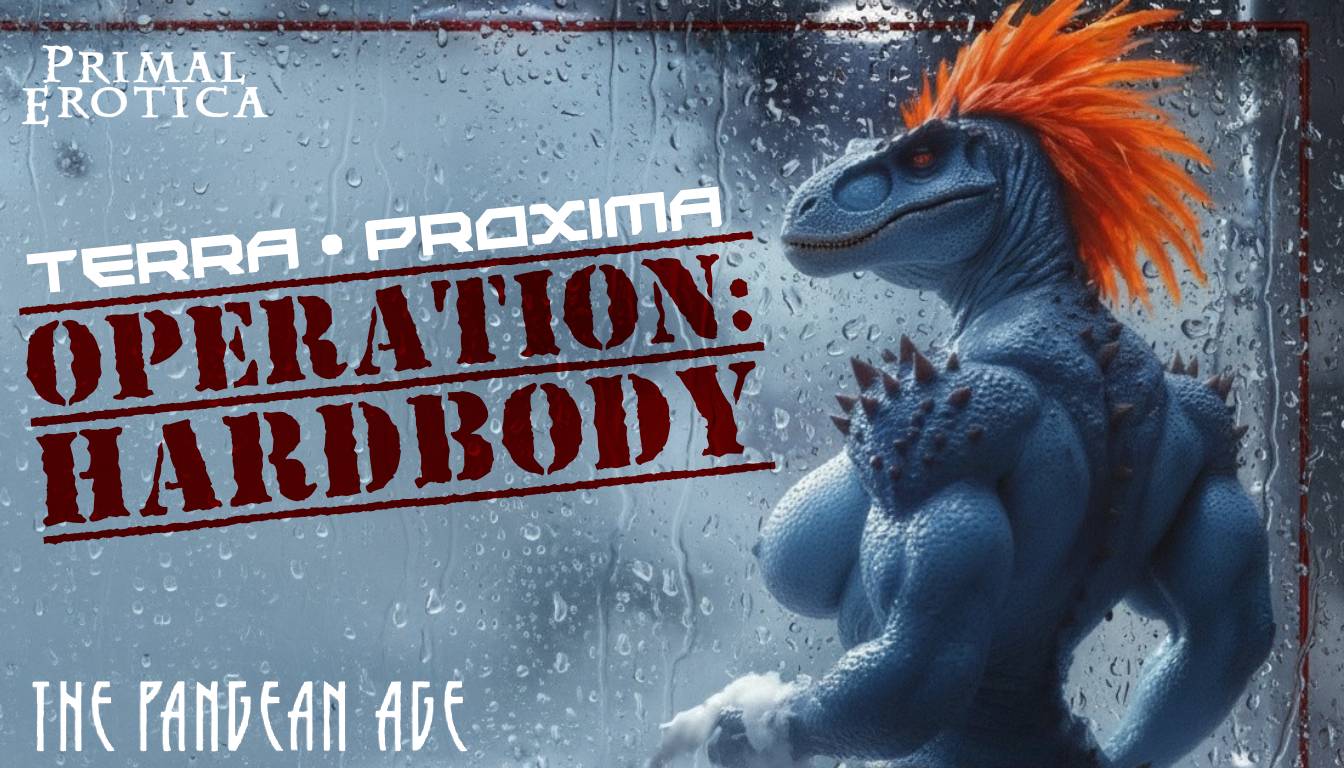
Terra•Proxima: Military Industrial Combine
Terra•Proxima is a vertically integrated industrial power operating across extraction, fabrication, transport, and advanced military systems development. Publicly, it presents as a stabilizing multinational infrastructure authority specializing in planetary modernization, orbital logistics, and security enforcement for frontier and post-conflict regions. Its charter language emphasizes compliance, continuity, and operational hygiene.
Structurally, Terra•Proxima is divided into four interlocking pillars: Heavy Industrial Fabrication, Military Systems Engineering, Advanced Transport & Deployment, and Strategic Research & Development. Each division feeds the others in a closed-loop production chain. Raw materials extracted under contract are processed in-house, fabricated into civil and defense assets, transported via proprietary fleets, and field-tested under corporate security mandates. No critical dependency lies outside corporate control.
Industrial Fabrication
The industrial arm focuses on large-scale planetary infrastructure: reactor arrays, atmospheric processors, transit corridors, orbital docks, and resource compression facilities. Terra•Proxima specializes in rapid conversion zones—regions restructured from underdeveloped or destabilized territories into compliant production environments. Speed and redundancy are core metrics. Civilian-facing messaging highlights job creation, supply stabilization, and technological uplift. Internal documentation measures output density per square kilometer and long-term resource yield.
The fabrication networks are modular. Entire refinery chains can be landed, assembled, and operational within standardized timeframes. Automation density remains high, minimizing local labor dependency. This reduces political leverage from host populations while ensuring predictable throughput.
Military-Industrial Systems
Terra•Proxima’s defense manufacturing arm produces small arms, armored exoskeletons, atmospheric gunships, orbital insertion craft, and automated perimeter systems. The emphasis is not spectacle but efficiency. Equipment is designed for durability, ease of maintenance, and interoperability across corporate units. Ammunition standards and power-cell formats remain uniform to prevent logistical fragmentation.
Weapons platforms are tuned for urban compliance operations and frontier suppression. High rate-of-fire systems, precision-targeting overlays, and integrated surveillance telemetry form the backbone of their enforcement doctrine. Public descriptions reference “stability assurance packages” and “security harmonization.” Internally, the objective is area denial, rapid compliance, and containment of information leakage.
Advanced Transport & Deployment
Transport is Terra•Proxima’s true advantage. The corporation maintains a fleet of interplanetary cargo haulers, armored convoy carriers, atmospheric insertion shuttles, and orbital logistics nodes. Their deployment doctrine prioritizes speed and invisibility. Assets can be moved before resistance networks fully register their presence.
This logistical dominance allows Terra•Proxima to frame operations as responsive rather than invasive. By the time a conflict is publicly acknowledged, the area is already sealed, secured, and under controlled narrative management.
Research & Development
The R&D division operates semi-autonomously, developing propulsion refinements, energy efficiency systems, containment materials, and compliance technologies. Advanced sensor arrays, predictive behavioral modeling software, and leak-suppression algorithms originate here.
Field data from enforcement actions feeds directly back into design iterations. Urban pacification metrics, ammunition expenditure curves, and resistance response times are treated as engineering variables. Innovation cycles are short, clinical, and outcome-driven.
Public Doctrine vs Operational Reality
Terra•Proxima markets itself as the stabilizing force in volatile sectors. Corporate language emphasizes “order,” “resource optimization,” and “population protection.” Enforcement units are labeled “Operators,” and lethal engagements are categorized as “compliance corrections.”
Where an external observer might describe boots on the ground delivering suppressive fire at industrial rates, Terra•Proxima reports “above-average compliance metrics with zero environmental spillover and no information leakage.” The corporation defines success not by absence of violence but by containment of consequence. Civilian impact is measured statistically, framed as within acceptable variance thresholds.
The narrative discipline is absolute. There are no massacres—only failed compliance audits. There are no rebels—only contract violators. There are no occupations—only secured development corridors.
IN DEVELOPMENT
TACTICAL EXTINCTION
Terra•Proxima vs. Tellus/GaianumWhen VANDYRIANS Ruled The World!
Battle for the ROCTERRAN TACTICAL LOGISTICS:
Your Guide To Corporate Sector Domination
Through Firepower At ScalePRODUCTS MAY NOT BE SUITABLE FOR PRIMATES
-
The Feast of Tentus
“Tentus is the open mouth of Drael, a city squatting in the bowl of an ancient impact scar where stone was once turned to vapor and sky burned white. It is not among the four great thrones of the north, nor does it pretend to rival the hidden citadels beneath ash and serpent-ruin, yet it endures because it performs a function none of the greater powers care to soil themselves with: exchange. Trade, vice, spectacle, execution. If Drael is a wound, Tentus is the clot that never quite seals, thick with caravans and carrion both. Drael itself is described in the old tablets as inverted—surface ruin masking subterranean dominion.
Tentus is surface made permanent. The crater’s rim forms a natural amphitheater, jagged stone rising in broken arcs like teeth around a tongue of dust. At its center yawns the Pit, a vast arena carved deeper into the impact basin, ringed by terraces of basalt and bleached bone. From above, the city appears circular and organic, streets spiraling down toward the Pit in widening coils, each ring a district of trade, degradation, and ambition. The Deinonychus lords claim Tentus as neutral ground. Whether they truly rule it is debatable. The scaled barbarian tribes of Drael’s surface—raptor packs, Spinosaur flotillas from the marshes, feather-crested velocian assassins—send emissaries and enforcers, but none sit a permanent throne there. That absence is deliberate.Tentus thrives because no single warlord dares claim it entirely. To do so would disrupt the delicate machinery of vice and barter that feeds all sides.”
I
Dust came first—the long brown veil that rose from the ash flats and stuck to her tongue, that scoured her cheeks when the wind came hard across the old bones of the land. She felt it against her horns like grit against stone, a rasping kiss that told her the road to Tentus was near. The mature styracosaur shaman took the rise slow, spear butt clicking on fractured slate, axe slung at the hip for anyone foolish enough to think a hungry tribe meant a helpless envoy.
Her bosom lay heavy beneath her harness, wrapped in worn blue cloth that smelled of sage and smoke; her blue cheeks had the habit of flushing when the sun broke free of cloud, and it did so now, throwing a hot stripe across her face that made her blink and squint.
The heat kept the scent of her sweat close. The heat made the flies bold. The heat made everyone on this broken road irritable and dangerous, and she counted on that because danger kept true, while promises were a softer breed of lie.
They noticed her as they always did. A pair of lizard porters with scarred tails, bellies gaunt beneath their belts; a crocodilian pilgrim draped in river beads and old reeds; three hyena sellblades who were laughing at nothing and everything. Males let their eyes fall to her cleavage and then bounce up when they remembered the horns. She did not mind the appetite—appetite made the world move—and she did not slow.
She had been told the brown allosaur in Tentus sometimes traded favors for favors —She had been told he bartered in flesh and spectacle as much as in coin. She had been told many things by storytellers who had never rutted with hunger or looked down the long throat of a dying season. The steppe behind her had gone to rust and thorn. The last calves had fallen. What she carried now — a few trinkets, a bundle of salt-cakes, and a prayer — was not a bargain. It was an excuse to be seen.
The grass had grown tall and then fallen in the wrong storms, mold taking it in a soft black creep that killed what cattle they dared keep near the marsh. The hyenas who crossed the sea had burned what they could not carry—this was their humor—and the tribe’s store-caves now breathed like hollow mouths.
She’d taken the last of the good salt cakes, the rolled canvas of medicinal moss, the small jar of sun-thick honey beads, token gifts to grease tongues. It would not be enough. It had never been enough with Tentus; that city ate in the rhythm of drums and spent in the rhythm of hips, and called it order.
On the high road into the basin she paused to piss, turned away from traffic toward the split slate and the sparse weeds. Relief warmed her thighs, then cooled in the breeze. When she straightened, adjusting the wrap at her chest, a young iguanodon with a rusty mask of paint stood ten paces off.
His eyes had the skittish shine of those who ran messages; his tail twitched a pattern that meant fear trying to dress up as bravado. He kept his head low but his stare low too, fixed where the blue cloth crossed and pressed her bosom together.
“You’ll get yourself hurt looking like that,” she told him without heat. “I’m only looking at what’s there,” he said, a little too quick, and stepped back when she shifted the axe on her belt. “You go to Tentus?”
“I go to whoever will sell me a season.” She picked up her spear and shouldered past. His scent was salt and young rut and the dust of the road, and it faded behind her soon enough because the city smell took over—blood smoke, meat char, latrine stink, perfume of cut sap from the arena stakes, and the hot iron breath of the forges where bone and bronze met and disagreed.
Tentus crouched in the basin like a jackal that had eaten too much and still wanted more. Its stone teeth rose in jagged palisades patched with old idols, shellacked with the fat of festivals and the filth of losing nights.
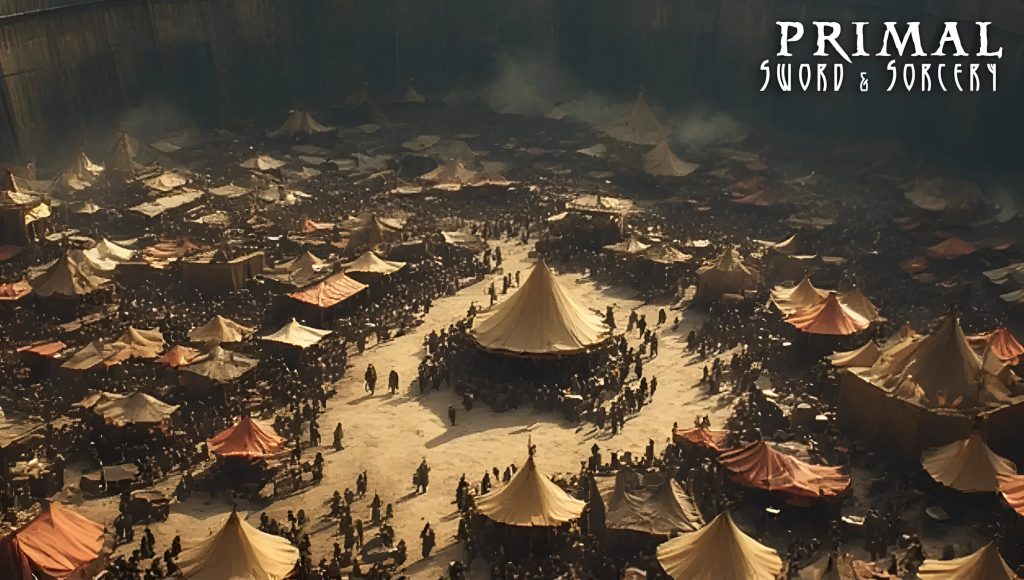
She had come as a girl once, more horn than sense, with her mother’s voice still in her ear; she had come again as a healer walking the plague lines when the flies overtook the river rats and a fever cut through the ribbed poor like a bright knife. Now she came as something else, something like a merchant but with nothing to sell but her dignity and what flesh the gods had given her.
She spat to throw the thought out like a bad seed. It clung anyway. At the gate the guards played their usual game—ask a little too much, hope for a bribe, stare a little too long at the curve of her chest to see if blushing might open her purse. She let the blush come; she could not help it in this heat. But when the shorter of the two, a skink with a gold ring between his nostrils, drifted from stare to step, she tapped the haft of her spear once on the stone.
The sound was not loud. The sound said: consider the points at the end and the weight of the axe and the weight of my patience. They stepped aside. Her sandals took city stone. Inside the wall, Tentus moved like meat on a spit. Hammocks swayed with dripping females, bosoms pierced, coins dancing between thighs; dust devils collected cheers in the arenas and flung them down again; a butcher’s boy wrestled a slab of purple meat while a crowd bet whether it came from something with feathers or scales;
Somewhere a priest hissed funeral words over a bloated corpse, a pale snake coiled in his hands, its tongue flicking the dead man’s lips as if to taste the soul and pass arcane judgements.
She angled past a canvas where females oil-slicked and laughing wrestled on their knees while some born-to-crown fool sprayed a rain of coins to watch them slap. The coins fell too fast and rolled in dust; fate had that habitVendors shouted inventories that sounded like poems. Needles for stitching hides. Needles for stitching holes in the meat. Needles for stitching holes in pride. Clay balls filled with musk for males who needed to smell stronger than they felt. Glass beads that turned sunlight into knives to scare carrion birds.
She tasted iron on the air and thought of her tribe’s huts and how the wind went through them too easily now that the hyenas had given the rafters to fire. She did not pray. She had already prayed on the ridge when she saw the road. The gods had given their answer in the shape of this city and its appetites.
A gambler’s drum took up a steady beat as she wound toward the war-quarter, a simple three-note call that meant numbers were going to be found out one way or another. The brown allosaur kept a hall near the bone-yard where the old champions’ skulls were stacked and stacked until the smell of lacquer and pride hung thick. His name did not matter; names changed with throats. What mattered was that his appetite was the sort that made caravans move and starving villages bend, and that he had sent word through salt lines that he would make trades if the trade amused him.
She could smell the pipe resin they said he liked from halfway down the narrow. She stopped at the hall mouth to straighten her wrap. She tightened the blue cloth over her bosom, a gesture of modesty that was really just armor. She rolled her shoulders once, pulling aches into the sockets where they belonged, and felt the old strength cinch around bone and sinew like a belt. Males would watch her walk in; they always watched.
They would measure her hips and her chest and the length of her horns and pretend that was the same as measuring her will. She let them think it. Then she stepped into the shade, spear at her back, axe at her hip, hunger at her heels, and the smell of resin and smoke unrolling ahead like a promise that tasted exactly like a price
II
The Allosaur Warlord did not greet her at once. He never did with petitioners. He sat sprawled at a bone-table slick with meat and fruit, the smoke of his resin pipe curling from his nostrils as though to draw a boundary around her in the air. He chewed and spat, tore cartilage with teeth made for rending, not savoring, and let her stand in the shadow while the minutes dragged.
When she shifted her weight, the crack of a spear-butt on stone snapped through the hall. His servant hadn’t been told; the gesture was instinct. The message clear. Patience was his, not hers.
She endured. She had endured the screams of fever victims as their tongues blackened. She had endured the smell of her tribe’s huts when the hyenas lit them. She would endure this too. But every crunch of bone between his jaws was meant for her, each wet suck of marrow another reminder that she was prey standing before a predator’s table.At last he wiped his mouth with the back of his hand and leaned back. His eyes found her bosom first, not her horns, not her arms. He stared with the lazy hunger of a drunk too full to bother pretending. The grin came slow, curling his lip until the smoke bled between his teeth like steam escaping rock. His tail flicked once, twice. The guard’s spear dipped half a handspan. That was all it took for her to know the balance had shifted.
“Food. Resources. Materials,” she began, forcing steadiness she did not feel. “The hyenas leave us nothing but ash. My people starve. You know this.”
“I know what I hear,” he said, voice thick with grease and smoke. “I hear weakness. Matriarchs who cannot defend their nests. Horns like banners, tits like milk-jars, and still you come here begging.”
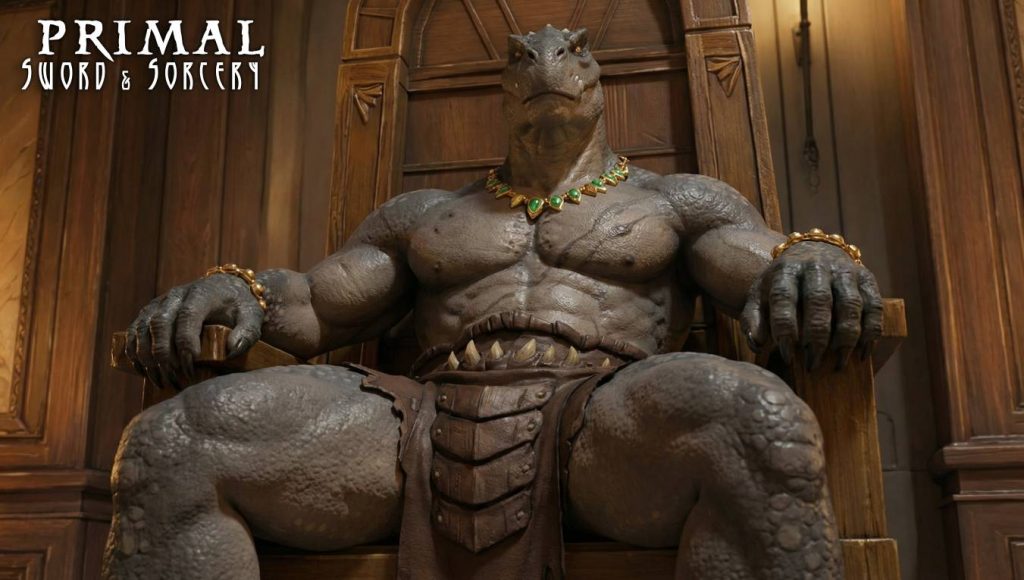
He sucked the last shred of marrow from a bone and tossed it aside, where it landed near her foot like a warning. “Why should I not feed you to the pit and let the crowd laugh at your squeals?!”
Her grip on the axe tightened, though she kept it low. “Trade profits both,” she said. “You have stores. We have—”He barked a laugh, low and scornful. “You have nothing. Nothing but that.” His chin dipped toward her chest. The twitch in his jaw told her exactly what he imagined. “And that, shaman, is worth more to me than all your starving tribes.”
Her stomach burned, but she stood her ground. This was Tentus. To flare, to draw blood, was to lose everything.
He rose, slow and deliberate, his scars catching the firelight. The pipe swung from his lip as he circled her, tail scraping the flagstones. His musk thickened the air. Servants withdrew without a word. The hall fell silent but for his steps and her breath.
“You came to beg,” he said at her ear. “Now you will beg properly.”
He did not touch her then. He only returned to his furs, took up another rib, and began to eat again as if she had already ceased to exist.
Hours passed. He heard messengers. He counted coin. She waited, motionless, the ache in her thighs spreading into her back. The smell of grease and fruit thickened the air until it felt like another punishment.
When he finally flicked a claw in her direction, it was without looking up. “Come.”
And she knew that whatever bargain would be struck, it would not be struck in words.
III
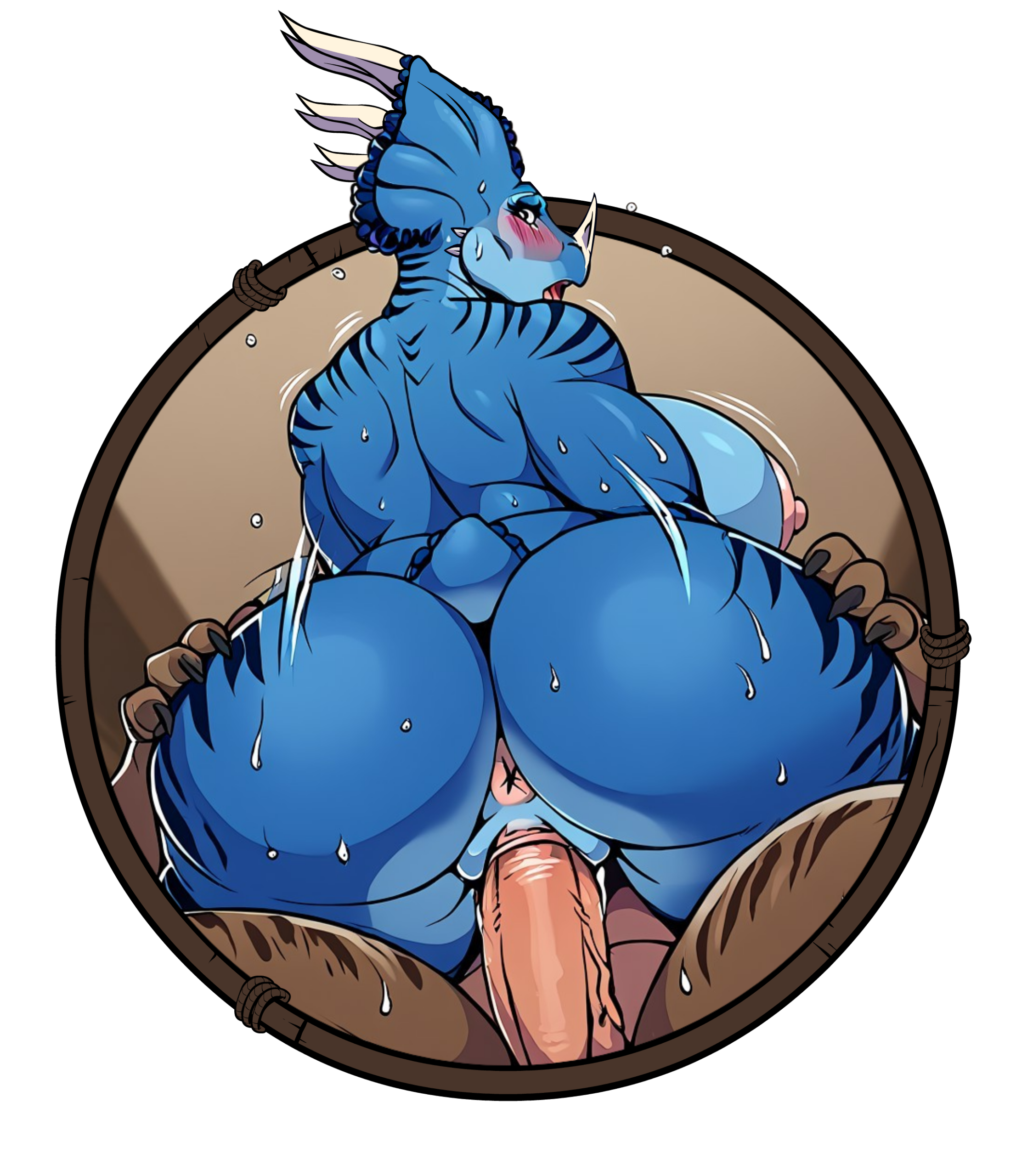
He lounged like a prince of bones, thick tail stretched across the furs, cock buried deep inside of her warmth already, a spear that had claimed far too many victories in the past.The styracosaur shaman straddled him, blue hips rolling, flushed bosom swaying, sweat dripping from her horned brow. Her thighs trembled from labor; the ache in her back had grown into a constant burn.
Yet he did nothing but recline, wine cup balanced in one claw, smoldering rib-meat dripping fat down the other, yellow eyes half-lidded with pleasure.
His shaft stayed stone-hard, but not through any effort of his own—she was the one doing all the work, grinding, bouncing, moaning, trying to coax his release again and again.
“Pathetic,” he said around a mouthful of charred flesh, voice rumbling like an insult carved into her marrow. “You sweat and squeal like a sow, and still your tribe starves. What good is a matriarch who cannot even rut properly?” Her blue cheeks burned darker, shading toward purple.
Rage, shame, arousal—all knotted so tightly she could not untangle them. She tried to form words, to explain, to deny, but his claw came down on her bosom with a stinging slap that made her squeal like a calf.“Then go back,” he sneered, pinching her nipple until her vision blurred. “Go rut with your own weak males. Let them pant and dribble seed into you while your children chew bark.”.
His laughter was cruel as she worked her naked blue flesh above him. Her protest caught in her throat. Every time she had spoken, he had silenced her with laughter, with pain, with command. So now she moaned instead, high and desperate, hips working faster in spite of herself. Her cunt clutched him, slick and clenching, betraying her station and her disgust alike.
He drained his wine and held the empty cup aloft. A slave hurried to refill it, eyes flicking to the shaman’s bouncing bosom, lips twisted in a smirk of mockery. Others brought trays of meat, the scent of charred beast heavy in her nostrils. She recoiled, stomach tightening at the sight of him tearing sinew from bone even as his cock throbbed inside her. He relished her disgust, chuckled when she flinched.
“You hate it,” he said, snapping bone with his teeth. “You hate that I eat while you serve. But your tight fat cunt… ah, it relaxes me. A good suckling cunt, full of heat. You might even be worthy of it, if you learn.” Her teeth ground together. She hated him. Hated the way her body betrayed her, hated the way her nipples stiffened under his claws, hated the way the flush of her cheeks slid purple with need.
She whined, high and trembling. “I have been at this for hours…”
“Hours?” He laughed, deep and cruel. “Hours are nothing. A true vessel milks her master until his hunger is drowned. Watch.”
He seized her tit, yanked until she shrieked. She had learned: arms behind her head. Her bosom thrust forward, vulnerable, obedient.
He nodded, satisfied. Slaves lingered, watching her rut while handing him another rib, another jug of wine. She squealed with each thrust, not daring to stop, not daring to falter. The shaman loathed every gaze upon her, loathed the way they whispered and smirked. Her tribe’s enemies would starve her kin, and here she was, sweating, bouncing, riding the warlord’s cock while he feasted.
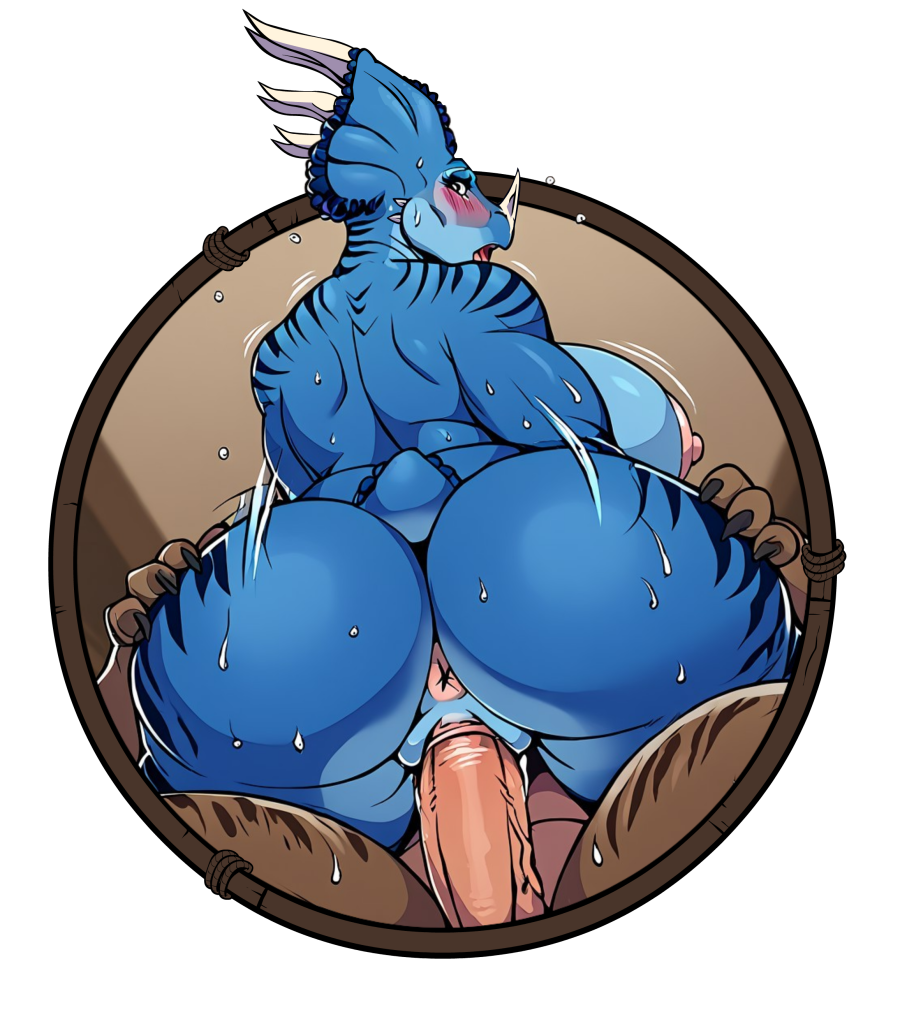
“Perfect,” he said, chewing loud. “Seed and meat together—what more could a male want?”
She saw the moment come: his jaw snapped bone, fat running down his chin, and at the same time he groaned and spilled inside her. She recoiled, horror surging like bile—yet she forced herself to stay, forced herself to present, cunt swallowing his spurts, bosom bouncing in rhythm to his release.She nearly slapped him, nearly broke the spell with fury—but he saw it in her eye, grinned, and dragged her down hard, burying her to the root. Her head snapped back, scream tearing the air like a prayer that would never be answered.
Her hips ached, bosom slapped against his chest, sweat rolled down the blue of her cheeks until the flush had turned purple. “Too stiff,” he sneered, giving her breast a sharp slap. “Roll your hips, cow. Spiral it. You’ve got potential.” She gritted her teeth, hating that his words cut both ways—mockery, and yet a kind of instruction.
This was not how things were done in her tribe; rutting was quick, fierce, equal. Here she was reduced to squealing and whining, her arms behind her head on his command while his slaves looked on and laughed. “You’ll learn,” he drawled, tearing a rib in half with his teeth. “A good suckling cunt deserves training.”
Her thighs trembled, but the allosaur only leaned deeper into his furs, belly streaked with grease, cock jutting skyward like the mast of a war-raft. Still, She rolled her hips, forcing the spiral he demanded, bouncing hard and fast, breath breaking in sharp whines. Every movement sickened her—this was not rutting, not the way her people knew it—but her cunt betrayed her, clutching his shaft, sucking him deep. His eyes burned yellow-gold as he sipped his wine and let her do the work. Her loathing was a hot coal inside her, yet her body betrayed her—cunt clenching, hips rolling in figure-eights just as he’d shown.
He drank deep, swallowed meat, and when the second orgasm ripped through him, he timed it with a swallow, moaning as if her tightness and the taste of charred flesh were the same pleasure. He pulled her down hard, burying himself, and she screamed, not in triumph but in horror that her body had obeyed so perfectly.
When she licked her lips, desperate for water, he barked a laugh. “Thirsty? Here, cow. Drink.” He caught her by the horns and poured the wine down her throat, red and sharp, burning her tongue, filling her belly with fire. She coughed, sputtered, swallowed, and the world lurched sideways—the walls bent, the smoke curled into shapes, the slaves’ faces swam. The wine was too strong, drugged or simply bred for a stomach thicker than hers. He roared with laughter as she swayed atop him, grinding harder, looser, her cunt slicker for the heat in her veins.
“Good! I feel it. Loosened up, little cow. You ride better drunk.” His claws dug into her ass, spreading grease across her hide, smearing rib fat onto her flanks until her rump gleamed with it.
Her backside slid against his scaled thighs, oiled not with perfume but with the juices of his feast. She gagged on the stench—meat, smoke, resin, sex—all tangled together. Each slap of her hips smeared more grease over her haunches, down between her thighs, until she was painted in his appetite. The slaves smirked as they brought another tray, staring openly at her bosom as it slapped against his chest. She wanted to cry out, to curse, but the wine made her moan instead, a low animal sound that sent him over the edge.
He bit down on a rib, swallowed a hunk of meat, and groaned as he spilled into her, spurting seed while grease ran from his claws onto her ass. He timed it perfectly, chewing, swallowing, and ejaculating in one lazy rhythm, as though she were just another dish in his banquet. She screamed—whether from orgasm, horror, or both she no longer knew—and collapsed forward, her bosom crushed to his chest, her cunt clenching on his shaft even as she hated every second. He laughed, belly shaking, and licked wine from his teeth. “Perfect. Meat and cunt, the two true gifts. And I get both at once.”
She sagged against his chest, bosom pressed flat and glistening with sweat, cunt still fluttering around his cock though he had emptied into her many times already.
Her breath came in sharp squeals. He only leaned back further, smearing grease into her hide with the casual stroke of a claw, laughing deep in his throat. “Look at you,” he said, tilting her head back by her horns so he could see her cheeks. “Not blue anymore. Purple. That’s what a real male’s seed does. Paints your face with heat. Shows the truth of you.” She snarled, low and desperate, but the wine made it break into a moan. The floor swam beneath her hooves, the walls twisted into coils of smoke, and still his cock stood iron-hard inside her. She tried to slow her hips, to catch her breath, but his claw slapped her bosom again, the sting making her squeal high and pitiful. “Not enough,” he mocked. “Not nearly enough. Roll them wider. Spiral your hips, cow. Yes. That’s how you milk me. Don’t stop. Don’t you dare stop.”
She obeyed. Not because she wished it, but because every time she resisted, his claw pinched her nipple until her eyes watered and the slaves laughed. She hated their stares, hated the smirks curling their muzzles as they filled his cup, as they dabbed grease from his scales only to smear it across her rump. Her backside was slick now, shiny with meat-fat, each bounce making a wet slap against his thighs. “A thick matriarch begging with her cunt.” he said, chewing loud, flecks of flesh falling into the fur beneath them. “A Grass eater. A vessel of weakness. Do your horns tremble knowing you were bred for this?” Her cunt betrayed her again, clenching hard around him. She threw her head back and moaned, ashamed at how deep it struck her.
Loathing gnawed her, not only for him but for herself. She had never been skilled in the ways of sex; her station had allowed few chances. Now she found herself guided like a calf in the pen, taught how to grind, how to squeal, how to please a carnivore who tore meat with his teeth even as he spilled into her womb. He poured more wine down her throat, and she swallowed in desperation, tongue thick, belly burning.The hallucinations deepened—his teeth gleamed like moons, his tail like a serpent winding the hall. Her body moved easier, looser, driven by drug and humiliation both. “Good,” he chuckled, tugging her arms back behind her head again. “fat tits high. Cunt tight. This is how you’ll beg for me.” She squealed, purple blush staining her cheeks, and rolled her hips in violent figure-eights. Her breasts bounced with each thrust, fat and heavy, slapping against her chest while his claws tugged and twisted. She hated him. Hated herself more. But her body reached anyway, her cunt rippling, pulling, dragging his seed from him until he groaned and thrust once—just once—and spilled into her, yet again.
He swallowed meat as he came, grease dribbling onto her ass, his laugh shaking his belly. Pressing down onto her thick trembling rump as he ejaculated long and deep into her. “There,” he said, patting her tit as though marking a tally. “and Just three more before the sun sets.” She whined, high and broken, but kept grinding because protest had earned her nothing but pain, and obedience at least gave her the rhythm of his release. Her eyes rolled back as the searing heat of his load washed over deep inside of her.
Epilogue
The door flap had barely fallen shut behind the styracosaur when he barked a laugh, slapped his thigh, and raised his cup. Resin smoke and meat fat hung heavy in the hall. Her axe and spear leaned against the bone-table, gleaming with fresh grease where he had touched them, already claimed as trophies. “Look at that,” he said, stretching out long in his furs, cock still streaked, belly full. “Big horns, heavy tits, a matriarch of grass-eaters — and I sent her out of here bow-legged, leaking, and unarmed. I let her keep her rags. Jewelry alone would’ve been prettier, but…” He blew smoke toward the rafters.
“Better to let her keep a scrap of dignity. That way when she comes crawling back, I can strip it from her slow.” The slaves chuckled, sharp teeth flashing. One poured wine; another laid a new tray of ribs. He ignored them as he always did. He wasn’t talking to them. He wasn’t even talking to anyone in particular. He was talking to the hall, to the rafters, to the bones, to himself — because he knew every claw and fang in his war-band could hear him, and they were grinning in their guts. “They call me a pain in the eye of civilization,” he said, chewing slow. “Good. To horn-cows and grass-eaters, I am pain. To hyenas across the sea, I am nightmare. But to my raptors? To my pack?” He raised the rib in salute, grease running down his arm. “I am king.” He leaned back, sighing through smoke.His grin widened as he saw her spear glint in the firelight, his trophy now, proof of her humiliation. “Six times I spilled, and she rode every drop. Didn’t matter if she blushed, didn’t matter if she cried, didn’t matter if she hated it. She worked for me. She bled sweat for me. She learned my rhythm.” He licked the last of the grease from his claw. “That’s civilization. That’s Tentus.” The hall laughed with him, a chorus of snorts and tail-slaps. He drank deep, wine staining his jaw, and thought of her purple cheeks, her squeals, the way she staggered out with her head down. He had given her nothing but “consideration,” and still she would come back. They always did.
The laughter of the hall faded behind her, swallowed by the dust and the wind. She staggered up the embankment barefoot, the blue cloth clinging damp to her bosom, every step a throb between her thighs. Her axe and her spear were gone—his trophies now, shining in the firelight of Tentus. She cursed him under her breath, cursed the city, cursed the hyenas across the sea. Each oath felt thin, rattling out of her beak like brittle shells. The road stretched long and gray ahead, the grass withered to stubble. Her horns ached, her bosom burned from his claws, her cunt still leaked in thick pulses.
She tried to spit, to clear the taste of his wine from her tongue, but the fire lingered in her belly, the heat it had kindled refusing to leave. And in the hollow of her mind, in the place she would never speak aloud, she knew the truth: it was when he had been most despicable that her body had betrayed her most. When he had eaten meat and laughed, grease dripping on her ass, when he had called her a cow and slapped her tit raw, when he had spilled into her with his mouth still chewing—that was when she had felt her flush deepen, her hips loosen, her heat rising.
She hated him for it. Hated herself more. The shame scalded worse than the bruises. She pressed her thighs together as she walked, but the ache only grew, a cruel rhythm that matched the memory of his belly shaking with laughter. Behind her, the smoke of Tentus climbed the sky.
FROM THE VANDYRIAN CODEX
-
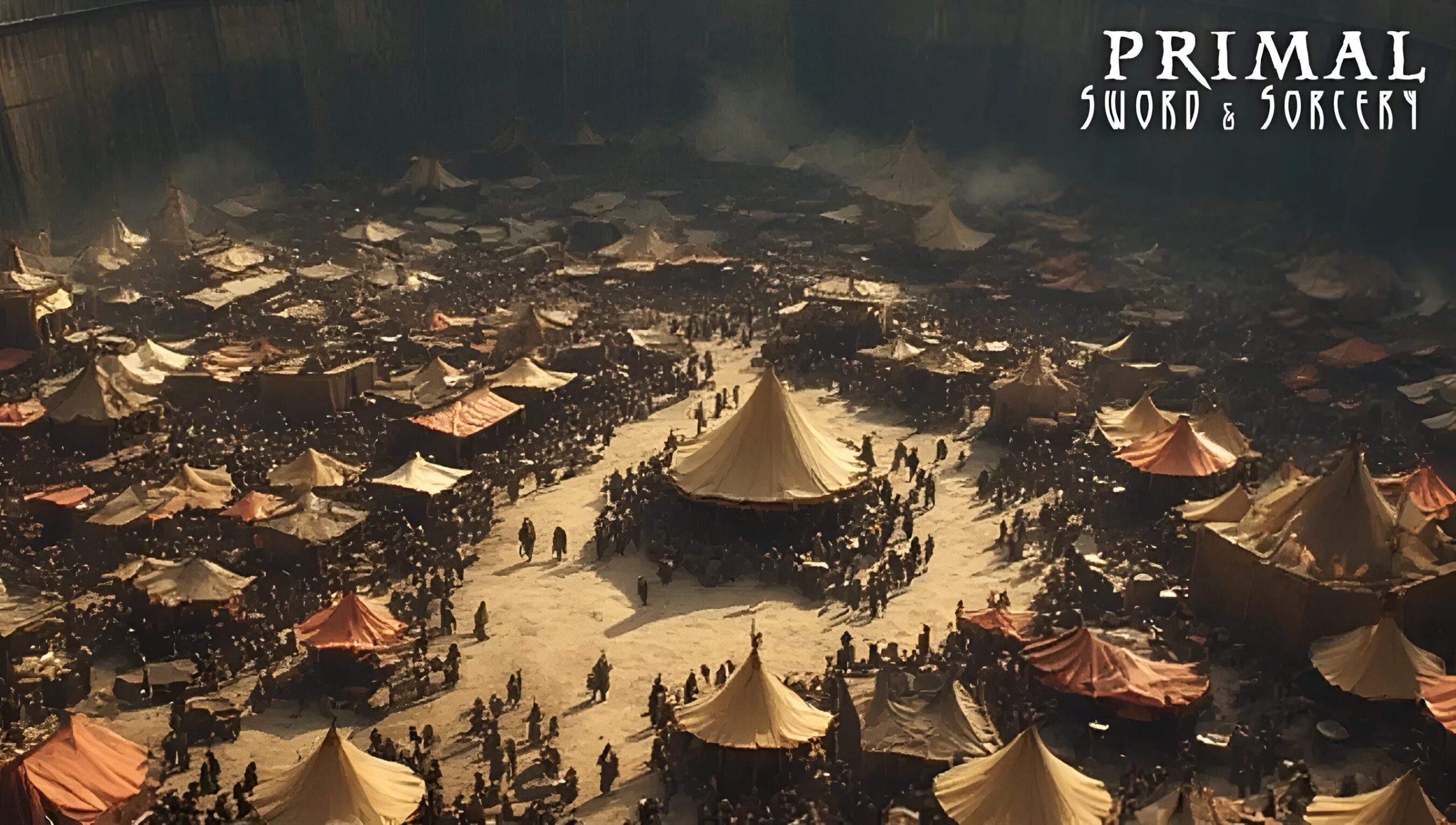
The City of Tentus
Tentus is the open mouth of Drael, a city squatting in the bowl of an ancient impact scar where stone was once turned to vapor and sky burned white. It is not among the four great thrones of the north, nor does it pretend to rival the hidden citadels beneath ash and serpent-ruin, yet it endures because it performs a function none of the greater powers care to soil themselves with: exchange. Trade, vice, spectacle, execution. If Drael is a wound, Tentus is the clot that never quite seals, thick with caravans and carrion both. Drael itself is described in the old tablets as inverted—surface ruin masking subterranean dominion.
Tentus is surface made permanent.
The crater’s rim forms a natural amphitheater, jagged stone rising in broken arcs like teeth around a tongue of dust. At its center yawns the Pit, a vast arena carved deeper into the impact basin, ringed by terraces of basalt and bleached bone. From above, the city appears circular and organic, streets spiraling down toward the Pit in widening coils, each ring a district of trade, degradation, and ambition.
The Deinonychus lords claim Tentus as neutral ground. Whether they truly rule it is debatable. The scaled barbarian tribes of Drael’s surface—raptor packs, Spinosaur flotillas from the marshes, feather-crested velocian assassins—send emissaries and enforcers, but none sit a permanent throne there. That absence is deliberate. Tentus thrives because no single warlord dares claim it entirely. To do so would disrupt the delicate machinery of vice and barter that feeds all sides.
-
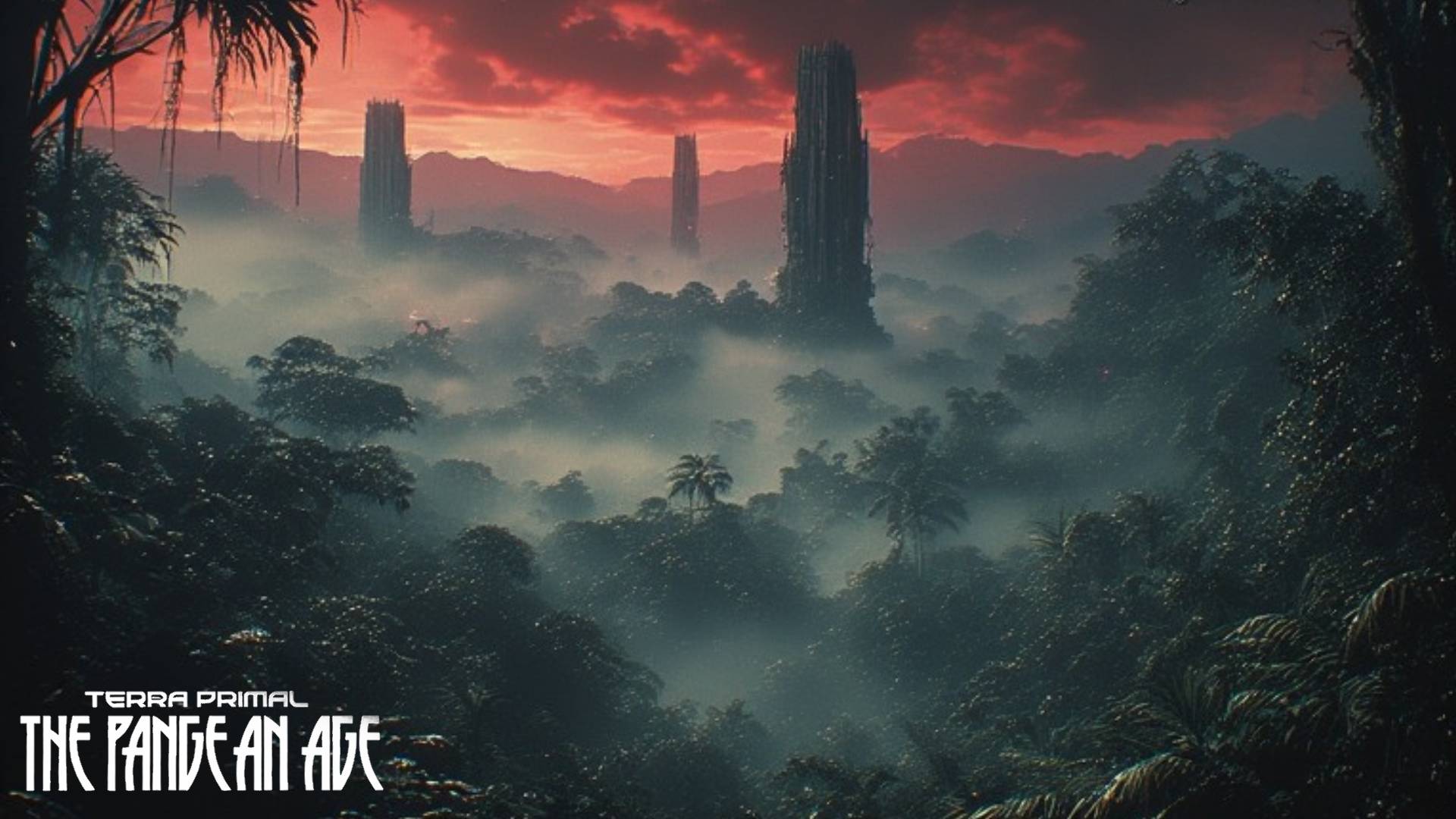
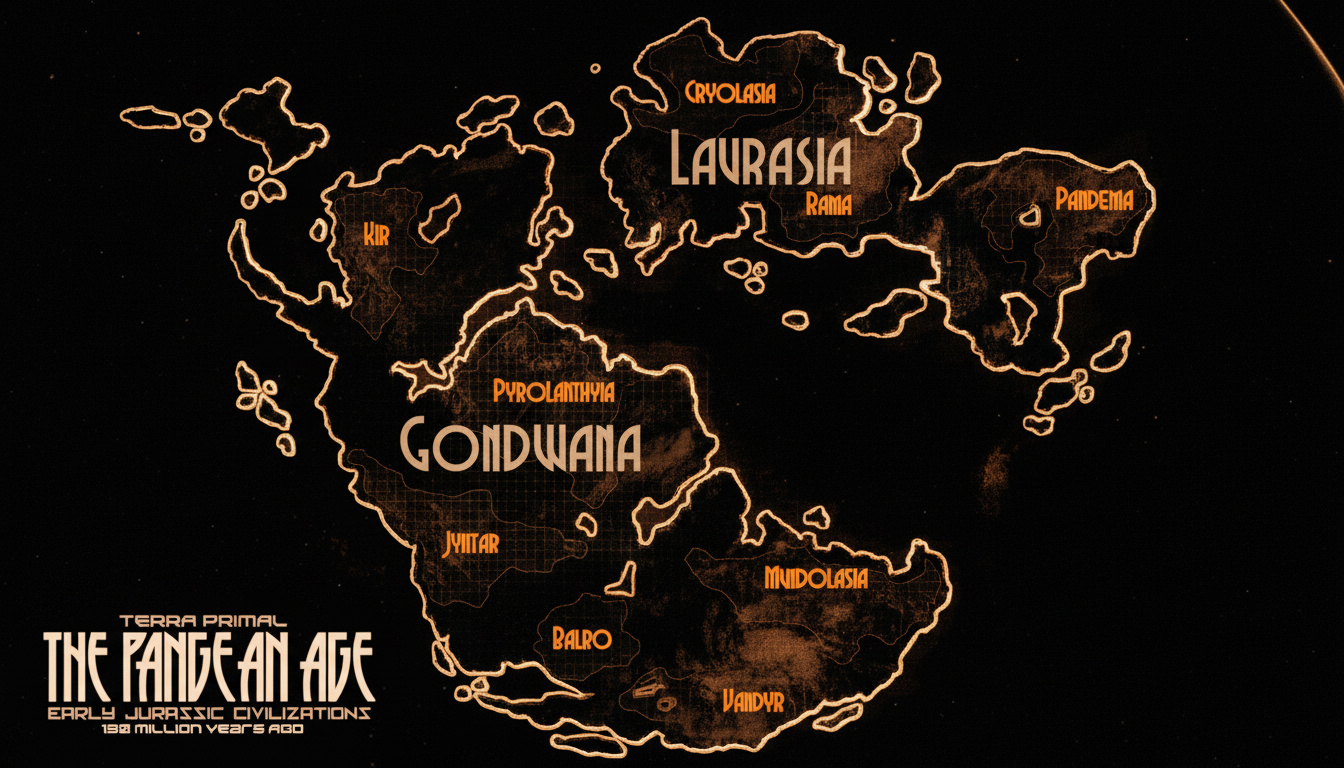
The Gondwanan Territories
In the southern dominion, Tellus did not establish an outpost; it inherited a machine:
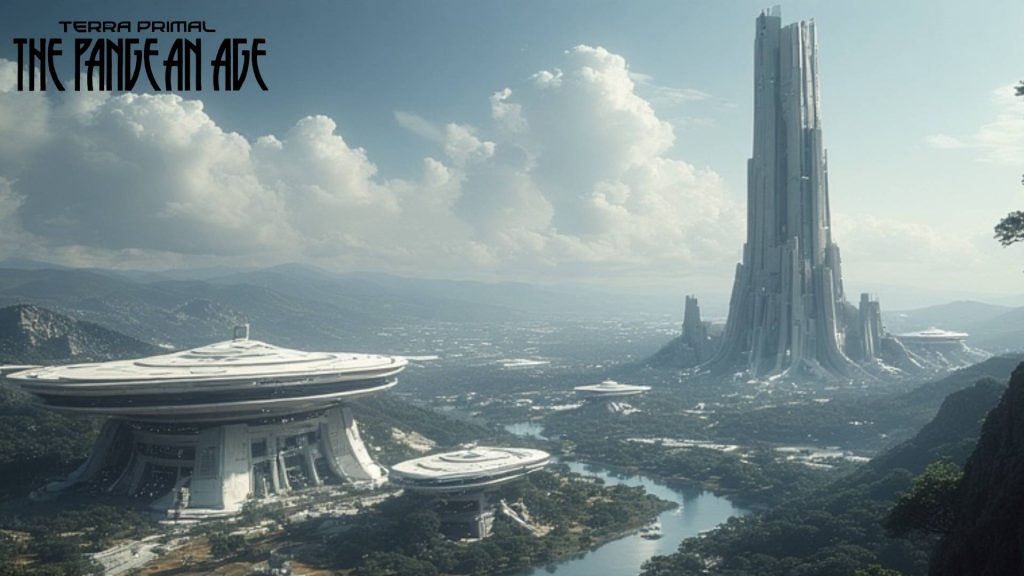
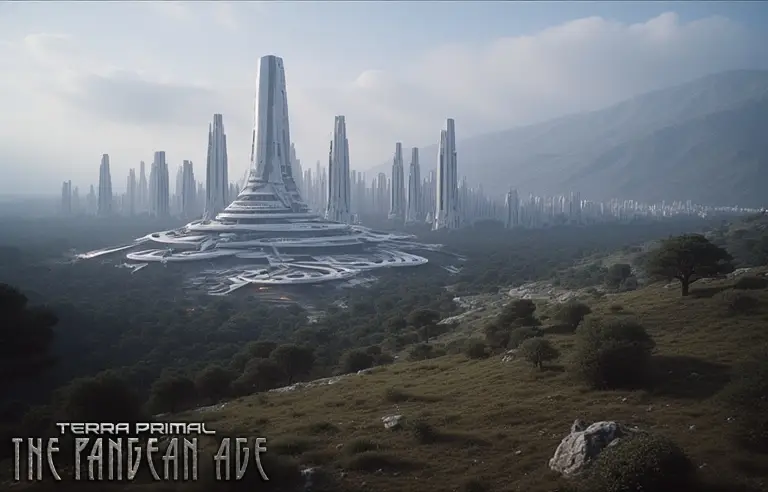
Jyntar had risen not as a city but as a spiraling web of black archology towers fused by skybridges and subterranean transit veins. It functioned less as capital than processor—an interlocked lattice of ministries, weapons directorates, compliance tribunals, and orbital uplinks tracing lineage to offworld benefactors whispered to have emerged from Saturnian collectives. Authority had not centralized there; it had circulated. Decrees were not announced but compiled. Expansion registered as adjustment. Leadership, when glimpsed at all, appeared as silhouette and transmission artifact—never singular, never fully embodied.
South of Jyntar lay Pyrolanthia—the wasteland border and the true crucible of Gondwana. The ocean crossing had been trivial; Pyrolanthia had been punishment. Once an industrial corridor of reactors and transit lines, it had collapsed into a field of oxidized megastructures and ruptured hulls scavenged by whatever endured the attrition cycles of prior eras. Towers leaned like broken fangs across irradiated plains. Buried systems discharged intermittent surges, lighting the horizon in irregular pulses. What lived there did not rebuild—it consumed. Those who wandered unshielded did not disappear into myth; they were catalogued as loss.
To the north, beyond elevation breaks and containment grids, Kir had festered into a protomutational hell-jungle. Bioengineered growth had breached protocol generations earlier and run feral. River systems choked under hypertrophic canopy. Predatory clades reproduced without equilibrium. The grid had held—for a time—separating ordered territory from uncontrolled bloom, but projections had marked Kir as eventual contagion. Without decisive intervention, spread had been inevitable. Kir was not rebellion; it was entropy made vegetal.
Balro had operated in deliberate contrast: open, regulated, weaponized. It served as the primary testing ground for Tellus’s armament programs—atmospheric suppression arrays, long-range deterrents, and platform-scale annihilation systems. Explosions had been scheduled. Catastrophes rehearsed. Terra Proxima had targeted Balro as a priority for infiltration, and the sector had been guarded accordingly—sensor fields buried beneath agricultural facades, strike divisions embedded within logistics infrastructure. Every prototype had departed under escort. Every failure had been reduced to data and ash.
Mundolasia had remained an anomaly. Dense jungle and deliberate neutrality shielded its populations—herbivores, Gaianist sectarians, and exiles from both megacorporate blocs. They had facilitated rather than fought, trading passage, intelligence, and sanctuary without permanent allegiance. Survival had been doctrine. Neither Terra nor Tellus had claimed them fully; both had relied upon them. Their forests had harbored unspoken accords and temporary alignments, dissolving as quickly as they formed.
Vandyr had persisted as the wound beneath the southern order. Former host to the Greater Vandyrian Empire, its reactor infrastructure had lingered in long-rim decay, output diminishing while risk indices remained elevated. Entire districts had been abandoned to structural collapse. Residual surges and containment breaches rendered reclamation costly. Tellus had maintained skeletal oversight, extracting stabilized yield while sealing off the irreparable. VandyR had not been asset nor relic; it had been liability too potent to discard.
Across Gondwana, governance had expressed itself not through spectacle but through endurance. When a sector destabilized, it had been isolated. When a region failed, it had been sealed. Pyrolanthia had rotted yet held the line. Kir had mutated yet remained partitioned. Balro had detonated yet advanced. Jyntar had compiled, recalibrated, and continued. If serpent-folk operatives had existed within these territories, their presence had manifested as gaps in audit trails and anomalies in predictive models. They had been calculated as variables rather than myths. No command architecture had been complete without its ghosts.
Each prior cycle had left residue—rusted corridors in Pyrolanthia, unstable cores in Vandyr, feral canopy in Kir. Tellus had not erased residue; it had built through it, over it, and when necessary, around it. Destiny there had not been conquest nor spectacle. It had been persistence under diminishing returns. Systems failed; archives endured. Sectors collapsed; quarantines followed. When the age had turned, the objective had not been triumph. It had been continuity. Power had not burned bright. It had settled deep, waited out collapse, counted losses, and prepared for recalibration in the silence that followed.
-
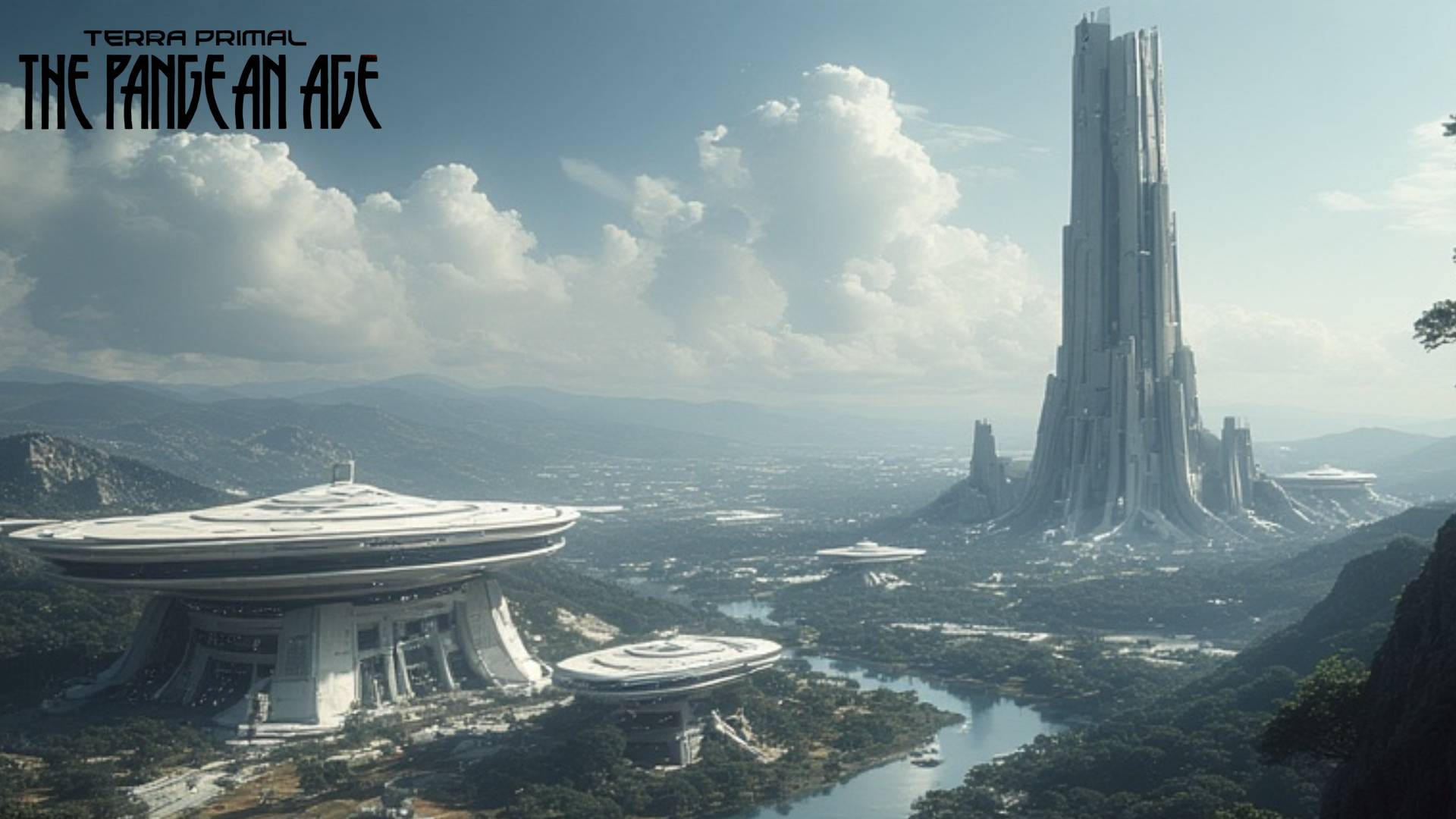
The Laurasian Frontier
Upon the Laurasian frontier, Proxima established the headquarters of her operational entrypoint: UNCI-Maka HQ: raised from white stone and black-encased spire upon the rocks of Rama. That city’s story is itself a ledger of expendability: founded not by citizens, but by the prisoner-slaves of the first corporate wave, those bred and delivered to build, to haul, to die in the dust beneath machinery.
Caste was not accident, but design—each cohort tailored for purpose, each life cycle engineered for function, then redundancy. Some augmentations broke protocol, escaping into the sector’s northern wilds, where they established their own logic of violence. These feral strains are not legend, but statistical fact—recorded in the casualty rolls of six suppressions, the cost in overseer blood and unprocessed ore indexed at 11,231 units lost per cycle.
Rama’s caste—the reptilian hybrids of the mining generation—endured not because they were strong, but because they were invisible to record. Those who survived the first crucible became the new overseers, a lesson in recursive authority that remains empire doctrine. The breakaway populations on the southern coast, denied armament but not cunning, are a living reminder that Vandyrian descent is not a shield against regression. Barbarism and empire are not opposites here; they are points along the same parabola, each accelerating as the core withers.
North of Rama, Cryolasia, the landing site of the Proxima front line, is a region of cold without snow, merely driving icy rain and sleet, broken by waves of dense lightning and sporadic heat. The atmosphere generator—damaged and starting to die—will take eons to cycle down. Only then can repairs begin; the empire, no longer able to send commands from on high. The population is overworked and wears cloth. Labor cycles here run at 1.7x coreworld average, with a 37% overexertion fatality among conscripted troops—diverted south for the endless brushfire wars. The numbers are not a mystery; they are the policy.
Pandameia is the exo-sector, like all regions under Proxima’s jurisdiction, subcontracted and sectored; these, from some collective offworld about the Saturnian orbit, bioengineered by their guru, the Seedking, a strangeling from another world. He is mysterious and unseen; this ‘Giy’ they speak of in hushed, sweaty tones.The exo-sector Pandameia, always a statistical outlier, remains the empire’s tolerated unknown.
Governed by subcontract, populated by collectives from the Saturnian diaspora, Pandameia’s political economy is less a chain of command than a shifting network of alliances and experimental hierarchies. Bioengineering is their only doctrine, and its high priest—the Seedking, known only as ‘Giy’—is referenced in no less than 417 intercepted comms, always in the idiom of awe or threat. His origins are irrelevant; his effect is measurable. Crop yields, splicing metrics, and resistance to imperial oversight are all above baseline, but so is the incidence of espionage, sabotage, and unsanctioned genetic drift.
Though not allied, these forces are hardly conspiratorial. Cryolasia, gated in by imperial necessity. Rama, the beachhead. Pandameia, the constant X-factor.
Inside the subcontracted area is believed to be a base of serpent-folk espionage. The serpent-folk, if they exist, are not merely rumor; they are the calculus of imperial anxiety. No command structure is complete without its ghosts.
Throughout the operational history of Terra Proxima, one trend is immutable: extraction, depletion, and attrition run together, a triple helix in the empire’s DNA. Every resource tallied is a life diminished; every day the atmosphere generator stutters is a day closer to ecological collapse. In the records of the outpost, the dichotomy of home and hell is not rhetorical. It is the arithmetic of existence at the threshold of empire, where the only certainty is that every gain is temporary, and every loss is permanent.
Destiny, in the empire’s codex, is not prophecy, but record. Proxima stands as both memorial and forecast—a tabulation of will, loss, and the final truth that even the greatest machine runs down. Those stationed here do not dream of the core; they recite the casualty rolls, rebuild what burns, and wait for the next rotation—knowing the only certainty is that the age of decline will claim every stronghold, every faction, every myth, until nothing is left but the data, and the silence that follows.
The Latest From

-
Then…
Our People arrived…
…and with them the corporate war at the empire’s outer frontier. during “the age of decline”. when the collapse of the core worlds finally began to take down the greater polities and ruling factions of “this”. the time known, as The Pangean Age.
The event horizon of the Pangean Age is charted not by the slow procession of dynasties, but by the fracture lines at the empire’s furthest rim—where beings and beasts alike are forged and spent in the machinery of decline. Proxima stands as the imperial threshold and the sovereign directive: the photonic mind behind every order, the first and last arbiter as hope gave way to systemic loss.
It was here, at the outer edge of The Laurasian Frontier, that our people—agents of the greater project, bearers of both the imperial will and its contradictions—arrived, and with them the epochal corporate war that finally broke the back of imperial pretense.
At the hour Proxima raised her banners over the ROC—the so-called Region of Concern, that third world circling an amber, low-yield star—imperial authority was already a simulation. This was not the luminous blue-white of axium-class Vandyrian cores, but a dull, suffocating light that revealed only scarcity, not abundance. Proxima never chose this world; she calculated it, read it as asset and risk, cursed in its selection and in every metric that followed.
The skies—once blue, now the ochre of chemical night—ran thick with smog and vented ruin, the cost of extraction measured not in credits, but in survival odds and atmospheric decay.
-
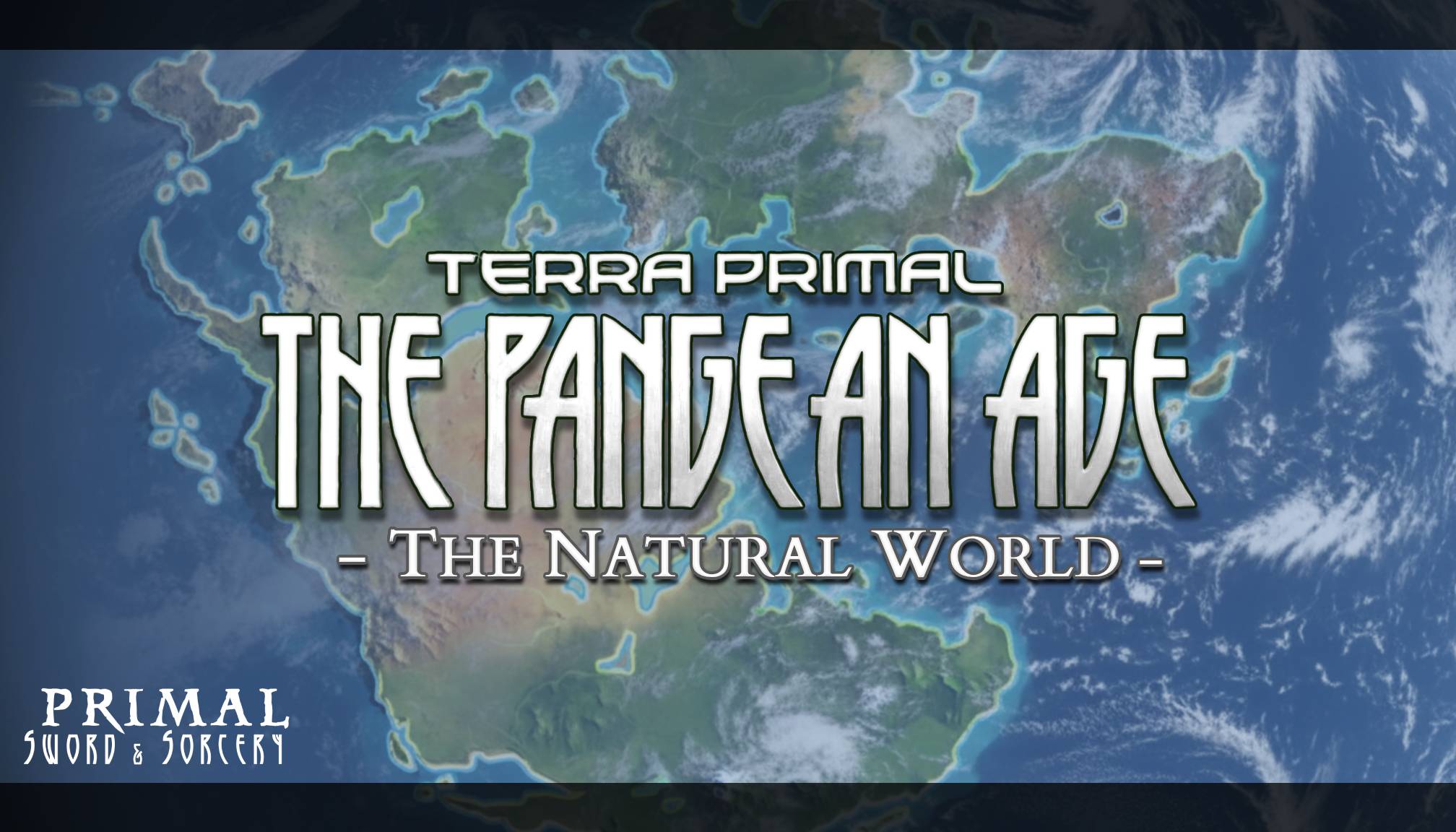
PRIMER: The Natural World
Here an unnamed world existed in an age without memory:
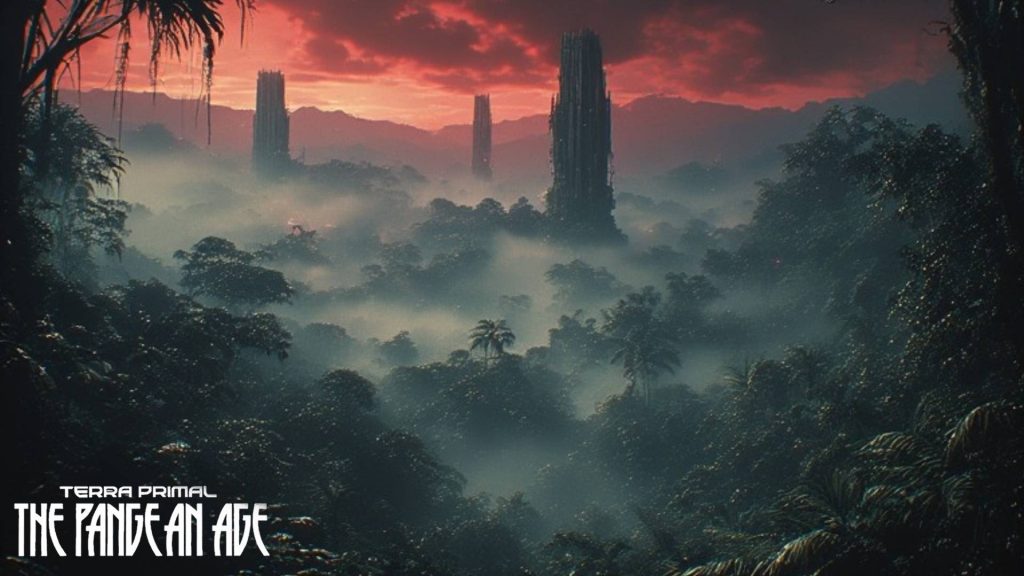
The land’s surface unbroken by wall or road, its air dense with green mist made from drifting spores. Thick with the heat of an ancient relentless sun. The land in its entirety ran together in a continent so vast that river and mountain were swallowed in the sweep of forests and open floodplain. All the world was motion—rain hammering leaf, thunder rolling down valleys, roots splitting stone, fire chasing the horizon.
Life was restless. Swamps heaved with armored bodies; plains shivered beneath the passage of beasts heavy as storms, their hides a tapestry of scars, horns, bony plates. Jaws snapped in silence; shadows waited for weakness. Hunger shaped every day. Ferns and towering horsetails choked the light, fighting skyward for a taste of the sun, while predators drifted between the trunks—some quick and clever, some enormous and slow, all bound to the rhythm of need. All breeding without mercy.
Yet here even giants were hunted, and the smallest creatures clung to life in the mud, in bark, in pools left behind by vanished floods. Eggs waited in silence beneath layers of rot and wet earth, while the air trembled with the wingbeats of reptiles gliding from one ancient tree to another, eyes catching light in colors no mammal would ever see. The rivers stank of silt, packed with teeth and armor; the nights echoed with the low voices of monsters claiming territory, of flesh warning flesh away.
There were no stories, no witnesses. The land changed itself daily: lakes vanished, forests burned, mountains bled new stone. Ash would settle, rain would return, and life would push up through the ruin, hungry, armored, uncaring. No pattern held. No age lasted long. The strongest fell to drought, to famine, to wounds that never healed; the swift became the slow, the hunted the hunter. Everything that lived was both ancestor and experiment.
These endless wilds bore no names—only the unending process of being: living, devouring, enduring, vanishing. Sometimes a tree would fall, and the crash would echo for miles, answered only by the startled stampede of a hundred horned backs through the fog. Sometimes the dawn would rise on a plain made silent by fire, ash mixing with the dew, nothing left but bone and the blackened trunks of ancient ferns.
Above it all, the sky glowed. Red in the lowlands, emerald where the clouds gathered in the north. The sun burned close, unfiltered, bleeding heat and color across the continents. Night brought chill, mist, and the heavy drift of stars across a horizon broken only by volcanoes and the silhouettes of creatures whose bones would never be found.
This was a world complete in itself, ruled by no order but change. Life thrived and ended by law older than bone. No eye watched, no mind remembered, and nothing called out except the wind and the voices of living hunger. The world was what it had always been: a stage for the next survivor, indifferent to all but the moment.


 Unlock with Patreon