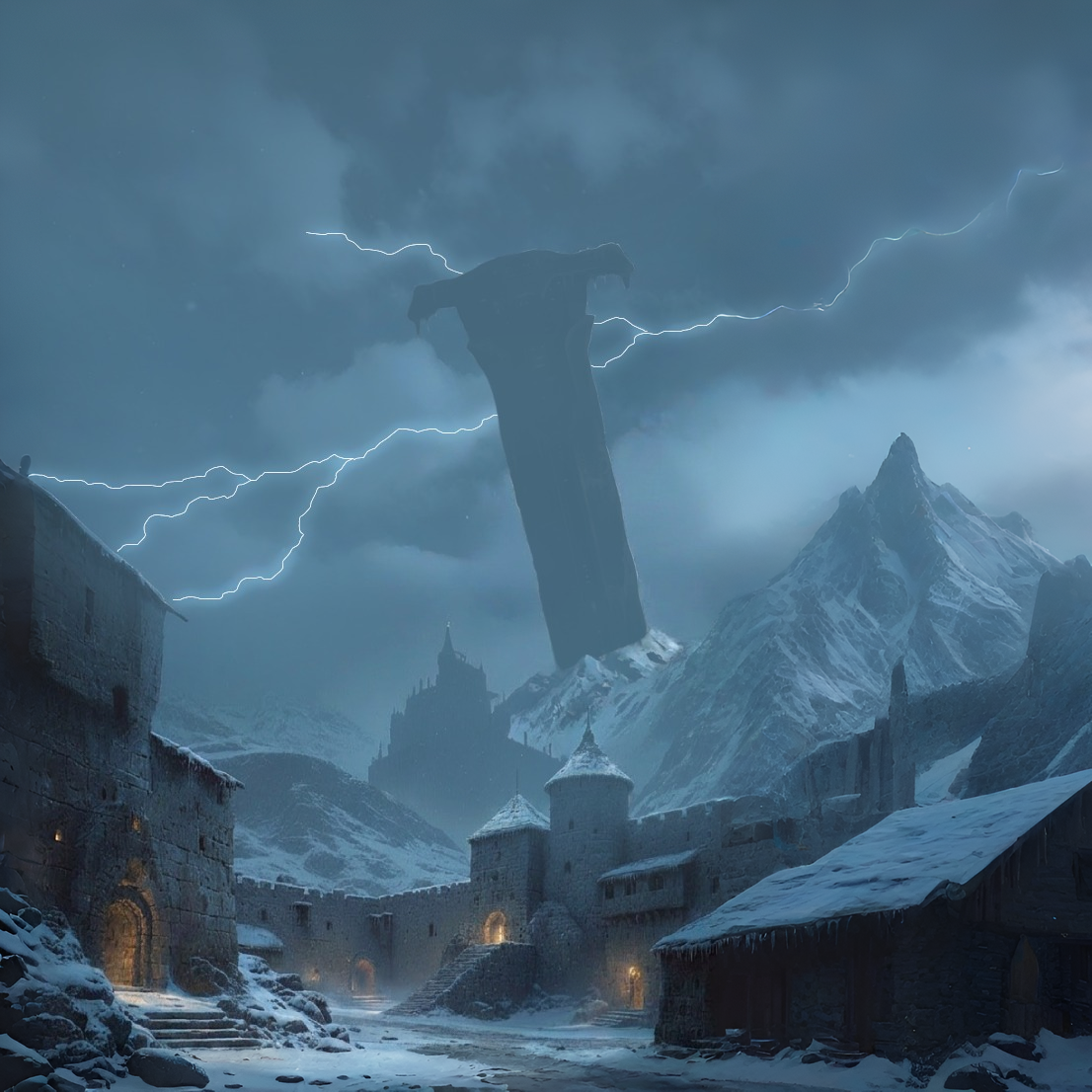



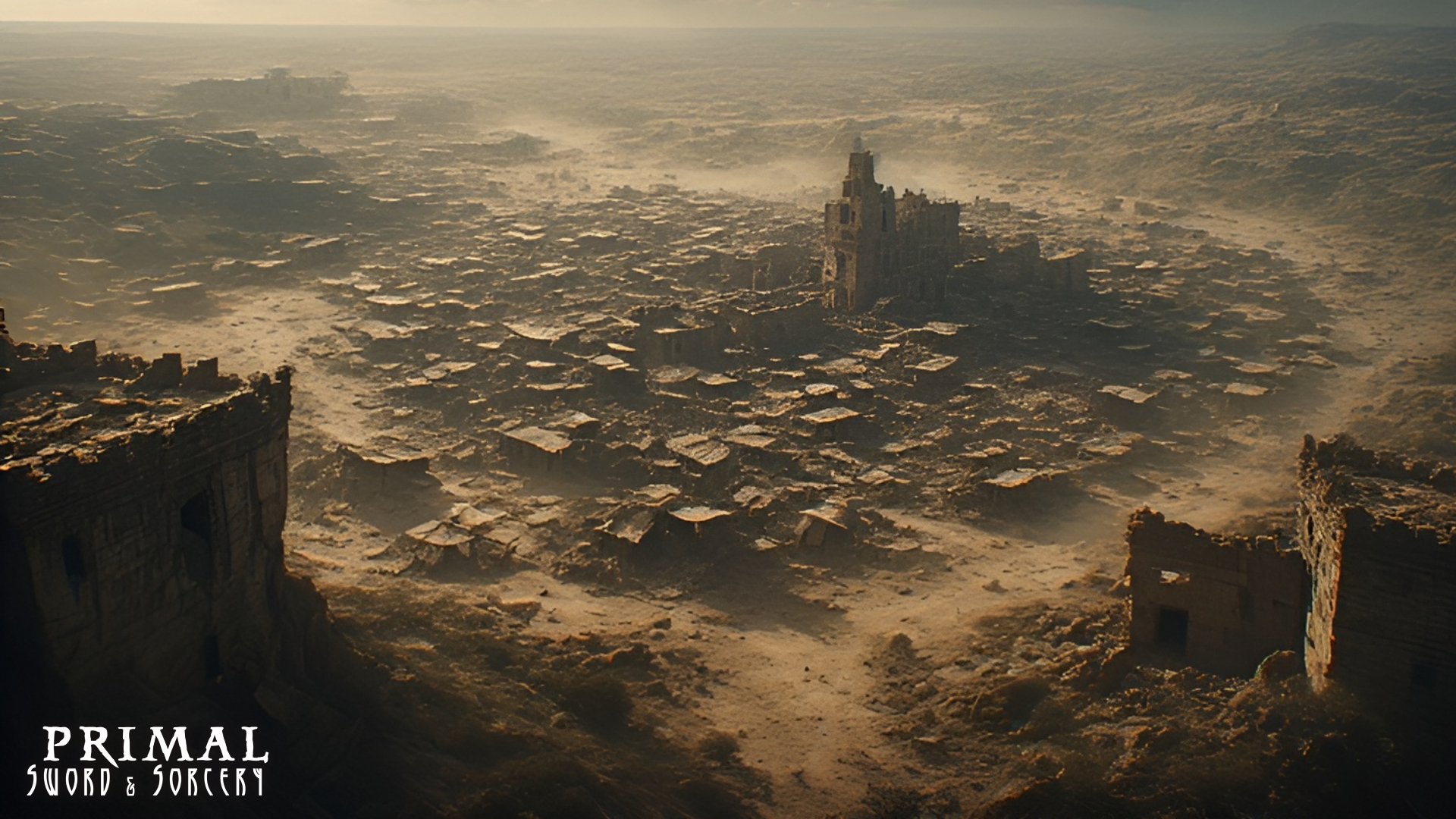
Kartonga, in its entirety, is spoken of across Vandyrus not as a realm among realms, but as a condition—an expanse where structure thins, law dissolves, and survival itself becomes the only recognized authority.
Thus the term “Outland,” when applied within its borders, loses the clarity it possesses elsewhere.
A city in Kartonga cannot truly be said to stand outside the bounds of civilization, for it was never fully within them to begin with. Even its most fortified settlements—Old Kartong among them—exist as temporary assertions against a surrounding truth that is older, broader, and ultimately indifferent to walls or crowns.
What passes for a “city” in this region is often no more than a concentration of will: stone or timber gathered long enough to resist the wastes, trade routes held by violence rather than charter, markets that operate under shifting allegiances of thieves, warbands, and opportunists. Beyond those walls, the distinction collapses entirely.
Shanties, tents, and ruin-fields sprawl outward in every direction, indistinguishable from the broader desolation except by the density of bodies and the immediacy of danger.
To an outsider, these outer belts might seem the true Outland, yet to the folk of Kartonga, they are simply the next ring of habitation—no less legitimate than the city cores, merely less defended. In this way, Kartonga renders the classification meaningless: there is no frontier to cross, no boundary that marks the fall from order into chaos.
The entire region is already that fall, stabilized only in pockets, never reversed. What remains contested, even within surviving records, is whether Kartonga was always such a place or whether it is the long echo of something broken beyond repair, its so-called cities being not foundations, but scars that refuse to close.