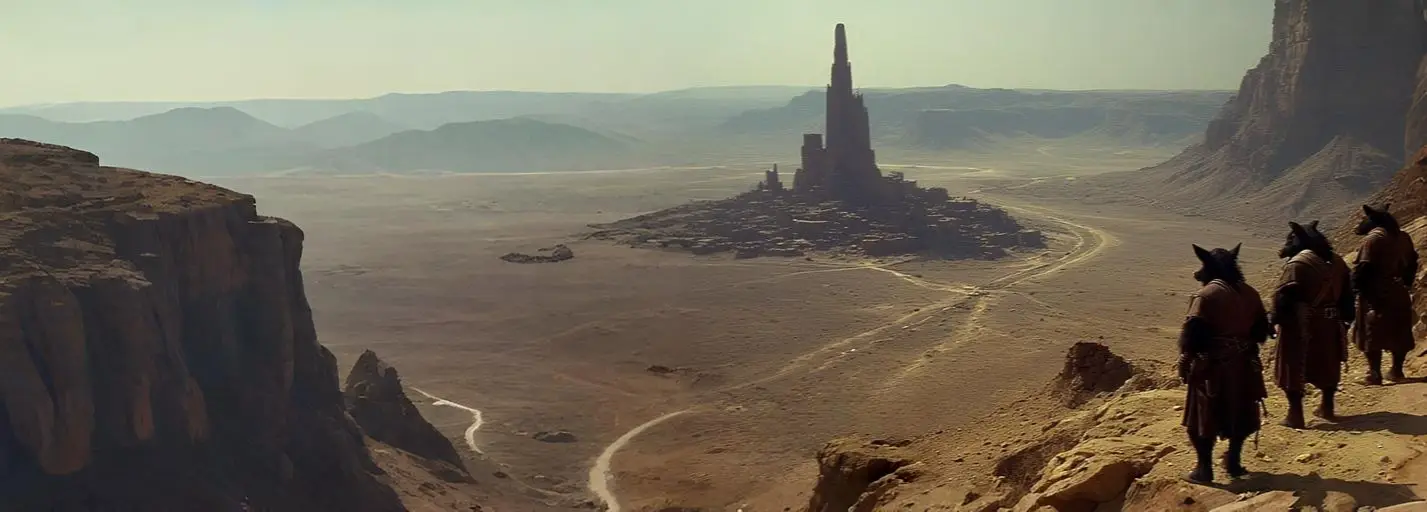

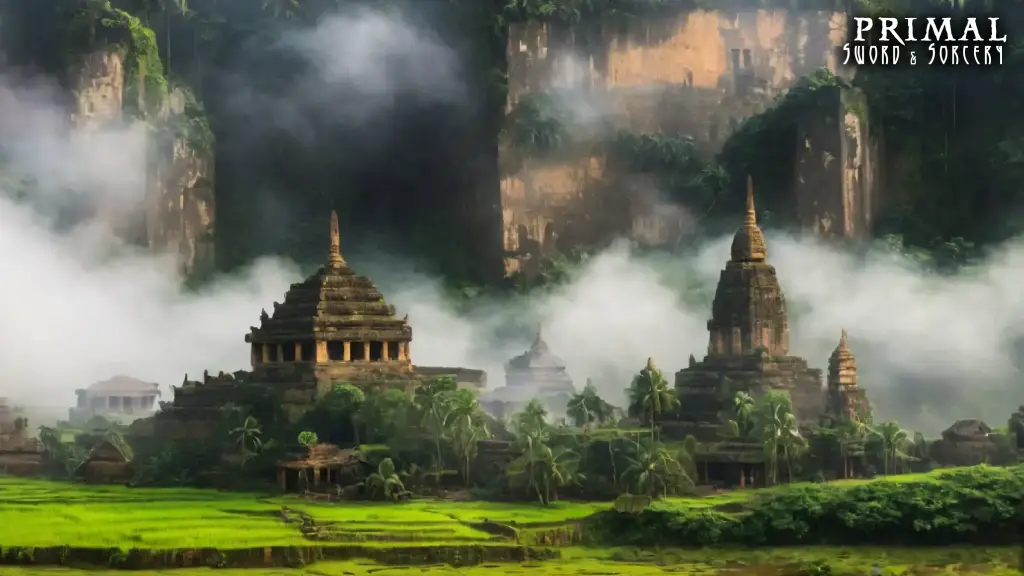
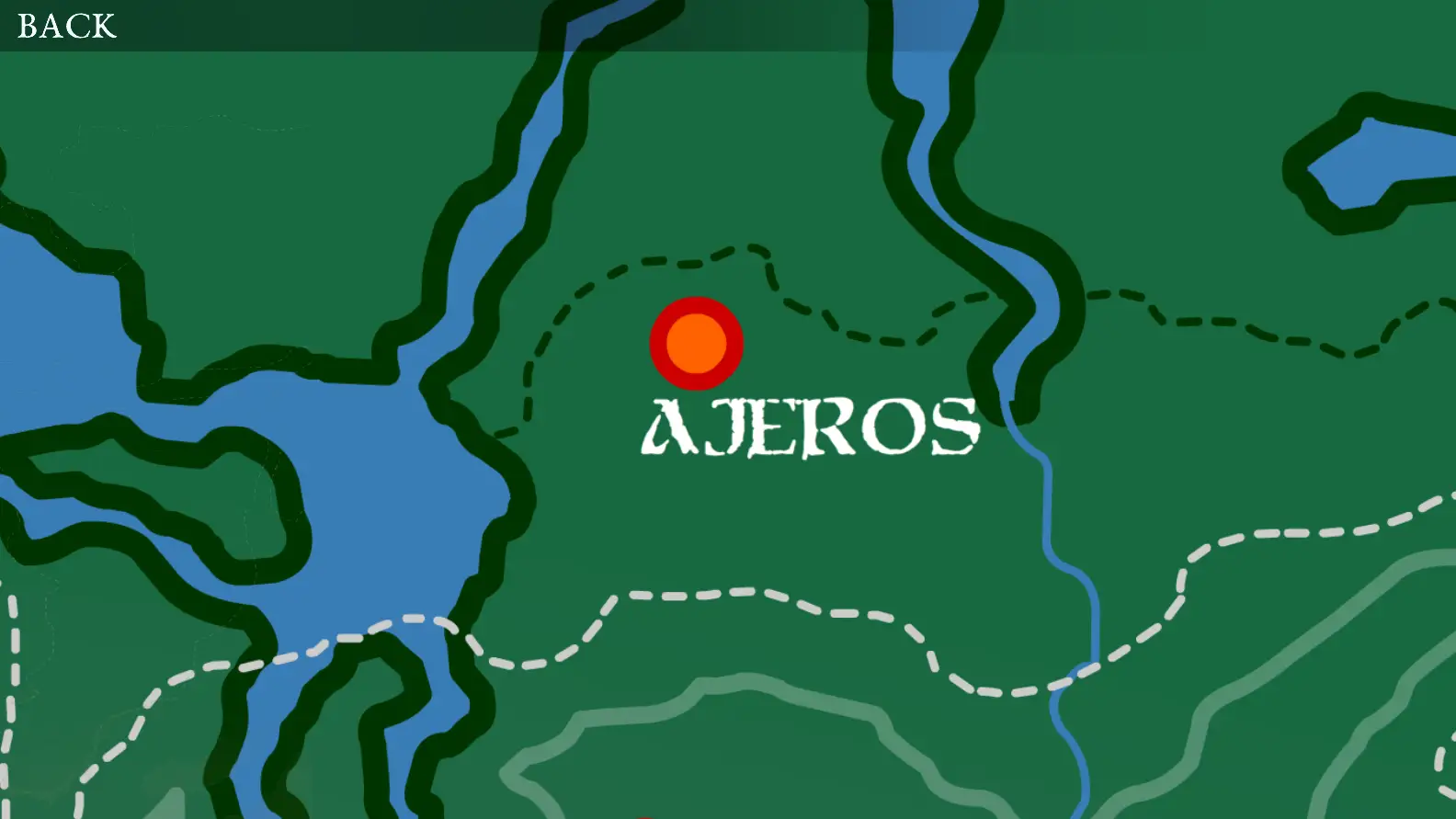
Ajeros exists because it must, not because it should. It is a city pressed into service by geography and history alike, a hard knot of stone and wet iron driven into the southern edge of Yir’s long shadow. Though counted among the holdings of Izhura, it is an outland city in every meaningful sense: distant, inconvenient, and perpetually half-forgotten by those who live in safer latitudes.
The routes that reach it do so grudgingly, slipping through vine-choked corridors and old jungle descents that once flowed south from Yir in elder ages, when the land was wilder and the borders less certain. Even now, those jungles have not fully released their claim. They cling. They creep. They remember.
The city itself is civilized only by constant effort. Stone streets exist, but they are never fully dry. Walls stand, but they are webbed with roots and lichen, their mortar forever tested by moisture and slow green pressure. Rain is not an event here; it is a condition. It seeps into roofs, beads along beams, and darkens cloth until even the poorest can tell by touch alone whether a garment has ever truly dried.
Homes are built with this knowledge carved into them. Windows are screened not for comfort but survival, their metal meshes fine enough to bar the bird-sized mosquitos that rise from the low green reaches at dusk, drawn by heat, breath, and blood. To leave a window unguarded is not negligence but folly, and folly does not live long in Ajeros.
Yet for all this, Ajeros is not lawless. Its merchants are Izhuran by custom and reputation, their measures honest, their contracts respected even by those who grumble at the city’s isolation. Trade here is practical rather than ambitious. Goods are moved because they must be, not because fortunes will be made.
The guards are much the same—strong, disciplined, and unromantic about their duty. They do not posture as heroes. They stand watch because the watch must be stood, and because everyone in Ajeros understands what happens when it is not.
For the truth, known to every stonecutter and shopkeeper, is that Ajeros is not merely a city. It is a warning bell. It is the northernmost civilized finger extended toward Yir, and the first knuckle that will be broken if something terrible decides to move south.
The badlands above do not loom merely in distance but in intent, a region whose ferocity eclipses Ajeros not just in violence, but in scale, in logistics, in the simple capacity to endure and deliver ruin. Ajeros knows this. There is no delusion here of matching Yir blow for blow, nor of holding against a true descent. Its purpose is earlier and bleaker: to see first, to bleed first, and to send word while there is still time for others to prepare.
This awareness shapes the city’s character more than any charter or banner. Ajeros does not indulge in grand monuments or idle excess. Beauty exists here, but it is the beauty of persistence—of lantern light reflected on wet stone, of vines cut back each morning only to be cut again the next, of rooftops patched so many times they resemble quilts of iron and tar.