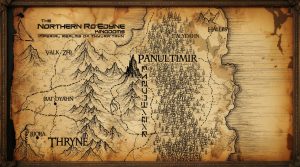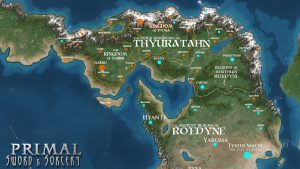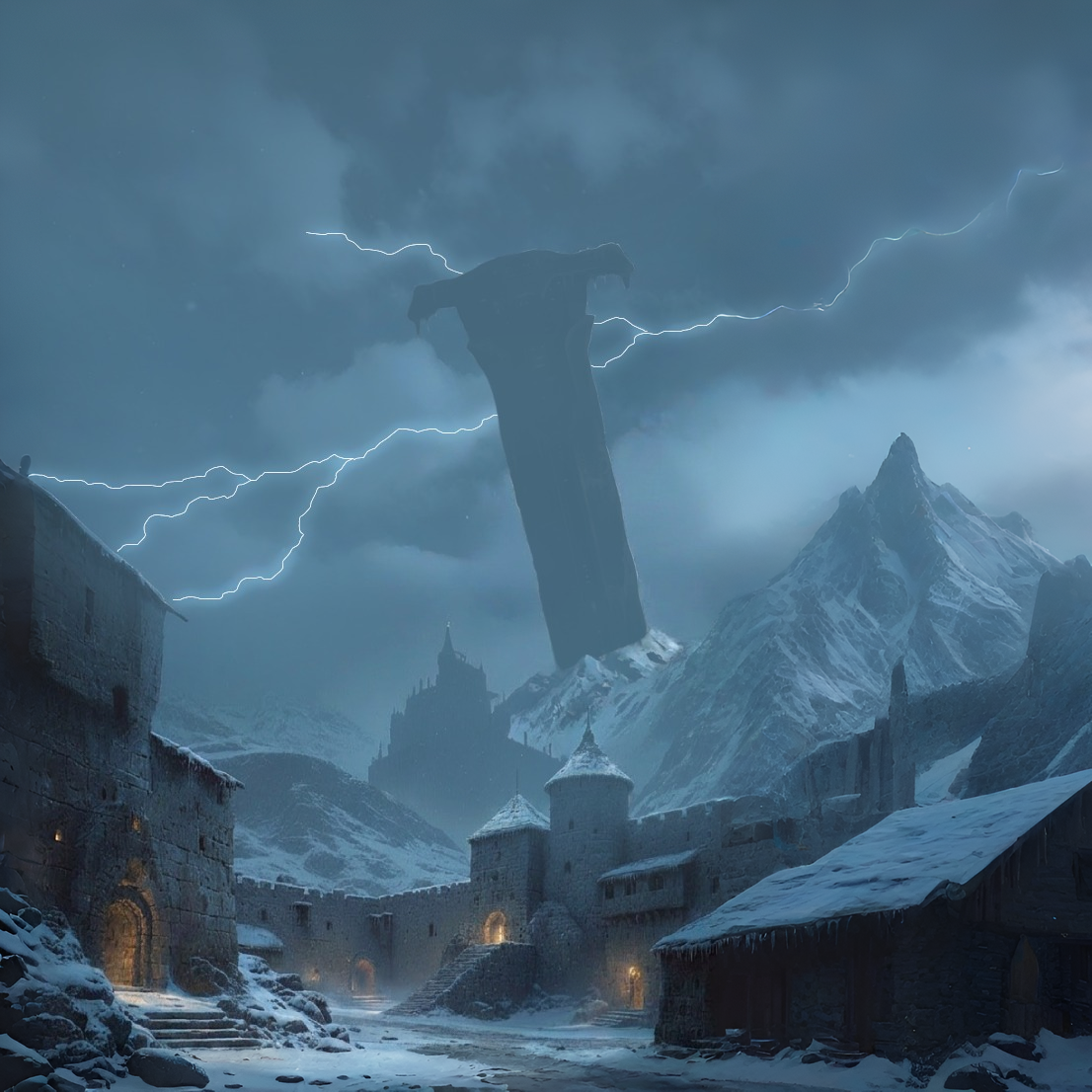



Among the many repositories of knowledge maintained throughout the northern realms, few possess a reputation equal to that of the Archives of Panultimir. Situated within the upland mountains of the Kingdom of Prandwir upon the Isles of Roedon, the institution occupies a location as unusual as its history. Unlike the larger archival complexes of the southern cities, the Panultimir Archives stand isolated among high ridges, ancient forests, and winding mountain roads that become increasingly difficult to traverse during the winter months. Visitors frequently remark upon the remoteness of the site, though this isolation has proven one of the principal reasons for its survival.
The origins of the structure remain the subject of ongoing debate. Archaeological examination suggests that portions of the foundation substantially predate the modern kingdom itself. Most scholars believe the central tower around which the archives were later constructed originally served as a military installation of some form.
Whether this installation functioned as a watchtower, signal station, frontier fortification, or administrative outpost remains uncertain. The surviving foundations are consistent with several possibilities, while the loss of many contemporary records has prevented a definitive conclusion. What appears beyond dispute is that the site occupied a position of strategic significance during the final centuries preceding the Coming of Doom.
The destruction of the ancient world altered the northern landscape profoundly. Entire regions vanished. Trade routes disappeared. Settlements were abandoned or destroyed. Yet the upland position of the future archives spared it from much of the devastation that afflicted lower territories. While the surrounding civilization collapsed, the mountain stronghold endured. Damaged but standing, isolated but accessible, the structure remained among the few surviving installations capable of supporting long-term occupation during the difficult centuries that followed.
As northern society gradually recovered, the site acquired a new purpose. The practical advantages that had once recommended it as a military position now recommended it equally for preservation. Its elevation offered protection from flooding. Its remoteness discouraged looting. Its stone construction provided unusual durability.
Most importantly, it stood upon stable ground at a time when much of the surviving population remained preoccupied with the immediate demands of survival. The earliest custodians of the collection recognized these advantages and began transferring surviving records recovered from the surrounding regions into the complex. Over subsequent centuries the institution expanded repeatedly. Additional wings were constructed. Storage vaults were excavated into the surrounding stone. Cataloguing chambers, reading halls, preservation facilities, and secure repositories gradually transformed the old stronghold into one of the most important historical collections in the north.
Although modest in size compared to the vast archival complexes maintained elsewhere within the Kingdom of Prandwir, the Panultimir Archives acquired a distinct reputation owing to the unusual character of their holdings. Many collections preserve copies. The Panultimir Archives preserve originals.
The institution houses surviving charters, census records, correspondence collections, trade accounts, administrative ledgers, maps, legal documents, military records, and countless other materials associated with the ancient northern territories. In numerous cases these documents represent the earliest surviving versions known to scholars. Entire fields of northern historical research depend heavily upon collections preserved within the archives.
Without them, substantial portions of Roedon’s pre-cataclysmic and early post-cataclysmic history would remain poorly understood.
The archives also serve as a physical reminder of continuity across the ages. More than seven thousand two hundred years have passed since the Coming of Doom. Kingdoms have risen and fallen. Dynasties have appeared and vanished. Borders have shifted repeatedly. Yet the old mountain stronghold remains occupied. Though altered extensively by generations of archivists, builders, scholars, and custodians, portions of the original structure continue to form the heart of the complex. Visitors entering the oldest halls frequently pass through stonework whose origins may extend to the final centuries of the ancient world itself.
Today the Archives of Panultimir function as both historical repository and scholarly institution. Researchers from throughout the northern realms travel to the site in pursuit of records unavailable elsewhere. Historians, genealogists, linguists, archaeologists, and chroniclers regularly consult its collections. While its remote location continues to present logistical challenges, many archivists regard the isolation as a small price to pay for seven millennia of uninterrupted preservation. Whether viewed as a library, a fortress, a monument, or a relic of another age, the Archives of Panultimir remain among the most enduring institutions of post-cataclysmic Roedon. Their survival stands as a testament not merely to the durability of stone, but to the determination of successive generations who understood that civilizations endure only so long as their memory does.