

The Second Coming of Thanator refers not to a return of dominion, but to the final, catastrophic failure of it, and it cannot be understood without first acknowledging the nature of Vandyrus under Thanatorian rule.
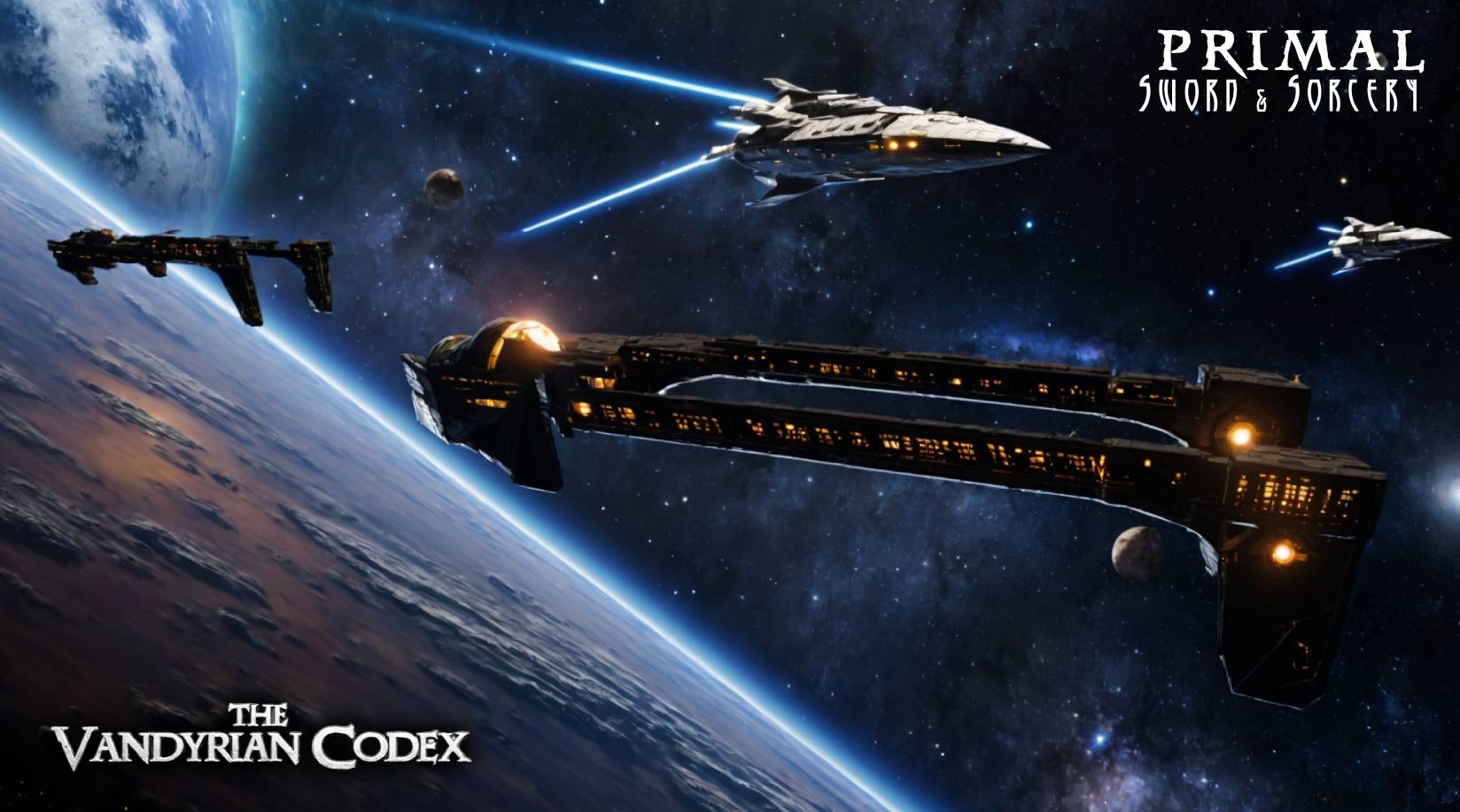
Prior to the Cataclysm, Vandyrus was not a frontier world, nor a contested prize. It was a held asset. For many generations it existed within the Thanatorian system as a planet of extraction—its land mined, its populations harvested, its cultures bent into ritualized compliance rather than overt military occupation. Vandyrus was never conquered in the classical sense because it never resisted. When the sky split and the Thanatorian fleets descended, bearing colossal arrays of light, engines vast enough to bruise the heavens themselves, the peoples of Vandyrus made the only rational decision available to them. They submitted. No war was fought, no cities burned in conquest, because none were required. The threat alone was sufficient.
What made Vandyrus anomalous within the Thanatorian portfolio was its scale. Resource worlds were common; worlds of this size were not. Ordinarily, extraction on the imperial periphery took place on dead rock—airless planets, hollowed moons, asteroid remnants stripped until nothing remained but slag and orbiting debris. A living world, with atmosphere, ecosystems, and an enduring biosphere, was an extravagance unless the resource being extracted justified it. Thanator does not waste effort without cause. The size of Vandyrus, coupled with the secrecy surrounding its yields, made it an object of unusual internal attention. Records speak obliquely of layered clearances, compartmentalized fleets, and ritualized disinformation campaigns designed not merely to obscure the planet from rival powers, but to conceal its true value from Thanator’s own administrative strata.
Control of the population was achieved not through constant force, but through structure. Indigenous belief systems were redirected, hierarchies were codified, and ritual authority was elevated until obedience became cosmological rather than political. Espionage was constant. Manipulation was systemic. Abuse was frequent. This was Thanator at its most efficient and, as always, at its most arrogant. Pressure increased year by year, quotas rose, exemptions vanished, and the familiar pattern began to form—the slow tightening that always preceded revolt.
That revolt never came.
Long before the Cataclysm, and before any organized resistance could coalesce, Thanator withdrew. No declaration survives. No justification is recorded. The fleets simply departed, the administrative lattice collapsed, and Vandyrus was abandoned to the vacuum left behind. Whatever decision prompted this withdrawal was either erased from the record or never committed to it. What remains is absence, and absence on this scale is never benign.
Into that vacuum stepped local powers: war-sorcerers, cult hierarchs, petty tyrants, and would-be gods, each attempting to seize fragments of the authority Thanator had discarded. None endured. The Cataclysm erased them as thoroughly as it erased the old world itself, leaving Vandyrus shattered but unclaimed.
After the Cataclysm, Thanator attempted to return.
The First Dread Thanatorian War was not a war in any meaningful sense. It was a scramble. Rival Thanatorian commanders, sensing an opportunity to reclaim a lost world and return bearing singular glory, turned on one another before planetary control could even be established. Betrayal unfolded at fleet scale. Orders conflicted. Alliances shattered mid-orbit. The result was total failure. Capital vessels were destroyed by their own escorts, surviving ships were captured rather than reinforced, and their crews were taken alive. Those who were not killed outright were tortured, studied, and erased. The expedition ended not in defeat by Vandyrus, but in self-annihilation.
The Second Dread Thanatorian War lasted hours.
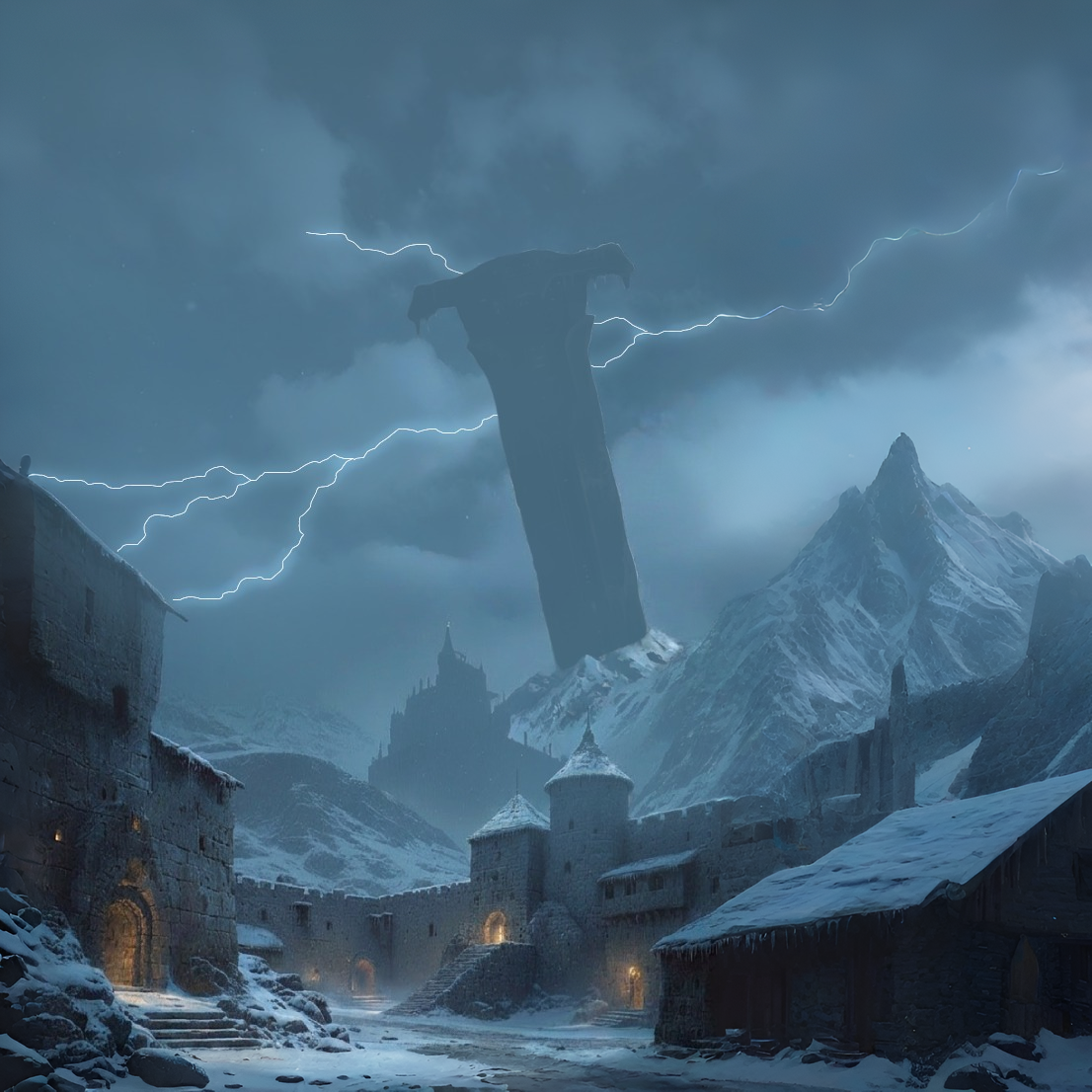
A single surviving mega-cruiser made planetfall, attempting a direct assertion of dominance through orbital terror. It never achieved orbit again. Vulsan sorcerers, already ascendant in the post-Cataclysm world, dragged the vessel from the sky itself. The ship was broken, its crew hauled alive to ritual sites, and there subjected to execution rites of extraordinary brutality. Still-beating hearts were torn from living chests with onyx blades, lifted to the heavens, and consumed by shamans in acts meant to absorb strength, wisdom, and enemy essence.
What none of them understood—what no record suggests they could have understood—was that in devouring Thanatorian flesh, they devoured more than organs. They consumed nanites. They ingested microscopic machinery designed to regulate blood, repair tissue, cleanse toxins, and preserve life far beyond natural limits. These systems were never meant to enter another biological context, let alone be metabolized through ritual cannibalism. Yet they were.
In doing so, the Vulsans ate machines as gods.
This event marks a visible inflection point in Vulsan power. Already formidable conjurers, necromancers, and elemental manipulators, their sorcery thereafter exhibited traits of precision, endurance, and scale previously unknown. Their magic became more direct, more kinetic, less symbolic. Where once ritual strained against physical limits, it now seemed to ignore them. The boundary between spellcraft and mechanism blurred, though none living at the time possessed the language to describe it as such.
History records the outcome without embellishment: at least once, sword and sorcery reached into the heavens and dragged a star-born vessel screaming down upon Vandyrus.
Thanator never returned after that. Whether through fear, calculation, or wounds too deep to risk reopening, the empire withdrew its gaze from Vandyrus entirely. The Second Coming did not restore imperial rule. It ended it, decisively, and in doing so ensured that Vandyrus would never again be treated as a silent asset.