
BOOK I
BOOK II
BOOK III
Audiobook
• DOWNLOAD
“Before we begin…
The Vandyrian Codex exists to give game masters, writers, and players a dense, brutal, myth-driven setting they can lift directly into their own tabletop campaigns without permission, payment, or subscription. Inside are cultures, regions, wars, economies, religions, and power structures written to function at the table: places with motives, histories with consequences, and factions that collide whether the players intervene or not. Nothing here is locked behind a paywall, nothing is “lore-bait” for later purchase. This is a working world meant to be looted from, expanded, broken, and played in.“
A message from VAULTUS
On The Vandyrians
To speak of the Vandyrian is to step onto a faultline older than memory, where every word fractures under a burden it was never shaped to bear. The question—what is a Vandyrian?—seems innocent, almost scholarly, until one begins to answer it.
For the Vandyrian is not a folk, nor a lineage, nor a culture, nor even a single empire in the paltry sense that lesser ages use the term.
The Vandyrian is a continental shadow cast across the galaxy, a residue left upon tens of millions of worlds, a design philosophy written into the very bones of every species that breathes beneath the Ran system’s suns.
Lion and wolf, ram and bear; horsefolk of Zhuru, dogfolk of Vulsa, jackals of the wastes; otter, mouse, and every scaled carnivore that stalks the ash or surf—all bear the unmistakable signature of hands that once shaped, culled, reformed, redeployed, and finally abandoned them.
To ask what a Vandyrian is, then, is to ask why the ruins scattered across Vandyrus, Thanator, Kydahn, and their sister worlds share identical geometries, identical power-laws, identical genetic scaffolds; why the peoples themselves mirror one another’s instincts, hierarchies, and neural architectures; why war, order, stratification, and controlled brutality arise again and again as if imprinted not by culture but by inheritance.
If there ever was a singular homeworld it’s name would be ‘Vandyria’ not Vandyrus. According to the conventions of their own language ‘Vandyrus’ translates roughly as: “Within the outer grasp of the Empire of Vandyria.”, marking it as a frontier province, rather than The Imperial Heart.
The Greater Vandyrian Empire
The Vandyrian Empire was not vast—it was impossible. No mortal arithmetic can encompass it. Across innumerable cycles of expansion, extinction, recursion, and renewal, the Vandyrian dominion is estimated to have encompassed on the order of one hundred million star systems.
Not worlds—systems. Entire solar families reorganized to serve military, industrial, or experimental purpose. Moons carved to factory-hollows. Asteroid belts reconfigured into supply nets. Star output harnessed, redirected, or extinguished to suit imperial necessity.
And yet the paradox: almost nothing remains. In the Ran system we see Thanator’s shattered titanic civilization, Kydahn’s engineered splendor, Drael’s scarified substrata—but these are embers scraped from a fire whose heat once reached across the firmament.
Concerning identity. The peoples who now claim the Vandyrian mantle—lion, wolf, ram, bear—are local survivals, nothing more. Their pride rests on instinctual memories, genetic impulses, or the psychological residue of ancient doctrine.
Whether they derive from true Vandyrian stock or were merely designed according to a Vandyrian template no longer matters. Their self-claims are provincial echoes ringing in the husk of a cathedral too vast for modern folk to comprehend.
“Vanguard”
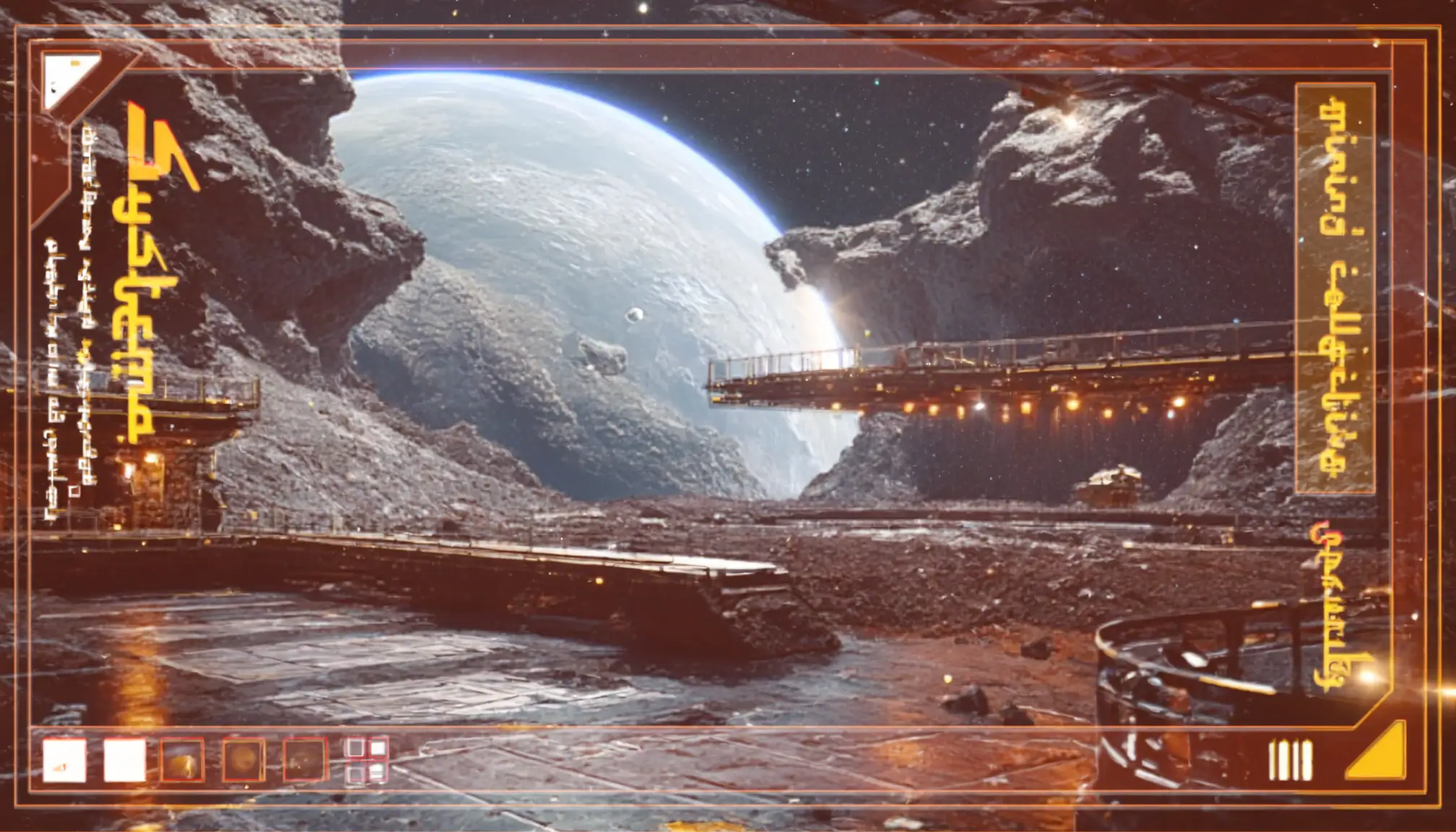
The designation “Empire” does not appear in any surviving Vandyrian records. It is a label imposed almost exclusively by those who, finding themselves a mere fractal segment within the greater system, grasped for early classification.
What terrifies even the boldest chroniclers is this: ancient reconstructions suggest that “Vandyrian” most accurately translates to “Vanguard.” Not people. Not empire. Not race. Vanguard. A forward element. A spearpoint. A preparatory force, deployed in anticipation of something larger behind it.
If an empire of one hundred million systems named itself the vanguard, then the unspoken questions become unbearable:
A vanguard for what?
A vanguard for whom?
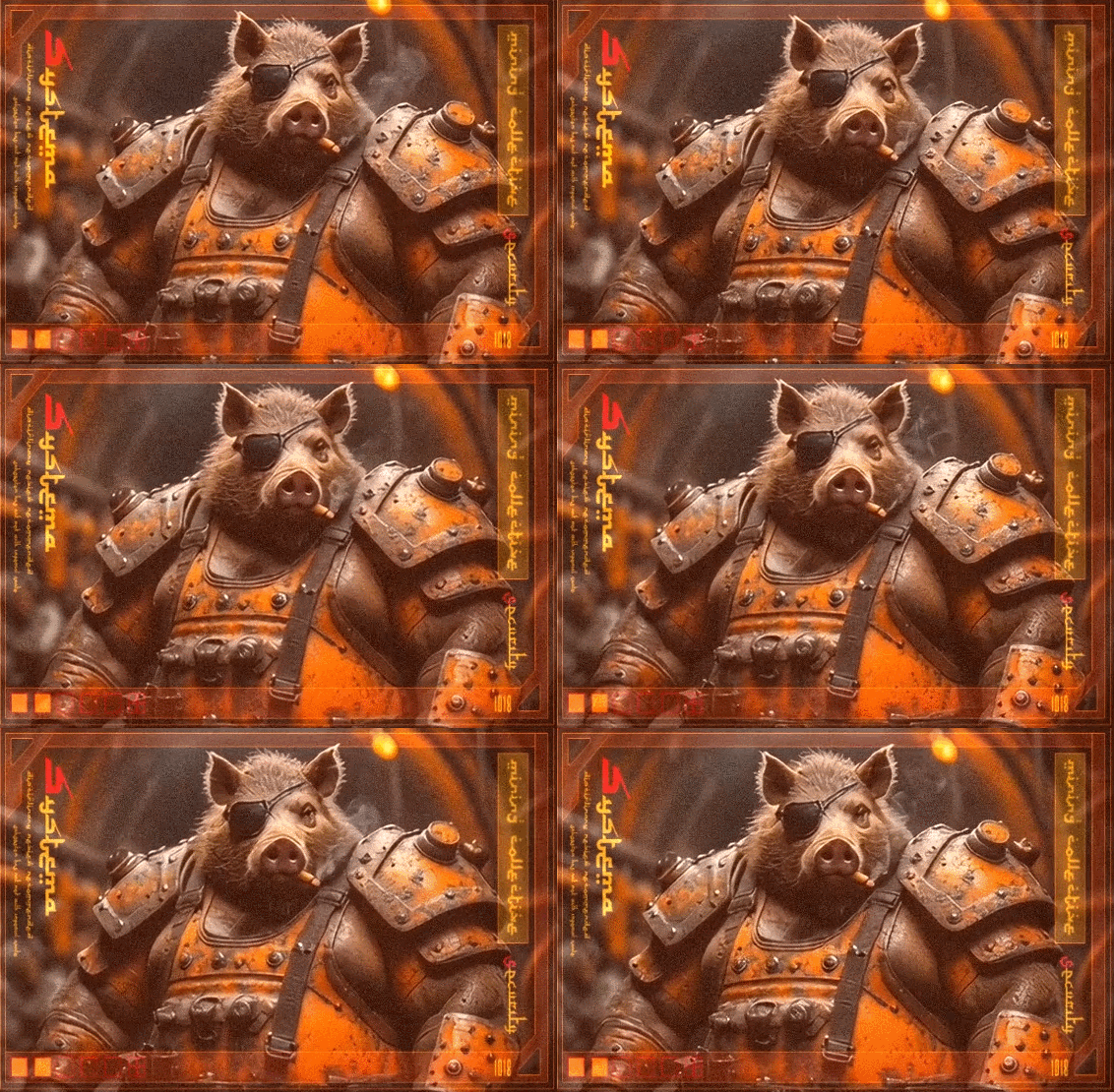
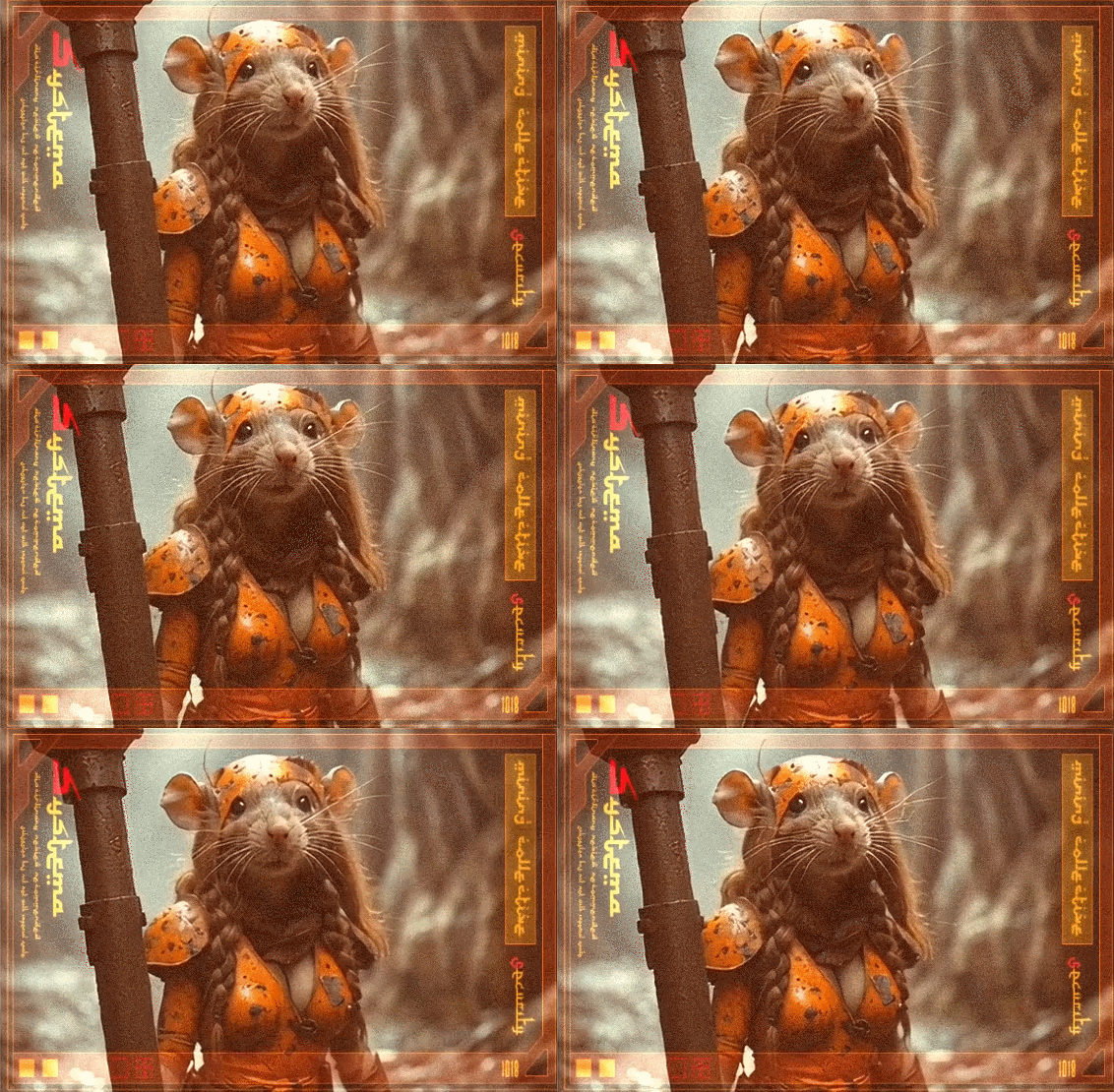
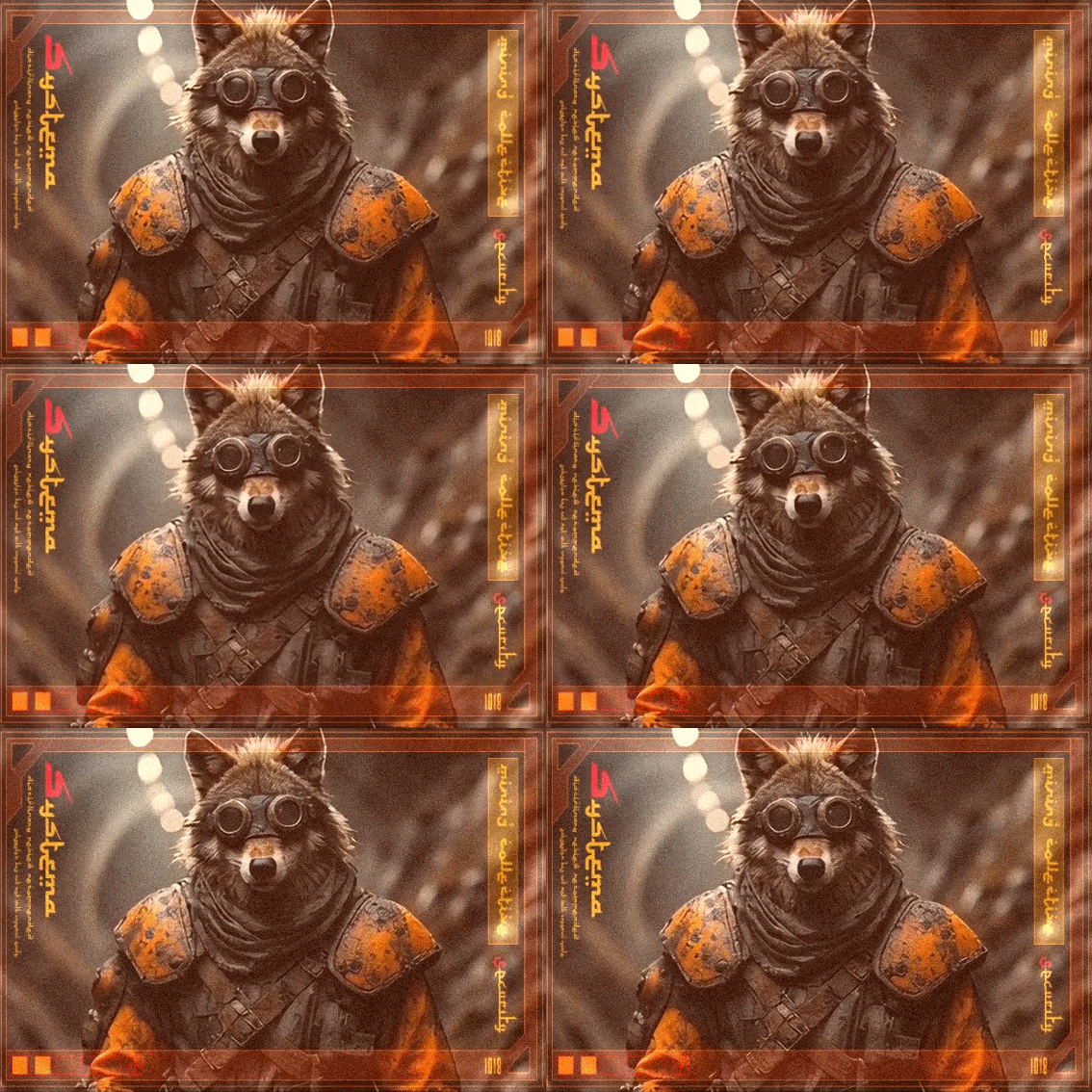
A vanguard against what adversary or toward what cosmic project so vast that even their colossal empire was merely its opening gesture?
For the originators, such boundaries were irrelevant—a vanguard is defined by function, not domain.
The Cosmology of the Ran System
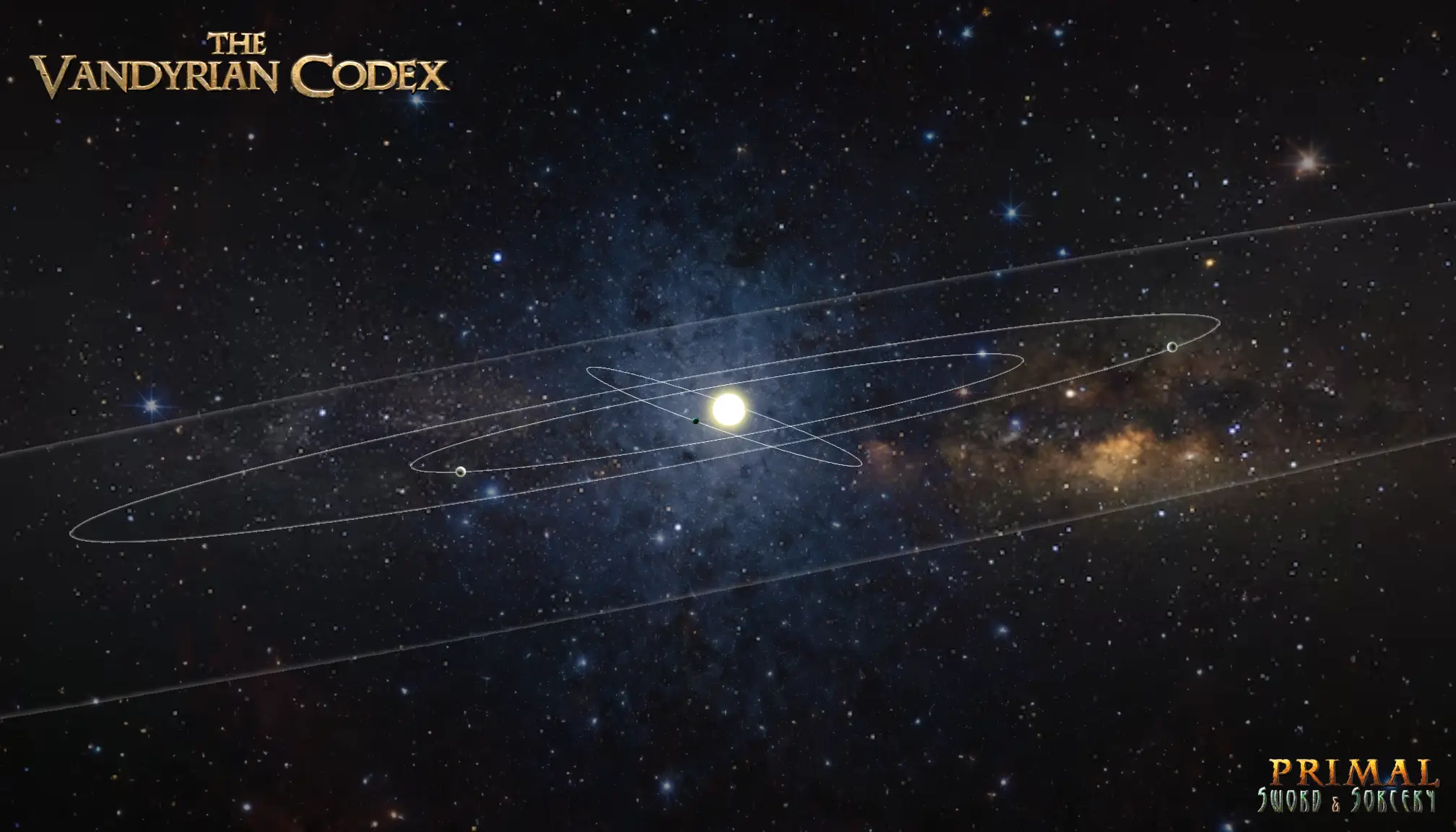
Before the coming of the Cataclysmic Object—called Doom by the survivors—Ran presided over a family of worlds in rough alignment.
The system boasted planets as varied as the ambitions of their folk: worlds of storm and chemical sea, of verdant forest and rising empires, of savage law and decadent peace. Some bore moons, others rings, some nothing at all but the weight of their own history.
Before the age of doom, Ran’s children moved in stately order, each world bearing its own silent ambitions.
Yalar
Before the Cataclysm:
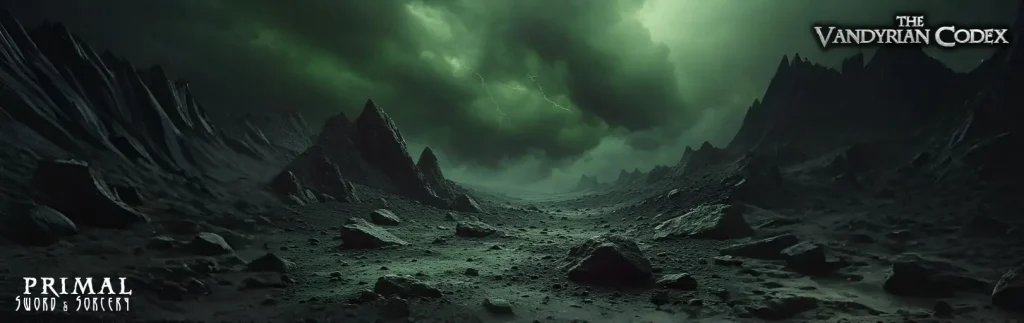
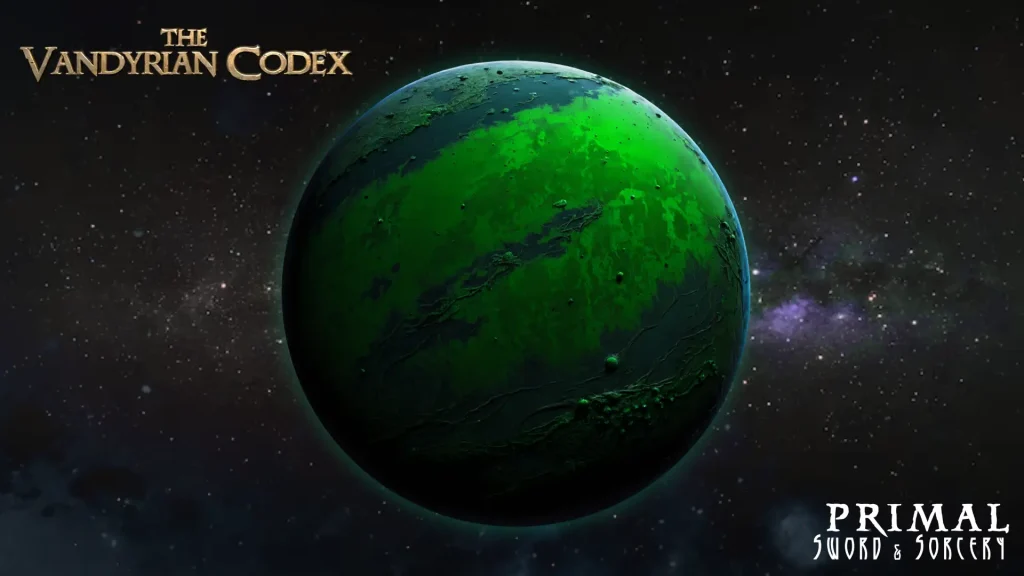
The first planet of the Ran system was nothing more than a primordial sphere, wrapped in a choking viridian atmosphere—a world locked in chemical tumult, eternally hostile to biology. Nothing seeded, nothing stirred; the surface swam with toxic clouds and silence.
The Cataclysm:
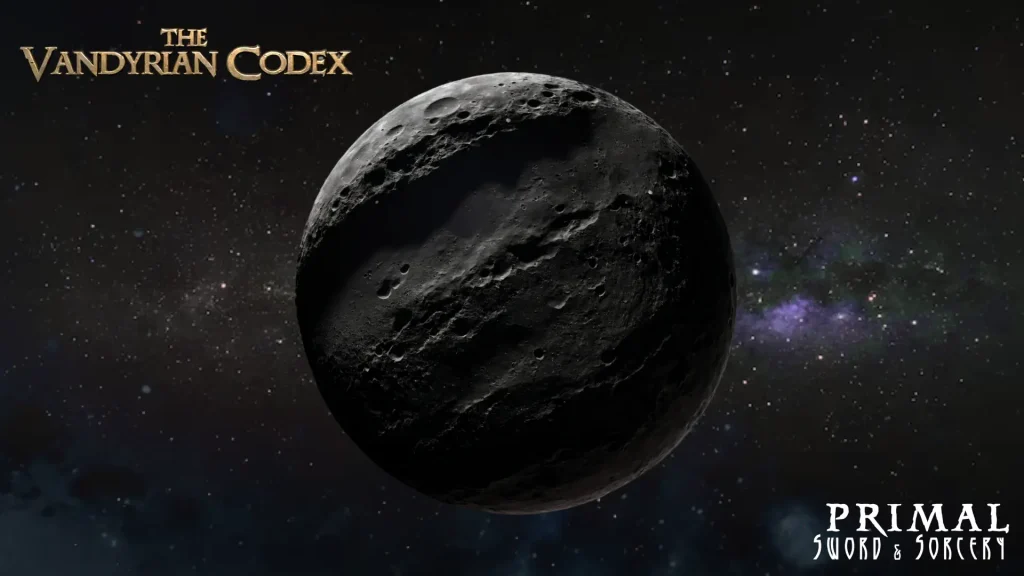
When Doom arrived, it stripped Yalar of its shroud, peeling away atmosphere and memory in a single, wordless moment. What remained was black stone and vitrified quartz, the surface flash-melted and barren, history erased in an instant.
Present Day:
Yalar is not dead because it never truly lived. There is no record of seed or animal, no fossil or artifact, only heat fractures and the silent testimony of scorched glass beneath a star that now burns on nothing.
Tyvex
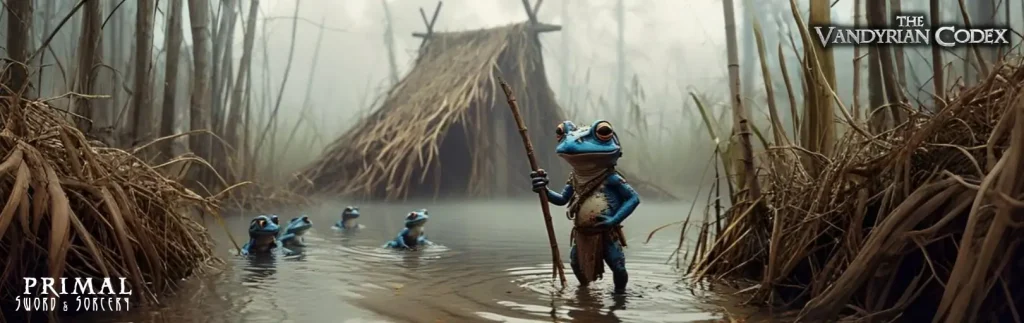
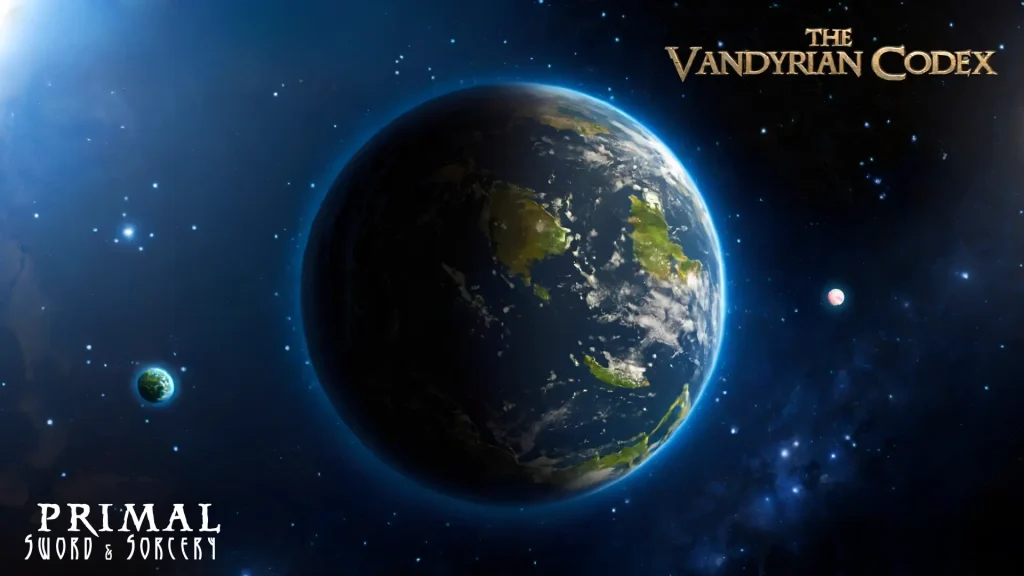
Before the Cataclysm:
The second planet of the Ran system rose out of ancient swamps. In its earliest age, the lowlands seethed with amphibian life, forms poised at the brink of transformation—half-dreaming of legs, lungs, and dominion beyond the mire. The world’s hunger was primordial, its promise uncertain, its waters thick with unspent potential.
The Cataclysm:
Doom’s passing was both verdict and sentence. In an instant, Tyvex was broken—its teeming lowlands and ancient hunger seized by apocalyptic violence, the planet’s future smothered before it could emerge.
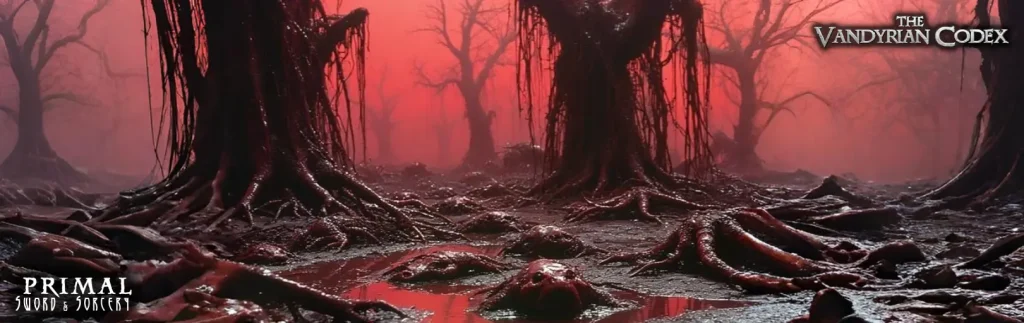
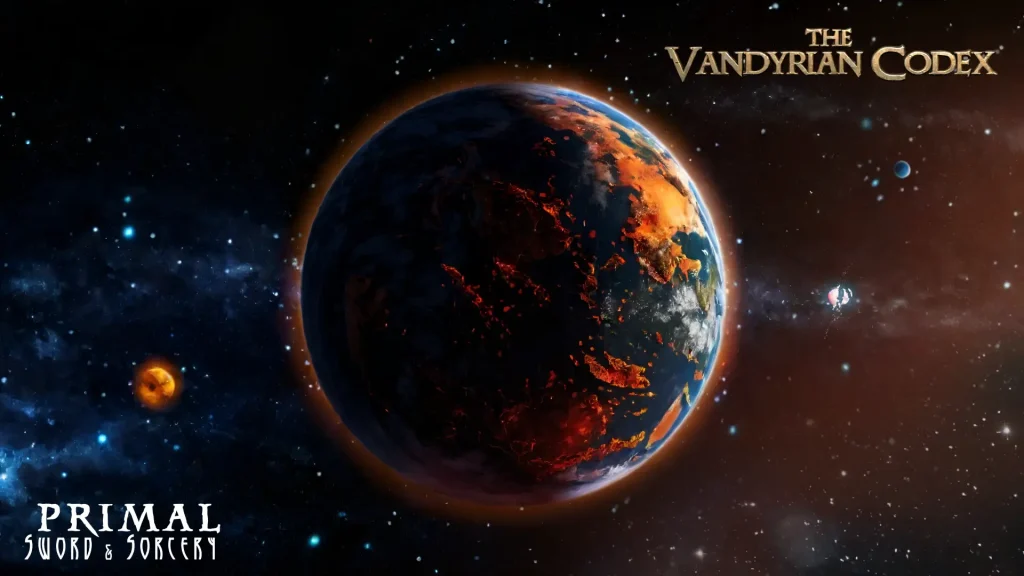
Aftermath:
Radiation twisted the swamps into a catalogue of mutations. Creatures dissolved into the land itself; flesh and terrain intermingled, life that should have died stubbornly refusing extinction. Storms raged without end. The sky became a vault of poison, each cloud seeded with the memory of catastrophe.
Present Day:
Tyvex persists, but only as an abomination. The planet’s biology recoils from every memory of order. Nothing here is stable—nothing welcomes classification. What livs, does so in mockery of life: refusing extinction, refusing definition, the legacy of a world unable to die clean.
Illynar
Before the Cataclysm:
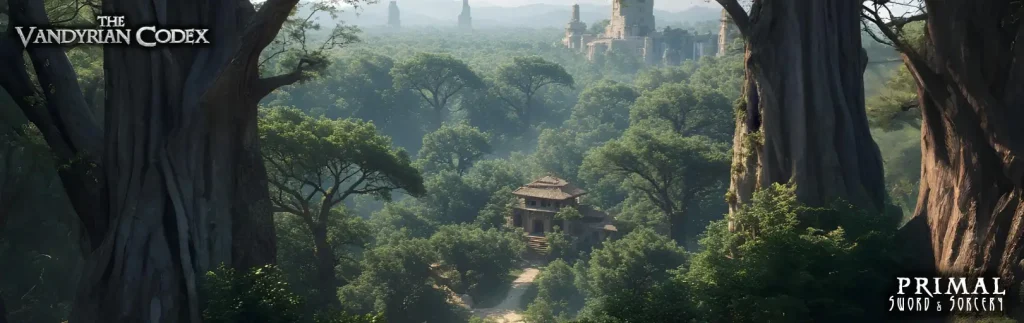
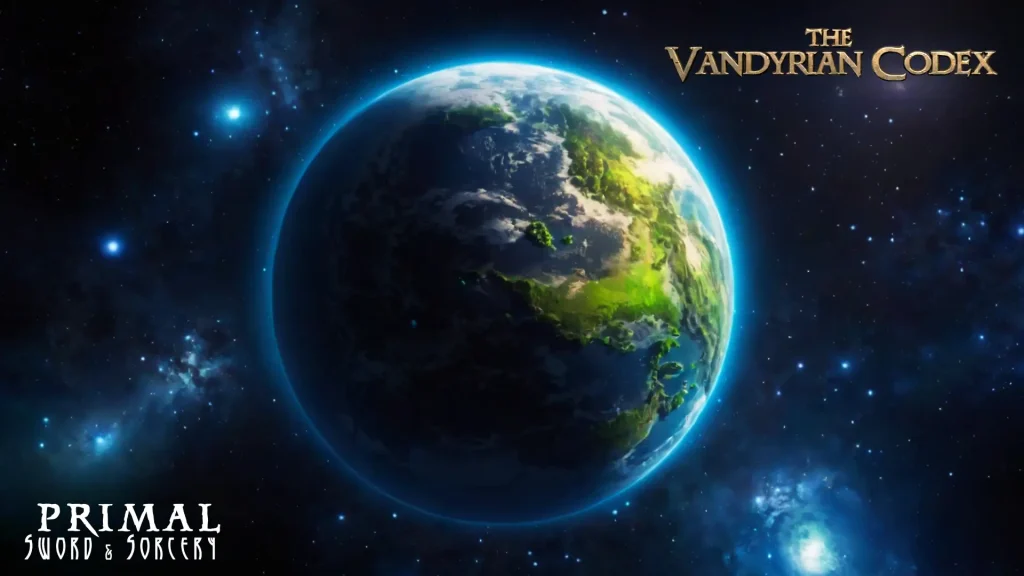
The third planet of the Ran system, Illynar was a garden world. Forests ran unbroken for leagues; river valleys bred life in profusion. Tribal cultures traced their beginnings along the watercourses, and two distinct peoples edged toward the first, uncertain glimmers of civilization. The world was green, vital, and poised for memory.
The Cataclysm:
The Cataclysm struck with finality. In a single, shuddering convulsion, Illynar’s core was shattered. Continents ground themselves to powder. The atmosphere was stripped and scoured, ripped from the planet’s surface and lost to the black. Civilization’s first sparks—names, records, beginnings—were erased at the root.
Aftermath:
There was no aftermath worth the name. The world was not simply broken; it was atomized. Dust finer than silt drifted across vacuum, too insubstantial even to seed the oceans of Vandyrus. Nothing of Illynar’s life, culture, or ambition survived the hour.
Present Day:
Illynar exists only as absence. There is no language left to mourn it, no relic to recover, no trace to unearth. Its history is a loss so complete it defeats memory, a blank in the record. The third world’s only legacy is its erasure—a silence so total that even Vandyrus’s scholars speak of it with unease.
The Vandyrian Civilization
of the Ran System
Before Doom’s arrival, only two worlds in the Ran system mattered.
Thanator & Kydahn
These planets did not simply cultivate their own soils or histories; they radiated ambition, dominating their neighbors by design and force. Thanator’s society was relentless—a machinery of conquest, where the refinement of imperial law met a culture of violence that penetrated every institution, from the blood-sport of noble courts to the conscription of whole continents for war. Every festival was edged with cruelty; every law enforced with the threat of steel.
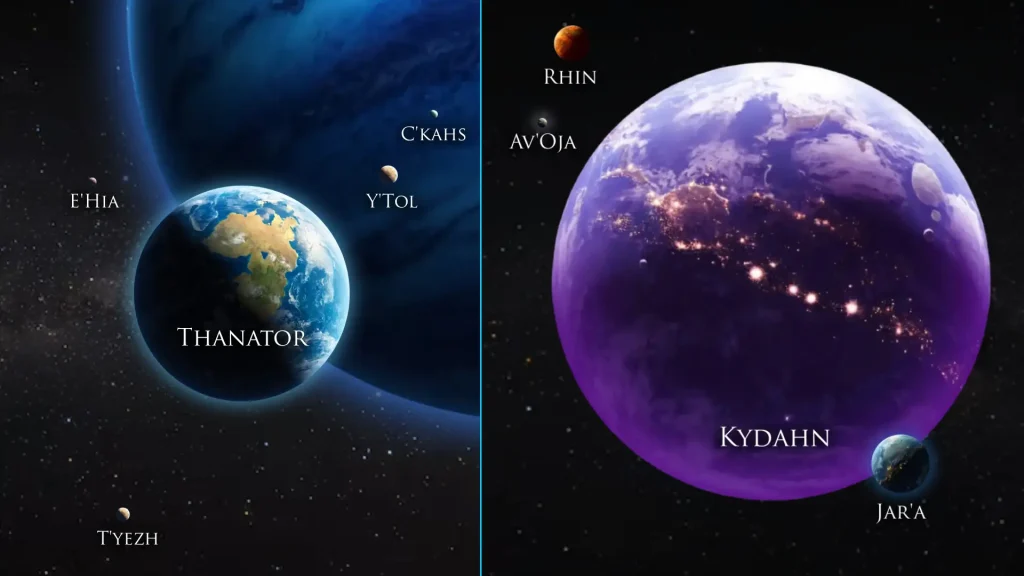
Kydahn, no less ruthless, secured mastery through intellect and precision. Where Thanator flexed, Kydahn calculated, applying superior artifice and administration with a cold authority that tolerated no defiance. Dissent was not crushed in public spectacle, but erased by systems so intricate that challenge became unthinkable. The rivalry between these twin powers dictated the fate of the system; the history of every lesser world was bent by the reach of their fleets and the legacy of defeat they imposed.
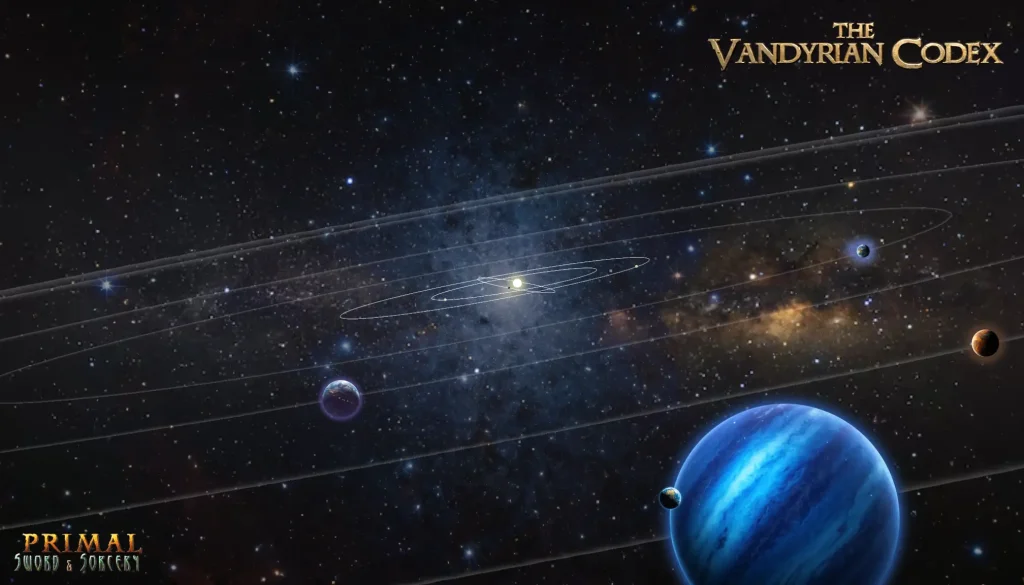
The other planets in the Ran system did not orbit only their star, but the gravitational pull of Thanator and Kydahn—the true axis of power. Their ambitions, wars, and bargains shaped the order of all things, and only the Cataclysm could render such striving meaningless. When Doom came, even the greatest designs were stripped of purpose, and dominion became just another memory lost in the dark.
Vandyrus
Before the Cataclysm:
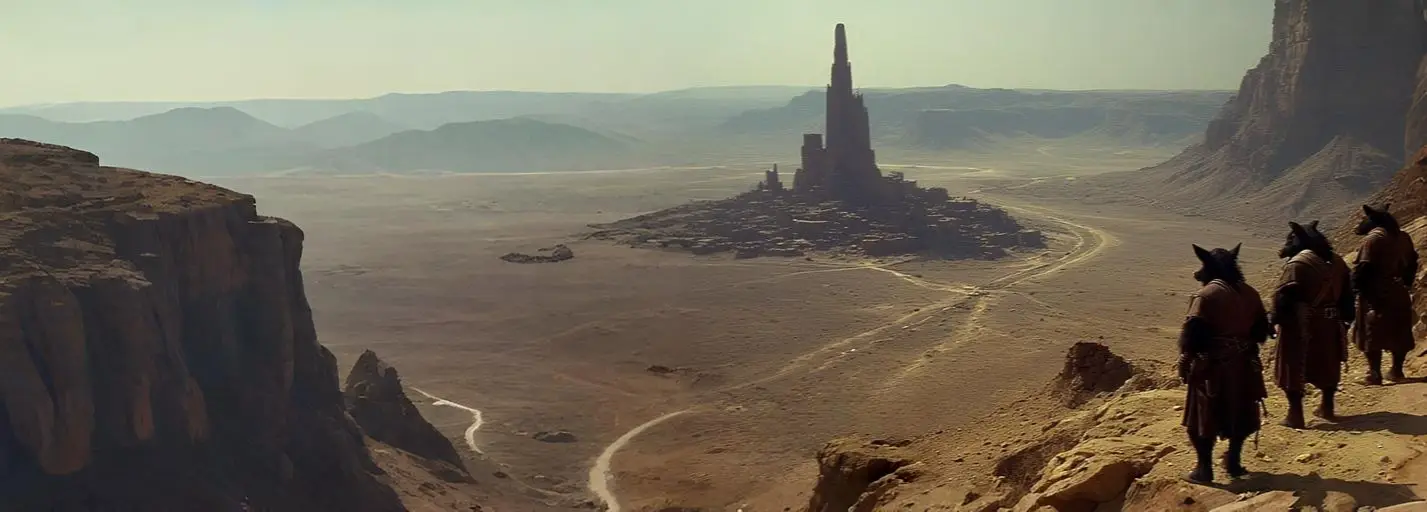
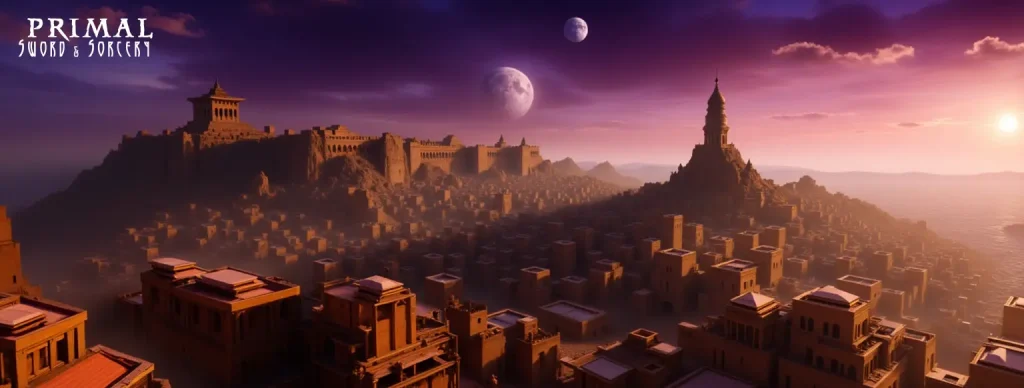
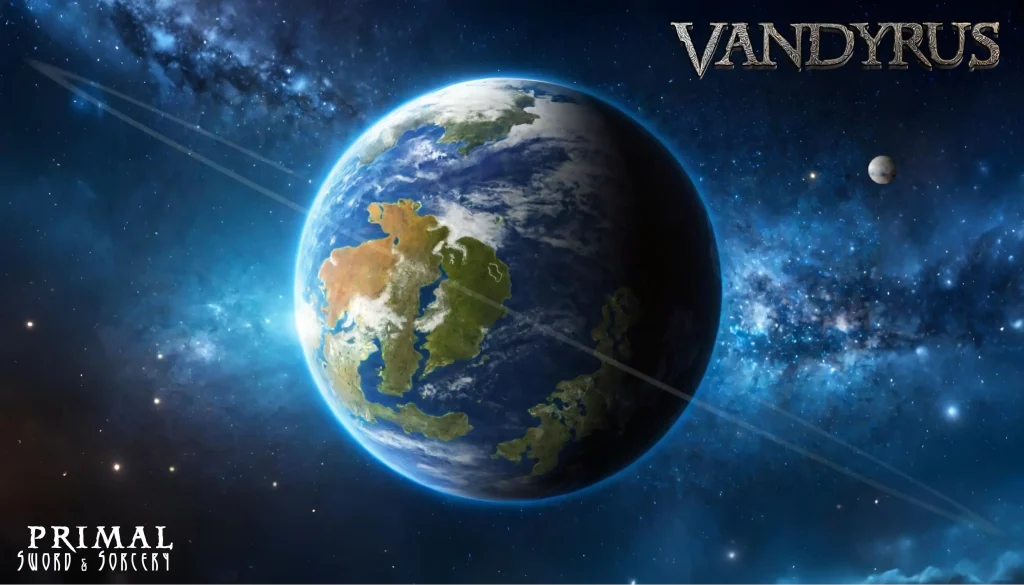
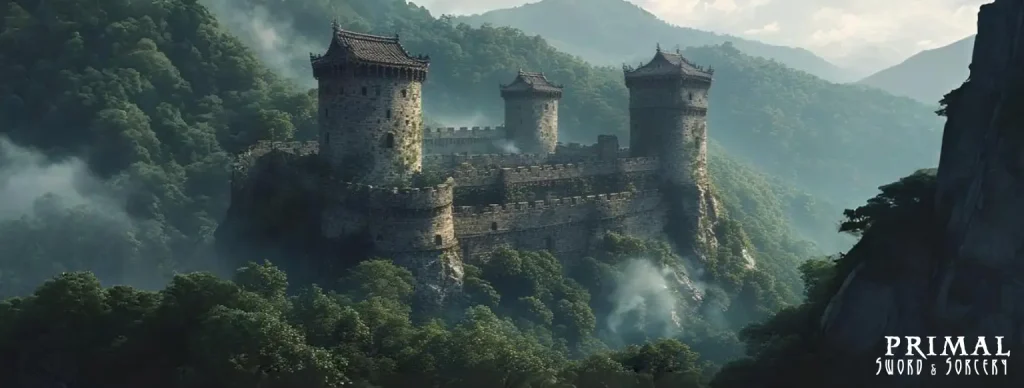
The fourth planet of the Ran system, Vandyrus was never the heart of empire. It was neither cradle nor capital, but a frontier—provincial, harsh, and unsettled. The planet’s surface was scarred by halls of stone, ziggurats raised to cruel gods, and fortress-cities clinging to the edge of survival. Wolf dens in Vulsa, the lion courts, the serpent vaults beneath Drael—all these were experimental holdings, not homelands.
Vandyrus, even in its height, was a deployment site at the rim of greater dominion, a foothold within the outer grasp of the vanished Empire of Vandyria. If there ever was a true Vandyrian homeworld, its name and location have been lost beyond memory—consumed, perhaps, by their own engines of expansion or annihilated in the chaos that followed their collapse.
The Cataclysm:
When Doom shattered the system, Vandyrus was not spared. Its provinces suffered—the sky torn, the cities battered, neighbors erased in fire and silence. Yet Vandyrus endured, not by virtue but by resilience: conquered twice in history—once by the imperial reach of Thanator, again by those same conquerors returned as raiders—but never truly tamed, never wholly broken. It was backward, brutal, and tough enough to weather the shock that unmade worlds more glorious.
Aftermath:
In the age that followed, Vandyrus persisted as the broken heart of a broken system. The survivors built new halls from the ruins of the old, adapted to the void left by lost neighbors, and made civilization from the scraps of disaster. No longer the outpost of empire, Vandyrus became a refuge for those too wretched, too adaptable, or too stubborn to die.
Present Day:
Vandyrus sits at the system’s axis not by right, but by survival. Its people endure, marked by scars, clinging to half-remembered rituals and relics of vanished overlords. The world is provincial still—a brutal province without illusions, bearing the name “within the outer grasp of the Empire of Vandyria.” Its only glory is that of persistence: battered, unbowed, and condemned to memory as the system’s harsh, undefeated core.
Artana
The Moon of Vandyrus
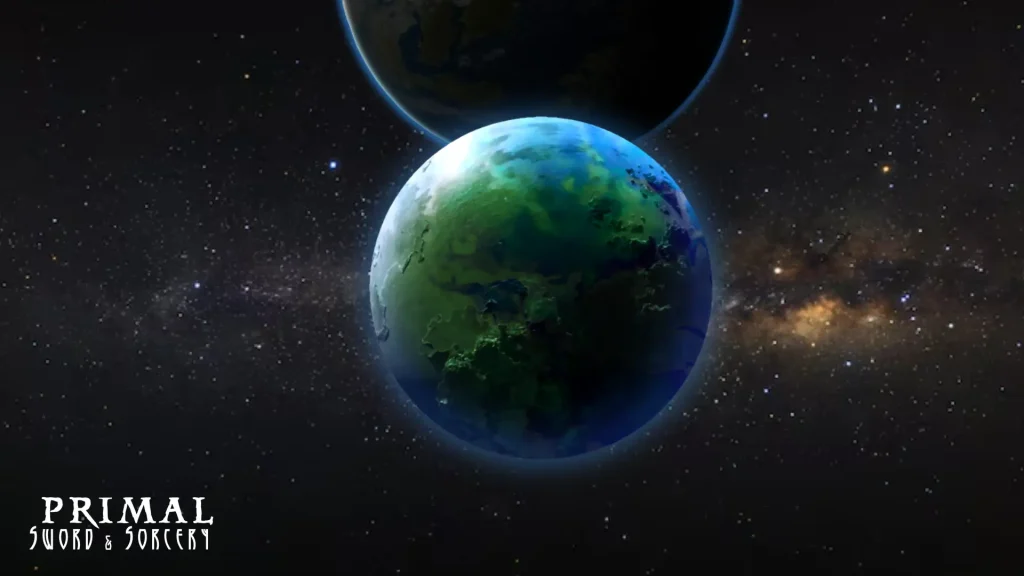
Before the Cataclysm:
Artana, Vandyrus’s principal moon, was a world on the threshold. From the surface of Vandyrus, distant watchers sometimes saw faint glimmers—evidence of fire, movement, or the first stirrings of civilization. The moon’s surface was scarred and pitted, but some believed enclaves or primitive settlements were beginning to rise. To the Vandyrians, Artana was a mystery—an object of speculation, never fully understood or mapped.
The Cataclysm:
When Doom tore through the Ran system, Artana was battered almost beyond recognition. The lunar surface fractured, its lights vanished, and all hopes of contact or observation were lost in the greater violence engulfing the system. Where another, smaller moon once orbited, nothing remained but a ring of debris—Votah, a shining wound encircling Vandyrus.
Aftermath:
In the years that followed, Artana was written off as dead. No signal, no traffic, no reliable sign of life persisted. The Vandyrian record treated it as just another casualty, another monument to ruin and silence. The Votah ring, visible even from the battered surface below, stood as the only testament to what had been.
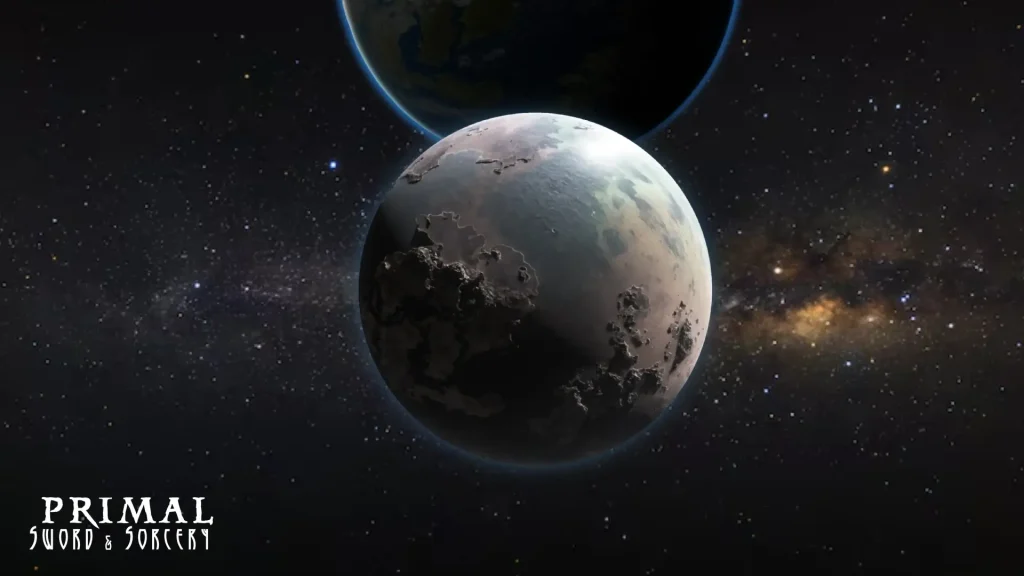
Present Day:
Yet even now, watchers claim to see faint lights flickering across Artana’s face—a rumor that will not die. Whether these are the sparks of survivors, the work of automated systems, or only tricks of the eye, none can say. To the Vandyrians, Artana remains an enigma, circling above as both scar and warning: a world just beyond knowing, haunted by possibility and loss.
Kydahn
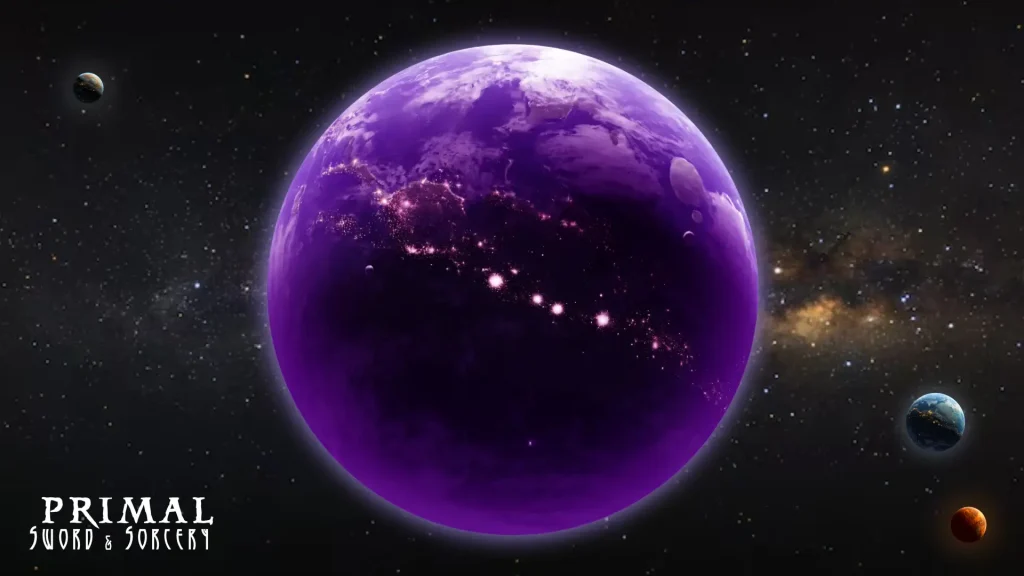
Before the Cataclysm:
Kydahn, the fifth planet of the Ran system, was a power to rival Thanator—some say its better. The world stood apart: decadent, proud, and technologically sovereign, its cities towers of silent threat and intricate demonstration. Kydahn’s influence checked the ambitions of the system not through open conquest, but through mastery. Its authority was absolute; its reputation, a warning.
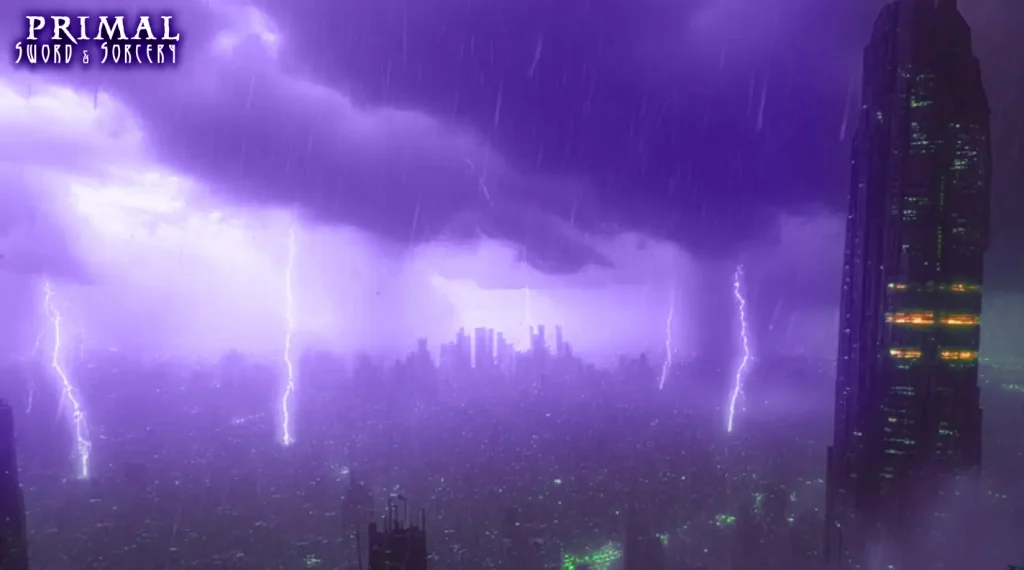
The Cataclysm:
Doom made no distinction. When the Cataclysm arrived, Kydahn was consumed utterly—its surface stripped, its core shattered, its substance drawn up and folded into the advancing shadow of destruction. Cities, archives, dynasties, and the very ground itself were all lost in one remorseless hour.

Aftermath:
Kydahn left nothing behind but dust and scattered mass, a memory kept alive only by those who once feared its power. Its silence was total; its authority, mocked by oblivion.
Present Day:
Kydahn exists now only as planetary debris and drifting cosmic dust—the aftermath of obliteration, the scene of a massacre scattered through the system’s empty lanes. Its name lingers in bitter stories, haunted by those who claim that, for a time after the Cataclysm, lights of civilization could still be seen flickering among the ruins.
Raiders from Thanator, drawn by the hope of salvage, found only fractured ground and the echoes of a world bleeding out its last atmosphere. Whatever survivors endured, they did so in darkness and despair, and by the third generation, even the lights went out. Now, nothing persists but dust, memory, and the void where Kydahn once ruled.
Rethka
Before the Cataclysm:
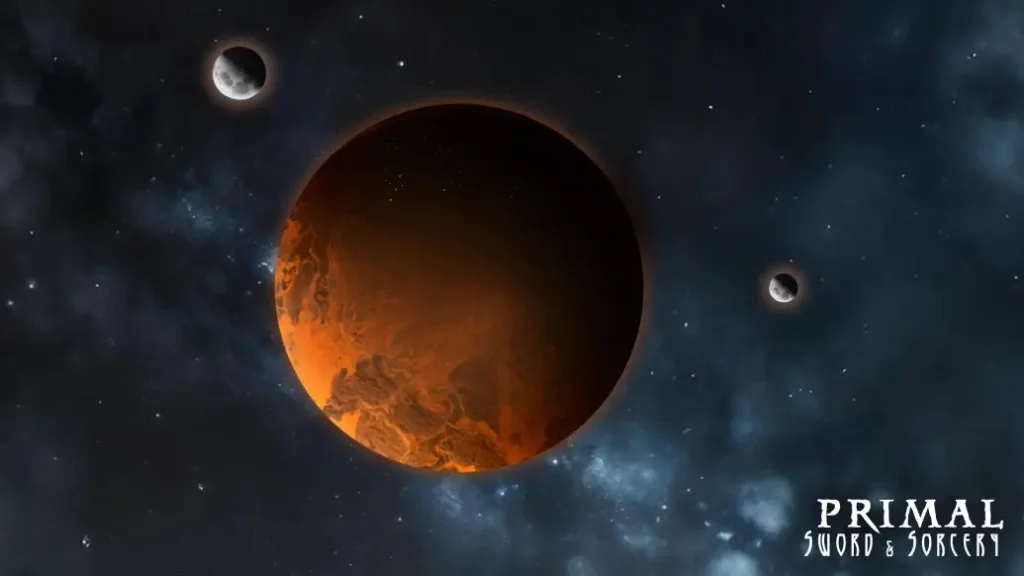
Rethka was a planet defined by contempt. It served the Ran system as a penal world and industrial graveyard—a dumping ground for toxic waste, spent fuel, heavy metals, and those folk deemed too despised, too dangerous, or too inconvenient to be allowed to die anywhere else. Its surface was scarred by slag fields, poisoned seas, and sealed labor zones where survival itself was considered part of the sentence. Nothing was cultivated here except suffering and neglect.
The Cataclysm:
When Doom passed through the system, Rethka did not resist, nor was it spared. The planet was caught fully in the object’s path, its poisoned crust and buried dead offered up without distinction. It is said that the final prisoner looked skyward as annihilation came, smiling as the light rose, whispering thanks to forgotten gods for a death that required no sentence to complete.
Aftermath:
There was no aftermath. Rethka was consumed entirely—its crust, its wastes, its buried populations reduced to component particles. The planet’s mass was stripped apart and drawn into Doom’s shadow, scattered beyond recovery.
Present Day:
Rethka no longer exists as a world. It survives only as dispersed matter and as a cautionary name in the records of the Ran system. No ruin marks its passing, no debris field traces its orbit. Even contempt, in the end, was erased.
Titanum
Before the Cataclysm:
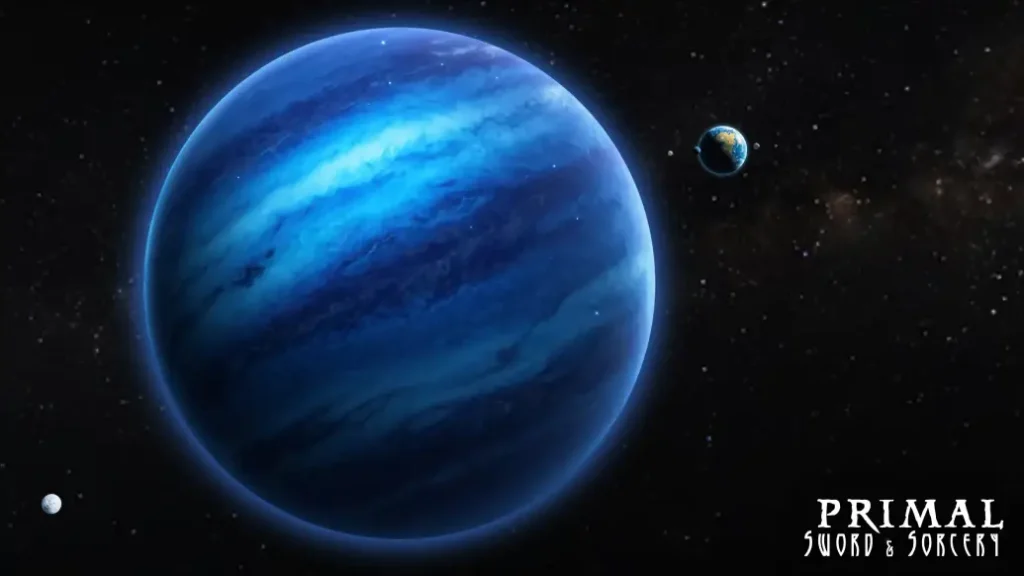
Titanum, the sixth planet of the Ran system, was a gas giant whose secrets eluded even the most ambitious empires. Its atmosphere roiled with storms of unimaginable violence, colored bands wrapping a world whose depths remained unmeasured. Some speculated at a hollow core, others at a rocky or even artificial heart, but no expedition ever returned with proof. Around Titanum orbited two major moons, Thanator and Jotun—each the seat of its own troubled history.
The Cataclysm:
The Cataclysm passed, and Titanum’s storms burned brighter, but the giant itself endured. Probes and landers sent into its depths vanished without a trace, their loss giving rise to tales of mutilation, distant chanting, and abduction by forces unknown. No empire, Vandyrian or otherwise, claimed dominion over the planet; every attempt at mastery was met with silence or disaster.
Aftermath:
Titanum’s mysteries deepened in the system’s ruin. The moons that once circled in orderly paths found their orbits changed, battered by debris and the shifting gravities of loss. Thanator and Jotun remained tethered, each altered, each made more perilous by proximity to the unanswerable depths.
Present Day:
Titanum stands untouched, the system’s enduring riddle. Its upper layers rage with storms, its heart unrevealed. Attempts to pierce its clouds are met with failure or madness; those who claim to have heard chanting or seen lights within are dismissed as mad or lost. Thanator and Jotun circle still, orbiting not only a planet but a question that no survivor has answered.
Thanator
Moon of Titanum
Before the Cataclysm:
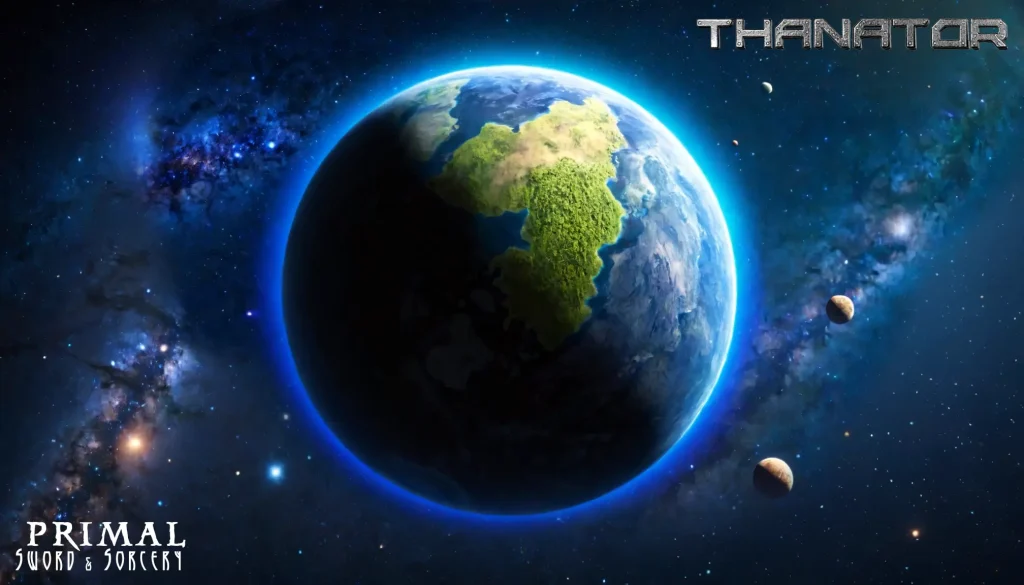
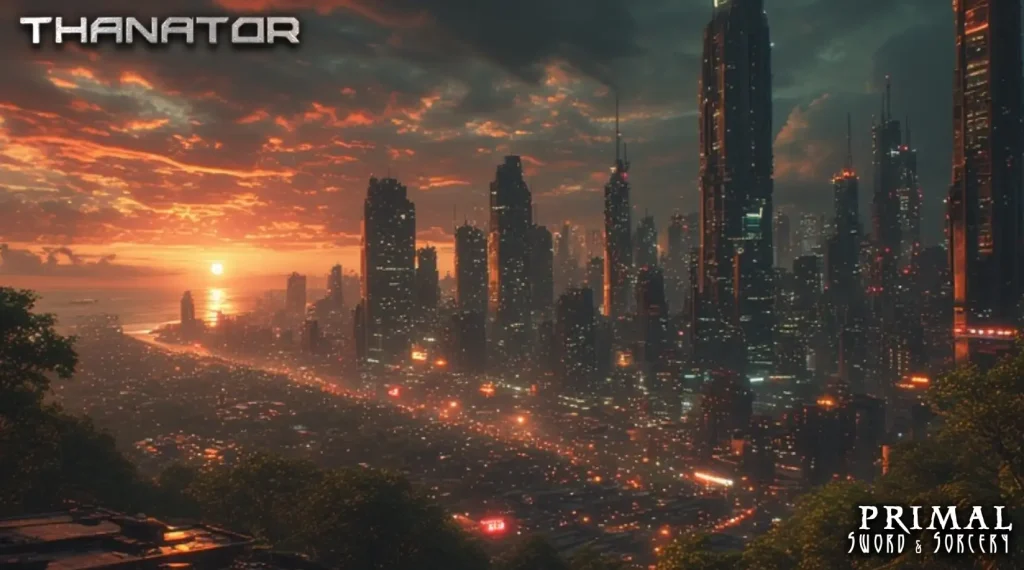
Thanator was the jewel of the Ran system—a moon-empire whose palaces soared above jungle canopies and whose civilization was both feared and envied.
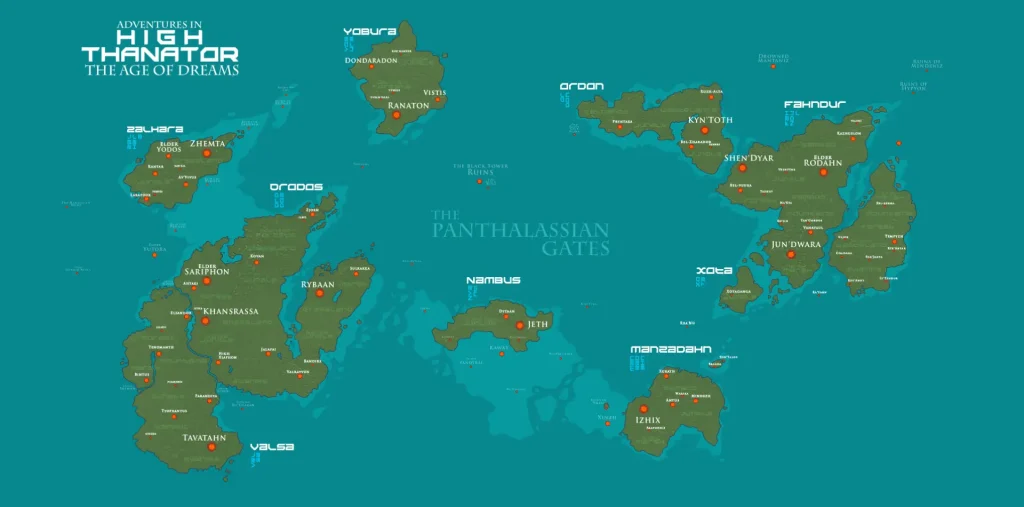
Here, violence was refined into art, and debauchery became the science of courts and warlords. Thanator’s fleets ranged far; its reputation shaped the fates of worlds. Admired by some, abhorred by others, Thanator was never ignored.
The Cataclysm:
When Doom crossed the system, Thanator was not spared. The Cataclysm shattered the moon’s upper layers, boiling jungles to steam, burying cities in molten ruin, and drowning all pride beneath floods of silence. The seat of empire collapsed; glory was replaced by survival.

Aftermath:
Thanator’s core world persisted, scarred but unbeaten. Civilization dissolved into violence and hunger. What survived did so by adapting to new savageries—predation, ruin, and an unending struggle for dominance. The memory of empire lingered only as legend, tainted by blood and the taste of loss.
Present Day:
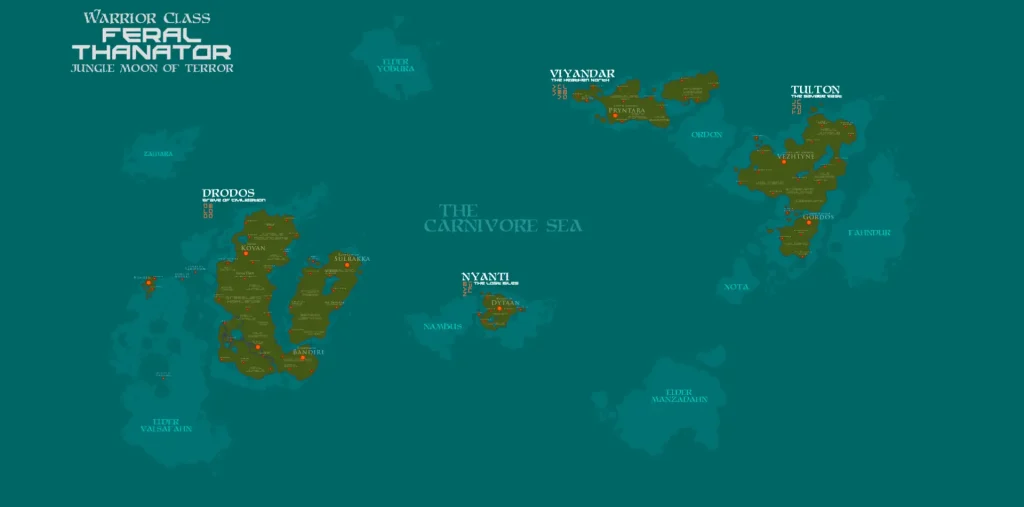
The dream of Thanator’s empire is dead, but the world itself endures—stripped of pretense, stubborn, and savage. No order holds for long.
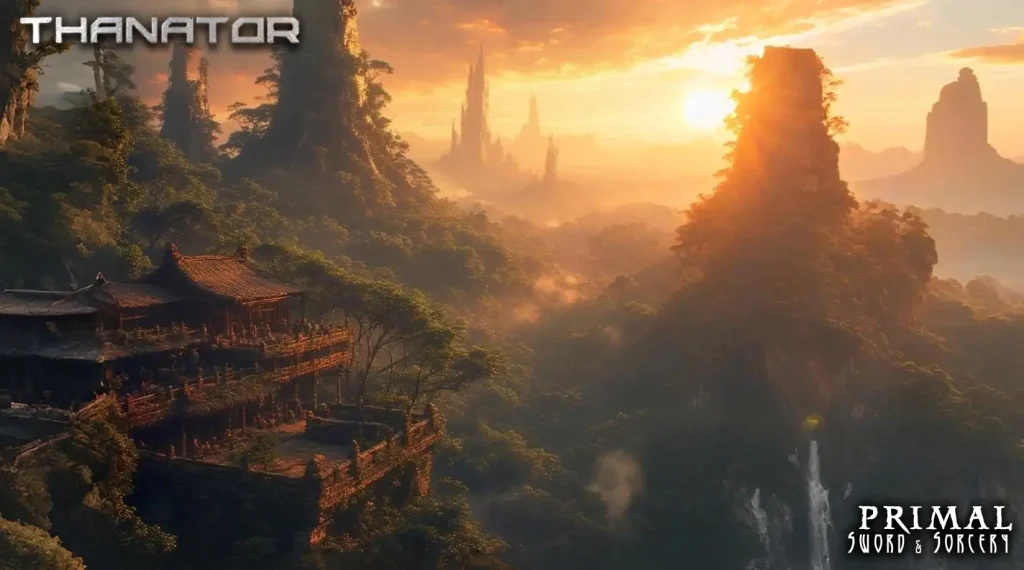
The moon remains a theater of predation and despair, its civilization replaced by an engine of survival that refuses extinction.
Jotun
Second Moon of Titanum
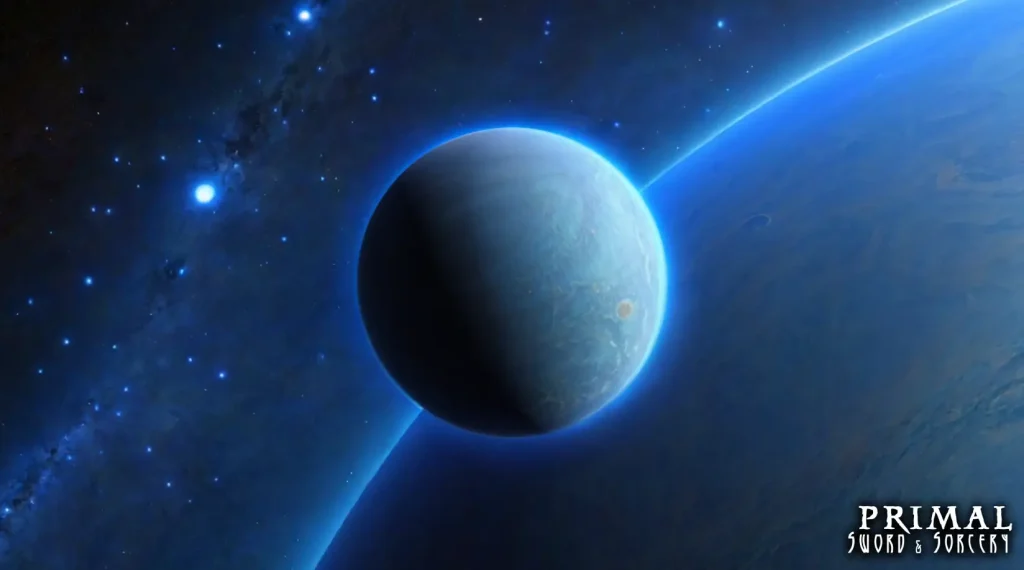
Before the Cataclysm:
Jotun, the outer moon of Titanum and sister to Thanator, was always the system’s outcast. Cold, sparse, and battered by distance and neglect, Jotun’s surface supported a thin, marginal existence. Its people—never numerous—endured through endurance alone, their societies shaped more by privation and retreat than by ambition or conquest. Even in the high age of Thanator’s empire, Jotun remained peripheral: an afterthought, a harsh frontier at the edge of the system’s true power.
The Cataclysm:
When Doom swept through the Ran system, Jotun was spared the worst of the violence. The moon’s distance and relative insignificance left it largely untouched by direct devastation. Yet the same event that erased so many worlds only highlighted Jotun’s own failures. Where Thanator descended into savagery and survival, Jotun faded into irrelevance and slow decline.
Aftermath:
In the centuries that followed, Jotun’s people diminished further, their cultures worn down by isolation and attrition. Once-thriving outposts collapsed or were abandoned, and the moon’s legacy became one of loss and diminishing return. No glory, no defiance—only the quiet, terminal slide toward silence.
Present Day:
Jotun stands as a graveyard in waiting. Its surface is marked by ruined settlements, abandoned halls, and the slow, steady retreat of what life remains. Generations from now, Jotun will be spoken of only in mourning: a reminder that some worlds are not destroyed by violence, but by the weight of neglect, disaster, and time.
Rywar
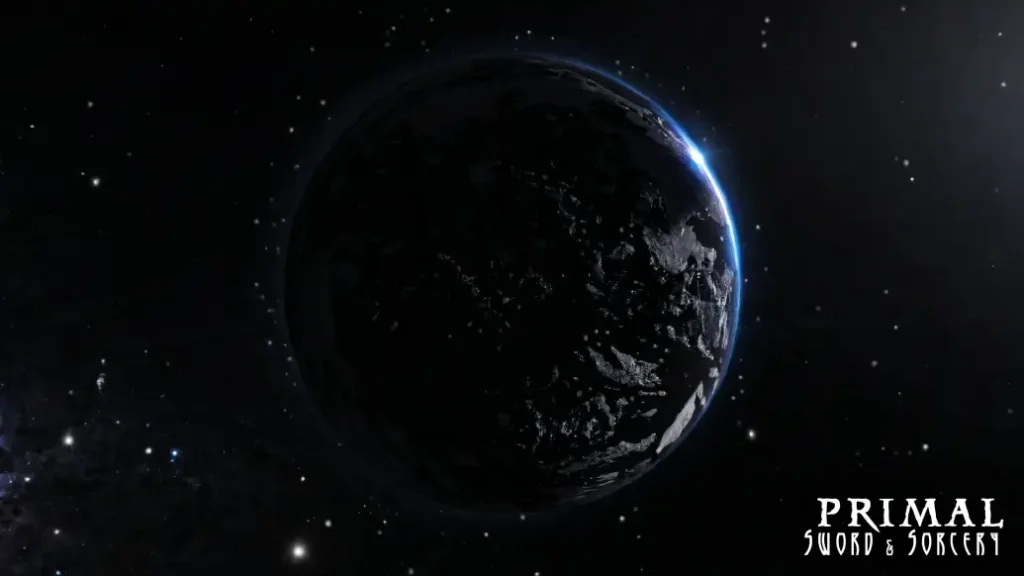
Before the Cataclysm:
Rywar was a distant, silent planet, its only features the colossal ruins of a civilization that vanished long before any known record in the Ran system. No living ecosystem ever emerged; the world’s surface remained an archive of emptiness, observed but never settled. In the golden ages of Thanator and Kydahn—millennia before Doom—expeditions from both worlds explored Rywar, uncovering glyphs and structures unmistakably marked by the Greater Vandyrian Empire.
These findings dated back nearly three hundred million years, predating the rise of Thanator or Kydahn themselves. Automated fleets—drones and colonial starter systems—had once landed here, mapping and surveying Rywar as a potential hub for Vandyrian expansion.
Vandyrus itself, it is now believed, was originally little more than a designated outpost—its name the legacy of imperial logistics, not of origin or birthright. By the time Thanatorian explorers set foot on Rywar, the automated presence of the Greater Empire had long failed, and what remained of the ancient installations was already decayed by time.
The Cataclysm:
Time began the ruin, but the Cataclysm finished it. When Doom swept through the system, half of Rywar’s crust was boiled into a sea of black glass, a hundred miles deep. The rest was drawn down by ancient vortices and encroaching silence. The ruins—already enigmatic and eroded—were further vitrified or swallowed. Surviving glyphs and structures were reduced to fragmented, scorched remnants, legible only in the rarest of circumstances.
Aftermath:
Following the Cataclysm, Rywar existed as the system’s furthest grave. Later scholars gave names to its scars—Vulcan Sea, Graveyard Coast—but these were nothing more than catalog entries. Rywar itself offered only mute evidence of entry, neglect, and extinction.
Present Day:
Rywar is the system’s farthest known tomb—a planet of black glass and ruins so ancient that even ghosts are a memory. Its negative legacy is clear: proof that Thanator and Kydahn were not the first, that the ambitions of the Greater Vandyrian Empire stretched here eons earlier. The world’s silence, and the worn glyphs beneath its fused surface, stand as the final reminder that even the greatest empires are reduced to dust, their claims unread, their history boiled away by time and catastrophe.
“The Homeworld”
Vandyrus is not, and has never been, the Vandyrian homeworld.
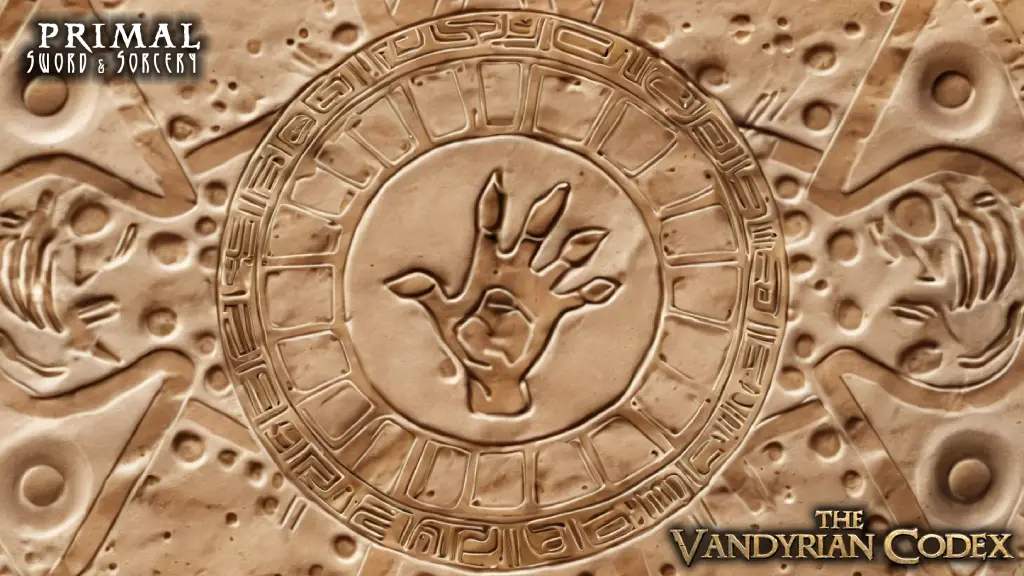
Vandyrus is a frontier node, a foothold, a deployment site on the very rim of what once was their dominion. The serpent vaults beneath Drael may whisper with dread and alien intellect; the wolf dens of Vulsa may thrum with ancient reflexes of command; the lion courts may preserve fragments of imperial etiquette—but none of these are the cradle.
They are provincial holdings at best, experimental platforms at worst. If the Vandyrian ever possessed a single world of origin, that world has been lost for ages beyond counting—either consumed by their own engines of expansion or erased in the collapse that followed their disappearance.
If there ever was a singular homeworld, its name would be Vandyria—not Vandyrus. According to the conventions of their own language, “Vandyrus” translates roughly as “within the outer grasp of the Empire of Vandyria,” marking it as a frontier province rather than the imperial heart.
Curse of “The Vandyrian Race”
The concept of the “True Vandyrian” is a philosophical toxin that has annihilated worlds.
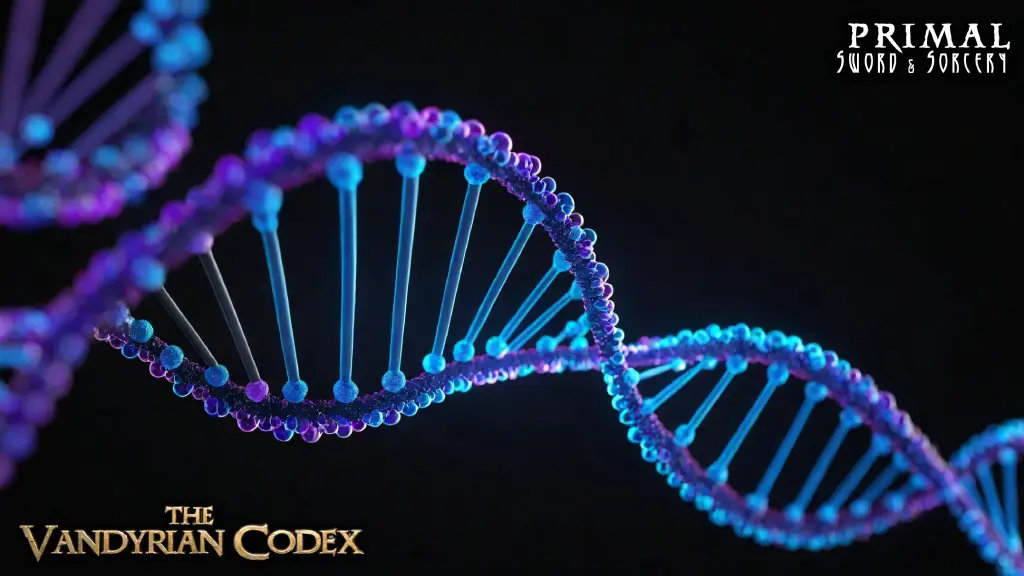
In the ruins of Thanator and across dead systems far from Ran, we find evidence of wars fought not for resources or borders but for authenticity. Battles between factions claiming purer blood, closer inheritance, truer doctrine. Whole ecologies sterilized for daring to proclaim themselves rightful heirs. This obsession with legitimacy carved scars through the galaxy long before Doom shattered Kydahn.
Yet the obsession itself rests upon a false premise. The Vandyrians may not have been one people at all. Their empire appears to have functioned less as a species’ dominion and more as a design consortium, a civilization whose unity arose from purpose rather than biology.
The shared anatomical and neurological traits in Ran-system species—parallel skeletons, compatible aggression-pathways, hierarchical instinct—do not necessarily stem from common ancestry. They may represent a standardized template, a suite of desired characteristics imposed upon uplifted species across countless worlds. A doctrine of utility, not kinship.
Thus arises the coldest definition: a Vandyrian is whatever the Empire deemed useful. A slave-race refined into soldiers. A predator modified into an overseer. A scavenger uplifted into a technician caste. A biologically malleable species reshaped into an administrator or diplomat. No wonder the peoples of Vandyrus share brutal elegance and instinctive stratification—they are not siblings by blood, but siblings by design.
Fate of the Core Worlds
It is believed by many that the Vandyrian core-worlds are not abandoned—they are emptied. Not lost to entropy, but purged. Archives erased. Biomes sterilized. Star-factories dismantled. Entire system-clusters missing as if carved from the map. Something eliminated the heart of the empire with surgical precision, leaving only peripheral remnants—Thanator, Kydahn, Vandyrus—to carry fragments of memory, instinct, and ruin.
Vandyrian is not an identity—it is a scar. A wound left by a vanished colossus. A function without a master. A task abandoned in mid-execution. To call oneself Vandyrian today is to wear a crown whose weight was forged for giants. It is to echo a purpose that no longer exists. It is to claim inheritance of a role—the Vanguard—that may have been meant not for survival, nor dominance, but for preparation.
The Pre-Cataclysmic Age
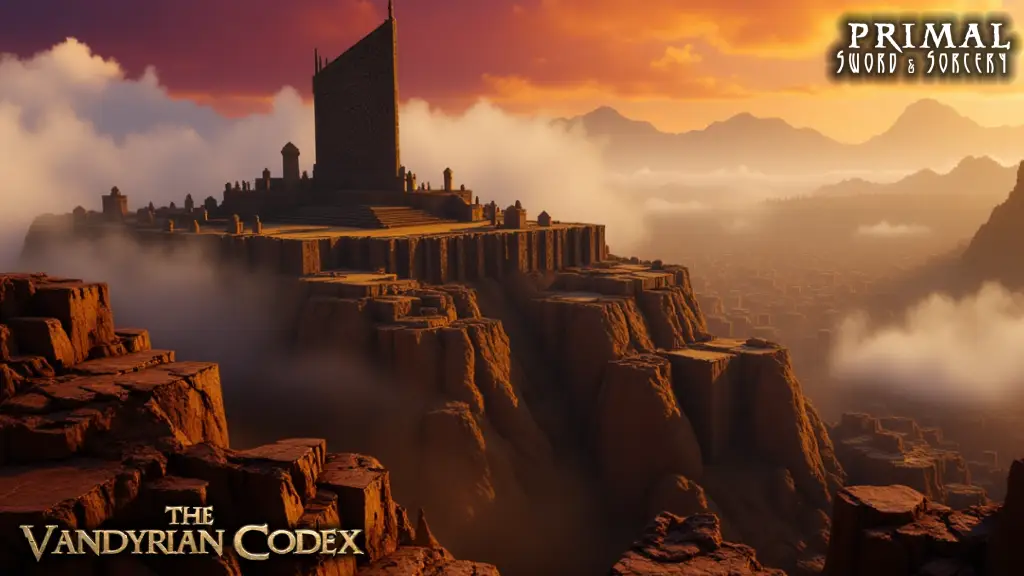
In the era before the Cataclysm, Thanator’s grip on Vandyrus was ruthless but unfinished. Their exploitation—industrial, extractive, and unyielding—never reached completion. The real collapse began not with local rebellion, but with withdrawal: Thanator’s masters, facing greater crises at home, issued orders that could not be denied. They left Vandyrus in haste, abandoning mines, leaving behind poisoned land, empty outposts, engines still running, and wounds still raw. Their occupation had never been a negotiation. They ruled from airships no grounded force could challenge, departing with no thought for what would follow.
What followed was the vacuum. Into it surged the pre-cataclysmic races—creatures older and crueler than most care to remember. These are called the Titan Races: the Kirin, horned equine sorcerers; the Sabertooths, colossal feline predators; and the Dire Wolves, whose madness would outlast all rivals. The Kirin, for all their brilliance, never reached the stars—their sorcery ran deep but could not pierce the sky. By the time of the cataclysm, the Kirin civilization was already in terminal decline, shattered into fractious cults driven by degeneracy and ecstatic violence.
The Sabertooth factions, too, were coming apart, undone by their own black arts—mutations and madness unleashed by necromancy and the desperate pursuit of new forms. The Dire Wolves, whose name would haunt Vandyrus for ages, had long since abandoned sanity in their own pursuit of bloodline perfection. Eugenics, ritual, and carnage became their law. All these titans warred on each other and themselves, every front a fresh wound, every border shifting in blood and chaos.
The only reason this violence did not engulf the planet sooner was Thanator’s sheer dominance: airships above, orders obeyed, no diplomacy, no resistance worth the name. The moment Thanator left, the cage opened. No one was thinking long-term—every race, every warlord, every sorcerer and beast jockeyed for the spoils of a world left unguarded.
Then, the cataclysm rocked the world.
The Cataclysm
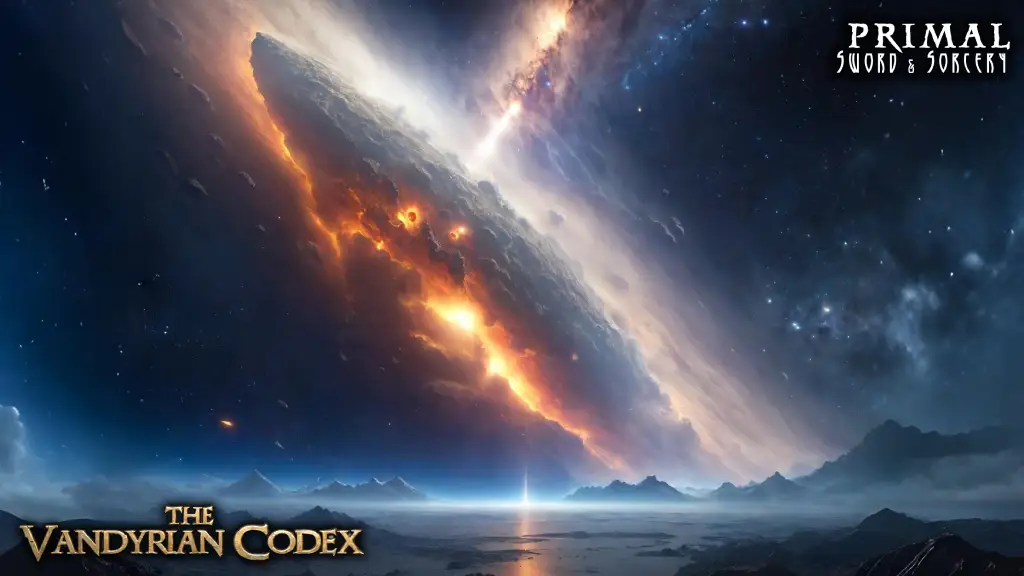
Thanator survived the Cataclysm only by becoming a theater for savagery, its glory permanently broken; Vandyrus, by contrast, was battered, fractured, and forced to heal wrong.
Its bones are hollowed by disaster, its civilizations lashed into dust and mud, every new era merely a repetition of the last—a cycle of rise, collapse, and forgetting. Nothing built here ever stands straight. The past is not inspiration, but a constant ache: every living culture senses the shape of what was lost, and cannot escape the knowledge that nothing here was ever whole.
For Vandyrus, the Cataclysm is not an event but an unending chain—a succession of blows, each one proof that the cosmos is indifferent to suffering or survival. The history known today is a patchwork of rumor, scavenged myth, and the dying embers of dead cities. The only records that persist are the desperate scratchings of survivors who watched the sky turn to fire, the land itself become hostile, the world shift beneath their feet. Vandyrus never built the crystal towers or star-thrones of Thanator. Its height was measured in ziggurats and stone halls, monuments to vanished gods, quickly reclaimed by salt, mud, and time.
The Cataclysm has no true name. Sages call it: Doom.
Vandyrus was struck by three great impacts—each powerful enough to shatter continents, poison seas, tilt the very axis of the world. But these were only preludes. Behind them came the Cataclysmic Object, a thing of monstrous gravity, dragging a cloak of ruin and fire, cursing the land and sea for generations.
Zhuru might have been a heartland, but the Cataclysm left it buckled and stripped bare, its grasslands now haunted and rivers sterile, its cultures surviving only as scattered, mistrustful bands.
Drael took the brunt: its spine broken, its surface split into peninsulas and chasms. Life on the surface was erased; what survived fled below.
Yet long before the cataclysm, the serpent folk built thrones in the deeps, while the surface became hunting ground for raptor and dragon—scavengers circling a world never theirs. Gamandor was gutted by aftershock and rot. Xalkul’s towers sank beneath the sea, Orotana’s memory is now only a curse. Vandura and Panjar bear wounds older than language, their dynasties just arrangements of scar tissue.
Suthku and Londorai, on the system’s edges, were not spared. Suthku broke, drifting south into a wasteland of half-empty cities. Londorai’s ancient realms fused beneath the ice, its folk surviving not by hope but by stubbornness, bitterness, and spite.
When the Cataclysm ended, history itself ended with it. What is remembered now is handed down as rumor, as warning, as bitter song. The common tongue of Vandyrus is a corruption of Thanator’s colonist speech, warped by abandonment and the need to rebuild from the bones of the lost. Even in language, survival takes the shape of failure.
But Vandyrus did not die.
It refused to yield.
The Vandyrian Codex: Book 1 – Primer: is a guide and open resource for game masters, developers, writers, and all creators working in tabletop, fiction, and digital space. Built as the foundation for the Homebrew Gaming Initiative, this primer is free to use, adapt, expand, and remix—no permissions, no subscriptions, no restrictions. Every culture, epoch, and artifact within is meant for real-world play and creative work, not as lore locked away or bait for future sale.
These works are deliberately not copyrighted or locked behind any barrier. The goal is to make the world of Vandyrus accessible—encouraging exploration, user-driven expansion, and developer participation at every level.
If you have a table, a server, or a blank page, this material is yours to use.
Developed for myth and built for play by Primal Sword & Sorcery—a division of HTH Studios LLC.
ATTRIBUTION & USAGE
All material in The Vandyrian Codex is released under a copyleft, Creative Commons license. You are free to use, modify, and distribute this content in your own games, writing, or projects—no license fees, subscriptions, or permissions required.
While HTH Studios is a commercial entity, this material is provided as an open resource to the community.
Attribution is appreciated.
For those seeking expanded content, exclusive modules, and
premium assets beyond the Codex, visit our Patreon at:
https://www.patreon.com/HTHStudios
Premium material is available exclusively to Subscribers.