


A second error, nearly as common as the first, is the tendency to reduce Elder Jantara to a caricature.
Modern observers, accustomed to the blunt simplicity of frontier kingdoms and the tribal romanticism favored by popular histories, often imagine the empire as little more than an unusually successful collection of desert clans. Such thinking reveals more about the observer than the civilization being observed. Elder Jantara maintained itself across roughly two millennia.
No society survives for such a span through luck, intimidation, or martial enthusiasm alone. Longevity of that scale demands administration. It demands social structures capable of surviving weak rulers. It demands institutions that function independently of individual personalities. Above all, it demands a population willing to participate in a shared system because they derive tangible benefit from its continuation.

The reader will therefore encounter throughout this volume a bewildering array of castes, mercantile orders, ritual obligations, inheritance traditions, companion classes, merchant-philosophers, civic fraternities, regional identities, bloodline privileges, legal distinctions, ceremonial ranks, and social contracts. This complexity is not evidence of decadence. It is evidence of sophistication. Elder Jantara did not endure despite these systems; it endured because of them. The empire’s customs were not ornamental curiosities draped upon an otherwise primitive society.
They were the machinery itself. What many modern commentators dismiss as eccentricity was often a carefully evolved solution to problems of governance, commerce, social stability, and regional integration developed over centuries.
Perhaps most importantly, the reader must abandon the persistent fantasy that Elder Jantara was fundamentally a civilization of raiders. Raiders do not construct continental trade networks.
Raiders do not establish commercial standards recognized by neighboring kingdoms. Raiders do not produce legal traditions respected beyond their own borders, nor do they create institutions whose reputation survives centuries after their disappearance. The archaeological evidence paints a remarkably consistent picture: goods moved more frequently than armies, contracts carried greater weight than threats, and influence was measured through dependency rather than destruction.
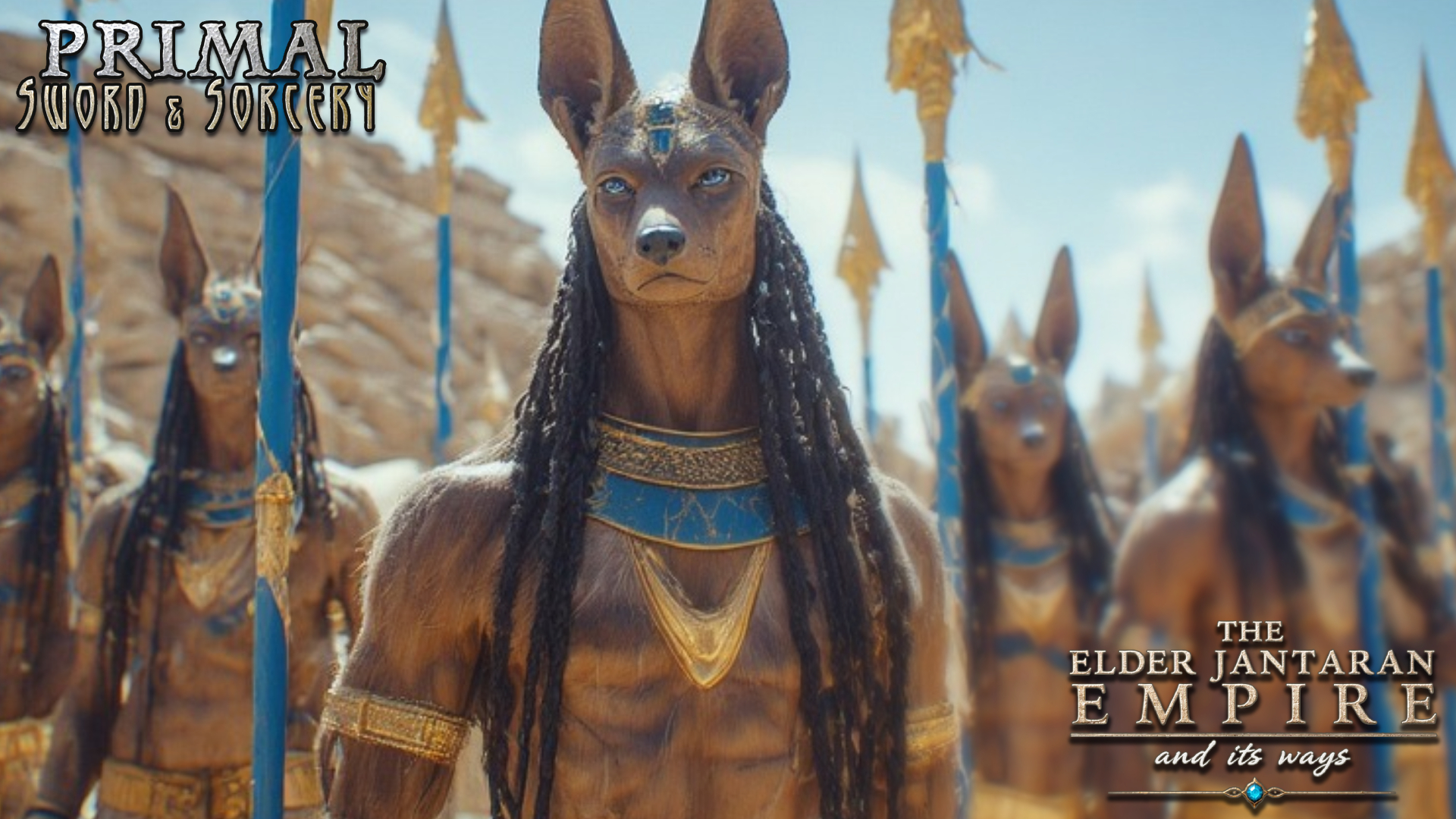
The later jackal kingdoms would embrace plunder and slavery with almost embarrassing enthusiasm, but to project those habits backward onto Elder Jantara is historical malpractice. It is akin to mistaking a collapsed temple for the civilization that built it.
Indeed, one of the great ironies confronting any serious student of Jantaran history is that many of the empire’s descendants spent centuries destroying the very qualities that had once made their ancestors powerful.
- They inherited symbols of authority while abandoning the disciplines that created authority.
- They remembered domination and forgot competence.
- They remembered prestige and forgot responsibility.
- They remembered that Elder Jantara had stood above its neighbors, but gradually lost all understanding of how and why that position had been achieved.
In this respect, the empire’s imitators became the single greatest source of confusion surrounding its legacy, leaving modern scholars to sift through layers of self-serving mythology in search of the civilization that existed before the masquerade began.