Category: Continents

  • The Kartonga

    The Kartonga

    The Wastes of Old Kartong

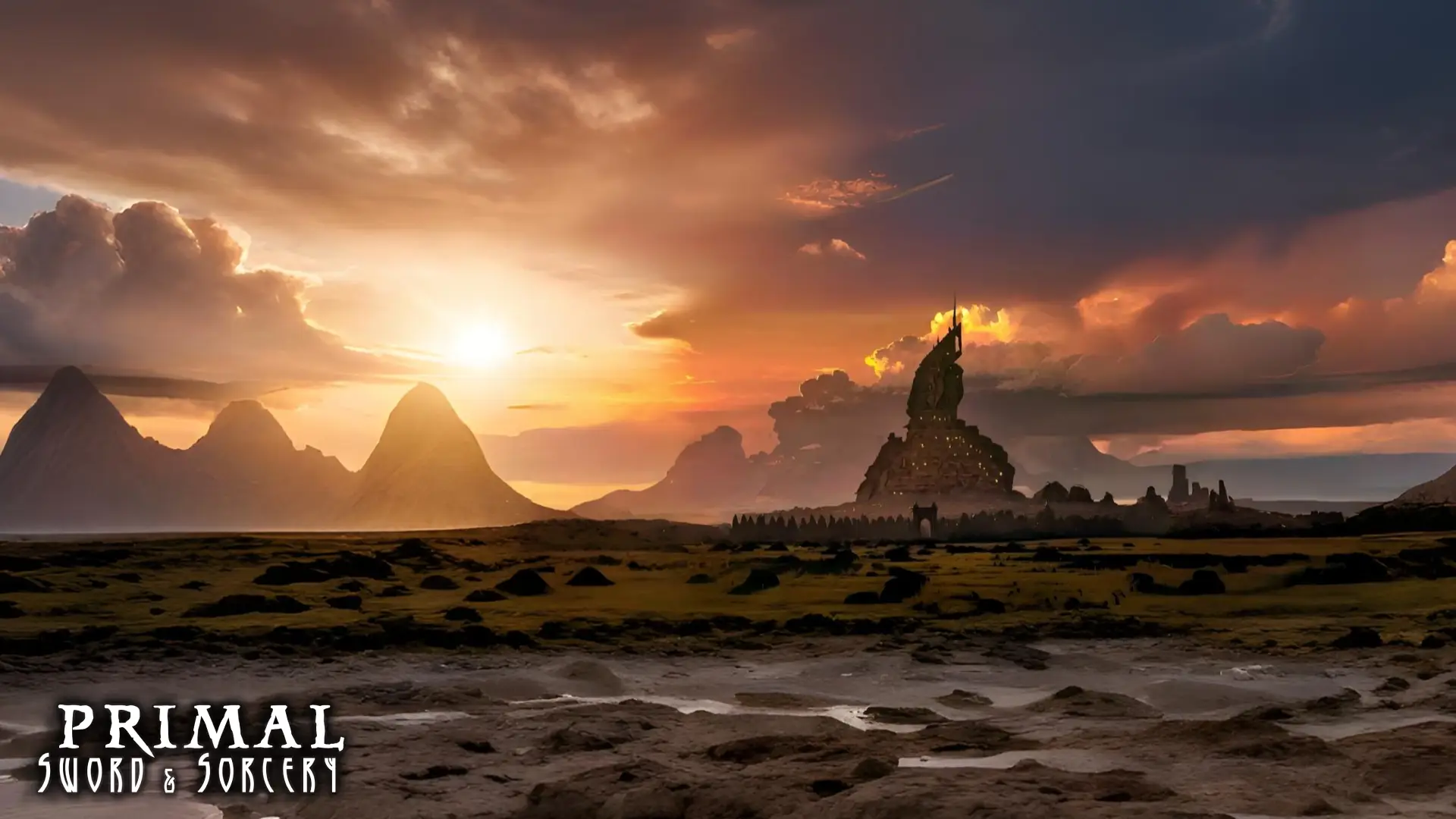
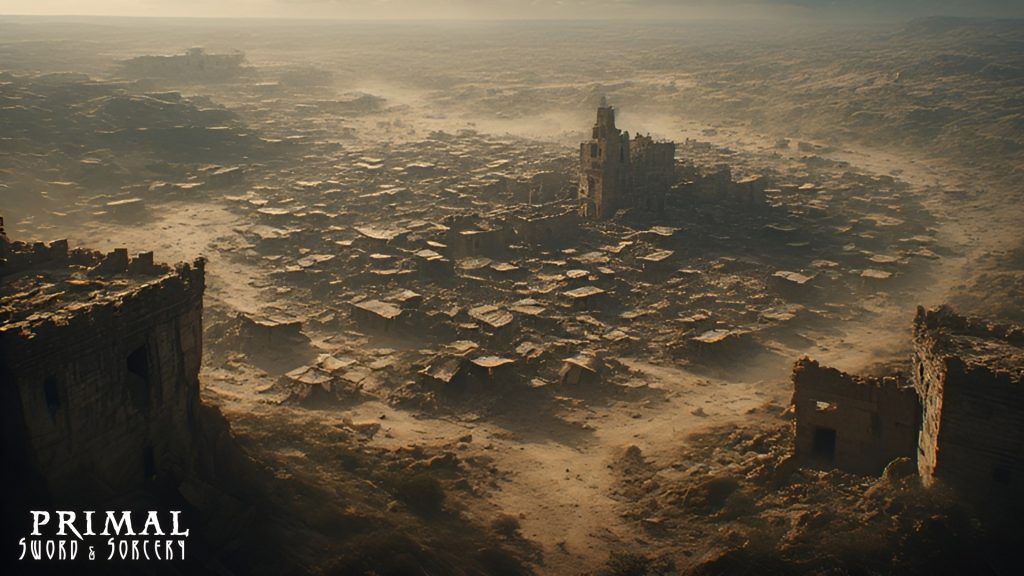
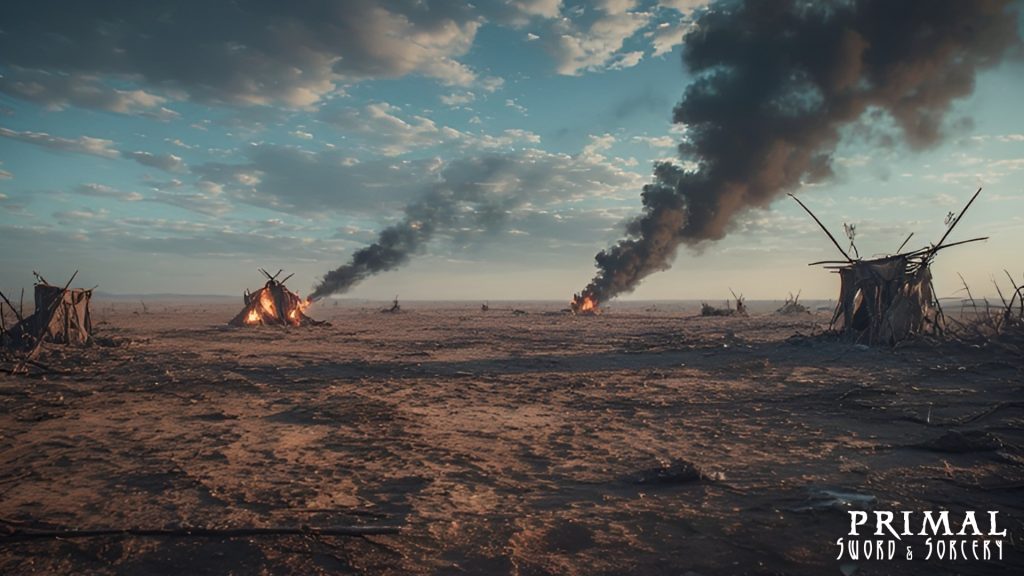
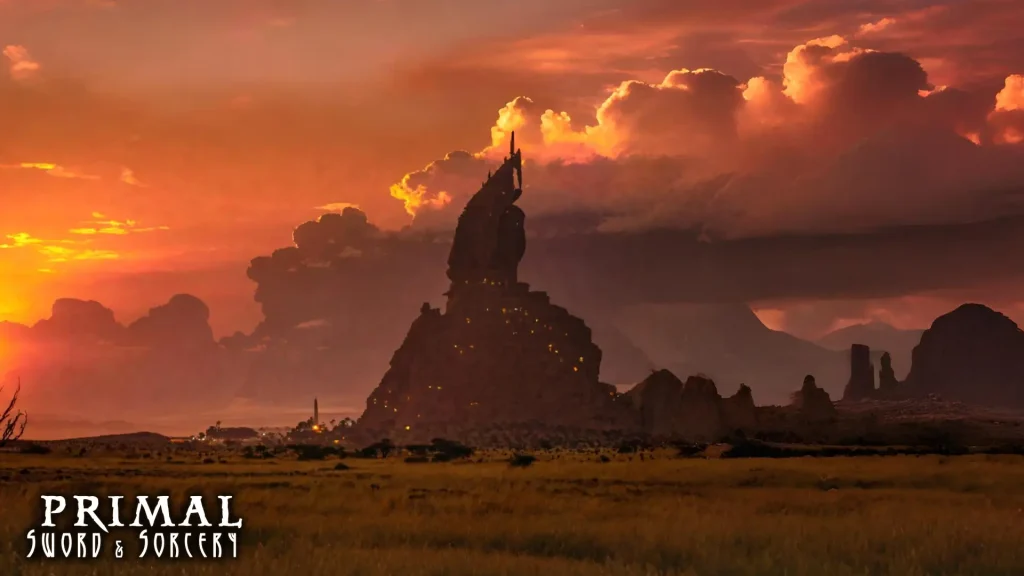
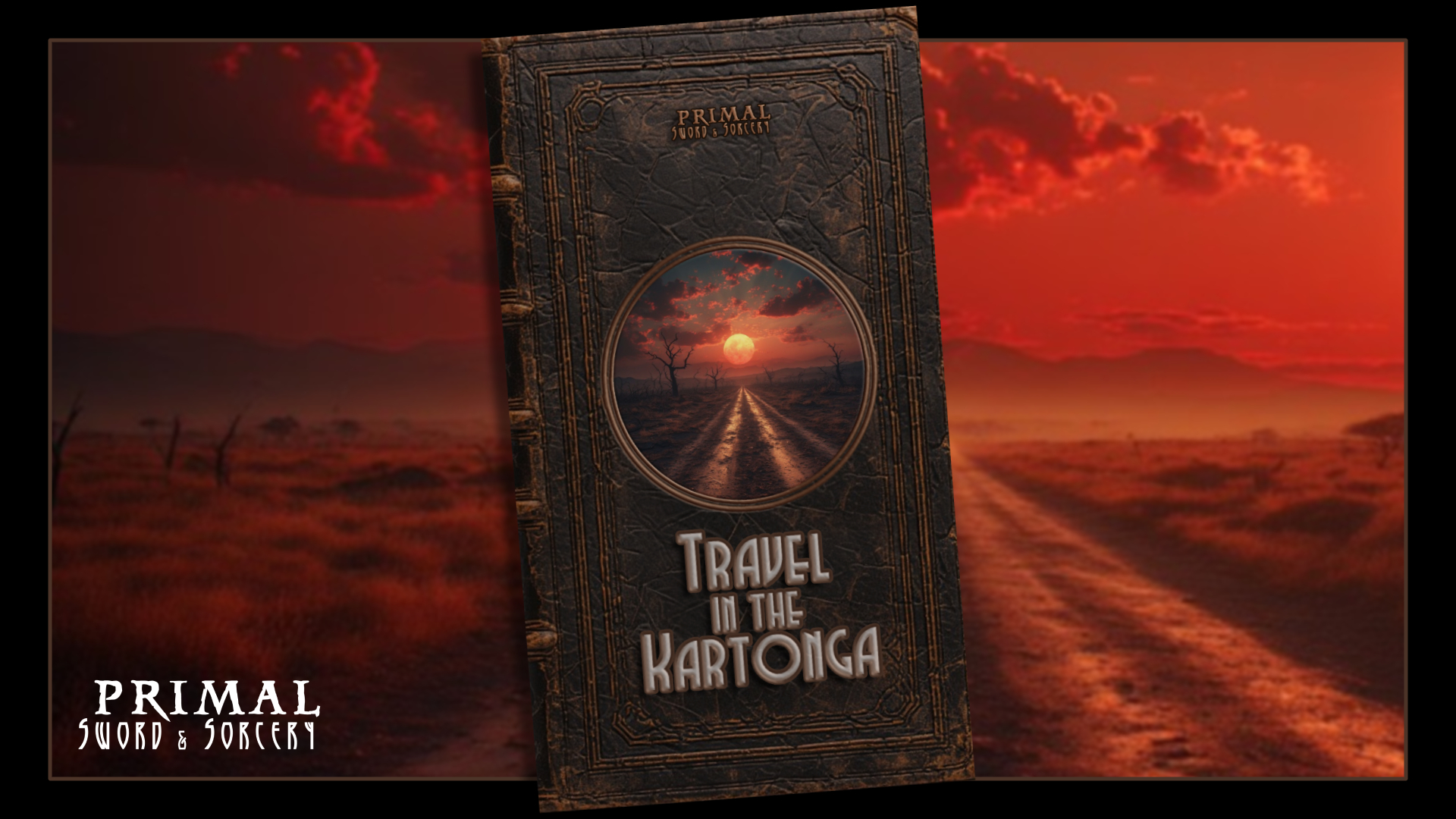
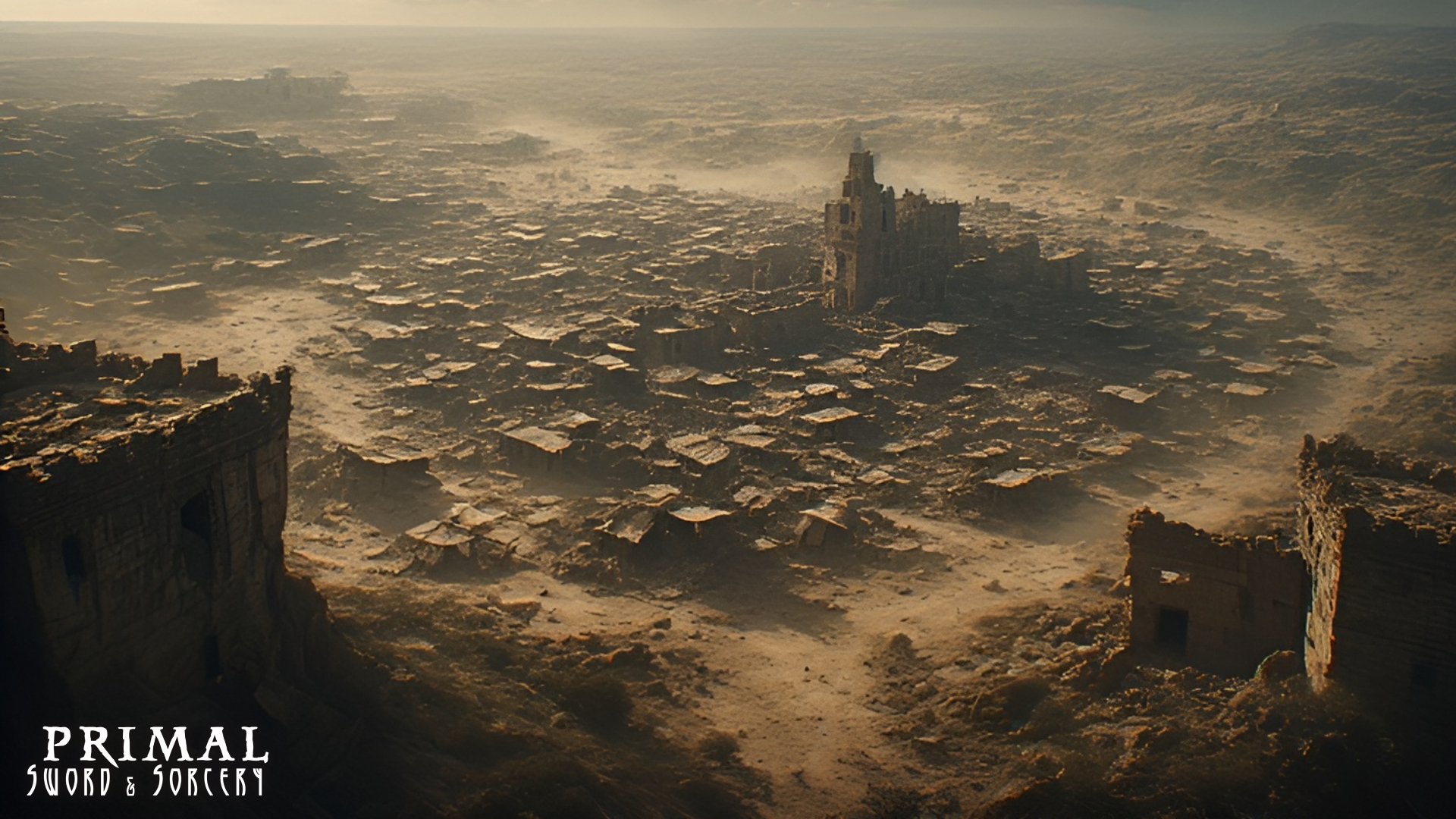
    The Kartonga is a wound within Zhuru, a land so dry and desolate it rivals the worst of the world’s deserts. The ground is scarred with craters, the sky forever hazed with dust. At its heart looms Old Kartong, the spire-city, a jagged fang of stone carved into impossible angles. No one agrees whether it was built or grown, whether it belonged to beasts, reptiles, or something that came before them all. Some whisper of the insect races—the pre-mammalian lords of a hellish epoch, long vanished yet never truly dead. The spire is not ruin but scar, proof that something vast and wrong once ruled the continent.

    The Kartonga is not a kingdom but a midden. Outcasts and refuse from every other nation crawl here when all else has failed them. Thieves, mercenaries, warlords, and heretics congregate amid its shattered craters. Loose alliances form and dissolve in blood, for nothing is sacred, and betrayal is the only constant. Here there is no culture beyond survival. Honor is a lie, loyalty a fleeting bargain. Outsiders enter Kartonga at their peril, for here even the idea of law is mocked, drowned in skullduggery and backstabbing.


    New Entries


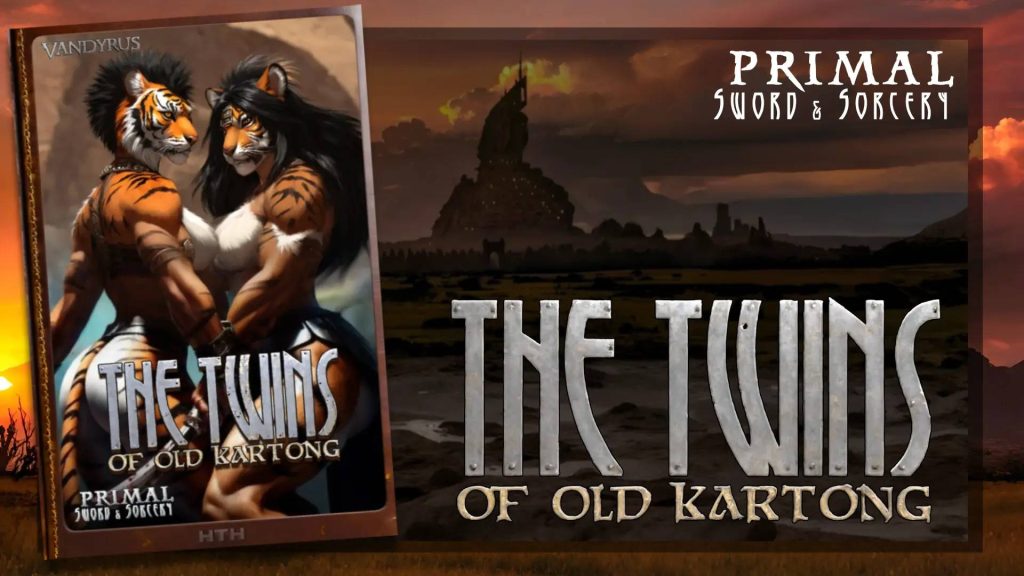
    Books on the Kartongaland Wastes

    Lurid Tales From The Scar of the World


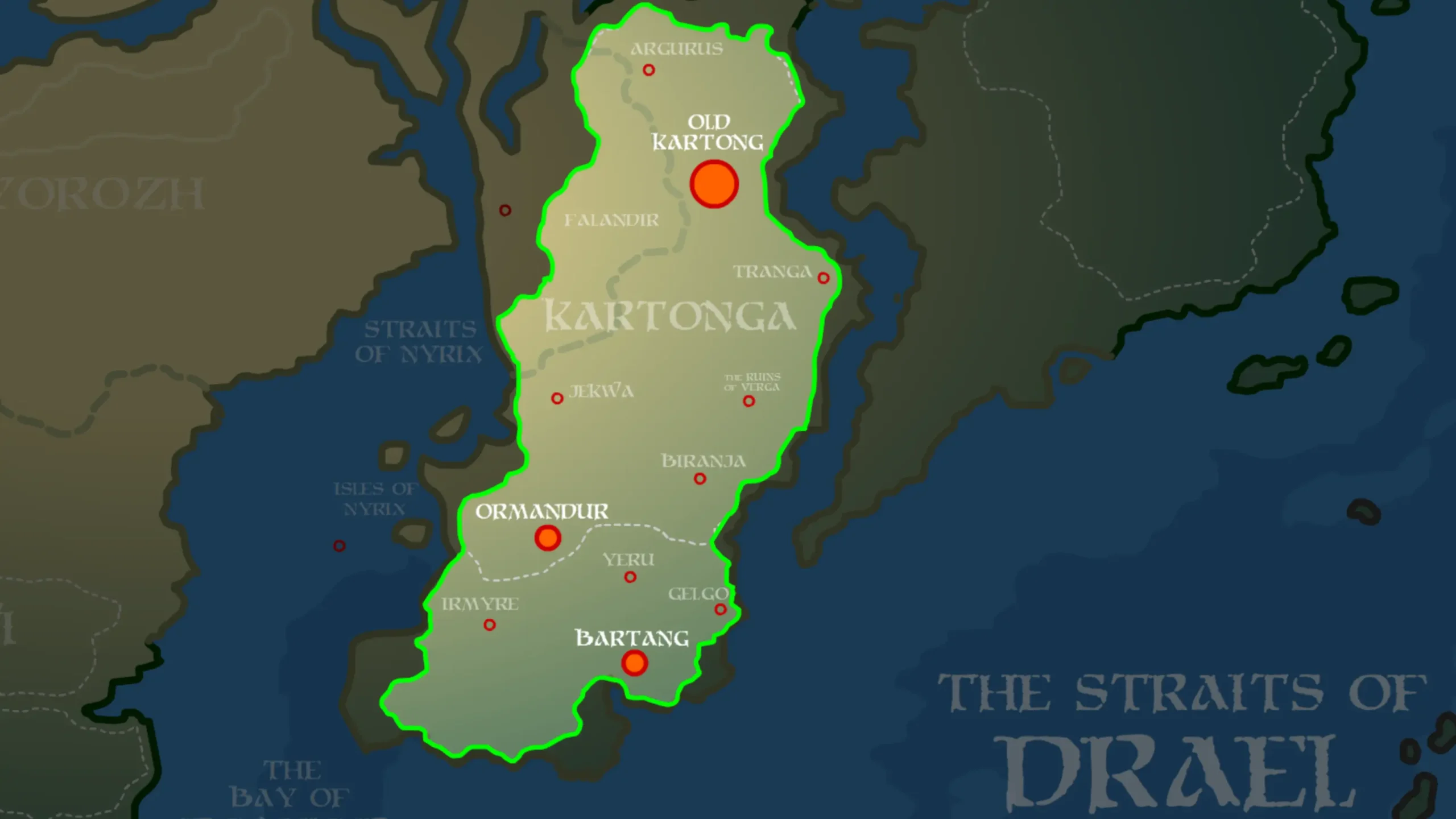
    Map of the Kartonga Wastes


    Cities of The Kartonga


  • From The North Downward

    From The North Downward

    Travel in Zhuru, as any seasoned wanderer knows, is a journey measured as much in manners as in miles. To step onto the northern roads is to step, by degrees, into something like civilization—if one takes civilization to mean politeness enforced by old blood, tradition, and the certainty of one’s place. In the green lanes north of the River Ayrel, past the rolling grasslands and cold rivers, travelers find themselves entering the reach of Konara. Here, elk with white-tipped antlers guard the thresholds of walled towns.

    Their customs are clipped, their speech precise, and their patience as thin as the paper on which they record their lineages. Riffraff, wanderers, and traders hoping for southern bartering find themselves stonewalled by a cold courtesy—no rough handling, no threats, only a measured refusal and a tightly drawn door. “We are not in need of company,” they say, “but we wish you a good evening.”

    The message is clear: move on, and do not ask twice.South of the horsefolk’s reach, the air thickens, and manners become rowdier, voices louder, the road more crowded. Here, the world sheds its northern reserve. In these middle tracts, one passes through towns that bark their business from muddy doorways, where arguments are settled with thrown mugs and market disputes are measured in bruises and broken noses.

    Yet, for all the roughness, there is a kind of fellowship among the rude: a sense that every traveler is kin to the last poor bastard who lost his purse or his virtue to the road. The taverns are full, and hospitality is loud if not always honest.

    Keep south, and the mask slips entirely. The vulturekin make their eerie home in the spires that claw the sky on the edge of the dry hills—a race of sharp-eyed, sharp-tongued folk who build strange fortresses and mind stranger taboos. They speak little, watch much, and leave the world to wonder at their motives. To pass their gates is to feel the last brush of order before plunging into the wild.

    Beyond lies the Kartongaland wastes, where all that northern restraint gives way to raw appetite. The roads here are not roads but veins—pulsing with the traffic of vice and desperation, hungry for coin, flesh, or news.

    Townships squat in the mud, ruled by those who can take and keep, not those who can claim ancestry. Here, the slums breathe in the smoke of foreign fires, and the old tower at the city’s heart rises above it all, a beacon for those with nowhere left to run. In Kartonga, barbarism is not a pejorative, but a force—rolling in like thunder from the wastes, swallowing up every pretense of gentility. No traveler leaves unchanged; most lose something along the way, whether it be coin, innocence, or their old name.

    So runs the road: from the north, where the world is cold and closed, to the south, where it is open and unforgiving.

    To travel Zhuru is to travel a spectrum of civilization—every mile another layer stripped away, until all that remains is what one can carry, what one can sell, and what one can take.

  • Vulsa – The Kingdoms of Steel

    Vulsa – The Kingdoms of Steel

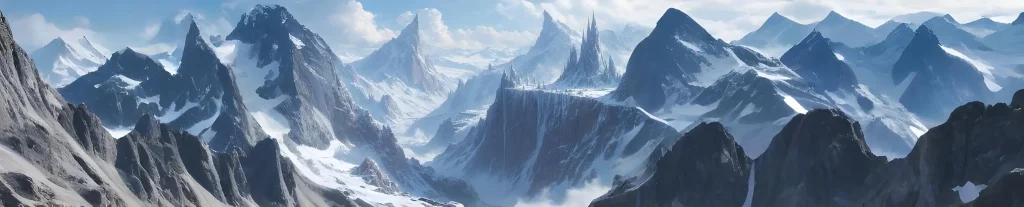
    The North of Vulsa, looking out over the Fangs of the North

    Vulsa lies in the east of Vandyrus, a continent of black rock and silver snow, where the mountains seem to breathe fire beneath the ice. It is vast, its northern crown large enough to swallow whole nations. High above the laws of civilization stretch the Fangs of the North, serrated, ice-sharpened ridges that divide the continent’s ruined core from its more habitable south. The ascent through those peaks is lethal. The wind cuts skin like knives, avalanches roar without warning, and the air itself freezes the blood. Wolves dwell in those highlands, taciturn, self-contained, but not cruel, and the few who cross the passes into their domain seldom return unchanged.


    The Ruination of the Central Kingdoms is the stuff of Dark Legend

    Below the Fangs lies central Vulsa , a land forever broken. When the world buckled in the Cataclysm, its heart was torn open, and the scars never closed. Whole ranges sank, rivers changed direction. What was once a broad interior now sinks by degrees into frozen black marshes, fissures of ice, and deep, killing snows where the remnants of old kingdoms drown a little more each year. Villages drift southward on rafts of half-frozen mud, while ruined keeps stand like teeth above the mire. Even the wind moves slowly, heavy with ash and memory.


    The nations of the Southern Kingdoms are by no means warm, Snow is replaced with driving rain, Endless cold by infinite grey and Frostbite with rot & rust

    South of the wastelands, the land softens into the civilized forges of Volsa, its snow giving way to black volcanic soil and the strange, shimmering craft of the Vulsan smiths.

    Here stands the last light of their civilization. The continent’s interior remains wild, much of it unmapped. Ancient craters from the Cataclysm pock the landscape, many believed to be sites where skymetal once fell. Settlements cling to trade rivers or to the smoldering forges themselves, leaving vast tracts of wilderness where only wolves, spirits, and scavenger bands roam. Culturally, Vulsa sits between ruin and revelation. It is a land that remembers the gods’ wars in its ore and carries both the genius and the madness of creation in its veins.

    To outsiders, it is a kingdom of cold mercenaries and unbreakable metal. To those born beneath its ash-stained skies, it remains the crucible of the world, where craft and sorcery, memory and metal are one and the same.

    Combined with Roedon and Tymere, the Kingdoms of Vulsa make up what the rest of Vandyrus refer to as the Triskelion nations.


    RELATED

  • Roedon – Broken Crown of the West

    Roedon – Broken Crown of the West

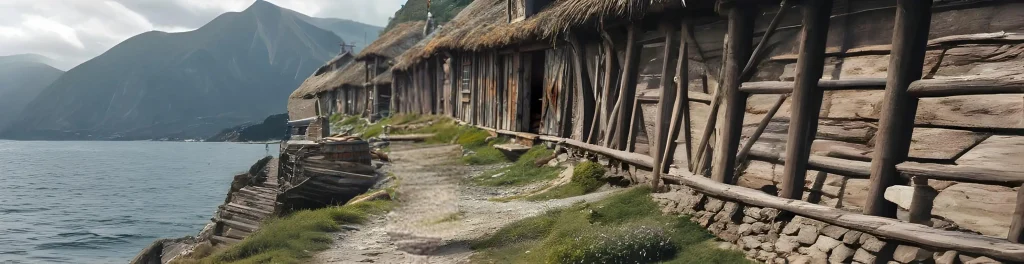
    Once the western mirror of Vulsa’s greatness, Roedon now lies in half-light and ruin. Its keeps are black with smoke and lichen, its folk live amid cracked pillars and moss-eaten vaults where kings once feasted. The wind from the Drael coasts carries the stench of raids, and from the north come the wolves of Zhuru, burning and stealing the few young left to enslave.

    The *Roedans are a hard folk—thick-furred, grim-eyed, and proud in their suffering. They remember the age when Roedon and Vulsa were twin realms of iron and ice, bound by shared blood and rivalry. But while Vulsa endured through faith and fury, Roedon broke beneath its own winters. The priests fled, the citadels fell silent, and now each valley shelters its own chieftain, each ruin its own petty god.

    Unlike the sunken reaches of the Vulsan marshlands, Roedon has not drowned—but it is freezing, bleeding, and starving. The raids from Drael never cease, the Zhurians press from the frost, and even the dead seem restless, wandering the moors in packs. Yet in the ruins of Thryne and the haunted markets of Den’Rydan, old blades are still traded, and old tongues still whisper of the Day of Return—when Roedon’s warriors shall ride again, howling beneath banners stitched from wolf hide and sea salt.

    *Roedans – An archaic term meaning both Northern Ro’Edyne & Southern Roedoni immigrant populations.


    NOW IN PRODUCTION


    RELATED

  • Varduun – The Hyenalands

    Varduun – The Hyenalands

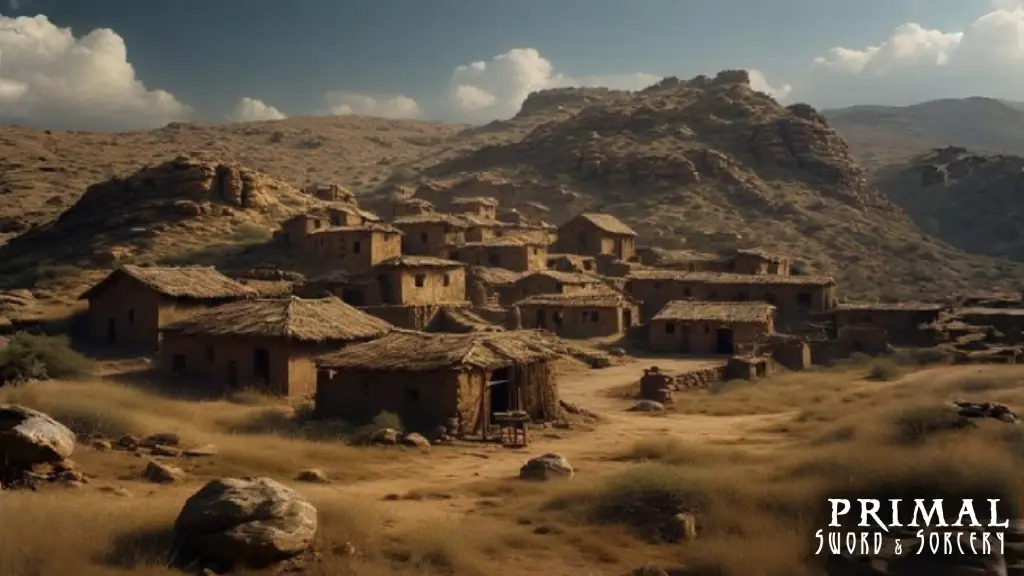
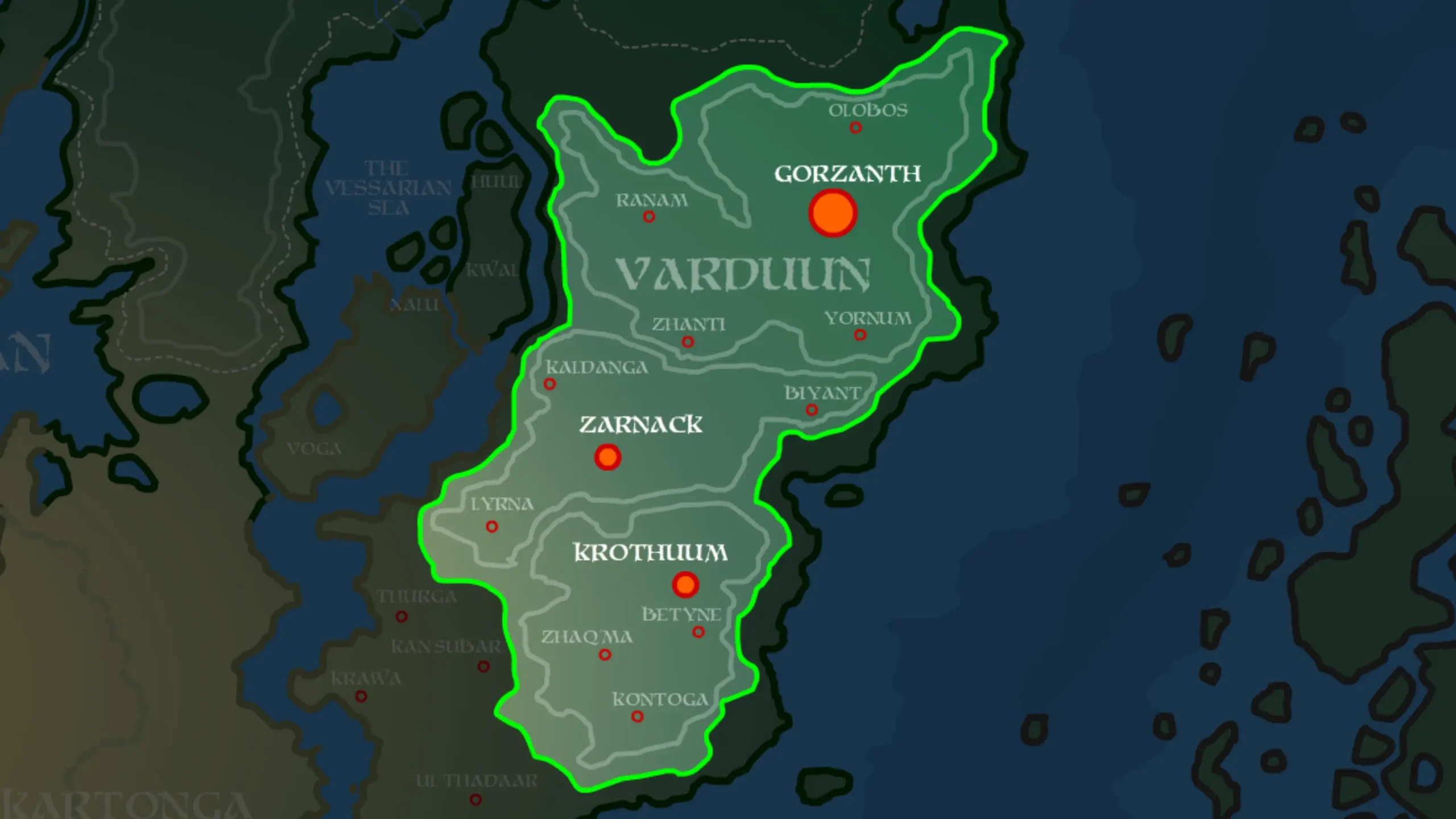
    Varduun is a land cursed twice. Once by fire, when Drael fell and split the earth, vomiting up vents, ash rivers, and poisoned plains. Again by its folk, for the hyenas claimed the land and made it theirs.

    It is a land of cracked savannah, fever-swamps, scorched plains, and wasted rivers. Disease prowls through its camps as easily as raiders do. Unwanted pregnancies, miscarriages, and deaths in childbirth are common; the alleys swarm with half-starved pups and abandoned ferals. Life here is cheap, short, and cruel—and the hyenas laugh at the cruelty not because it is funny, but because it is all they know.

    The Hyenalands are no kingdom, no empire. They are a trinity of strongholds and hordes—Gorzanth, Zarnack, and Krothuum—locked in endless rivalry. Only when all three are threatened at once do they bare their teeth outward, and then the savannah burns.

    And always, on the horizon, the whisper of a fourth city—Old Kartong, not theirs, not of Varduun, but a ruin that mocks them all.


  • Bantos – The Doglands

    Bantos – The Doglands

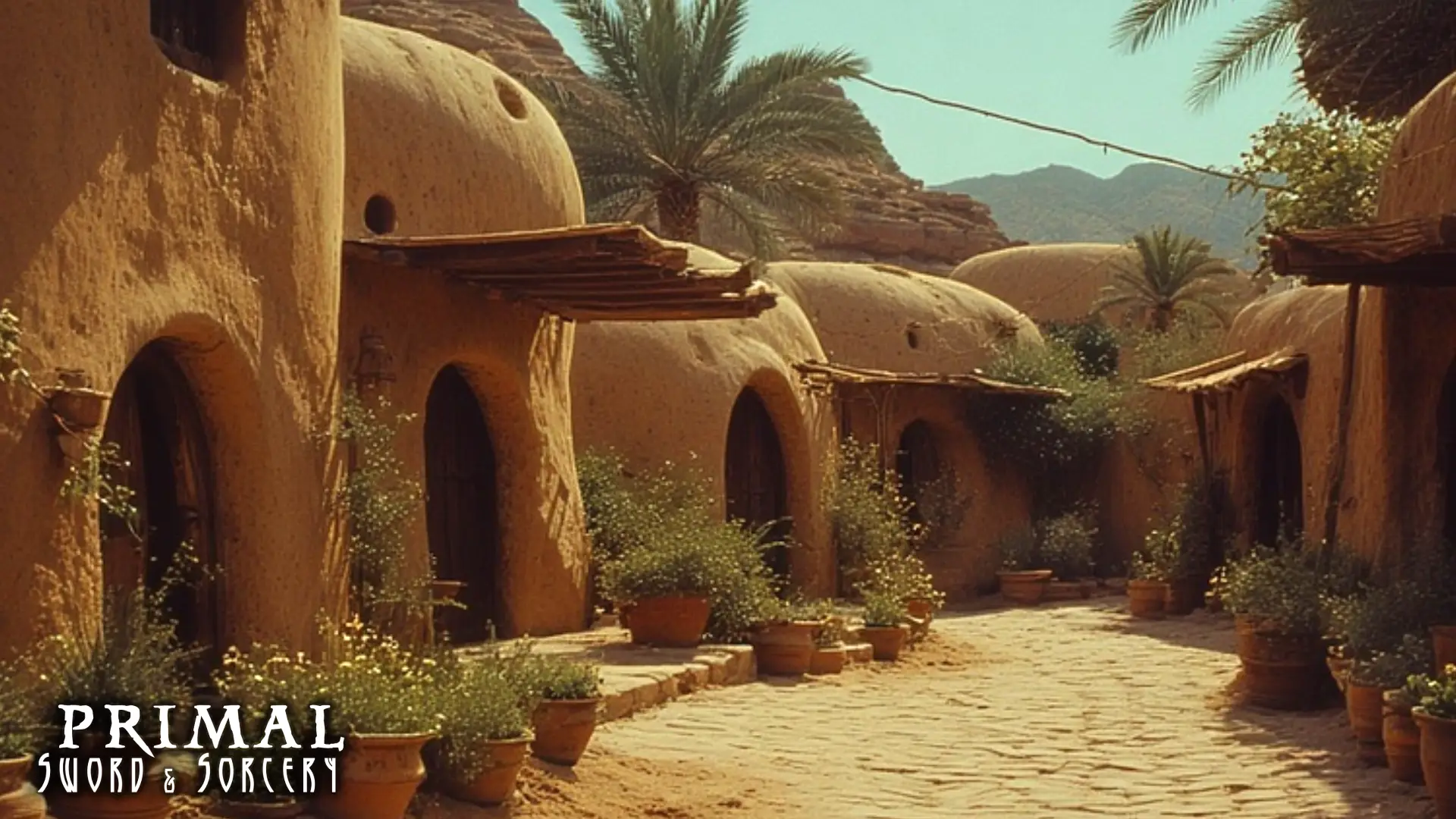
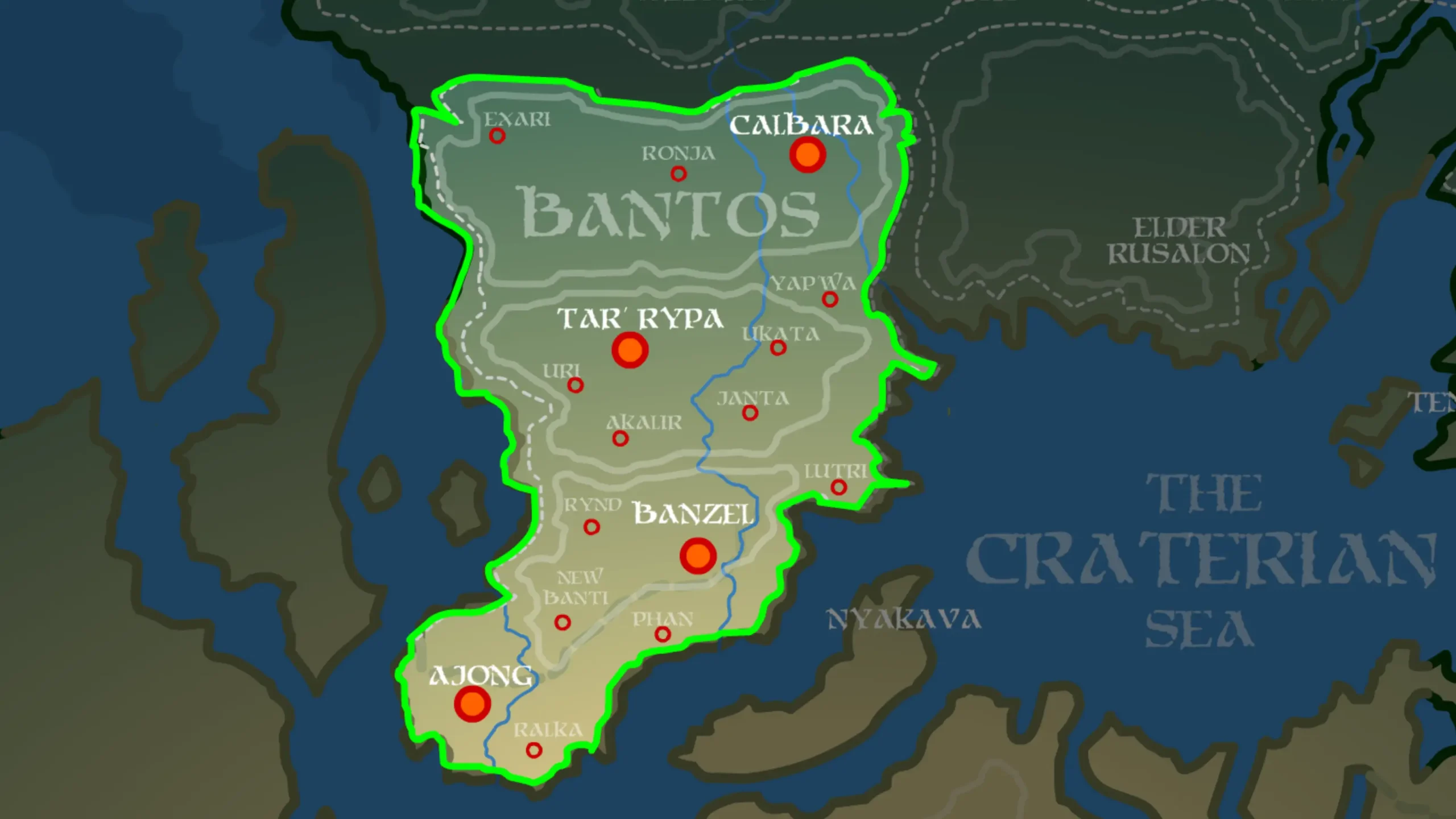
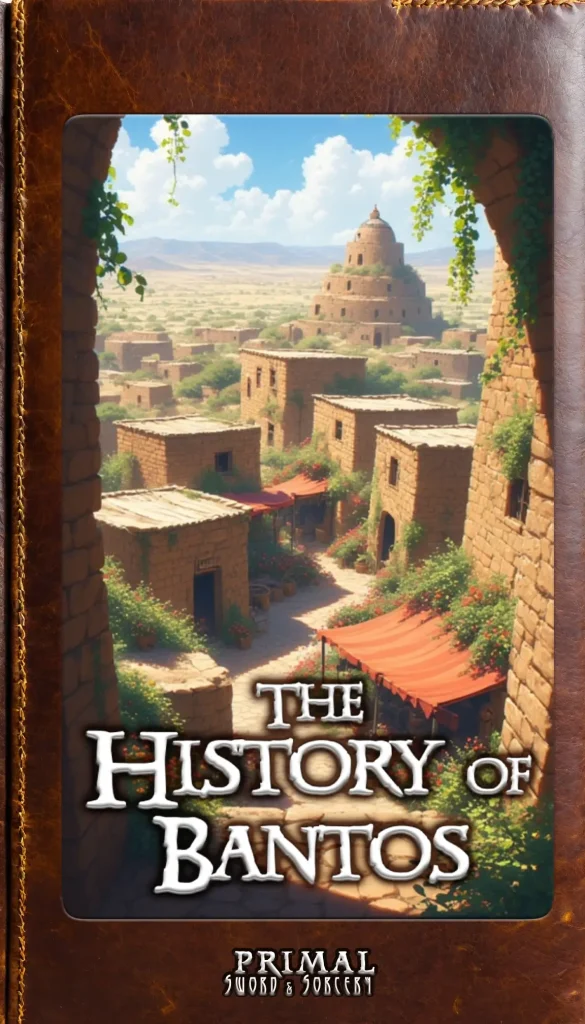
    In almost complete contrast to the hyena wastes of the Zhurian East stand the Realms of the Doglands — a loose constellation of citadels and town-states nestled between the ridges of Izhura and the guarded frontiers of the Lions’ territorial dominions.

    Where the hyena tribes thrive on terror, filth, and frenzy, the folk of the Doglands labor toward the illusion — and perhaps the first true experiment — of civilization. Their walls are high, their gates fortified, their plazas swept and sunlit. Within, sandstone towers rise over clay-tiled streets; bazaars spill with spice, silver, and textiles traded freely among breeds once enslaved.

    The population itself is a breed-born refuge of runaways and freed thralls, their collective memory steeped in the hunger for autonomy. Every law in their realm speaks to the preservation of the self — and the punishment of those who would erase it. Execution and treason are the two pillars upon which their justice rests, and mercy is measured not in pity, but in restraint from cruelty.

    Yet for all their civility, they remain a young and precarious nation. The Dogfolk abhor conscription, reject state labor drafts, and refuse to bind service to punishment. Their armies are few, their militia undisciplined, and their reliance on coin and contract makes them slow to rally. They are merchants before soldiers, architects before conquerors, and in that inversion lies both their nobility and their doom.

    Still, their hatred of both Jackals & hyenas runs hotter than any forge in Vandyrus. No treaty, no creed, no trade route is ever permitted to cross the filth of those carrion plains. To the Dogfolk, coexistence with Wolves is a cautious truce; with Horses, a mutual respect. But with Hyenas — only eternal war, declared in silence, and fought in every child’s bedtime story.

    For mistakes, even noble ones, do not require frequency to accumulate ruin. And the Lions across the western sea, in their cruel provinces of Gamandor, have long delighted in watching fledgling nations stumble — savoring, with almost culinary patience, the pleasure of playing with their food.


    RELATED


  • Gunran – The Labyrinthian Hell-Jungle

    Gunran – The Labyrinthian Hell-Jungle

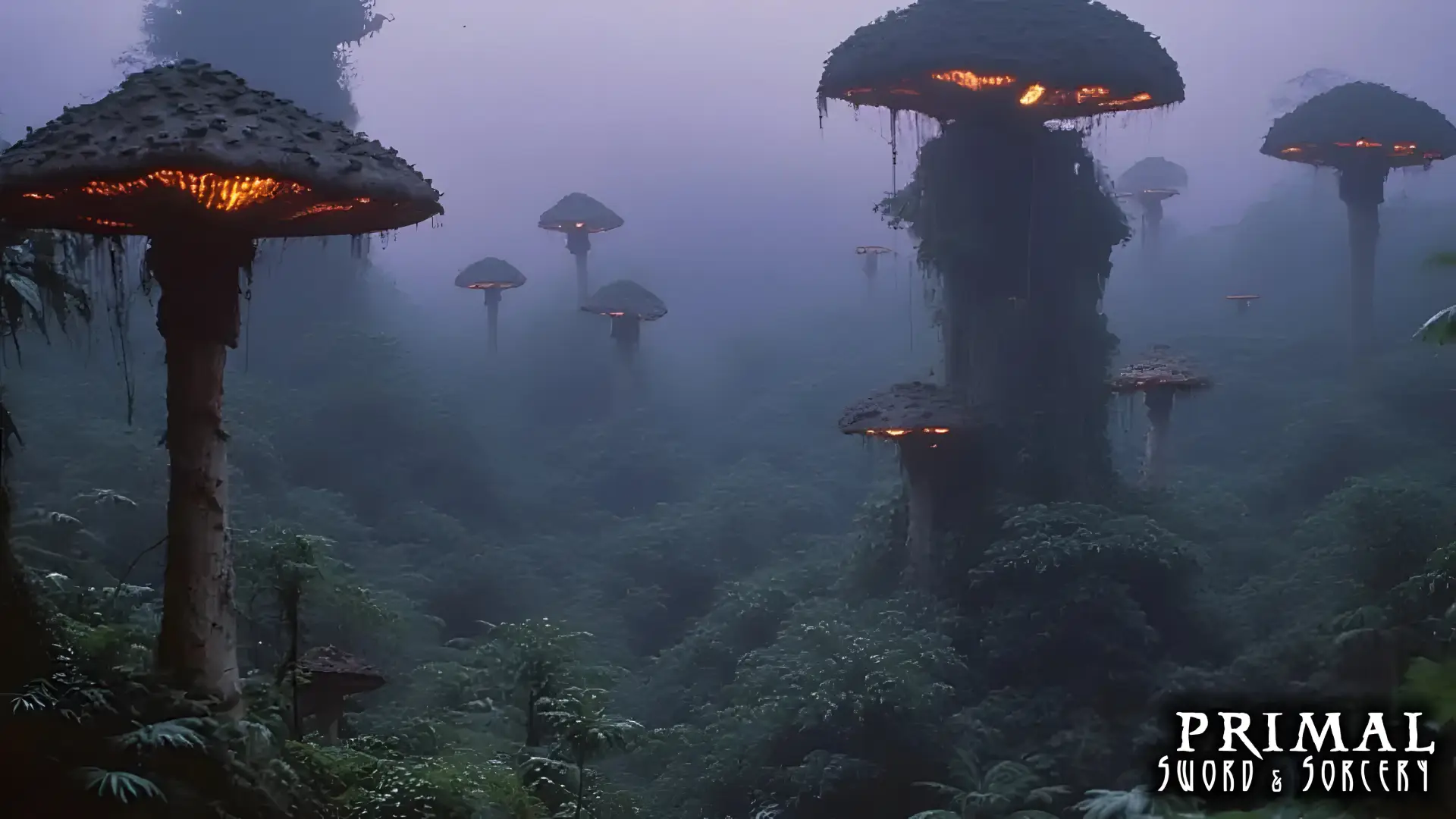
    Gunran sprawls across the eastern rim of Zhuru, its boundaries less drawn by rivers or cliffs than by gradients of misery—when the biting flies give way to biting things, when the mud turns from black to bone-white, when the air grows thick with the stink of rot and alkali. This is not a green, life-affirming jungle; it’s a fever-dream of gnarled trees and choked undergrowth, where every step promises a new kind of suffering. Even the light here feels wrong—filtered through canopies of predatory vines, fractured by steam, infested with motes of insect wings and fungal spores. It’s the kind of land that refuses to be tamed or charted, a jungle-swamp labyrinth both lethal and lush, its perils as much ecological as social.

    Only Gunrang City endures near the coast, a half-drowned relic perched at the edge of this mire. Once a tenuous refuge for exiles and the desperate, it survives more out of inertia than intent, its upper tiers lashed together atop rotting mangrove and fungus-choked foundation. Every season, another walkway collapses, another home is swallowed by the rising muck; the city’s lower levels are already lost to mold, biting insects, and the slow, relentless encroachment of the swamp. What remains of civilization there clings to the heights, even as the whole settlement sags, sinks, and rots, year by year, into the filth. Gunrang is no outpost of order, merely the last gasp of habitation before the jungle claims everything.

    The region’s true natives are the red panda tribes—arboreal, cunning, ferociously territorial. These folk are not gentle tricksters; they are expert guerrillas, masters of ambush and sabotage, their villages strung high above the worst of the swamp’s dangers, woven into the upper boughs where even the largest predators struggle to follow. Their feuds are legendary, as much with one another as with outsiders, and every turn of the season is marked by new raids, arson, and the taking of captives as rivals clash and alliances shift in the shadows of the trees.

    Travel in Gunran is a test of both will and wit. Roads are illusions; at best, they’re trails half-swallowed by the jungle, staked by lost traders, mercenary patrols, or the ruins of failed settlements. Raiders—often outcast mutts, desperate lion sons, or failed panda chiefs—prowl the margins, making alliances of convenience with whichever tribe holds the nearest high ground. It’s not uncommon for a caravan to pay toll to one warband at dawn and be bled dry by another by dusk.

    The ruins are what remain of forgotten empires—stone causeways sinking into the mire, vine-draped temples that once channeled sacrifice and power, ziggurats now nesting grounds for spectral insects the size of a hound. Every expedition into the swamp uncovers something new—old gold, forbidden relics, or simply a quicker death. Disease is a certainty: fever, rash, rot, and worse. Swamp plagues that have no name outside Gunran, parasites that drive their hosts mad before devouring them, and fungal infections that bloom under the skin like white fire.

  • The Outland City of Ajeros

    The Outland City of Ajeros

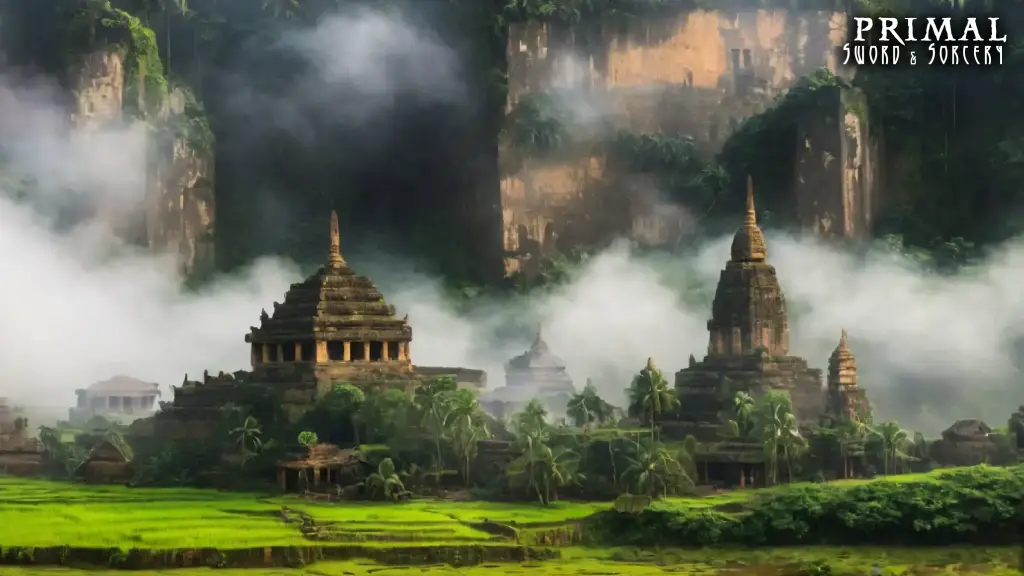
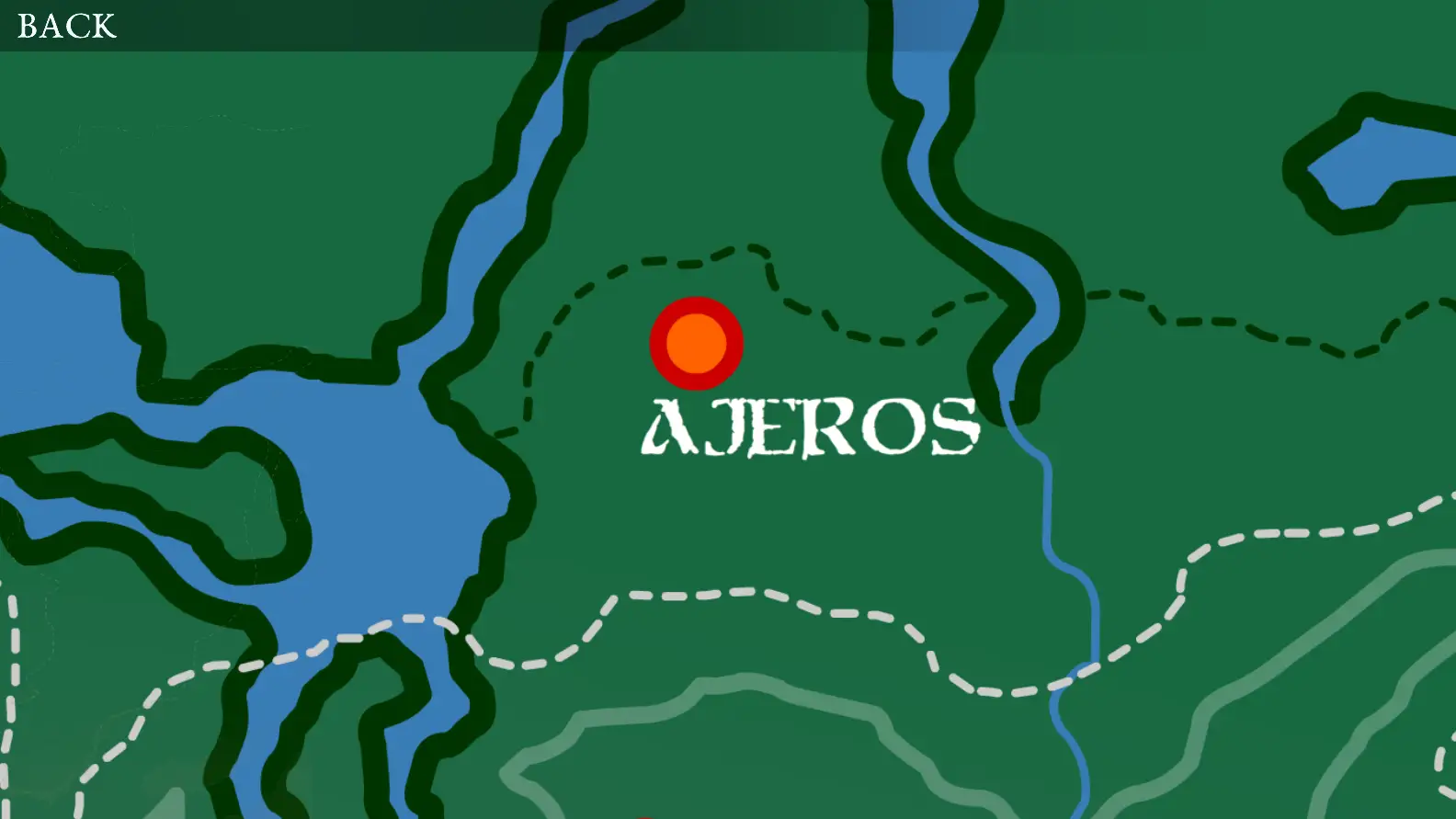
    Ajeros exists because it must, not because it should. It is a city pressed into service by geography and history alike, a hard knot of stone and wet iron driven into the southern edge of Yir’s long shadow. Though counted among the holdings of Izhura, it is an outland city in every meaningful sense: distant, inconvenient, and perpetually half-forgotten by those who live in safer latitudes.

    The routes that reach it do so grudgingly, slipping through vine-choked corridors and old jungle descents that once flowed south from Yir in elder ages, when the land was wilder and the borders less certain. Even now, those jungles have not fully released their claim. They cling. They creep. They remember.

    The city itself is civilized only by constant effort. Stone streets exist, but they are never fully dry. Walls stand, but they are webbed with roots and lichen, their mortar forever tested by moisture and slow green pressure. Rain is not an event here; it is a condition. It seeps into roofs, beads along beams, and darkens cloth until even the poorest can tell by touch alone whether a garment has ever truly dried.

    Homes are built with this knowledge carved into them. Windows are screened not for comfort but survival, their metal meshes fine enough to bar the bird-sized mosquitos that rise from the low green reaches at dusk, drawn by heat, breath, and blood. To leave a window unguarded is not negligence but folly, and folly does not live long in Ajeros.


    Yet for all this, Ajeros is not lawless. Its merchants are Izhuran by custom and reputation, their measures honest, their contracts respected even by those who grumble at the city’s isolation. Trade here is practical rather than ambitious. Goods are moved because they must be, not because fortunes will be made.

    The guards are much the same—strong, disciplined, and unromantic about their duty. They do not posture as heroes. They stand watch because the watch must be stood, and because everyone in Ajeros understands what happens when it is not.

    For the truth, known to every stonecutter and shopkeeper, is that Ajeros is not merely a city. It is a warning bell. It is the northernmost civilized finger extended toward Yir, and the first knuckle that will be broken if something terrible decides to move south.

    The badlands above do not loom merely in distance but in intent, a region whose ferocity eclipses Ajeros not just in violence, but in scale, in logistics, in the simple capacity to endure and deliver ruin. Ajeros knows this. There is no delusion here of matching Yir blow for blow, nor of holding against a true descent. Its purpose is earlier and bleaker: to see first, to bleed first, and to send word while there is still time for others to prepare.

    This awareness shapes the city’s character more than any charter or banner. Ajeros does not indulge in grand monuments or idle excess. Beauty exists here, but it is the beauty of persistence—of lantern light reflected on wet stone, of vines cut back each morning only to be cut again the next, of rooftops patched so many times they resemble quilts of iron and tar.

  • Izhura – The Grassland Courts

    Izhura – The Grassland Courts


    AUDIOBOOK

    Izhura stands as a battered but enduring wedge of territory carved out of the chaos and competition that defines central Zhuru. Unlike the realms that rise and fall with seasonal tides or the city-states that vanish into mud and memory, Izhura endures, neither the most powerful nor the most desperate, but a constant presence where so many others have flickered out.

    On a map, the realm is a long, crooked lance of grassland and border, reaching north toward the thick, haunted forests of Yir, sloping south until it meets the restless surf of the Craterian Sea.

    It is surrounded on all sides by realms that are either richer, wilder, or more dangerous—Yir’s uplands and poison woods to the north, the mires and uncertain loyalties of Gunran to the east, the crowded guild-dominated coast of Elder Ruselon to the south, and the rough dog-lands of Bantos to the west. The horsefolk of Izhura have survived not by outshining their neighbors, but by learning the virtues of patience, adaptation, and, when the time comes, sudden, blinding action.

    For outsiders, Izhura often blurs into a single patch of green, a corridor between more exotic realms. But for those who live on its soil, the land is divided into three major territories, each shaped by history, climate, and proximity to other powers: Uyarin, Vessara, and Elleas.

    These divisions are not just political—they are environmental, cultural, and psychological, with boundaries that run deeper than any border stone or old decree. The grassland spine that links them is both a blessing and a curse. It binds the realm together, but it also exposes it: armies, caravans, raiders, and rumor all travel the same broad corridors.


    CITY-STATES OF IZHURA


    IN PRODUCTION

    • More Cities
    • Encounters & Modules
    • The Gates of Yir
  • Konara – The Highland Realms

    Konara – The Highland Realms

    Konara rises as a wall of jagged peaks where the continent fractures, its snow-capped crest a deadly border between the wind-raked north and the grasslands that roll southward toward the deserts.

    The mountains are cruel, their passes narrow and uncertain, their storms sudden and merciless. To the North, the air is cold and thin, carrying only the howl of wind and goat horns echoing through the ridges. To the south, the land softens into vast plains, but even here the winds bite, and life bends hard beneath them.

    This is the realm of the goat and boar folk, horned and tusked, sure-footed upon the cliffs and relentless upon the steppes. Among them dwell the elder cervine kingdoms, proud antlered dynasts whose lineages are etched as deep as the stone.

    Konarans are riders and herders, hunters and raiders, their blood hardened by altitudes where weaker folk would perish. They bow to no throne beyond their own kin-claims, and their isolationist pride makes them scornful of the south.

    Trade caravans from decadent Zhuru are eyed with suspicion, tolerated only when salt, iron, or furs are worth the trouble. Of Bantos and its Dogs, the Konarans barely speak, dismissing them as rutting scavengers undeserving of notice.


    IN PRODUCTION:

    • The Crown of Iron
    • The Northern Elk Lords
    • A Darkness Over Konara
    • The Antlered Crest of Endless Rule
    • The Reign of King Haros Elkyre XI
    • The Rule of Nye Rheiyos VI
    • The Highland Wars