Category: The Thanatorian Codex: Book I: Primer

  • III. Jurisdictional Ambiguity

    III. Jurisdictional Ambiguity

    & The Fiction of Non-Ownership

    Rethka, though diminished, still fields opportunistic detachments to sabotage imperial-aligned cores when openings appear. Shride’s involvement is less overt but no less real; certain Shridian consortiums view Yalar as a proving ground for atmospheric destabilization technologies adaptable to other theaters. Titanum’s autonomous interests harvest toxin at intervals that technically violate standing edicts, yet enforcement is strategically selective. Each actor claims necessity. None admit ownership. Officially, no one is supposed to be there.
    Yalar’s classification in imperial registers oscillates between “restricted hazard zone” and “unsanctioned extraction theater.” It is not designated a lawful colony. It is not recognized as sovereign territory. It is not cleared for civilian industry. The fiction is that any presence beyond penal deployment is incidental. The reality is that the resource reactors are too valuable to abandon and too controversial to legitimize. Thus the world exists in a permanent gray state: an open secret maintained by mutual hypocrisy.

  • II. Strategic Valuation

    II. Strategic Valuation

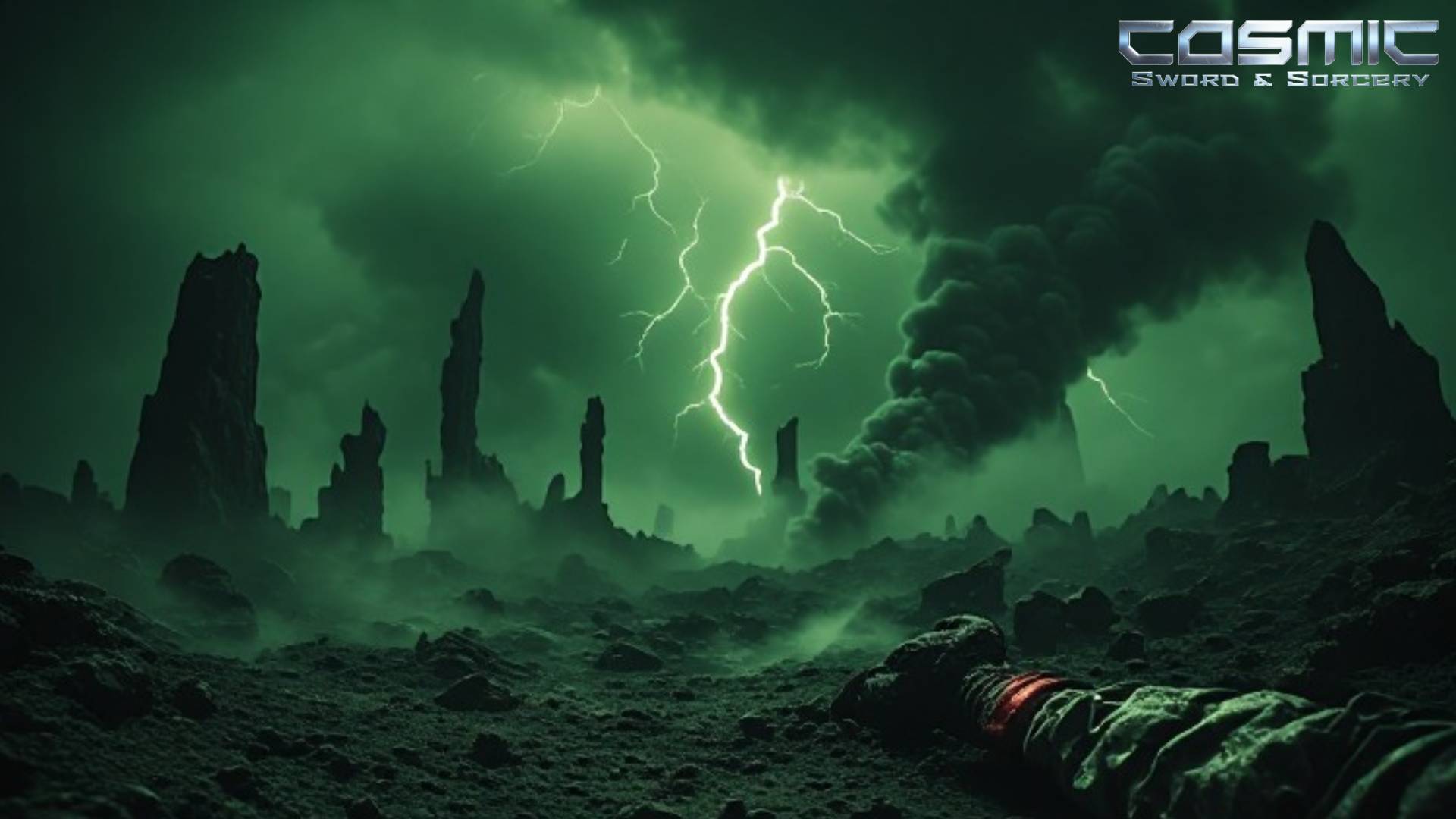
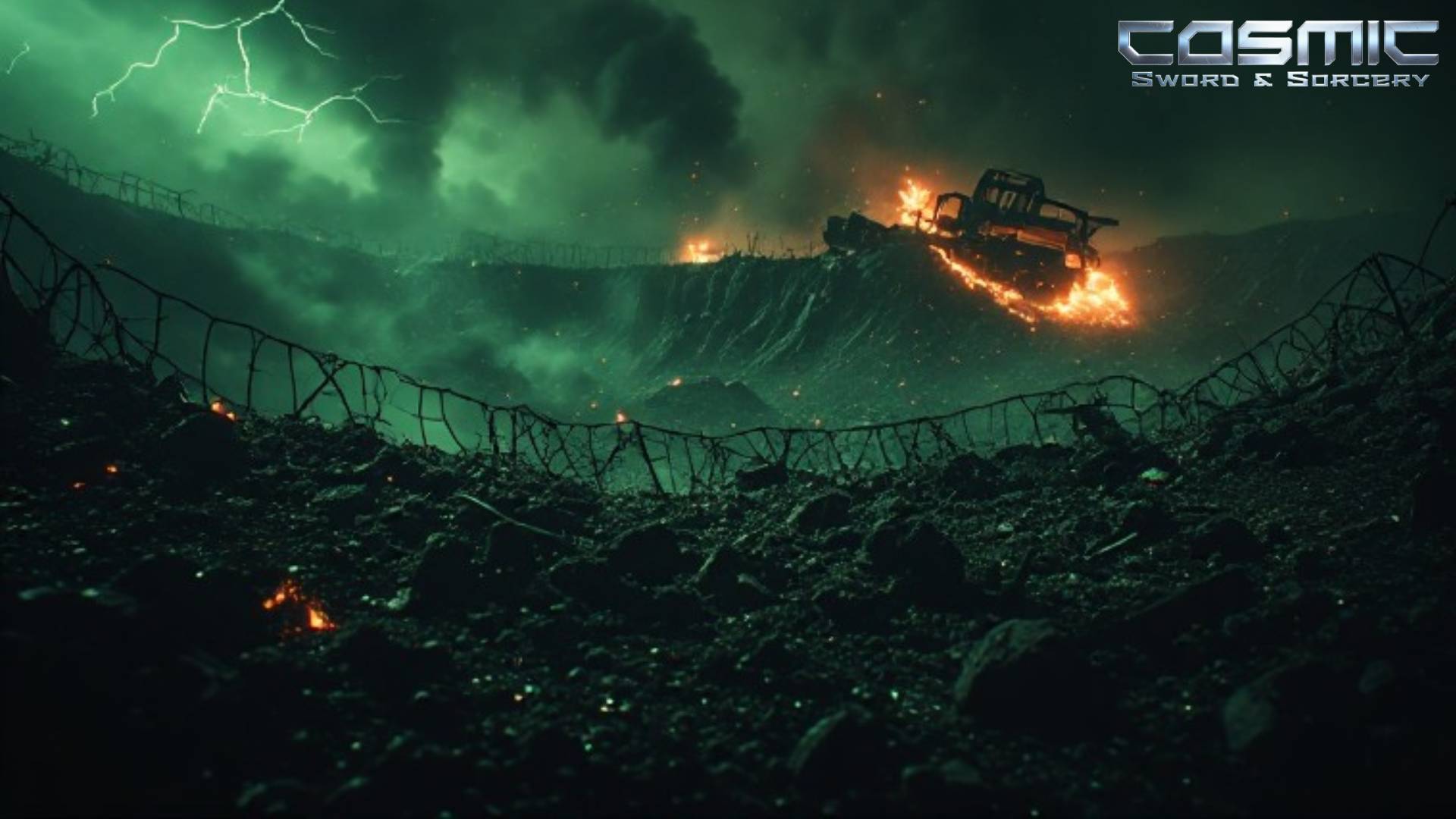
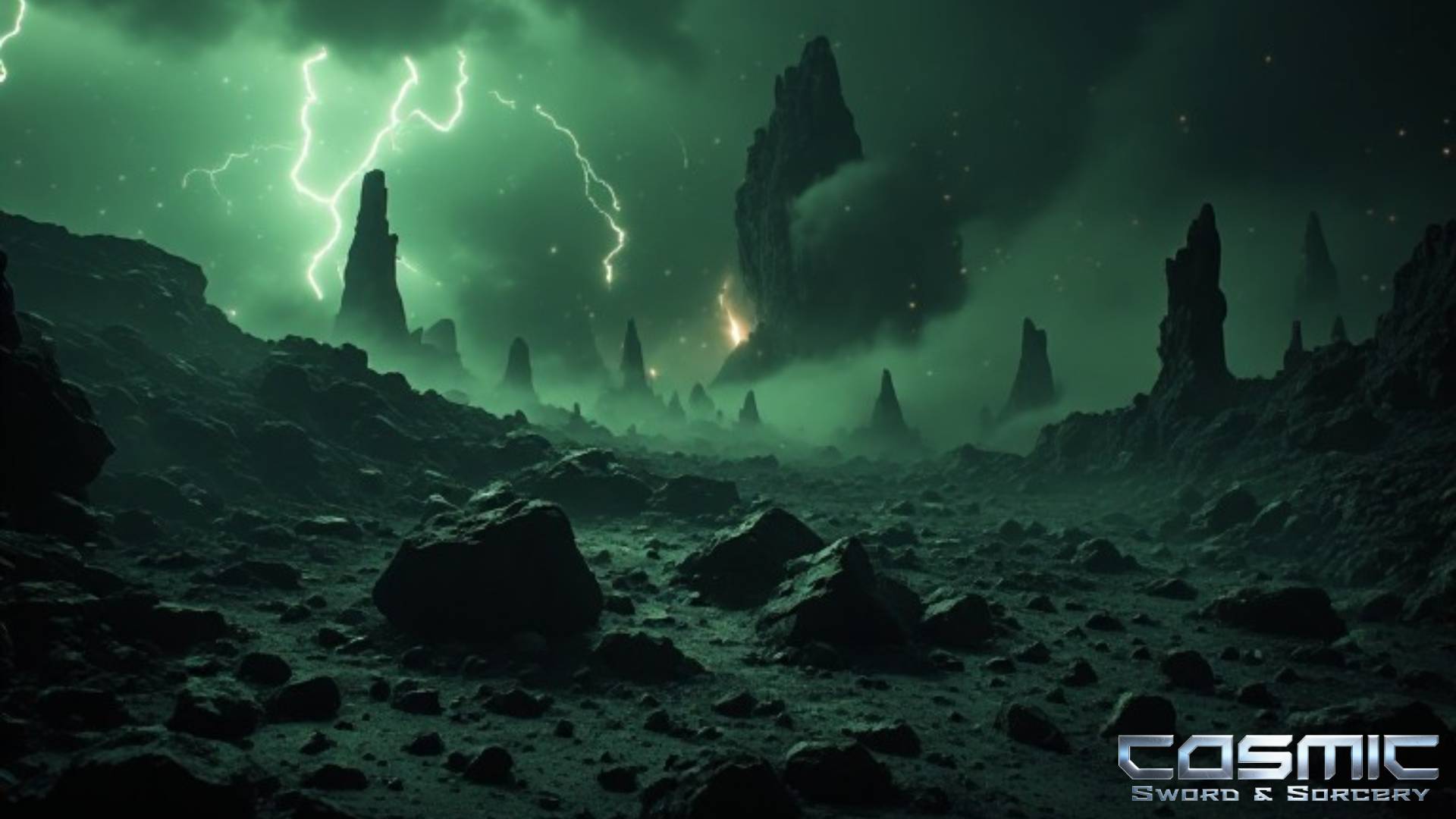
    Yalar is publicly framed as a penal sink and a disposal front for liabilities, but that is theater layered over the true contest. The convicts, dissidents, syndicate trash, and politically inconvenient are the visible fuel. The engines they burn around are the real objective. Beneath the permanent electrical storms and poison haze stand the resource reactors—atmospheric harvest cores, deep-crust taps, volatile compression stacks—owned, leased, or clandestinely installed by Kydahn, Thanator-aligned interests, Rethkan syndicates, Shridian reclamation houses, and even Titanum’s shadow complexes. Every faction denies formal presence. Every faction maintains infrastructure. The surface war is therefore not ideological. It is industrial denial.
    Kydahn seeds Yalar with extraction reactors designed to stabilize and refine atmospheric compounds at scale. These cores are compact, shielded, and often embedded within modular bastions that resemble defensive outposts but function primarily as processing nodes. Thanator’s doctrine toward Yalar has hardened over the ages into a single priority: destroy hostile reactors, preserve friendly ones. It is not about holding territory; it is about preventing supply continuity. A reactor allowed to run uninterrupted for even a cycle too long alters the balance of munitions, chemical stockpiles, and black-market leverage across the Ran system.

  • I. Planetary Classification

    I. Planetary Classification

    The Imperial Rival

    Among the great worlds of the Ran system, few possess a history as extensive, influential, or burdened as that of Kydahn. Long before the rise of High Thanator, long before the modern imperial order assumed its present form, Kydahn stood as the acknowledged center of regional civilization. Throughout dozens of planetary ages its institutions directed commerce, diplomacy, scholarship, military doctrine, and administrative governance across vast portions of the system. Entire civilizations measured themselves against Kydahni standards. Dynasties rose seeking its approval. Trade routes were designed around its markets. Political legitimacy was frequently judged according to proximity with its customs, traditions, and educational systems. By the beginning of the Sixty-Seventh Age, Kydahn possessed a historical continuity so immense that many of its citizens regarded primacy not as a privilege but as the natural state of existence.

    The physical manifestation of this antiquity could be observed across the planet itself. Towering arcological complexes dominated vast stretches of the surface, their foundations resting atop the accumulated layers of countless previous civilizations. Entire districts existed beneath newer districts. Transportation corridors crossed through structures older than many neighboring worlds. Libraries preserved records extending backward through periods so remote that modern scholars frequently debated whether certain documents described historical events or civilizations that had already become mythological by the time later records were compiled. Kydahn was not merely old. It was a world constructed from age itself, every generation building upon the remnants of those that preceded it until the distinction between history and infrastructure had become increasingly difficult to identify.


    Yet the decline of Kydahn did not originate from foreign invasion, ecological collapse, or technological stagnation. The source of its deterioration emerged from within. While external rivals frequently challenged Kydahni authority throughout its long history, no enemy inflicted greater damage upon the world than the Kydahni themselves. Across successive ages the planet became increasingly prone to cycles of internal fragmentation. Political coalitions hardened into rival power blocs. Economic disputes evolved into constitutional crises. Regional authorities accumulated military power independent of central governance. Noble houses, industrial consortiums, ideological movements, military factions, and hereditary administrative orders developed competing visions of Kydahn’s future. Over time these disagreements ceased to be political contests and became existential conflicts regarding the ownership of civilization itself.

    The result was a succession of civil wars that reshaped the world repeatedly across multiple ages. While historians continue to debate the precise classification of several major conflicts, traditional Kydahni reckoning recognizes sixteen planetary civil wars of sufficient magnitude to alter the course of civilization. Each conflict left scars deeper than the last. Governments collapsed and reformed. Alliances shifted. Entire populations were displaced. Economic systems required reconstruction. Military institutions fractured and reassembled under new leadership. Every war concluded with promises of stability and reconciliation, yet each settlement merely postponed the emergence of the next crisis. The cumulative effect was devastating. Although Kydahn survived every civil conflict, survival itself became increasingly expensive. Resources that might have strengthened the world against external threats were consumed by internal struggles whose consequences lingered for centuries after formal hostilities ended.


    By the dawn of High Thanator’s ascendance, the dust of the Sixteenth Civil War had only recently settled by Kydahni standards. Nearly a thousand years had passed since the final settlements were signed, yet the wounds remained visible throughout every level of society. Distrust persisted between regions. Ancient grievances survived within family histories. Political institutions continued to operate under emergency frameworks originally implemented during the conflict. Entire sectors of government remained dedicated to preventing the reemergence of conditions that had produced the war. Although peace technically existed, peace had become less a condition of confidence than a temporary exhaustion shared by all surviving factions.

    It was during this period of weakness that Kydahn found itself confronting a problem it had neither anticipated nor welcomed. Throughout previous ages Thanator had existed as a persistent rival, a recurring adversary whose ambitions repeatedly collided with Kydahni interests across economic, military, and political fronts. Their relationship had never been one of genuine cooperation. Border disputes, proxy conflicts, trade competition, diplomatic hostility, and direct military engagements had occurred frequently enough that mutual distrust became embedded within the identities of both civilizations. Entire generations were raised upon historical narratives portraying the opposing world as aggressive, arrogant, dangerous, or fundamentally misguided. The rivalry endured not because either side required conflict for survival, but because both civilizations had accumulated so much historical resentment that reconciliation gradually became impossible to imagine.

    The critical difference was that while Kydahn spent centuries struggling against itself, Thanator spent those same centuries hardening. The environments that shaped the two civilizations produced dramatically different outcomes. Kydahn increasingly directed its energy inward, attempting to preserve institutions, manage factional disputes, and maintain the immense bureaucratic structures required to govern an ancient world. Thanator, by contrast, remained engaged in continual adaptation to harsher conditions, producing administrative systems, military organizations, and social expectations oriented toward performance, resilience, and practical results. The divergence was gradual but profound. By the time the balance of power began shifting decisively, both civilizations still possessed tremendous capabilities, yet they approached governance from fundamentally different assumptions regarding authority, legitimacy, and survival.


    Contrary to later romanticized interpretations, the transition of influence from Kydahn to Thanator was never a dignified handover. No grand consensus emerged regarding the future of the system. No ceremonial acceptance of historical necessity took place behind closed doors. Kydahn did not prepare the throne for its successor, nor did it willingly assist in the construction of Thanator’s new order. Such interpretations emerged primarily from later scholars attempting to impose elegance upon a process that was, in reality, bitter, contentious, and deeply humiliating for much of the Kydahni establishment.

    The truth was considerably less graceful. Kydahn lacked the strength necessary to prevent Thanator’s rise, but it possessed more than enough resentment to oppose it wherever possible. Administrative resistance became common. Political delays multiplied. Regional authorities discovered endless procedural obstacles capable of slowing implementation of imperial directives. Diplomatic negotiations became exercises in frustration. Requests for cooperation frequently disappeared into bureaucratic labyrinths. Projects requiring coordination between the two worlds advanced only through extraordinary effort. Every concession extracted a price. Every agreement carried hidden complications. Every interaction reflected a civilization unwilling to acknowledge that its age of unquestioned supremacy had ended.

    This behavior was not merely political calculation. It was cultural. Generations of rivalry had conditioned Kydahn to view Thanatorian success as inherently threatening. Even as the balance of power shifted beyond recovery, many Kydahni leaders remained psychologically committed to frameworks established during earlier ages when resistance still appeared viable. The result was a civilization trapped between realities. It could no longer dominate the system, yet it remained unwilling to fully participate within structures increasingly shaped by its rival. The contradiction produced paralysis across substantial portions of the governing apparatus.

    What made the situation particularly tragic was that Kydahn retained immense strengths even during this period of decline. Its arcologies continued to house populations numbering in the hundreds of millions. Its universities remained among the finest educational institutions in the system. Its scientific communities preserved expertise accumulated across dozens of ages. Its industrial infrastructure retained enormous productive capacity. Its archives contained historical records unmatched anywhere within the region. The problem was never a complete loss of capability. The problem was the inability to unify those capabilities behind coherent strategic objectives. Kydahn remained powerful enough to matter, yet increasingly incapable of converting potential into decisive action.

    This condition might have persisted indefinitely had history confined itself to the rivalry between Kydahn and Thanator. Unfortunately for both civilizations, larger forces were already beginning to reshape the political landscape. The emergence of Rethka and the expansion of associated extremist movements introduced challenges fundamentally different from the traditional conflicts that had dominated previous ages. These new threats cared little for ceremonial prestige, dynastic legitimacy, historical grievances, or established balances of power. They targeted infrastructure, populations, communication networks, transportation systems, and political confidence itself. Their objective was destabilization rather than conquest, disruption rather than governance.


    The consequences for Kydahn proved severe. Decades and centuries of obstructionist policy suddenly revealed an uncomfortable reality. Many of the institutions best positioned to respond effectively to emerging threats increasingly operated under Thanatorian leadership or influence. Security frameworks, intelligence networks, military coordination systems, and interplanetary response mechanisms all reflected the new distribution of power. Kydahn discovered, often reluctantly, that the civilization it had spent ages attempting to frustrate had become one of the primary barriers separating the system from escalating instability.

    The resulting political atmosphere became poisonous. Every successful Thanatorian intervention highlighted Kydahni weakness. Every terrorist attack exposed vulnerabilities left unresolved by centuries of internal conflict. Every request for assistance carried implications many Kydahni leaders found difficult to accept. Public discourse increasingly divided between those advocating practical cooperation and those insisting that dependence upon Thanator represented a humiliation worse than the threats themselves. Old rivalries collided with new realities, producing tensions that reverberated throughout every level of society.

    Yet the historical significance of this era derives not from Kydahn’s weakness alone but from what followed. Despite widespread predictions of irreversible decline, the world endured. The arcologies remained populated. The institutions survived. The archives continued to grow. The educational systems persisted. Beneath the frustration, bitterness, and exhaustion, the foundations of Kydahni civilization remained intact. The same historical depth that burdened the world also granted it extraordinary resilience. Civilizations with lesser traditions might have collapsed entirely beneath comparable pressures. Kydahn instead entered a prolonged period of painful adaptation.

    For this reason, modern historians frequently describe the late Sixty-Seventh Age not as the death of Kydahn’s greatness but as the closing chapter of one historical cycle and the difficult beginning of another. The world had lost primacy. It had squandered enormous portions of its strength through centuries of internal conflict. It had been surpassed by a rival long regarded with suspicion and hostility. Yet none of these developments erased the immense reservoirs of experience, knowledge, infrastructure, and cultural continuity accumulated across its vast history. Kydahn remained diminished, but it remained alive.

    The greatest mistake made by contemporary observers was assuming that decline and extinction were synonymous. Kydahn was undoubtedly descending from its ancient summit, but civilizations measured in dozens of ages rarely disappear according to simple narratives. Beneath the storms, within the colossal arcologies that had witnessed the rise and fall of generations beyond counting, the old throne still endured. Exhausted, embittered, and wounded by its own history, it nevertheless retained enough strength to dream of resurgence. In the centuries that followed, that dream would grow steadily larger until it became the foundation for one final and extraordinary attempt to reclaim a place among the great powers of the age.

  • 5. Kydahn

    5. Kydahn

    5. Kydahn


    INDEX

    BY ESSAY

    All books in the project will be updated with New Entries:
    Check back for additional content


  • I. Planetary Classification

    I. Planetary Classification

    The Imperial Threshold

    Vandyrus occupied a unique position within the greater imperial structure, not because it controlled the fleet yards that surrounded it, but because it hosted them. The orbital anchorages, drydocks, refit stations, and naval infrastructure belonged to the Empire itself. Their command chains ran outward toward the throne worlds and central administrations, not downward toward the planet below. Vandyrus supplied the raw materials, labor, and strategic location upon which those installations depended, while much of its native population observed the constant traffic of warships and industrial fleets from settlements that remained comparatively primitive by imperial standards. The contrast was striking: vast orbital industries of steel and administration hanging above a world where brick-built towns, tribal domains, and regional kingdoms continued much as they always had.

    Within imperial records, Vandyrus was recognized as a threshold world. This designation arose not from its ecology, population, or cultural significance, but from its position within the practical machinery of imperial governance. Beyond Vandyrus the density of administration diminished noticeably. Patrol routes became less predictable. Communication delays lengthened. Supply networks became increasingly dependent upon local arrangements and regional initiative. Vandyrus therefore represented the last point at which the Empire could reliably assume the presence of its own institutions without substantial qualification. It marked the transition between direct administration and the vast frontier beyond. The importance of the world was therefore concentrated less upon its surface and more upon what surrounded it. The orbital fleet yards served as one of the Empire’s principal logistical and military staging grounds at the edge of consistently governed space. Administrators, quartermasters, naval officers, and commercial authorities passed through its stations in enormous numbers. To many within the bureaucracy, Vandyrus represented the final outpost of dependable order before the scattered frontier worlds beyond. Ships departing its anchorages moved outward into regions where imperial authority often became a matter of local interpretation rather than immediate enforcement.

    On the surface, however, the imperial presence was remarkably limited. The Empire maintained strategic strongholds rather than comprehensive control.
    The greatest of these was Ro’Edyne, whose administrative, commercial, and diplomatic functions made it the true center of imperial activity upon the planet. Far to the north stood Ataratoz, a secondary but significant center devoted to scientific inquiry, regional diplomacy, and the continued expansion of imperial understanding regarding the northern realms beyond Thuratahn. Together these enclaves provided the Empire with what it required: ports, intelligence, research, trade access, and stable points of contact. The vast majority of the planet existed outside direct administration. This arrangement reflected both necessity and intent. Vandyrus was an immense and hazardous world whose geography, climate, and ecosystems imposed severe practical limits upon expansion. Large portions of the planet remained difficult, dangerous, or economically unnecessary to occupy. The Empire had little interest in transforming the world into another core province when the resources it desired could be obtained through a comparatively small network of fortified administrative centers. The objective was utility rather than assimilation.

    As a result, much of Vandyrus remained culturally distinct from the worlds that governed it. The populations of the interior and frontier regions were aware of imperial authority, traded with imperial interests, and occasionally served imperial purposes, yet rarely regarded themselves as participants in a larger imperial identity. The throne worlds existed as distant centers of power whose influence arrived through merchants, officials, explorers, and warships rather than through daily governance.
    For many communities, the Empire was something encountered at ports, markets, and administrative compounds rather than something experienced as a continuous presence.

  • 4. Vandyrus

    4. Vandyrus

    4. Vandyrus


    INDEX

    BY ESSAY

    All books in the project will be updated with New Entries:
    Check back for additional content


  • I. Planetary Classification

    I. Planetary Classification

    Agrarian Continuity

    Illynar occupies an unusual position within the Ran system. Though commonly classified as an agricultural world, this designation often creates a misleading impression of uniform farmland and predictable production. The reality is considerably more complex. Much of the planet consists of unstable terrain where broad floodplains, shifting waterways, rugged mountain regions, and extensive grasslands compete for dominance across the landscape.
    The great floodplains remain the foundation of Illynar’s agricultural output. Rich soils deposited through centuries of seasonal inundation produce substantial harvests and support much of the food export upon which neighboring Vandaxium worlds rely. These regions are among the most valuable territories on the planet, not because they are easy to cultivate, but because their fertility consistently outweighs the difficulties imposed by the environment itself.

    Beyond these fertile belts, the terrain becomes far less predictable. Mountain regions frequently interrupt settlement patterns, creating isolated communities separated by difficult travel routes and irregular terrain. Many of these upland areas remain only lightly developed, serving instead as grazing territory, timber sources, mineral extraction zones, or natural barriers between larger agricultural districts. The result is a world whose productive regions are fragmented rather than continuous, forcing settlement and cultivation to adapt to the landscape rather than reshape it.
    The great grasslands further complicate the planetary pattern. Vast stretches of open country break apart the floodplain networks and create natural divisions between population centers. These regions support extensive herding operations and contribute significantly to local food production, yet they also reinforce Illynar’s tendency toward dispersed settlement. Rather than drawing populations into large urban concentrations, the land encourages communities to spread outward along productive corridors wherever soil, water, and terrain permit.

    This geography has had profound effects upon Illynar’s social and political development. Population centers emerged where conditions allowed rather than according to any singular planetary design. Agricultural communities, river settlements, grazing territories, and mountain holdings developed according to local circumstances, producing a patchwork of regional identities that remain visible even in the modern era. The planet’s structure favors practical cooperation over centralized control, as no single region possesses complete dominance over the others. For this reason Illynar’s agricultural classification should not be interpreted as evidence of simplicity or developmental delay.

    The world serves as one of the principal food-producing regions of the Vandaxium sphere precisely because its inhabitants learned to exploit a landscape that is productive without ever becoming entirely predictable. Flood, drought, erosion, and shifting waterways remain constant realities, and generations of experience have produced cultures adapted to managing these conditions rather than attempting to eliminate them. The result is a world whose importance rests not upon industrial concentration or urban expansion, but upon its ability to transform a geographically inconsistent environment into a reliable source of food, livestock, and agricultural exports for the surrounding systems.

  • I. Planetary Classification

    I. Planetary Classification

    Cultural Misperception

    Tyvex, for much of imperial memory, has lived in the shadows of condescension—a world whose surface image lingers in the popular imagination as a mosaic of swamps, marshes, and muddy hamlets, its folk portrayed as simple frog-tribes, perched on stilts above the bog, clutching spears tipped with cork and bone. This myth is not entirely invention: for thousands of years, Tyvex was a place of slow-moving rivers, mist-wreathed reed beds, and sprawling grass huts, its people living in close harmony with the planet’s watery pulse. Yet to mistake this as the sum of Tyvex is to miss the deeper current. Beneath the stereotype of provincial humility lies a culture of restless exploration and cunning adaptation—a people who, despite never developing indigenous spaceflight, carved for themselves a place among the stars by wit, alliance, and shrewd diplomacy.

    The persistence of this stereotype is neither accidental nor wholly imposed. Peripheral classification within the imperial registry favored visible metrics—fleet tonnage, megastructural output, mineral yield—over distributed intelligence or diplomatic penetration. Worlds that did not project force were categorized as rustic; worlds without indigenous void fleets were deemed dependent. Tyvex’s wetlands, lacking monumental skyline or heavy industry, reinforced this visual shorthand. The image of stilted hamlets proved easier to circulate than the record of negotiated treaties, embedded envoys, and cross-system brokerage. Misperception became administrative convenience.

    The systemic implication is strategic camouflage. Underestimation lowers scrutiny. Worlds perceived as simple are rarely subjected to aggressive restructuring or direct extraction mandates. Tyvex’s classification as provincial afforded it operational latitude. While attention fixated on industrial cores and war-worlds, Tyvex refined internal cohesion and external alliances. Cultural misperception thus became a defensive layer—an atmospheric distortion that shielded complexity beneath.
    The true genius of Tyvex was never in its engines, but in its negotiators.

    The world’s societies, more complex than outsiders ever cared to study, produced generations of envoys and intermediaries able to curry favor with both Thanator and Kydahn, often playing one against the other in ways that belied any suggestion of provincial naivety. The Tyvexian clans—frogfolk, gazelles, flying foxes, and the enigmatic white jackal breed with their sinewy necks and cybernetic inclinations—wove a network of allegiances and obligations that bound them to the centers of power without ever surrendering their own identity. The jackals, in particular, became infamous for their silver-cultures: artisans, financiers, and cyberneticists whose value in trade and intrigue made them prized agents and guests at imperial courts. If Tyvex as a planet lagged behind in technical terms, its people as individuals more than compensated—adopting and even improving upon the technologies of their patrons, migrating as trusted retainers, merchants, and specialists across the system.

    Diplomatic specialization emerged from structural necessity. Lacking indigenous void fleets, Tyvex could not impose its will through projection; it instead embedded itself within the machinery of those who could. Clan hierarchies emphasized linguistic mastery, cultural literacy, and adaptive protocol over territorial expansion. Envoys were trained not merely in etiquette but in leverage calculus—understanding which concessions could be offered without eroding autonomy and which alliances would outlast a regime’s current favor. The white jackal silver-cultures formalized this into trade guilds and cybernetic consultancies, ensuring Tyvexian presence in financial and technological corridors across imperial space.

    The doctrinal consequence is influence without provocation. Tyvex does not command fleets, yet it shapes decisions through proximity and indispensability. Its citizens ascend within foreign hierarchies, carry back knowledge, and extend informal networks that bind distant centers of power into reciprocal obligation. This model produces stability rather than spectacle. The Empire interacts with Tyvex not as a rival, nor as a dependent, but as a mediator embedded within its own apparatus. In long-duration calculus, such positioning yields continuity of relevance even when formal rank remains modest.


    BACK

  • 3. Illynar

    3. Illynar

    3. Illynar


    INDEX


    NEXT


  • 2. Tyvex

    2. Tyvex

    2. Tyvex


    INDEX


    NEXT