Category: Cosmic Sword & Sorcery

  • III. Proto-Urban Aggregations

    III. Proto-Urban Aggregations

    Managed Development and the Growth of City-States

    Though trade centers, market towns, pilgrimage sites, and regional administrative hubs have emerged throughout Illynar’s history, none have undergone the explosive urban expansion seen elsewhere within the Ran system. This is not solely the result of geography or economics. It is also a consequence of long-standing administrative policy.

    The world remains in a controlled state of development. Successive administrations recognized Illynar’s value as an agricultural producer and demonstrated little interest in transforming it into a heavily industrialized population center. Rather than encouraging rapid urbanization, policy consistently favored the preservation of productive land, stable rural communities, and decentralized regional economies. The objective was not stagnation but balance. Illynar was expected to grow, but not to grow beyond its ability to sustain itself.
    As a result, the city’s role differs from that found on many neighboring worlds. Urban centers function primarily as exchange nodes where agricultural goods, livestock, tools, services, and regional trade converge. Population increases occur during periods of market activity, seasonal festivals, and major trade cycles, yet these concentrations rarely become permanent. The surrounding countryside remains the foundation of economic life, continuously drawing population, labor, and resources back outward. This arrangement has produced a network of proto-urban city-states whose influence remains largely regional. Most command trade routes, market districts, religious institutions, or local administrative functions, but few possess the infrastructure necessary to dominate extensive territories. Their authority derives less from coercive power than from their usefulness as gathering points for surrounding agricultural communities.

    Prosperity depends upon maintaining productive relationships with the countryside rather than subordinating it. Administrative oversight further reinforces this pattern. Illynar’s development has long been curated to prevent the emergence of runaway urban concentrations capable of destabilizing the wider system. Historical examples elsewhere demonstrated that rapidly expanding city-states often generate competing political ambitions, territorial disputes, and economic distortions that eventually threaten regional stability.
    Vandyrus remains the most frequently cited example of what unchecked development can produce over sufficient time. Illynar was deliberately guided along a different trajectory. Consequently, urban growth remains incremental rather than exponential. New districts emerge slowly. Infrastructure expands in proportion to need. Trade centers increase in importance without automatically transforming into industrial capitals. City-states are permitted to prosper, but they remain embedded within the agricultural framework that sustains them.

    This creates a distinctive political character. Urban centers possess influence, wealth, and prestige, yet none are positioned to eclipse the world that feeds them. Rural communities remain economically indispensable, while city authorities remain dependent upon agricultural production and regional cooperation. The world is not frozen in time. It is being cultivated much as its fields are cultivated: carefully, deliberately, and with a constant awareness of what unchecked growth has produced elsewhere.

  • II. Political Character

    II. Political Character

    Agricultural Importance

    Though frequently regarded by outsiders as provincial or technologically conservative, this perception often obscures the world’s actual significance. The planet remains one of the principal agricultural producers within the Vandaxium sphere, supplying substantial quantities of grain, livestock, preserved foods, and agricultural goods to neighboring systems. Its importance is not derived from industrial output or military capability, but from its role in sustaining populations beyond its own borders.
    This position has produced a distinct political culture. Illynar has proven consistently loyal to imperial administration and regional authority structures, yet this loyalty differs markedly from that found upon worlds such as Tyvex. Where Tyvexian society tends toward institutional trust and procedural acceptance, Illynarian culture retains a stronger tradition of questioning external directives. Compliance is generally practical rather than ideological. Authority is respected when it demonstrates competence, but assumptions are rarely accepted without examination.
    Part of this disposition emerges from the world’s historical development. Illynar has remained technologically restrained for generations, not through incapacity but through circumstance. Large-scale industrialization never became the defining feature of the planet’s economy. Agricultural productivity remained more valuable than transformation into a manufacturing center, and successive administrations found little incentive to disrupt a system that consistently produced reliable yields. As a result, many communities preserve social and economic structures that elsewhere disappeared centuries earlier.

    This technological conservatism should not be mistaken for ignorance. Illynarians maintain regular contact with neighboring worlds, participate in regional trade networks, and possess a clear understanding of their position within the broader system. They are fully aware that more advanced worlds exist. They are equally aware that those worlds continue to require food. This awareness produces a quiet but persistent confidence that often surprises visitors expecting deference from a predominantly rural population.
    The agricultural character of the world reinforces this outlook. Land remains the primary source of wealth, stability, and social influence. Communities measure success through productive acreage, reliable harvests, and the ability to endure poor seasons rather than through technological novelty or rapid expansion. Political discussions therefore tend to focus upon stewardship, resource management, and long-term sustainability rather than ambitious programs of modernization.

    Consequently, Illynar often regards itself as more important than outsiders assume. Its inhabitants understand that industrial centers may manufacture machinery, warships, and consumer goods, but those same systems remain dependent upon agricultural imports. This awareness has fostered a regional identity rooted not in military prestige or technological achievement but in indispensability. Illynar may not command the greatest fleets or construct the largest cities, yet it occupies a position within the Vandaxium worlds that cannot easily be replaced.
    The result is a society that combines loyalty with independence, conservatism with awareness, and rural continuity with strategic relevance. Illynar neither isolates itself from the greater system nor rushes to imitate it. Instead, it maintains a steady confidence born from the knowledge that while others may possess greater power, few can afford to disregard the world that helps feed them.

  • V. The Nature of Tyvex

    V. The Nature of Tyvex

    Alignment Behavior & Personnel Integration

    Tyvex has, in successive ages, demonstrated a consistency of alignment that far exceeds what its civilizational ranking would predict. Where other peripheral worlds oscillate between compliance and opportunism, Tyvex has cultivated a reputation for deliberate assistance—measured, reliable, and rarely theatrical. Its contributions are seldom grand in scale, yet they are persistent: logistical support rendered without complaint, technical adaptation executed with precision, and personnel offered into imperial service with a quiet determination that belies the planet’s rustic stereotype.

    Though Tyvex never developed indigenous void-capable fleets, its people have steadily integrated into the broader naval and administrative apparatus of the Empire. It remains uncommon, but not unheard of, for a Tyvexian—particularly among the frogfolk clans—to ascend to formal rank aboard spacefaring vessels. Such appointments are never ornamental. Those who advance do so through discipline, competence, and a demonstrable refusal to be underestimated. Their physical stature and amphibian physiognomy, once sources of derision in less enlightened corridors, have over time become associated with a specific archetype within mixed crews: compact, adaptive, and intolerant of failure.

    The planet’s outward humility conceals a culture acutely aware of leverage. Its eagerness to assist is not servility; it is strategic continuity. By embedding its sons and daughters within imperial structures—rarely in commanding numbers, always in positions of trust—it ensures influence without provocation. The frogfolk who earn rank among the stars do more than advance personal station; they extend Tyvex’s presence into domains once closed to it, reinforcing the quiet doctrine that survival and relevance are best secured not through spectacle, but through indispensability.

  • IV. Placement

    IV. Placement

    Imperial Governance Comparison
    & Historical Conditioning

    Tyvex’s exceptional obedience within the imperial order, despite its low status in the civilizational hierarchy, is best understood through the long shadow cast by its past. The Vandyrian Empire, for all its vastness and occasional absence, was, by Tyvexian standards, a model of restraint and equanimity. Direct intervention from the imperial center was rare, and when it came, it was measured—always a balancing of priorities, always mindful of distance and relative importance. This was a governance style that, far from breeding resentment, was almost a relief to a world accustomed to harsher hands. For Tyvex, subordination to Vandyrian rule was not humiliation, but a reprieve: an arrangement that allowed the clans, tribes, and city-states to pursue their own lives with minimal interference, provided they honored the essential tokens of loyalty. This comparative docility was not the product of servility, but of hard-earned experience.

    Tyvex had once been yoked beneath the Shridian Empire—a power infamous for its brutality, violent purges, and a deeply ingrained specism that turned every “subject” people into a caste of expendables. Under Shridian dominion, Tyvexians learned to survive through submission, adaptation, and a keen sense of timing. But it was always submission enforced by terror: massacres, enforced migration, and cultural erasure were tools of policy, and any hint of dissent was met with overwhelming force.

    When the Shridians finally withdrew to their homeworld, broken by their own excesses and external pressures from hostile neighboring systems, the relief across Tyvex was profound. To this battered world, the arrival of Vandyrian administrators—calm, articulate, and far more interested in compliance than domination—seemed nothing short of liberation. Tyvex responded to this new order with calculated enthusiasm. The planetary leaders, from frog elders to jackal syndics, moved swiftly to ingratiate themselves with the imperial bureaucracy, offering logistical support, specialized labor, and the quiet loyalty that could only come from a people who had seen the alternative.

    The obedience of Tyvex was not cringing but strategic: the Vandyrians, for all their power, were absentee landlords, often too distant or distracted to micromanage the world’s internal affairs. In this space, Tyvex flourished, becoming quietly indispensable to the imperial machine while avoiding the attention that brought ruin to more recalcitrant worlds. The irony—keenly felt among Tyvex’s more ambitious clans—was that the planet’s survival skills and unassuming posture would, in time, position it as a forward base for imperial campaigns against the very Shridian overlords who had once subjugated them. Tyvex and Vandyrus, both underestimated and off the empire’s main stage, would become the hidden hammers poised to strike at the heart of their former tormentors—a final act of revenge, delivered with the patience of a world that knew the value of biding its time.

  • III. Subsurface Networks

    III. Subsurface Networks

    Caves, Sanctuaries & Continuity

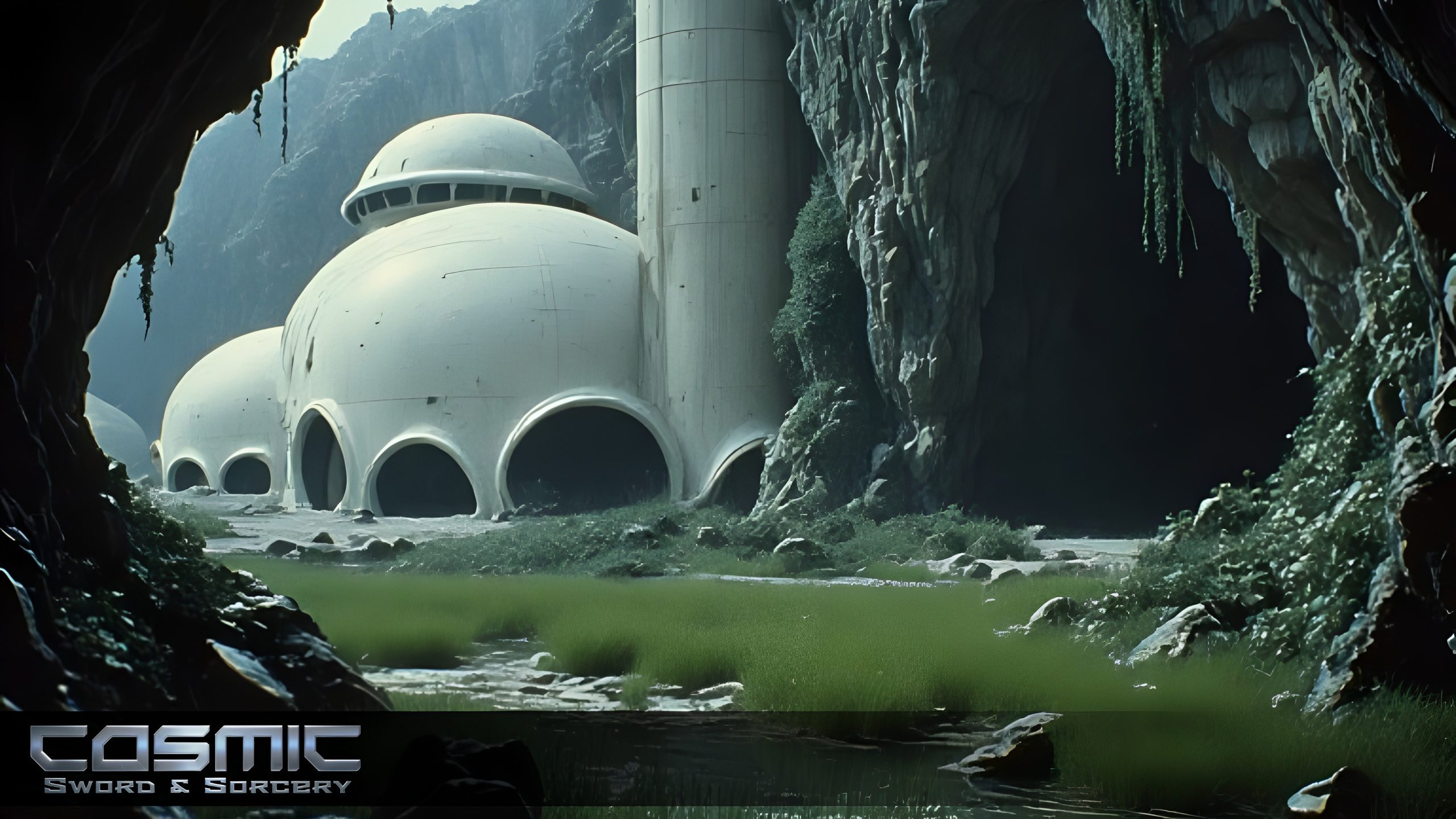
    Yet Tyvex’s true secret is below: the planet is honeycombed with immense caves, subterranean networks that stretch for leagues beneath the continents and even the sea. These caves have long served as sanctuaries, trade routes, and laboratories, their depths sheltering lineages and technologies unknown even to the most attentive imperial surveyors. In times of conquest or disaster, it was here that Tyvex’s people withdrew, preserving both bloodline and knowledge for the next cycle of emergence. The world’s reputation for meekness is thus revealed as a mask: Tyvex is a place of retreat and resurgence, a society whose patience and adaptability allow it to endure—and even thrive—no matter the balance of power above.

    In this, the planet remains a living lesson in the quiet strength of survival, and the many shapes that cunning can take beneath the notice of giants.

    This subterranean dimension predates imperial contact by geological epochs and predates formal statecraft by millennia. The distribution of these caverns is not random but systemic, intersecting continental fault lines, coastal limestone shelves, and volcanic substructures in patterns that mirror surface trade routes. Access points are often obscured within marsh depressions, forest sinkholes, or tidal caverns along archipelagic margins, rendering detection difficult without deliberate survey. Over successive ages, clans mapped these interiors with the same precision others reserve for star charts. The caves became cartographic extensions of identity—known, named, and inherited.

    The structural implication is simple: Tyvex exists in two layers at all times. Surface society is visible, negotiable, and, when required, compliant. Subsurface society is enduring, archival, and insulated. The Empire may engage with the upper layer through treaty, levy, or oversight; the lower layer remains an enduring reserve of continuity. What appears as modest provincial culture above is underwritten by depth below. The meekness attributed to Tyvex is therefore a perceptual artifact produced by incomplete mapping.

    Geologically, these caverns are the product of prolonged hydrological erosion across limestone strata and volcanic sublayers, producing vaulted chambers large enough to sustain enclosed ecologies. Over centuries, they were formalized into structured networks—ventilated corridors, fungal cultivation chambers, freshwater reservoirs filtered through mineral beds. Subsurface settlements were never improvised panic shelters; they were parallel infrastructures. Trade moved beneath floodplain and forest alike, insulated from seasonal instability and, when necessary, from occupying surveillance. Knowledge repositories—biochemical archives, clan records, prototype substrate matrices—were stored in humidity-stable chambers beyond the reach of surface volatility.

    Engineering within these caverns evolved from necessity into doctrine. Ventilation shafts were aligned with prevailing wind currents; mineral seams were reinforced with resin composites; water tables were regulated through carved sluice systems that prevented catastrophic flooding during marsh surges. Fungal matrices were cultivated not only for sustenance but for environmental stabilization, regulating humidity and reinforcing chamber walls through organic binding. Over time, these measures transformed raw geological voids into controlled biospheres—self-sustaining, low-visibility habitats capable of supporting population clusters independent of surface supply lines.

    The systemic effect is infrastructural redundancy. Surface ports may be blockaded; agricultural belts may be burned; highland temples may fall under foreign administration. The subsurface remains operational. Production of biochemical compounds, preservation of archival data, and training of specialized cadres can continue beyond the reach of orbital scans or atmospheric patrols. In imperial terms, Tyvex maintains shadow logistics: a secondary network capable of reconstituting the primary when conditions permit.

    The doctrinal implication is continuity insurance. Tyvex does not collapse when overrun; it contracts. Conquest yields surface compliance while preserving interior autonomy. Catastrophe becomes cyclical rather than terminal. For imperial planners, this trait produces both reassurance and constraint. Tyvex can be relied upon to survive shock and resume output with minimal reconstruction subsidies. Simultaneously, it cannot be wholly subdued through surface occupation alone. Its sovereignty is layered. The caves ensure that even in defeat, Tyvex retains memory. In long-duration imperial calculus, such depth is not romantic—it is strategic redundancy embedded in stone.
    Historically, this contraction pattern has repeated across occupations and internal crises.

    Shridian incursions secured surface settlements yet failed to extinguish interior networks. Epidemic cycles reduced visible populations while subsurface archives preserved lineage continuity and technical knowledge. Political transitions that might have destabilized more centralized worlds passed across Tyvex like weather—altering the surface skyline but leaving the bedrock order intact. Contraction is not retreat in panic; it is scheduled withdrawal into pre-existing depth.

    The long-duration consequence for the Empire is a partner-world that cannot be erased without geological intervention. Tyvex’s loyalty is durable precisely because its survival does not depend upon imperial protection alone. It aligns by choice, not desperation. This independence generates stability: a world secure in its continuity is less prone to rebellion born of existential fear. At the same time, imperial authority over Tyvex is inherently negotiated rather than absolute. Depth enforces parity. In civilizational arithmetic, Tyvex’s caves function as a constant—unmoved by surface fluctuation, anchoring a society that measures time not in campaigns, but in cycles.

  • V. Penal Theater

    V. Penal Theater

    Convict Throughput and Disposable Personnel

    Yalar, in this schema, stands apart from the familiar horror of the slow death: it is the logic of churn, not the logic of rot. Yalar’s utility to the imperial order was neither subtle nor ambiguous.

    In the calculus of the Administrates, it served as the empire’s most direct instrument for the liquidation of undesirables—a planetary mechanism for penal disposal rather than penal containment. Where Kalba, and in later ages, Rethka, functioned as open-air prisons or sites of indefinite exile, Yalar was never designed to be a place of lingering punishment or protracted suffering. Its surface, brutalized by climate and industry, was organized as a consumptive process: convicts, political dissidents, and other disposable populations were not warehoused for future negotiation but processed—stripped of utility, subjected to extractive labor or terminal assignment, and fed into the machinery of empire with little thought for their survival.

    No lineage of convicts arose here, no tradition of prisoner society or culture; the turnover was too swift, the environment too lethal, the regime too pitiless to permit anything resembling continuity. Sentences were measured in productivity or in metric tons extracted, not in years survived. Those dispatched to Yalar rarely left an account of their experience, and the planet itself became the silent ledger of imperial waste—each cycle of dispossession erased by the arrival of the next, each rebellion extinguished by attrition and the indifference of administrators who viewed penal throughput as a matter of routine logistics.

    Here, the only monument to those sent below the clouds is the relentless progress of imperial extraction, ore processed, atmospheres bled, quotas met. The fate of the convict is not to endure, but to vanish, swallowed by a planetary system engineered not for redemption, nor for memory, but for the efficient annihilation of the inconvenient.


    BEYOND THE CODEX

  • II. Geophysical Composition

    II. Geophysical Composition

    Surface Ecology

    Geographically, Tyvex is a planet of grand variety and hidden wealth. Three sprawling supercontinents rise from shallow seas, their coasts broken into bays and marshes, while a central archipelago sprawls at the planet’s equator, linking the continents in a necklace of verdant isles. The biomes range widely: from lush, almost decadent grasslands—hotbeds of biodiversity and clan culture—to ancient forests that rise in canopies of green-shadowed mystery. The marshlands, famed for their layered mists and colossal water lilies, are as much home to scholars and inventors as to the so-called “meek” amphibian tribes. Highlands with sheer peaks slice through the central latitudes, home to wind temples and hidden fortresses, while the poles are capped not with ice but with sweeping expanses of ultrapine forest—ecologies so vast that they shape global climate and weather.
    This variety is not incidental ornamentation; it is structural capital. The shallow seas moderate continental temperature bands, stabilizing agricultural cycles and allowing dense settlement without the climatic volatility seen on harsher imperial peripheries. The equatorial archipelago functions as connective tissue—maritime corridors, trade chokepoints, and biological exchange zones that prevent regional isolation. Grasslands provide caloric abundance and livestock viability; forests regulate hydrological cycles; marshes operate as biochemical incubators. Even the ultrapine poles, often misread as remote wilderness, exert planetary-scale atmospheric influence, maintaining humidity gradients that sustain the wetlands below. Tyvex’s terrain distributes productivity across latitude rather than concentrating it in a single exploitable band.
    The systemic consequence is resilience through dispersion. No singular biome defines Tyvex’s output; therefore, no singular environmental shock can collapse it outright. Agricultural belts compensate for flood cycles in marsh zones; forest canopies buffer atmospheric irregularities; archipelagic routes reroute commerce when continental corridors falter. For the Empire, this translates into a partner-world whose productivity is stable without heavy-handed infrastructural correction. Tyvex does not require forging, climate intervention arrays, or orbital weather stabilization platforms. Its geography self-regulates. What appears pastoral is, in administrative terms, low-maintenance yield.

  • Xenotaxa

    Xenotaxa

    The Imperial discipline of Xenotaxa arose from a practical problem encountered during the early centuries of deep space exploration.As contact with new worlds increased, natural philosophers found themselves confronted by an ever-growing number of organisms that could not be comfortably classified within existing biological frameworks, yet nevertheless displayed obvious relationships to familiar evolutionary lineages.

    Rather than continuously inventing new taxonomic categories for every world surveyed, the Imperial sciences adopted a system of expanded lineage classification. Under this methodology, organisms displaying recognizable ancestry or strong evolutionary convergence with established biological groups are incorporated into broader xenological branches while retaining local distinctions where necessary.

    The Xenotaxic system therefore allows researchers to discuss familiar biological relationships while accounting for the immense diversity produced by planetary isolation, artificial intervention, convergent evolution, and deep evolutionary time.

  • A Part of the Natural World

    A Part of the Natural World

    One of the more persistent misconceptions among younger scholars is the belief that civilization exists apart from nature rather than within it. Such distinctions are often useful for administrative purposes, but become increasingly difficult to maintain when examined across the scales of time addressed within this volume.

    The civilizations of Ran have endured for periods measured not in centuries, but in geological eras. Across such spans, cities become ecosystems, transportation networks become migration corridors, industrial districts become habitats, and entire species adapt themselves to the conditions created by intelligent life. The distinction between natural and artificial environments, while occasionally useful, is seldom absolute.

    This volume is not concerned primarily with the history, governance, achievements, or institutions of the Ran Empire and its predecessor cultures. Such subjects are addressed extensively elsewhere. Nevertheless, it would be impossible to discuss the ecology of the system without acknowledging the influence of civilizations whose presence has shaped environmental conditions for millions of years.

    Many organisms described within these records depend upon settlements, agricultural systems, transportation corridors, industrial infrastructure, or archological complexes for their continued existence. Others have adapted to avoid them entirely. Countless species now occupy ecological niches created by civilization itself, while some environments once regarded as artificial have become indistinguishable from naturally occurring habitats.

    The reader should therefore understand that references to cities, settlements, archologies, industrial zones, transportation networks, and inhabited regions are not departures from the purpose of this work. They are components of the ecological reality being examined. Where such systems influence the distribution, behavior, evolution, or survival of life, they shall be addressed accordingly.

  • The Worlds of Ran

    The Worlds of Ran


    With the exception of Yalar, a poisonous anti-biological hellscape of toxic atmospheres, liquid metals, radiation, and the lingering scars of ages of mechanized warfare and Kalba, no longer recognized as a world of significance but instead a dying industrial debris field, the worlds of Ran present an extraordinary continuum of life and adaptation.

    It is upon the second planet, Tyvex, that life first emerges in meaningful abundance within the outward progression of the system. Vast oceans, sprawling vineroot wetlands, amphibious coral forest labyrinths, shimmering grassland savannas, and surprisingly diverse polar steppe regions; have combined to produce one of the most ecologically productive worlds presently known.
    Beyond Tyvex lies Illynar, a larger and more heavily forested world whose immense snowcapped mountain chains, strange equatorial bamboo jungles, blue stepped highlands, and great crystalline deserts have given rise to an astonishing variety of specialized lifeforms and isolated evolutionary regions.

    Further outward stands Vandyrus, often regarded as the Barbarous Line beyond which one enters the truly civilized worlds of Ran. Vast towering redwood forests, deep layered jungles, brutal frozen northern continents, and expansive inland regions; have made the planet one of the most extensively studied ecological spheres within the Imperial record.
    Our Vandyrian Civilization does not stand entirely apart from The Natural worlds of Ran. Owing to the scale of both its biosphere and civilizations, the planetary status of each world and its peoples beyond Vandyrus shall be addressed prior to discussion of each worlds flora and fauna.

    Kydahn presents a markedly different case. Though rain-cursed, ruinous, and suffering severe ecological decline, the world continues to support a startling diversity of life. Much like the reputation of its inhabitants, Kydahn’s biology displays a remarkable refusal to surrender to adversity, clinging stubbornly to existence despite environmental pressures that would have extinguished many lesser ecologies.
    The gas giant Pranja represents one of the system’s more unusual biological frontiers. Continental-scale cloud formations, atmospheric islands, and centuries of experimental intervention have produced strange aerial ecosystems unlike those found elsewhere within Imperial territory.

    Rethka shall be covered only briefly. Though the world once supported abundant life, approximately eighty-nine percent of known native species are now extinct. As a consequence, much of the surviving record concerns ecological collapse, adaptation, conservation efforts, and the growing list of recent removals from the extant register.
    Unlike many worlds described within this volume, Farydahn possesses no indigenous biosphere. Nevertheless, its great floating megacities have become important centers of biological research, conservation, genetic archiving, and public education.

    Kalba is no longer classified as a world.

    Titanum represents a unique form of war ecology. Though naturally hostile to complex animal life, centuries of military activity, black-market trafficking, escaped livestock, and accidental introductions have created a strange and often unstable biological landscape.
    Orbiting Titanum are two worlds deserving independent treatment.
    Thanator, the Jungle Moon and Throne World of the Ran Empire, ranks among the most biodiverse bodies in the known system. Its forests, jungles, mountains, wetlands, and countless isolated habitats contain such biological abundance that entire volumes could be devoted to its study alone.

    Jotun, though considerably smaller, displays a similarly remarkable richness of life. Forests, grasslands, wetlands, and temperate regions support ecosystems of surprising complexity and resilience for a body of its size.
    The gas giant Daradahn hosts immense atmospheric ecosystems dominated by avian megafauna and vast drifting communities of aerial invertebrates, many of which spend their entire existence suspended within the upper atmospheric layers.
    Finally, Rywar remains stable, heavily forested, and outwardly unremarkable. Yet beneath this appearance lies a world of considerable scientific interest. Its oceans appear to host the emergence of increasingly complex arthropodal and fish-like lifeforms. Furthermore, evidence suggests that this may not be the first biosphere to develop upon the planet. Some researchers have proposed that Rywar was captured from another stellar system in the distant past, carrying with it the remnants of a far older evolutionary history.

    From this point onward, each world shall be indexed through the guide’s internal reference matrix. Planetary entries, regional surveys, species records, environmental hazards, and associated ecological observations have been organized to allow rapid navigation between related subjects.

    Readers are encouraged to consult these references frequently, as many organisms, habitats, and environmental conditions described within this volume occur across multiple worlds and continuity zones.


    ARCHIVAL NOTE

    In its original Imperial form, this indexing matrix was maintained through crystalline information systems capable of dynamically cross-referencing associated records in real time. As such technology is unavailable within the present edition, all reference links have been reproduced in simplified form. Relevant entries will appear at the conclusion of each page and may be selected directly to navigate to the associated record.