

Sunderings of the North
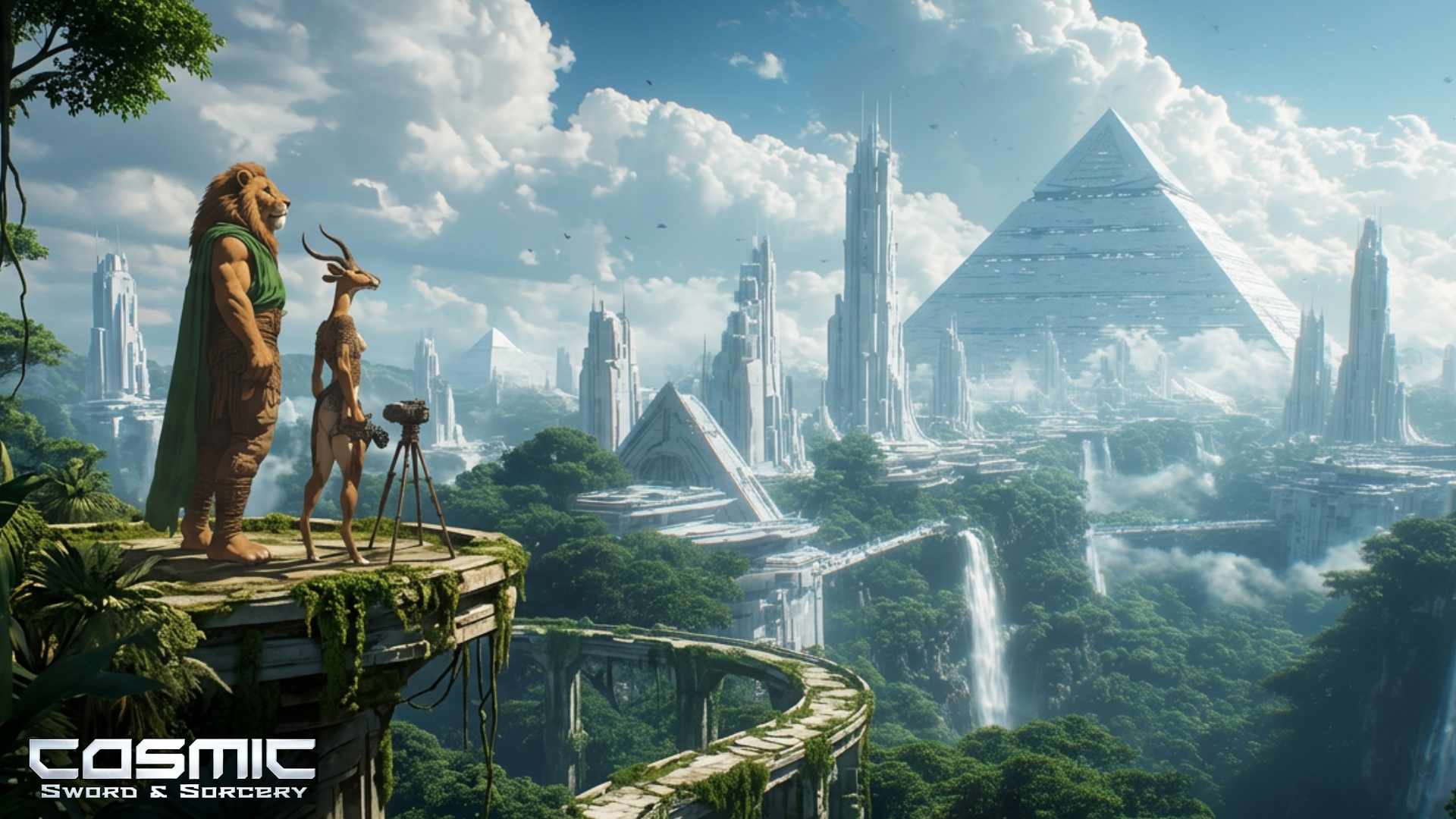
Unlike the colder northern territories that would emerge after the Cataclysm, the elder central dominion existed beneath warmer and considerably more volatile planetary conditions. Much of the territory rested atop geologically unstable zones shaped by tectonic movement, geothermal pressure, volcanic uplift, and deep subterranean fracture systems. Great geyser fields, steaming river valleys, sulfur plains, and heated jungle basins divided immense stretches of open grassland and steppe country.
Travelers from the southern territories frequently remarked upon the immense scale of the Thyuratahn plains. Long rolling steppelands extended beyond visible horizons before gradually transitioning into grass seas stretching for extraordinary distances uninterrupted by major forest growth. Migratory megafauna traversed these territories seasonally in colossal numbers, accompanied by both mounted pastoral cultures and large predatory species adapted to the open plains. In wetter regions, dense jungles emerged abruptly around geothermal basins and volcanic waterways, creating strange transitional ecosystems where tropical vegetation, heated stone terraces, and open grasslands existed within close proximity. This environmental diversity appears to have profoundly shaped the fragmented political structure of the region. Rather than consolidating into a singular uninterrupted empire, Thyuratahn developed as a network of interdependent kingdoms, dynastic territories, ceremonial leagues, and migratory protectorates bound together through trade infrastructure, shared astronomical systems, and common high cultural traditions inherited from older imperial contact.
Many later Ro’Edyne scholars considered Thyuratahn one of the clearest examples of the “middle civilizations” of elder Vandyrus — societies existing between the direct metropolitan continuities of the southern imperial spheres and the more isolated native polities occupying the distant frontiers. They possessed advanced infrastructural systems, extensive trade integration, and partial offworld continuity, yet retained strong regional identities distinct from both Ro’Edyne and the greater Vandyrian core administrations.
By the post-cataclysmic ages, however, much of Thyuratahn had vanished almost completely from the known world. The grasslands fractured. The geothermal belts collapsed or froze. Sea levels altered. Northern shelf systems disappeared beneath new oceans and glacial waters. Trade routes ended in broken cliffs and drowned territories. Entire migratory corridors ceased to exist. Of the great kingdoms themselves, little remained beyond fragmented oral traditions, scattered dynastic references, corrupted star charts, and the strange persistence of names surviving long after the civilizations attached to them had vanished entirely from history.