

- 🔊 AUDIO
- Thanator & Kydahn
The Vandyrian Planets
AUDIO
Before Doom’s arrival, only two worlds in the Ran system mattered.
Thanator & Kydahn
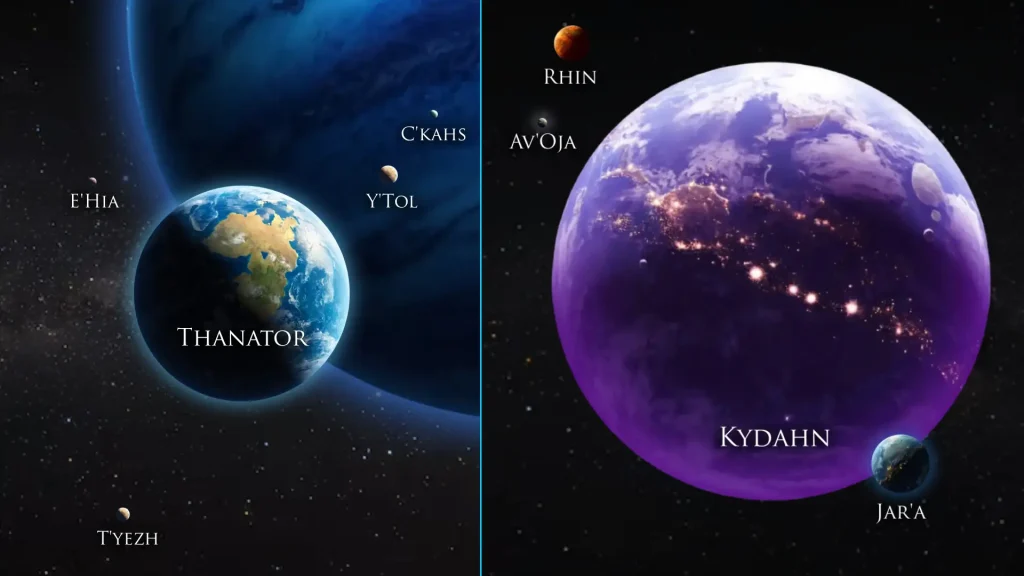
These planets did not simply cultivate their own soils or histories; they radiated ambition, dominating their neighbors by design and force. Thanator’s society was relentless—a machinery of conquest, where the refinement of imperial law met a culture of violence that penetrated every institution, from the blood-sport of noble courts to the conscription of whole continents for war. Every festival was edged with cruelty; every law enforced with the threat of steel.
Kydahn, no less ruthless, secured mastery through intellect and precision. Where Thanator flexed, Kydahn calculated, applying superior artifice and administration with a cold authority that tolerated no defiance. Dissent was not crushed in public spectacle, but erased by systems so intricate that challenge became unthinkable. The rivalry between these twin powers dictated the fate of the system; the history of every lesser world was bent by the reach of their fleets and the legacy of defeat they imposed.
The other planets in the Ran system did not orbit only their star, but the gravitational pull of Thanator and Kydahn—the true axis of power. Their ambitions, wars, and bargains shaped the order of all things, and only the Cataclysm could render such striving meaningless. When Doom came, even the greatest designs were stripped of purpose, and dominion became just another memory lost in the dark.
Vandyrus
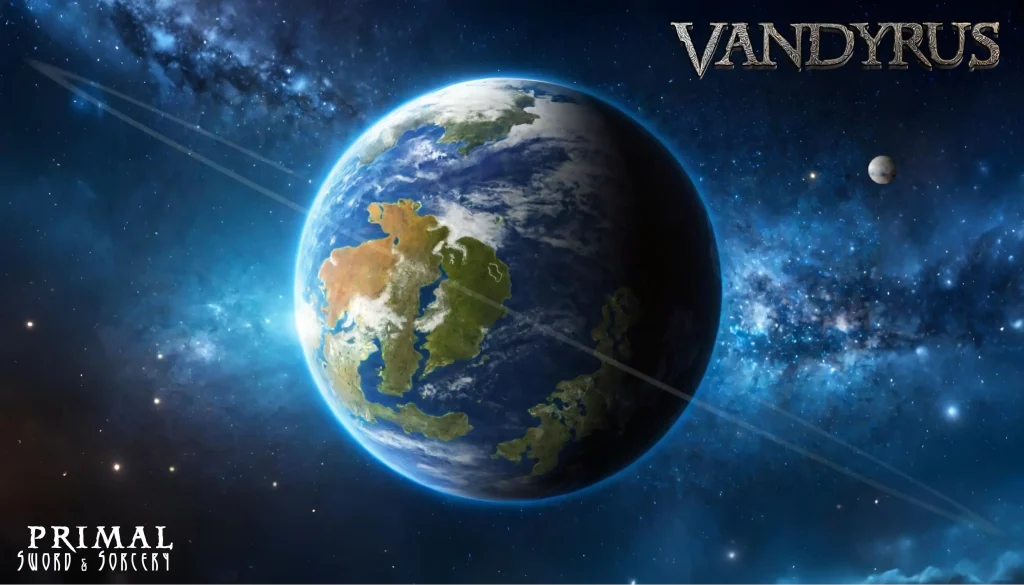
Before the Cataclysm:
The fourth planet of the Ran system, Vandyrus was never the heart of empire. It was neither cradle nor capital, but a frontier—provincial, harsh, and unsettled. The planet’s surface was scarred by halls of stone, ziggurats raised to cruel gods, and fortress-cities clinging to the edge of survival. Wolf dens in Vulsa, the lion courts, the serpent vaults beneath Drael—all these were experimental holdings, not homelands.
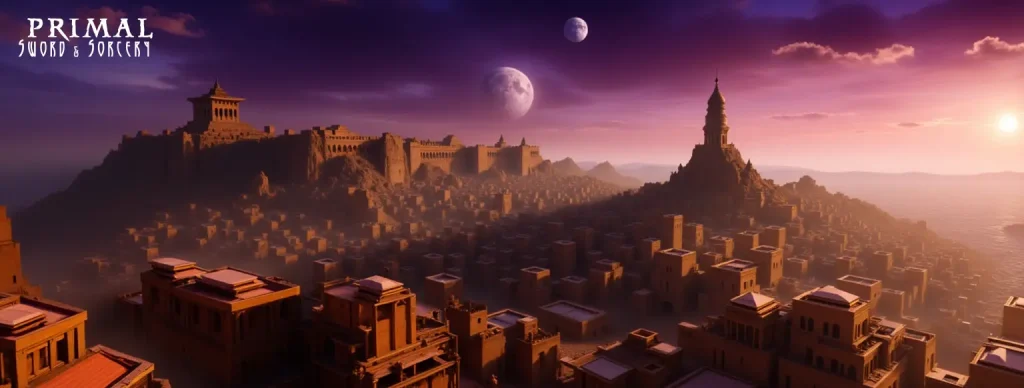
Vandyrus, even in its height, was a deployment site at the rim of greater dominion, a foothold within the outer grasp of the vanished Empire of Vandyria. If there ever was a true Vandyrian homeworld, its name and location have been lost beyond memory—consumed, perhaps, by their own engines of expansion or annihilated in the chaos that followed their collapse.
The Cataclysm:
When Doom shattered the system, Vandyrus was not spared. Its provinces suffered—the sky torn, the cities battered, neighbors erased in fire and silence. Yet Vandyrus endured, not by virtue but by resilience: conquered twice in history—once by the imperial reach of Thanator, again by those same conquerors returned as raiders—but never truly tamed, never wholly broken. It was backward, brutal, and tough enough to weather the shock that unmade worlds more glorious.
Aftermath:
In the age that followed, Vandyrus persisted as the broken heart of a broken system. The survivors built new halls from the ruins of the old, adapted to the void left by lost neighbors, and made civilization from the scraps of disaster. No longer the outpost of empire, Vandyrus became a refuge for those too wretched, too adaptable, or too stubborn to die.
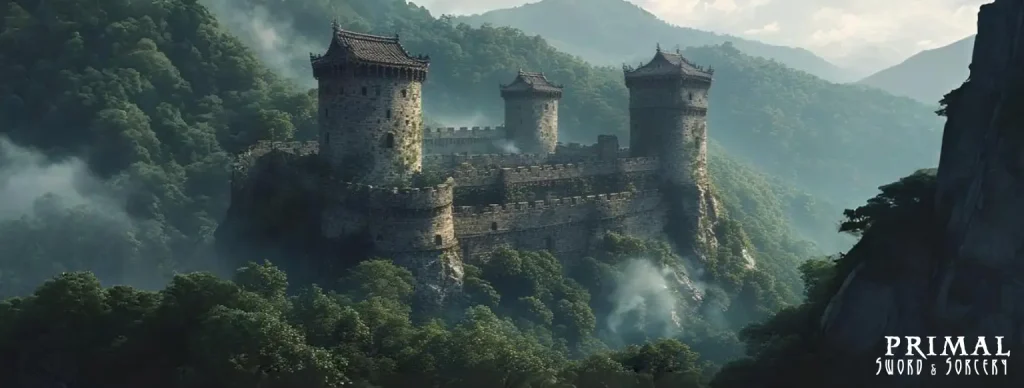
Present Day:
Vandyrus sits at the system’s axis not by right, but by survival. Its people endure, marked by scars, clinging to half-remembered rituals and relics of vanished overlords. The world is provincial still—a brutal province without illusions, bearing the name “within the outer grasp of the Empire of Vandyria.” Its only glory is that of persistence: battered, unbowed, and condemned to memory as the system’s harsh, undefeated core.
The Moon of Artana
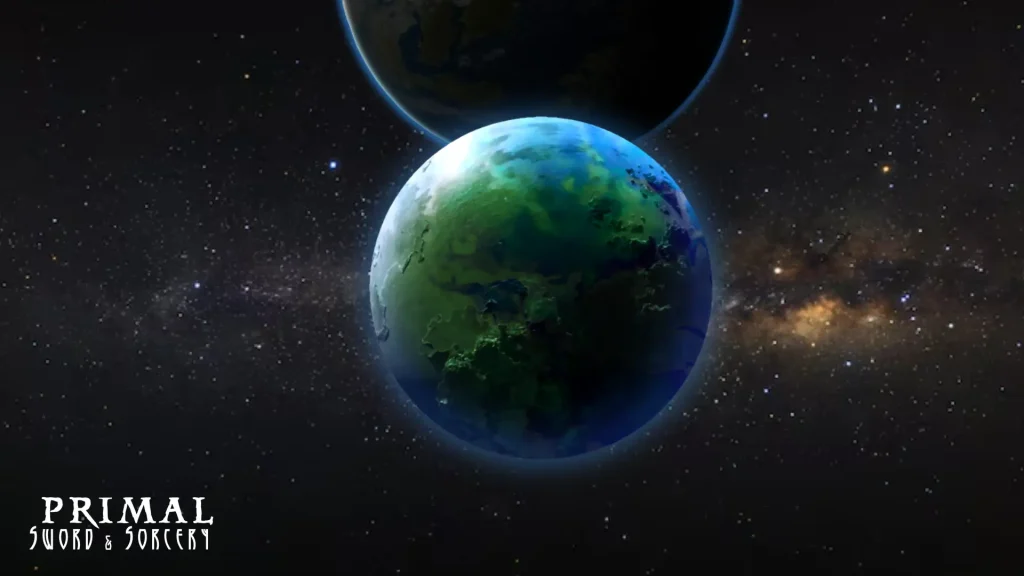
Before the Cataclysm:
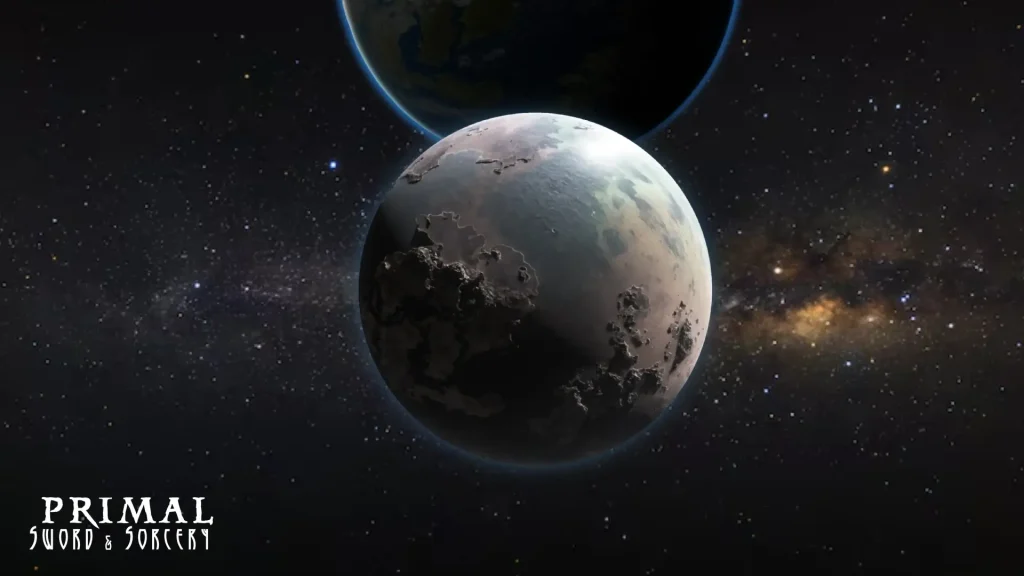
Artana, Vandyrus’s principal moon, was a world on the threshold. From the surface of Vandyrus, distant watchers sometimes saw faint glimmers—evidence of fire, movement, or the first stirrings of civilization. The moon’s surface was scarred and pitted, but some believed enclaves or primitive settlements were beginning to rise. To the Vandyrians, Artana was a mystery—an object of speculation, never fully understood or mapped.
The Cataclysm:
When Doom tore through the Ran system, Artana was battered almost beyond recognition. The lunar surface fractured, its lights vanished, and all hopes of contact or observation were lost in the greater violence engulfing the system. Where another, smaller moon once orbited, nothing remained but a ring of debris—Votah, a shining wound encircling Vandyrus.
Aftermath:
In the years that followed, Artana was written off as dead. No signal, no traffic, no reliable sign of life persisted. The Vandyrian record treated it as just another casualty, another monument to ruin and silence. The Votah ring, visible even from the battered surface below, stood as the only testament to what had been.
Present Day:
Yet even now, watchers claim to see faint lights flickering across Artana’s face—a rumor that will not die. Whether these are the sparks of survivors, the work of automated systems, or only tricks of the eye, none can say. To the Vandyrians, Artana remains an enigma, circling above as both scar and warning: a world just beyond knowing, haunted by possibility and loss.
Kydahn
Before the Cataclysm:
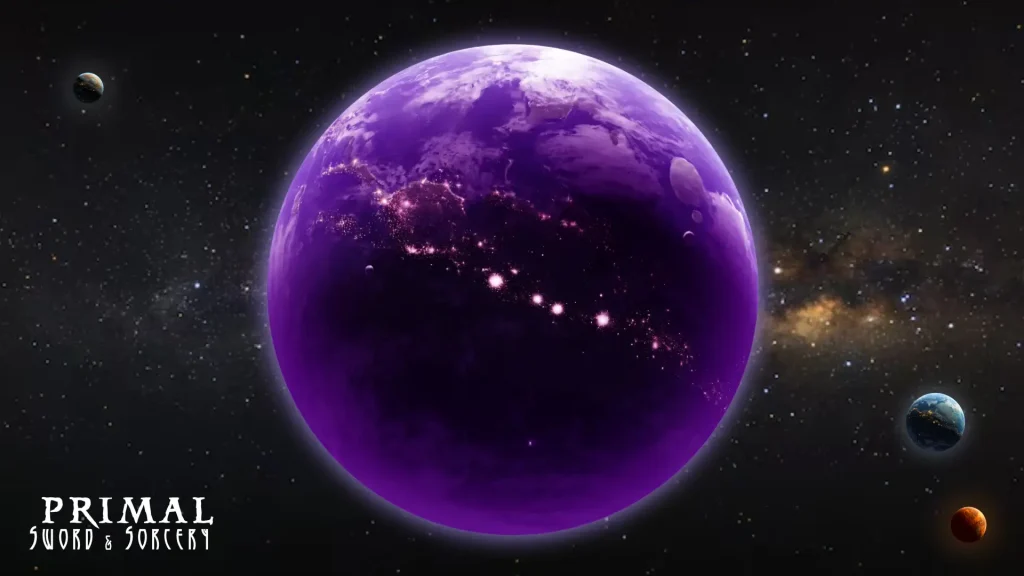
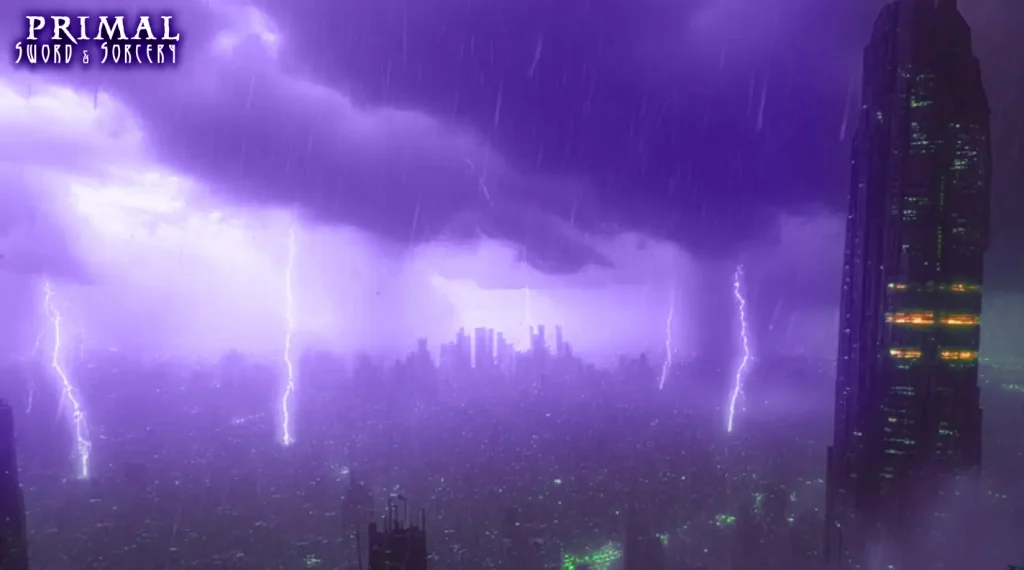
Kydahn, the fifth planet of the Ran system, was a power to rival Thanator—some say its better. The world stood apart: decadent, proud, and technologically sovereign, its cities towers of silent threat and intricate demonstration. Kydahn’s influence checked the ambitions of the system not through open conquest, but through mastery. Its authority was absolute; its reputation, a warning.
The Cataclysm:
Doom made no distinction. When the Cataclysm arrived, Kydahn was consumed utterly—its surface stripped, its core shattered, its substance drawn up and folded into the advancing shadow of destruction. Cities, archives, dynasties, and the very ground itself were all lost in one remorseless hour.

Aftermath:
Kydahn left nothing behind but dust and scattered mass, a memory kept alive only by those who once feared its power. Its silence was total; its authority, mocked by oblivion.
Present Day:
Kydahn exists now only as planetary debris and drifting cosmic dust—the aftermath of obliteration, the scene of a massacre scattered through the system’s empty lanes. Its name lingers in bitter stories, haunted by those who claim that, for a time after the Cataclysm, lights of civilization could still be seen flickering among the ruins. Raiders from Thanator, drawn by the hope of salvage, found only fractured ground and the echoes of a world bleeding out its last atmosphere. Whatever survivors endured, they did so in darkness and despair, and by the third generation, even the lights went out. Now, nothing persists but dust, memory, and the void where Kydahn once ruled.
Rethka
Before the Cataclysm:
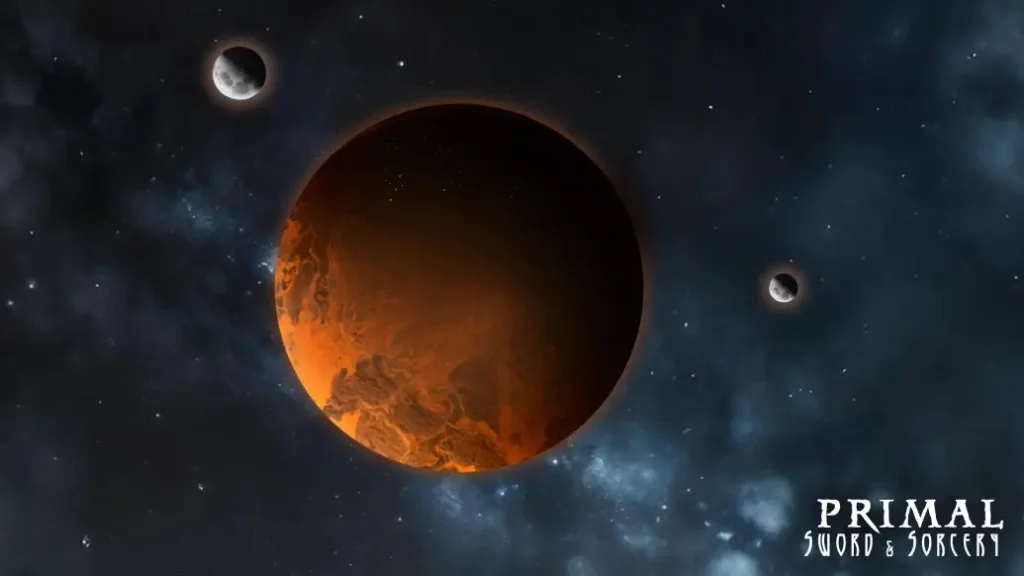
Rethka was a planet defined by contempt. It served the Ran system as a penal world and industrial graveyard—a dumping ground for toxic waste, spent fuel, heavy metals, and those folk deemed too despised, too dangerous, or too inconvenient to be allowed to die anywhere else. Its surface was scarred by slag fields, poisoned seas, and sealed labor zones where survival itself was considered part of the sentence. Nothing was cultivated here except suffering and neglect.
The Cataclysm:
When Doom passed through the system, Rethka did not resist, nor was it spared. The planet was caught fully in the object’s path, its poisoned crust and buried dead offered up without distinction. It is said that the final prisoner looked skyward as annihilation came, smiling as the light rose, whispering thanks to forgotten gods for a death that required no sentence to complete.
Aftermath:
There was no aftermath. Rethka was consumed entirely—its crust, its wastes, its buried populations reduced to component particles. The planet’s mass was stripped apart and drawn into Doom’s shadow, scattered beyond recovery.
Present Day:
Rethka no longer exists as a world. It survives only as dispersed matter and as a cautionary name in the records of the Ran system. No ruin marks its passing, no debris field traces its orbit. Even contempt, in the end, was erased.
Titanum
Before the Cataclysm:
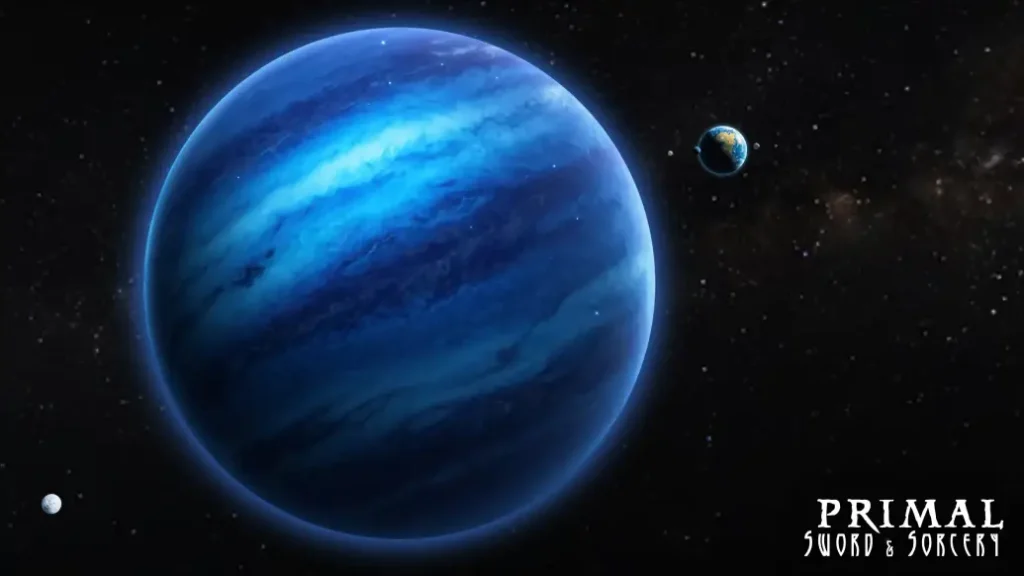
Titanum, the sixth planet of the Ran system, was a gas giant whose secrets eluded even the most ambitious empires. Its atmosphere roiled with storms of unimaginable violence, colored bands wrapping a world whose depths remained unmeasured. Some speculated at a hollow core, others at a rocky or even artificial heart, but no expedition ever returned with proof. Around Titanum orbited two major moons, Thanator and Jotun—each the seat of its own troubled history.
The Cataclysm:
The Cataclysm passed, and Titanum’s storms burned brighter, but the giant itself endured. Probes and landers sent into its depths vanished without a trace, their loss giving rise to tales of mutilation, distant chanting, and abduction by forces unknown. No empire, Vandyrian or otherwise, claimed dominion over the planet; every attempt at mastery was met with silence or disaster.
Aftermath:
Titanum’s mysteries deepened in the system’s ruin. The moons that once circled in orderly paths found their orbits changed, battered by debris and the shifting gravities of loss. Thanator and Jotun remained tethered, each altered, each made more perilous by proximity to the unanswerable depths.
Present Day:
Titanum stands untouched, the system’s enduring riddle. Its upper layers rage with storms, its heart unrevealed. Attempts to pierce its clouds are met with failure or madness; those who claim to have heard chanting or seen lights within are dismissed as mad or lost. Thanator and Jotun circle still, orbiting not only a planet but a question that no survivor has answered.
Thanator
Moon of Titanum
Before the Cataclysm:
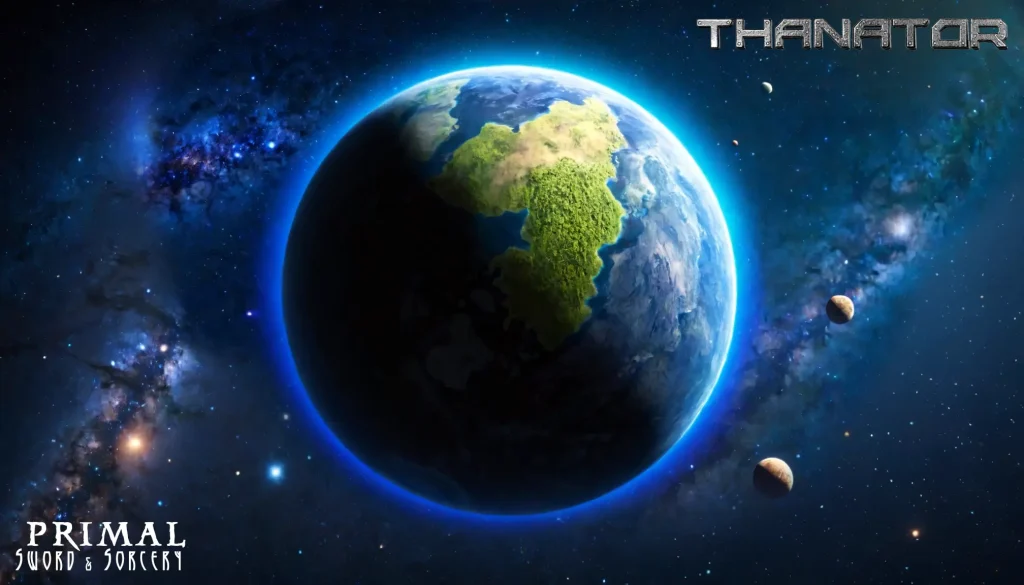
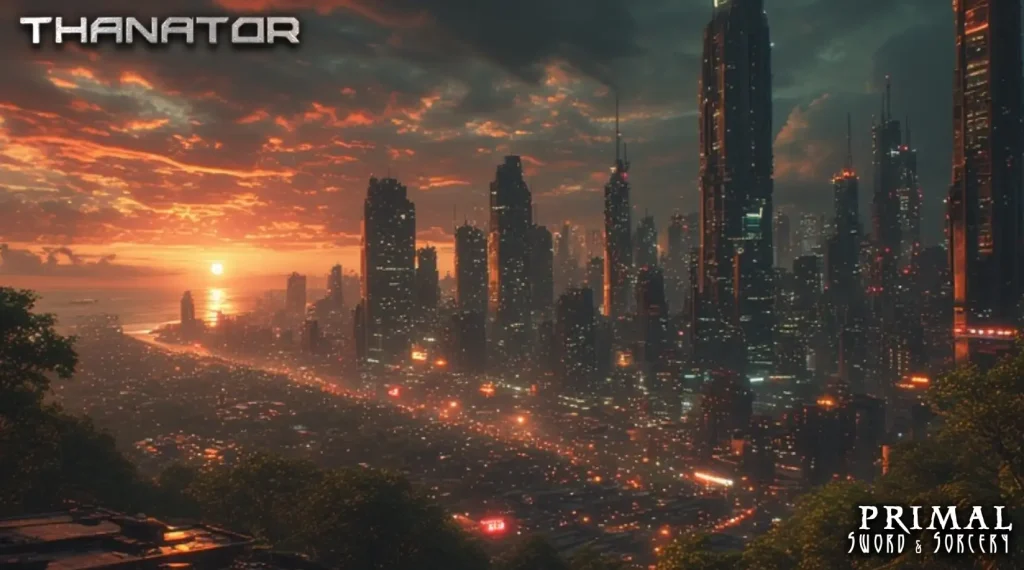
Thanator was the jewel of the Ran system—a moon-empire whose palaces soared above jungle canopies and whose civilization was both feared and envied.
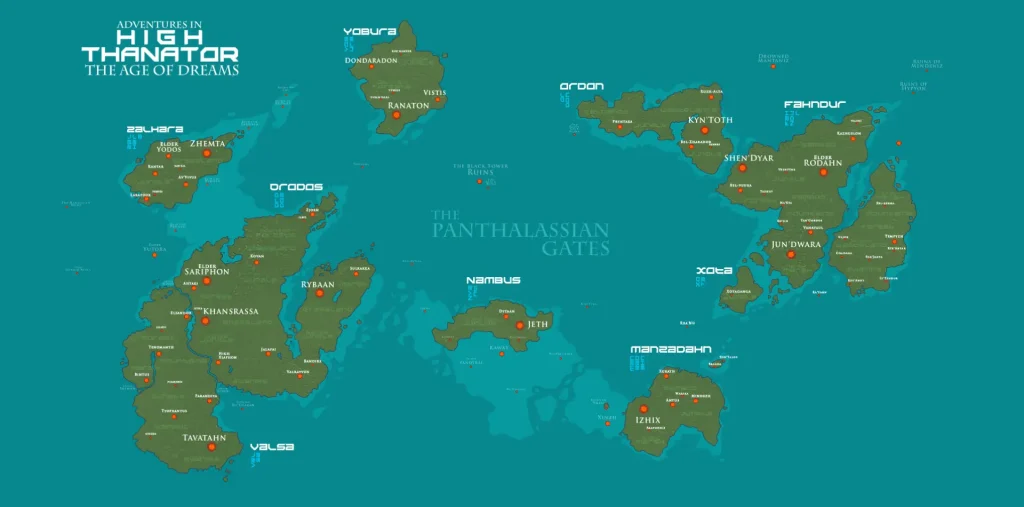
Here, violence was refined into art, and debauchery became the science of courts and warlords. Thanator’s fleets ranged far; its reputation shaped the fates of worlds. Admired by some, abhorred by others, Thanator was never ignored.
The Cataclysm:
When Doom crossed the system, Thanator was not spared. The Cataclysm shattered the moon’s upper layers, boiling jungles to steam, burying cities in molten ruin, and drowning all pride beneath floods of silence. The seat of empire collapsed; glory was replaced by survival.

Aftermath:
Thanator’s core world persisted, scarred but unbeaten. Civilization dissolved into violence and hunger. What survived did so by adapting to new savageries—predation, ruin, and an unending struggle for dominance. The memory of empire lingered only as legend, tainted by blood and the taste of loss.
Present Day:
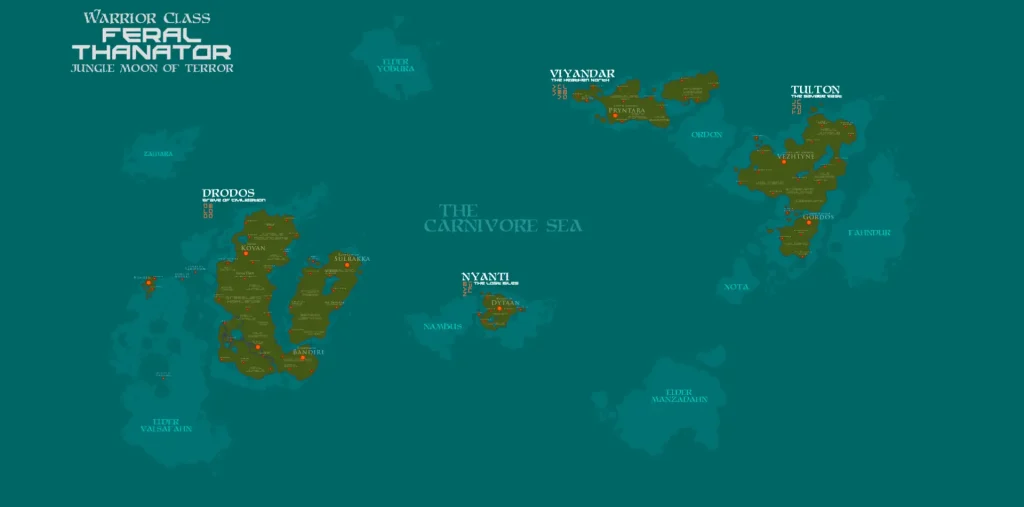
The dream of Thanator’s empire is dead, but the world itself endures—stripped of pretense, stubborn, and savage. No order holds for long.
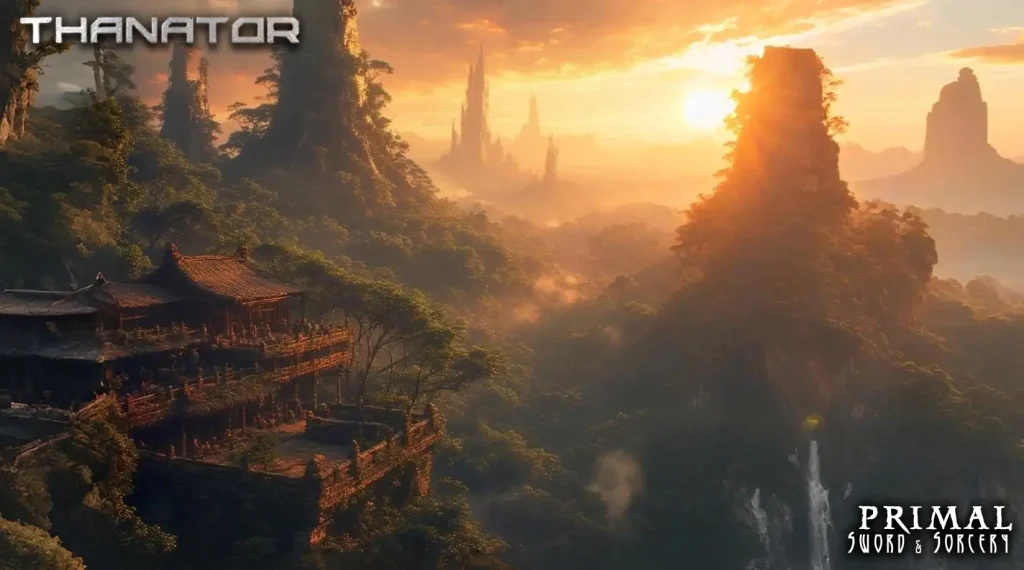
The moon remains a theater of predation and despair, its civilization replaced by an engine of survival that refuses extinction.
Jotun
Second Moon of Titanum
Before the Cataclysm:
Jotun, the outer moon of Titanum and sister to Thanator, was always the system’s outcast. Cold, sparse, and battered by distance and neglect, Jotun’s surface supported a thin, marginal existence. Its people—never numerous—endured through endurance alone, their societies shaped more by privation and retreat than by ambition or conquest. Even in the high age of Thanator’s empire, Jotun remained peripheral: an afterthought, a harsh frontier at the edge of the system’s true power.
The Cataclysm:
When Doom swept through the Ran system, Jotun was spared the worst of the violence. The moon’s distance and relative insignificance left it largely untouched by direct devastation. Yet the same event that erased so many worlds only highlighted Jotun’s own failures. Where Thanator descended into savagery and survival, Jotun faded into irrelevance and slow decline.
Aftermath:
In the centuries that followed, Jotun’s people diminished further, their cultures worn down by isolation and attrition. Once-thriving outposts collapsed or were abandoned, and the moon’s legacy became one of loss and diminishing return. No glory, no defiance—only the quiet, terminal slide toward silence.
Present Day:
Jotun stands as a graveyard in waiting. Its surface is marked by ruined settlements, abandoned halls, and the slow, steady retreat of what life remains. Generations from now, Jotun will be spoken of only in mourning: a reminder that some worlds are not destroyed by violence, but by the weight of neglect, disaster, and time.
Rywar
Before the Cataclysm:
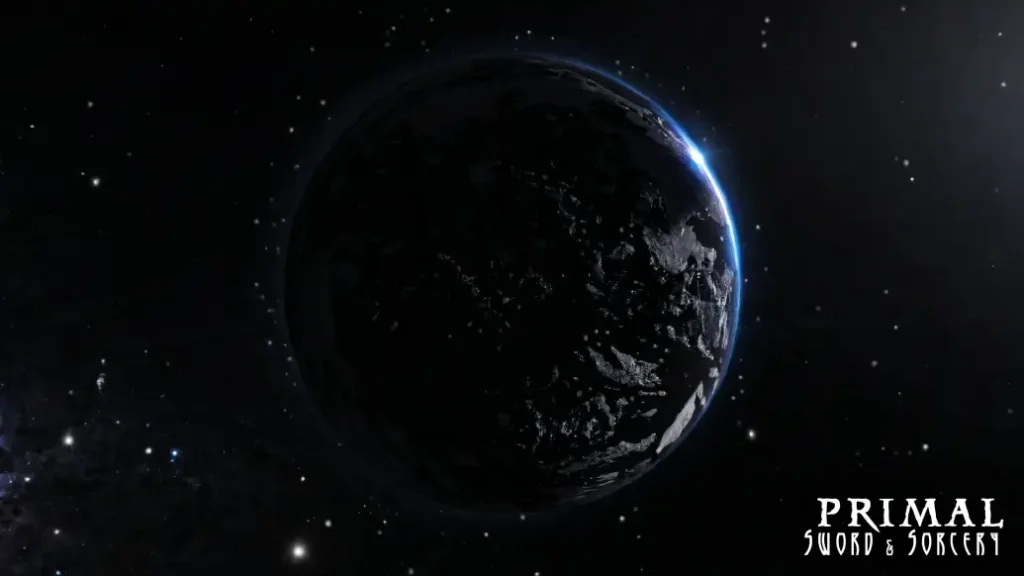
Rywar was a distant, silent planet, its only features the colossal ruins of a civilization that vanished long before any known record in the Ran system. No living ecosystem ever emerged; the world’s surface remained an archive of emptiness, observed but never settled. In the golden ages of Thanator and Kydahn—millennia before Doom—expeditions from both worlds explored Rywar, uncovering glyphs and structures unmistakably marked by the Greater Vandyrian Empire.
These findings dated back nearly three hundred million years, predating the rise of Thanator or Kydahn themselves. Automated fleets—drones and colonial starter systems—had once landed here, mapping and surveying Rywar as a potential hub for Vandyrian expansion.
Vandyrus itself, it is now believed, was originally little more than a designated outpost—its name the legacy of imperial logistics, not of origin or birthright. By the time Thanatorian explorers set foot on Rywar, the automated presence of the Greater Empire had long failed, and what remained of the ancient installations was already decayed by time.
The Cataclysm:
Time began the ruin, but the Cataclysm finished it. When Doom swept through the system, half of Rywar’s crust was boiled into a sea of black glass, a hundred miles deep. The rest was drawn down by ancient vortices and encroaching silence. The ruins—already enigmatic and eroded—were further vitrified or swallowed. Surviving glyphs and structures were reduced to fragmented, scorched remnants, legible only in the rarest of circumstances.
Aftermath:
Following the Cataclysm, Rywar existed as the system’s furthest grave. Later scholars gave names to its scars—Vulcan Sea, Graveyard Coast—but these were nothing more than catalog entries. Rywar itself offered only mute evidence of entry, neglect, and extinction.
Present Day:
Rywar is the system’s farthest known tomb—a planet of black glass and ruins so ancient that even ghosts are a memory. Its negative legacy is clear: proof that Thanator and Kydahn were not the first, that the ambitions of the Greater Vandyrian Empire stretched here eons earlier. The world’s silence, and the worn glyphs beneath its fused surface, stand as the final reminder that even the greatest empires are reduced to dust, their claims unread, their history boiled away by time and catastrophe.