

The Ran System:
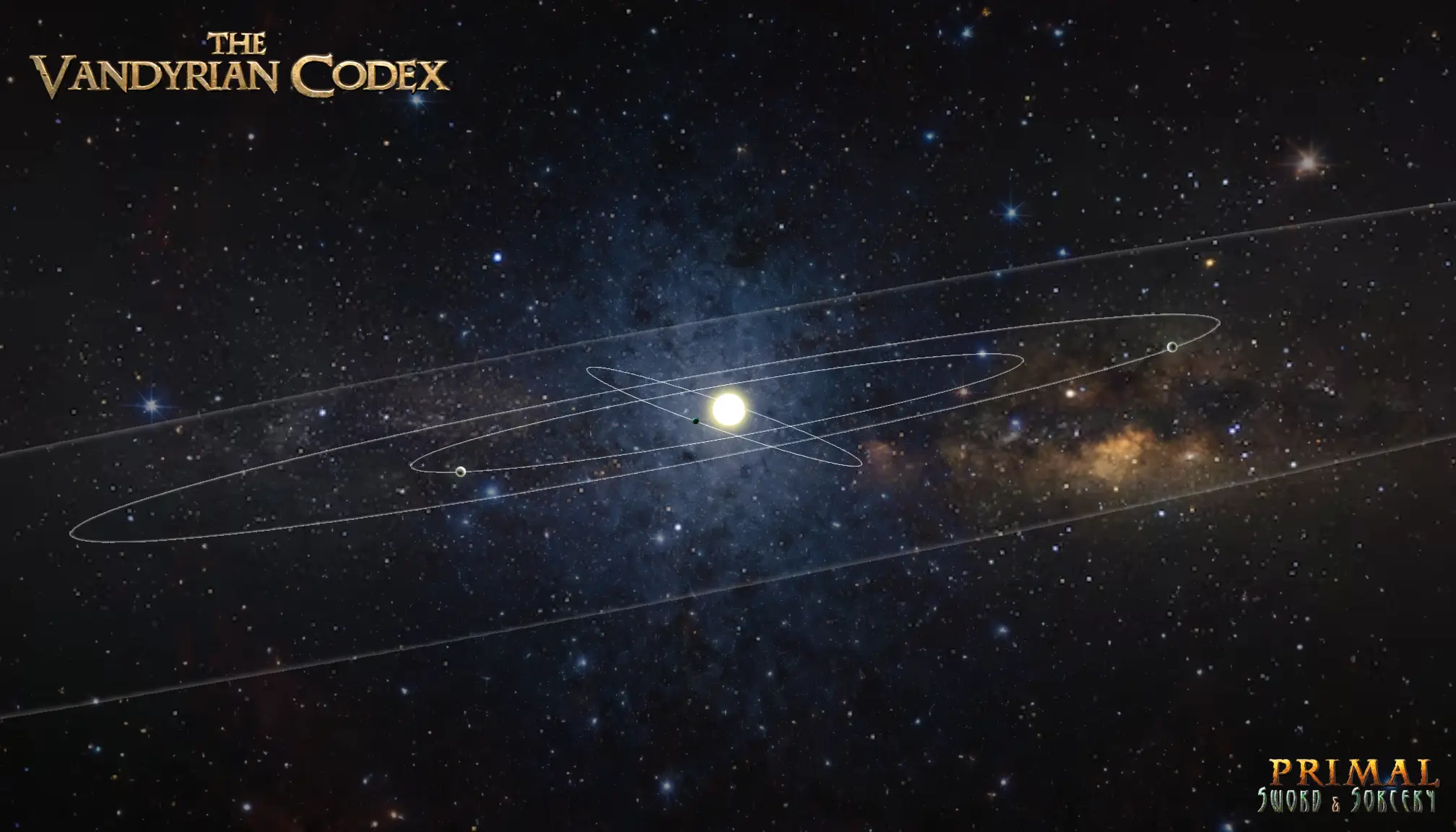
Before the coming of the Cataclysmic Object—called Doom by the survivors—Ran presided over a family of worlds in rough alignment.
The system boasted planets as varied as the ambitions of their folk: worlds of storm and chemical sea, of verdant forest and rising empires, of savage law and decadent peace. Some bore moons, others rings, some nothing at all but the weight of their own history.
Before the age of doom, Ran’s children moved in stately order, each world bearing its own silent ambitions.
Yalar
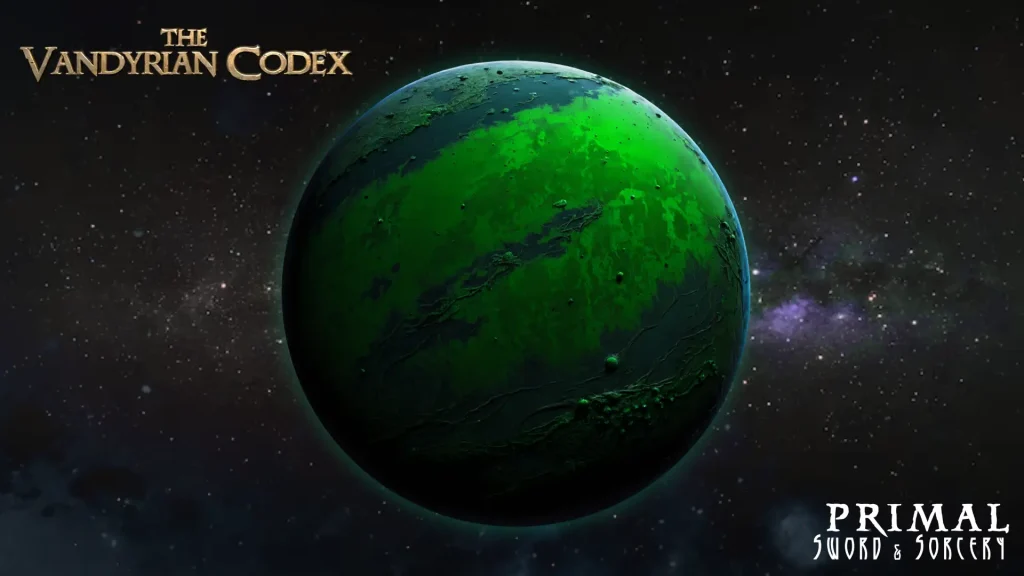
Before the Cataclysm:
The first planet of the Ran system was nothing more than a primordial sphere, wrapped in a choking viridian atmosphere—a world locked in chemical tumult, eternally hostile to biology. Nothing seeded, nothing stirred; the surface swam with toxic clouds and silence.
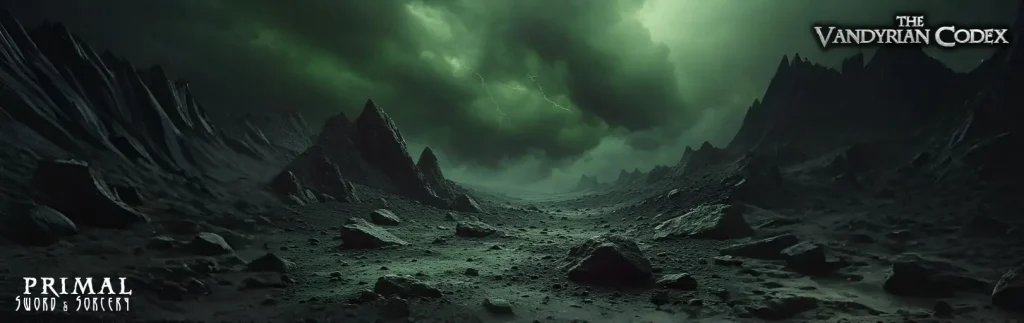
The Cataclysm:
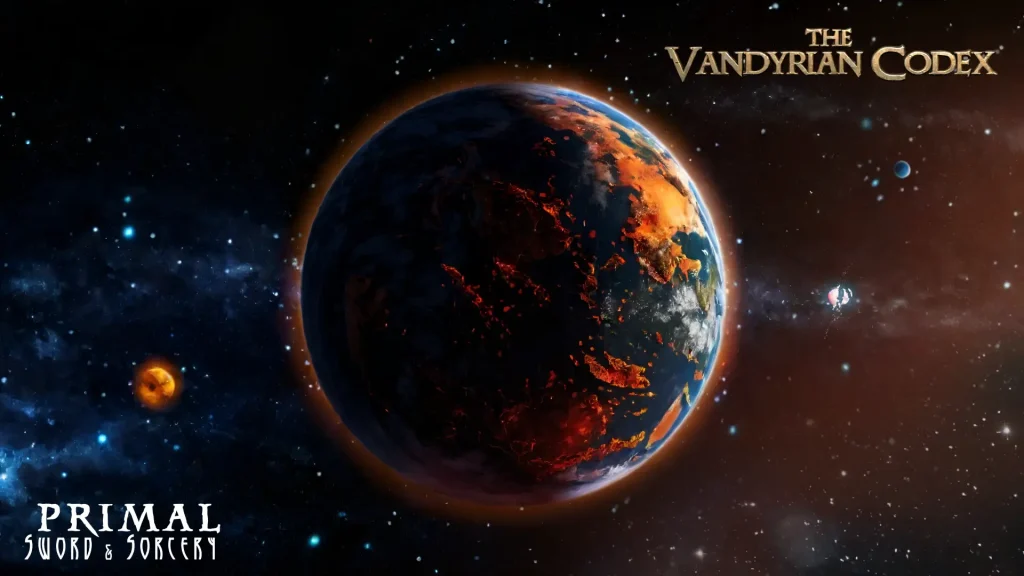
When Doom arrived, it stripped Yalar of its shroud, peeling away atmosphere and memory in a single, wordless moment. What remained was black stone and vitrified quartz, the surface flash-melted and barren, history erased in an instant.
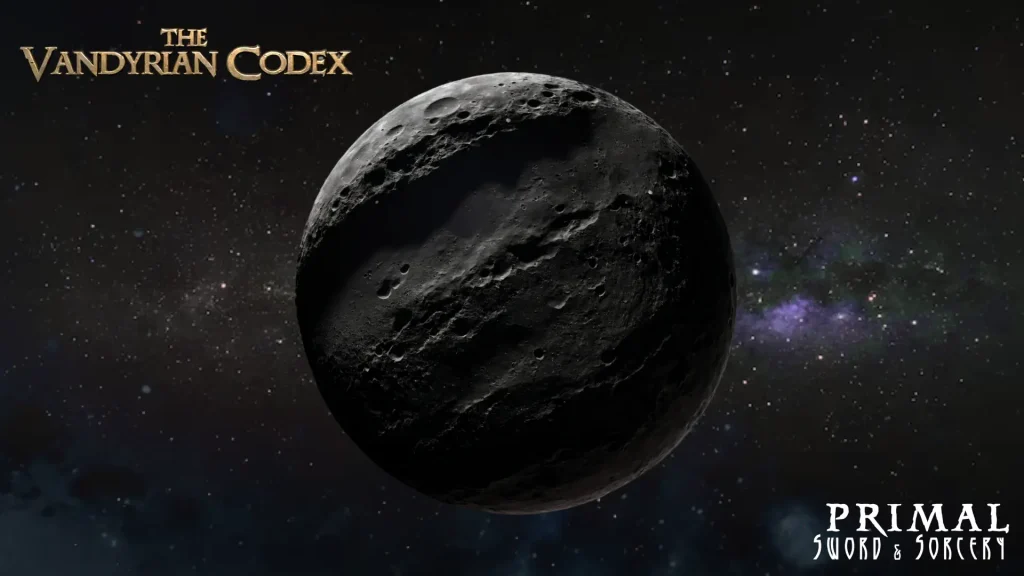
Present Day:
Yalar is not dead because it never truly lived. There is no record of seed or animal, no fossil or artifact, only heat fractures and the silent testimony of scorched glass beneath a star that now burns on nothing.
Tyvex
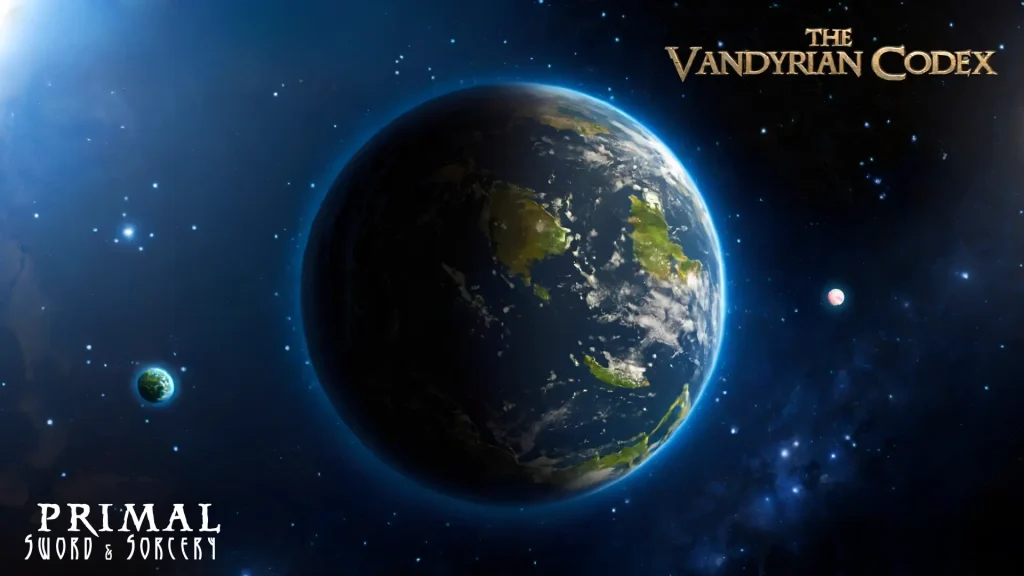
Before the Cataclysm:
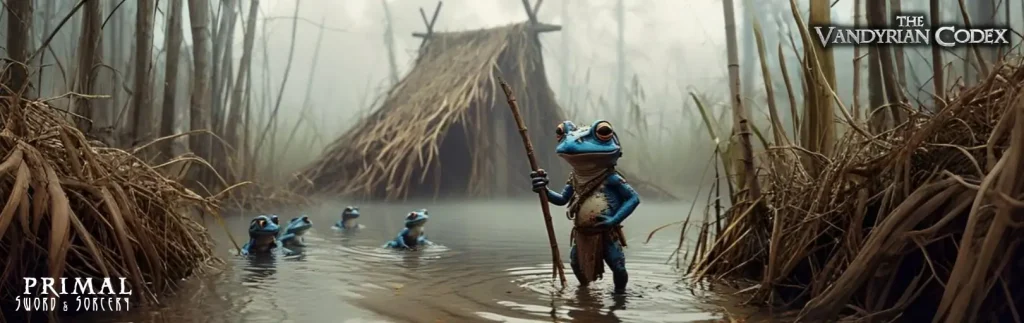
The second planet of the Ran system rose out of ancient swamps. In its earliest age, the lowlands seethed with amphibian life, forms poised at the brink of transformation—half-dreaming of legs, lungs, and dominion beyond the mire. The world’s hunger was primordial, its promise uncertain, its waters thick with unspent potential.
The Cataclysm:
Doom’s passing was both verdict and sentence. In an instant, Tyvex was broken—its teeming lowlands and ancient hunger seized by apocalyptic violence, the planet’s future smothered before it could emerge.
Aftermath:
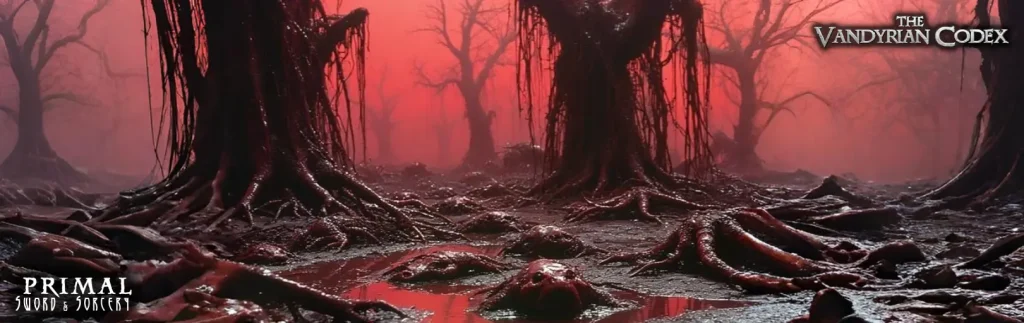
Radiation twisted the swamps into a catalogue of mutations. Creatures dissolved into the land itself; flesh and terrain intermingled, life that should have died stubbornly refusing extinction. Storms raged without end. The sky became a vault of poison, each cloud seeded with the memory of catastrophe.
Present Day:
Tyvex persists, but only as an abomination. The planet’s biology recoils from every memory of order. Nothing here is stable—nothing welcomes classification. What lives, does so in mockery of life: refusing extinction, refusing definition, the legacy of a world unable to die clean.
Illynar
Before the Cataclysm:
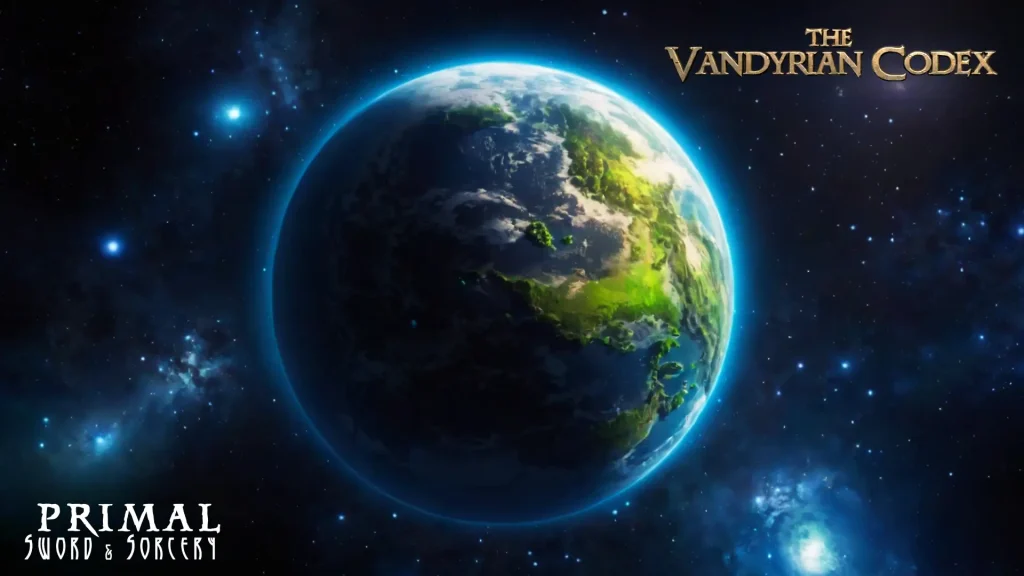
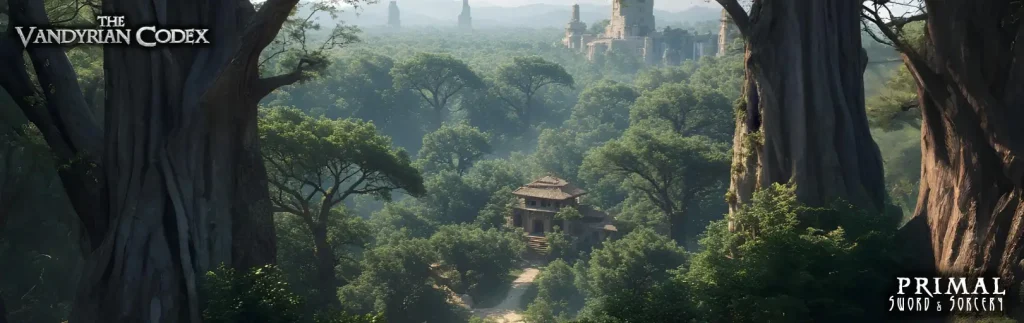
The third planet of the Ran system, Illynar was a garden world. Forests ran unbroken for leagues; river valleys bred life in profusion. Tribal cultures traced their beginnings along the watercourses, and two distinct peoples edged toward the first, uncertain glimmers of civilization. The world was green, vital, and poised for memory.
The Cataclysm:
The Cataclysm struck with finality. In a single, shuddering convulsion, Illynar’s core was shattered. Continents ground themselves to powder. The atmosphere was stripped and scoured, ripped from the planet’s surface and lost to the black. Civilization’s first sparks—names, records, beginnings—were erased at the root.
Aftermath:
There was no aftermath worth the name. The world was not simply broken; it was atomized. Dust finer than silt drifted across vacuum, too insubstantial even to seed the oceans of Vandyrus. Nothing of Illynar’s life, culture, or ambition survived the hour.
Present Day:
Illynar exists only as absence. There is no language left to mourn it, no relic to recover, no trace to unearth. Its history is a loss so complete it defeats memory, a blank in the record. The third world’s only legacy is its erasure—a silence so total that even Vandyrus’s scholars speak of it with unease.