

VI. Oxygen Economy
VI. Oxygen Economy
Refill Modules, Attrition, and Surface Logistics
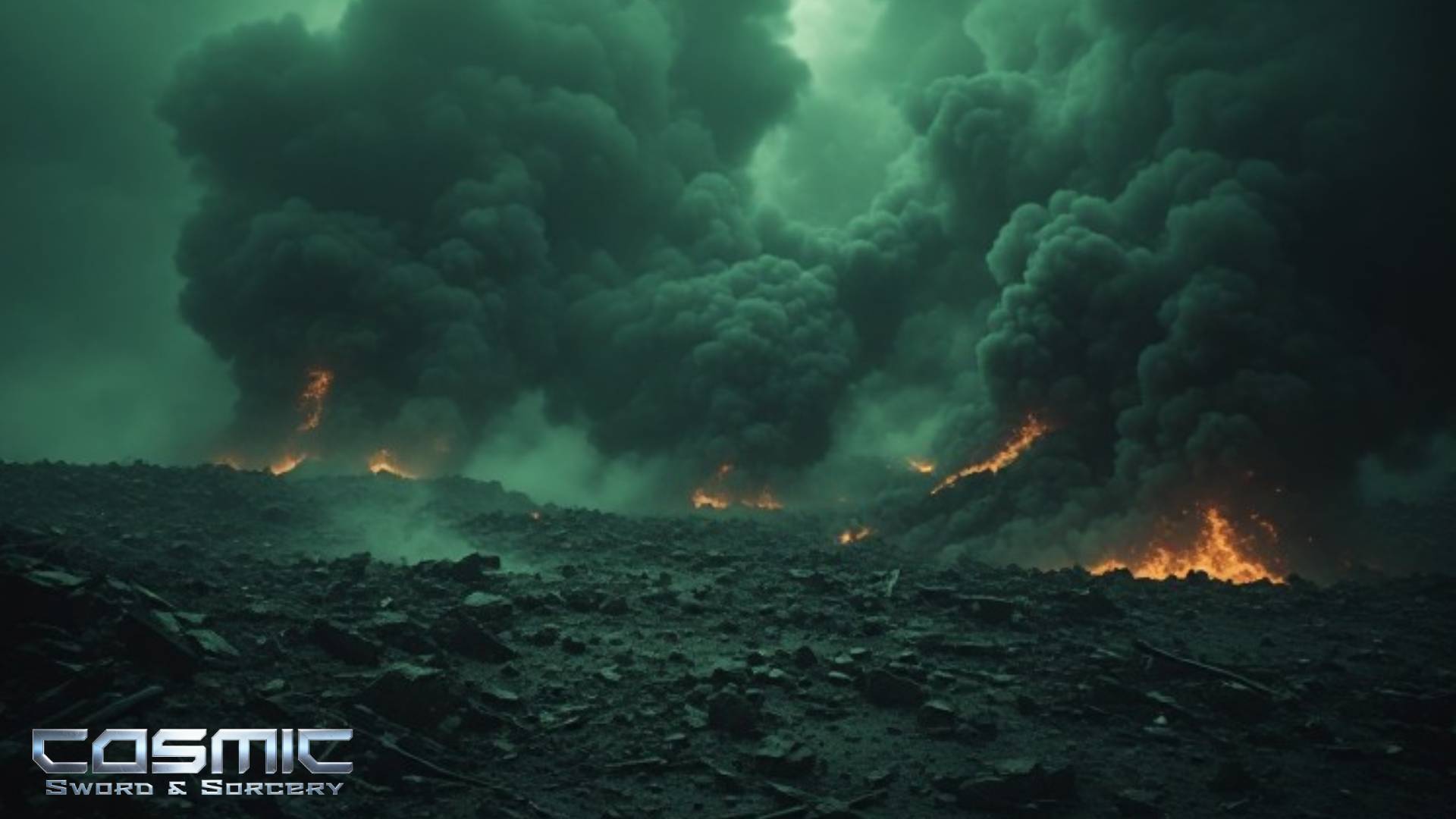
Yalar was never intended to be lived upon in the conventional sense, and so it never was. Its surface was left undeveloped by design, a final and deliberate cruelty disguised as administrative pragmatism. There are no habitable domes spanning its plains, no permanent arcologies rising above its poisoned crust, no atmospheric correction grids softening its hostility. The sky itself is a weapon. Those condemned to its wars arrive not as settlers but as sealed burdens, bound within environmental suits from the moment of deployment until death. The suit is not equipment; it is sentence.
Every combatant on Yalar lives on borrowed breath. The only reprieve from suffocation lies in the scattered liminal refill modules that dot the landscape—modular air stations of inconsistent reliability, some functioning, some drained dry, none clearly marked, none protected by universal law. They are not neutral sanctuaries. They are objectives. Armies clash not over territory in the traditional sense but over oxygen nodes. Skirmishes erupt around refill spires as convicts fight to prolong existence by minutes or hours. The air itself is rationed through violence.
The horror is systemic. Refill modules are drained by all sides, scavenged, sabotaged, hoarded. No authority guarantees their maintenance. No central registry tracks their depletion. They are simply present—enigmatic relics of a half-built infrastructure that was never completed because it was never meant to be humane. War on Yalar is not merely conflict; it is atmospheric attrition. To lose ground is to lose air. To be cut off is to suffocate slowly inside one’s own armor.
This design serves a dual function. It contains the inmate combatant population within a self-regulating ecosystem of desperation, ensuring that large-scale organization is perpetually undermined by resource scarcity. And it weaponizes dependency. The very air that convicts cannot breathe freely becomes a tool in broader theaters. Yalar’s atmospheric technologies—refinement, compression, destabilization—have been adapted into munitions capable of stripping breathable environments elsewhere. The same systems that ration survival on its surface can be inverted to annihilate it on another world.
Thus Yalar stands as both grave and laboratory. Its convicts are bound to their suits not because development proved impossible, but because development would have diminished the cruelty required for its purpose. The surface remains raw, unfinished, lethal. In that unfinished state lies its genius: an eternal battlefield where survival is temporary, where mercy is logistical failure, and where the most basic necessity—air—is converted into the sharpest blade in the imperial arsenal.