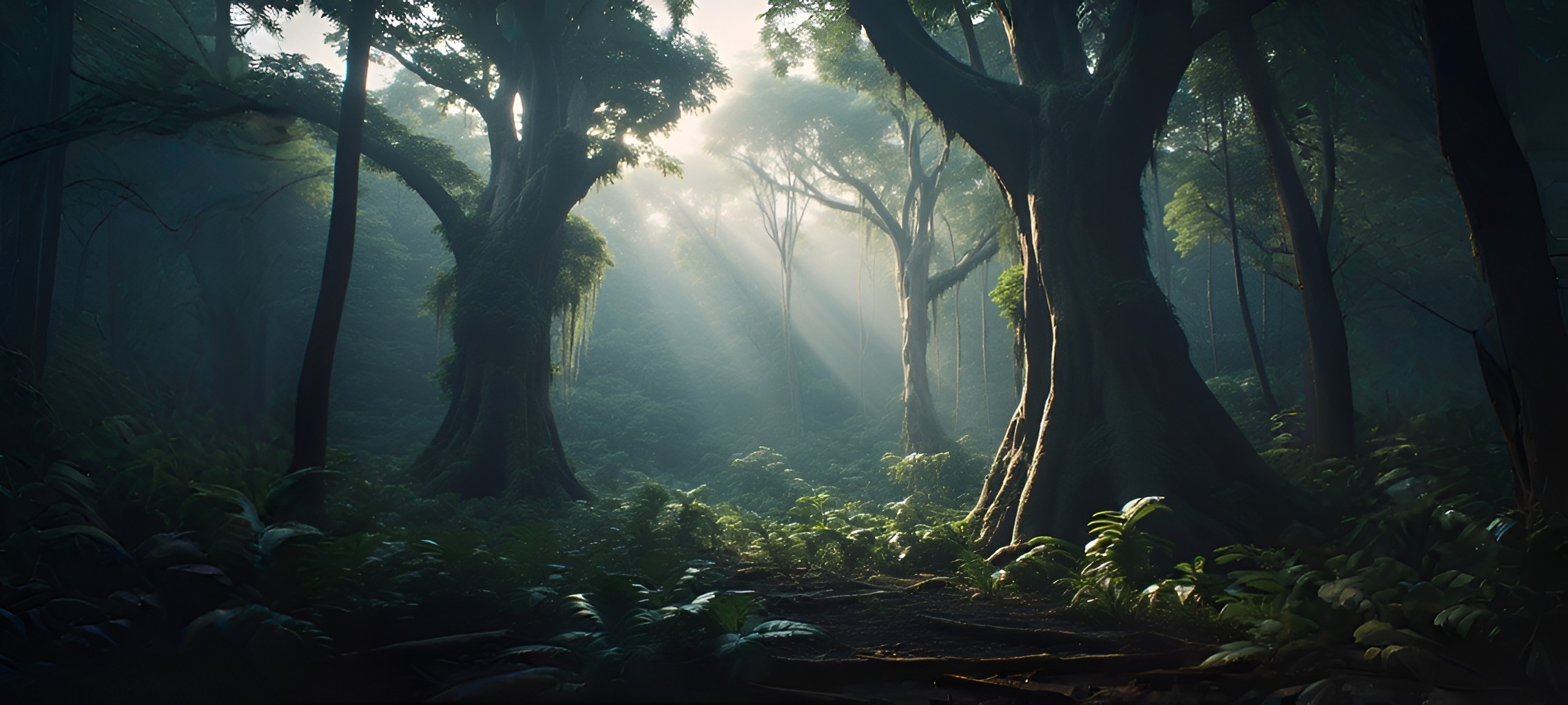



On The Ages of Tyvex
The antiquity of these environments further complicates any simple accounting of Tyvexian life. Across geological ages, changes in continental geography, atmospheric conditions, sea levels, and biological distribution have produced successive periods of expansion, isolation, and evolutionary specialization.
- The extensive mangrove supercolonies and ancient forests preserve particularly complex ecological relationships, while the marshlands support a remarkable concentration of amphibious, avian, microbial, and parasitic organisms.
- The grasslands, by contrast, sustain broad populations of terrestrial megafauna whose ecological relationships differ considerably from those prevailing in the wetter continental regions.
- Above these environments, the highlands and forested foothills provide habitats for specialized aerial predators and other organisms adapted to elevation, variable weather, and rugged terrain.
Throughout the planet, the abundance of life is accompanied by equally substantial biological competition, with predation, disease, environmental pressures, and regional isolation influencing the development and survival of countless species.