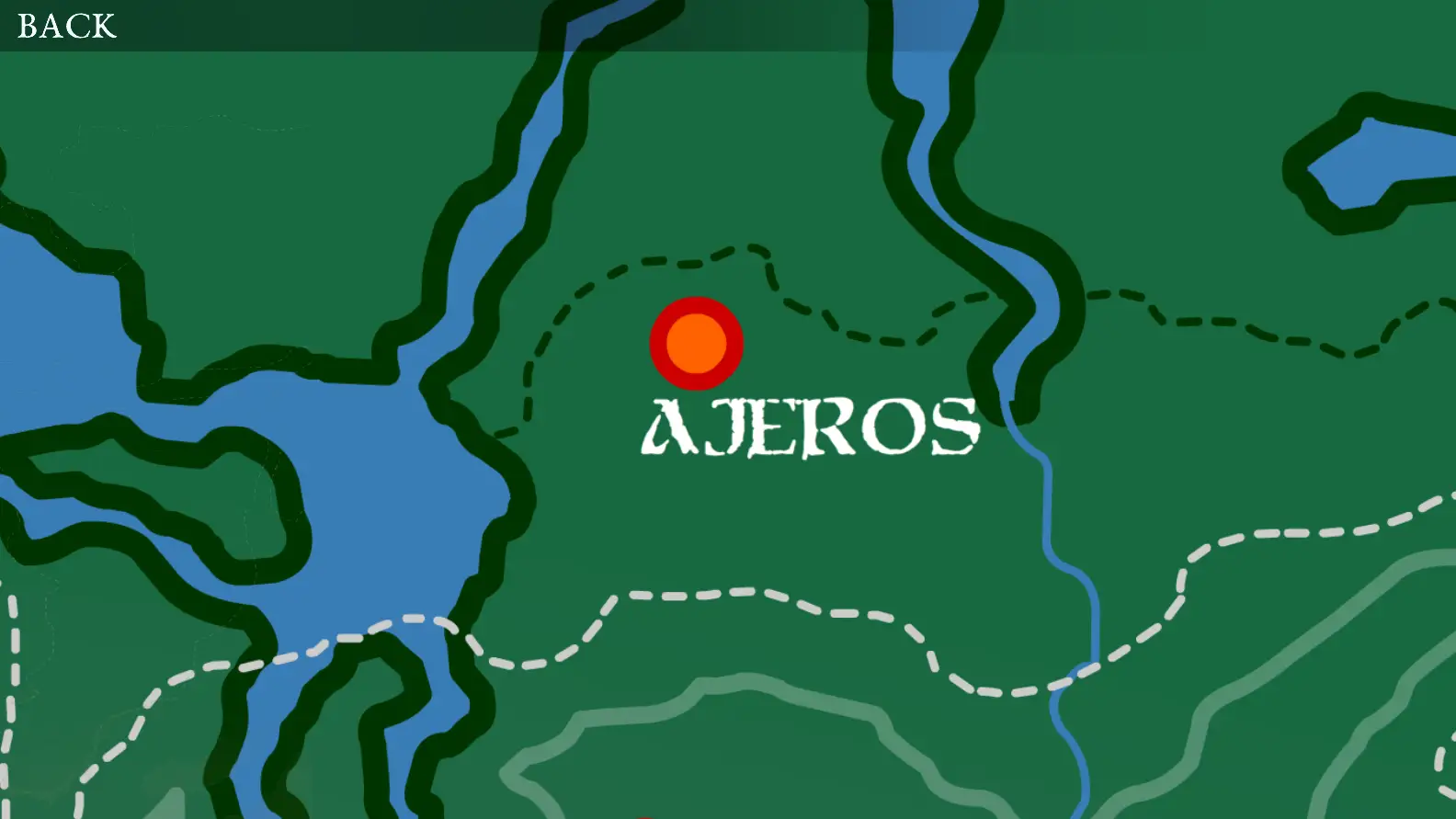
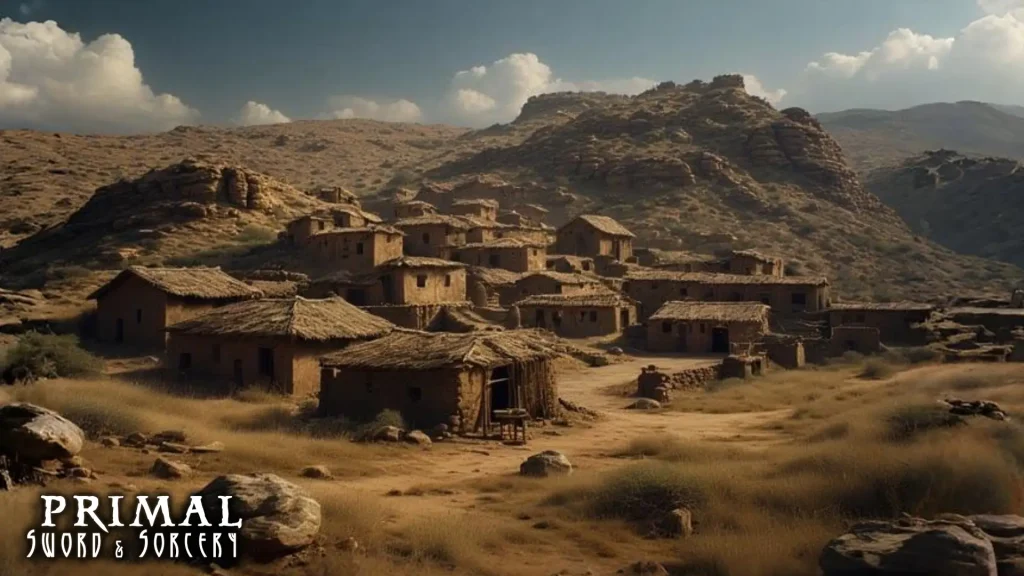
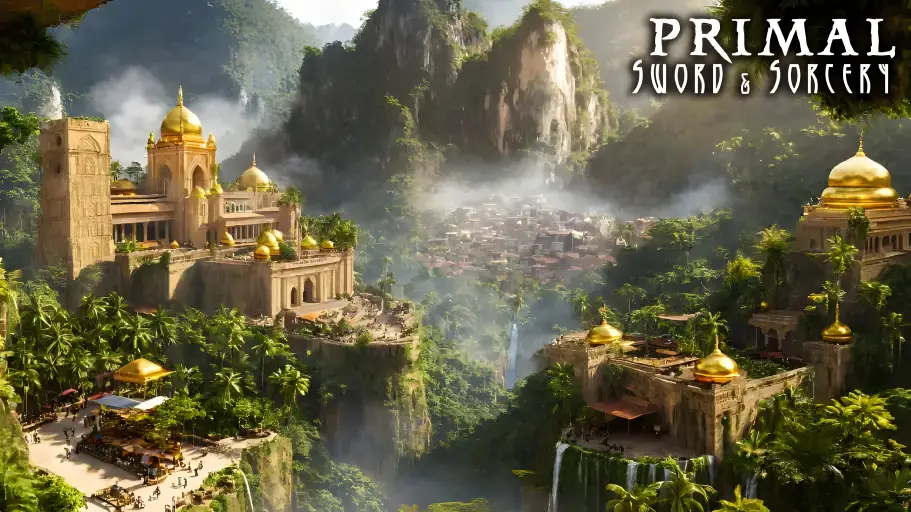
Ajeros exists because it must, not because it should. It is a city pressed into service by geography and history alike, a hard knot of stone and wet iron driven into the southern edge of Yir’s long shadow. Though counted among the holdings of Izhura, it is an outland city in every meaningful sense: distant, inconvenient, and perpetually half-forgotten by those who live in safer latitudes.
The routes that reach it do so grudgingly, slipping through vine-choked corridors and old jungle descents that once flowed south from Yir in elder ages, when the land was wilder and the borders less certain. Even now, those jungles have not fully released their claim. They cling. They creep. They remember.
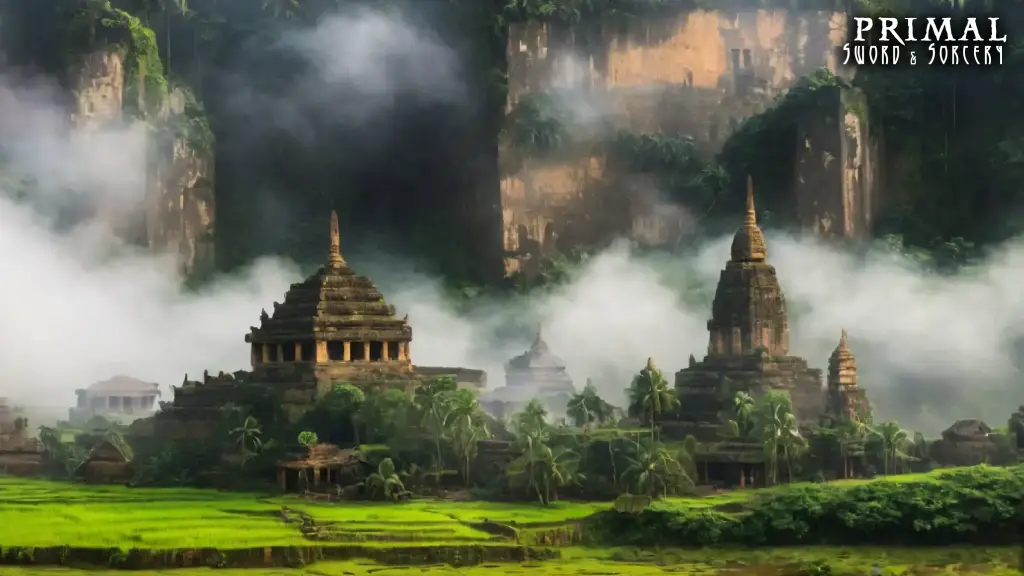
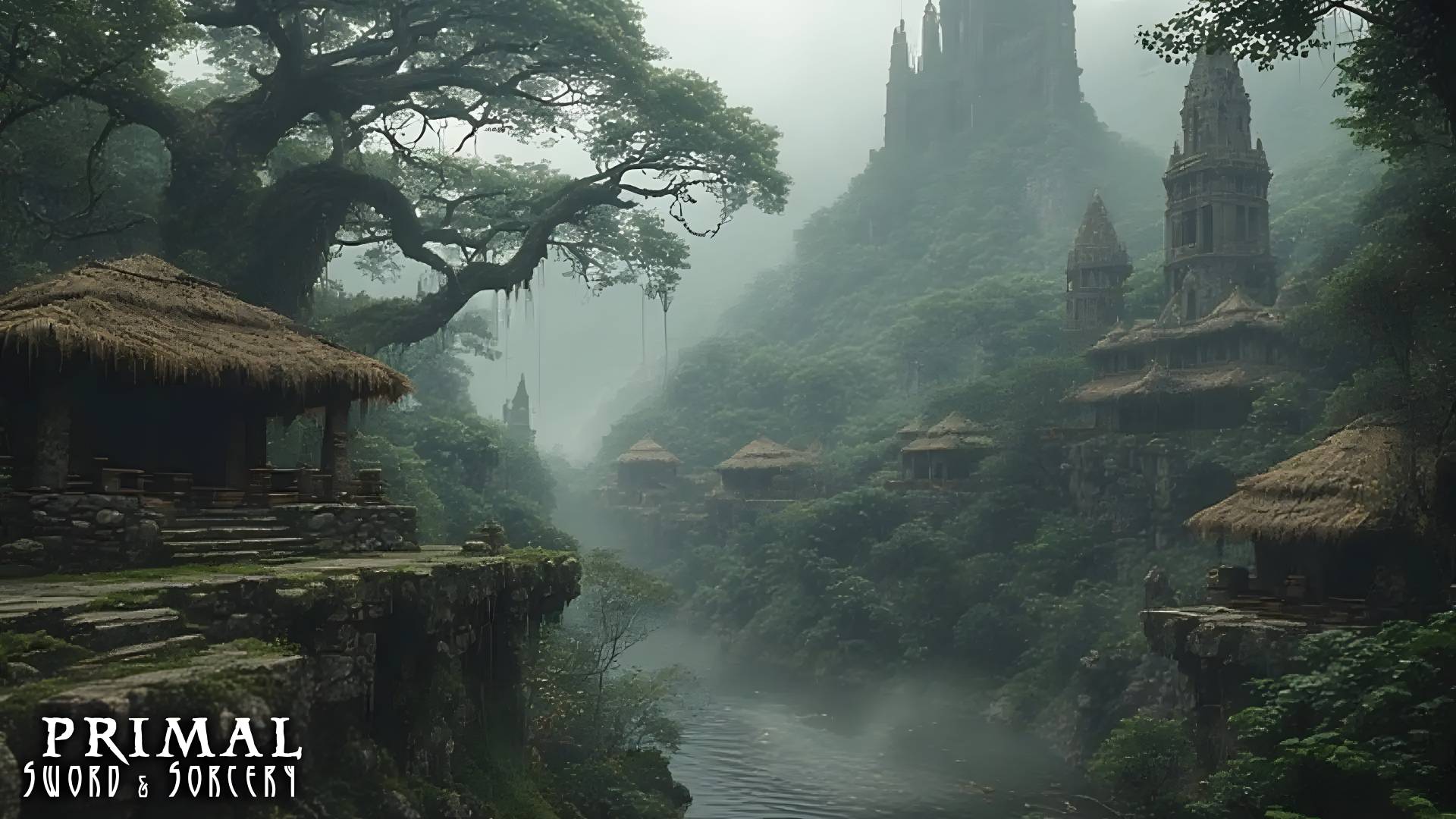
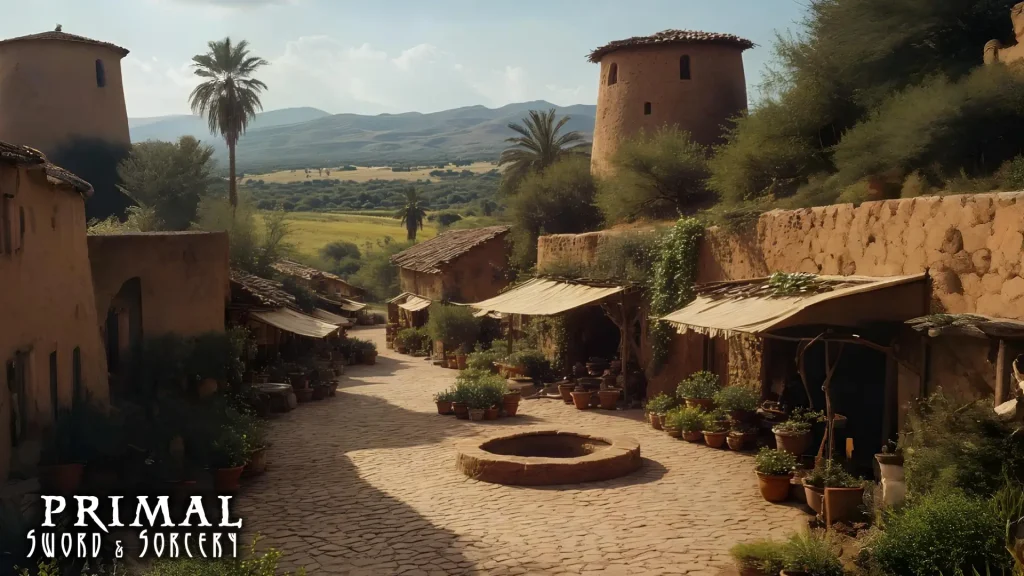
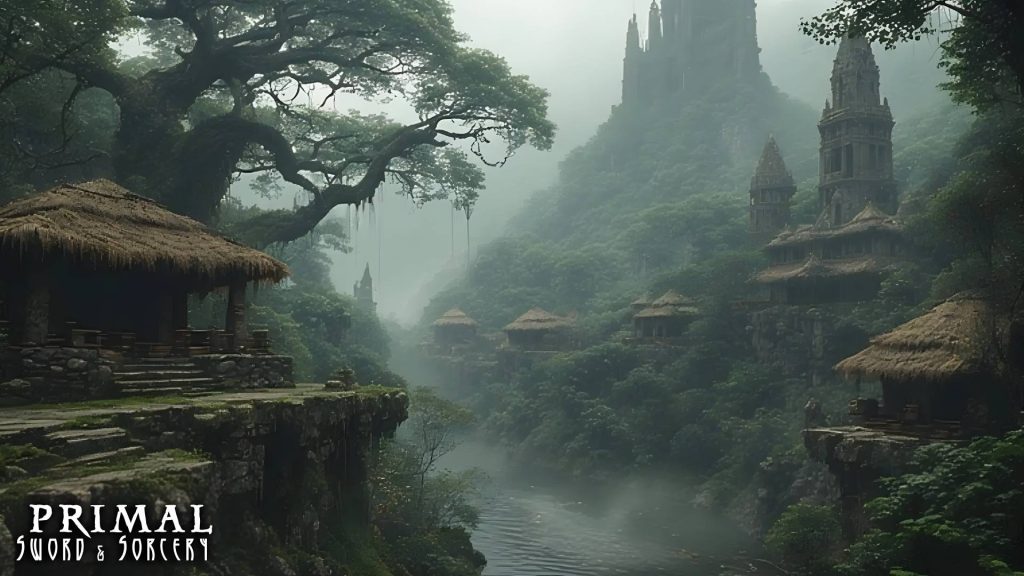
The city itself is civilized only by constant effort. Stone streets exist, but they are never fully dry. Walls stand, but they are webbed with roots and lichen, their mortar forever tested by moisture and slow green pressure. Rain is not an event here; it is a condition. It seeps into roofs, beads along beams, and darkens cloth until even the poorest can tell by touch alone whether a garment has ever truly dried.
Homes are built with this knowledge carved into them. Windows are screened not for comfort but survival, their metal meshes fine enough to bar the bird-sized mosquitos that rise from the low green reaches at dusk, drawn by heat, breath, and blood. To leave a window unguarded is not negligence but folly, and folly does not live long in Ajeros.
Yet for all this, Ajeros is not lawless. Its merchants are Izhuran by custom and reputation, their measures honest, their contracts respected even by those who grumble at the city’s isolation. Trade here is practical rather than ambitious. Goods are moved because they must be, not because fortunes will be made.
The guards are much the same—strong, disciplined, and unromantic about their duty. They do not posture as heroes. They stand watch because the watch must be stood, and because everyone in Ajeros understands what happens when it is not.
For the truth, known to every stonecutter and shopkeeper, is that Ajeros is not merely a city. It is a warning bell. It is the northernmost civilized finger extended toward Yir, and the first knuckle that will be broken if something terrible decides to move south.
The badlands above do not loom merely in distance but in intent, a region whose ferocity eclipses Ajeros not just in violence, but in scale, in logistics, in the simple capacity to endure and deliver ruin. Ajeros knows this. There is no delusion here of matching Yir blow for blow, nor of holding against a true descent. Its purpose is earlier and bleaker: to see first, to bleed first, and to send word while there is still time for others to prepare.
This awareness shapes the city’s character more than any charter or banner. Ajeros does not indulge in grand monuments or idle excess. Beauty exists here, but it is the beauty of persistence—of lantern light reflected on wet stone, of vines cut back each morning only to be cut again the next, of rooftops patched so many times they resemble quilts of iron and tar.
Izhura stands as a battered but enduring wedge of territory carved out of the chaos and competition that defines central Zhuru. Unlike the realms that rise and fall with seasonal tides or the city-states that vanish into mud and memory, Izhura endures, neither the most powerful nor the most desperate, but a constant presence where so many others have flickered out.
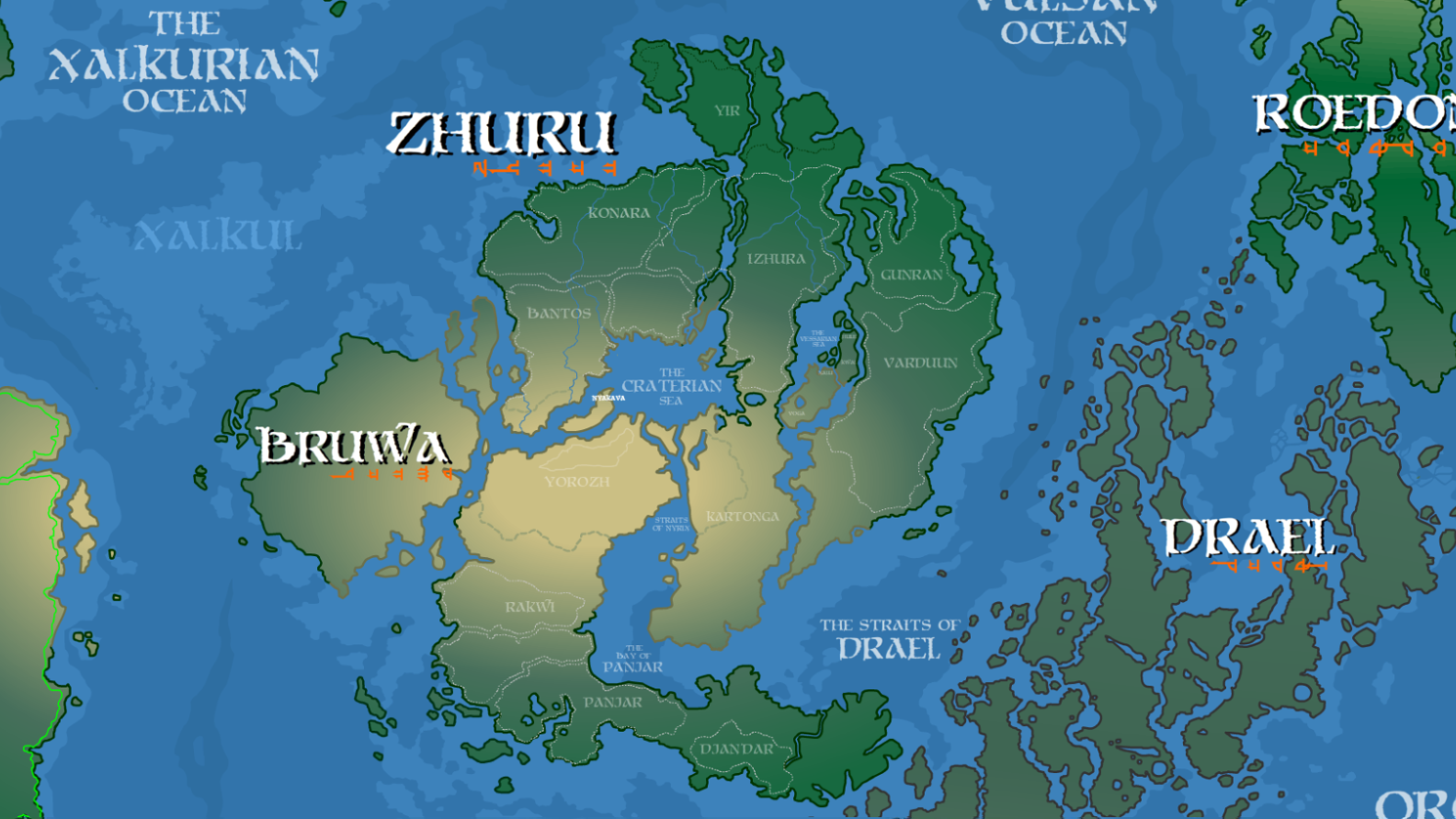
On a map, the realm is a long, crooked lance of grassland and border, reaching north toward the thick, haunted forests of Yir, sloping south until it meets the restless surf of the Craterian Sea.
It is surrounded on all sides by realms that are either richer, wilder, or more dangerous—Yir’s uplands and poison woods to the north, the mires and uncertain loyalties of Gunran to the east, the crowded guild-dominated coast of Elder Ruselon to the south, and the rough dog-lands of Bantos to the west. The horsefolk of Izhura have survived not by outshining their neighbors, but by learning the virtues of patience, adaptation, and, when the time comes, sudden, blinding action.
For outsiders, Izhura often blurs into a single patch of green, a corridor between more exotic realms. But for those who live on its soil, the land is divided into three major territories, each shaped by history, climate, and proximity to other powers: Uyarin, Vessara, and Elleas.
These divisions are not just political—they are environmental, cultural, and psychological, with boundaries that run deeper than any border stone or old decree. The grassland spine that links them is both a blessing and a curse. It binds the realm together, but it also exposes it: armies, caravans, raiders, and rumor all travel the same broad corridors.
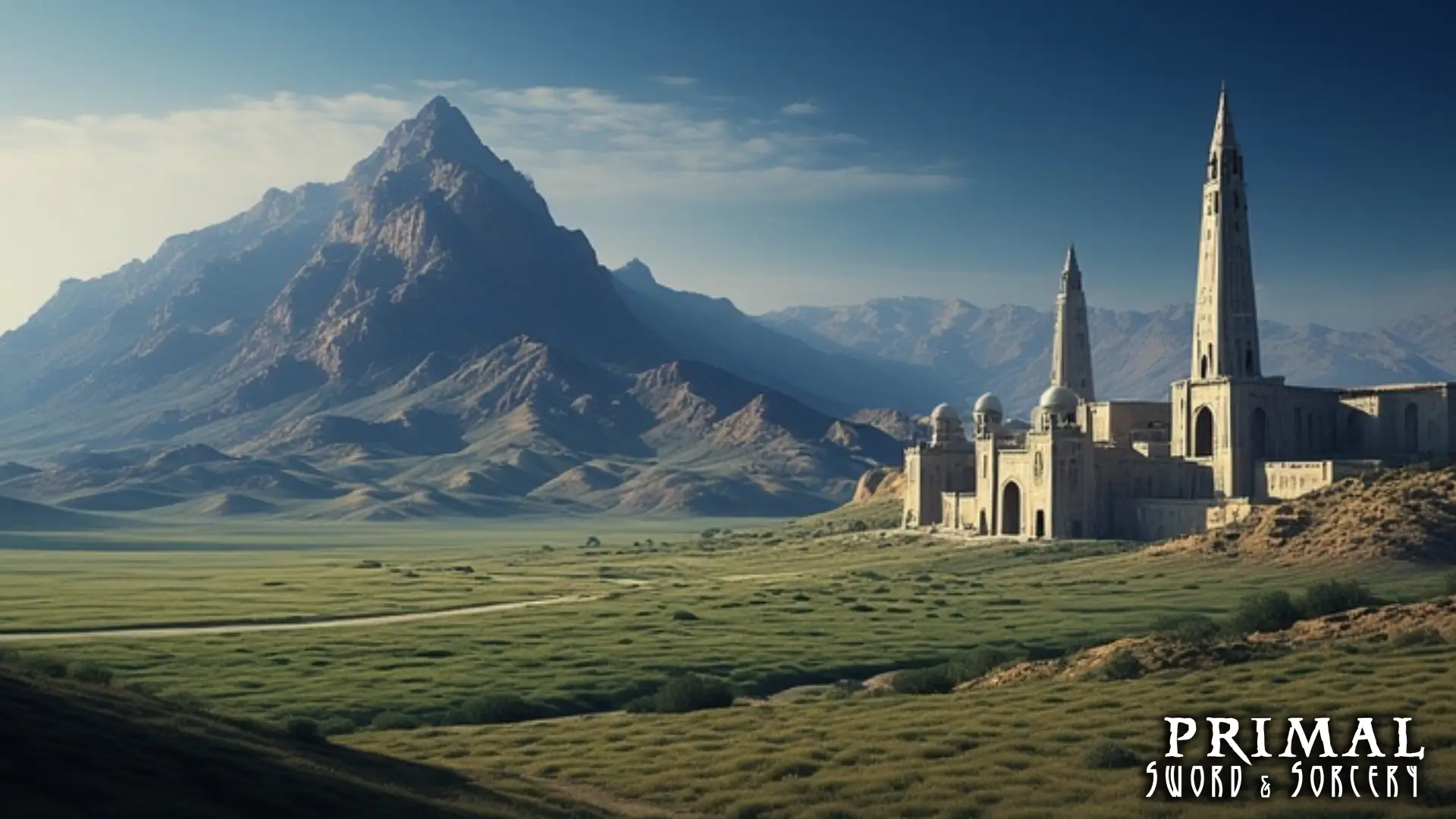
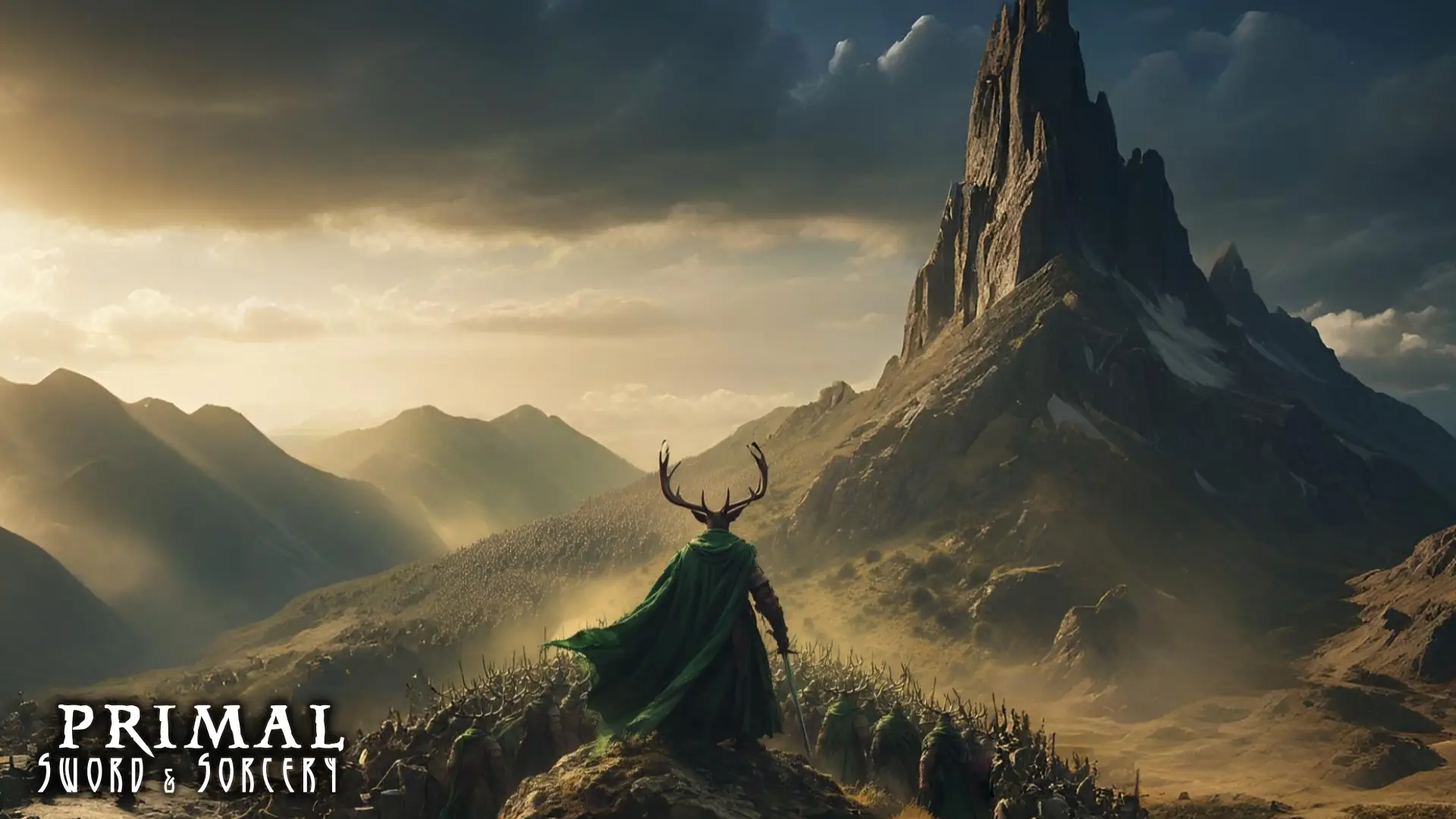
Konara rises as a wall of jagged peaks where the continent fractures, its snow-capped crest a deadly border between the wind-raked north and the grasslands that roll southward toward the deserts.
The mountains are cruel, their passes narrow and uncertain, their storms sudden and merciless. To the North, the air is cold and thin, carrying only the howl of wind and goat horns echoing through the ridges. To the south, the land softens into vast plains, but even here the winds bite, and life bends hard beneath them.
This is the realm of the goat and boar folk, horned and tusked, sure-footed upon the cliffs and relentless upon the steppes. Among them dwell the elder cervine kingdoms, proud antlered dynasts whose lineages are etched as deep as the stone.
Konarans are riders and herders, hunters and raiders, their blood hardened by altitudes where weaker folk would perish. They bow to no throne beyond their own kin-claims, and their isolationist pride makes them scornful of the south.
Trade caravans from decadent Zhuru are eyed with suspicion, tolerated only when salt, iron, or furs are worth the trouble. Of Bantos and its Dogs, the Konarans barely speak, dismissing them as rutting scavengers undeserving of notice.
DANGER: Yir is virtually unexplored & almost completely unmapped in any reliable way. The known “Cities” lie in crumbling vine- haunted ruins that haven’t been reached by anyone sane or returned in generations.
Ghu
Anar
Rakka
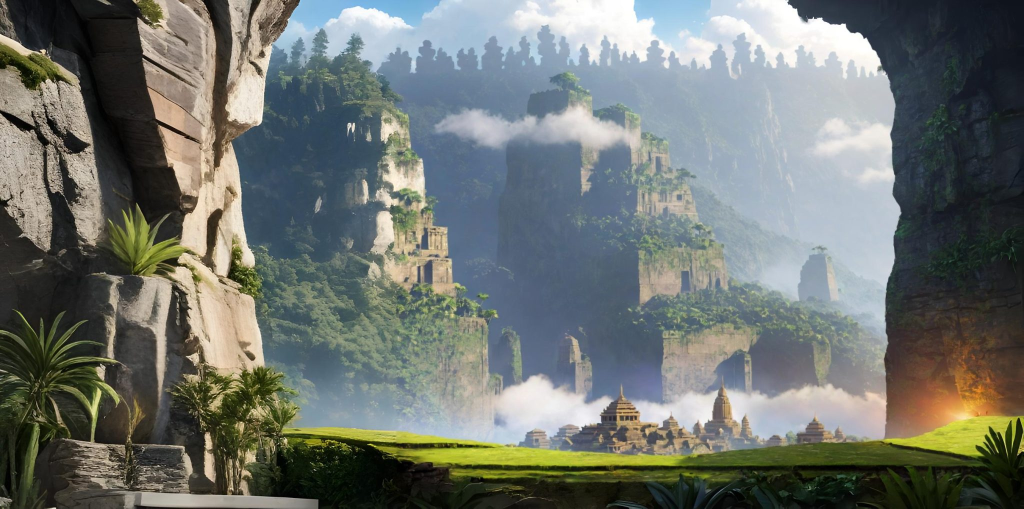
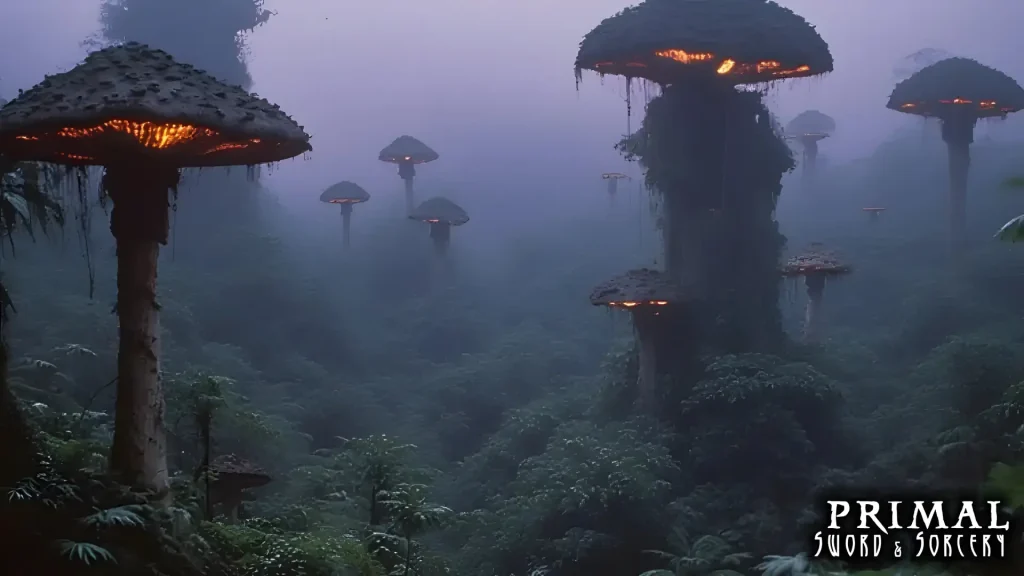
Yir is a kingdom of vapor perched high above the world. Cold rainforests sprawl across shattered uplands where the land itself rises in broken cliffs, thousands of feet above the grasslands below. Mazes of mangroves knot with drowned forests, and black pools yawn like mouths between their roots. Paths vanish overnight, swallowed by shifting waters, and the cliffs themselves bleed waterfalls that vanish into the mists beneath. To descend from Yir is near suicide. The plateau was not meant for escape, only endurance.
The folk of Yir are scattered and sparse. Small mammals dart through the undergrowth, preyed upon by tall, sharp-beaked bird clans who prowl with spear and arrow. Between them stalk the lizard-folk, chameleon-skinned and silent, hunters who thrive in ambush and camouflage. None bend to any empire, and all live uneasily amid ruins far older than themselves.
Everywhere in Yir rise the shattered remains of temples—stone long claimed by moss and rot. Their carvings are worn, their rites forgotten, but still the swampfolk whisper of the beings once worshipped there. The old priests promised change, spoke of transformation as a gift. Yet the stories linger of shapes half-formed, of folk who shed their skins endlessly, never complete, never at peace. In the black pools, the locals say, something still waits.
Conflict festers even in isolation. The Bird–Civit Wars rage, tall hunters clashing against nimble arboreal fighters in ambush and reprisal. In the drowned forests, the Arboreal Kingdoms feud endlessly, their skirmishes as frequent as the storms.
For Yir is a land that breeds no peace; its folk are too busy surviving one another, too busy fearing the return of whatever once ruled here.
Zhuru is not merely a continent but a scar across the center of Vandyrus, a land defined by fracture, memory, and the unending contest between predation and endurance. Its surface, vast and wild, is a collage of grasslands, deserts, shattered cities, tainted rivers, and haunted highlands—the living record of every cataclysm that has scoured the planet since the age before written memory. Here, the myth of civilization is always provisional. Kingdoms rise, bleed, and collapse into dust, each era layering its own ruin over the last.
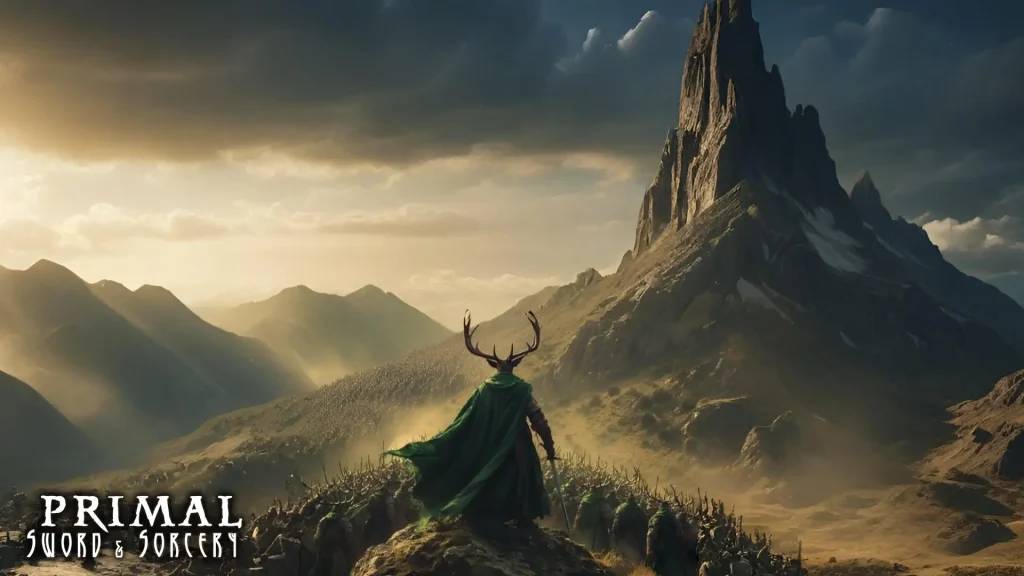
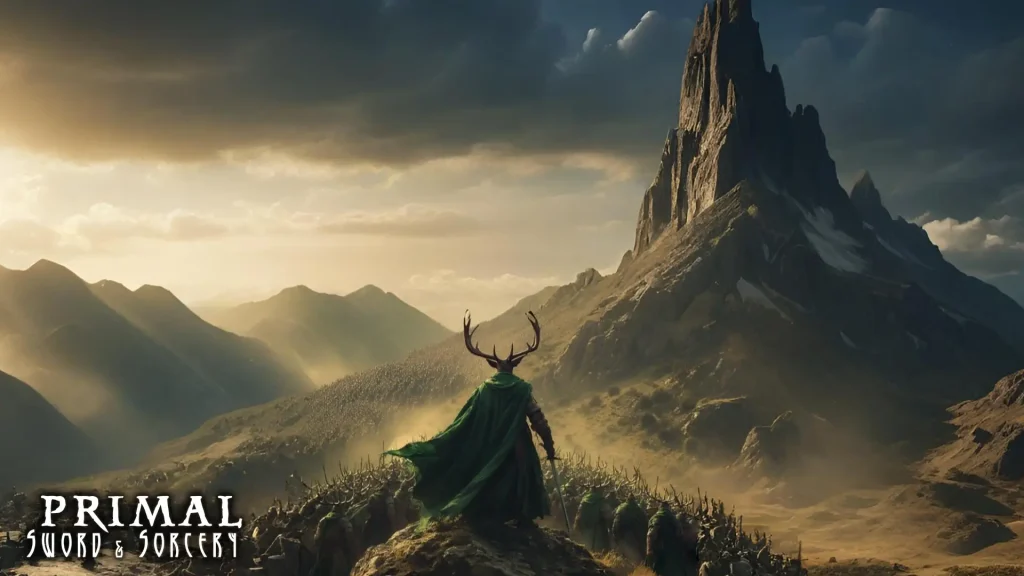
Though Warlike, The Elk Lords of Konara stand against the forces of Bruwa earning them a great deal of respect from much of Zhuru.
The north and east are carved by the territories of Yir, a vast and ancient upland raised by forces long lost to time—mist‑shrouded plateaus and drowned forests perched impossibly high above the plains, haunted by sharp‑beaked bird clans and spirits older than any living tribe.
Konara, a realm of brooding woods and forgotten shrines and Gunran, a prehistoric mire where the land sinks into warm, primordial swamp, birthing traders, raiders, and scavengers hardened by humidity, hunger, and the slow rot of the wetlands.
Bantos is a new nation, Founded merely 250 years ago, it overthrew the Slaver Lords of Old Jantara and established a realm of free dogs in the nation that replaced it.
Izhura sprawls across the wild high plains, ruled by barbarian horsefolk famed for their stamina and pride, their matron‑lords trailing veiled caravans and rumors of orgiastic feasts. In the west, Bantosis a crossroads of riotous celebrations and tangled kin‑lines—a land where rut, barter, and blood feud set the rhythm of the seasons.
At the heart of Zhuru lies the Yorozh Basin, a wind‑flattened expanse once dreamt of as the cradle of empire, now reduced to a graveyard of grass, bone, and ambition. Here, the sun‑blasted remains of Kartongasprawl—a land of ruins and skeletal forests watched over by wolf packs and scavenger‑birds that outlive every banner.
To the south and west, the Rakwi hills rise: deep valleys harboring clans who trust neither outsider nor kin for longer than a season, and where the old oaths are traded and broken by dusk.
Across these contested landscapes, the cervine kingdoms maintain their proud, antlered dynasties—holding their own councils and rites, colder in temperament than their equine rivals but no less driven by the lures of trade, war, and desire.
Beyond the great plain, elk and red‑deer lords brood along the forest fringes, dreaming of a day when their lineage will eclipse the horsefolk, but for now, power is ceded only as far as survival demands.
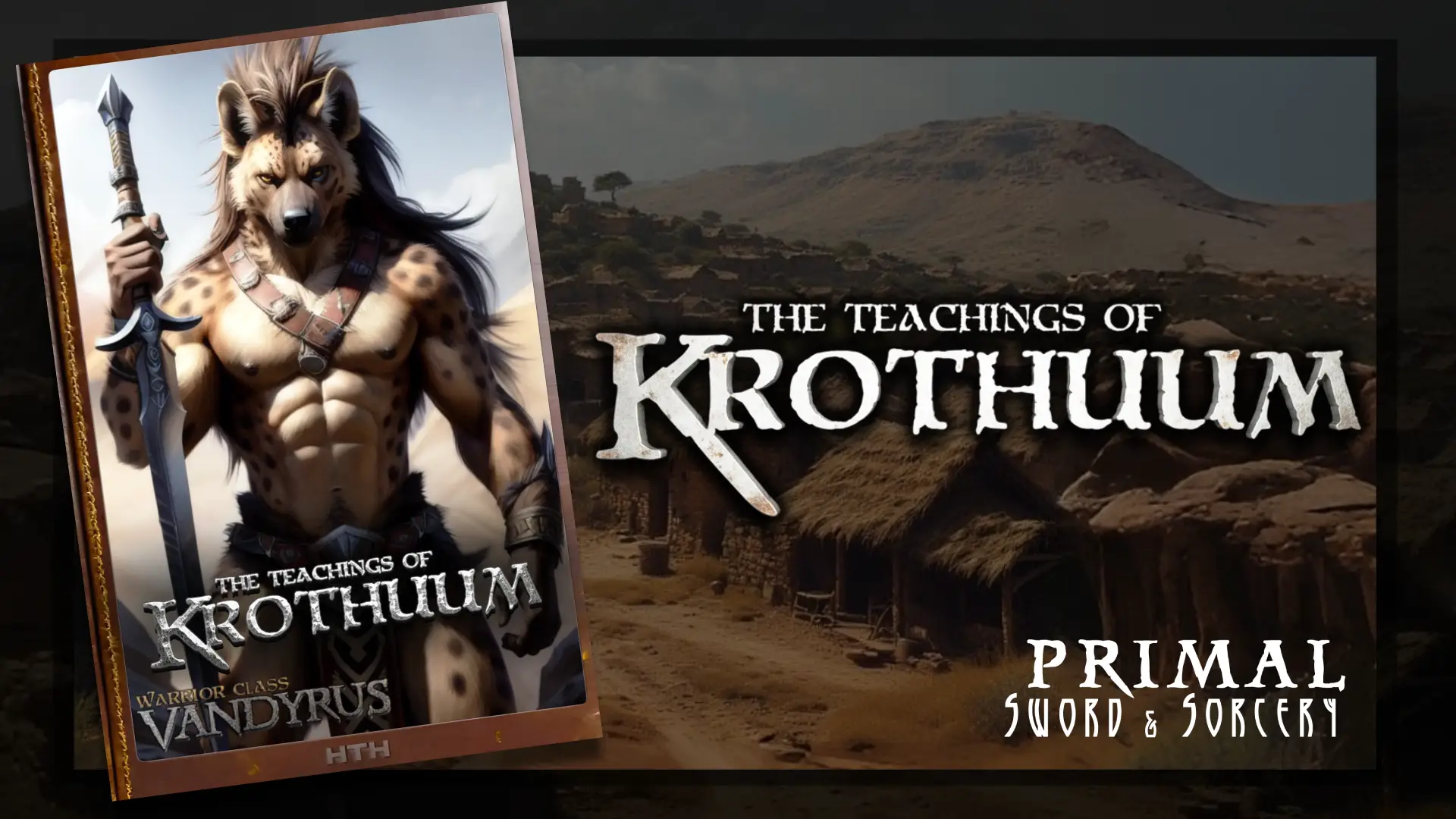
The vile reaches of the Hyenalands. You will never find a more feral hive of scum and villainy. In Varduun, you must be cautious.
To the east, Varduunmarks the dry‑rotted borderlands—parched grass and cracked land, haunted by hyena clans whose laughter is as much threat as warning. Old strongholds crumble in the sun, and every traveler is measured first by the weight of their purse, then by their nerve. This is not a land for the soft or the lucky.
It is a proving ground for the desperate and the ruthless, where every promise lasts only until the next betrayal, and even the wind carries the rumor of violence.
Beyond the last fever‑swamp and the ragged edges of the southern grasslands rise the ivory kingdoms of the elephants—a living wall north of Panjar, the infamous sea‑delta. Their caravans bring ivory, gold, and wisdom to the southern courts, and their wrath—when roused—is slow, absolute, and catastrophic.
Panjar itself is a collection of bloodthirsty, disciplined sea‑kingdoms whose mastery of naval warfare and piracy holds the rest of Zhuru hostage. Here, violence is calculated, never random; raids are planned, vengeance is codified, and the line between commerce and war is thinner than a razor. Panjari fleets sweep the Panjarian Ocean and straits, controlling trade, collecting tribute, and launching campaigns that keep the continent’s softer interiors in check. Their discipline is legendary; their cruelty, a point of pride.
And to the far south, across the restless water, the jungles and hidden strongholds of Djandar glimmer—sometimes as an ally, more often as a lurking threat, their power never spoken of lightly by any who traffic along the coast.
Each of these regions—Yir, Konara, Bantos, Izhura, Gunran, Varduun, Yorozh, Kartonga, Rakwi, Panjar, and Djandar—is a nation unto itself: at war, in alliance, or in ancient feud with its neighbors, yet all bound by the great wound that is Zhuru.
Beneath all this, Zhuru is a graveyard of ambitions. Every tribe, every city, every would‑be dynasty carries the scars of the Cataclysm—craters still smoking, ruins that refuse to be swallowed by grass or mire, legends of lost empires whispered only in the low tongue of slaves and exiles.
War is not a chapter here but a drumbeat; rut and conquest, feast and betrayal, all are recurring acts in a theater that never ends. Even the most beautiful rites—the fertility feasts, the public couplings, the displays of power—are always set against a backdrop of hunger, rivalry, and old wounds reopened.
To survive in Zhuru is to accept that every strength is provisional, every alliance temporary, every lover a potential traitor. The land gives nothing for free. But for those who endure—wolf mercenary, horse matron, hyena usurper, lion prince—there is no greater prize than to outlast, to outwit, to claim one more season of power in the oldest, greatest contest that Vandyrus has ever known.
Krothuum was a scar of stone and dust on the southern grasslands of Zhuru. Its walls were low, cracked things, more a mark of pride than a bulwark, and the gates gaped like broken teeth. Smoke clung above the city, not the holy incense of temples but the choking reek of coal-pits and forges, of fat burning on anvils, of oil dumped into the gutters.
The city lived on steel and mockery. Every forge was a rival, every hammer-strike a jeer against the smith across the alley. Hyenas laughed at each other across the streets, the cackling rolling through Krothuum like thunder. It was a city that thrived on humiliation — and where shame was remembered longer than blood spilled.
Into this dust-choked maze strode a she-wolf of the northern tribes, black of pelt, broad of shoulder, and proud of stride. Her amber eyes burned beneath the sweat-clumped locks of her mane, and her arms — thick with the sinew of war — bore scars that spoke of raids across mountains and the razing of caravans. She was not soft like the courtesans of Zarnack, nor sly like the thieves of Kansubar. She was barbarian stock: raw, bold, made for the clash of steel and the bite of blood.
Yet for all her strength, she had come to Krothuum weakened — stripped not of her coin, but of her sword.
It had been promised ready at dawn. She had paid for it with gold and a raided caravan’s worth of loot. A northern blade, reforged in the hyena-smith’s coals, tempered for the blood-feast she intended to unleash when she crossed the straits toward Drael. But dawn had passed, then noon, then dusk, and now the day waned while her temper flared.
She shoved her way through the market, scattering fox-hawkers and goat-wives alike, until she came to the forge of Rathgur the Smith — a thick-shouldered hyena with soot-blackened fur, known for his laugh and his treachery in equal measure. His rivals claimed he spent more time mocking than hammering, yet he never lacked for customers. For in Krothuum, the louder a smith’s laughter, the more certain folk seemed that his steel would not bend.
The wolf planted her hands on his counter, claws clattering against the iron-rimmed wood. “Where is my blade?” she snarled. “You swore it would be ready. You swore it with oath and coin both.”
Rathgur did not look up at once. He worked the bellows, smoke curling around his muzzle. Only when the forge flared red did he glance at her — a slow, toothy grin spreading across his muzzle. “Not here,” he said. His voice was rough, each word dripping with the slothful amusement of one who knows he holds power. “Perhaps you misplaced it.”
“Misplaced?” Her voice was a growl, low and trembling. “You think me a pup, hyena? You think I forget where I lay my steel?”
He shrugged, the grin never leaving his muzzle. “Perhaps you forget many things. Where you leave your weapons. Where you leave your coin. Where you leave your legs, after drink and whoring.”
The forge-hands laughed. A cruel, barking chorus. The wolf’s claws dug into the wood, carving furrows. Pride swelled in her chest, mingling with desperation. Her sword was not just iron — it was her name, her survival, her right to stride as a warrior. Without it, she was no more than a lost bitch wandering a city of jackals.
And in that desperate moment, her tongue betrayed her.
“Who,” she spat, her voice sharp enough to cut the smoke, “do I have to rutt with to find my sword!?”
The words hung in the air like a curse. The forge fell silent, save for the crackle of coals. Hyena ears pricked. Jaws spread in grins. Then the laughter came — harsh, howling, rolling through the smithy until it seemed the very walls shook with it.
Rathgur’s eyes gleamed. “Ah,” he said, drawing the word like a blade across her pride. “So that is the bargain you offer.”
The wolf’s face burned beneath her dark fur. She opened her mouth to curse him, to call him heathen, thief, and crook — but the laughter was already binding her, wrapping her in mockery. In Krothuum, a word spoken in desperation was as binding as an oath.
And Rathgur, hyena that he was, would not let it pass.
The headboard rattled like a war drum, a cracked plank nailed crooked against the stone wall of Rathgur’s forge-room. Every thrust set it hammering, every laugh of his made it echo louder. The noise carried through the thin walls into the market beyond, so that all of Krothuum’s dust-choked streets could hear the she-wolf’s shame.
Her claws dug splinters into the board, her amber eyes squeezed shut as sweat matted the fur at her temples. She cursed through clenched teeth, the words breaking apart into gasps and sharp yelps as the hyena’s bulk drove against her. His cock was thick, cruel, stretching her in ways that were no pleasure, only pain. He knew it, and he reveled in it.
“Bitch,” Rathgur snarled, punctuating the word with a slap across her haunch, the crack of palm to fur echoing like a blacksmith’s strike. “You thought you’d strut in here, north-blood, tossing your pride like coin. You thought you could mock me, eh? Tell me where my steel lies? Ha!”
His laughter rolled like thunder. His paw closed on her tail, yanking it back as he drove himself deeper, forcing a cry from her throat that no curse could hide. She trembled with fury, with helplessness, with the gnawing ache that each thrust drove into her belly.
“Curse you!” she spat, though it came out broken, half a whimper, half a growl. “Curse you, hyena cur! Heathen crook—”
Her voice snapped into a squeal as his thumb shoved rudely into her tailhole, pressing past clenched muscle. Her whole body jolted, shame burning hotter than the coals outside. He barked laughter, the cruel, barking kind that only hyenas could muster, and it shook the rafters.
Outside, the forge-hands and passersby heard everything. The rhythm of the rattling board, the hyena’s laughter, the wolf’s strangled cries. Krothuum thrived on spectacle, and today’s spectacle was the barbarian bitch who had demanded her sword. Already wagers were whispered, jokes flung back and forth — who would finish first, her pride or his seed.
She wanted to scream, to thrash, to claw his throat open. Yet the grip on her tail, the weight of his body, the cruel shove of his cock left her pinned and trembling. Her bosom pressed against the splintered board, her thighs shook with the strain of holding herself up. She tried to spit venom, to call him filth, to swear vengeance — but every word was broken by gasps and yelps.
And worst of all, she could feel her pride crumbling with each thrust. Not arousal — never that — but the bitter, soul-deep regret of a warrior undone. She thought of her sword, her steel, her lifeblood. Without it she was nothing in this city. Without it she could not walk the caravan roads, could not raid, could not fight. Without it she had no power.
And so she endured. Teeth grit, eyes burning, heart pounding not with lust but with rage and shame. She endured, even as his thumb worked cruelly in her tailhole, even as his palm cracked against her flank again and again, even as he laughed like a jackal feasting.
“North-blood bitch,” he jeered, his breath hot against her ear. “Regretting your adventures now, eh? Regretting your big mouth? You’ll think twice before you wag your tongue in Krothuum again.”
His thrusts grew harder, faster, each one shaking the board, each one driving her claws deeper into splinters. Her tail jerked in his grip, her body jolted against his weight. She tried to curse him one last time, but it broke into a strangled yelp as he shoved himself deep and spilled into her, the hot flood of seed sealing her shame.
He laughed again, louder than ever, the sound rolling out into the street so all could hear. He slapped her haunch once more, as if to mark her, then pulled free. She collapsed against the rattling board, chest heaving, bosom slick with sweat, fury and shame burning her amber eyes.
And still he laughed.
“On your feet, bitch,” Rathgur said, buckling his belt as if nothing had happened. “I’ll show you your precious sword.”
Her breath hissed through her teeth, her pride torn raw. Yet she dragged herself up, tail low, fury trembling in every limb. She needed her sword. She needed it more than she needed her pride.
And so she followed him, half-dressed, into the daylight of Krothuum, where the crowd was already gathering, already laughing, already hungry for the next stroke of her humiliation.
The forge-door creaked wide, and daylight cut across the soot and smoke. The she-wolf staggered into the street behind Rathgur, her mane damp with sweat, her chest heaving. Her fur clung to her body where his seed still dripped, her tail limp, her pride raw. She had not bothered to dress, only clutched her loin-wrap against her hips as if to guard what little modesty she had left.
But modesty was nothing in Krothuum. The laughter had already spread.
Hyenas lined the alleys, forge-hands leaned from doorways, merchants paused mid-bargain to jeer. Even the mongrels and half-breeds of the market were grinning, for nothing in Krothuum drew a crowd faster than shame. They had heard the board rattle, the wolf squeal, the hyena laugh — and now they saw the proof stumble into the dust.
“Show me,” she hissed, dragging Rathgur by the arm. Her claws dug into his soot-stained hide. “Show me my blade, you bastard! Now!”
The hyena only grinned wider, throwing a look to the crowd. His laughter was louder than the forge-bellows. “Aye, I’ll show you. But perhaps you’ll wish I hadn’t.”
He turned, slow as a priest delivering judgment, and lifted a paw to point across the street.
There, standing smug in the doorway of his own smithy, was his rival — a thick-armed hyena of equal girth, holding a longsword aloft in one hand. The wolf’s longsword.
“There you are, wench!” the rival bellowed, his voice carrying over the dust and din. “Your sword’s been ready for hours! And here you are — fucking around like a common whore while I waited!”
The crowd roared. Hyenas doubled over, their laughter sharp as knives. A pair of foxes howled and slapped each other’s backs. Even the slaves hauling coal grinned as they trudged past.
The wolf’s face burned hot beneath her fur. She wanted to scream, to deny, to kill. Instead, she turned on Rathgur and struck him hard across the back with the flat of her paw. The blow cracked like a whip, but he only threw his head back and howled with laughter.
Her rage boiled over. She charged across the street, snatched her sword from the rival’s paw, and lifted it high. Its weight steadied her, its steel cooled her trembling. At last she felt whole again — at last she felt like herself.
She spun back, amber eyes blazing, and stormed toward Rathgur’s forge with murder written in every stride. The crowd parted, eager to see blood, eager to see the story end in violence. She raised her blade, teeth bared, ready to carve his head from his shoulders—
—when the heavy door slammed in her face.
The clang of iron bolts drove home her defeat. Behind the shuttered timbers came Rathgur’s laughter, louder than ever, echoing through the alleys like a curse.
The wolf froze, sword in hand, fury quaking in her chest. The crowd laughed on. Some mocked her with barks, others with obscene gestures. None offered pity.
For this was Krothuum, dustiest of Varduun’s cities. Here, humiliation was currency, shame was spectacle, and the tale of the black she-wolf who rutted away her pride would be told in taverns from Gorzanth’s barracks to Zarnack’s brothels.
She clenched her sword until her knuckles ached, then turned away, vowing vengeance. But vengeance is long in coming, and laughter travels fast.