

Category: The Vandyrian Codex

  • The Cosmology of the Ran System

    The Cosmology of the Ran System

    The Ran System:

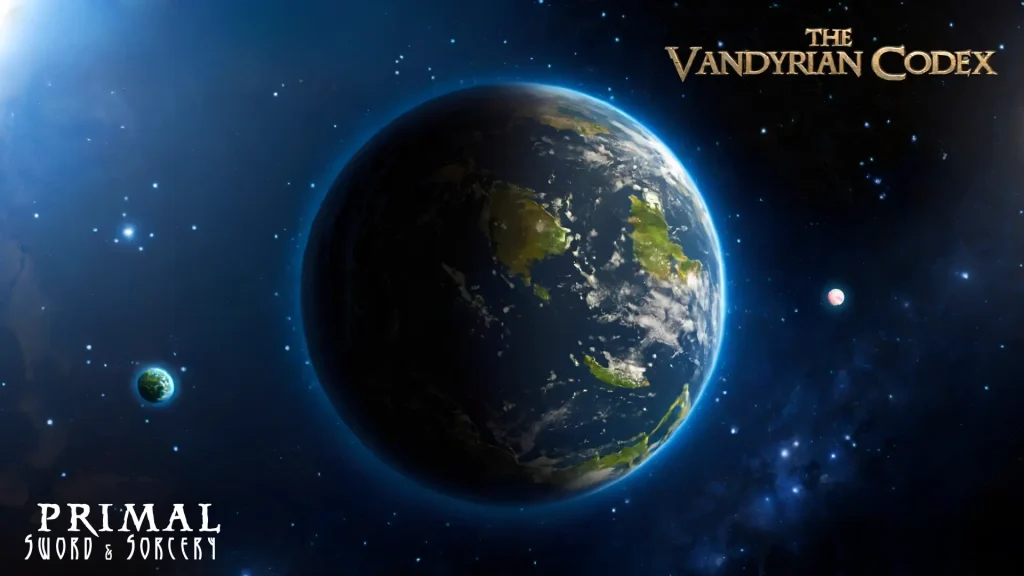
    Before the coming of the Cataclysmic Object—called Doom by the survivors—Ran presided over a family of worlds in rough alignment.

    The system boasted planets as varied as the ambitions of their folk: worlds of storm and chemical sea, of verdant forest and rising empires, of savage law and decadent peace. Some bore moons, others rings, some nothing at all but the weight of their own history.

    Before the age of doom, Ran’s children moved in stately order, each world bearing its own silent ambitions.

    Yalar

    Before the Cataclysm:

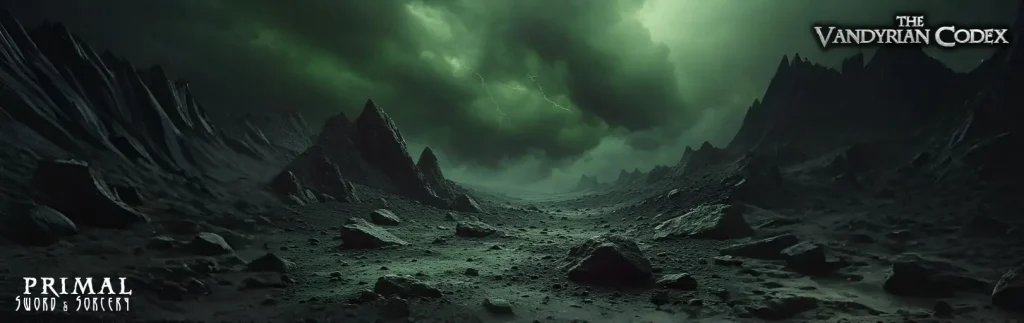
    The first planet of the Ran system was nothing more than a primordial sphere, wrapped in a choking viridian atmosphere—a world locked in chemical tumult, eternally hostile to biology. Nothing seeded, nothing stirred; the surface swam with toxic clouds and silence.

    The Cataclysm:

    When Doom arrived, it stripped Yalar of its shroud, peeling away atmosphere and memory in a single, wordless moment. What remained was black stone and vitrified quartz, the surface flash-melted and barren, history erased in an instant.

    Present Day:

    Yalar is not dead because it never truly lived. There is no record of seed or animal, no fossil or artifact, only heat fractures and the silent testimony of scorched glass beneath a star that now burns on nothing.


    Tyvex
    Before the Cataclysm:

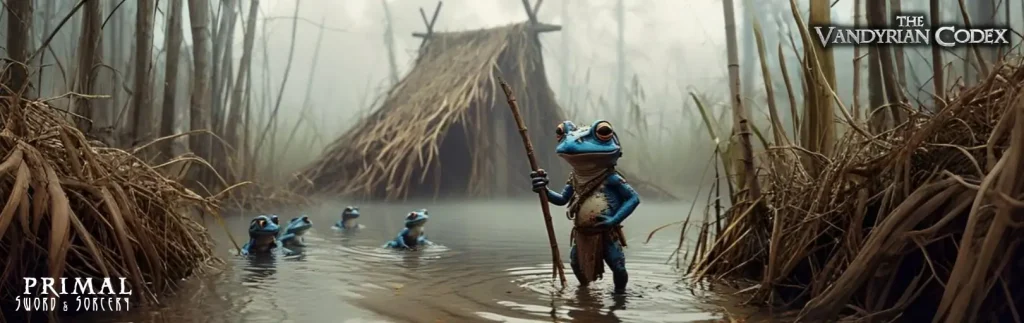
    The second planet of the Ran system rose out of ancient swamps. In its earliest age, the lowlands seethed with amphibian life, forms poised at the brink of transformation—half-dreaming of legs, lungs, and dominion beyond the mire. The world’s hunger was primordial, its promise uncertain, its waters thick with unspent potential.

    The Cataclysm:

    Doom’s passing was both verdict and sentence. In an instant, Tyvex was broken—its teeming lowlands and ancient hunger seized by apocalyptic violence, the planet’s future smothered before it could emerge.
    Aftermath:

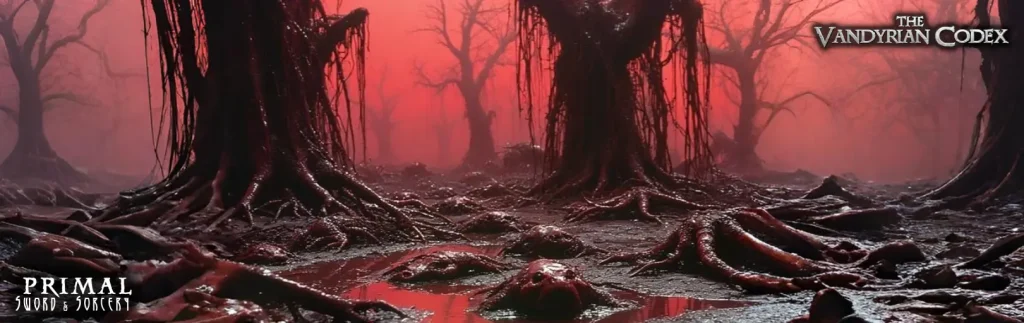
    Radiation twisted the swamps into a catalogue of mutations. Creatures dissolved into the land itself; flesh and terrain intermingled, life that should have died stubbornly refusing extinction. Storms raged without end. The sky became a vault of poison, each cloud seeded with the memory of catastrophe.

    Present Day:

    Tyvex persists, but only as an abomination. The planet’s biology recoils from every memory of order. Nothing here is stable—nothing welcomes classification. What lives, does so in mockery of life: refusing extinction, refusing definition, the legacy of a world unable to die clean.


    Illynar
    Before the Cataclysm:

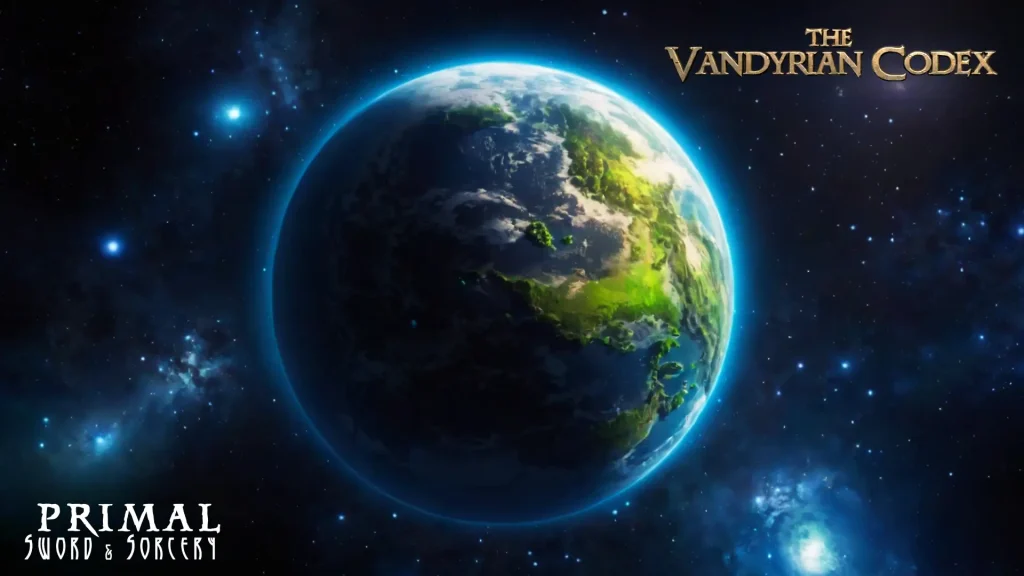
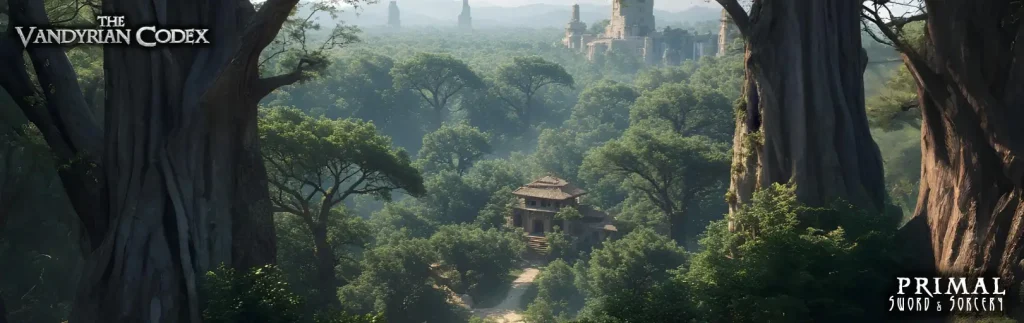
    The third planet of the Ran system, Illynar was a garden world. Forests ran unbroken for leagues; river valleys bred life in profusion. Tribal cultures traced their beginnings along the watercourses, and two distinct peoples edged toward the first, uncertain glimmers of civilization. The world was green, vital, and poised for memory.

    The Cataclysm:

    The Cataclysm struck with finality. In a single, shuddering convulsion, Illynar’s core was shattered. Continents ground themselves to powder. The atmosphere was stripped and scoured, ripped from the planet’s surface and lost to the black. Civilization’s first sparks—names, records, beginnings—were erased at the root.

    Aftermath:

    There was no aftermath worth the name. The world was not simply broken; it was atomized. Dust finer than silt drifted across vacuum, too insubstantial even to seed the oceans of Vandyrus. Nothing of Illynar’s life, culture, or ambition survived the hour.

    Present Day:

    Illynar exists only as absence. There is no language left to mourn it, no relic to recover, no trace to unearth. Its history is a loss so complete it defeats memory, a blank in the record. The third world’s only legacy is its erasure—a silence so total that even Vandyrus’s scholars speak of it with unease.
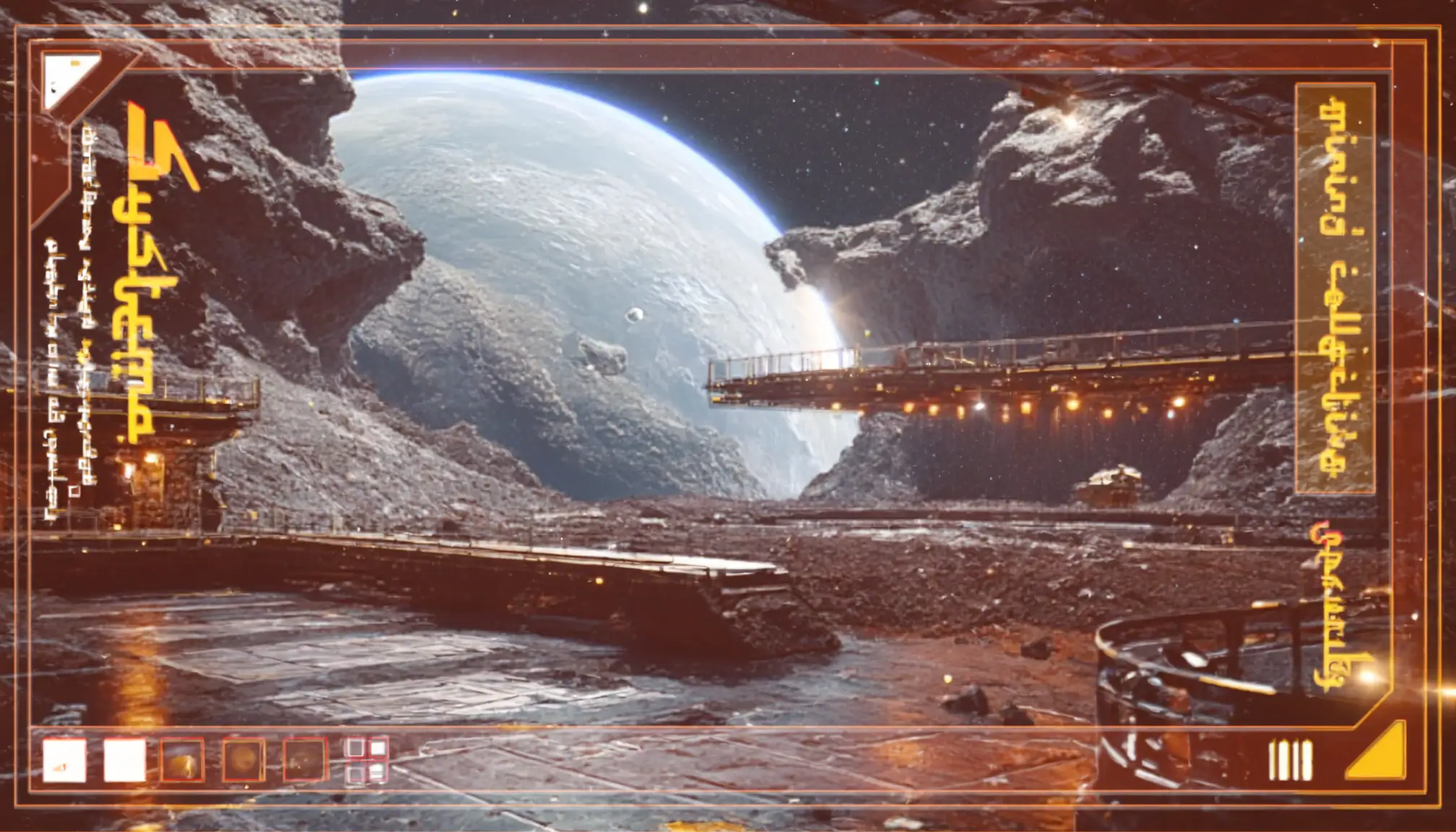

  • “Vanguard”

    “Vanguard”

    The designation “Empire” does not appear in any surviving Vandyrian records. It is a label imposed almost exclusively by those who, finding themselves a mere fractal segment within the greater system, grasped for early classification.

    What terrifies even the boldest chroniclers is this: ancient reconstructions suggest that “Vandyrian” most accurately translates to “Vanguard.” Not people. Not empire. Not race. Vanguard. A forward element. A spearpoint. A preparatory force, deployed in anticipation of something larger behind it.

    If an empire of one hundred million systems named itself the vanguard, then the unspoken questions become unbearable:

    A vanguard for what?

    A vanguard for whom?

    A vanguard against what adversary or toward what cosmic project so vast that even their colossal empire was merely its opening gesture?

    For the originators, such boundaries were irrelevant—a vanguard is defined by function, not domain.


  • The Greater Vandyrian Empire

    The Greater Vandyrian Empire

    The Vandyrian Empire was not vast—it was impossible. No mortal arithmetic can encompass it. Across innumerable cycles of expansion, extinction, recursion, and renewal, the Vandyrian dominion is estimated to have encompassed on the order of one hundred million star systems.

    Not worlds—systems. Entire solar families reorganized to serve military, industrial, or experimental purpose. Moons carved to factory-hollows. Asteroid belts reconfigured into supply nets. Star output harnessed, redirected, or extinguished to suit imperial necessity.

    And yet the paradox: almost nothing remains. In the Ran system we see Thanator’s shattered titanic civilization, Kydahn’s engineered splendor, Drael’s scarified substrata—but these are embers scraped from a fire whose heat once reached across the firmament.

    Concerning identity. The peoples who now claim the Vandyrian mantle—lion, wolf, ram, bear—are local survivals, nothing more. Their pride rests on instinctual memories, genetic impulses, or the psychological residue of ancient doctrine.

    Whether they derive from true Vandyrian stock or were merely designed according to a Vandyrian template no longer matters. Their self-claims are provincial echoes ringing in the husk of a cathedral too vast for modern folk to comprehend.

  • On The Vandyrians

    On The Vandyrians

    To speak of the Vandyrian is to step onto a faultline older than memory, where every word fractures under a burden it was never shaped to bear. The question—what is a Vandyrian?—seems innocent, almost scholarly, until one begins to answer it.

    For the Vandyrian is not a folk, nor a lineage, nor a culture, nor even a single empire in the paltry sense that lesser ages use the term.

    The Vandyrian is a continental shadow cast across the galaxy, a residue left upon tens of millions of worlds, a design philosophy written into the very bones of every species that breathes beneath the Ran system’s suns.

    Lion and wolf, ram and bear; horsefolk of Zhuru, dogfolk of Vulsa, jackals of the wastes; otter, mouse, and every scaled carnivore that stalks the ash or surf—all bear the unmistakable signature of hands that once shaped, culled, reformed, redeployed, and finally abandoned them.

    To ask what a Vandyrian is, then, is to ask why the ruins scattered across Vandyrus, Thanator, Kydahn, and their sister worlds share identical geometries, identical power-laws, identical genetic scaffolds; why the peoples themselves mirror one another’s instincts, hierarchies, and neural architectures; why war, order, stratification, and controlled brutality arise again and again as if imprinted not by culture but by inheritance.


  • “Before we begin…

    “Before we begin…

    The Vandyrian Codex exists to give game masters, writers, and players a dense, brutal, myth-driven setting they can lift directly into their own tabletop campaigns without permission, payment, or subscription. Inside are cultures, regions, wars, economies, religions, and power structures written to function at the table: places with motives, histories with consequences, and factions that collide whether the players intervene or not. Nothing here is locked behind a paywall, nothing is “lore-bait” for later purchase.

    This is a working world meant to be looted from, expanded, broken, and played in.


    Book I: Primer

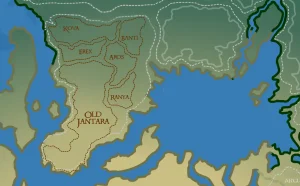
  • Known Ruins of Elder Jantara

    Known Ruins of Elder Jantara

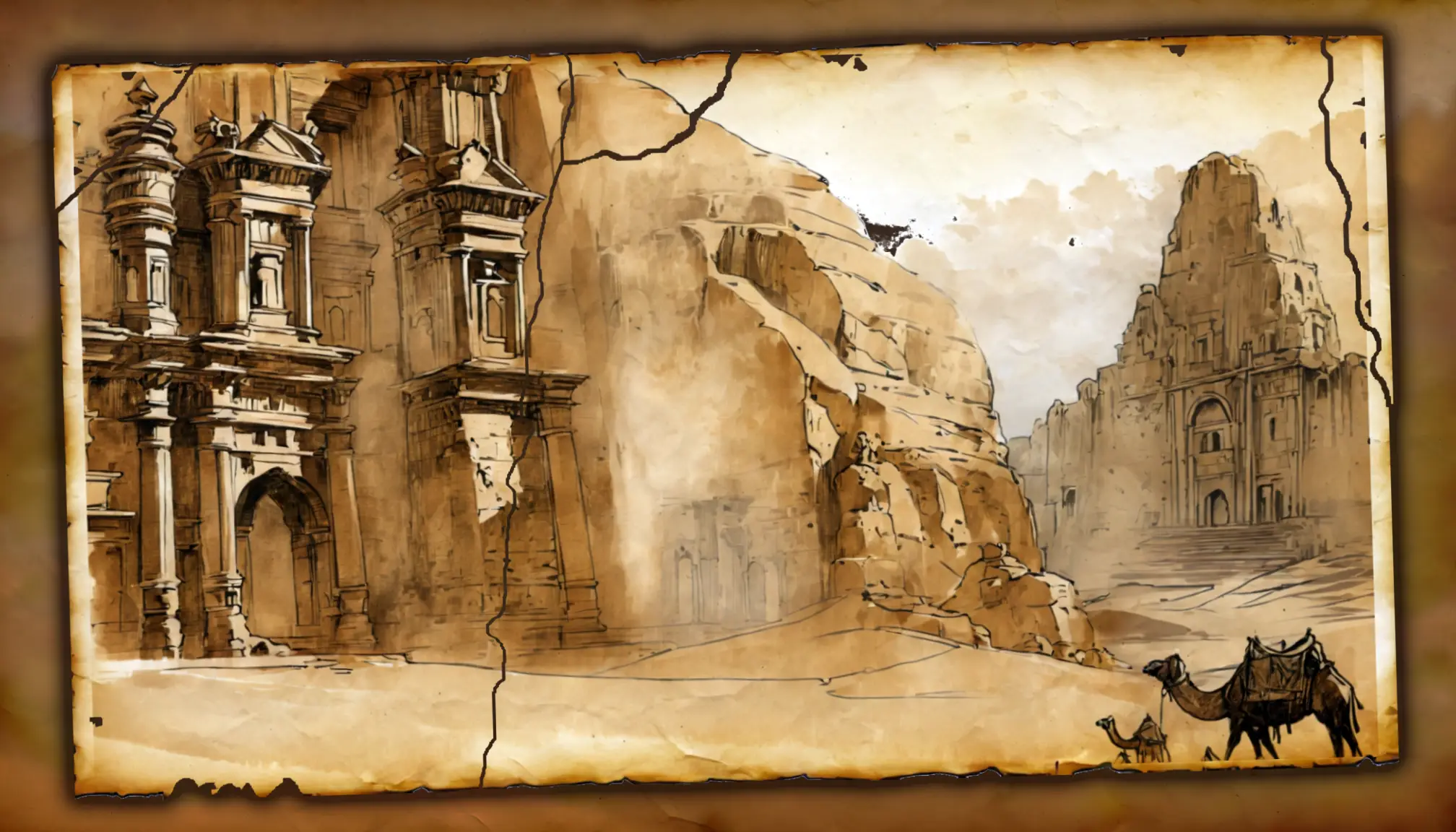
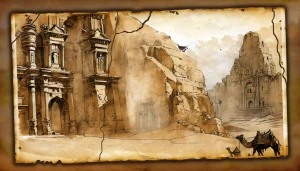
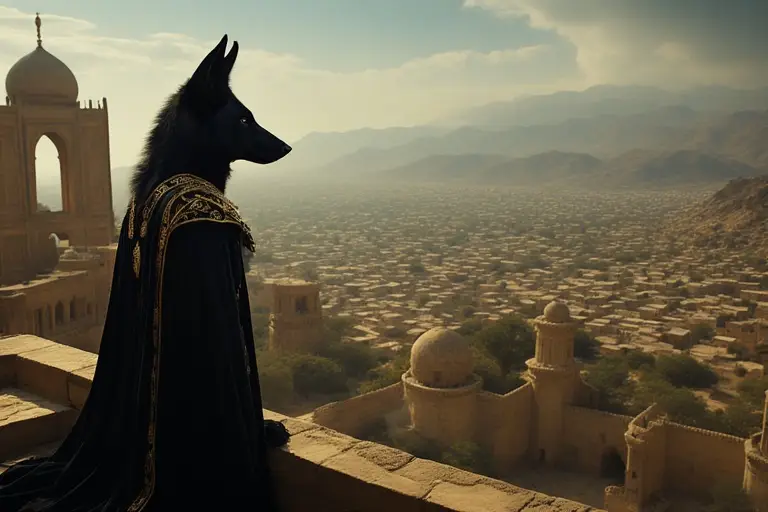
    The true splendor of Elder Jantara is measured not in what endured, but in the magnitude of what was lost. Five cities once anchored the heartlands of the jackal civilization, each a distinct pole of culture, trade, or cunning. Today, all are ruins—picked over by centuries of scavengers, scholars, and memory-haunted dogs. Their names are seldom spoken outside the codex and their locations, though mapped and marked, are more legend than destination.

    Ay’Albwa

    The City of Arts & Science

    Once the jewel of northern Jantara, Ay’Albwa was famed for its academies, scriptoriums, and marble halls lined with statues to dead philosophers. Legends claim its libraries rivaled anything in Ruselon, and its artisans minted coins and mechanical wonders that ended up as tribute in every court of Zhuru. The city was abandoned in the final purges, its great dome shattered, and now only fragments of stained glass and eroded sculpture remain, half-buried in the grass.

    Nab’Wa

    The City of Puzzles & Gardens

    Built on a series of engineered terraces, Nab’Wa was a city of green walls and geometric courtyards, each section designed as a puzzle or labyrinth. Its rulers took pride in riddles, botanical grafts, and the artistry of living sculpture. The invaders who ended Nab’Wa’s reign left little but broken aqueducts and tangled stonework behind. Even the rivers were diverted, turning its gardens to dust.

    Zha’Bwazha

    The City of Birds & Ledgers

    Sitting astride the central trade arteries, Zha’Bwazha served as Jantara’s ledger-keeper, mint, and post. The city’s aviaries sent messages by trained corvid and pigeon from stone towers. By the end, not even the birds stayed; the ledgers rotted and the market squares filled with mud. Bantos traders still pick over the old vaults, seeking lost coins and the secrets of Jantaran bookkeeping.

    Am’Waratt

    The City of Crystal & Desire

    Am’Waratt was infamous even in its own time—a den of glass towers, pleasure houses, and revels that drew the jaded and powerful from across the continent. Here, the jackal lords mingled with visiting tigers, Ruseloni mystics, and every breed of vagrant prince. When Am’Waratt fell, its crystals were plundered, its lamps smashed, and its streets littered with the bones of both merchant and courtesan. The site is now haunted, dangerous, and cursed by any clan that remembers.

    Yoz’Zhoubatt

    The City of Lotus & Intrigue

    Closest to the southern wastes, Yoz’Zhoubatt was a city of shadow, trade, and veiled plots. Alchemists brewed lotus extracts in cellars beneath the great ziggurat, and spies sold secrets to whoever could pay. The city’s collapse was absolute; no clan claims descent from it and no scavenger lingers long—strange lights and sickly blooms still appear in the ruins, and the wind carries the scent of poppy and death.


  • A Hierarchy of Merchant Scholars

    A Hierarchy of Merchant Scholars

    Within the Bardasi hierarchy, teacher was a tiered position, difficult to attain and not lightly bestowed. One did not become a teacher merely by age or experience, but by surviving review. Teachers were evaluated by their students’ later conduct, not by affection or loyalty. Above them stood professors, responsible not for instruction but for doctrine—the articulation of Jantaran commercial philosophy across generations. Above them again were adjudicators, empowered to resolve disputes between Bardasi, students, and foreign authorities alike, often with rulings that carried weight across borders. At the summit stood the civil proclamators, rare figures whose role was not to teach individuals, but to formalize Jantaran position in moments of crisis, transition, or foundational accord.

    This structure ensured that the Bardasi did not merely produce clever traders, but shaped minds capable of operating without homeland, without sentiment, and without illusion. The student who completed such an apprenticeship did not return home wiser in the comforting sense. They returned sharper, quieter, and harder to deceive.

    That other realms once accepted this transformation—once entrusted their offspring to jackal hands knowing they would not come back the same—is not a curiosity of the past. It is the measure of what Elder Jantara once was.

    That such trust no longer exists is not mystery.

    It is judgment.


    The History of Jantara

  • Lessons in Matters of Consequence

    Lessons in Matters of Consequence

    Pedagogically, the Bardasi rejected abstraction. A lesson was valid only if it could be tested on the road. Arithmetic was taught through loss and gain. Language through insult, negotiation, and apology. Ethics through exposure to consequence. A teacher might allow a student to misprice a good, offend a local official, or misjudge a rival merchant—so long as the error did not endanger the caravan as a whole. The resulting damage, whether economic or social, was never repaired on the student’s behalf. It was observed, recorded, and addressed later, often days after the event, when emotion had cooled and memory had sharpened.

    The Teachings of The Bardasi

  • Teachers of Philosophy & Civilization

    Teachers of Philosophy & Civilization

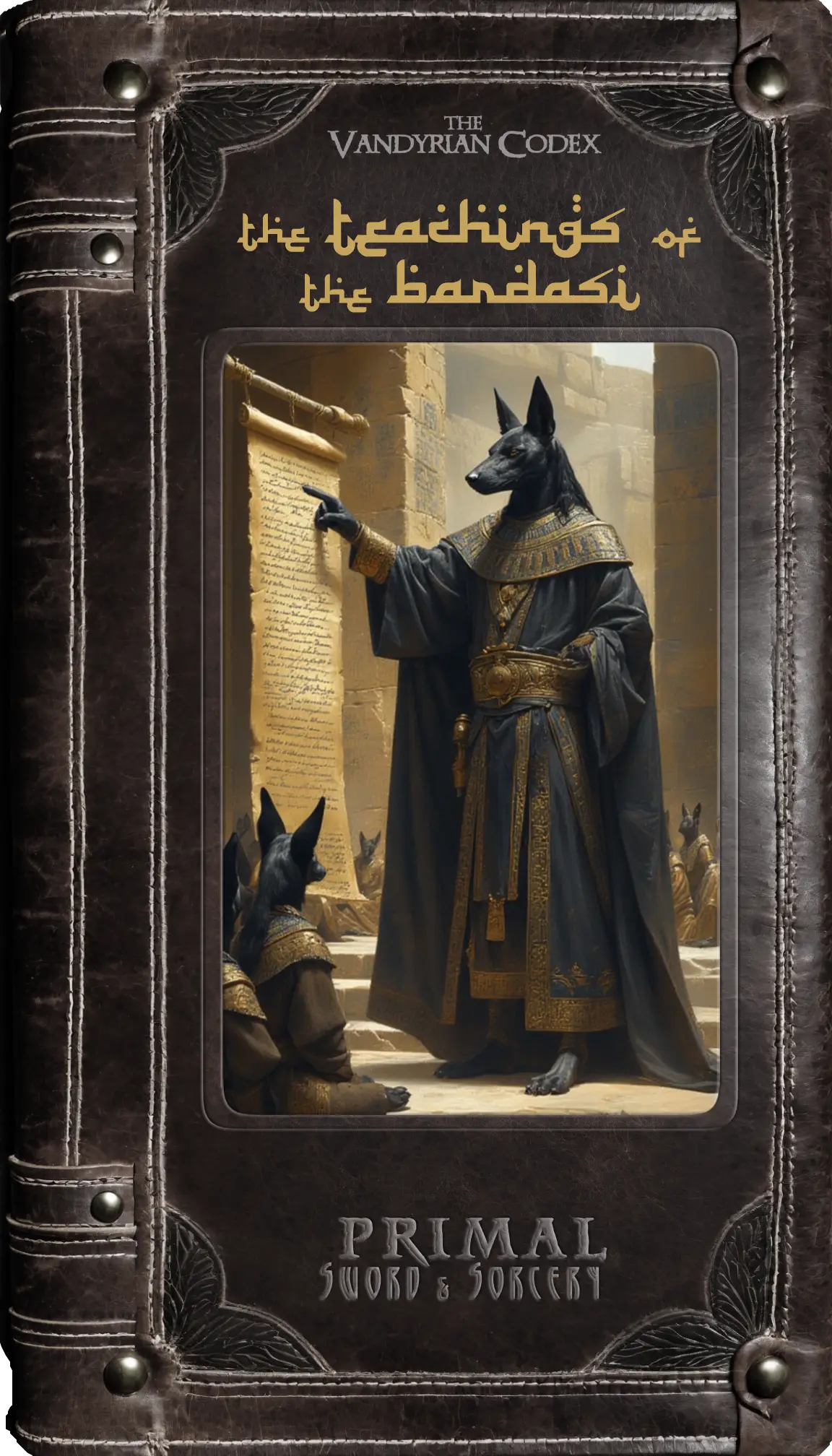
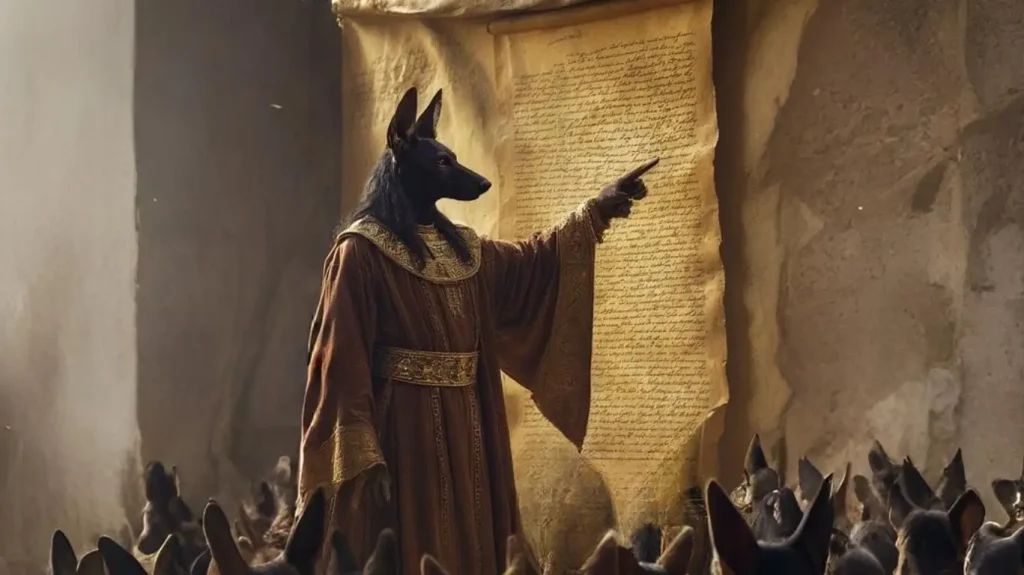
    Within the Bardasi caste, instruction was not an adjunct to trade but one of its primary instruments. The caravans were universities in motion, and the teachers who walked among them were neither tutors nor caretakers, but custodians of formation. A youth assigned to a Bardasi instructor did not merely accompany the caravan; they were absorbed into its internal discipline. Within Jantaran society such students were treated well, but never indulged. Comfort was permitted only insofar as it did not dull perception. Respect was granted, but never deference. A student’s value lay not in who they were, but in how quickly they learned to see.

    Beyond the borders of the Jantaran Union, the status of these students changed markedly. They were no longer merely apprentices but living collateral, entrusted to the caravan under conditions approaching ritual sanctity. Reputable caravan lords and merchant-kings—those with the wealth, stability, and standing to bear such responsibility—accepted them as one might accept custody of sacred gems. They were housed deep within the safest folds of the caravan, protected not only by guards but by reputation itself. To harm a Bardasi student was to declare oneself unfit for future trade, memory, or record. In this way, whole trade networks became strange, rolling academies of coin and wisdom, bound together by the shared understanding that knowledge outweighed plunder.

    The teachers themselves were carefully chosen. Not for warmth, nor for gentleness, but for evenness. A Bardasi instructor was expected to speak to youth without softening truth, to correct without humiliating, to permit failure without allowing collapse. They were often individuals who had mastered restraint until it became instinct. Their authority came not from volume or severity, but from consistency. Students learned quickly that these jackals did not lie, did not bluff, and did not repeat themselves. A correction given once was never given again. The cost of misunderstanding was borne by the student alone.


    The Teachings of The Bardasi

  • The Teachings of The Bardasi

    The Teachings of The Bardasi

    💎

    By Essay:

    The Bardasi

    Teachers of Philosophy & Civilization

    Lessons in Matters of Consequence

    A Hierarchy of Merchant Scholars

    The Teachings of The Bardasi [COMPLETE]

    The Teachings of the Bardasi [Complete Audio Book Version] – A Part of The Vandyrian Codex

    The Bardasi

    Bardasi or Baru’Audahsi;

    Meaning “Teacher of ‘Philosophy” & “Civilization”‘
    in Elder Jantaran Common

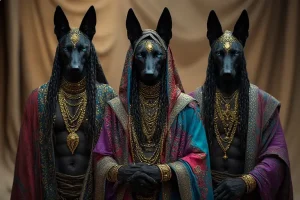
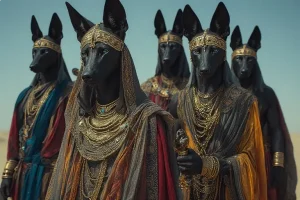
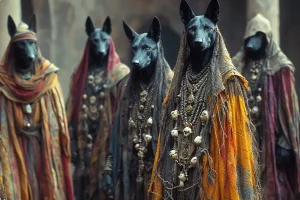
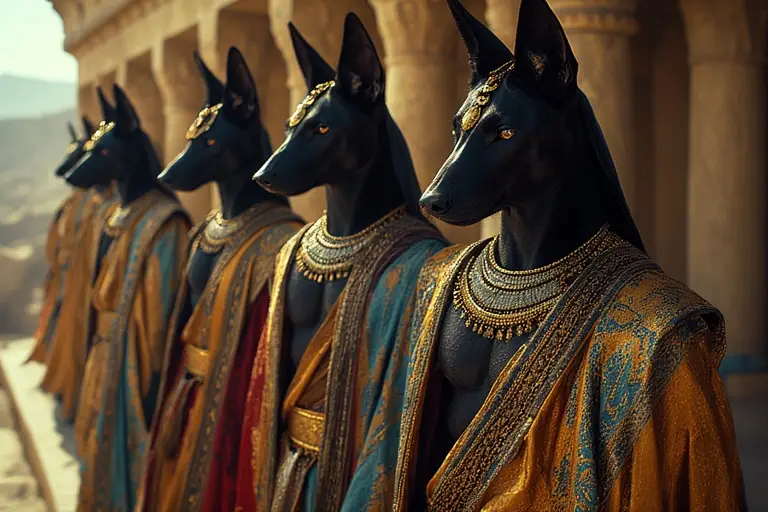
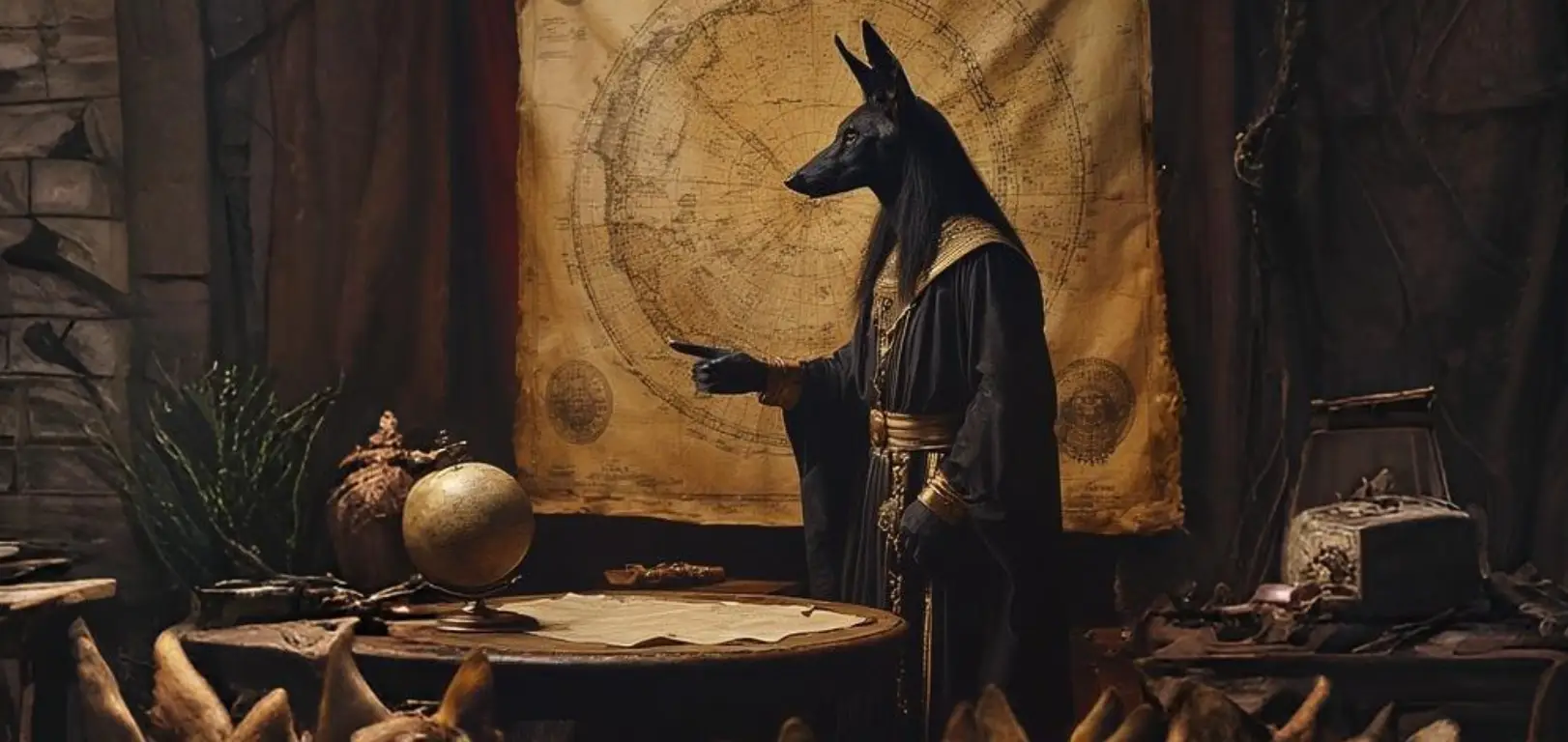
    The Jantaran Bardasi were not merely merchants, nor philosophers in the later, toothless sense that the word acquired after the fall. They were a caste, formally trained, ritually bound, and socially insulated, whose function was to move between realms without ever belonging to them.

    To be Bardasi was to be trusted precisely because one was never fully at home anywhere. Elder Jantara understood something most civilizations learn only after collapse: that trade is not the exchange of goods, but the exchange of assumptions.

    The Bardasi existed to test those assumptions, to strain them without breaking them, to learn where honor bent and where it snapped. Their caravans carried salt, dyes, metals, manuscripts, and spices, but these were incidental. What they truly transported was Jantaran order, compressed into custom, etiquette, contract, and silence.

    Children entrusted to the Bardasi were not treated as hostages, nor as guests. They were apprentices in worldview. A youth traveling under a Bardasi seal was stripped of birth-rank the moment they crossed into the caravan’s authority. A prince was addressed as cub. A merchant’s daughter carried the same burdens as a shepherd’s son.

    The jackals believed hierarchy was real but situational, and nowhere was this enforced more ruthlessly than on the road. The youths learned accounts by firelight, languages by insult and correction, and ethics by observing what happened when bargains were honored, broken, or renegotiated under threat. No lesson was explained that could be demonstrated. No rule was taught that could not be violated at cost.

    The Bardasi worldview balanced profit with restraint not out of kindness, but out of long calculation. Elder Jantara had already discovered what later jackal regimes forgot: that maximum extraction invites maximum retaliation. A Bardasi caravan never emptied a market. It never humiliated a local lord by overpaying. It never revealed full inventories.

    They practiced deliberate incompleteness, leaving value on the table as proof of confidence. This cultivated dependence without resentment, a subtle art neighboring realms mistook for generosity. It was neither. It was dominance practiced quietly, the way a blade dominates a throat without cutting.

    Civic duty, for the Bardasi, was inseparable from commerce. Every contract was archived. Every insult was recorded. Every favor was remembered longer than a grudge. The Bardasi carried scrolls not merely of trade, but of precedent.

    When a dispute arose between foreign houses, a Bardasi could often resolve it by unrolling a record of what that same bloodline had agreed to generations earlier, under different banners, in a different land. This was the true source of their authority. They did not threaten armies. They threatened memory. And memory, in a world of short-lived rulers and shifting borders, was power no steel could contest.


    Teachers of Philosophy & Civilization

    Within the Bardasi caste, instruction was not an adjunct to trade but one of its primary instruments. The caravans were universities in motion, and the teachers who walked among them were neither tutors nor caretakers, but custodians of formation.

    A youth assigned to a Bardasi instructor did not merely accompany the caravan; they were absorbed into its internal discipline.

    Within Jantaran society such students were treated well, but never indulged. Comfort was permitted only insofar as it did not dull perception.

    Respect was granted, but never deference.A student’s value lay not in who they were, but in how quickly they learned to see.

    Beyond the borders of the Jantaran Union, the status of these students changed markedly. They were no longer merely apprentices but living collateral, entrusted to the caravan under conditions approaching ritual sanctity. Reputable caravan lords and merchant-kings—those with the wealth, stability, and standing to bear such responsibility—accepted them as one might accept custody of sacred gems. They were housed deep within the safest folds of the caravan, protected not only by guards but by reputation itself. To harm a Bardasi student was to declare oneself unfit for future trade, memory, or record. In this way, whole trade networks became strange, rolling academies of coin and wisdom, bound together by the shared understanding that knowledge outweighed plunder.

    The teachers themselves were carefully chosen. Not for warmth, nor for gentleness, but for evenness. A Bardasi instructor was expected to speak to youth without softening truth, to correct without humiliating, to permit failure without allowing collapse. They were often individuals who had mastered restraint until it became instinct. Their authority came not from volume or severity, but from consistency. Students learned quickly that these jackals did not lie, did not bluff, and did not repeat themselves. A correction given once was never given again. The cost of misunderstanding was borne by the student alone.


    Lessons in Matters of Consequence

    Pedagogically, the Bardasi rejected abstraction. A lesson was valid only if it could be tested on the road. Arithmetic was taught through loss and gain. Language through insult, negotiation, and apology. Ethics through exposure to consequence. A teacher might allow a student to misprice a good, offend a local official, or misjudge a rival merchant—so long as the error did not endanger the caravan as a whole. The resulting damage, whether economic or social, was never repaired on the student’s behalf. It was observed, recorded, and addressed later, often days after the event, when emotion had cooled and memory had sharpened.


    A Hierarchy of Merchant Scholars

    Within the Bardasi hierarchy, teacher was a tiered position, difficult to attain and not lightly bestowed. One did not become a teacher merely by age or experience, but by surviving review.

    Teachers were evaluated by their students’ later conduct, not by affection or loyalty. Above them stood professors, responsible not for instruction but for doctrine—the articulation of Jantaran commercial philosophy across generations.

    Above them again were adjudicators, empowered to resolve disputes between Bardasi, students, and foreign authorities alike, often with rulings that carried weight across borders. At the summit stood the civil proclamators, rare figures whose role was not to teach individuals, but to formalize Jantaran position in moments of crisis, transition, or foundational accord.

    This structure ensured that the Bardasi did not merely produce clever traders, but shaped minds capable of operating without homeland, without sentiment, and without illusion. The student who completed such an apprenticeship did not return home wiser in the comforting sense. They returned sharper, quieter, and harder to deceive.

    That other realms once accepted this transformation—once entrusted their offspring to jackal hands knowing they would not come back the same—is not a curiosity of the past. It is the measure of what Elder Jantara once was.

    That such trust no longer exists is not mystery.

    It is judgment.


    The History of Jantara