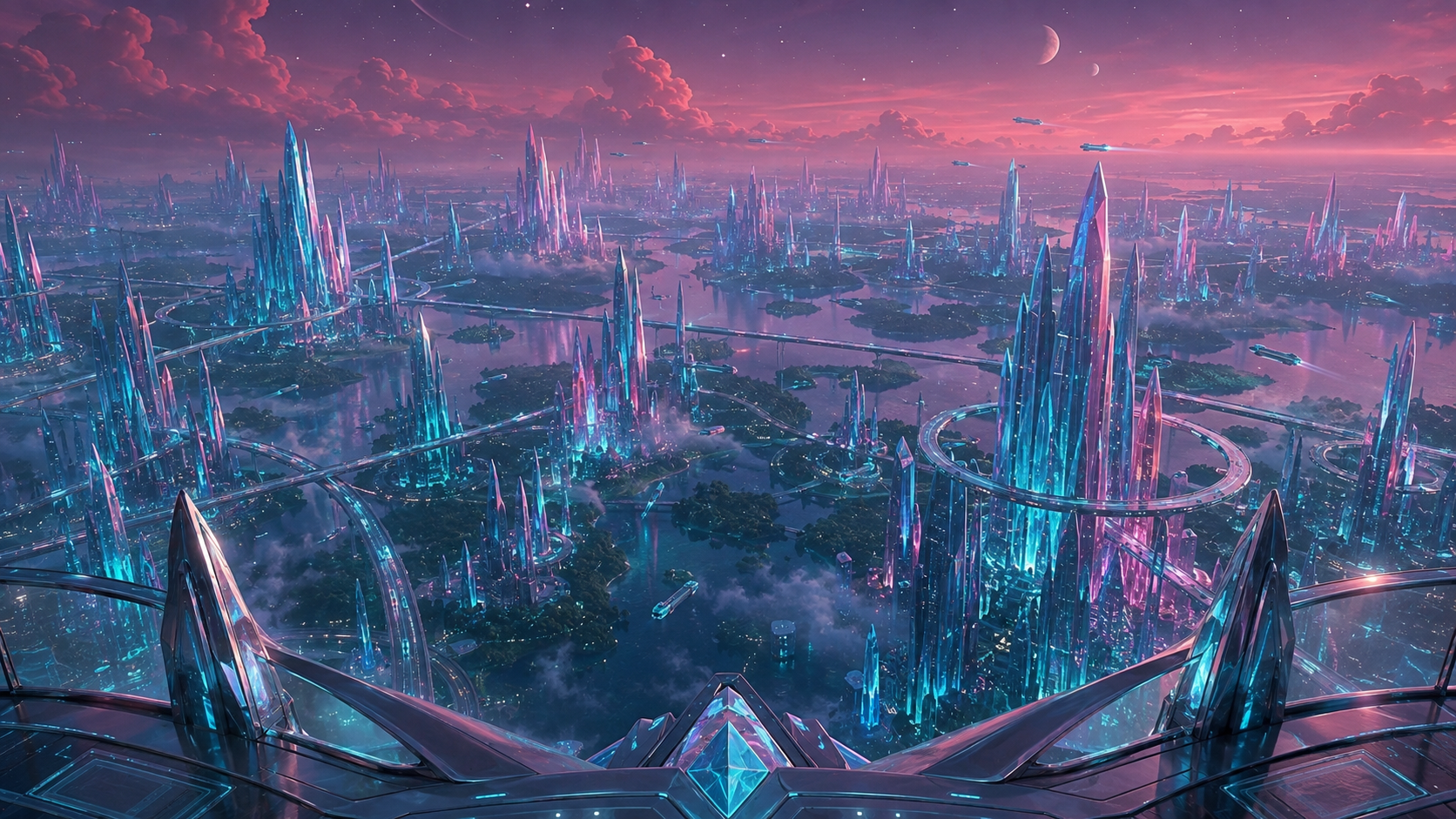



We now arrive at the outer edge of that galaxy.
Merely one among the greater realms of the Vandyrian Empire.
However, we have not yet reached its staggering scale.
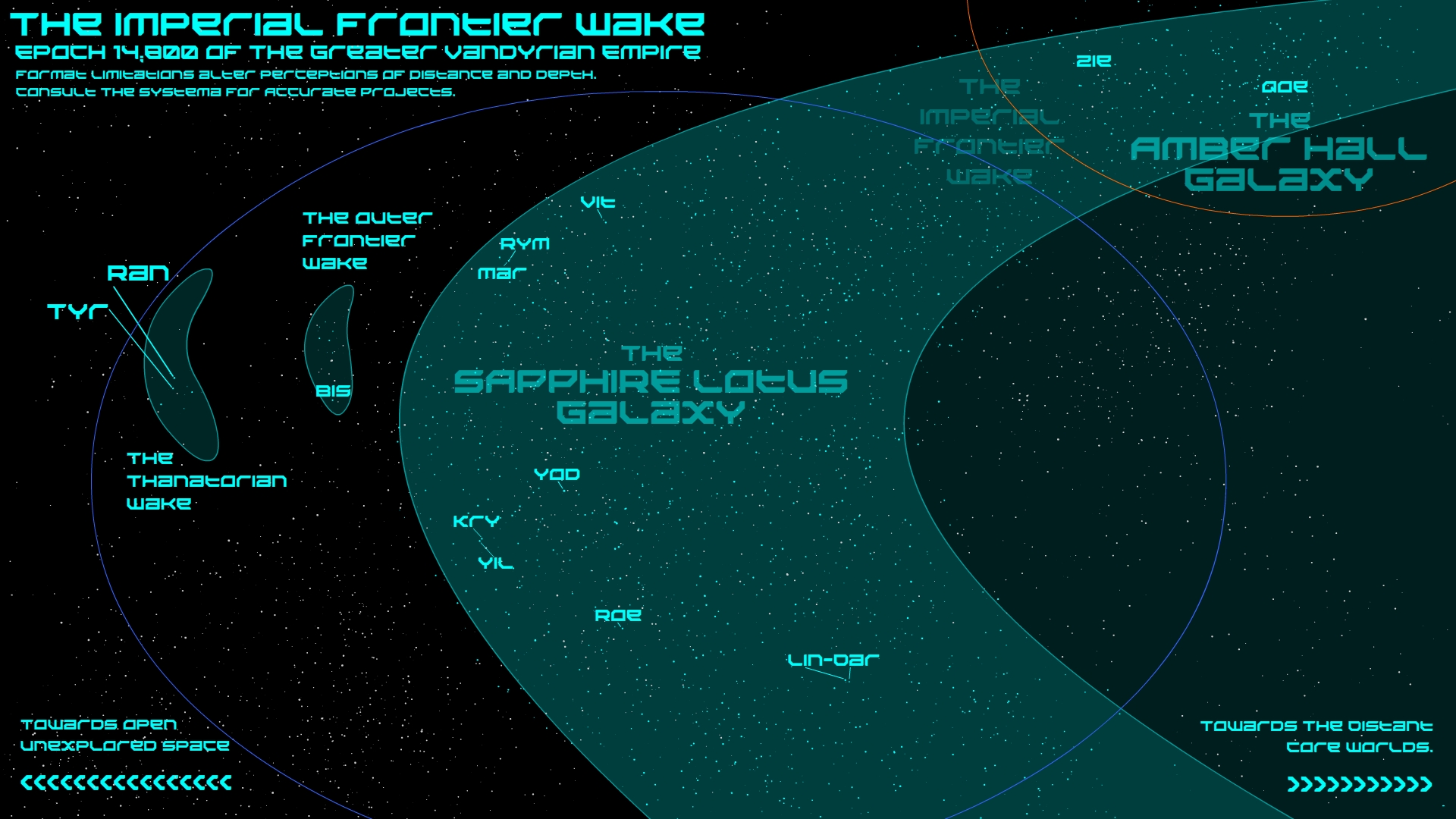
What appears, at lesser resolution, to be the outline of a singular territorial mass is revealed, at this depth, to be only a gradient of dominion—spanning countless galaxies in width. Boundaries dissolve into density fields. Edges resolve into transitions. What was once perceived as a complete region is exposed as a narrow band within a far greater continuum.
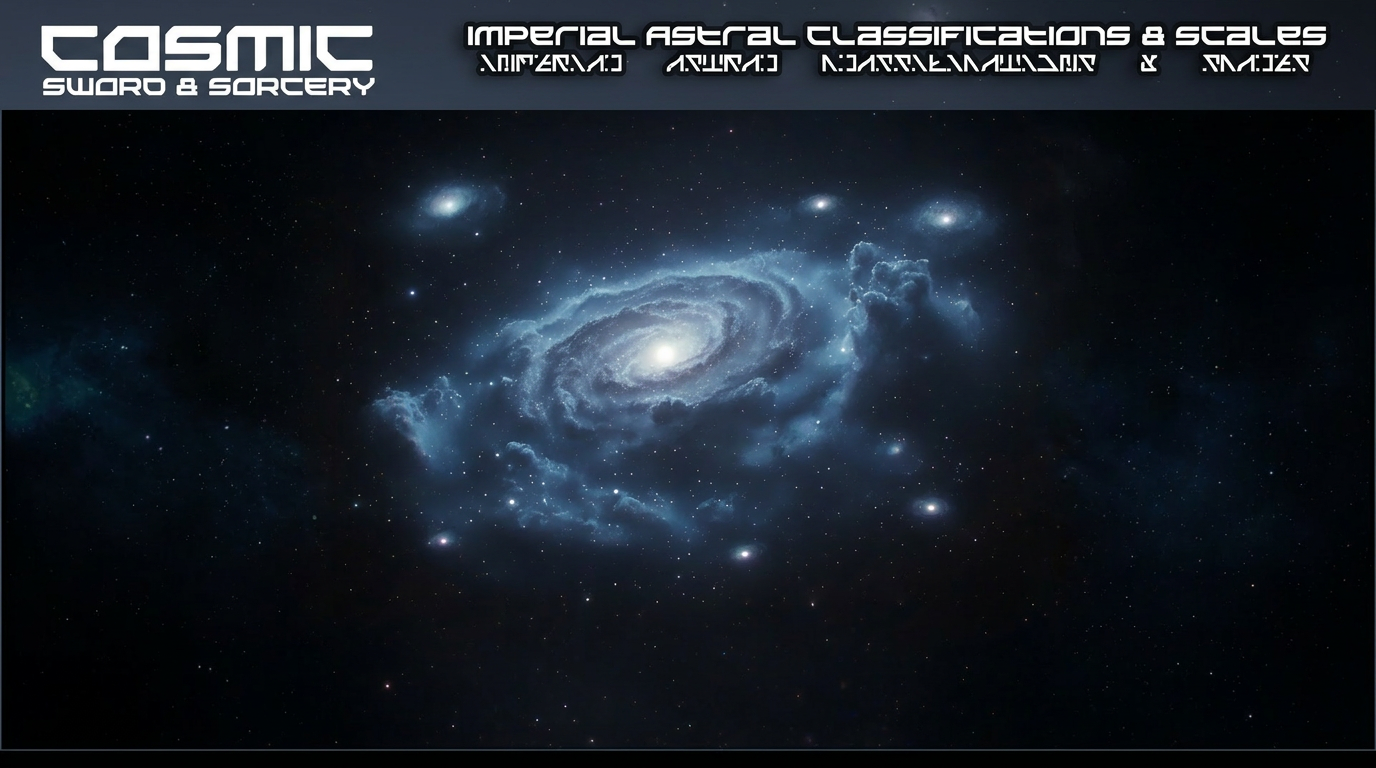
At this magnification, each point of light is no longer an individual star, but an entire galaxy—or, in certain instances, a clustered assembly of galaxies bound within a shared gravitational field. Even a localized domain—such as that in which the Sapphire Lotus Galaxy is suspended—exists only as a minor filament within this broader structure.
But we have not yet reached its staggering scale.
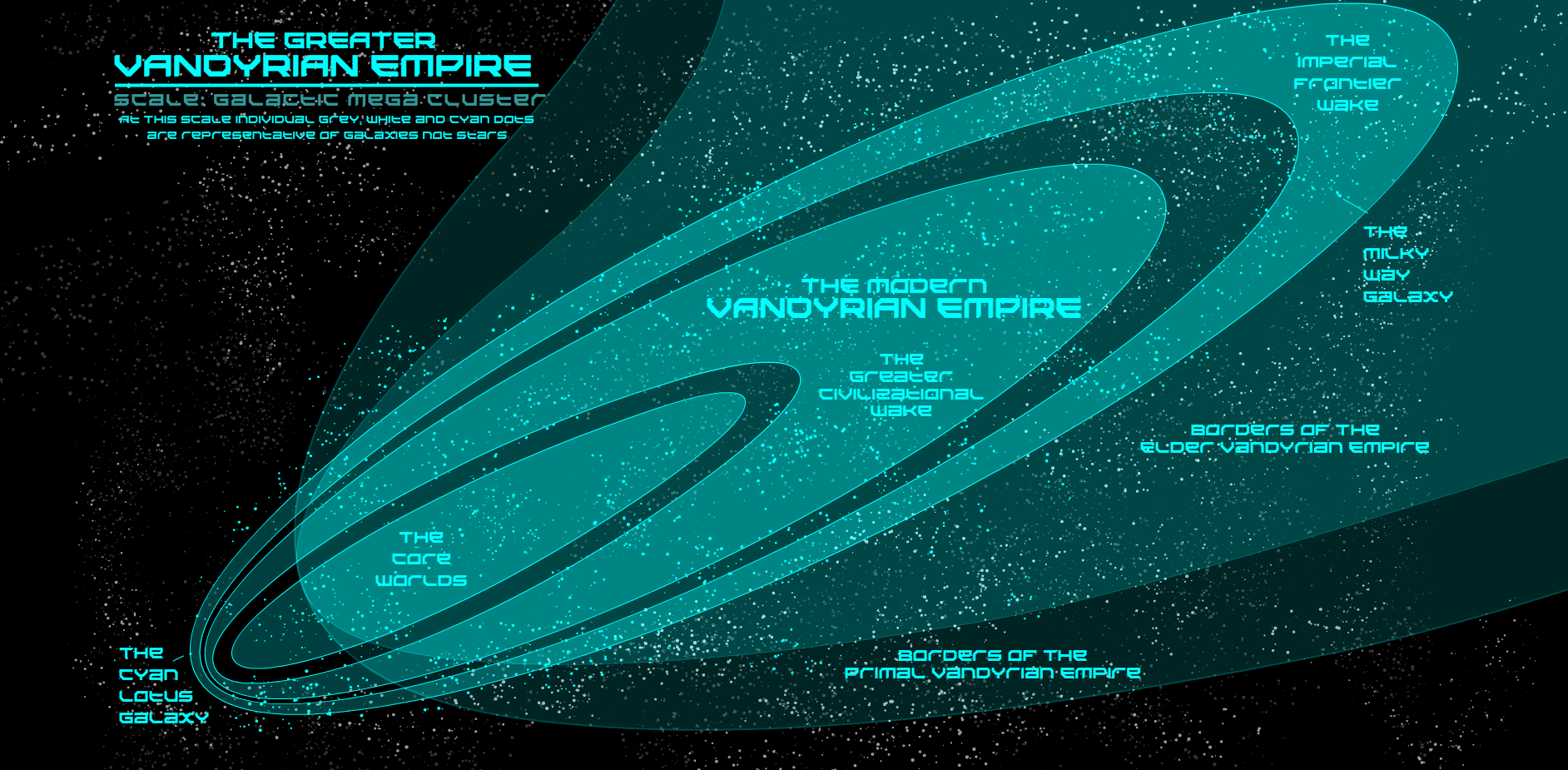
What now emerges—marked by vast circumferential formations, the great rings encasing the region known as the Core Worlds—appears, at first glance, to suggest a center.
It is not.
There is no singular core in the conventional sense. What presents as a center is, in truth, a convergence of density and coherence. The so-called Core Worlds do not reside within a single galaxy, nor within any unified cluster. They are distributed across a vast disc of interwoven systems, spanning innumerable galaxies, stellar bodies, and gravitational frameworks—bound not by proximity, but by coherence.
Still, we have not yet reached its staggering scale.
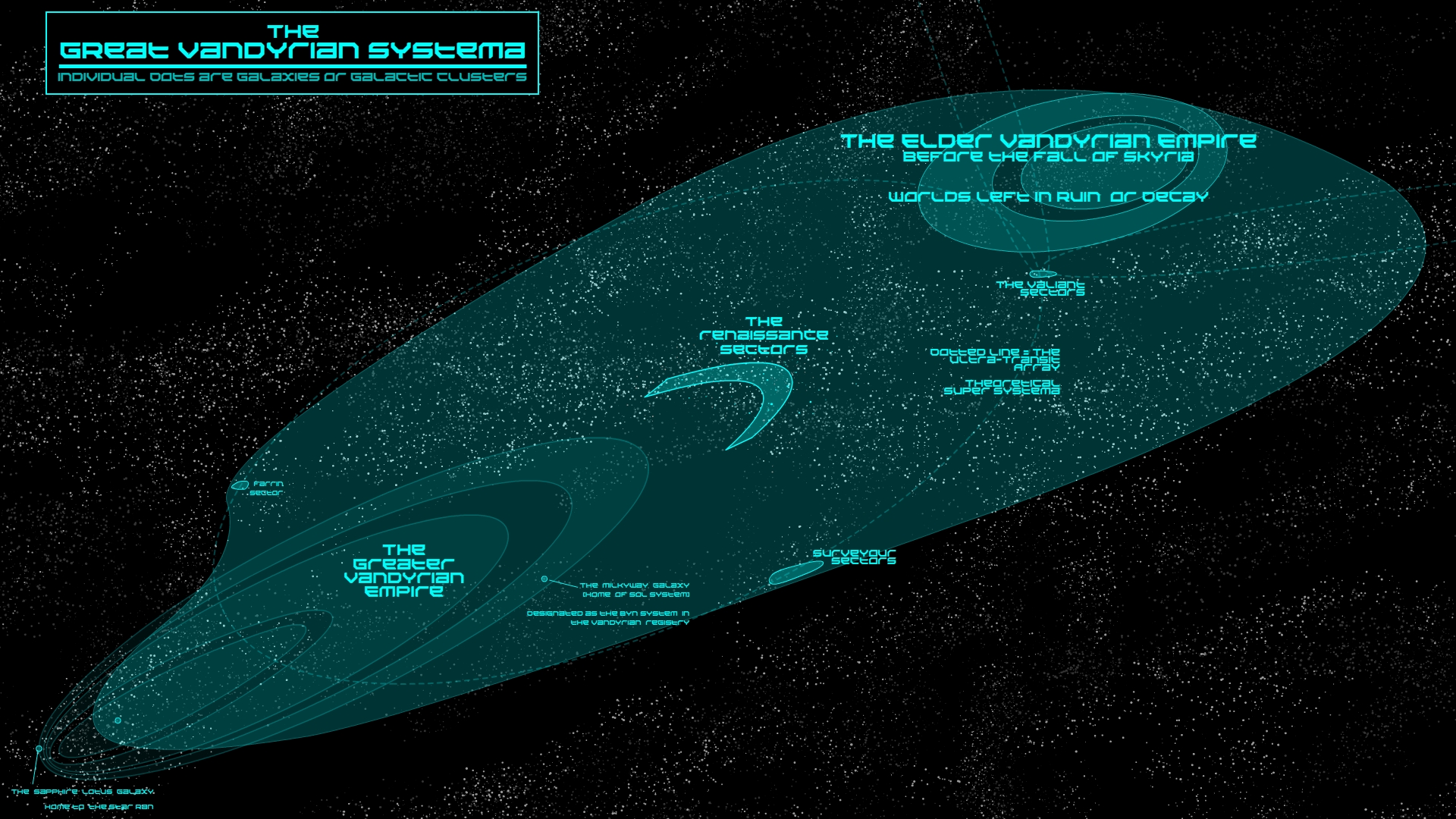
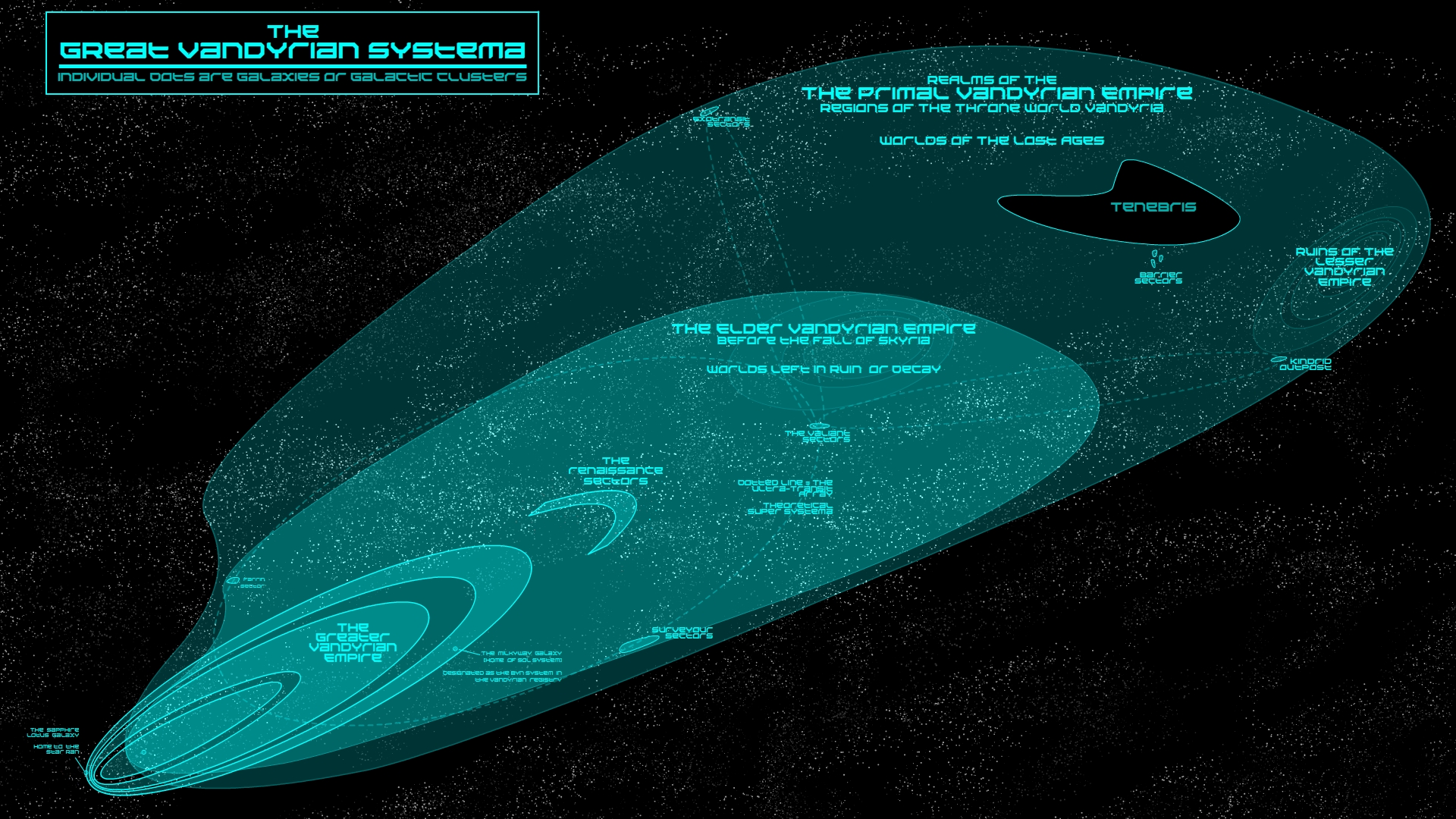
Beyond the present borders of the Modern Vandyrian Empire lies the mapped expanse of its ancestral predecessor: the Elder Vandyrian Empire. These charts—fragmented yet enduring—form the foundational strata upon which all modern imperial cartography is constructed. These regions predate the antique and the ancient alike, extending beyond the limits of continuous historical record into an era preserved only in fragments, distortions, and recovered memory.
This is the domain of mythic space.
Not myth in the sense of fiction, but of incompleteness—of records too old, too vast, or too damaged to resolve into a single, stable narrative.
Here lie the faded borders of the primal Vandyrian expansion—realms older than any other recorded sectors.
It is here that the structure of history itself becomes non-linear. Expansion, collapse, technological ascent, annihilation, and rebirth do not form a sequence, but a layered accumulation. These realms hold the residue of first movement: the earliest expansions, the most volatile technologies, the longest wars, and the deepest losses. What remains is not a complete account, but a stratified memory of existence at its most formative and least constrained.
Only here—at the furthest edge of retained mapping—does the structure begin to suggest its full extent.
It is at this threshold that the Greater Vandyrian Empire can no longer be understood as a region, nor even as a collection of regions, but as a continuous, multi-layered expanse—its present form inseparable from the accumulated depth of all that came before it.
This, finally, begins to reveal the overall expansive entirety of the Greater Vandyrian Empire…
…and its truly staggering scale.