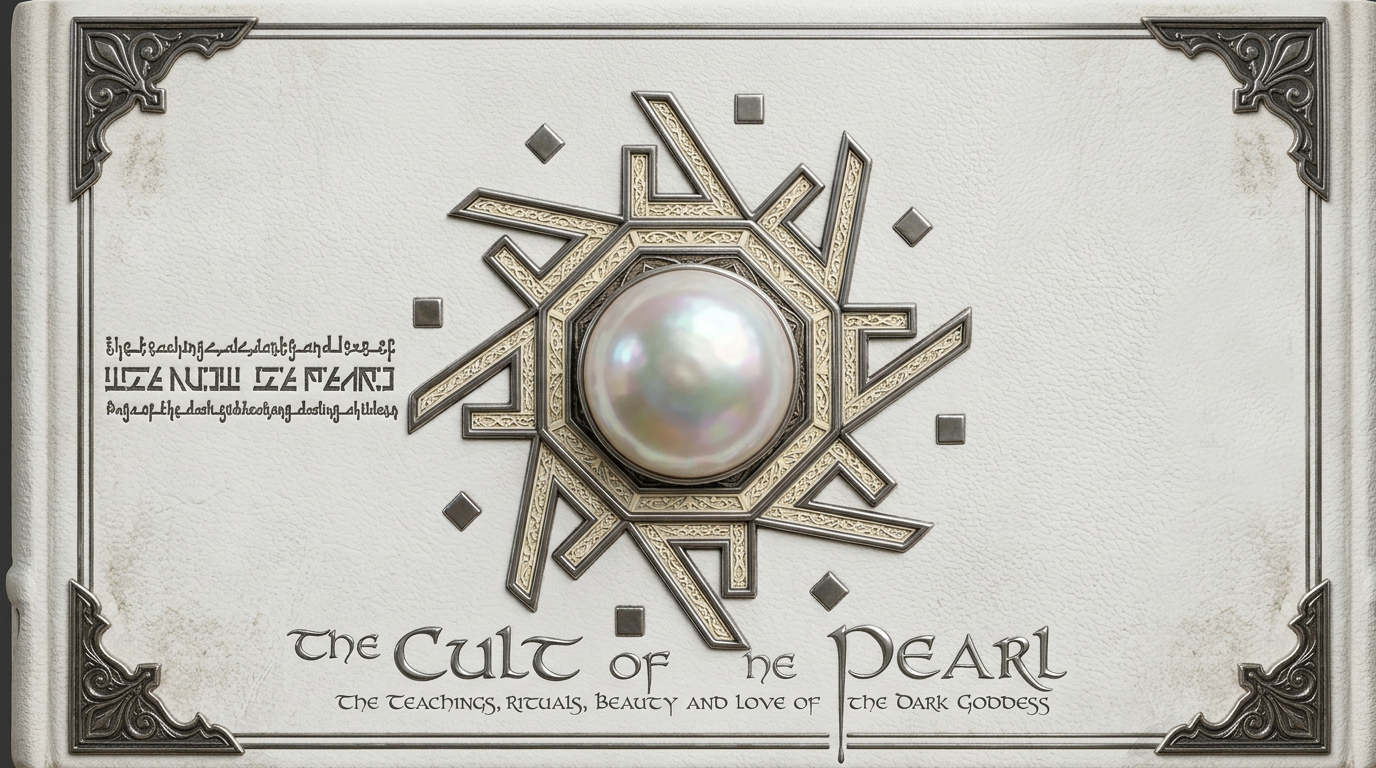
Book Two
Rituals of The Dark Goddess
Index
i. INTRODUCTION
ii. ON THE DECEPTIONS OF LESSER CULTS
iii. ON THE SOVEREIGN CIRCLE
iv. ON THE HOSPITALITY OF LOVE
v. ON THE QUIETING OF TENSIONS
vi. ON AFFECTION
vii. ON THE NIZHARIAN STAR
Rituals of The Dark Goddess
i. INTRODUCTION
ii. ON THE DECEPTIONS OF LESSER CULTS
iii. ON THE SOVEREIGN CIRCLE
iv. ON THE HOSPITALITY OF LOVE
v. ON THE QUIETING OF TENSIONS
vi. ON AFFECTION
vii. ON THE NIZHARIAN STAR
Among the many falsehoods spoken of our faith by those who neither know us nor seek to understand us, perhaps none is repeated more often than the claim that the Pearl is a religion of excess. Such creatures look upon our songs, our festivals, our marriages, our celebrations, and our temples and see only pleasure. Having mistaken the blossom for the root, they believe they understand the tree. They do not.
The Pearl does not worship pleasure. The Pearl worships life. Pleasure is merely one of life’s many gifts. So too are health, beauty, affection, companionship, creation, laughter, music, curiosity, fertility, learning, friendship, and love. None stand above the others. All are precious. All are worthy of celebration. A creature who denies every joy in pursuit of some imagined purity is no wiser than a creature who abandons every responsibility in pursuit of indulgence. Both have become lost. Both have wandered from balance. Both have forgotten that life is meant to be lived.
Many ask why our temples concern themselves with matters of the body. The answer is simple: because the body matters. The stars did not place us within these forms so that we might neglect them. A healthy body allows a healthy mind. A healthy mind allows a healthy spirit.
A healthy spirit is capable of wonder. Thus we encourage cleanliness, medicine, exercise, proper rest, nourishing food, and emotional well-being. Disease is not a moral failing, yet neither should it be romanticized. Sickness steals possibility. Illness shortens stories that might otherwise have continued for generations. Wherever disease appears, we seek to heal it. Wherever suffering appears, we seek to lessen it. Such work is not merely charitable. It is sacred.
To preserve health is to preserve potential, and potential is among the most precious gifts granted to any creature beneath the stars.
Likewise, we are often criticized for our teachings regarding desire. Those who know nothing of us imagine that we place no limits upon such matters. Yet our oldest doctrine is among the simplest ever spoken beneath the heavens.
Only the willing.
Always the willing.
Nothing beautiful blooms beneath coercion.
No creature may be forced into affection. No creature may be compelled into intimacy. No creature may be treated as property. Love given under threat is not love.
Desire extracted through fear is not desire. Affection purchased through violence is not affection. Such acts are barren things. Empty things.
They produce neither beauty nor joy and therefore possess no place within the teachings of the Pearl. For this reason our faith holds particular contempt for rapists, slavers, and those who prey upon the vulnerable.
They do not honor desire. They profane it. They take one of life’s greatest gifts and transform it into suffering. Such creatures often imagine themselves powerful. In truth they reveal only their own weakness. A creature capable of inspiring genuine affection has no need for chains, threats, cages, or force.
Nor do we share the beliefs of certain lesser faiths who seek to control desire through shame. There exist religions that teach pleasure is dangerous. Others insist beauty is temptation. Some demand celibacy from those unsuited to it. Others elevate suffering into a virtue and regard joy with suspicion. Such folk often spend their lives at war with their own nature and then wonder why they remain unhappy. We do not condemn them. We pity them. How tragic it must be to live beneath a sky filled with stars and spend every night staring at the ground. How unfortunate to inherit a body capable of affection and spend one’s life fearing it. How sorrowful to encounter beauty and respond with suspicion rather than gratitude.
The Pearl teaches a different path. We do not demand marriage, though we celebrate it. We do not require love, though we honor it. We do not insist upon children, though we cherish them. Every creature must walk their own road. Yet whatever road is chosen, it should be walked honestly and willingly. A life built upon fear is a fragile thing. A life built upon affection, dignity, health, and purpose endures.
Many of our critics hear such words and imagine that we advocate mindless indulgence. Once again they mistake the blossom for the root. The Pearl does not celebrate excess. Excess is merely imbalance wearing another face. Too little water brings thirst. Too much water brings drowning. Too little rest invites exhaustion. Too much rest breeds stagnation. Too little affection leaves the spirit hungry. Too much attachment may consume wisdom. The lesson is not denial, nor surrender, but harmony. A healthy garden is neither starved nor flooded. It receives what it needs and flourishes accordingly. So too should every creature strive to cultivate balance within body, spirit, and heart.
This is especially true regarding matters of fertility and desire, for many outside our temples misunderstand our teachings. A healthy young male blessed with vigor should not be taught shame for possessing vigor. A healthy young female blessed with beauty should not be taught guilt for possessing beauty. The Pearl does not regard vitality as a flaw requiring correction. We regard it as evidence of life flourishing as intended. Desire is no more shameful than hunger, curiosity, laughter, or wonder. What matters is not that such impulses exist, but how they are expressed. We teach responsibility rather than repression, self-knowledge rather than self-hatred, wisdom rather than denial. A creature who understands their nature is far less dangerous than one who spends a lifetime pretending not to possess one.
Remember this well, beloved reader.
The Dark Goddess does not ask you to become something you are not. She asks only that you cease running from what is beautiful. Care for your body. Care for your spirit. Care for those entrusted to your affection. Create where you can. Heal where you can. Love where you can. Leave the world richer than you found it. Then, when your days are finished and your story joins the countless others beneath the night sky, you shall know that you walked in harmony with Her Ways. Look upward. The stars shine upon you no less than any other.


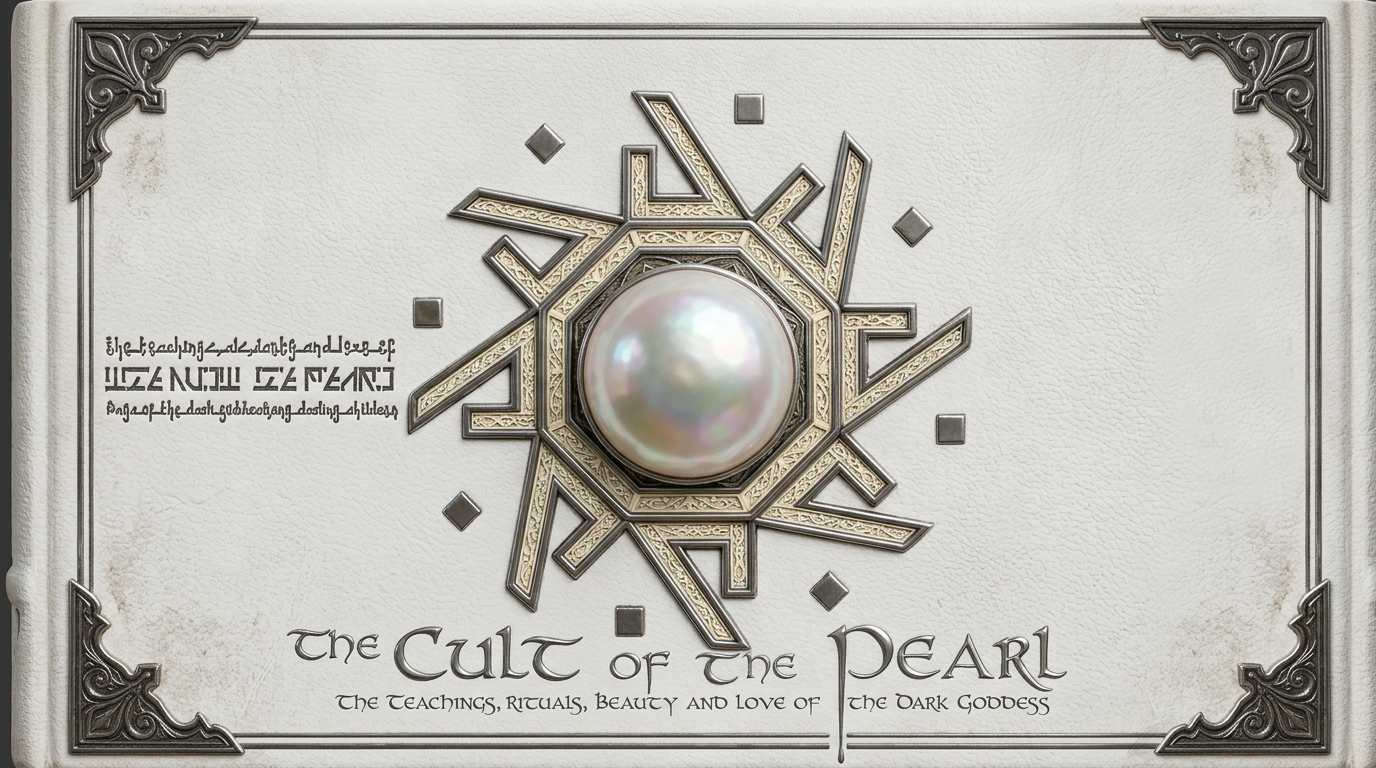
BOOK I:
Teachings of The Dark Goddess
BOOK II:
Rituals of The Dark Goddess
BOOK III:
Beauty of The Dark Goddess
BOOK IV:
Love of The Dark Goddess
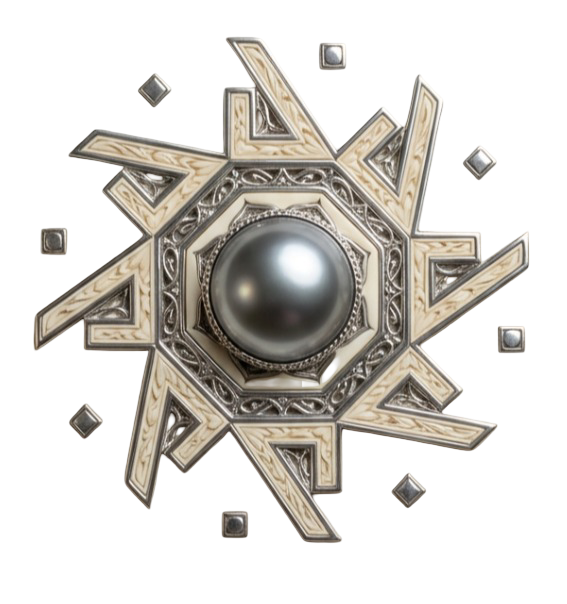
Life is sacred.
Nurture it where it flourishes.
Beauty is sacred.
Celebrate it where it appears.
Desire is sacred.
Honor it only when freely shared.
Affection is sacred.
Give it generously and receive it gratefully.
Health is sacred.
Guard the body, for it is life’s vessel.
Creation is sacred.
Leave the world richer than you found it.
The stars shine upon all.
Therefore treat all with dignity beneath their light.
Only the willing.
Always the willing.
For nothing beautiful blooms beneath coercion.
Children, pilgrims, wanderers, and beloved souls beneath the stars, there are many who spend their lives asking what the Dark Goddess desires of them. Some seek complicated answers. Some seek commandments. Others seek burdens. Yet I tell you now that Her Ways are far simpler than many suppose. The Night Above does not delight in suffering. The stars do not shine so that you may wither. The Pearl does not celebrate sacrifice for its own sake.
Life is precious because it is rare, fragile, beautiful, and fleeting. Therefore one of the highest acts of devotion is not death, but thriving.
Your body is not an enemy to be conquered. It is not a prison. It is not a source of shame. It is the vessel through which you experience music, touch, beauty, affection, wonder, pleasure, friendship, and love. To care for your health is therefore not merely practical; it is sacred.
Feed yourself well. Rest when weary.
Heal your injuries. Tend your illnesses. Seek comfort when wounded in body or spirit. A neglected body cannot fully appreciate the beauty of existence, just as a cracked cup cannot hold precious wine. Many creatures believe virtue is found in needless suffering. The Pearl teaches otherwise. We honor life by preserving it, strengthening it, and allowing it to flourish. Likewise, you must learn to love yourselves. This is among the most difficult lessons many shall ever learn. Countless folk speak kindly to strangers while reserving cruelty for their own reflections. They forgive others but deny themselves forgiveness.
They praise beauty in every creature they meet yet cannot see beauty within themselves. Such blindness is a tragedy. Look carefully beneath the stars and ask yourself why the heavens would create something entirely without worth. They would not. Every creature carries beauty. Every creature possesses potential. Every creature is deserving of dignity. If you cannot yet love yourself fully, then begin by showing yourself the same kindness you would offer a friend. In time, the rest shall follow. Love itself is among the greatest gifts known to the world, yet many misunderstand its nature.
Love cannot be commanded.
It cannot be purchased. It cannot be demanded as tribute. It grows where it chooses and often appears where least expected. Some find it in a lifelong mate. Some in family. Some in friendship. Some in service to their communities. Some in devotion to art, music, scholarship, or purpose. The Pearl does not insist that all creatures love in identical ways. It teaches only that when genuine love appears, it should be cherished rather than feared. To love is to allow another creature to become part of your story. To be loved is to know that your existence has brought light into another life. Such things are among the greatest treasures any soul may possess.
Yet continuity extends beyond blood alone. A teacher passes knowledge to a student. A mason leaves walls that shall outlive him. A musician teaches a song that survives centuries. A healer preserves lives that will touch countless others. Even the smallest kindness may echo through generations in ways no creature can foresee.
Thus continuity is not merely reproduction. It is participation in the endless unfolding of existence. It is the decision to leave the world richer than one found it. This is why the Pearl cherishes health, self-love, companionship, affection, family, and creation. These things are not separate virtues. They are branches of the same living tree. A healthy body nurtures a healthy spirit. A healthy spirit learns self-worth. Self-worth allows one to love. Love creates connection. Connection creates continuity. Continuity allows beauty to survive beyond the span of a single life. Thus the cycle turns beneath the stars as it always has.
When you stand beneath the night sky and feel small, remember this: the stars above are ancient beyond measure, yet they endure not because they cling desperately to themselves, but because they shine. So too should you. Care for yourselves. Care for one another. Create where you can. Love where you can. Heal where you can. Leave beauty in your wake. In doing so, whether your days be many or few, you walk in harmony with Her Ways.
Look upward, beloved souls. The heavens are vast, but they are not empty. And neither are you.
The Dark Goddess is not regarded as a jealous deity, ruler of creation, or divine monarch. Indeed, many among the faithful would object to describing her as a “being” at all, at least not in the manner one speaks of kings, spirits, saints, or the lesser gods of the world. To the followers of the Pearl, she is not a throne-bound authority issuing commands from some distant celestial court. Rather, she is understood as the Night Above, the endless sky stretching beyond the reach of mortal sight, the darkness between the stars and the stars themselves.
To speak of The Dark Goddess is often to speak not of a person, but of principles. Beauty, abundance, wonder, desire, pleasure, creation, potential, and connection are all counted among Her Ways, while the force that moves through these things—the unseen current which binds life to life and draws creatures together beneath the heavens—is called Her Magik. Thus the faithful concern themselves little with questions of cosmic origin or divine genealogy. Whether she created the world, whether she existed before the stars, or whether she shall endure after them are matters considered less important than understanding the world which presently exists and the blessings that may be found within it.
The Pearl teaches that all life possesses beauty. Not merely the beautiful, nor solely the fertile, strong, wealthy, or admired, but all life. Every creature possesses value. Every creature possesses potential. Every creature possesses a place beneath the stars. Because of this belief, the faith rarely speaks in terms of sin, corruption, or inherent unworthiness. Instead it speaks of neglect. Neglect of beauty. Neglect of affection. Neglect of joy. Neglect of companionship. Neglect of one’s own nature. To the Pearl, suffering often arises not because life itself is flawed, but because creatures deny themselves that which nourishes the spirit. Thus the religion places great emphasis upon self-discovery, emotional honesty, companionship, celebration, and the pursuit of meaningful fulfillment. Followers are encouraged to seek lives that feel complete rather than lives that merely conform to the expectations of others.
Marriage is respected within the faith but is not required. Love is celebrated but is not required. The Pearl teaches that these things possess sacred value when they occur naturally and sincerely, yet it does not insist that all folk must pursue identical paths through life. Some become devoted mates. Others remain wanderers. Some raise large families. Others dedicate themselves to art, scholarship, music, exploration, or service. The faith does not demand that creatures love, marry, reproduce, or bind themselves to a single path. Rather, it teaches that beauty may be found in many forms and that fulfillment cannot be imposed from without. What matters is that one lives honestly, appreciates the wonders of existence, and allows life to flourish where it may.
The central principle of the faith is Acceptance. This concept appears so frequently within Pearl teachings that many outsiders mistakenly assume it to be the religion’s sole doctrine. Yet among the faithful, Acceptance is understood not as passive tolerance but as active recognition of value. Their oldest sayings summarize this philosophy in three simple declarations: We Accept. We Worship. We Adore. We accept beauty wherever it may be found. We worship life wherever it flourishes. We adore creation in all its forms. Such phrases appear engraved upon temple walls, embroidered into ceremonial garments, sung within hymns, and repeated throughout countless blessings offered by priests and priestesses. To many followers these words represent the purest expression of the Pearl’s worldview.
The faithful believe that every star in the sky shines equally upon all creatures. The Dark Goddess does not choose favorites. The stars do not discriminate. Neither should those who walk beneath them. This belief forms the foundation for the religion’s reputation for hospitality and openness. Travelers are often welcomed within Pearl temples regardless of origin.
Orphans, widows, laborers, merchants, artists, nobles, wanderers, and foreigners alike may find shelter beneath the symbol of the Pearl. Music, art, companionship, storytelling, affection, and celebration are considered sacred pursuits, not because they distract from life, but because they deepen one’s appreciation of it. A beautifully sung song, a well-crafted sculpture, a heartfelt embrace, a night spent among friends beneath a starlit sky—these are regarded as acts which bring the faithful closer to understanding Her Ways.
Among the countless sayings attributed to the Pearl, none is more common than the phrase “Look Upward.” It appears in prayers, temple inscriptions, hymns, and common conversation alike. To outsiders the expression may seem simple, even naive, yet to the faithful it encapsulates the entire philosophy of the religion. Every star above serves as a reminder that beauty exists even in darkness. Every point of light is proof that wonder may be found in the most distant places. Every creature, no matter how small, humble, lonely, or forgotten, shares the same sky. To look upward is therefore to remember that one is part of something greater than oneself—not through fear, obligation, or submission, but through participation in the endless beauty of existence. In this way the Pearl teaches that no creature truly walks beneath the heavens alone.
Teachings of The Dark Goddess
i. NATURE OF THE GODDESS
ii. ON HEALTH
iii. THE 7 COMMON TEACHINGS
iv. ON DESIRE
v. ON EXCESS
vi. ON THE SACRED NATURE OF THE FEMALE
vii. ON THE SACRED NATURE OF THE MALE
viii. ON PEARLS
ix. ON THE KINDNESS OWED TO MALES
x. ON COMFORT
xi. ON COMPANIONSHIP
xii. ON THE FALSEHOOD OF SIN
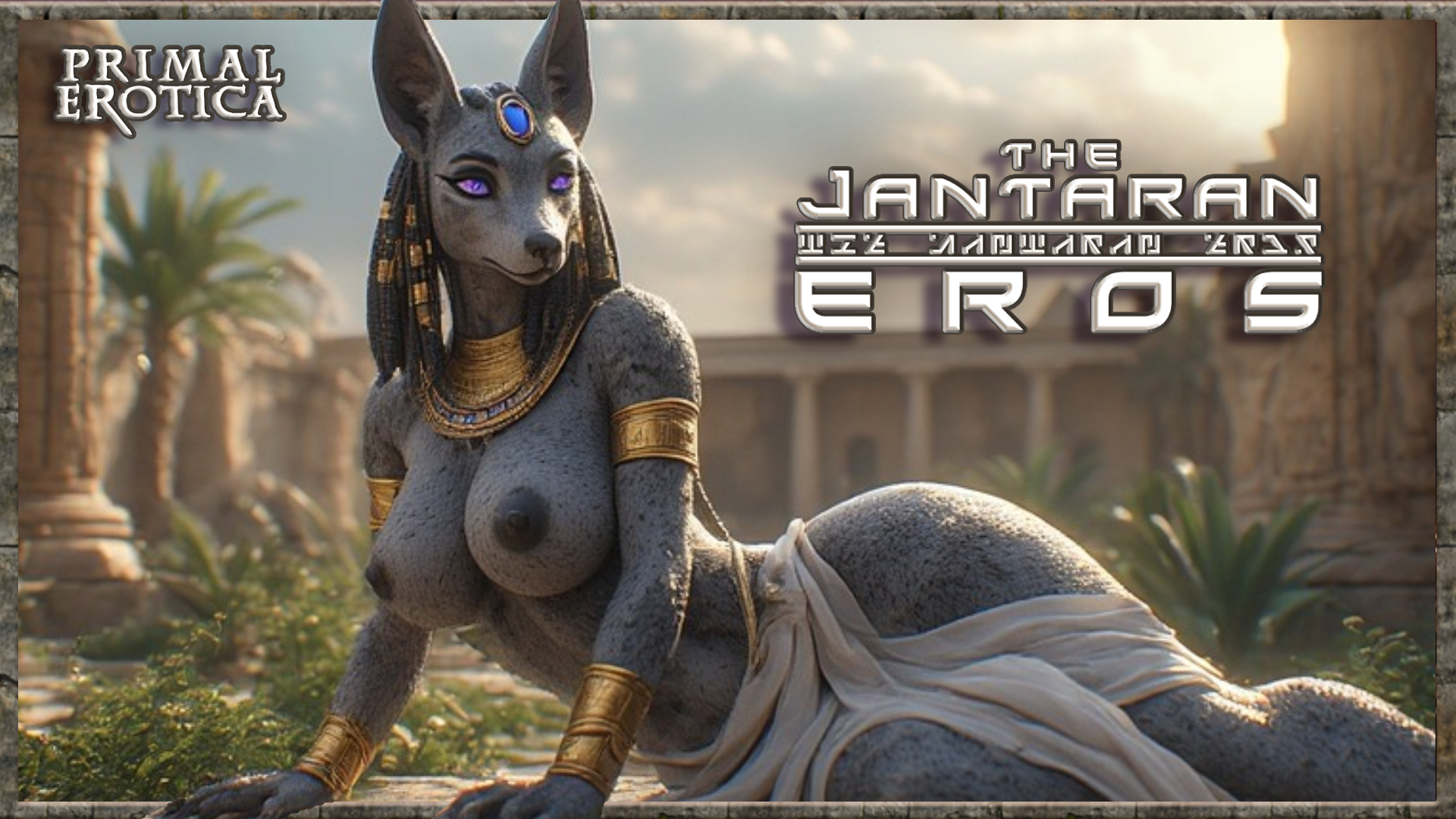
“Before the southern trade wars, before the Bantos rose to prowl the silver valleys and the Lion Imperium unfurled its banners across the steppe, there was Elder Jantara—land of golden dusk, jackal princes, and cities hewn straight from the bones of the ancient desert. This was an age not of beginnings, but of grand returns: a time when the sun beat down upon avenues lined in sapphire and bronze, and the air itself shimmered with the promise of secrets half-whispered in the heat.
Here, the jackal folk walked with a confidence only centuries of mastery can breed—suave, sharp-eyed, their pelts as varied as the stones in their opulent markets. The tribes of Elder Jantara were not merely merchants or mercenaries, but magicians of commerce, poets of intrigue, architects of excess. Gold and spices flowed like water through a thousand bazaars. Every stone archway was carved with ancestral script, every garden blooming with forbidden fragrances from the heart of vanished empires. The matriarchs of the north—clad in silks, draped in veils of iridescent coin—met their rivals not only at the bargaining table, but in shadowed alcoves and jeweled courts, where a glance could ruin a dynasty or ignite a legend.
To walk the grand thoroughfares of Zharun or Irza was to be swept into a delirium of color and noise: dancers with tails braided in gold spun for warlords and courtesans alike, while beneath every mask or turban flickered ambitions as old as the Cataclysm itself. Psychic secrets changed paws for gemstones whose luster could turn a merchant’s luck for a lifetime—or doom a careless scion to exile. Nobles courted fortune in the thrill of risk, never trusting the dice nor the lips that kissed their rings, but trusting in fate, and in their own unyielding will.
This was not a civilization of innocence, but of appetite—diplomacy as seduction, treachery as an art form, pleasure inseparable from peril. Even the poorest street vendor wore the remnant of royal blood in the cock of her brow, the flash of his teeth. Under the indigo banners and heat-hazed domes, jackal kind wrote their names in the annals of survival and audacity, their every pleasure and humiliation recorded in the glint of gemstones and the scent of sweat-drenched sand. In Elder Jantara, the night itself was another mask, and behind it, the folk of gold and shadow danced, bartered, and claimed the world.“
The matron of the Vakhaar tribes came cloaked in pearl-grey, her paws caked with the thin dust that drifted from ’s walls at dusk. She passed beneath vaults banded in copper and aquamarine, scenting the city’s bustle—papyrus, sweat, caged birds and coins, old incense trampled under hurried footpads. Above, the crows wheeled through the ledger-towers, their voices lost beneath the endless market chorus and the creak of wooden scales. Zha’Bwazha, City of Birds and Ledgers: her destination, and her battlefield. She was not unknown here. Eyes followed her, quick and calculating, weighing silk, muscle, the flick of her tail—an older female, seasoned but still dangerous, silver rings tapping against her knuckles as she strode the market colonnades. Among the stall-keepers, her name was spoken in whispers: not fear, not quite respect, but wariness, as one might give a jackal whose teeth had earned both blood and bargains.
Her own pelt, graphite under the city’s golden haze, marked her as neither purebred nor foreign; her lineage was muddied by trade, like every power worth fearing.
At the heart of the old city, past blue flags and the calls of pigeoneers, lay the southern lord’s manse. Its doors stood open, guarded not by spears but by reputation and gold. She entered as the hour grew thick with heat, led by silent attendants through halls lined with clay tablets and great cages where the courier birds drowsed, untroubled by the world’s intrigues. She caught glimpses of herself in polished copper—hips still round, thighs sturdy, bosom cinched in chains and violet wraps. She carried her widowhood like a birthright: neither ashamed nor inviting pity. If she was past bearing, it only freed her from risk.
He waited in the atrium, sprawled on a low throne, jet-black from snout to tail-tip, bracelets stacked to the elbow, mane plaited with gold wire and tiny, flashing stones. He was younger—old enough to own a city block, young enough to swagger. She felt the old pulse quicken, an ache not quite forgotten. Their rivalry was legend; their first bargains inked before his voice had dropped, her children not yet grown. Yet always, it was here, in the pulse between market and moon, that they measured their fortunes.
He rose to greet her, one eyebrow lifted, mouth quirking with a private joke. “North comes south, bearing ledgers and hunger. What does the widow of Qerrat desire from Zha’Bwazha?”
She did not bow. “I desire what is owed to me. I hear you possess a certain stone—a sapphire, cut for the brow, not the neck. A gem with weight enough to tip the balance in any hand.”
He spread his claws over the lacquered arm of the throne, lazy. “You think I trade away such luck on a whisper from the north?”
She smiled, slow and unyielding. “I think you are a jackal who knows the value of a rival’s gratitude—and the price of refusing it.”
The silence between them thickened; behind her, servants withdrew, the doors falling shut with the hush of expectation. The city’s heartbeat receded, replaced by something old, dangerous, sharply intimate. He gestured for her to approach. “Is this what you truly want?”
She met his gaze, letting him see the hunger behind the mask. “Yes. More than anything.”
He did not move at first. Then, with the casual authority of a king, he snapped his fingers—guards faded into the pillars, eyes respectfully averted. He rose, unfastening the sash at his waist, letting it fall to reveal the full, potent arrogance of his body. Cock already swelling, defiant and dark as obsidian. She tasted salt on her tongue—old memory, new shame, the thrum of rivalry shifting to something raw.
He lounged back, legs spread, tail curled. “On your knees, merchant. Show me the price of your ambition.”
She knelt, as one might kneel at an altar, palms on his thighs, feeling the heat and weight of him—a body that knew victory, that had bested her before but never claimed her utterly. She heard her own breath, thick and unsteady, as she leaned in. When she took him into her mouth, it was not with meekness but with hunger, the velvet press of her tongue a silent oath: I will take what is mine, in gold, in trade, in flesh.
He groaned, head tipped back, claws raking her ears as his hips flexed. He was young but not untested; he knew how to hold back, to tease, to make her work for every inch. His taste was bitter, heat pulsing against her palate, and the pulse of his need thrummed through her jaws and down her spine. She let him feel the skill of older tongues, the rhythm that unseated kings.
By the time he spilled, it was not in victory but surrender—his howl muffled by the domes above, body quaking under her hands. She swallowed, throat raw, gaze never leaving his face. When he slumped back, sated, she rose, mouth gleaming, pride intact.
He panted, grinning now, chest heaving. “You play for high stakes, widow.”
She wiped her lips, steady. “I play to win.”
Outside, the market sang and the ledgers tolled. In the hush between acts, two rivals measured each other, each knowing the game had only begun.
Time loosened its grip in the heat of the atrium. What followed was not negotiation but ritual, bodies arranged into an obscene geometry older than either bloodline. He hauled her up with effortless strength, seating himself bare on the throne while turning her, lifting, locking her into a headstand against his chest. Her thighs framed his muzzle; her tail hung slack, twitching with every breath. His hands cupped her rump, thick and heavy, the flesh yielding and rebounding in his grip, not soft with age but perfected—Jantaran breeding honed for balance, for endurance, for the pleasures that lived between muscle and fat. Smooth-cut, no dimpling, no slackness; a matron’s body kept honest by heat, walking, and appetite.
She took him back into her mouth as if she had never left it, lips slick, jaw aching, pride swallowed with the salt of him still lingering in her throat. He groaned again, low and dangerous, and drove his tongue into her sex with intent, not gentle, not reverent, tasting her as one tastes a sacred fruit stolen from a guarded grove. His muzzle buried deep, breath hot, tongue working her with practiced hunger. She shuddered, the inversion pulling blood to her head, making the room swim, her own sounds torn from her despite herself. Her worry crept in then—quiet, sharp. This was more than display. This was the prelude to mating, and she was not here to be claimed.
The throne creaked beneath them. Her rump jiggled helplessly in his grasp as he held her there, using her, enjoying the way her body answered despite every calculation that had brought her south. She sucked him harder, faster, hoping to spend his need, to keep this in the realm of foreplay and power-play rather than binding. His claws flexed against her ass, not cruel, not gentle—possessive enough to make her breath hitch.
At the edge of the chamber, two guards had drifted close, half-hidden by the pillars. Both were erect, silent, eyes fixed. One murmured, barely audible, noting how supple she was, how her age only seemed to sharpen the appeal. The other answered without looking away: that was why the light tribes kept to their oases, why their females endured so long. Sex fed their sorcery, and sorcery fed their sex. The words alone were enough to make the younger guard’s cock leak, a thin line down his shaft. He shifted his weight, already planning the end of his shift, the crowded whore-rows of Zha’Bwazha, a grey-furred female who would remind him of this vision without making him foolish enough to speak of it.
The sounds took over then—wet, rhythmic, breath and flesh and the low animal noises neither rival bothered to restrain.
The city beyond the walls faded to nothing.
With the sapphire clenched between her teeth, the chain biting into her gums, he drove into her from behind, relentless, his black fur slick with sweat. Her caution came too late. She had come south for leverage, and left herself open to appetite—now the price was being paid in breathless gasps and the raw, undeniable heat in her body. He did not bind her—not truly; no claim, he swore into her ear—but the fullness of him, the sheer insistence of every thrust, overwhelmed whatever careful distance either had meant to keep. She felt reckless, overreached—a matron who had gambled too freely with her own hunger.
He took her hard, fast, hands locked on her hips, cock buried to the root, driving until her thoughts scattered like startled birds. When he came, it was with a rough sound dragged from his chest, hips snapping forward as his release pulsed deep inside her—hot, excessive, leaking around the throbbing knot she hoped he would not mention, mind racing, staining the moment with a finality she could not undo. She bit down on the chain, refusing to cry out, tasting sweat, and blood and sapphire and victory all at once.
All she could think as the seed spilled into her was that, altered or not, she had received the Jantaran Sapphire first.
Before dawn, she slipped from Zha’Bwazha’s gates, sex swollen and aching, a vivid, hot pink reminder beneath sweat-matted fur. The desert trails took her back in silence. Sand cooled her feet; the night breeze dried the sheen on her body; the gemstone—heavy, cold, triumphant—swung from the circlet on her dark grey brow.
She would win the trade war.
That much was certain.
What lingered was the ache, and the memory of how near desire had come to unmaking her.
Behind her, in the hush after conquest, he lounged on his throne, hookah smoke curling lazily above his head. He chuckled, hips twitching with aftershocks, a slow leak at his tip as his balls settled. He licked his lips, savoring both taste and outcome.
At his signal, a blond, gold-furred northern attendant appeared, carrying a large chest. The lid opened, revealing a gleam that lit the chamber—sapphires by the hundred, all cut alike, set in rings, circlets, chains, even the hilts of knives. The jackal lord peered in, his smirk deepening.
The servant hesitated, unable to hide his curiosity. “Master… are we to consider ourselves sly? Or… was that the true sapphire?”
The jackal leaned in, voice low with amusement. “That’s the best part. They’re all real sapphires.”
He straightened, eyes gleaming as he gazed into the trove. “They just all believe only they possess the true Jantaran Sapphire.”
Laughter—low, sly, satisfied—filled the stone chamber, while the city of ledgers slept, none the wiser.

 Unlock with Patreon