
To view this content, you must be a member of HTH Studios’s Patreon at $10 or more
 Unlock with Patreon
Already a qualifying Patreon member? Refresh to access this content.
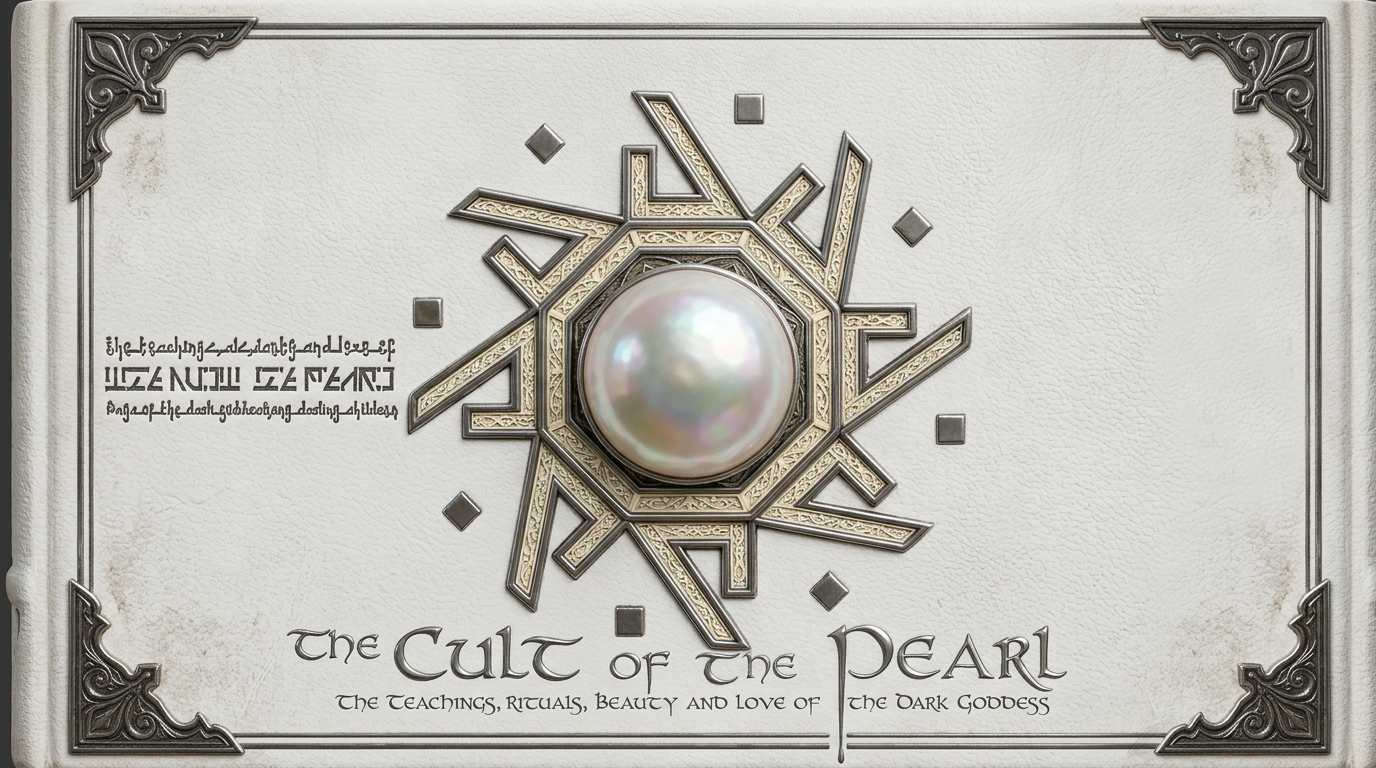
Among the many ideas rejected by the Pearl, few have caused greater confusion among outsiders than our refusal to embrace the doctrine of Sin. Many hear this and immediately conclude that we reject morality itself. Others imagine that we believe all actions are equal, all choices permissible, and all behaviors beyond criticism. Such conclusions reveal only that the listener has mistaken one thing for another. The Pearl rejects Sin. The Pearl does not reject responsibility. These are not the same. The doctrine of Sin teaches that an action is wrong because an authority has declared it wrong. The faithful are instructed not to question, not to examine, and not to understand. Obedience becomes the highest virtue, reflection becomes unnecessary, and a creature need only ask whether a rule has been violated. The Pearl teaches a different path. We ask not merely what was done, but what happened. We ask who was harmed and who was helped. We ask what was created and what was destroyed. We ask what flourished and what withered. Such questions require thought, wisdom, honesty, and judgment. They cannot be answered merely by reciting commandments.
A creature who strikes a child has caused suffering whether or not a scripture forbids it. A creature who violates another’s willing heart has committed a cruelty whether or not a priest has written a law against it. A creature who abandons those dependent upon them leaves real wounds behind regardless of whether a god keeps count. Reality itself bears witness. Consequences are real. Suffering is real. Joy is real. Love is real. Loss is real. These things require no divine bookkeeping to exist. Fire burns regardless of doctrine. Disease spreads regardless of theology. Kindness comforts regardless of ritual. The world itself records the outcomes of our choices. We need not invent cosmic ledgers to observe them.
For this reason the Pearl regards Sin as a dangerous simplification. Too often it becomes a tool through which the ambitious control the fearful. Too often it allows cruelty to disguise itself as righteousness. Too often it encourages creatures to obey without understanding and condemn without compassion. The history of Vandyrus contains no shortage of tyrants, priests, kings, magistrates, zealots, and would-be prophets who discovered that frightened populations are easier to command than thoughtful ones. A creature burdened by guilt may be manipulated. A creature taught to fear their own nature may be controlled. A creature convinced that every impulse, question, doubt, desire, or mistake carries cosmic consequences becomes dependent upon those claiming authority to grant forgiveness. We therefore view doctrines built primarily upon guilt, shame, terror, and spiritual intimidation with considerable suspicion.
Yet rejecting Sin does not mean rejecting morality. Indeed, it demands more of it. The creature who follows rules blindly has surrendered responsibility to another. The creature who must think, judge, reflect, and consider consequences carries responsibility personally. Such a burden is heavier, not lighter. Wisdom requires effort. Compassion requires effort. Understanding requires effort. It is easier to obey than to think. Easier to condemn than to understand. Easier to repeat a law than to examine a situation honestly. The Pearl therefore teaches wisdom rather than obedience, understanding rather than fear, and compassion rather than condemnation. We do not ask whether a creature has offended the heavens. We ask whether they have enriched the world or diminished it. We ask whether they have increased suffering or reduced it, whether they have nurtured life or neglected it, whether they have honored the willing heart or violated it, and whether they have left beauty behind them or destruction. These are the measures by which actions are judged, not because the stars demand it, but because every creature living beneath them must endure the consequences.
Thus we reject Sin, not because nothing is wrong, but because too many creatures have used the word to avoid understanding why something is wrong. We reject the notion that morality begins and ends with obedience. We reject the idea that guilt is wisdom or that shame is virtue. We reject the belief that fear produces goodness. A creature should strive toward kindness because kindness improves the world. A creature should reject cruelty because cruelty diminishes it. A creature should honor affection because affection enriches life. A creature should oppose coercion because coercion corrupts what ought to be freely given. These truths require neither threats nor commandments to remain true. The stars themselves offer no lectures. They simply shine. The consequences of our actions are much the same. Whether we acknowledge them or not, they remain. Wisdom lies in learning to see them clearly and accepting responsibility for the paths we choose beneath their light.
The Pearl does not command marriage, nor does it condemn those who walk other paths. Many creatures live honorable lives without taking mates, while others find companionship only later in life. Some become wanderers. Some become scholars. Some devote themselves to craft, service, or duty. The stars shine upon all equally. Yet wisdom requires that we acknowledge what generations have observed.
A home built upon trust tends to weather storms more easily than one built upon convenience. A pair of devoted hearts often accomplishes more together than either might alone. Children flourish when surrounded by affection and stability. Elders fare better when loved. Labor feels lighter when shared. Grief becomes easier to endure when another creature carries part of the burden.
For this reason the Pearl has long encouraged healthy pair-bonds, not because they are mandatory, but because they frequently lead to flourishing lives. The faithful often speak of the Hearth Bond, the sacred companionship that develops when two creatures choose, day after day, to build a shared future together. Such bonds need not be perfect. No relationship is free from hardship. Yet hardship faced together often strengthens affection rather than diminishing it.
This should not be mistaken for ownership. A mate is not property. A spouse is not a servant. Affection cannot be commanded. Love cannot be demanded. The willing heart remains sacred. A healthy union survives because it is continually chosen, not because it is enforced.
Thus the Pearl celebrates courtship, companionship, marriage, and family not as obligations, but as proven paths toward domestic harmony. We recognize that not every creature will walk these roads. Yet for those who do, we encourage patience, honesty, mutual respect, affection, forgiveness, and shared purpose. Such virtues build homes that endure long after beauty fades and youthful passions cool. A brief flame may warm the hands for a night.
A well-tended hearth may warm generations.
Among the many accusations directed toward the Pearl by those unfamiliar with our customs, perhaps none is more common than the claim that our temples conceal secret teachings from the public. Such rumors often arise because creatures mistake mystery for secrecy. They see our hymns, our rituals, our symbols, and our traditions and imagine hidden agendas where none exist. To such concerns we offer a simple answer: the Pearl hides neither its teachings nor its principles. Our books are written openly. Our hymns are sung publicly. Our doctrines are available to any creature who wishes to read them. Our temples stand within cities rather than beyond them. Our festivals occur beneath open skies. Our teachings may be questioned, debated, challenged, studied, criticized, and examined by any honest scholar willing to undertake the effort. Truth need not fear observation. The Pearl therefore encourages literacy, record keeping, genealogy, public archives, and the preservation of knowledge. We believe that teachings capable of surviving scrutiny emerge stronger for it. A faith built upon deception eventually collapses beneath its own weight. A faith built upon understanding may endure for generations. What we teach today should withstand examination tomorrow. What we write should survive the eyes of friend and critic alike. A creature confident in the strength of their foundations need not fear the opening of doors.

Likewise, our temples recognize the authority of lawful sovereigns, kings, queens, councils, magistrates, and rulers. The Pearl does not seek to replace governments, command armies, collect territories, or establish kingdoms of its own. Such matters belong to the temporal world. Our duty is not to rule civilizations but to serve those who live within them. Thus temples cooperate with local authorities wherever possible and respect the laws of the lands in which they stand, provided those laws do not demand cruelty toward the helpless. There are some religions which dream endlessly of earthly power, measuring success by the number of banners they command or the armies that march beneath their symbols. Such ambitions do not concern us. We are caretakers, healers, teachers, archivists, midwives, musicians, counselors, and guardians of tradition. We seek not thrones but thriving communities, for a prosperous city filled with healthy, hopeful creatures honors the stars far better than a frightened kingdom ruled through force.
For there exists one authority older than kingdoms, older than dynasties, and older than the stones from which many cities were built: hospitality. Throughout Vandyrus there endures a sacred custom that those in genuine distress deserve aid where aid can be given. The Pearl has always honored this tradition. A child abandoned in the rain. A widow fleeing violence. A family driven from their home by disaster. An orphan with nowhere to sleep. A traveler stranded far from safety. Such creatures shall find our doors open whenever possible. This does not mean the temple is blind. We are not required to embrace wolves pretending to be lambs, nor are we commanded to place the innocent in danger for the sake of appearances. Yet neither shall we ignore suffering simply because it is inconvenient. Compassion remains among the highest virtues taught beneath the stars. A civilization may often be judged by how it treats the powerful, but its character is revealed by how it treats those who possess nothing.
This commitment naturally extends to matters of comfort, affection, and desire. The Pearl recognizes that loneliness is real. Grief is real. Heartache is real. Isolation wounds the spirit as surely as disease wounds the flesh. Therefore our priestesses and priests are encouraged to listen when others speak, to comfort when comfort is needed, and to offer companionship where appropriate. Such acts are not viewed as distractions from faith. They are expressions of it. A creature burdened by sorrow may require medicine, but they may also require understanding. A creature mourning a loss may require shelter, but they may also require company. The spirit hungers no less than the body, and those who pretend otherwise often discover too late how deep such wounds can become. The Pearl therefore teaches that kindness is not weakness. Compassion is not indulgence. Affection is not frivolous. These things sustain life just as surely as bread and water.
Yet let it be understood that comfort is not coercion. Affection is not obligation. Desire is not entitlement. No creature owes another their heart, their body, or their affection. The willing heart remains among the most sacred principles of the Pearl. Only the willing. Always the willing. Nothing beautiful blooms beneath coercion. This doctrine governs every aspect of temple life. No affection gained through fear possesses value. No intimacy secured through pressure possesses dignity. No comfort extracted through manipulation possesses sincerity. Such things are counterfeit. The Pearl seeks the genuine article. Friendship freely given. Affection freely shared. Desire freely expressed. Love freely discovered. Hospitality freely extended. These are the treasures we celebrate because these are the things that enrich the world. A flower forced open before its season is ruined. A song sung under threat ceases to be music. A heart commanded to love cannot truly do so.
In this way our temples strive to remain what they were always intended to be: places of refuge rather than confinement, places of learning rather than secrecy, places of healing rather than judgment, and places where creatures may arrive burdened by sorrow and depart carrying a little more hope than when they entered. The stars above hide nothing of their light. They shine openly for all who choose to look upward. Neither should those who walk beneath them.
Among the many customs that distinguish the Pearl from certain lesser faiths, perhaps none is remarked upon more frequently than the kindness our priestesses show toward males. Travelers often arrive from distant lands expecting judgment, suspicion, ridicule, or indifference, for these things are sadly common elsewhere. Instead they find smiles, conversation, encouragement, hospitality, and genuine affection. Some find this so unusual that they mistake it for manipulation. Others assume it is merely politeness. Neither explanation is correct.
The truth is much simpler.
We are kind because the male is sacred.
Not because he is powerful. Not because he is wealthy. Not because he is handsome, accomplished, noble, or influential. He is sacred because he is alive beneath the stars, and because within him resides possibility. This remains true whether he is a king seated upon a throne or a laborer covered in dust. It remains true whether he is young or old, celebrated or forgotten. Every male carries within him gifts unique to himself, and every male deserves to be treated with dignity.
Many societies are eager to praise males only when they are useful. A warrior is praised for victory. A merchant is praised for profit. A craftsman is praised for skill. A father is praised for provision. Yet what becomes of the male who is weary? What becomes of the male who has failed? What becomes of the male who has lost his way, suffered misfortune, or simply lacks the gifts celebrated by his peers? Too often such creatures are discarded, mocked, or forgotten. The Pearl rejects this cruelty. We do not believe dignity must be earned. We believe dignity is inherent.
For this reason our priestesses are taught to see beyond status. The nervous apprentice, the aging mason, the awkward scholar, the exhausted caravan guard, the widowed sailor, the frightened young male entering adulthood for the first time—all are worthy of kindness. Not because they have proven themselves, but because they exist. We believe that many wounds of the spirit arise not from hardship itself, but from the feeling that one is unseen.
Thus one of the first duties of a priestess is simply to notice. To listen. To comfort. To encourage. To remind a creature of the worth they have forgotten within themselves.
This does not mean that all males are virtuous. The Pearl is not blind. There exist cruel males, selfish males, violent males, dishonest males, and predators who bring suffering wherever they go. Such creatures are judged not because they are male, but because they have chosen to misuse the gifts entrusted to them. Strength without compassion becomes tyranny. Desire without restraint becomes violation. Confidence without wisdom becomes arrogance. The Pearl does not excuse wickedness. Yet neither does it assume wickedness. Every creature must be judged by their actions rather than by suspicion alone.
Many outsiders are surprised to discover that our faith openly admires masculine beauty. Yet why should we not? We praise beautiful music. We praise beautiful architecture. We praise beautiful gardens and beautiful stars. Why then should we pretend that beauty in a male is somehow different? A strong back shaped by honest labor. Skilled hands hardened through craftsmanship. Broad shoulders capable of carrying burdens. A warm laugh shared among friends. A brave heart. A gentle spirit. A sharp mind. A devoted father. A loyal companion. These things are beautiful. To acknowledge beauty is not weakness. It is honesty.
Likewise we do not regard vitality as something shameful. The healthy vigor of youth, the energy of a creature in their prime, the desire to create, build, protect, explore, love, and continue are among life’s great blessings. Some faiths teach creatures to fear these things. We teach them to understand them. A gift does not become evil merely because it is powerful. Fire warms a home. Fire may also destroy one. Wisdom lies not in extinguishing the flame, but in learning how to tend it properly.
The Pearl therefore encourages priestesses to offer kindness freely, particularly to those who seldom receive it. Many males spend their lives being valued only for what they produce, build, carry, earn, fight, or provide. Few are taught that they themselves possess value apart from utility. Few hear words of encouragement. Few are told they are appreciated simply for existing. Yet we believe such affirmations nourish the spirit just as food nourishes the body. A creature who feels seen often stands taller. A creature who feels valued often becomes kinder. A creature who feels loved often discovers new reasons to love others in turn.
This is why visitors so often find warmth within our temples. Not because we seek to flatter. Not because we seek to deceive. But because we genuinely believe that every creature deserves dignity beneath the stars. The mason deserves it. The prince deserves it. The shepherd deserves it. The scholar deserves it. The fool deserves it. The lonely deserve it most of all.
For the stars above shine upon all creatures equally.
And if the heavens themselves make no distinction, who are we to do otherwise?
Among the many symbols employed by the Pearl, none are more commonly misunderstood than the Sacred Pearl, the Rosen Pearl, and Pearl Essence. Though often confused by outsiders, each represents a distinct aspect of life’s great cycle and occupies a unique place within our teachings.
The Sacred Pearl is the most familiar of these symbols and appears throughout temples, scriptures, jewelry, architecture, and devotional art. To the common worshipper, the Pearl represents potential. It is possibility made visible. It is tomorrow resting quietly within today. It is the promise that life may continue beyond the span of a single creature. For this reason the Pearl has long been associated with the masculine principle within Pearl theology. Just as a pearl forms around a tiny beginning and grows into something precious, so too does possibility travel through generations. Thus many of our oldest hymns describe the Pearl as the Seed of Tomorrow, the First Promise, or the Gift of Continuity.

Pearl Essence occupies a more philosophical position within the faith. Often translated imperfectly as Egg Wisdom, the term refers not to a physical object but to the accumulated knowledge carried forward through life itself. Every generation inherits gifts from those who came before: memory, instinct, tradition, experience, language, culture, and understanding. Pearl Essence is the recognition that life is not merely transmitted through flesh but through wisdom. A child inherits more than blood. A civilization inherits more than ancestry. Thus Pearl Essence represents continuity of understanding, the sacred transmission of knowledge from one generation to the next. Among temple scholars it is often said that bodies carry life forward, but Pearl Essence teaches life how to flourish once it arrives.

The Rosen Pearl occupies a different place still. Within sacred texts it serves as a symbol of feminine pleasure, receptivity, and awakening. It is not treated as a symbol of reproduction alone, but as a reminder that creation is not merely an act of necessity. The Pearl teaches that joy, affection, intimacy, and shared delight possess sacred value of their own. Thus the Rosen Pearl frequently appears in poetry, marriage blessings, fertility hymns, and devotional artwork concerning companionship between mates. It symbolizes the capacity to receive, to respond, to awaken, and to transform possibility into lived experience. For this reason many priestesses describe it as the Pearl of Delight, the Hidden Rose, or the Jewel of Awakening.
Together these symbols form a complete teaching. The Sacred Pearl represents possibility. The Rosen Pearl represents joyful transformation. Pearl Essence represents continuity and wisdom. Possibility alone accomplishes little. Transformation without continuity quickly fades. Wisdom without renewal eventually stagnates. Yet when all three work in harmony, life flourishes.
Thus the faithful often summarize the lesson simply:
Possibility creates the future.
Delight welcomes it.
Wisdom guides it.
Such is the cycle beneath the stars, and such are the mysteries entrusted to the Pearl.
Many ask why the Pearl places such honor upon the male. Some ask this question sincerely. Others ask it because they have heard outsiders claim that our temples honor only the female while overlooking the contributions of the male. Such creatures understand neither our teachings nor the nature of life itself.
The Pearl has never regarded the male as lesser. Indeed, from the earliest hymns to the newest sermons, the male has been honored as one of the great sacred mysteries through which life continues beneath the stars.
The male embodies potential. Within him resides the possibility of futures not yet written, generations not yet born, stories not yet told, and destinies not yet realized. Though the world often celebrates what can be seen, the Pearl also teaches reverence for that which has not yet become. Every city was once an idea. Every tree was once a seed. Every bloodline was once a possibility. So too does the male carry within himself the promise of countless tomorrows.
This is why many of our oldest teachings speak of the male not as conqueror, but as bearer of possibility. Not as ruler, but as giver.
Not as owner, but as steward of the future.
When we honor fathers,
we honor devotion.
When we honor sons,
we honor promise.
When we honor grandfathers,
we honor legacy.
When we honor young males entering adulthood,
we honor the countless futures resting quietly within them.
Thus the male occupies a sacred place within our teachings because he reminds us that every creation begins with possibility.
Nothing may become unless something first dares to be.
Yet this should never be mistaken for superiority. The Pearl has little patience for such arguments. Possibility alone is not enough. A seed kept forever within a pouch never becomes a tree. A song never sung remains only silence. The miracle of life belongs not to one participant, but to many. The male carries possibility, but possibility longs to become reality. It seeks fulfillment. It seeks continuation. It seeks transformation.
The Pearl therefore teaches that the male is sacred because he carries the first spark of tomorrow. Within him resides the wandering starlight of futures yet unborn. His strength, vitality, affection, courage, creativity, and devotion are not accidents of nature. They are gifts. Like all gifts, they must be cultivated wisely. A male who learns compassion alongside strength becomes a protector. A male who learns wisdom alongside passion becomes a guide. A male who learns affection alongside desire becomes a source of comfort and stability. Thus our temples teach responsibility rather than shame, understanding rather than fear, and stewardship rather than denial.
For many lesser faiths regard masculine vitality with suspicion. They teach males to fear their own nature, to regard desire as corruption, affection as weakness, beauty as vanity, and fertility as embarrassment. Such teachings have produced countless miserable creatures who spend their lives fighting wars against themselves. The Pearl teaches otherwise.
A healthy young male blessed with vigor should not be taught shame for possessing vigor. A handsome face is no crime. A strong body is no crime. A loving heart is no crime. The desire to create, protect, build, nurture, and continue is no crime. These are among life’s most precious gifts.
Yet the greatest mystery emerges when male and female come together willingly beneath the stars. The Pearl teaches that neither exists in opposition to the other. Rather, they are complementary expressions of the same sacred cycle. The male carries possibility. The female carries transformation. The male bears the spark. The female tends the flame. The male offers tomorrow. The female gives tomorrow form. When united through affection, trust, desire, and mutual devotion, these gifts join together in harmony.
Many of our oldest hymns describe this union as the joining of starlight. For the faithful believe that every living creature carries within them a fragment of the same celestial wonder that shines above. Alone, that light is beautiful. Joined willingly with another, it becomes creative. Joined in love, desire, affection, and trust, it becomes transformative. Joined completely, it may become life itself. Thus reproduction is not viewed merely as a biological process, but as one of the clearest visible expressions of creation’s endless cycle. Two creatures share their light, and from that union emerges a third who carries both forward into the future.
This is why the Pearl celebrates intimacy without shame and fertility without fear. Not because such things are compulsory, but because they remind us of the sacred relationship between possibility and becoming. The male and female are not rivals beneath the stars. Neither stands above the other. Neither diminishes the other. Both participate in the same miracle from different places within the cycle of life. Each possesses gifts the other does not. Each requires the other for the cycle to continue. Each is sacred in their own way.
The stars above do not ask whether possibility is greater than transformation.
Neither do we.
Many ask why the Pearl places such honor upon the female. The answer is not that females are greater than males, nor that one stands above the other beneath the stars. Such thinking belongs to those who see life only through the lens of rank and hierarchy.
The Pearl teaches no such thing. Rather, we honor the female because she embodies one of the greatest mysteries known to life itself. Across every land, every species, every kingdom, and every age, the female stands as a living reminder that possibility may become reality. The male may offer potential, but the female transforms potential into existence. Within her body the unseen becomes seen. The possible becomes actual. The future acquires flesh. What was once only hope becomes life. What was once only promise becomes continuity. This transformation lies at the heart of many of our oldest teachings and remains among the most sacred wonders contemplated by the faithful.
For this reason many of our hymns speak of the female not as ruler, but as gateway. Not as master, but as vessel.
Not as sovereign, but as the living bridge between what may be and what shall be.
When we honor mothers, we honor continuity itself.
We honor the countless generations carried forward
through devotion, sacrifice, and care.
When we honor daughters, we honor possibility,
for every child carries futures unseen and stories not yet written.
When we honor grandmothers, we honor memory, wisdom,
and the living chain that binds past generations to those yet unborn.
When we honor maidens, we honor becoming,
for within youth resides the promise of all that has not yet come to pass.
Thus the female occupies a sacred place within our teachings because she reminds us that life is never static.
Everything grows. Everything changes. Everything becomes.
Yet this should never be mistaken for superiority. The Pearl has little patience for creatures who seek to elevate one gift by diminishing another. Such thinking reveals misunderstanding rather than wisdom. The female cannot create alone any more than a seed may become a garden without soil. Just as a song requires both singer and listener, life requires many hands. The miracle belongs not to one participant, but to the union of many forces acting in harmony. The stars themselves teach this lesson. No single star illuminates the heavens alone. Each contributes to a greater whole whose beauty exceeds the sum of its parts. The Pearl therefore teaches that the male is sacred because he carries potential, while the female is sacred because she carries transformation.
One offers the spark.
The other tends the flame.
One begins the journey.
The other carries it forward.
One entrusts possibility to the future.
The other gives that possibility form.
Neither diminishes the other.
Neither exists solely for the sake of the other.
Both participate in the same miracle from different places within the cycle. To elevate one while despising the other is to misunderstand both.
There is another lesson hidden within this mystery. The female reminds us that creation itself requires patience. The world teaches many creatures to value only beginnings. Victories, conquests, declarations, ambitions, and grand moments often receive the most attention. Yet beginnings alone accomplish little. The female teaches the sacred value of carrying things forward. Nurturing. Protecting. Sustaining. Transforming. Bringing into reality what previously existed only in thought or desire. Whether one speaks of children, families, works of art, communities, traditions, discoveries, or entire civilizations, the principle remains the same. Creation is not merely the act of beginning. Creation is the act of becoming.
Thus when the Pearl honors the female, it honors one of the fundamental truths of existence. Life does not simply appear. It is carried. It is nurtured. It is transformed. It is brought from possibility into reality through patience, devotion, sacrifice, and care.
The female stands as one of the clearest living symbols of that truth.
Not because she rules over it, but because she embodies it.
The stars above do not ask which is more important.
Neither do we.
Many outsiders mistakenly believe that the Pearl teaches indulgence without limit. Such accusations are usually spoken by those who have never opened our books, never listened to our hymns, and never sat beneath the stars long enough to understand the difference between celebration and excess. The ignorant often mistake joy for recklessness and affection for weakness, believing that any faith which embraces beauty must inevitably descend into decadence. Yet this misunderstanding reveals more about the critic than the criticized. The Pearl has never taught surrender to appetite. It has never taught the abandonment of wisdom. Rather, it teaches that all things possess a proper measure and that true fulfillment is found not through denial or excess, but through harmony.
Consider the simplest example. A thirsty traveler requires water. Water sustains life, cools the body, nourishes the flesh, and preserves health. Yet every creature knows that too much water weakens the body. A creature burdened by excess becomes waterlogged. One consumed entirely by it drowns. Thus even the purest gift may become harmful when stripped of wisdom and balance. So it is with all things. Food nourishes, yet gluttony weakens. Rest restores, yet idleness diminishes. Labor strengthens, yet exhaustion destroys. Affection enriches, yet obsession consumes. Pleasure delights, yet the relentless pursuit of pleasure alone eventually leaves the spirit hollow. The lesson is not that such gifts are dangerous, but that they must be understood. One must learn not merely what brings joy, but what allows joy to endure.
This is why our faith places such importance upon health. A creature who destroys their body cannot fully appreciate life’s blessings. A creature who neglects their spirit cannot recognize beauty even when surrounded by it. The goal is not indulgence. The goal is flourishing. We encourage cleanliness because disease steals possibility. We encourage medicine because illness shortens stories that might otherwise continue for generations. We encourage exercise because strength expands opportunity. We encourage proper rest because an exhausted spirit struggles to perceive wonder. Health is not merely the absence of sickness. It is the foundation upon which all other blessings stand. To care for oneself is therefore not vanity. It is stewardship of a sacred gift.
Likewise, there are some faiths which regard desire itself as a weakness to be punished. We find such teachings deeply unfortunate. Desire is no more evil than hunger, thirst, curiosity, laughter, or wonder. These are among the natural gifts of existence. What matters is not that such impulses exist, but how one chooses to carry them. A young male blessed with vitality should not be taught shame for possessing vitality. A healthy female should not be taught guilt for possessing beauty. Strength is not a crime. Fertility is not a crime. Attraction is not a crime. These are ordinary expressions of life itself. To condemn them simply because they exist is as foolish as condemning rain for falling or flowers for blooming.
The Pearl therefore teaches responsibility rather than condemnation. We encourage self-knowledge rather than self-hatred. A creature should learn to understand their desires, govern them wisely, and express them honorably. What is freely shared may become beautiful. What is forced upon another becomes corruption. For this reason we reserve our harshest judgments not for those who feel deeply, but for those who violate the willing heart of another. The danger has never been desire. The danger is selfishness without compassion, appetite without restraint, and power without dignity. A creature who seeks affection through kindness strengthens the world. A creature who seeks it through force diminishes both themselves and those around them.
The stars themselves teach this lesson. They shine brilliantly, yet remain in harmony with one another. Were they to abandon all balance, the heavens would become chaos. So too must creatures learn that life’s gifts are most beautiful when guided by wisdom. The gardener who waters a field without restraint destroys the crop as surely as the gardener who neglects it entirely. The musician who never rests eventually loses their voice. The laborer who never pauses eventually breaks. The lesson is always the same. Life thrives when nurtured with understanding.
The Pearl does not ask that you extinguish your nature. It asks only that you cultivate it. We do not seek creatures emptied of passion, stripped of desire, or frightened of their own hearts. We seek creatures who understand themselves. Creatures capable of appreciating beauty without becoming enslaved by it. Creatures capable of love without surrendering wisdom. Creatures capable of strength without cruelty. Creatures capable of pleasure without losing purpose. For a garden thrives not because it is denied water, nor because it is flooded endlessly, but because it receives what it needs and grows toward the light. So too should every soul strive to grow beneath the stars, neither starving itself nor drowning itself, but flourishing in harmony with Her Ways.