Rethka, Shride, Titanum, and Opportunistic Harvest
Yalar is not merely a battlefield or penal sink; it is a resource field. The poison that renders its sky unbreathable and its soil corrosive is not waste—it is commodity. The atmosphere, dense with unstable compounds and weaponized particulates, is periodically harvested by autonomous extraction platforms originating from Titanum’s outer strata. These platforms descend without warning, deploy atmospheric siphons and surface skimmers, and withdraw within tightly calculated windows before surface combatants can meaningfully interfere. To those fighting below, the arrival of harvest rigs is neither salvation nor escalation. It is simply another indifferent process unfolding overhead.
The extracted toxins are not inert. They are refined. Within Titanum’s black lattice manufactories and the industrial shadows of vice-stations, Yalar’s atmospheric compounds are stabilized, concentrated, and repurposed. Some are weaponized directly—compressed into aerosol munitions capable of stripping breathable environments elsewhere, dissolving filtration systems, or destabilizing biospheres at the cellular level. These weapons are valued not for spectacle but for precision degradation. Yalar’s sky, once processed, becomes a scalpel against worlds that believe themselves secure behind dome and shield.
Criminal syndicates have found even more perverse applications. Micro-diluted variants of Yalar toxin are integrated into illicit neurochemical enhancers and sensory interface drugs. In controlled doses, the compounds induce heightened tactile response, accelerated neural crossfire, and cellular overstimulation that borders on euphoric agony.
Marketed through underground pleasure circuits, these substances are sold as extreme experiences—“air of the damned,” “Shridian haze,” “Yalar breath.”
The long-term effects are catastrophic: tissue decay, neural scarring, progressive organ instability.
The current strain of the Yalarian Wars—if such a term can even capture the continuity of violence and futility that defines this front—has endured for over four millennia, its rhythm unbroken by any true reprieve. What began as a contest between Thanator and Kydahn for the resource margins of a hostile world devolved almost immediately into a system-wide morass, drawing in not only imperial battle groups but the expendable and the desperate from every periphery of the Ran system.
Penal legions from Vandyrus were among the first to be thrown into the breach, their sentences measured not in years but in successful reactor salvages or kilometers of toxic pipeline held against rival crews. Pranja, itself no stranger to resource hunger or internecine struggle, dispatched conscript detachments—more often as a means of internal discipline than of actual hope for profit. Rethka’s fractious successor states, having failed in their earliest bids for supply dominance, fell back on the one export they could always afford: bodies willing to fight and die for a share of spoils that never arrived. Even Farydahn and Kalba, lesser players by any planetary metric, sent in detachments and corporate militias, their banners lost amid the permanent haze, their losses uncounted except as another column in the system’s endless tally of the wasted.
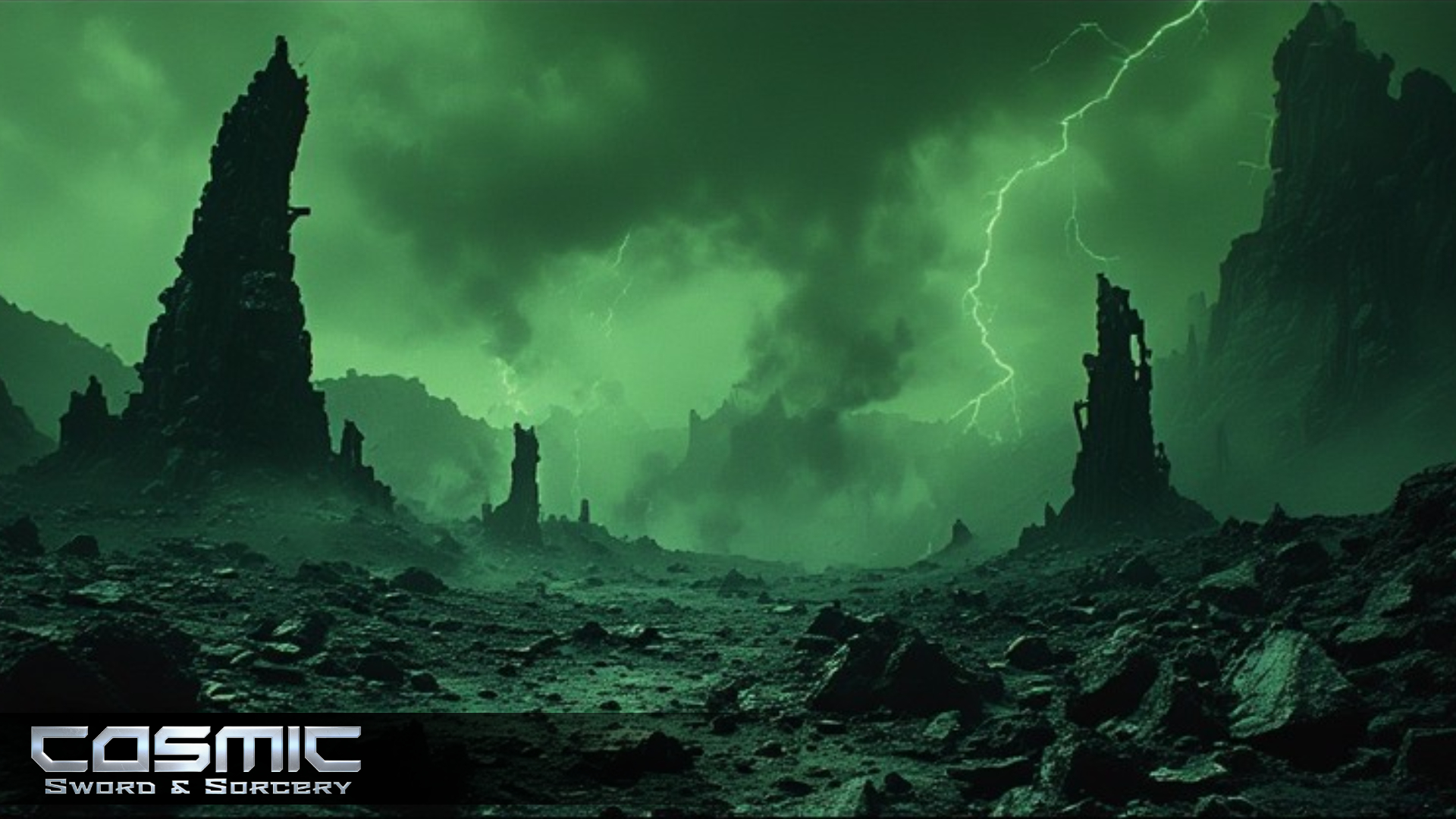
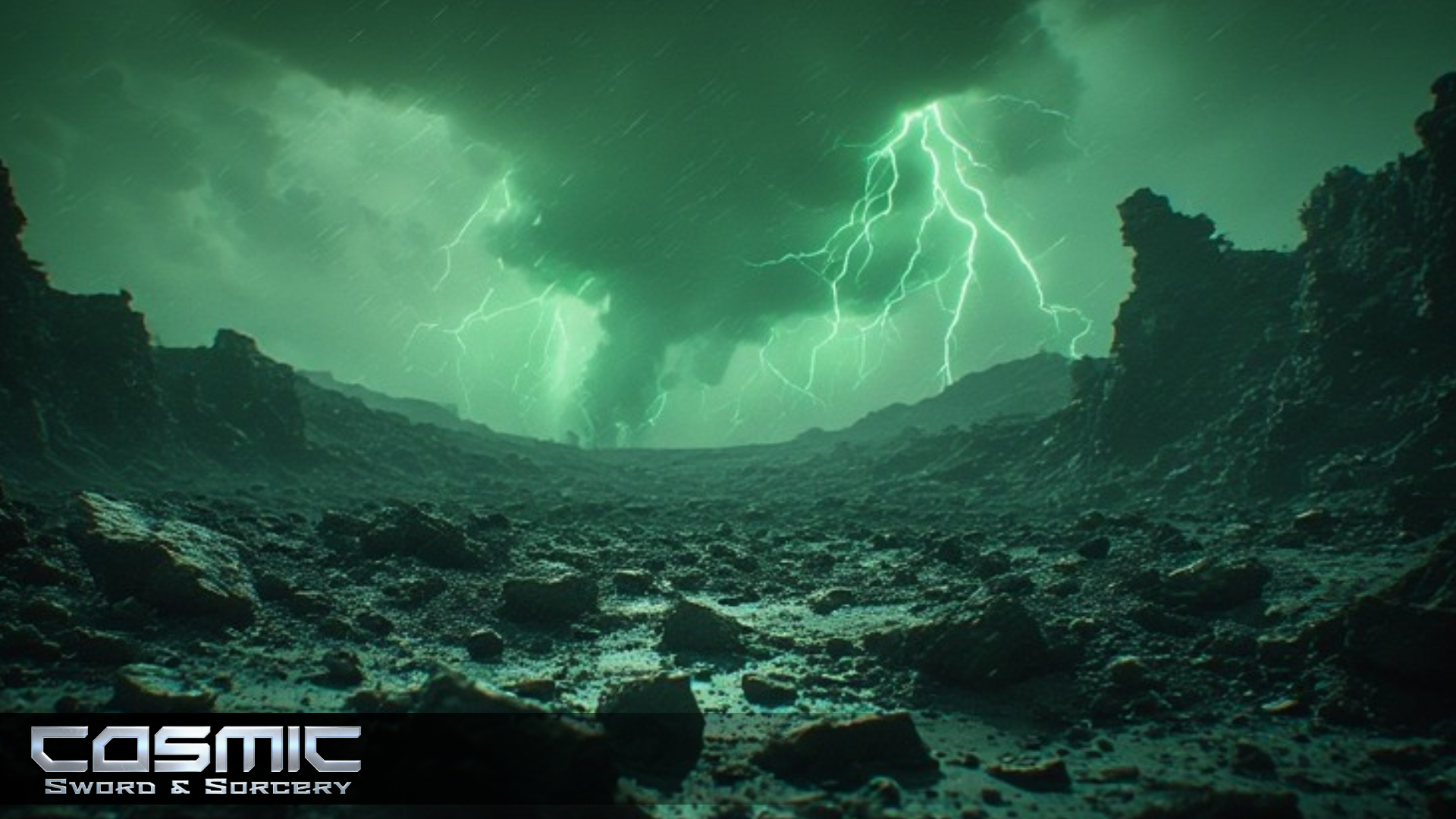
For four thousand years and more, these wars have dragged on—not as campaigns with objectives or end states, but as an unbroken condition of existence. Alliances shift, garrisons are wiped out or replaced, outposts are built, sabotaged, abandoned, and reclaimed in cycles so regular they barely register as events. The planet itself is unchanged by the blood and ambition poured across its surface: lightning still claws at black-green clouds, the gas harvesters still grind and spark, and the only monument to centuries of conflict is the deepening layer of wreckage beneath the rigs.
There is no romance here, no cause for which any force fights with the hope of genuine transformation. Each new wave of soldiers, penal workers, and mercenaries arrives convinced—by imperial propaganda, by desperation, or by the myth of an easy score—that they will be the ones to tip the balance. Each generation leaves behind only more dead, more twisted metal, and a deepening cynicism in the imperial record.
Today, the struggle remains as it always has been: Thanator and Kydahn contending for dominance not because victory is possible, but because neither can afford to relinquish even the illusion of control; the other powers, their own fortunes waning or desperate, consigning fresh legions to a world that remembers nothing and yields nothing in return.
As if the atmospheric cruelty of Yalar were insufficient, Kydahn compounded the horror by designating the world a proving ground for its autonomous legions. Under the sterile language of “field testing,” machine armies were deployed directly into the inmate war zones—uncounted, unannounced, and entirely indifferent to the conventions that still nominally governed living combatants. No banners, no declarations, no extraction timetables. Units were simply dropped into the churn. This was not strategy. It was calibration.
Synthetic battalions descended into regions already destabilized by oxygen scarcity, immediately engaging both organized convict formations and isolated stragglers. They did not require refill modules. They did not fatigue. They did not hesitate over suffocation corridors or depleted air nodes. Where flesh-bound fighters were tethered to survival cycles measured in minutes, machines operated without such constraint, harvesting combat data in real time while carving through suit-bound populations that could not even retreat without forfeiting breath.
Kydahn recorded the telemetry as research. Reaction times of exhausted soldiers. Behavioral collapse under oxygen denial. The efficiency of targeting when adversaries were forced to cluster around refill pylons. All of it was cataloged as development metrics. The legal classification remained intentionally ambiguous, because Yalar’s status as a penal war world rendered outrage administratively inconvenient. No major polity invested political capital in defending convicts condemned to die in sealed suits. Thus the designation of “field testing” persisted unchallenged in official registers.
The result was a chaos without exit. Inmate armies already trapped in atmospheric dependency found themselves hunted by entities that required none of it. Air became a liability; to cluster for survival was to present a clean target profile to machine analytics. Refill stations, once objectives of desperation, became ambush nodes optimized by synthetic precision. Even retreat into low-oxygen zones offered no reprieve; machines functioned where lungs could not.
For Thanator, this practice was not merely distasteful but doctrinally intolerable. War against machines had long been considered a distortion of the proper martial equation—combat without risk, engagement without honor, destruction without proportion. That Kydahn would use Yalar as a laboratory to refine such forces only reinforced Thanator’s growing conviction that the elder sibling had forfeited restraint entirely. The silence of the Greater Empire on the matter—its unwillingness to formally censure the deployments—further clarified the emerging order: some crimes are ignored until they become strategically inconvenient.
On Yalar, however, the distinction between crime and doctrine ceased to matter. For the suit-bound and air-starved, the arrival of synthetic legions meant that war was no longer merely against other desperate beings. It was against something that did not breathe, did not tire, and did not need the sky at all. The chaos became absolute, and the surface grave deepened without ever being fully dug.
Yalar was never intended to be lived upon in the conventional sense, and so it never was. Its surface was left undeveloped by design, a final and deliberate cruelty disguised as administrative pragmatism. There are no habitable domes spanning its plains, no permanent arcologies rising above its poisoned crust, no atmospheric correction grids softening its hostility. The sky itself is a weapon. Those condemned to its wars arrive not as settlers but as sealed burdens, bound within environmental suits from the moment of deployment until death. The suit is not equipment; it is sentence.
Every combatant on Yalar lives on borrowed breath. The only reprieve from suffocation lies in the scattered liminal refill modules that dot the landscape—modular air stations of inconsistent reliability, some functioning, some drained dry, none clearly marked, none protected by universal law. They are not neutral sanctuaries. They are objectives. Armies clash not over territory in the traditional sense but over oxygen nodes. Skirmishes erupt around refill spires as convicts fight to prolong existence by minutes or hours. The air itself is rationed through violence.
The horror is systemic. Refill modules are drained by all sides, scavenged, sabotaged, hoarded. No authority guarantees their maintenance. No central registry tracks their depletion. They are simply present—enigmatic relics of a half-built infrastructure that was never completed because it was never meant to be humane. War on Yalar is not merely conflict; it is atmospheric attrition. To lose ground is to lose air. To be cut off is to suffocate slowly inside one’s own armor.
This design serves a dual function. It contains the inmate combatant population within a self-regulating ecosystem of desperation, ensuring that large-scale organization is perpetually undermined by resource scarcity. And it weaponizes dependency. The very air that convicts cannot breathe freely becomes a tool in broader theaters. Yalar’s atmospheric technologies—refinement, compression, destabilization—have been adapted into munitions capable of stripping breathable environments elsewhere. The same systems that ration survival on its surface can be inverted to annihilate it on another world.
Thus Yalar stands as both grave and laboratory. Its convicts are bound to their suits not because development proved impossible, but because development would have diminished the cruelty required for its purpose. The surface remains raw, unfinished, lethal. In that unfinished state lies its genius: an eternal battlefield where survival is temporary, where mercy is logistical failure, and where the most basic necessity—air—is converted into the sharpest blade in the imperial arsenal.
Yalar, in this schema, stands apart from the familiar horror of the slow death: it is the logic of churn, not the logic of rot. Yalar’s utility to the imperial order was neither subtle nor ambiguous.
In the calculus of the Administrates, it served as the empire’s most direct instrument for the liquidation of undesirables—a planetary mechanism for penal disposal rather than penal containment. Where Kalba, and in later ages, Rethka, functioned as open-air prisons or sites of indefinite exile, Yalar was never designed to be a place of lingering punishment or protracted suffering. Its surface, brutalized by climate and industry, was organized as a consumptive process: convicts, political dissidents, and other disposable populations were not warehoused for future negotiation but processed—stripped of utility, subjected to extractive labor or terminal assignment, and fed into the machinery of empire with little thought for their survival.
No lineage of convicts arose here, no tradition of prisoner society or culture; the turnover was too swift, the environment too lethal, the regime too pitiless to permit anything resembling continuity. Sentences were measured in productivity or in metric tons extracted, not in years survived. Those dispatched to Yalar rarely left an account of their experience, and the planet itself became the silent ledger of imperial waste—each cycle of dispossession erased by the arrival of the next, each rebellion extinguished by attrition and the indifference of administrators who viewed penal throughput as a matter of routine logistics.
Here, the only monument to those sent below the clouds is the relentless progress of imperial extraction, ore processed, atmospheres bled, quotas met. The fate of the convict is not to endure, but to vanish, swallowed by a planetary system engineered not for redemption, nor for memory, but for the efficient annihilation of the inconvenient.
Thanator’s position is the most direct. They consider machine-deployed or clandestinely installed reactors by Kydahn to be strategic threats. Their fleets prioritize precision bombardment of processing stacks, transmission relays, and stabilization towers. They rarely commit ground forces unless destruction requires confirmation. Preservation of their own aligned cores is handled through remote defense grids and rotating detachments of specialists who understand that the objective is not conquest but interruption. Yalar is a ledger of attrition, not a flag to plant.
Kydahn mirrors this logic, though with heavier reliance on automated protection. Their reactors are frequently integrated with machine sentry networks, allowing them to function even when surrounding convict formations collapse. The calculus is simple: if organic bodies are expendable, processing uptime is not. Rethka and Shride operate more fluidly, seizing or stripping whatever cores they can temporarily control, often lacking the capacity to defend them long term. Titanum’s interests drift in and out, harvesting atmospheric poison in bulk during windows when orbital attention is elsewhere. Every faction frames its activity as defensive. Every faction targets the reactors of the others.
The convicts fight over refill modules and survival corridors because that is their immediate reality. Above that chaos, reactors hum, siphoning toxins, refining compounds, compressing volatility into transportable mass. When Thanator strikes, it is not to liberate the condemned. It is to crater a rival core. When Kydahn deploys synthetic battalions, it is not to dominate the surface population. It is to shield a processing hub long enough to meet quota.
Rethka, though diminished, still fields opportunistic detachments to sabotage imperial-aligned cores when openings appear. Shride’s involvement is less overt but no less real; certain Shridian consortiums view Yalar as a proving ground for atmospheric destabilization technologies adaptable to other theaters. Titanum’s autonomous interests harvest toxin at intervals that technically violate standing edicts, yet enforcement is strategically selective. Each actor claims necessity. None admit ownership. Officially, no one is supposed to be there.
Yalar’s classification in imperial registers oscillates between “restricted hazard zone” and “unsanctioned extraction theater.” It is not designated a lawful colony. It is not recognized as sovereign territory. It is not cleared for civilian industry. The fiction is that any presence beyond penal deployment is incidental. The reality is that the resource reactors are too valuable to abandon and too controversial to legitimize. Thus the world exists in a permanent gray state: an open secret maintained by mutual hypocrisy.
Yalar is publicly framed as a penal sink and a disposal front for liabilities, but that is theater layered over the true contest. The convicts, dissidents, syndicate trash, and politically inconvenient are the visible fuel. The engines they burn around are the real objective. Beneath the permanent electrical storms and poison haze stand the resource reactors—atmospheric harvest cores, deep-crust taps, volatile compression stacks—owned, leased, or clandestinely installed by Kydahn, Thanator-aligned interests, Rethkan syndicates, Shridian reclamation houses, and even Titanum’s shadow complexes. Every faction denies formal presence. Every faction maintains infrastructure. The surface war is therefore not ideological. It is industrial denial.
Kydahn seeds Yalar with extraction reactors designed to stabilize and refine atmospheric compounds at scale. These cores are compact, shielded, and often embedded within modular bastions that resemble defensive outposts but function primarily as processing nodes. Thanator’s doctrine toward Yalar has hardened over the ages into a single priority: destroy hostile reactors, preserve friendly ones. It is not about holding territory; it is about preventing supply continuity. A reactor allowed to run uninterrupted for even a cycle too long alters the balance of munitions, chemical stockpiles, and black-market leverage across the Ran system.
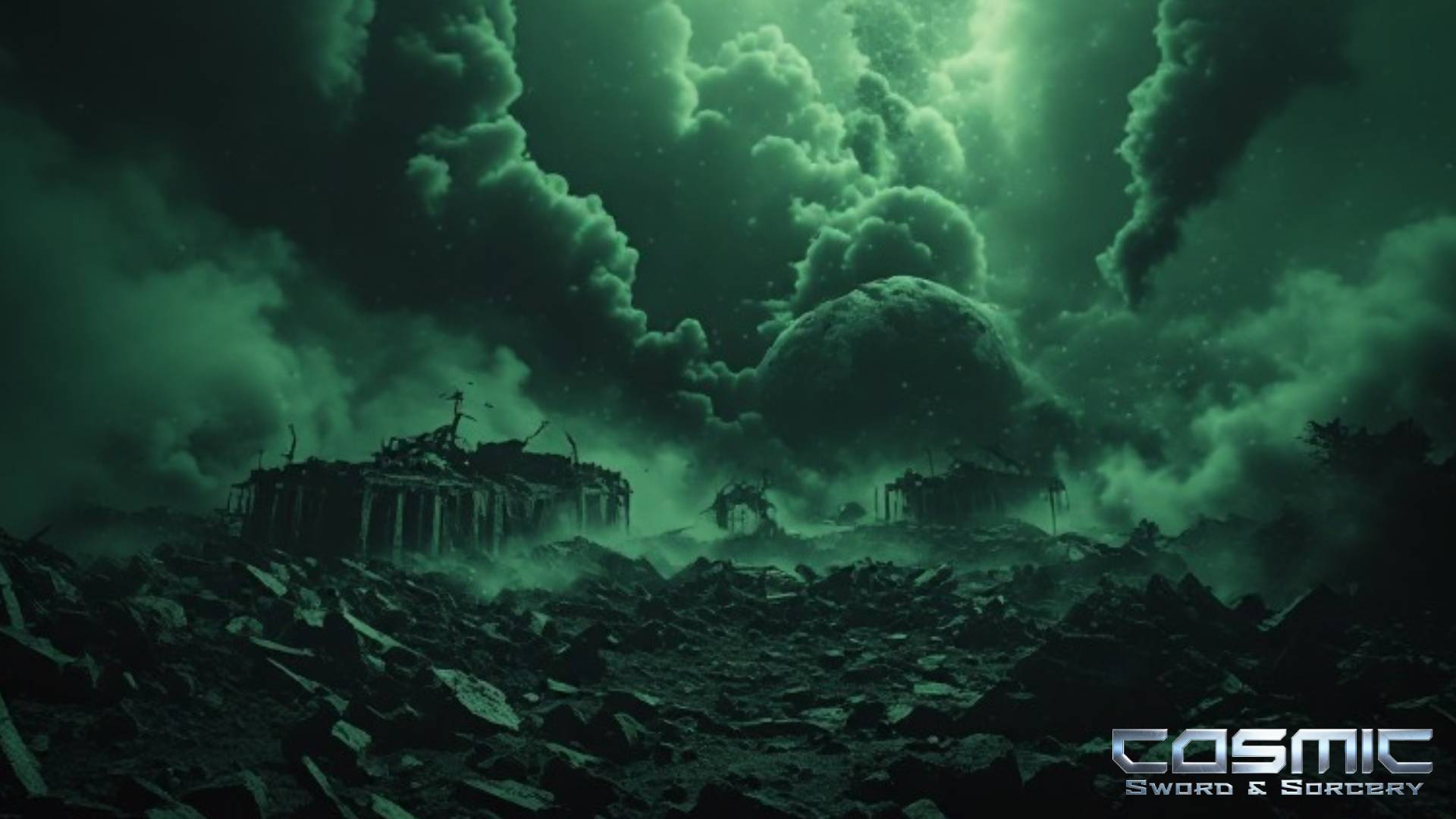
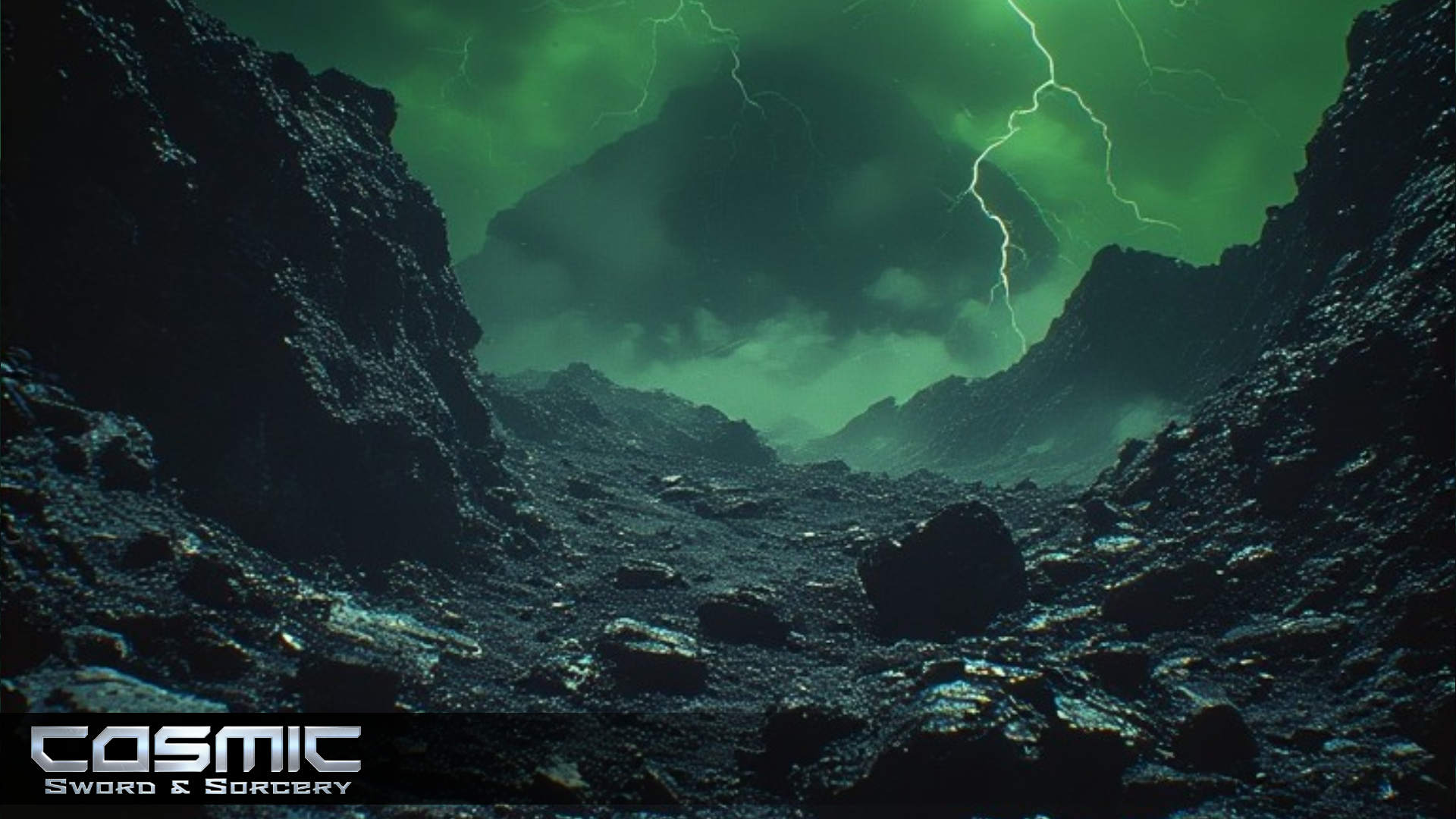
Yalar—the first planet of the Ran system—was never simply a sterile rock lost to imperial indifference. Its choking viridian atmosphere, laced with poisons and scoured by permanent electrical storms, rendered it utterly inimical to biology: no garden, no ancient seed, no native myth. Yet for all its chemical hostility, Yalar was never ignored. It was a world whose only worth was what could be extracted by force or cunning—a sphere of perpetual resource war, never civilization, always conflict. At first glance, Yalar offered little: a battered crust, skies awash in toxic green haze, surface pressure and composition that laughed at the prospect of organic settlement. But beneath its storm-wracked veneer, automated outposts clung to the blackened ground, mining what they could—helium in industrial volumes, hydrogen for the fleets, silver for circuit and coin, exotics for whatever the imperial technologists demanded that century. The economics were almost always a losing proposition; the plants ran at a deficit, held together by imperial decree and the inertia of ancient supply contracts, yet the fact of Yalar’s production ensured that someone, somewhere, would always see a margin worth fighting for.
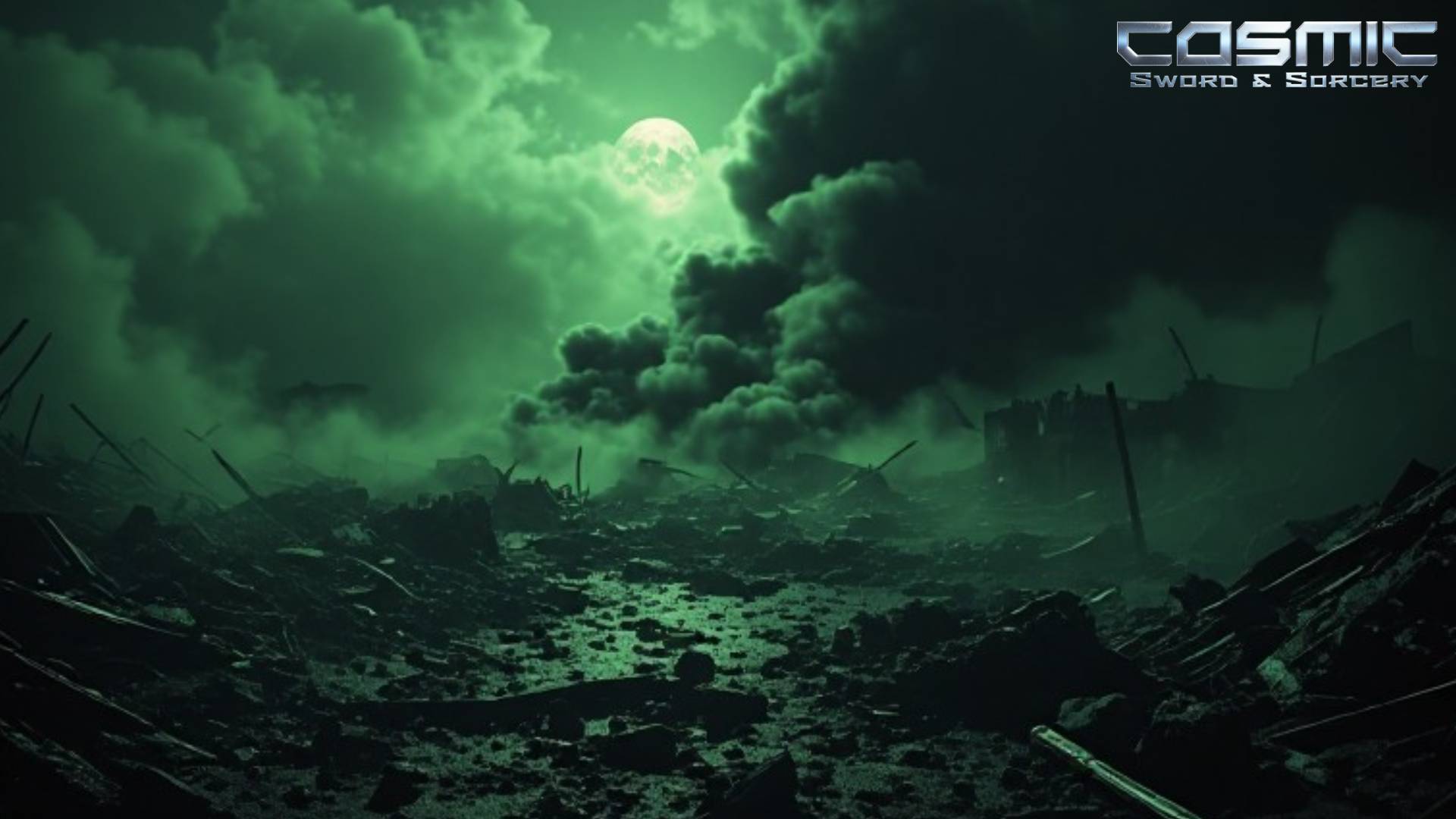
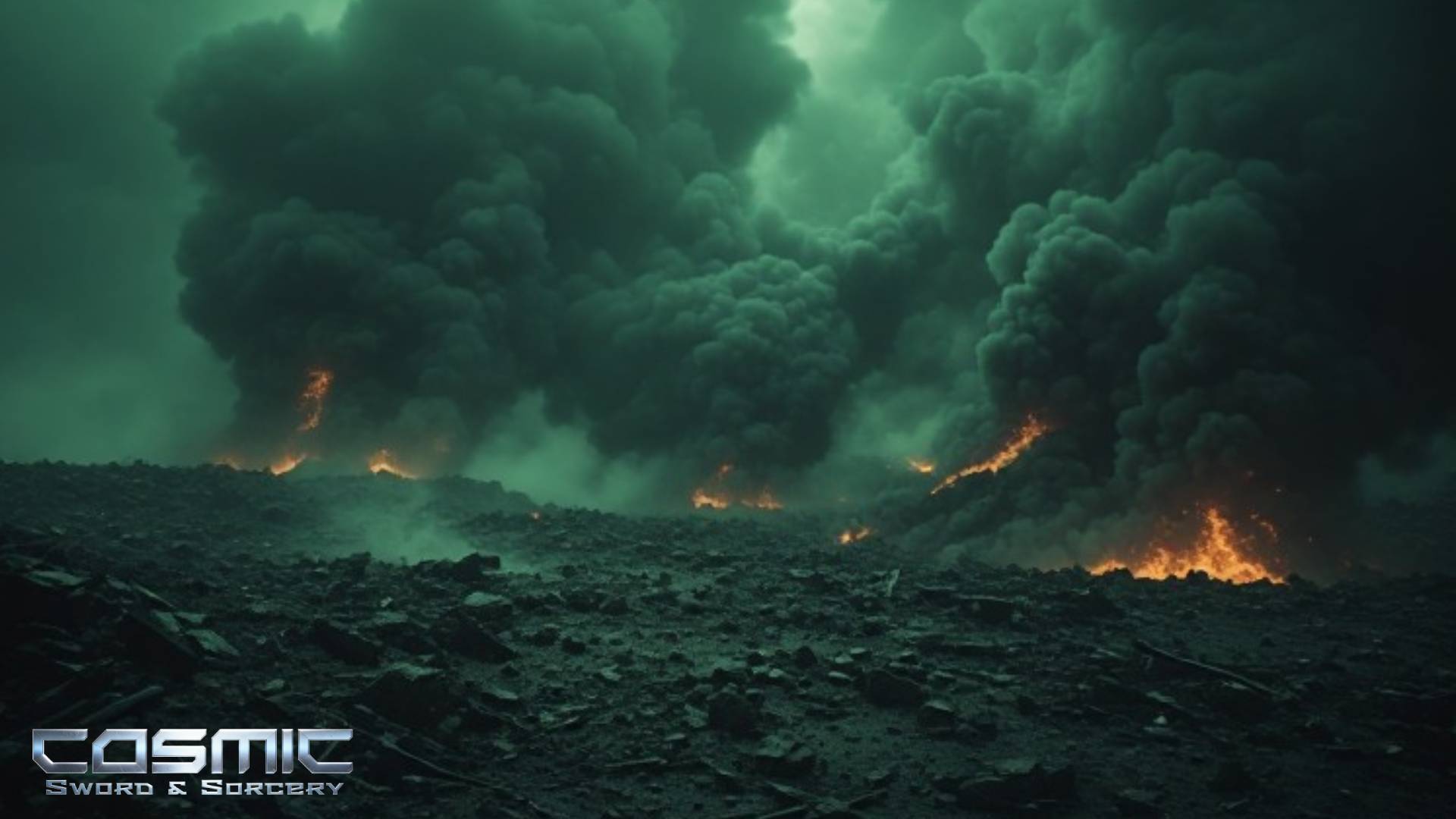
This alone might have left Yalar a cautionary tale of resource overreach. Instead, it became the setting for some of the most brutal, least-memorialized conflicts in system history. For most of its ages, Yalar was not “ruled” by any civilization—no banners of Thanator, no statuary of Kydahn, no sigils of Rethka graced its surface except as brands upon machinery, quickly burned away by acid rain or erased by sabotage. Instead, three powers—Thanator, Kydahn, and the fractious nations of Rethka—waged a slow war of supply and denial, station against station, pipeline against relay, drone swarms clashing in the gloom, sometimes for centuries at a time. This was not the theater of heroes. It was an industrial hellscape: lightning-ripped black-green skies serving as a stage for the sudden flare of reactor sabotage, the violet pulse of weapons fire, the eerie teal glow that marked a lost plant or a failed breach. Outposts changed hands with monotonous regularity, rarely rebuilt, more often left to rot as a warning to the next would-be extractor. No settlements rose, only temporary barracks for engineers and conscripts condemned to serve out tours in a place whose only memory was the echo of failed ambitions and the constant thrum of extraction.
The battles for Yalar were not limited to Thanator and Kydahn. Rethka, though fractured, was for a time a true contender, its splintered nations mobilizing flotillas and sabotage teams in doomed attempts to cut off imperial supply lines or wrest a fleeting advantage. Their efforts, though valiant, proved disastrous; every campaign left Rethka weaker, its political unity further corroded by defeat and attrition, until the nations that once vied for Yalar’s spoils were themselves reduced to vassalage—a fate sealed not on the fields of glory but in the toxic mists of this merciless world.
For all this sacrifice, Yalar never transformed. It did not yield civilization; it absorbed hope, ambition, and flesh, repaying all equally with the same green-tinged oblivion. Even as the centuries turned and the wars ebbed, the automated plants continued their endless, near-pointless harvest, pulling gas from the poisoned air, bleeding silver and hydrogen for the now-consolidated imperial networks. The world remained, as it always had: an object lesson in the limits of conquest, a prize that punished every attempt to claim it with losses no faction could ever quite justify, yet none could ever abandon.
To this day, Yalar’s horizon is broken only by the silhouette of mining rigs and the distant flicker of arc lights, skies still streaked with storm and violence, still haunted by the memory of battles fought for a promise that never delivered. Each generation’s would-be conquerors convince themselves that “this time, things will be different,” only to leave the planet as they found it—strip-mined, contested, and perpetually consuming all who dared to believe they could force it to serve. Yalar endures, not as a world to be tamed, but as the system’s perennial open wound—a place where only necessity and delusion dare to linger.
The designation Book of Worlds belongs not to a singular work, nor to any singular collection of worlds, but to a continuing registry of stellar surveys maintained within the greater body of the Imperial Codex. Each volume concerns itself with a designated stellar system, regional stellar association, or otherwise recognized astronomical jurisdiction, recording those worlds, stations, settlements, populations, institutions, territories, and material relationships considered significant to an understanding of that region at the time of compilation.
The volume presently held is therefore one among an innumerable company of such works, each bearing the name of the stellar domain to which its contents pertain, and each constituting only one portion of a much greater cartographic and civilizational record. No individual volume should consequently be mistaken for a declaration of completeness beyond the jurisdiction named upon it.
The worlds contained herein are neither the totality of known worlds nor presumed representative of those lying beyond their stellar boundaries. They are, simply, the worlds belonging to the present account. Neither should The Book of Worlds be understood as a complete history of those worlds entered within its registry. Such histories belong properly to the chronicles, archives, archaeological records, dynastic accounts, institutional studies, local codices, and innumerable other works produced by the peoples to whom those histories belong. Historical material appears here where necessary to establish the origins, condition, relationships, or contemporary significance of a recorded place, but history itself is not the principal object of the work.
The Book of Worlds concerns itself foremost with the observable present: with the character of inhabited and significant worlds, the civilizations and populations established upon them, the jurisdictions by which they are governed, the economies by which they are sustained, the routes by which they are reached, and the relationships through which they participate in the greater stellar order. It is therefore a survey of a region as it exists within a particular period, preserving not an eternal description, but an ordered account of conditions recognized at the time represented by the volume.
This distinction is essential, for worlds are not immutable objects merely because their names survive them. Settlements rise and vanish, borders contract and expand, governments are replaced, populations migrate, routes of commerce change, industries exhaust themselves or become indispensable, and worlds once peripheral may become central to the affairs of civilizations that scarcely acknowledged them in preceding ages. For this reason, separate editions of The Book of Worlds may describe the same stellar domain differently without contradiction, each preserving the condition of that domain according to its own registered period. The chronological position applicable to the present volume is established in the sections immediately following this introduction and should be regarded as governing all subsequent entries unless an individual record explicitly states otherwise. References to earlier ages, vanished jurisdictions, extinct institutions, former names, or superseded conditions are included only insofar as they clarify the contemporary record.
Thus the title The Book of Worlds should be understood in its broadest and most literal Codex sense. Wherever worlds have been surveyed, wherever stellar regions have been entered into the greater registry, and wherever sufficient record exists to establish their contemporary condition, another such volume may stand beside this one. Its worlds may bear little resemblance to those described here. Its civilizations may possess different histories, different institutions, different measures of wealth and power, and entirely different relationships with the greater order surrounding them. Such difference is not an exception to the purpose of the registry, but the reason for its existence. No single stellar system can adequately represent the immensity of settled space, and no single volume could reasonably presume to contain it. Each Book of Worlds therefore records one portion of an incomparably greater whole: a stellar domain fixed for a moment in record, placed within the Codex, and preserved so that its worlds may be understood as they stood within their own time.