The highest objective of warfare is not destruction. The highest objective of warfare is the acquisition of strategic advantage while preserving value. Infrastructure that remains functional possesses greater value than infrastructure reduced to ruin. Populations that remain productive possess greater value than populations rendered incapable of contribution. Transportation networks, industrial capacity, communications systems, administrative institutions, and military formations all represent investments accumulated over time. To destroy such assets unnecessarily is to destroy value that may otherwise be incorporated into the Systema. For this reason, the complete destruction of an adversary rarely represents the most efficient outcome. It is preferable to acquire a functioning System than to inherit a wasteland. It is preferable to integrate productive infrastructure than to reconstruct it. It is preferable to gain useful capabilities than merely deny them to an adversary. Military force should therefore seek preservation whenever preservation produces greater advantage than destruction.
VICTORY WITHOUT COMBAT
Many commanders regard battle as the primary instrument of warfare. This is a misunderstanding. Battle represents only one method through which strategic objectives may be achieved. The highest expression of military capability is not victory in combat. It is the achievement of objectives without requiring combat at all. Resistance may be weakened through diplomacy, economic pressure, information operations, political isolation, logistical disruption, technological superiority, administrative influence, or the demonstration of overwhelming capability. An adversary who abandons resistance before military engagement has already been defeated. Resources have been preserved. Personnel remain available. Infrastructure remains intact. Objectives have been achieved at minimal cost. For this reason, the wise commander seeks not battle itself, but favorable outcomes. If victory can be secured without expenditure, expenditure becomes unnecessary.
ATTACKING PLANS
The most efficient method of defeating an adversary is to disrupt the decisions upon which his success depends. Every military operation originates as a plan. Every mobilization originates as a plan. Every alliance, deployment, industrial initiative, and strategic objective originates as a plan. Therefore the commander who disrupts planning disrupts the foundation upon which military action depends. An adversary prevented from executing his strategy becomes ineffective regardless of the strength available to him. A fleet denied fuel remains idle. An army denied orders remains stationary. An alliance denied coordination becomes fragmented. Resources possess value only when organized toward a coherent objective. The destruction of enemy forces may achieve victory. The prevention of their effective employment frequently achieves the same result at lower cost.
THE ISOLATION OF ADVERSARIES
When the plans of an adversary cannot be disrupted directly, it becomes necessary to disrupt the relationships upon which those plans depend. Military forces rarely operate independently. They rely upon supply networks, communications systems, transportation corridors, industrial support, political authority, and cooperative institutions. These relationships create strength. Their disruption creates weakness. The isolation of an adversary may therefore produce greater advantage than direct confrontation. A fleet separated from logistical support becomes vulnerable. A government separated from its allies becomes vulnerable. A military command separated from accurate information becomes vulnerable. Strength is often reduced more effectively through isolation than through direct attack.
THE COST OF DIRECT ASSAULT
Direct assaults against heavily defended objectives should be avoided whenever practical alternatives exist. Fortified installations, orbital defense networks, hardened fleet anchorages, strategic bunkers, industrial megastructures, and other prepared positions are designed specifically to increase the cost of attack. They consume personnel, equipment, time, logistical capacity, and political capital. Even successful assaults may inflict losses disproportionate to the value gained. The impatient commander often mistakes action for progress. Unable to tolerate delay, he commits forces prematurely and transforms manageable problems into costly operations. Such actions frequently expend resources without producing equivalent gains. For this reason, commanders should first seek alternatives. Isolation, disruption, maneuver, economic pressure, political pressure, information warfare, and strategic encirclement frequently achieve results that direct assault achieves only at great cost. Military force should be employed where it creates advantage rather than where resistance is strongest.
THE APPLICATION OF AUTHORITY
The effectiveness of military operations depends upon the proper relationship between authority and expertise. Administrative authorities establish objectives, allocate resources, and determine strategic priorities. Military commanders execute operations. Confusion between these responsibilities creates inefficiency. Operational decisions made without understanding operational realities produce failure. Resources assigned without understanding requirements produce failure. Personnel selected without regard for competence produce failure. Institutions function effectively only when responsibility is matched with expertise. When confidence within a System deteriorates, uncertainty spreads throughout every subordinate organization. Uncertainty impairs initiative. Impaired initiative reduces effectiveness. Reduced effectiveness creates vulnerability. Thus organizational disorder frequently produces defeat before military engagement even occurs.
THE FIVE CONDITIONS OF VICTORY
Certain conditions consistently increase the probability of success.
⦁ The first is the ability to distinguish between favorable and unfavorable engagements. Not every battle should be fought. Not every opportunity should be pursued. Judgment determines where resources should be committed and where they should be preserved.
⦁ The second is the ability to employ forces appropriately according to circumstance. Numerical superiority, numerical inferiority, mobility, sustainment, information, and position all require different methods of application. A commander who applies the same solution to every situation misunderstands warfare.
⦁ The third is unity of purpose. Organizations achieve greater effectiveness when all levels pursue common objectives. Fragmented intentions produce fragmented results.
⦁ The fourth is preparation. A force prepared for conflict possesses advantages unavailable to a force reacting to conflict. Preparation creates opportunities while reducing uncertainty.
⦁ The fifth is freedom of competent action. Commanders entrusted with responsibility must possess sufficient authority to fulfill that responsibility. Accountability without authority creates paralysis. Authority without accountability creates disorder. Effective Systems maintain both.
KNOWLEDGE OF SELF AND ADVERSARY
The foundation of strategic judgment is accurate understanding.
A System that understands both itself and its adversary may forecast outcomes with confidence. It understands its capabilities, limitations, requirements, vulnerabilities, and opportunities. It understands the same qualities within its opponent. Such knowledge permits informed decisions.
A System that understands itself while misunderstanding its adversary introduces uncertainty into every calculation. Success remains possible, but favorable outcomes become less predictable.
A System that understands neither itself nor its adversary operates blindly. Plans become speculation. Decisions become assumptions. Resources become vulnerable to misuse.
For this reason, commanders must continuously pursue knowledge. Information is not merely a support function of warfare. Information is among the foundations upon which warfare depends.
CONCLUSION
Victory should not be measured by destruction alone. Victory should be measured by advantage acquired, value preserved, resources conserved, and objectives achieved. The purpose of warfare is not to produce ruin. The purpose of warfare is to create conditions favorable to the continued strength of the Systema. The commander who understands this principle seeks outcomes rather than battles, efficiency rather than spectacle, and strategic advantage rather than unnecessary destruction. Such a commander preserves strength while reducing the strength of his adversary. In this manner, victory becomes both less costly and more complete.
War consumes resources. This fact remains unchanged regardless of era, technology, geography, or scale. The deployment of military force requires the commitment of personnel, transportation assets, industrial production, communications infrastructure, logistical support, administrative capacity, and political authority. Every fleet activated, every expedition launched, every installation maintained, and every soldier deployed represents resources that can no longer be employed elsewhere. Warfare must therefore be understood not merely as an act of violence, but as an act of expenditure whose consequences extend throughout the entire Systema.
The burden imposed by military operations does not fall solely upon the forces engaged in combat. Industrial production must be redirected toward military requirements. Transportation networks become occupied by the movement of personnel and materiel. Communications systems become increasingly strained. Civilian resources are consumed in support of operational objectives. The longer such conditions persist, the greater the burden becomes. For this reason, the costs of warfare are measured not only upon battlefields, but within shipyards, factories, transit corridors, administrative offices, and population centers.
When military operations fail to achieve timely results, the burden of warfare accumulates. Equipment deteriorates through use. Personnel become exhausted. Infrastructure requires repair and replacement. Strategic reserves diminish. Public confidence weakens. Administrative capacity becomes strained. A prolonged campaign therefore weakens not only the force conducting it, but also the civilization sustaining it. While a Systema may survive a costly victory, history provides few examples of civilizations benefiting from unnecessary wars of attrition. Strategic patience should never be confused with strategic delay, and the wise commander understands the difference between persistence and waste.
EFFICIENCY AND EXPENDITURE
The commander who understands warfare must therefore understand expenditure. Military operations consume resources continuously regardless of whether combat is occurring. A fleet in transit consumes resources. A fleet in orbit consumes resources. A fleet awaiting orders consumes resources. Time itself carries cost. The objective of military force is not activity, nor is it movement for its own sake. The objective of military force is the achievement of strategic outcomes through the most efficient expenditure of available resources.
Distance magnifies every burden imposed by warfare. The further military force must be projected from its supporting Systems, the greater the strain upon transportation assets, communications Systems, logistical Systems, and industrial production. Every additional transit corridor traversed, every additional theater supplied, and every additional fleet maintained increases the cost borne by the Systema. For this reason, commanders must regard distance not merely as a measurement of space, but as a multiplier of expenditure whose effects extend throughout every supporting System.
ACQUISITION THROUGH SUCCESS
Whenever possible, military operations should derive sustainment from success itself. Captured infrastructure should be incorporated into ongoing operations. Secured transportation networks should be utilized. Recovered resources should be redirected toward future objectives. Acquired industrial capacity should be integrated into existing Systems. Resources obtained through successful operations frequently possess greater value than equivalent resources transported from distant reserves. The wise commander therefore seeks not merely to weaken an adversary, but to strengthen the Systema through the acquisition of useful capabilities.
This principle applies equally to territory, infrastructure, materiel, information, and population. The destruction of enemy assets may be necessary, but destruction alone rarely represents the most efficient outcome. Infrastructure that remains productive possesses greater value than infrastructure reduced to ruin. Transportation networks that remain functional contribute to stability. Industrial facilities that continue production may be integrated into existing Systems. Populations that become productive participants within the Systema frequently contribute more value than those rendered incapable of doing so. The most efficient victory is therefore one which simultaneously reduces the strength of the adversary while increasing the strength of the Systema.
REWARDS AND EFFECTIVENESS
Personnel must likewise understand the relationship between incentives and effectiveness. Organizations inevitably reflect the expectations established within them. Competence should be recognized. Initiative should be rewarded. Achievement should produce advancement. A force that consistently rewards effective action encourages further effectiveness throughout its command structure. Stability within the organization produces reliability within the organization, and reliability produces efficiency.
THE MEASUREMENT OF SUCCESS
For these reasons, military operations should be judged according to strategic effect rather than visible destruction. An operation requiring enormous expenditure to secure limited gains represents inefficiency regardless of apparent success. An operation achieving substantial gains through limited expenditure represents efficiency regardless of appearance. The wise commander therefore evaluates every undertaking according to cost, benefit, duration, sustainability, and long-term consequences for the Systema.
Before committing resources, commanders should determine the expenditure required to achieve the desired objective, the gains likely to result from success, the burden imposed upon supporting Systems, the opportunities created through acquisition, and the long-term sustainability of continued operations. Such calculations must be conducted before mobilization rather than after exhaustion has already occurred. The Systema can survive hardship. It cannot survive waste indefinitely.
CONCLUSION
Thus it may be understood that warfare concerns far more than combat. A commander who understands only battles understands only a portion of war. A commander who understands expenditure understands the relationship between military force and civilization itself. Such a commander recognizes that the purpose of warfare is not destruction, but the preservation and strengthening of the Systema through the efficient application of force. In this understanding lies the difference between temporary success and enduring victory.
War is among the highest concerns of the Systema. The preservation of populations, the maintenance of commerce, the security of infrastructure, the continuity of institutions, and the survival of civilization itself may depend upon its successful prosecution. Strategic failure may result in territorial fragmentation, economic collapse, institutional degradation, demographic decline, or systemic dissolution. For this reason, warfare is not merely a military concern, but a civilizational concern. Its study shall never be neglected.
FOUNDATIONS
The successful conduct of warfare is governed by five Strategic Foundations. These foundations exist regardless of technology, era, geography, or scale. They apply equally to tribal conflicts, planetary campaigns, interplanetary warfare, and system-wide military operations. Every strategic assessment shall be evaluated according to these foundations before the commitment of personnel, resources, fleets, industrial capacity, or political authority.
The first foundation is the Mandate. The Mandate concerns the relationship between the population and the Systema. A population that maintains confidence in its institutions will endure hardship, accept sacrifice, contribute resources, and continue fulfilling its obligations during periods of crisis. Such populations remain resilient even when confronted with uncertainty, danger, or deprivation. A population that loses faith in the continuation of the Systema becomes strategically vulnerable regardless of military strength, territorial holdings, or economic prosperity. The Mandate therefore measures the degree to which a civilization views its own survival as worthy of preservation.
The second foundation is the Environment. The Environment concerns conditions beyond direct administrative control. These include climate, seasonal cycles, demographic trends, economic fluctuations, technological developments, political conditions, resource availability, transit stability, and all temporal factors capable of influencing military operations. The Environment cannot be conquered. It can only be understood and exploited. Commanders who understand environmental conditions may derive advantage from them. Commanders who ignore them become subject to them.
The third foundation is the Territory. The Territory concerns the physical realities within which operations occur. These include geography, orbital positioning, navigational routes, transportation corridors, communication latency, resource distribution, strategic chokepoints, defensive depth, and the distances separating objectives. Territory determines what is possible, how rapidly it can be accomplished, and what resources must be expended to accomplish it. Ambition alone cannot overcome geography.
The fourth foundation is the Commander. The Commander concerns the quality of leadership. The ideal commander possesses judgment, intelligence, discipline, integrity, adaptability, courage, and administrative competence. Military organizations inevitably reflect the character of those who lead them. Excellence in leadership amplifies existing strengths. Deficiencies in leadership magnify existing weaknesses. The Commander therefore serves not as the source of victory, but as the instrument through which available advantages are either realized or squandered.
The fifth foundation is the System. The System concerns organization itself. A System represents the local application of the Systema within a government, military command, industrial administration, logistical network, colony, fleet, or other operational institution. This includes command hierarchies, logistical administration, transportation networks, communication infrastructure, procurement systems, industrial support, training standards, resource allocation, and operational doctrine. Military strength emerges from effective Systems rather than numerical superiority alone. A superior System transforms available resources into military capability more efficiently than its opponent. In prolonged conflicts, the effectiveness of a System frequently proves more decisive than any battlefield victory.
These five foundations shall be familiar to every officer entrusted with command authority. Those who understand them consistently produce favorable outcomes. Those who neglect them consistently invite defeat. The difference between victory and failure is often determined not by courage in battle, but by understanding before deployment.
OPERATIONAL CONSIDERATIONS
Having understood the foundations of warfare, commanders must next evaluate the means through which warfare is conducted. These means are governed by five Operational Considerations. While the Strategic Foundations explain why civilizations prevail, the Operational Considerations explain how military force is projected.
The first operational consideration is Mobility. Military force possesses no value if it cannot arrive where required. Mobility concerns fleet deployment, transportation capacity, skiff availability, transit corridor access, reinforcement timelines, evacuation capability, logistical reach, and the projection of force between operational theaters. A force incapable of movement surrenders initiative to one that can move freely.
The second operational consideration is Sustainment. No military operation exists independently of supply. Sustainment concerns ration production, ammunition reserves, industrial output, replacement personnel, repair infrastructure, fuel availability, medical support, and every operational System required to maintain combat effectiveness over time. Armies consume. Fleets consume. Campaigns consume. Sustainment determines how long military power can remain relevant.
The third operational consideration is Information. Commanders do not act upon reality directly. They act upon information regarding reality. Information concerns intelligence gathering, reconnaissance, communication networks, signal security, data reliability, command awareness, and the ability to understand conditions before the enemy understands them. The side possessing superior information frequently determines the actions of its opponent before battle begins.
The fourth operational consideration is Position. Position concerns orbital control, defensive depth, infrastructure ownership, fleet disposition, strategic geography, planetary access, transit chokepoints, and the physical arrangement of forces relative to objectives. Position determines which opportunities become available and which risks become unavoidable. A favorable position may compensate for deficiencies elsewhere. An unfavorable position magnifies every weakness.
The fifth operational consideration is Initiative. Initiative concerns the ability to dictate conditions. The force possessing initiative determines where conflict occurs, when conflict occurs, and under what circumstances conflict occurs. A force deprived of initiative becomes reactive. A reactive force gradually surrenders strategic freedom. Initiative therefore represents one of the most valuable advantages available to any commander.
Before military action is undertaken, commanders shall evaluate both the Strategic Foundations and the Operational Considerations of all participating forces. Through comparison, probable outcomes become visible.
⦁ Which Systema possesses greater legitimacy among its population?
⦁ Which command structure demonstrates superior competence?
⦁ Which side benefits from more favorable environmental conditions?
⦁ Which side possesses superior territorial advantages?
⦁ Which System more effectively applies the principles of the Systema?
⦁ Which force possesses greater mobility?
⦁ Which force possesses superior sustainment capacity?
⦁ Which side possesses more accurate information?
⦁ Which side occupies superior positions?
⦁ Which side controls the initiative?
Through these comparisons it becomes possible to forecast probable victory or defeat. Strategic forecasting is not prophecy. It is the measurement of observable conditions. Victory and defeat frequently become visible long before military operations commence.
Commanders must also recognize that doctrine provides principles rather than rigid instructions. Conditions evolve. Objectives evolve. Enemies evolve. Technologies evolve. Sound doctrine informs decisions. It does not make them. Strategic success therefore belongs not to those who obey doctrine blindly, but to those who understand doctrine sufficiently to adapt it.
All warfare contains elements of deception. The purpose of deception is not merely concealment. The purpose of deception is the manipulation of enemy decision-making. A force that successfully controls enemy perception influences enemy behavior. A force that influences enemy behavior influences enemy decisions. A force that influences enemy decisions influences outcomes.
When capable of offensive action, conceal offensive intent. When concentrating forces, conceal concentrations. When operating nearby, imply absence. When operating at distance, imply proximity. When vulnerable, project strength. When strong, encourage complacency. The enemy’s understanding of reality constitutes a battlefield in its own right.
Present opportunities that encourage unfavorable decisions. Encourage the enemy to commit resources inefficiently. Create uncertainty where confidence exists. Create confidence where uncertainty should exist. The purpose of deception is not confusion for its own sake, but the creation of strategic advantage.
If an opponent possesses superior strength, avoid engagement until favorable conditions emerge. If an opponent possesses superior numbers, target organization rather than personnel. If an opponent demonstrates emotional instability, apply pressure until judgment deteriorates. If an opponent enjoys comfort, create uncertainty. If an opponent possesses unity, create division. If an opponent expects action in one region, maneuver elsewhere. If an opponent neglects a region, concentrate effort there. Victory frequently results not from destruction, but from the systematic creation of unfavorable decisions.
The methods leading to victory must remain concealed until their execution. Once understood, a successful strategy immediately begins losing effectiveness. The greatest operations often remain invisible until their consequences become unavoidable.
A commander who wins campaigns conducts extensive calculations before committing resources. A commander who loses campaigns conducts insufficient calculations. A commander who enters conflict without calculation has already accepted unnecessary risk.
Such calculations include projected ration requirements, transportation capacity, skiff availability, fleet readiness, industrial output projections, replacement forecasts, communication delays, infrastructure resilience, resource consumption rates, civilian endurance estimates, and long-term sustainability assessments. No operation exists independently of logistics. No logistics exist independently of industry. No industry exists independently of the Systema.
The accumulation of accurate calculations increases the probability of success. Insufficient calculation increases the probability of failure. The absence of calculation guarantees vulnerability. Therefore the wise commander studies conditions extensively before deployment and commits resources only when the resulting advantages justify the associated risks.
Victory is rarely determined when battle begins. More often it is determined during the years, months, and preparations preceding conflict. Thus it becomes possible to forecast probable outcomes before the first fleet departs its dock, before the first skiff enters transit, before the first orbital defense grid activates, and before the first soldier receives orders.
“This volume is an archival edition of On Vandyrian War, one of the foundational strategic treatises preserved within the military and civil repositories of the Systema. Compiled through successive generations of scholarship, translation, commentary, and doctrinal revision, it presents enduring principles of warfare as understood by the Vandyrian civilization rather than as the work of any single era or commander. Although studied extensively within military institutions, its subject extends beyond the battlefield, examining the relationship between governance, logistics, industry, leadership, information, and the preservation of civilization itself. Readers should therefore regard this work not as a historical document, but as a living body of doctrine maintained by the Imperial Archives for the continued education of officers, administrators, scholars, and all citizens entrusted with the stewardship of the Greater Vandyrian Empire.”
Throughout history, societies separated by geography, language, culture, technology, and even time have repeatedly arrived at many of the same fundamental conclusions. This phenomenon, known as Convergent Philosophy, suggests that certain ideas emerge not through imitation, but through repeated observation of the same underlying realities. Just as unrelated species may independently develop similar biological adaptations when confronted with similar environmental pressures, civilizations frequently develop similar solutions to recurring problems in governance, engineering, commerce, science, warfare, and the organization of society.
The purpose of this work is therefore not to claim unprecedented ideas where enduring principles already exist, but to explore how those principles might naturally emerge within the context of a different civilization, operating under different histories, technologies, and scales.
The Vandyrians did not invent these principles.
They simply arrived at many of the same conclusions.
“Stalking out at dusk from Roedon, trench gun slung across my back Iron boots on broken flagstones, scent of blood along the track Gods who watch the black pine shudder old as rust and winter’s edge Why leave teeth beneath the heather why let nightmares cross the hedge
‘Fore I hunted shadowed valleys in the madness of my youth Tracked the thunder in the hollows never pledged my soul to truth Never knelt before a council never kissed the master’s ring Never prayed for peace or pardon steel’s the only song I sing
Roedon , Roedon , doomed old Roedon crown me king of claw and mire Let the sabers prowl the moorland let the night catch fire with fire Let the bones of friends and traitors bleach beside the haunted fen I have come to wake the monsters I have come to hunt again
Dreams are fangs in distant darkness flashing quick through fog and bone Hope is hot brass in the barrel roaring out across the stone If the halls are cold behind me and the moon rides high and red I will find my mercy hunting where the wild things are not dead
Wind may shriek through shattered towers mother’s whisper of the slain Let them talk of crowns and kinfolk I have loosed the dogs again I have gone to seek the hunter where the saber-tooth still go And the guns ring under starlight old Roedon need never know”
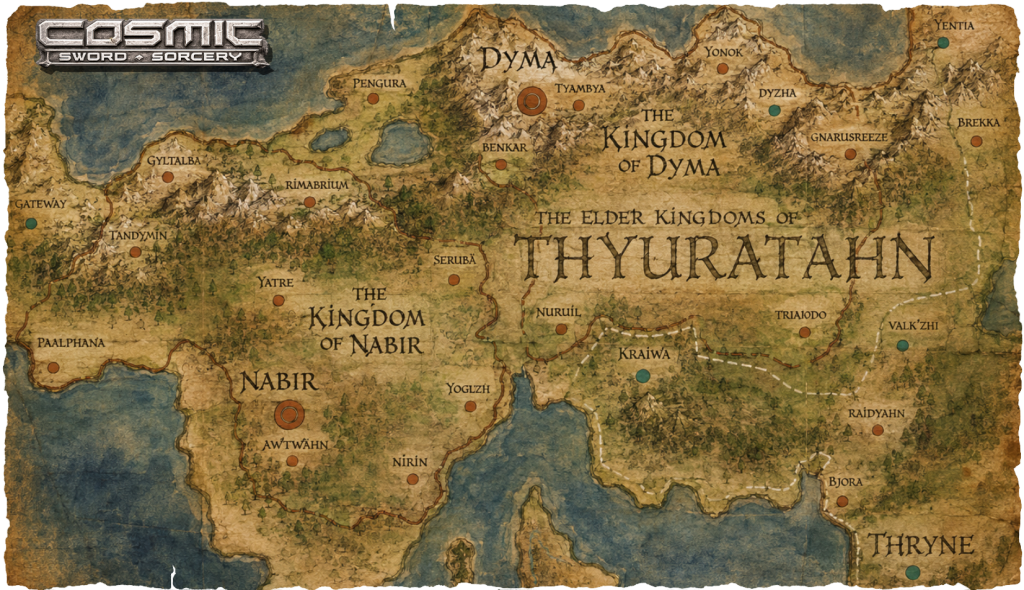
The beast had ruled the northern valleys for longer than many villages could remember. Among the upland settlements beyond the Great Ridge Mountains, where the forests grew thick with bamboo and mist and the roads narrowed into little more than game trails winding through ancient hills, stories persisted of a one-eyed sabertooth whose savagery had become legend. Entire generations had grown old hearing tales of the creature while shepherds vanished from isolated pastures, woodcutters disappeared along forgotten paths, and caravans traveling without adequate escorts occasionally failed to arrive at their destinations. Some believed the beast to be little more than an unusually large predator, while others claimed it possessed an unnatural cunning bordering upon malice. Whatever the truth, the result remained the same, as the northern marches of Thyuratahn had surrendered large stretches of wilderness to a single predator whose reign of terror had endured for decades.
The road leading northward climbed steadily into colder country where jagged peaks rose against the horizon like the broken teeth of sleeping gods, and dense Blackwood Pineborder forests cloaked the valleys beneath them in dark green shadow. Along that road traveled two hunters whose appearance alone was enough to draw attention wherever they passed. Both were wolves by blood, broad-shouldered and heavily built beneath weathered travel cloaks, with rifles slung across their backs in the easy familiarity of tools long mastered. Sidearms, knives, and various pieces of hunting equipment hung from belts and harnesses worn smooth by years of use, and nothing about either hunter suggested uncertainty. They moved with the quiet confidence of males who had spent much of their lives pursuing creatures capable of killing them and had survived long enough to make that pursuit their profession.
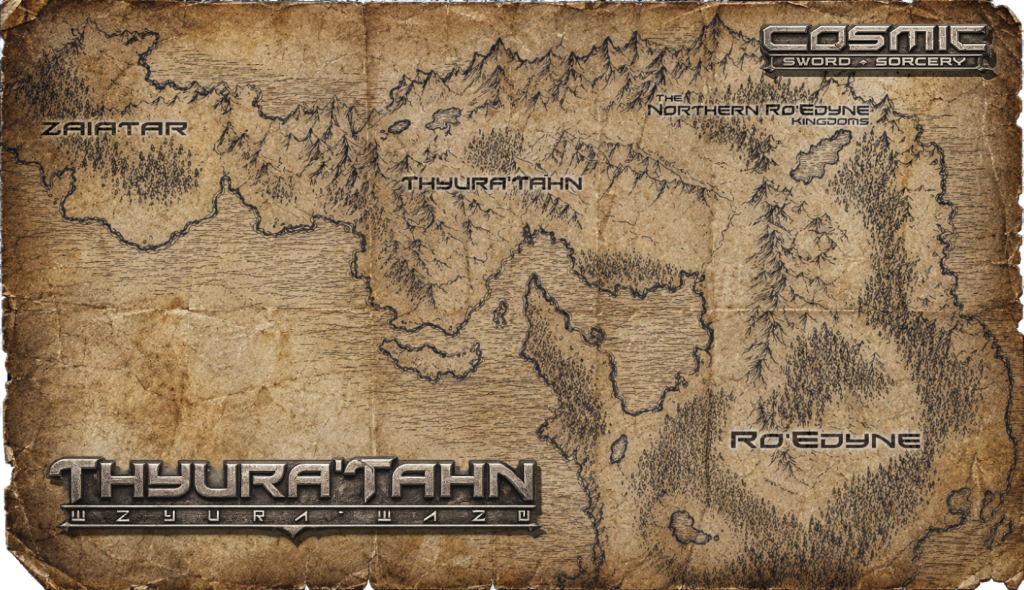
As the road crossed the border into the Northern Ro’Edyne Kingdoms of Thyuratahn, a small detachment of royal guards emerged from a fortified checkpoint overlooking the pass. Their captain, signaling for the travelers to halt, and the two hunters complied without complaint, for formalities remained formalities, particularly in frontier territory where strange things often wandered across borders without regard for law or kingdom. The captain studied them carefully, his gaze lingering first upon the rifles and then upon the scars visible beneath fur and armor alike, recognizing the quiet markers of experience that could not be easily hidden from another veteran. “What business takes you beyond the border?” he asked. The older of the two hunters adjusted the strap of his rifle and offered a faint grin that revealed the edge of a canine fang as he answered without hesitation. “We’re hunting.”
The captain raised an eyebrow at that. That much was obvious. The younger wolf allowed himself a quiet chuckle while the older continued in the same even tone, describing their quarry with the blunt precision of a professional recounting a contract rather than a story. “We’re after the sabertooth, the one with half its face torn away and only one eye left, the one with the foul temper and worse habits, the one that eats travelers, livestock, and anything else foolish enough to wander into its territory.”
A murmur spread among the nearby guards as the name of the beast, unspoken yet fully understood, passed through them like a cold wind. The captain’s expression shifted almost immediately, as what had begun as routine inspection became something more serious. The northern beast was no mere tale told to frighten children. It was a presence, a known terror, and nearly every soldier stationed along the frontier knew someone who had been lost to it.
“You intend to kill it?” the captain asked, his tone no longer casual. The younger hunter shrugged slightly, as though the matter required no further elaboration. “That’s generally how these things conclude when we’re involved.”
Several guards exchanged impressed looks while others simply stared at the weapons carried so casually by the two wolves. Neither hunter appeared particularly concerned by the reputation of the creature they intended to pursue, and there was no boasting in their voices nor any attempt to impress their audience. If anything, the calm certainty with which they discussed the hunt made the matter seem all the more serious, as though the outcome had already been decided and only the process remained. The captain stepped aside and motioned for the gates to be opened, conceding both authority and respect in the same gesture. “Then I won’t delay you. If anyone can put an end to that beast, perhaps it would be hunters carrying weapons like those.”
The older wolf inclined his head slightly in acknowledgment. “Appreciated.” The two hunters continued northward, passing through the checkpoint and following the winding road as it disappeared into increasingly rugged country, leaving behind the last structured presence of the kingdom. Behind them the guards watched in silence until the hunters became distant silhouettes against the hills, their figures gradually swallowed by the vastness of the northern landscape. Just as they crested the next rise and began their descent into the deeper wilderness, the captain suddenly called out after them with enough urgency to halt their progress.
“Wait!”
The hunters halted and turned as the captain hurried forward from the checkpoint. The urgency in his voice immediately drew their attention. For the first time since passing through the gate, the officer seemed genuinely concerned about something. He slowed as he approached and gestured toward the northern road stretching into the mountains beyond. “There was another hunter passed through here earlier today,” he said. “Went up the same road you’re taking. Is he traveling with you?”
Both wolves became noticeably still. The younger hunter frowned while the older narrowed his eyes slightly. “What hunter?” he asked. The captain pointed toward the distant peaks. “Huge bull! Biggest fellow I’ve seen in years. Looked like he could uproot a tree with his bare hands. Carried a shield, a sword, and enough confidence for three. Said his name was Valhuma.”
Neither hunter answered immediately. The silence lingered long enough for the captain’s expression to shift from curiosity toward uncertainty. The two wolves exchanged a brief glance, neither requiring words to understand the other’s thoughts. Both knew Valhuma. Both had hunted beside him before. They knew his strengths as well as his weaknesses. Valhuma was brave, skilled, and strong enough to contend with most warriors. Unfortunately, he was also reckless enough to challenge enemies that wiser hunters would avoid. Courage and strength were admirable qualities, but neither was a substitute for judgment. A predator that had survived decades of organized hunts, military patrols, bounty seekers, and professional hunters was not the sort of enemy that yielded to determination alone. The younger wolf slowly exhaled through his nose while the older hunter considered the mountains ahead.
“How long ago?” he finally asked.
“Several hours.” The answer settled heavily between them. The captain glanced from one hunter to the other. “Is something wrong?” The younger wolf adjusted the rifle hanging across his shoulder and looked toward the distant peaks. “No,” he replied quietly. “Nothing’s wrong.” The older hunter turned back toward the road. “But if Valhuma truly went ahead alone, he’s already committed himself to whatever happens next.” The captain waited for further explanation, but none came. The two hunters resumed walking and began making their way north once more. For a time only the sound of their boots disturbed the mountain road. Eventually the younger wolf glanced sideways toward his companion. “You thinking what I’m thinking?” The older hunter never took his eyes off the wilderness ahead. “Probably.” The younger wolf sighed heavily. “Poor bastard.”
Neither spoke again. Beyond the hills stretched hundreds of miles of forest, ravines, bamboo groves, and mist-shrouded valleys where the ancient sabertooth held dominion. Somewhere within that wilderness a bull hunter had gone searching for glory. Somewhere within that same wilderness an old predator waited among the shadows with one eye, half a face, and a reputation earned through decades of bloodshed. The mountains gradually swallowed the two wolves as they disappeared northward, leaving the kingdom behind and entering the hunting grounds of a monster that had devoured enough heroes to become a legend.
Chapter 2
By the following afternoon the mountains had swallowed the last traces of civilization. The roads had vanished hours earlier, leaving only narrow game trails winding through dense wilderness and steep upland ridges. Vasco and Salidahn traveled steadily northward through a vast bamboo forest whose towering stalks rose high overhead like the columns of some forgotten temple. Pale sunlight filtered through the canopy in thin green shafts while the endless sea of bamboo whispered and creaked softly beneath the wind. Ordinarily such forests teemed with life, but the deeper the hunters traveled into the beast’s territory, the quieter the wilderness became. Birds no longer called from the treetops. Small animals no longer darted through the undergrowth. The forest possessed the uneasy stillness of a place that knew a predator was near.
Neither hunter felt compelled to comment upon the silence. The signs were obvious enough. Years spent tracking dangerous creatures had taught them that wilderness spoke through absences as often as sounds. Every living thing within these hills understood the boundaries of the sabertooth’s domain. Even without tracks, blood, or carcasses, the silence itself served as warning. Somewhere ahead lurked a predator so feared that the lesser creatures of the region seemed determined to avoid every place it walked. The further north the hunters traveled, the more pronounced the feeling became. The wilderness no longer felt merely remote. It felt occupied.
Toward evening the bamboo forest began to thin, giving way to a series of rolling hills overlooking a narrow valley shrouded in shadow. Beyond the valley rose another ridgeline cloaked in mist and dark evergreen forests. Numerous game trails converged toward the region, some old and heavily worn, others faded and abandoned. The land itself revealed the influence of the beast. Predators shaped landscapes in subtle ways. Trails shifted. Migration patterns changed. Entire regions gradually transformed around the habits of a successful hunter. The sabertooth had ruled these hills for so long that the wilderness had adapted around its presence.
The two wolves established camp upon a defensible rise overlooking the valley below. The fire remained deliberately small, little more than a bed of glowing coals concealed behind a ring of stone. Supper consisted of dried provisions consumed with the efficiency of professionals who viewed food primarily as fuel rather than pleasure. Conversation remained sparse. There was little left to discuss. The journey was effectively over. What remained was the hunt itself.
Night settled gradually across the mountains. Darkness gathered first within the valleys before climbing the slopes and consuming the ridges one by one. The moon eventually rose above the distant peaks, casting pale silver light across the sea of bamboo stretching below. For several hours nothing disturbed the stillness. The wilderness seemed frozen beneath the weight of its own silence. Then, sometime after midnight, both hunters became aware of movement beyond the neighboring ridge. The sound arrived first. Branches snapped. Vegetation shifted. Loose stones rattled down unseen slopes. Whatever traveled through the darkness possessed tremendous weight. Neither wolf moved. Both listened. The noises continued for several moments before abruptly ceasing, leaving the night silent once more.
The silence lasted less than a minute before a scream shattered the darkness. The sound echoed across the valleys and hills before ending with startling suddenness. No struggle followed. No second cry. No desperate call for aid. The mountains absorbed the noise and returned to silence. Somewhere beyond the ridge, something had died. Neither hunter commented. There was little point. Both knew exactly what they had heard. The beast had fed.
The remainder of the night passed without further incident. Sleep came lightly and without comfort. Both wolves rested with rifles within arm’s reach and ears alert for danger. Experience had taught them that genuine rest became impossible inside a predator’s territory. Every unfamiliar sound demanded attention. Every shift in the wind invited consideration. Beyond the boundaries of the firelight the wilderness remained silent, as though the creature’s presence weighed upon the entire region.
Morning arrived beneath a blanket of dense fog. Moisture clung to fur, equipment, and clothing while the surrounding hills emerged only as vague silhouettes beyond the mist. Visibility extended little farther than a hundred paces in any direction. It was ideal hunting weather for an ambush predator. Distances became deceptive. Sounds traveled strangely. Shapes appeared suddenly where moments earlier there had been nothing. The world seemed reduced to shades of white and gray broken only by the dark forms of trees and stone.
The hunters broke camp quickly and without ceremony. Rifles were removed from travel slings and prepared for immediate use. Actions were checked. Ammunition inspected. Every motion occurred through habit developed across countless hunts. Familiar rituals possessed value. They steadied the mind and focused attention upon practical concerns rather than imagination. Once camp had been dismantled and equipment secured, the two wolves began climbing toward the upper ridges where local reports placed the creature’s lair.
For a time they traveled in silence through the fog. Eventually Salidahn remarked that perhaps this hunt might prove different from those that had come before. The observation earned immediate disapproval from Vasco, who informed him that such thoughts had no place this close to an objective. Whether born from superstition, experience, or simple habit, the older hunter maintained that inviting uncertainty into a hunt served no useful purpose. Salidahn found the reaction mildly amusing, but allowed the matter to drop. After several moments Vasco added that there was no reason to expect anything unusual. The hunt would unfold exactly as every successful hunt had unfolded before. They would find the beast, survive the encounter, kill the beast, collect the reward, and return home wealthier than when they had arrived. The statement carried neither arrogance nor bravado. It was simply the practical outlook of a hunter who had spent decades doing the same work.
The younger wolf nodded and the conversation ended there. Nothing more needed to be said. Somewhere beyond the fog lay the cave identified by local reports. Somewhere beyond the fog waited the one-eyed sabertooth that had terrorized the northern marches for a generation. The beast had fed during the night and could not be far away. Armed with heavy rifles and the confidence earned through years spent hunting creatures that most sensible folk fled from, Vasco and Salidahn continued their ascent into the mist and disappeared among the hills as they approached the lair.
Chapter 3
The cave revealed itself only at the last moment, its mouth cut into the mountainside like a wound in the stone and half-concealed by the rising fog and broken terrain that surrounded it, and the slope leading toward it bore the unmistakable signs of long habitation, though not in any civilized sense, as game trails converged and ended abruptly while bones lay scattered in half-buried clusters where scavengers had taken what they could and fled what remained. The ground itself had been churned and hardened over years of passing weight until it no longer resembled soil so much as a trampled threshold between the outer world and something claimed, something that had fed and endured long enough to shape the land around it.
At the very foot of the cave, they found what remained of Valhuma, and the evidence of his end required no interpretation, for the head lay several paces from the entrance, half-turned toward the slope as though the final motion of the body had been resistance rather than retreat, with one horn shattered and the eyes still open, while the top of the spinal column remained attached though little else did, the severance ragged and brutal rather than clean, and nearby the hand lay buried to the wrist in torn earth, the fingers curled inward as if they had been gripping the ground with all the strength the body possessed while the rest of him had been dragged into the darkness, and the position of the limb told its own story, one of defiance overcome by force rather than surrender, a struggle that had ended not in retreat but in consumption.
As the two wolves passed, the eye blinked once, a final reflex or the last echo of life lingering within a body that had already lost its claim to existence, and neither hunter stopped, for the distinction between life and death in that moment held no value, and the truth of the situation had already been made clear by what lay before them, as the bull had reached the lair and failed to leave it, and that conclusion required no further examination or commentary from those who understood the work well enough to recognize its outcomes without explanation.
Valhuma had been a capable hunter, possessed of strength, training, and the kind of experience earned in open battle where opponents announced themselves with steel and answered in kind, and he had been raised to fight enemies that could be seen, measured, and overcome through force, and that knowledge had carried him far across battlefields where courage and power decided the outcome, yet it had not carried him far enough here, for this was not a battlefield governed by honor or symmetry but a predator’s ground where patience, instinct, and cruelty determined the outcome, and sword and shield had their place in the world of ordered conflict, but here they were insufficient, and the proof of that insufficiency lay scattered at the threshold of the cave in pieces that once had been a warrior.
Vasco studied the entrance for several moments before speaking, his voice low and controlled as he measured distance, terrain, and shadow, and when he spoke his words carried the weight of decision rather than suggestion as he said, “We draw it out,” and Salidahn nodded once and moved immediately to gather what was needed, as their teacher had drilled the method into them long ago until repetition had turned instruction into instinct, and fire denied concealment while smoke denied patience, and a creature that relied upon ambush could be forced into the open if its lair became untenable, and while the method carried risk, it remained preferable to stepping blindly into darkness claimed by something that understood it better than any intruder could hope to.
They worked quickly, building a crude bundle of brush and damp vegetation near the entrance and positioning it where the smoke would be drawn inward, and the fog thickened around them as the morning pressed on, lending the entire scene a muted, distant quality as though the mountain itself observed without concern, and when Vasco struck the flame the fire began to take, the first tendrils of smoke curling upward before bending inward toward the cave mouth as the air shifted under its influence.
The beast did not wait, and it came out of the darkness with a violence that collapsed distance into impact, a mass of muscle, scar tissue, and ruined flesh erupting from the cave with a speed that defied its size and its apparent weight, and the one remaining eye burned with feral intensity that spoke not of thought but of immediate and absolute intent, and there was no hesitation, no warning, and no separation between emergence and attack as the creature committed fully to the kill in a single continuous motion.
Shots rang out almost instantly as both rifles spoke in overlapping thunder, the recoil driven into shoulder and bone through practiced control, and the rounds struck the creature square in the chest with visible impact even through its forward momentum, and flesh tore while blood followed, and for a fraction of a second the beast faltered beneath the force of the strikes, its body reacting to damage that would have ended lesser creatures and halted lesser predators in their tracks.
It did not stop, and the distance closed in less time than it took to draw breath, and Salidahn moved to adjust his position and bring his rifle to bear for a second shot, but the sabertooth reached him first, and its jaws closed around his arm with crushing force, teeth driving through plated armor as though it were little more than hardened leather, and the sound that followed was not a cry but the wet, breaking snap of bone yielding under pressure as the limb failed in multiple places at once, and the force of the bite alone would have been sufficient to cripple him, yet the beast did not merely hold.
It twisted, and the motion lifted Salidahn from his footing and cast him aside with brutal efficiency, his body thrown down the slope and across broken ground until he came to rest within sight but beyond immediate reach, separated from his weapon and struggling against the shock of the injury as his body fought to remain conscious under the sudden violence, and the sabertooth released him without hesitation and turned at once, its focus shifting with predatory precision as it sought the next threat before the first had even settled.
There was a sharp mechanical click followed immediately by the rising whir of a system engaging under load, and Vasco had already moved, the trench shotgun coming up with practiced certainty as the weapon’s mechanism cycled into full operation the moment the trigger was pulled and held, and the response was immediate and overwhelming as a rapid succession of heavy slugs erupted from the barrel in a sustained, controlled torrent, each round striking with concussive force as they tore into the creature’s head at point-blank range, and the sequence of impacts destroyed structure faster than the body could respond, as bone shattered under the first strikes while the second drove deeper and the third and fourth erased what remained, transforming skull and eye into a violent spray that painted the stone behind it in a broad arc of blood and matter.
The beast convulsed under the force of the assault, a wet surge of blood forced from what remained of its mouth as its body lost cohesion and momentum collapsed beneath the destruction of its skull, and it staggered once, then again, before slumping heavily to one side, its mass striking the ground with finality as the violence of its life ended in an instant of mechanical certainty, leaving behind only the echo of force and the stillness that followed.
Silence returned slowly, as though the mountain itself required time to accept what had occurred, and the air seemed to settle in the aftermath as the echo of the gunfire faded into nothing and the presence that had dominated the region for decades was reduced to a cooling carcass upon the ground.
By nightfall the work was done, and the aftermath of the hunt had taken on the quiet rhythm of survival rather than conflict, as Salidahn’s arm had been set and bound as best as could be managed in the field, the limb secured in a sling to prevent further damage while the worst of the pain dulled into something manageable, and the fire burned low beside them as darkness closed in once more, and between them rested a small flask of plum brandy whose contents were shared without ceremony as one measure was poured and taken and then another, while a third was poured and left upon the ground as an offering to the White Witch and to the memory of the one who had taught them how to endure such work.
Kyone’s lessons had carried them to this place and through what had awaited them there, and the proof of that success lay cooling behind them where the sabertooth had fallen, and the teeth were taken with care, each one a token worth more than most would see in a lifetime, and the reward agreed upon before the hunt would be paid in full, for three chests of Imperial silver awaited their return, heavy enough to matter and sufficient to justify the risk taken to claim it. Behind them the cave stood silent, its darkness emptied of threat and its claim broken, and within it nothing remained that would hunt again, and the valley that had once belonged to the beast would, in time, remember what it had been before fear took root within it.
Epilogue
Several days later the hunters finally reached the Highland City, where crowds gathered outside the gates long before the procession arrived.
News traveled quickly throughout the northern kingdoms, particularly when the news involved monsters. Hundreds waited along the streets as the wagon rolled through the city, and guards struggled to maintain order while citizens pushed forward for a better look at the fallen beast. The reaction was immediate. Some cheered. Others stared in stunned silence. Many simply stood and watched as the enormous carcass rolled past. Away from mountains and forests, surrounded instead by buildings, walls, and ordinary folk, the scale of the predator became impossible to ignore. It resembled less a natural animal and more some forgotten relic from an older age when monsters had ruled the world.
By the time the remains reached the ancient High Halls, plans were already being discussed regarding their preservation. The skeleton would be cleaned and assembled for display. The skull would be mounted above the great chamber. The hide would be preserved and hung among the banners of the northern kingdoms so future generations could look upon it and understand that the stories had been true. Long after the names of those who killed it faded into history, the beast itself would remain part of the city’s memory.
Several hours later, with payment received and formalities completed, Vasco and Salidahn finally began preparing for departure. The wagon carrying the trophies had been surrendered to the authorities, fresh supplies had been purchased, and Salidahn’s arm remained secured in a sling, though the worst of the pain had faded into something manageable.
The work was finished. All that remained was the road home.
They had just cleared the outer district when a voice called after them. Turning, they found a young fox sprinting down the street while clutching a narrow glowing tube in both paws. He looked no older than twelve summers and was entirely out of breath by the time he reached them. Vasco raised an eyebrow and asked what was so urgent, while the fox bent over with his hands upon his knees and struggled to recover enough air to speak.
After a moment he straightened, held up the device, and announced that he needed a picture. The request earned a puzzled look from Vasco, who asked what possible purpose such a thing could serve. The fox immediately pointed back toward the High Hall where the remains of the sabertooth now rested and explained that nobody was going to believe him. He had seen the beast with his own eyes. He had seen the head, the fangs, and the size of the carcass. Yet he already knew that everyone back home would assume he was lying the moment he tried to describe it.
Salidahn’s ears twitched with amusement as he asked whether the picture was intended as evidence. The fox nodded vigorously and declared that it was exactly that. The two hunters exchanged a glance before simultaneously shrugging. The request seemed reasonable enough. A creature that large stretched the limits of credibility even when its corpse was sitting in plain sight. Once the matter was explained, neither hunter could find a reason to object.
Several minutes later the fox positioned himself in the street and adjusted the glowing device while Vasco and Salidahn returned to stand beside the carcass one final time.
The resulting image captured the entire scene perfectly.
Two weathered wolf hunters stood before the fallen sabertooth, neither attempting to appear larger than they were nor positioning themselves in some absurd fashion to exaggerate the scale. There was no need. The beast itself occupied most of the image. Its body stretched across nearly the entire width of the frame, while the shattered remains of its skull remained immense enough to dwarf the hunters standing before it. The photograph required no embellishment. The truth alone was impressive enough.
When the fox finally lowered the device, he stared at the image for several moments before declaring it perfect. Vasco glanced at the result and snorted before asking whether anyone would believe the story now. The fox looked from the image to the enormous corpse behind them and grinned broadly. If they still refused to believe it after seeing the picture, he replied, then they were idiots. The hunters laughed, adjusted their packs, and resumed their journey. Behind them the Highland City celebrated the end of a nightmare that had haunted the northern valleys for generations.
Ahead of them stretched another road, another wilderness, and eventually another hunt. Such was the profession. Monsters died, kingdoms endured, and stories passed from one generation to the next. Long after the sabertooth’s bones had been mounted in the ancient High Hall and its hide hung among the banners of the north, folk would still point toward an old photograph and marvel that two hunters had stood before such a creature and returned alive to tell the tale.
“Nothing Comes Easy”
“Stalking out at dusk from Roedon, trench gun slung across my back Iron boots on broken flagstones, scent of blood along the track Gods who watch the black pine shudder old as rust and winter’s edge Why leave teeth beneath the heather why let nightmares cross the hedge
‘Fore I hunted shadowed valleys in the madness of my youth Tracked the thunder in the hollows never pledged my soul to truth Never knelt before a council never kissed the master’s ring Never prayed for peace or pardon steel’s the only song I sing
Roedon , Roedon , doomed old Roedon crown me king of claw and mire Let the sabers prowl the moorland let the night catch fire with fire Let the bones of friends and traitors bleach beside the haunted fen I have come to wake the monsters I have come to hunt again
Dreams are fangs in distant darkness flashing quick through fog and bone Hope is hot brass in the barrel roaring out across the stone If the halls are cold behind me and the moon rides high and red I will find my mercy hunting where the wild things are not dead
Wind may shriek through shattered towers mother’s whisper of the slain Let them talk of crowns and kinfolk I have loosed the dogs again I have gone to seek the hunter where the saber-tooth still go And the guns ring under starlight old Roedon need never know”
“Ere upon ages and eras of old, aye, upon these grey steel cliffs, these roving meadows of violet bloom and the scent of the towerpine borders, these waning isles of lore and leisure, these isles of the Ro’Edyne, nearer to the stars than I.”
Chapter 1: Tales of the Antique Ro’Edyne
Ro’Edyne stands among the oldest civilized territories of southern Vandyrus, though the true age of its earliest foundations remains disputed even within the higher imperial archives. Long before the modern provincial cultures of Vandyrus emerged from tribal isolation, the southern continental belts of Ro’Edyne had already entered successive ages of hydraulic engineering, monumental construction, and interregional administration. The oldest preserved records of Tykon’Mach, the City of Steel, speak casually of caravan routes crossing territories now claimed by the Vulsan seas, suggesting that the continental arrangement of Vandyrus itself differed considerably during the earliest recognized periods of Ro’Edyne expansion. Unlike the harsher northern territories of Vandyrus, the Ro’Edyne regions developed within warm subtropical climatic belts fed by dense river systems, inland rainfall currents, and stabilized coastal weather patterns.
The Southern Gardens
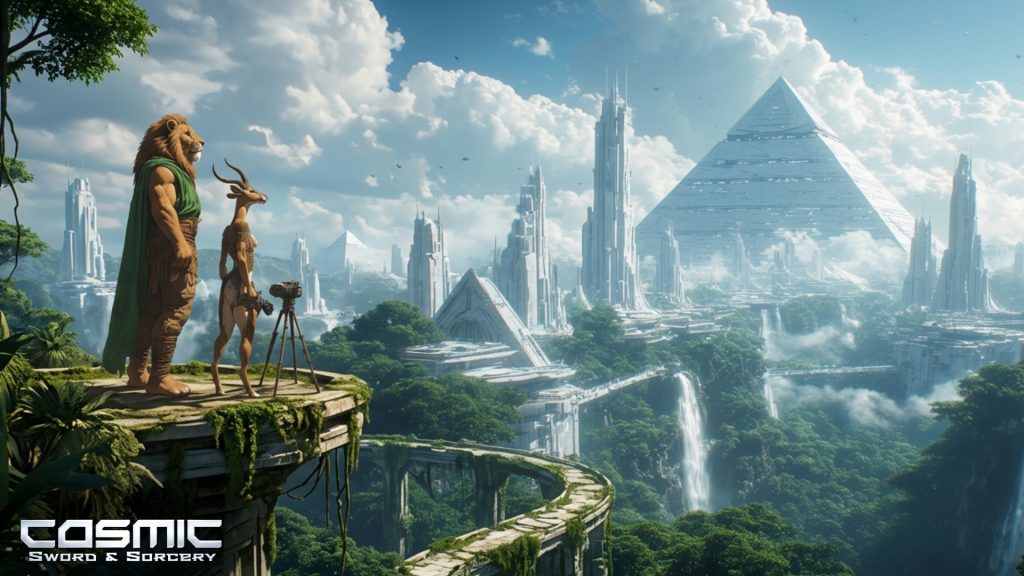
Great fern valleys, mountain jungles, flooded terraces, acacia groves, and engineered watercourses dominated the southern reaches of the continent. Later foreign visitors frequently compared portions of Ro’Edyne to the old garden-worlds of the inner Vandyrian systems, owing to the unusual integration between civic infrastructure and surrounding ecological systems. Rivers, cliffs, terraces, and monumental architecture were rarely treated as separate domains within Ro’Edyne planning doctrine.
Ro’Edyne maintained uninterrupted alignment with the Greater Vandyrian imperial spheres across multiple recognized Ages, becoming one of the principal southern continuity-states upon Vandyrus. Though many lesser planetary cultures viewed the civilization as anomalous or impossibly advanced, such disparity was largely the result of uneven imperial integration across the world itself. While isolated northern and interior territories continued to experience cyclical collapse, localized warfare, and infrastructural decline, Ro’Edyne retained direct access to orbital commerce, interstellar administration, imperial transit networks, and offworld educational systems. Spaceports, aerial transit lanes, holographic civic systems, synthetic administrative intelligences, and orbital trade infrastructure were commonplace throughout the greater metropolitan corridors of the southern territories.
This disparity produced a considerable cultural divide between Ro’Edyne and the surrounding planetary civilizations. Contemporary accounts from outer provincial visitors frequently describe the southern cities as disorienting or unreal, comparing them less to conventional planetary capitals and more to independent imperial worlds transplanted onto the surface of Vandyrus itself. The common imperial citizen of Ro’Edyne possessed greater practical access to interstellar movement than many noble houses beyond the southern territories. Travel between worlds, off-system employment transfer, and imperial civil placement were regarded as ordinary aspects of metropolitan life.
The great cities of Ro’Edyne developed according to continuity principles preserved across immense spans of time. Monumental stepped pyramids, elevated water structures, white alloy civic towers, sacred administrative complexes, and vertically integrated terrace districts became recurring architectural constants throughout nearly every recognized Ro’Edyne Age. Rather than abandoning older forms during periods of technological advancement, the civilization continuously refined and re-integrated ancestral structural geometries into newer civic systems. By the later imperial periods, spaceports themselves resembled ceremonial temple districts, while orbital administrative towers retained proportions and visual motifs traceable to some of the oldest surviving southern records.
At the center of the southern territories stood Tykon’Mach, the City of Steel, oldest among the major Ro’Edyne metropolitan continuities and among the most historically significant urban centers ever established upon Vandyrus. Imperial archive estimates place portions of the city at over four hundred thousand years in age, though deeper geological and structural surveys conducted beneath the lower administrative strata suggest that sections of the region may predate even the earliest recognized Ranar imperial periods.
Ages Preserved
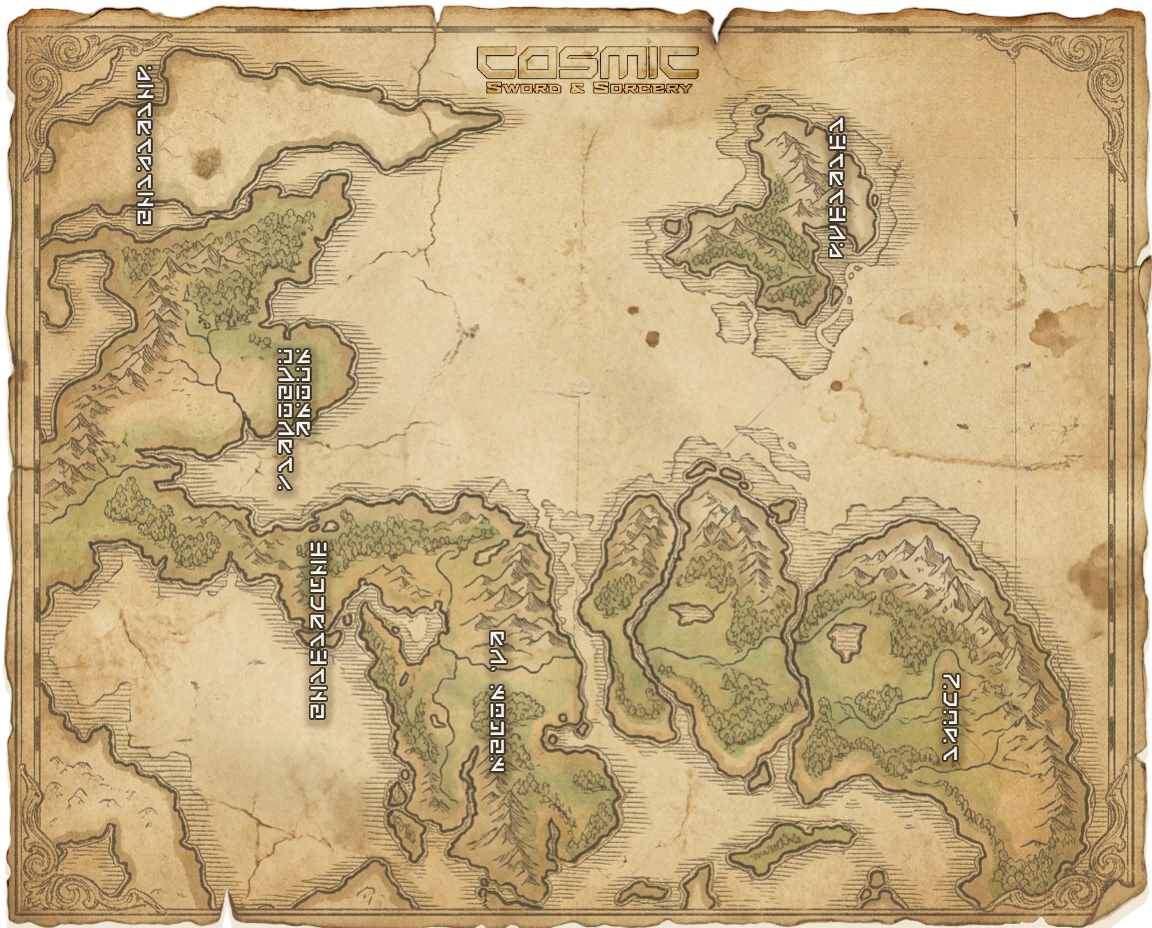
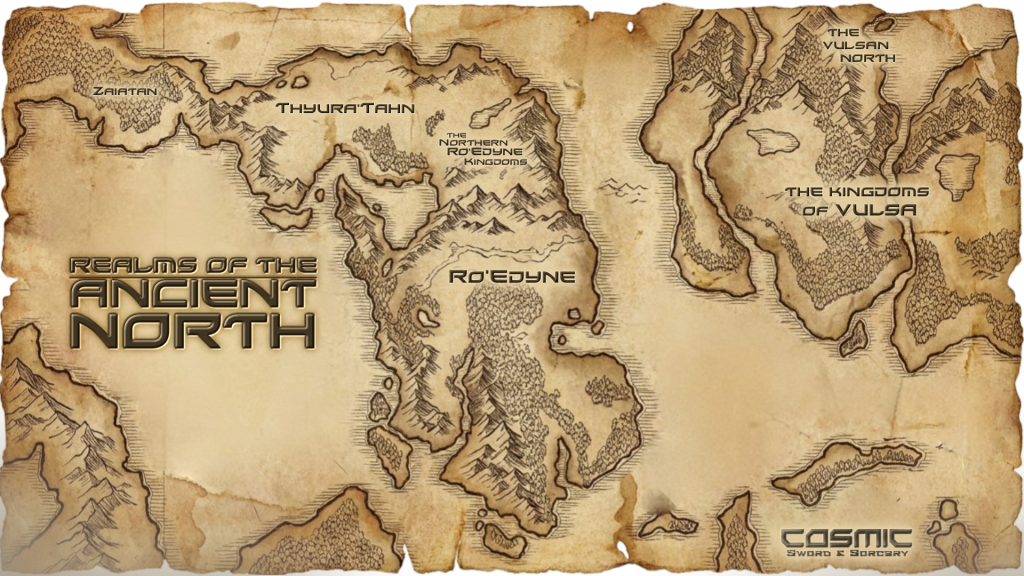
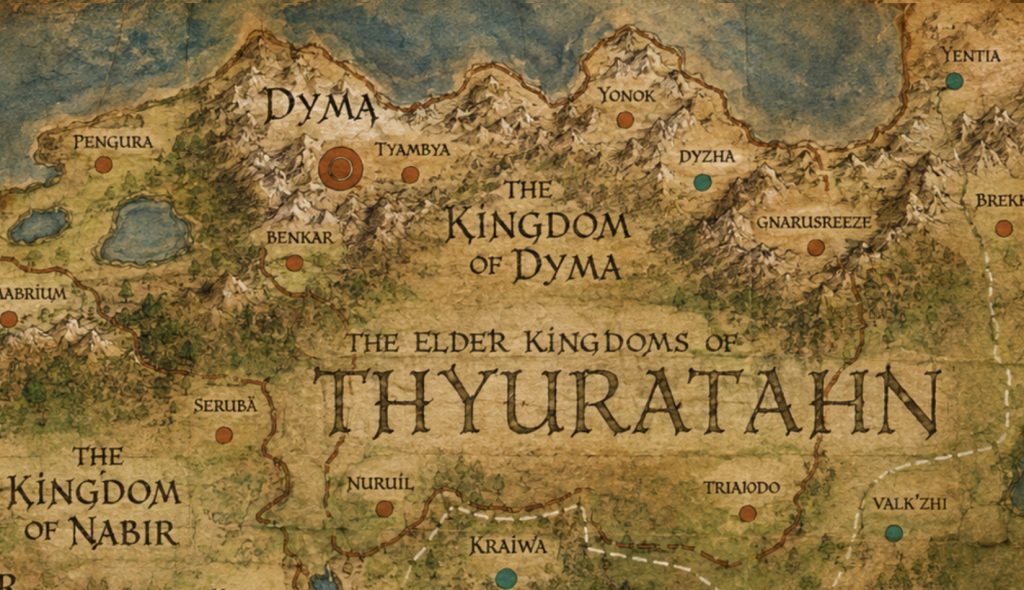
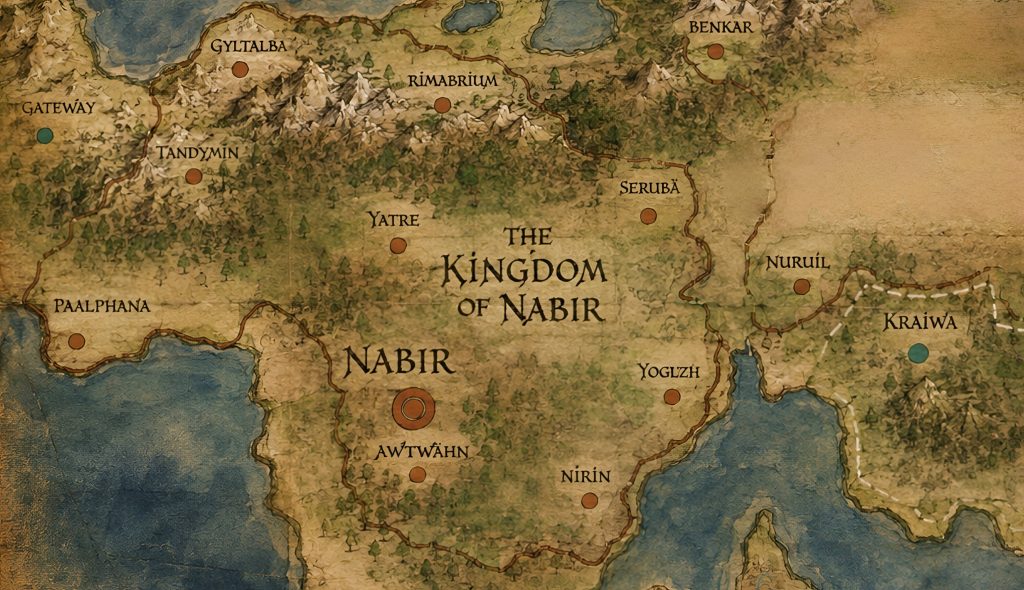
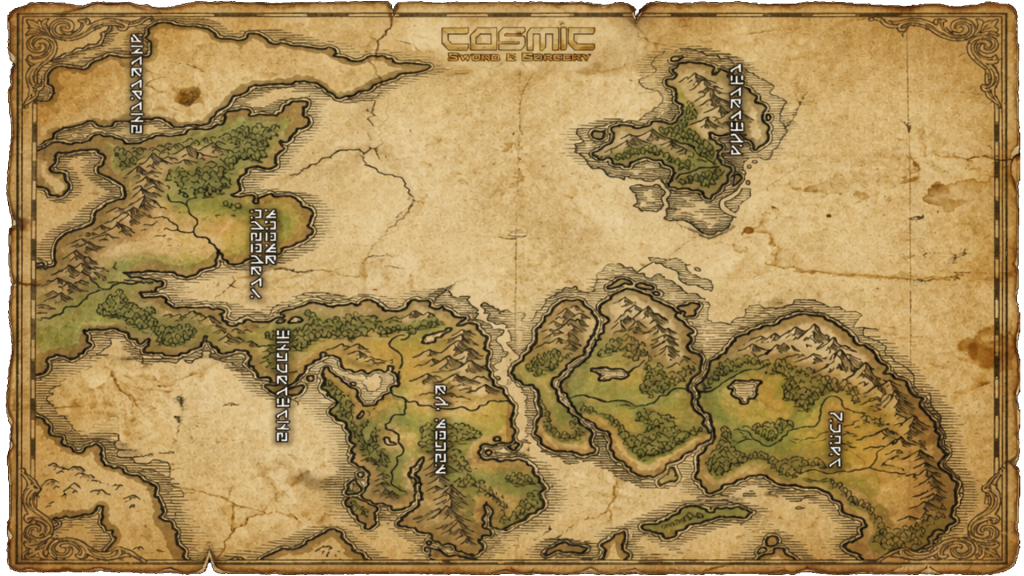
A Map of The Vandyrian North
Successive civilizations rebuilt, expanded, and restructured the city repeatedly across the Ages until the distinction between original foundation and later construction became effectively impossible to determine. Ro’Edyne’s longevity profoundly shaped its cultural psychology. Unlike younger imperial worlds driven by expansionary ambition or dynastic competition, the southern territories increasingly viewed civilization itself as an act of preservation against time, erosion, and planetary instability. Historical memory, environmental continuity, cartographic preservation, and ancestral civic maintenance became central pillars of Ro’Edyne administrative culture. The civilization produced some of the most extensive archival systems in the known imperial spheres, preserving territorial, climatic, and demographic records stretching across periods many outer systems considered mythological.
Among the more unusual features of Ro’Edyne culture was the persistence of extremely ancient linguistic and ceremonial structures alongside highly advanced administrative systems. Ancient Vandyrian remained preserved within liturgical, musical, and governmental contexts long after regional dialects evolved into simplified provincial forms. Many of the oldest surviving ceremonial songs of the southern territories continued to be performed in archaic sung dialects whose grammatical structures were already considered ancient during the later imperial periods themselves.
Though formally aligned to the greater imperial structure, Ro’Edyne maintained considerable regional distinctiveness throughout its history. The southern territories developed reputations for philosophical conservatism, monumental civic aesthetics, environmental ceremonialism, and unusually long continuity traditions compared to younger imperial systems. Foreign administrators often remarked that Ro’Edyne behaved less like a frontier world and more like an ancient inner imperial state whose civilization simply happened to exist upon Vandyrus.
Chapter 2: Time & Changes
Before the Cataclysm, Ro’Edyne bore almost no resemblance to the colder continental territories that would later emerge from the long planetary collapse. The modern age remembers Ro’Edyne as a realm of pine-choked valleys, cold mountain rain, misted escarpments, and immense northern timberlands stretching across broken terrain shaped by geological violence and climatic instability. Yet the older Ages record an entirely different world. The southern territories of ancient Vandyrus existed beneath far warmer atmospheric conditions, their continental belts wrapped in immense humid jungles, sweeping inland grasslands, drowned mangrove deltas, and subtropical floodplains whose scale dwarfed many later kingdoms entirely.
The environmental conditions of the southern Ages produced ecosystems of extraordinary biological density. Vast herds of towering saurian megafauna migrated across the grasslands beyond the major metropolitan corridors, while predatory species dominated the river systems, marshes, and interior jungles. Diplodocus moved through the southern floodplains in migratory groups large enough to alter entire river courses through repeated passage alone. Stegosaurian species occupied the drier inland plains and elevated fern valleys. Spinosaurids and Baryonyx variants prowled the swamps, estuaries, and deep river channels where the dense vegetation concealed movement even from advanced aerial reconnaissance systems. Much of this megafauna vanished during the planetary instability surrounding the Cataclysm, surviving only within isolated ecological pockets hidden deep beyond the modern frontiers.
The Emerald Divide
The central territories of ancient Ro’Edyne became especially infamous throughout the later imperial periods due to the enormous equatorial jungles occupying the continental interior. These forests stretched for immense distances uninterrupted by civilization, forming layered canopies so dense that even advanced orbital imaging systems frequently failed to penetrate them with consistency. Atmospheric interference, thermal distortion, biological overgrowth, and strange electromagnetic anomalies rendered large portions of the interior effectively unreadable to long-range scanning technologies. Imperial surveys often described the jungles as resistant to observation itself. Mapping expeditions disappeared with enough regularity that the phenomenon became institutionalized within southern administrative planning.
Numerous patrols, scientific ventures, military reconnaissance groups, and exploratory expeditions entered the central jungles across multiple Ages seeking to determine the true extent of the interior territories. Many transmitted partial findings before vanishing entirely. Some recovered recordings described enormous unidentified lifeforms moving beneath the canopy layers, cyclopean ruins reclaimed by vegetation, collapsed transit systems buried beneath roots and mud, and isolated populations living wholly detached from greater imperial authority. Others simply ceased communication without explanation. The southern archives preserve hundreds of fragmented reports concerning the interior regions, though very few offer coherent conclusions. Even during the height of Ro’Edyne’s technological sophistication, vast portions of the continent remained fundamentally unknown.
The southern reaches beyond the major metropolitan zones were dominated not by cities but by unstable ecological regions shaped continuously by water movement. Great grasslands merged into drowned flood marshes and mangrove forests stretching toward the southern coasts where the land itself fractured into chains of unstable islands, tidal wetlands, and shifting mud territories. These regions proved catastrophically difficult for large-scale naval invasion. Shorelines altered constantly through flooding, erosion, and tectonic instability, while thick mangrove systems rendered conventional landing operations nearly impossible. Foreign strategists throughout the imperial periods often concluded that the southern coasts functioned less as viable invasion corridors and more as natural defensive labyrinths hostile to organized military movement altogether.
The island chains themselves remained sparsely inhabited despite repeated attempts at settlement and development. Violent storms, unstable ground conditions, dense predator populations, and tidal irregularities prevented sustained urbanization across much of the southern archipelagos. Small ceremonial outposts, fisheries, weather stations, and military observation facilities existed intermittently, though many required continual reconstruction simply to remain operational. Certain older records imply that portions of these southern islands submerged and re-emerged repeatedly across successive Ages, contributing to the widespread Ro’Edyne belief that Vandyrus itself was never geologically stable in the manner of the greater inner imperial worlds.
The northern territories of pre-Cataclysmic Ro’Edyne more closely resembled fragments of the landscape recognized today, though even these regions existed in far more primeval forms. Great redwood forests occupied isolated northern mountain belts where colder climates prevailed along the highest elevations. These forests, immense even by later standards, remained largely confined to northern highlands during the earlier Ages and had not yet spread southward across the continent. The colder climates that would eventually allow the pine forests of the modern era to dominate most of Ro’Edyne had not yet emerged. Instead, the northlands existed as transitional territories where alpine forests, stone highlands, river valleys, and elevated grass plains intersected beneath cooler skies.
Before the rise of the later imperial continuity-states, numerous highland kingdoms occupied these northern regions. Their settlements were often constructed atop cliffs, elevated plateaus, and fortified ridges overlooking the lower plains below. Unlike the immense metropolitan continuities of the southern civic belts, these northern polities developed around defensive isolation, mountain trade, and territorial autonomy. Great grazing beasts migrated seasonally from the southern grasslands into the northern elevations, shaping both the economy and military structures of many early highland cultures. Some of the oldest surviving northern myths speak of enormous horned herd-creatures darkening entire valleys during migratory seasons, accompanied by predators large enough to threaten fortified settlements directly.
The climatic transformation that followed the Cataclysm permanently altered these ancient ecological balances. Cooling atmospheric systems, ash dispersal, tectonic upheaval, orbital instability, and long-term environmental collapse reshaped the continent over immense spans of time. The jungles receded. The southern wetlands collapsed or hardened into colder marsh territories. Redwood species expanded far beyond their former isolated northern ranges. Grasslands gave way to colder forests, rocky highlands, and harsher continental weather systems. Entire migratory ecosystems disappeared. River systems changed course. Inland seas receded or flooded. Mountain ranges fractured and rose where fertile valleys once stood.
Bones of the Elder World
By the later post-Cataclysmic eras, only fragments of the old southern world remained visible beneath the transformed landscape. Fossilized remains of gigantic saurian species emerged from canyon walls and frozen escarpments. Buried transit corridors surfaced beneath root systems kilometers from any known ruins. Ancient flood-control structures stood stranded high above dried valleys whose rivers had vanished tens of thousands of years earlier. The people of later Vandyrus inherited a broken continent haunted constantly by evidence that the world itself had once been fundamentally different.
For this reason, many later scholars of Ro’Edyne regarded the Cataclysm not merely as a civilizational collapse but as the death of an entire planetary age. The destruction was not limited to governments, empires, or cities. Whole climates vanished. Entire ecological epochs disappeared alongside the civilizations that once inhabited them. The ancient warm south of Vandyrus — the jungled Ro’Edyne of the great Ages — survived afterward only in fragmented archive records, ceremonial songs, geological anomalies, and the impossible ruins buried beneath the forests of the modern world.
Chapter 3: Secrets from the Sky
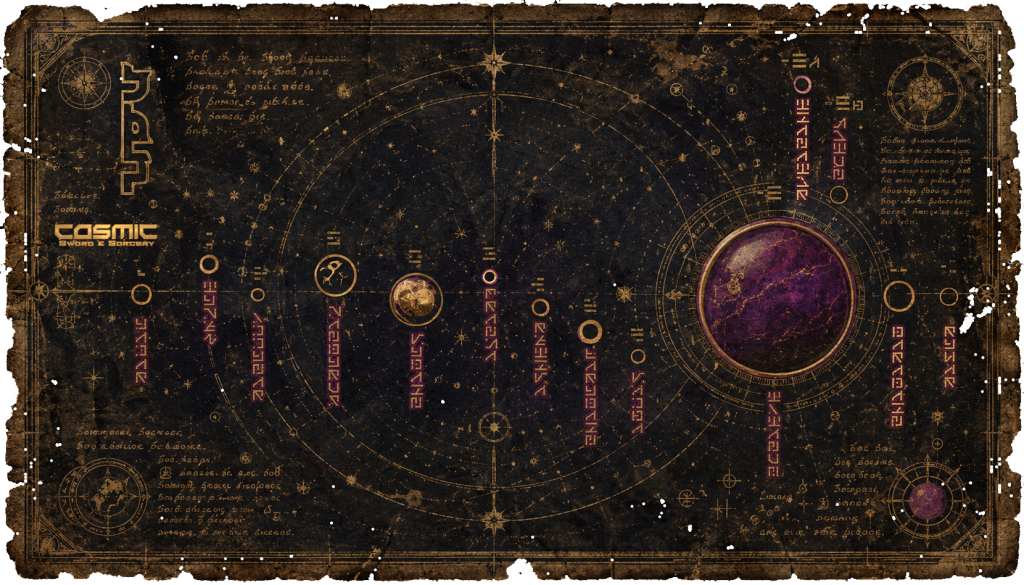
Ancient star charts recovered from the southern vaults of Ro’Edyne remained among the great unresolved mysteries of the early post-collapse ages. For centuries following the long restoration of literacy and astronomical study across Vandyrus, surviving observatories struggled to reconcile the positions recorded within the old imperial charts against the heavens visible in the modern era. Entire stellar reference paths appeared displaced.
Seasonal tracking systems failed outright. Ancient navigation tables produced impossible results when applied to the contemporary skies. At first, many scholars concluded the Ro’Edyne records themselves must have been ceremonial, symbolic, or corrupted through successive archival degradation. Others proposed that the imperial astronomers of the southern territories had employed alternative stellar conventions no longer understood by modern observers. Yet as more fragments emerged from drowned archives, collapsed observatories, and surviving orbital records, a far more disturbing conclusion gradually took shape. The skies themselves had changed.
Comparative astronomical reconstruction eventually demonstrated that Vandyrus no longer occupied the orbital alignment reflected in the oldest Ro’Edyne records. The planet’s axial orientation had shifted catastrophically at some point during the great collapse periods of antiquity, producing widespread climatic destabilization across the world. Seasonal durations altered. Oceanic circulation patterns failed. Entire continental weather systems reorganized themselves across subsequent centuries. This revelation resolved numerous long-standing historical contradictions preserved within older southern records. Regions once described as humid subtropical territories now lay beneath snow and northern forest. Ancient accounts of warm coastal valleys, monsoon rainfall systems, jungle escarpments, and fern-covered mountain terraces conflicted sharply with the cold maritime climates occupying those same regions in the modern age. For generations such descriptions had been dismissed as exaggeration, poetic embellishment, or symbolic language inherited from lost religious traditions.
The star charts proved otherwise. Pre-collapse Vandyrus had been a warmer, wetter, and significantly more hydrologically active world than the one inherited by later civilizations. The great southern territories of Ro’Edyne existed beneath skies unfamiliar to the modern era, their climates stabilized by planetary conditions no longer present after the orbital disruption. The redwood expanses, frozen highlands, and northern fog systems characteristic of later Vandyrus appear to have expanded only gradually across the cooling world during the long centuries following the collapse.
Among the more unsettling implications of the reconstructed charts was the realization that many post-collapse cultures had unknowingly built their understanding of “natural” Vandyrus atop the aftermath of planetary trauma. Entire civilizations emerged believing the colder world to be the original state of creation itself, unaware that the forests, coastlines, and seasonal cycles surrounding them represented only the latest condition of a much older and radically transformed planetary body.
Chapter 4: Thyuratahn
Even among the oldest surviving southern records, references persist to a northern continental dominion known variously as Thyuratahn, the Central Dominion, or in certain later Londorai reconstructions, simply the Lost North. The antiquity of these accounts greatly exceeds that of most surviving native historical traditions upon Vandyrus.
Certain preserved records attributed to the later Ro’Edyne archive periods already describe Thyuratahn as ancient, suggesting the kingdom had passed partially into legend even during the height of the southern imperial ages. The surviving references are made stranger still by the geography they describe. Numerous records speak casually of northern overland crossings between Ro’Edyne and regions now separated entirely by the Vulsan sea. At first these passages were dismissed by restoration scholars as symbolic, mythological, or ceremonial in nature. Yet successive discoveries of older navigational charts and fragmented territorial records complicated such interpretations considerably. Some among these materials appear to predate even the oldest linguistically understood Ro’Edyne dialects currently known to modern scholarship.
This remains among the more troubling aspects of the Thyuratahn material. Ro’Edyne itself already represents one of the deepest and most difficult linguistic continuities in surviving Vandyrian history, yet portions of the northern records appear to originate from structures older still. Certain inscriptions recovered from drowned northern shelf regions do not conform fully to any recognized Ro’Edyne linguistic family, though partial symbolic overlap remains sufficient to suggest some degree of ancestral relation.
Accounts concerning Thyuratahn vary considerably between surviving cultural traditions: Surviving records portray Thyuratahn less as a singular kingdom and more as a vast continental sphere containing numerous aligned polities, trade federations, dynastic territories, and ceremonial states spread across the central northern expanses. Unlike many later northern civilizations which emerged in relative isolation following the collapse periods, the peoples of Thyuratahn appear to have maintained direct cultural and administrative contact with both Greater Londorai and the southern continuities of Ro’Edyne across immense stretches of time. The oldest surviving descriptions portray the dominant populations of the region as physically imposing even by Vandyrian standards, their ruling castes frequently described within southern records as “high blooded” or “sky-allied” owing to extensive offworld admixture among the upper dynastic lines.
Imperial genealogical fragments recovered from later Ro’Edyne archives suggest that portions of the Thyuratahn aristocracy possessed direct ancestral links not only to the greater Vandyrian imperial spheres, but to colonial bloodlines originating beyond Vandyrus itself. Certain northern houses reportedly maintained ceremonial kinship ties to Jotunic colonial administrations, while others traced their ancestry to interstellar dynastic lines associated with the core worlds of the greater imperial systems. Though much of this material remains fragmentary, the surviving evidence strongly suggests that Thyuratahn functioned not as an isolated northern kingdom, but as a heavily integrated frontier continuity-state positioned between multiple spheres of imperial influence.
Chapter 5: The Kingdoms of The Mythic North
Among the most frequently referenced powers within the region were the kingdoms of Dyma and Nabir, both of which appear repeatedly throughout surviving trade records, migratory charts, astronomical schedules, and ceremonial exchange documents preserved across later southern archives. These kingdoms occupied critical transit territories linking the northern highlands, central steppe systems, and southern continental corridors. Over time they developed into major commercial and cultural centers whose influence extended far beyond their immediate territorial boundaries.
Dyma in particular became associated with monumental trade architecture and long-distance overland caravan systems stretching across the northern plains. Surviving references describe immense elevated roadways, geothermal rest-stations, and fortified transit cities constructed along migratory and commercial routes extending for thousands of miles across the central territories.
Nabir meanwhile appears more frequently in relation to educational institutions, astronomical observatories, archive complexes, and ceremonial diplomacy between the northern dynasties and southern imperial continuities. The geography of Thyuratahn itself contributed heavily to the unusual character of the region.
What remains difficult to dismiss, however, is the increasing convergence between the oldest cartographic reconstructions, submerged geological surveys, and the persistent recurrence of northern territorial references appearing independently across otherwise unrelated historical traditions. Though much concerning Thyuratahn remains uncertain, few serious scholars now dispute that substantial landmasses once existed across regions presently claimed by the northern seas, nor that civilizations of considerable sophistication may once have occupied them long before the modern age of Vandyrus.
Yet Thyuratahn was not merely a northern grassland corridor through which migrations and trade passed between the southern continuities and the distant northern reaches of Vandyrus. During the elder Ages, the region itself possessed a dense and unusually layered civilizational structure, serving as one of the great intermediary cultural belts of the pre-cataclysmic world.
Chapter 6: Into The Lost Realms
The discovery of the southern Ro’Edyne archives, independent from the surviving Vandyrian imperial record systems, opened numerous unsettling points of comparison between later restoration histories and realms previously dismissed as allegorical, ceremonial, or wholly mythic in nature. Civilizations such as the great fortress nations of the Ataratoz and the distant northern realms of Zarhanda emerged repeatedly across otherwise unrelated historical strata separated by immense spans of time.
Though never fully rediscovered in any complete archaeological sense, these lost powers persisted through fragmented cartography, dynastic references, military accounts, migratory records, and obscure archive correspondences preserved deep within the southern vault systems. They left treaties, trade corridors, battlefield records, astronomical observations, and territorial disputes embedded throughout the long chronology of elder Vandyrus, suggesting that many civilizations once regarded as purely legendary may instead represent the shattered remnants of continuity-states whose worlds vanished beneath the planetary upheavals of the collapse ages, leaving modern history to glimpse them only faintly across the abyss of time.
Among the older Vulsan tribal cycles, Zarhanda is described as the location of the Gates Beyond, a northern island-realm where fallen warriors were granted continued dominion among their ancestors and retained council with the living world. Later folkloric interpretations increasingly transformed Zarhanda into a spiritual or funerary concept, though earlier records appear markedly less symbolic in tone.
More ancient references describe Zarhanda not merely as an afterlife construct, but as a physical northern territory associated with knowledge acquisition, advanced healing practices, directed light weaponry, and crystalline matrix systems beyond the understanding of later restoration-age cultures. Several surviving fragments from the southern archive traditions refer to Zarhanda specifically as an island nation aligned in kinship with Ro’Edyne “amidst stellar reckoning,” a phrase whose precise meaning remains disputed among contemporary scholars.
Some later Londorai natural philosophers proposed that these northern accounts may preserve distorted memory traces of an earlier continuity-state predating the later Ro’Edyne imperial periods entirely. Others argue that Thyuratahn may instead represent a northern administrative or scientific branch of the broader southern civilization whose records became fragmented following successive continental collapses and marine inundations across the northern shelves. No consensus presently exists.
Positionally, Zarhanda appears to have existed well beyond the primary continental reaches of both Thyuratahn and Ro’Edyne proper, situated far to the north amidst the colder outer seas beyond the Vulsan territories and eastward of the elder Londorai spheres. Surviving geographic references consistently associate the region with freezing climates, violent northern waters, volcanic shelf instability, and long seasonal darkness unlike the warmer central dominions further south. Later post-cataclysmic accounts frequently describe the island as barren, storm-ridden, or partially wastelanded, though earlier records suggest this condition may represent the aftermath of successive collapse periods rather than the original state of the territory. The isolation of Zarhanda, combined with its apparent association with unusually advanced knowledge systems and surviving pre-collapse continuities, likely contributed heavily to its gradual transformation within later Vulsan traditions from a distant northern island-state into a mythologized realm of the dead and ancestral beyond.
Chapter 7: Sunderings of the North
Unlike the colder northern territories that would emerge after the Cataclysm, the elder central dominion existed beneath warmer and considerably more volatile planetary conditions. Much of the territory rested atop geologically unstable zones shaped by tectonic movement, geothermal pressure, volcanic uplift, and deep subterranean fracture systems. Great geyser fields, steaming river valleys, sulfur plains, and heated jungle basins divided immense stretches of open grassland and steppe country.
Travelers from the southern territories frequently remarked upon the immense scale of the Thyuratahn plains. Long rolling steppelands extended beyond visible horizons before gradually transitioning into grass seas stretching for extraordinary distances uninterrupted by major forest growth. Migratory megafauna traversed these territories seasonally in colossal numbers, accompanied by both mounted pastoral cultures and large predatory species adapted to the open plains. In wetter regions, dense jungles emerged abruptly around geothermal basins and volcanic waterways, creating strange transitional ecosystems where tropical vegetation, heated stone terraces, and open grasslands existed within close proximity.
This environmental diversity appears to have profoundly shaped the fragmented political structure of the region. Rather than consolidating into a singular uninterrupted empire, Thyuratahn developed as a network of interdependent kingdoms, dynastic territories, ceremonial leagues, and migratory protectorates bound together through trade infrastructure, shared astronomical systems, and common high cultural traditions inherited from older imperial contact.
Many later Ro’Edyne scholars considered Thyuratahn one of the clearest examples of the “middle civilizations” of elder Vandyrus — societies existing between the direct metropolitan continuities of the southern imperial spheres and the more isolated native polities occupying the distant frontiers. They possessed advanced infrastructural systems, extensive trade integration, and partial offworld continuity, yet retained strong regional identities distinct from both Ro’Edyne and the greater Vandyrian core administrations.
By the post-cataclysmic ages, however, much of Thyuratahn had vanished almost completely from the known world. The grasslands fractured. The geothermal belts collapsed or froze. Sea levels altered. Northern shelf systems disappeared beneath new oceans and glacial waters. Trade routes ended in broken cliffs and drowned territories. Entire migratory corridors ceased to exist. Of the great kingdoms themselves, little remained beyond fragmented oral traditions, scattered dynastic references, corrupted star charts, and the strange persistence of names surviving long after the civilizations attached to them had vanished entirely from history.
Chapter 8: The City of Steel
For centuries and countless generations, the City of Steel remained among the great unresolved mysteries of the old southern world. The surviving descriptions preserved within Ro’Edyne records spoke of impossible skylines, towering districts, elevated causeways, and colossal structures forged from steel and white alloy upon a scale no surviving civilization could easily reconcile. Even among the more educated restorationist courts of the later ages, many regarded such accounts with skepticism. Great cities might fall, certainly, but cities do not simply vanish. The absence of ruins surrounding the supposed site of Tykon’Mach became one of the principal arguments against the more extravagant southern chronicles.
As later inquiry would reveal, the truth proved considerably worse than the speculation.
It is now believed that portions of the greater southern territories survived the first violence of the collapse periods, though only briefly and in fractured form. What followed the arrival of DOOM appears increasingly distinct from the wider devastation occurring elsewhere across Vandyrus. Surviving reconstruction models suggest that a smaller fragment separated from the greater mass and descended directly into the southern continental belts at tremendous velocity, striking within proximity of the City of Steel itself.
The force of the impact exceeded anything previously imagined by the natural philosophers of the restoration eras. Modern geological examination suggests the temperatures generated during the strike vitrified enormous sections of the surrounding territory almost instantaneously. Rock formations became glass. Structural metals liquefied. The crust beneath the southern basin fractured catastrophically, opening vast fissures across the region. Much of the city itself, together with surrounding terrain and infrastructure, appears to have been drawn downward into the ruptured mantle zones beneath the impact region.
The unusual geography of the central Roedon straits had long troubled earlier scholars even before the southern impact theories gained wider acceptance. The depth, shape, and structural irregularity of the formation differed significantly from conventional marine erosion patterns observed elsewhere across Vandyrus. Early explanations ranged from tectonic collapse to ancient glacial flooding events, though none fully accounted for the scale or violence implied by the surrounding geological damage.
Remnants Beneath the Pines
The southern impact theory remained controversial for many generations. Many considered it an attempt to force mythological narratives onto natural history. Yet later sub-surface scans directed into the deepest portions of the fissure produced results that proved difficult to dismiss. Beneath layers of collapsed stone and vitrified material appeared massive concentrations of steel, glass, and artificial structural density inconsistent with any known natural formation. Certain scan returns suggested repeating geometric profiles buried far below the modern seabed, including angular formations later compared against surviving Ro’Edyne architectural records.
Most significant among these discoveries was the identification of Vandyrium signatures deep within the collapsed strata. Fragments displaying the unmistakable resonance patterns associated with the ancient imperial material provided the first widely accepted evidence that the southern records describing Ro’Edyne monumental construction had not been entirely allegorical. Among the more widely circulated scan reproductions was the partially exposed upper section of what many scholars believe may have been one of the great stepped pyramid complexes described within later imperial accounts.
No serious excavation attempts were undertaken during the early restoration ages. The depth of the collapse zones, combined with the instability of the surrounding geological structures, placed the remains well beyond the reach of contemporary mining capability. Even had such operations been possible, many scholars argued that the buried remains of Tykon’Mach no longer existed in any meaningful architectural sense, but rather as a fused mass of liquefied alloy, collapsed stone, and vitrified continental material compressed deep beneath the modern straits. Thus the City of Steel passed from history into a stranger category entirely. Not ruined. Not abandoned. Buried beneath the wounded geography of Vandyrus itself.
“Ro’Edyne’s Beauty”
“Sing, sing to me sages and spirits of glory and grace, of Anything but clear, cool water runs now through Ro’edon’s veins, Sing, Brown with peat and memory, heavy with old rains. Once it sang from high stone hollows where the hawks knew every name, Now it crawls beneath the bridges like a thing that feels the shame.
I remember silver mornings on the broken mountain’s brow, Mist like wool around the pines that aren’t there now. Heather burned in purple fire where the long grass used to lie, And the wind knew every footstep of the folk who’ve all gone by. The highlands bowed to centuries, to hunger, war, and rust, To walls that learned to crumble and to oaths that turned to dust.
What was sung as living truth became a story told too low, Until even the stories tired, and let themselves go.
Once, long, long ago, Back in the days, When people believed, My home and its kindred existed— Before the fog took the names, Before the stones learned to grieve, Once, long, long ago, Ro’edon still lived.
The old roads sink like questions no one bothers to ask, Cart-ruts filled with rain and leaves, and promises gone slack.
There were feasts that shook the rafters, there were laughs that split the night, Now the hills just hold their breath and wait for another light.
They say the age rolled on without us, never turned its head, Built its future on the bones of all the quiet dead.
But sometimes when the west wind cuts just right across the loch, You can hear a half-remembered tune knock once… and knock.
Once, long, long ago, Back in the days, When people believed, My home and its kindred existed— Before the banners were torn, Before belief learned to leave, Once, long, long ago, Ro’edon still breathed.
So pour me anything but clear, cool water for this cup, Let it taste of loss and lichen and the ground that won’t give up. If the world has moved on laughing, let it go its way alone— I’ll stay here with the rivers that still remember home.”
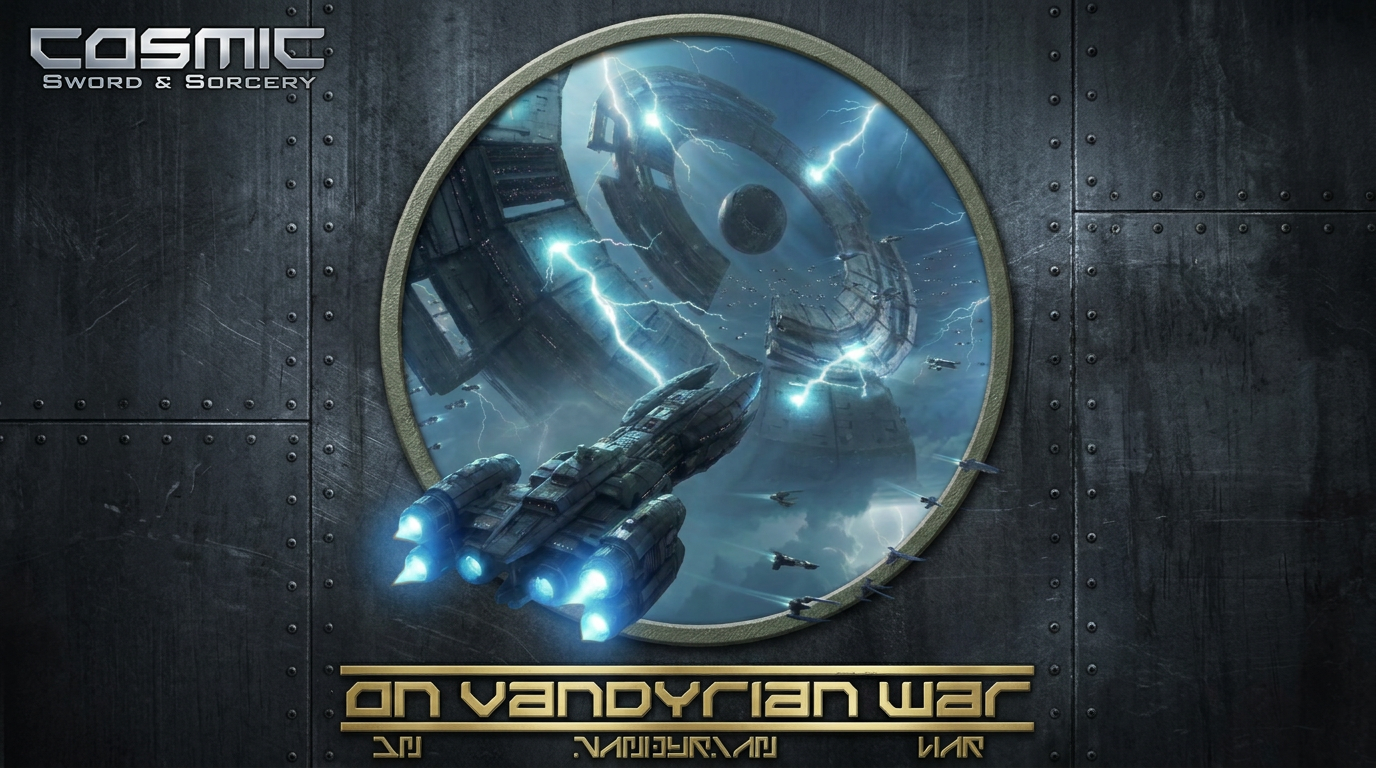



















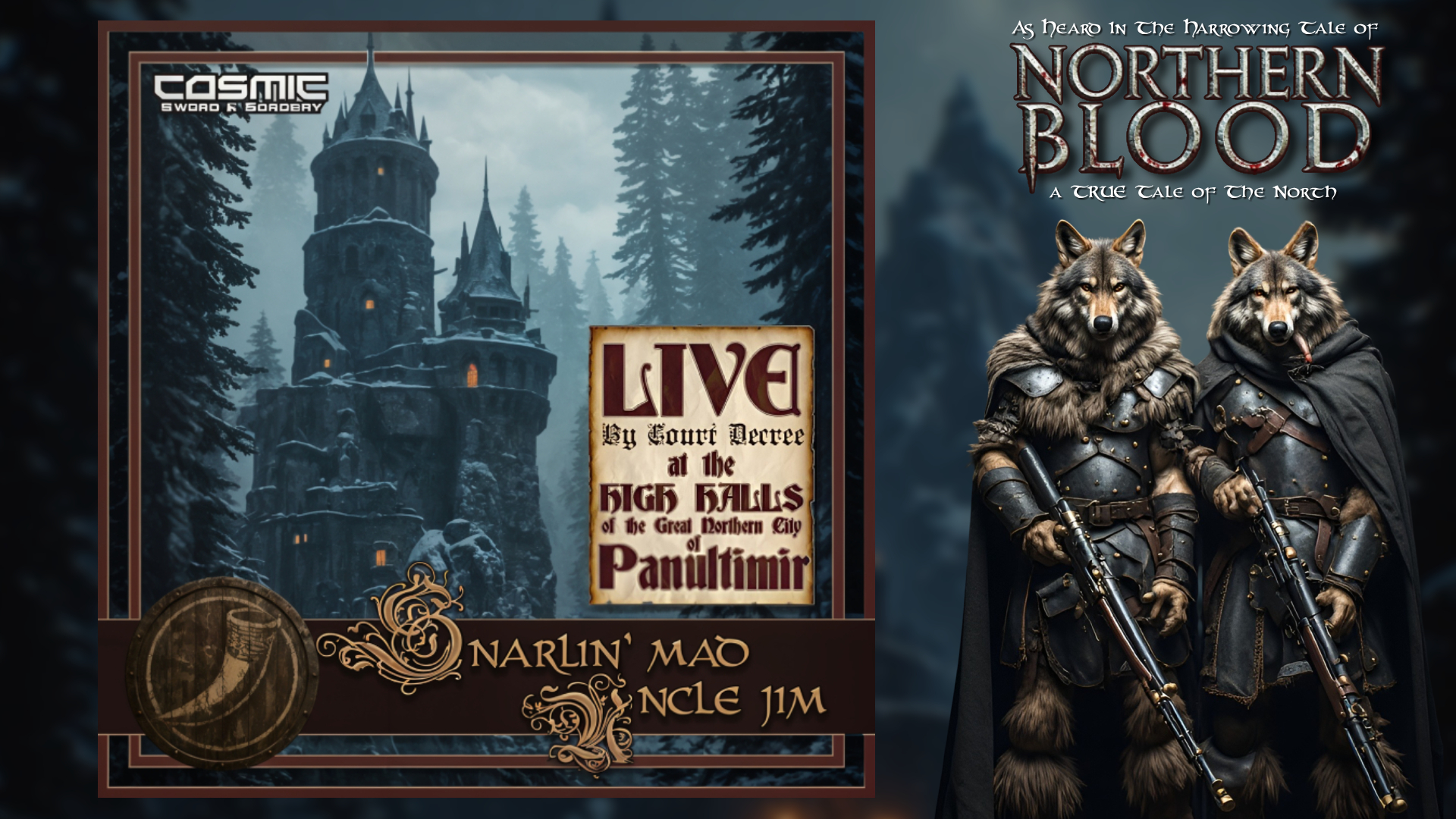

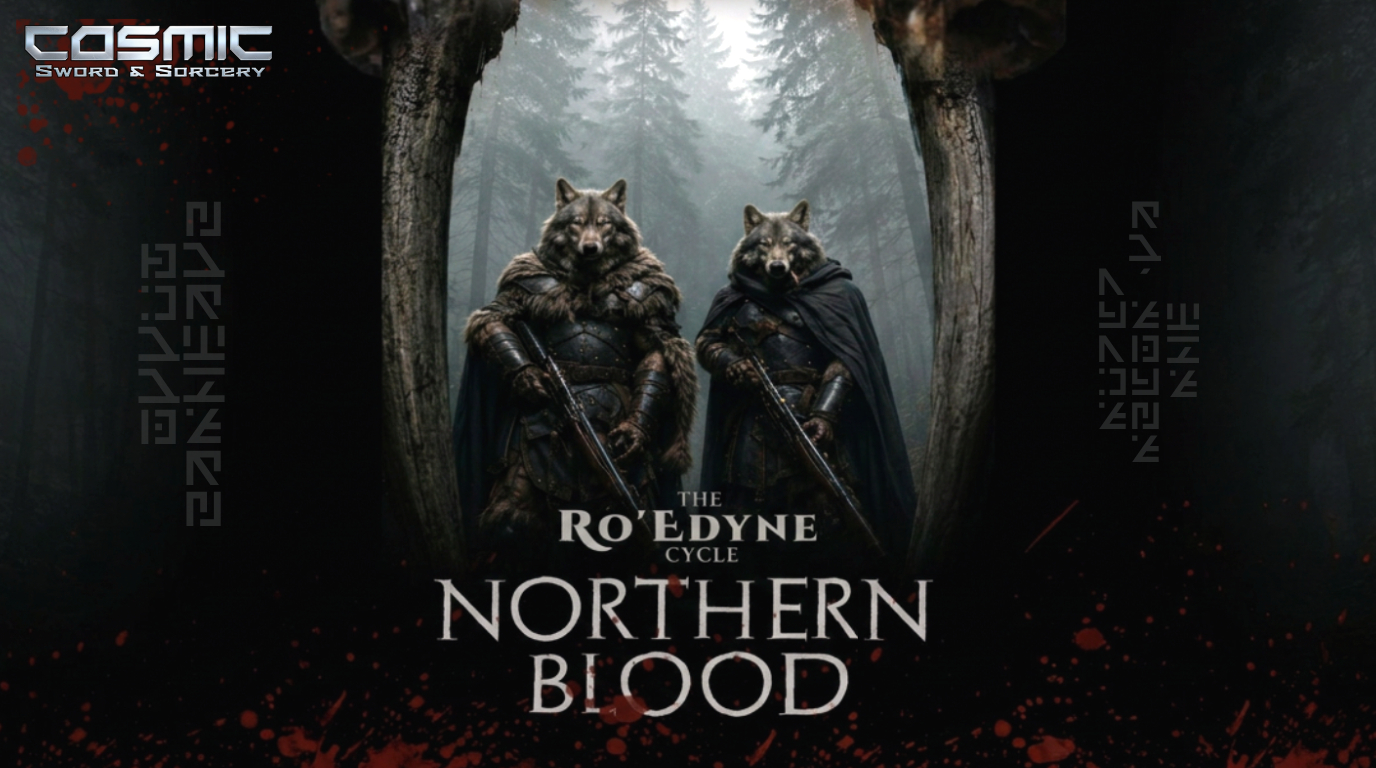
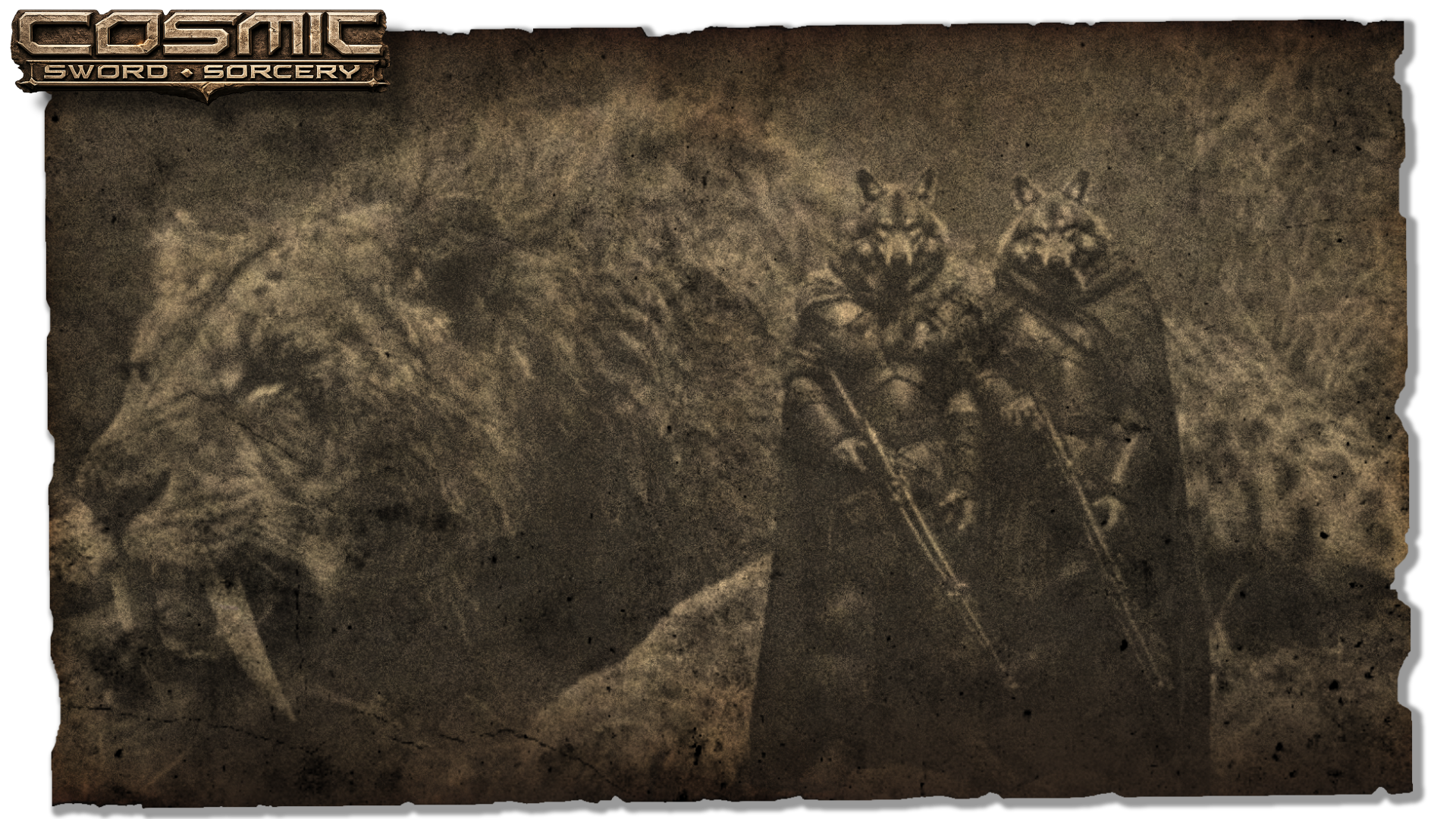
![The History of Ro’Edyne [Production Audiobook]](https://www.primalswordandsorcery.com/wp-content/uploads/2026/06/The-History-of-RoEdyne-Audiobook-PRODUCTION.jpg)