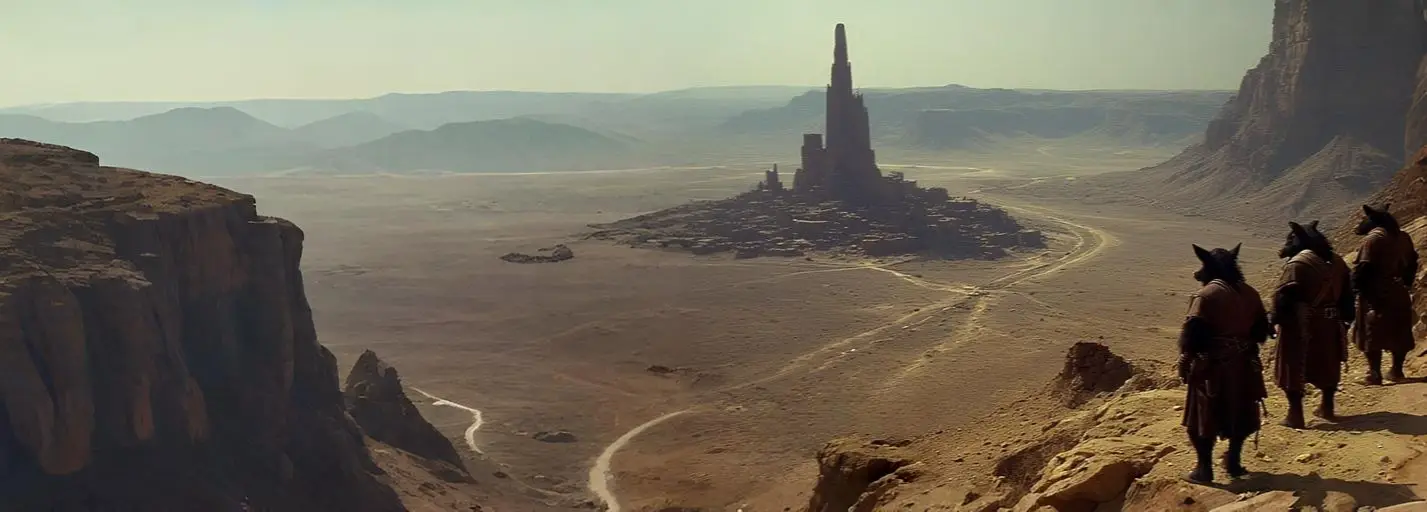
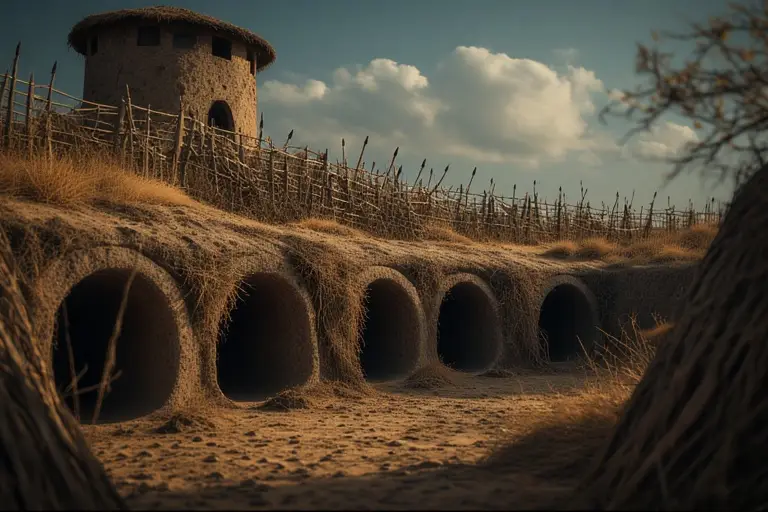
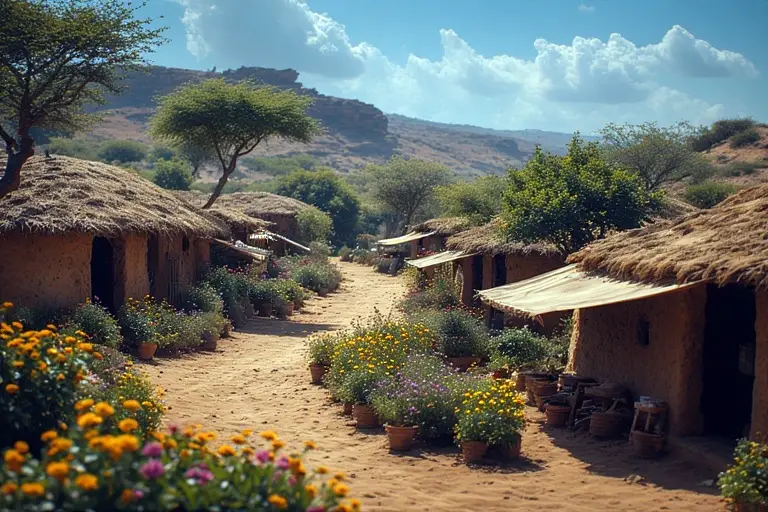
Bantos did not wait for revolution to succeed elsewhere—it moved first. As the jackal order broke, the folk of Banti struck south, seizing the borderlands even before the old regime fully collapsed. Banti itself, hollowed by corruption and famine, fell in a matter of hours—its jackal rulers slaughtered almost to a one, their citadels emptied by their own flight and the ruthless efficiency of the rebels. Couriers and riders from the first outbreak at Aros had already crossed into Izhura, rallying kin and allies along the border before the first day’s violence had ended.
The next weeks saw the region transformed. Fortifications sprang up overnight, not only by local hands but with open support: Allies in Elder Rusalon furnished weapons and coin, Izhura lent horses and muscle. These debts have never been forgotten. To this day, Bantos comes to the aid of both the strongholds of Elder Rusalon and crosses into Izhura with formal blessing when the old banners are called—by land or by sea.
While civil war consumed the streets of the Jantaran capital, the rebellion swept steadily south. By the time the dogfolk arrived at the heart of Old Jantara, the city was already a slaughterhouse. They burned it to the ground, and—significantly—did not build anew atop its bones. The site was left empty, its ruins erased by time and disuse. Instead, the similarly named Janta remained hidden, central to the new Bantos but never permitted to become a monument to old power.
The first capital rose at Calbara, in old Banti, but after a century the seat of power shifted to the center of the realm for practical reasons. Expansion continued steadily southward. In time, Ajong began to rival Tar’Rypa for dominance, each city staking a claim to greatness: Tar’Rypa insisted it remained the spiritual heart of the land, while Ajong’s boosters argued that real civilization required a city folk would actually travel to.
Bantos today stands as a tightly interwoven republic of three major city-states: Calbara, Tar’Rypa, and Banzel. with Ajong being a newly integrated city-state of ourland origins. There is no king. Rule falls to an elected council: six members in peacetime, nine in wartime, and up to twelve when including foreign advisors. The capital remains in Tar’Rypa by law, though rivalry with Ajong is ongoing. Currency is silver for standard trade, copper and mead by the barrel for local exchange, and bacon—five strips to the pack, clean-wrapped—for daily barter.
Laws are as direct as the region’s history:
Slavery is illegal.
Slavers are hanged.
Trials are mandatory, though justice is swift.
The army is volunteer-only; there has never been conscription.
Usury is forbidden.
The council is fair, but makes mistakes.
There are no city walls—only the “Bantos Wall,” meaning the militia lines at:
Calbara in the north or
Ajong and Banzel in the south.
A vital warning stands at every border: “Do not go to Nyakava.” This outland city, isolated on a marsh spire south of Bantos, is notorious as a haven for traffickers and reavers. Those who flee toward Bantos seeking freedom are told plainly: escape means Bantos, not Nyakava. Those unlucky enough to fall into Nyakava’s grasp may find themselves lost forever, or sold back to the slavers and bandits of Kartonga—often just a day’s journey from safety, and a lifetime from rescue.
Bantos did not erase the scars of its past. It built its law and customs on the memory of oppression, the debts of alliance, and the lessons of a rebellion that left no monument but freedom itself. Its cities still rival one another, its council still argues, but beneath it all is the grim pride of a people who survived ruin, refused tyranny, and never forgot who bought their first dawn.
After their rout from the heartlands, the jackals were not butchered, but they were expelled with totality. Small holdouts were crushed or run off; Bantos tolerated no enclaves, no survivors to sow the seeds of return. The few who made it south found no sanctuary. Pushed across the crossing to the isle of Nykava, they were met not with welcome but massacre—Nykava’s rulers made sport and example of them, cutting down any who thought to dig in, driving the remainder further still.
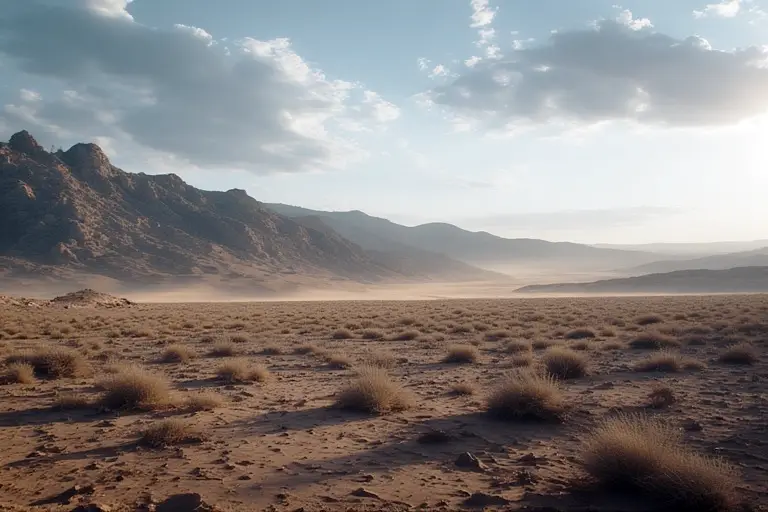
Those who survived that passage staggered on, only to be pushed to the edges of the Yorozhian desert—a region already infamous as a screaming hell of sand, starvation, and predation. There, the jackals stagnated, their numbers withering to madness, disease, and despair. They found themselves unwelcome in every neighboring realm, haunted by their own extinction and ruled by petty tribal lords—each one a pale shadow of the weakest old Jantaran slavers.
Bantos made a ritual of hanging any jackal caught crossing back—never a mistake, never a wrongful execution. The line between jackal and “black dog of civilization” was never blurred. Bantos’ scouts and marshals took pride in it, and the certainty of the policy sent a message to all who might doubt the resolve of the new order.
The fate of the Yorozh jackals was fitting in the eyes of those who had suffered under them. In Kartonga and the Varduun wastes, the jackal outcasts became sport and prey—a living warning. Kartonga’s cruelest found joy in hunting them for bounty or amusement. Varduun’s arenas turned their suffering into entertainment, pitting the starved jackals against monsters for the pleasure of their most sadistic enemies. Those not slain outright found only madness in the lotus haze, their bodies consumed by the same vultureworms and hyena-born curses their ancestors had once spread. In the end, it hardly mattered if the jackals fell to monsters, disease, or to one another. The world no longer cared.
The average jackal knew the truth: extinction was not a possibility, it was a sentence already half-executed. They existed only as a memory of what they had lost, and as prey for the very races and beasts they once despised.
The jackals themselves speak of the past in low tones. They once possessed a realm twice the size of what now lies beneath their feet, its southern half fertile and rich with pasture. But they built nothing that endured. Their towns were camps, their strongholds carved from rock and sand, their wealth stored in caravans that never stopped moving. When the war came, there were no walls to hold, no fields to feed them, no foundries to arm their sons.
The dogs came with iron, timber, and a will to settle. The jackals had only teeth and pride. Their defeat was absolute. The southern half of their world—the heart of their domain—became the Doglands, the single greatest territorial loss of any people in Zhuru’s postwar age. It was not simply a shift of borders; it was a replacement of civilizations. Every city that stands there now was raised by dogfolk, brick upon brick, on jackal graves.
The canals that run from the highlands bear Doglord names. The shrines, the market towers, even the roads—none are of jackal make. If the jackals were to reclaim what was theirs, they would inherit only the monuments of their conquerors. To restore their own culture, they would have to destroy everything the dogs have built.
This is the curse of the Jackalands: a land they cannot reclaim without erasing the only structures that could sustain them. They lack the numbers, the beasts of burden, the ironworks, and the sheer labor power to rebuild what war and time erased. A full generation has grown since their last serious campaign. Those born now know no homeland beyond the sand. They dwell in ruins that predate them, carving out a thin existence along the northern marches where the soil begins to fail and the wind carries the dust of Kartonga.
History records that Jantara was never truly conquered. There was no siege, no campaign of attrition, no parley at the gates. When the end came, the city did not fall—it was burned.
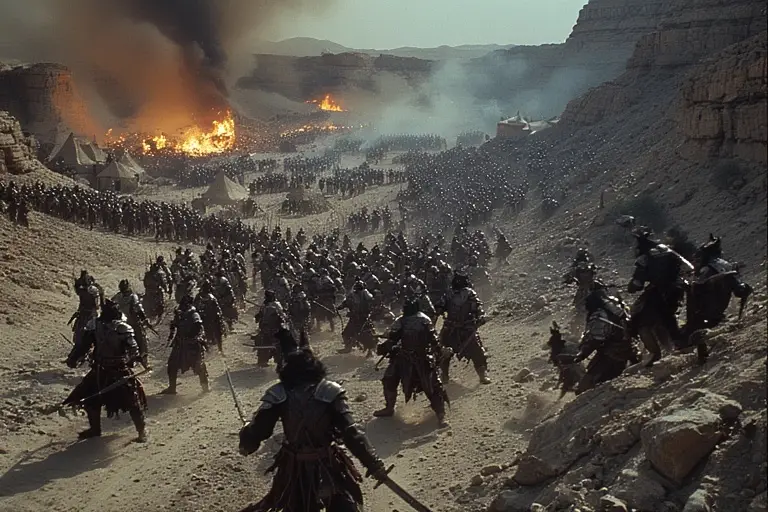
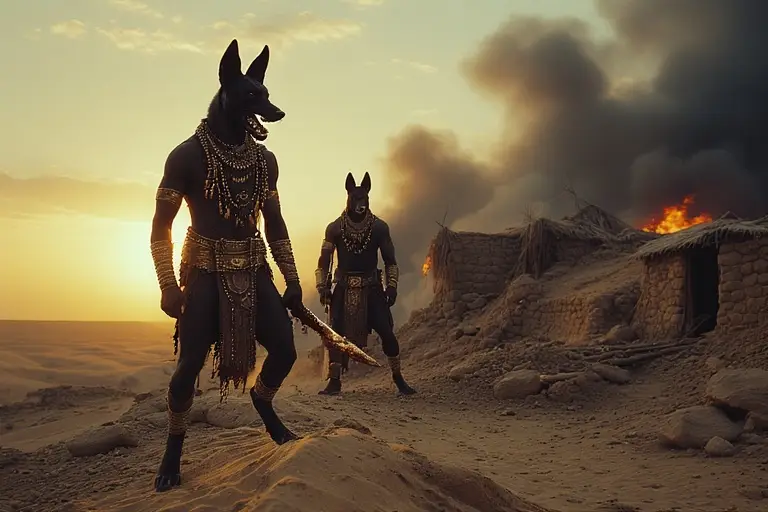
The walled city-state, already rotted from within, became a pyre. The legions of Bantos declared there would be no slaves taken, and every ear understood the rest: there would be no prisoners taken either. The jackals who did not perish in the flames fled into the alleys and countryside, only to be hunted, one by one, until the city was cleansed of its masters and the age of the jackal was truly over.
No monument was left. No quarter was given. The ruin itself became the warning: here, where arrogance met its reckoning, nothing was spared and nothing forgiven. The Dogfolk who entered that place did so not as liberators, but as executioners—and they left behind not a city, but a lesson scorched into the stones.
The precise spark of the Bantos Uprising is unknown.
What survives is myth: that a single dog soldier—veteran of the failed rebellions—rallied entire slave settlements, marched them back to the capital, burned Jantara City to its foundations, beheaded its rulers, and shattered the old gold and ruby crowns.
Whether this figure existed as described is irrelevant. The truth is larger: Bantos was not founded by negotiation, but by annihilation of a system that had exhausted every claim to legitimacy.
Old Jantara did not collapse in a single night of thunder and revolt. Its demise was a slow-motion disaster, the product of too many years living off stolen fortune and the belief that fate itself was a debtor in the jackal’s ledger. The Jantaran usurpers had ridden luck hard, and when luck failed, there was nothing left to cushion the fall.
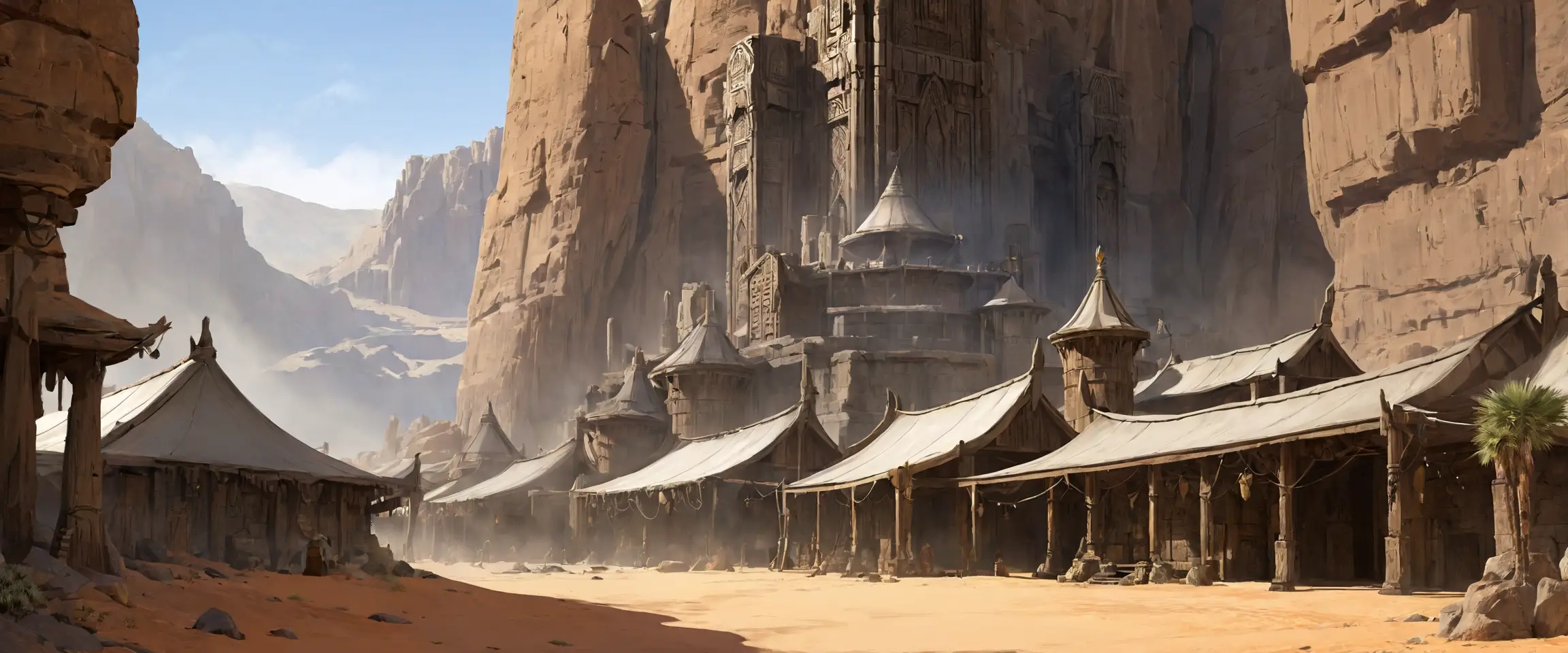
In its final generation, the heart of Old Jantara had become a grotesque monument to rot: a hivelike city crowded with the fortresses and dens of a hundred petty kings, each reigning over a fragment of squalor. The once-fabled central city had degenerated into a sprawl of citadels built atop hovels, brothels, and shantytowns, all ringed in the refuse of failed ambition and forgotten law.
It had become a parody of better cities—a place that was openly mocked by the likes of Old Kartong, viewed with contempt and scorn and considered vile by much of the world, not only in its squalor, but in the absence of any redeeming order or pride. Even the jackals who ruled it seemed to know they presided over a sty.
Poverty festered everywhere. Violence was as common as breath; the only constant was the relentless churn of new suffering. Overpopulation strained what little infrastructure survived, and the underworld boiled with cults, rival gangs, and occult societies fighting over every resource, every scrap of power.
Plagues and parasites flourished in the chaos. Scholars of later ages would claim that entire generations of jackals were lost to the introduction of vultureworm parasites—a scourge seeded by conquest and rape in the hyena lands to the east. This blight did not merely decimate the underclass, but struck at the seed-stock of the ruling clans, deepening the city’s spiral into poverty, disease, and madness.
Economically, the collapse was total. Every effort to stabilize the realm after three failed dogfolk rebellions only deepened the crisis. The state’s debts multiplied, markets failed, and the cost of keeping the cities fed and the armies loyal outstripped even the riches looted from a dozen conquered realms. The currency of Old Jantara became hunger, terror, and betrayal.
No dogfolk rebellion, however brave, could have toppled such a regime on its own. The final wounds were self-inflicted. Assassinations, poisonings, occult intrigues, and outright street battles claimed the lives of those few leaders who might have preserved order. The ruling usurpers—each a king in his own crumbling tower—turned on each other, hiring enforcers to hunt rivals, burning out whole districts to cover debts and clean up “loose ends.” Their desperation poisoned the city faster than any foreign invasion could have.
By the time rumors of a new uprising reached the city’s rotten heart, it was already too late. The jackals knew their hour had passed. They lacked the strength, the unity, and the credibility to withstand one more revolt. The debt of old atrocities—the cost of burning northern kingdoms, starving out rebellious towns, and shattering the lives of their own kin—came due all at once.
The uprising that finally ended Jantara was not a surprise. It was a consequence—a violent, inevitable reckoning that swept away the pretense of power and the illusions of a thousand petty tyrants. When the dogfolk rose at last, they did not face a nation, but a carcass picked nearly clean by its own masters.
The enslaved dogfolk rose three times under Old Jantara. Each rebellion was crushed completely.
The first was naive and disorganized. The second more violent, but betrayed. The third nearly succeeded—and taught the jackals the cost of mercy. Each failure resulted in worse treatment, harsher controls, and fewer illusions among the enslaved.
But the jackals made a critical error. They made submission worse than death.
Escape became preferable to obedience. Flight into the grasslands, into hunger and exposure, became a rational choice. The slaves learned routes, timings, weaknesses. Information spread in whispers and scars. Old habits from Old Jantara were carried by the escapees—but so was hard knowledge.
The Northern Doglands were never a kingdom of their own, nor did they emerge from a single lineage or heroic age. They existed as the battered remnant of Old Jantara’s conquests—a stretch of land marked by devastation, forced migration, and a patchwork of ruined subkingdoms, each with its own bitter history of betrayal, humiliation, and subjugation.
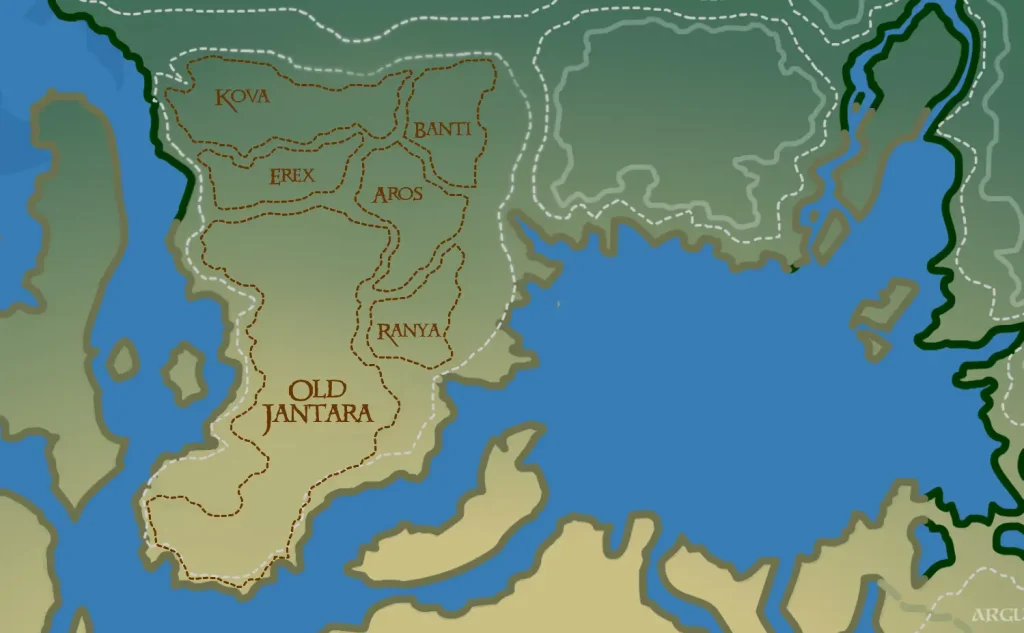
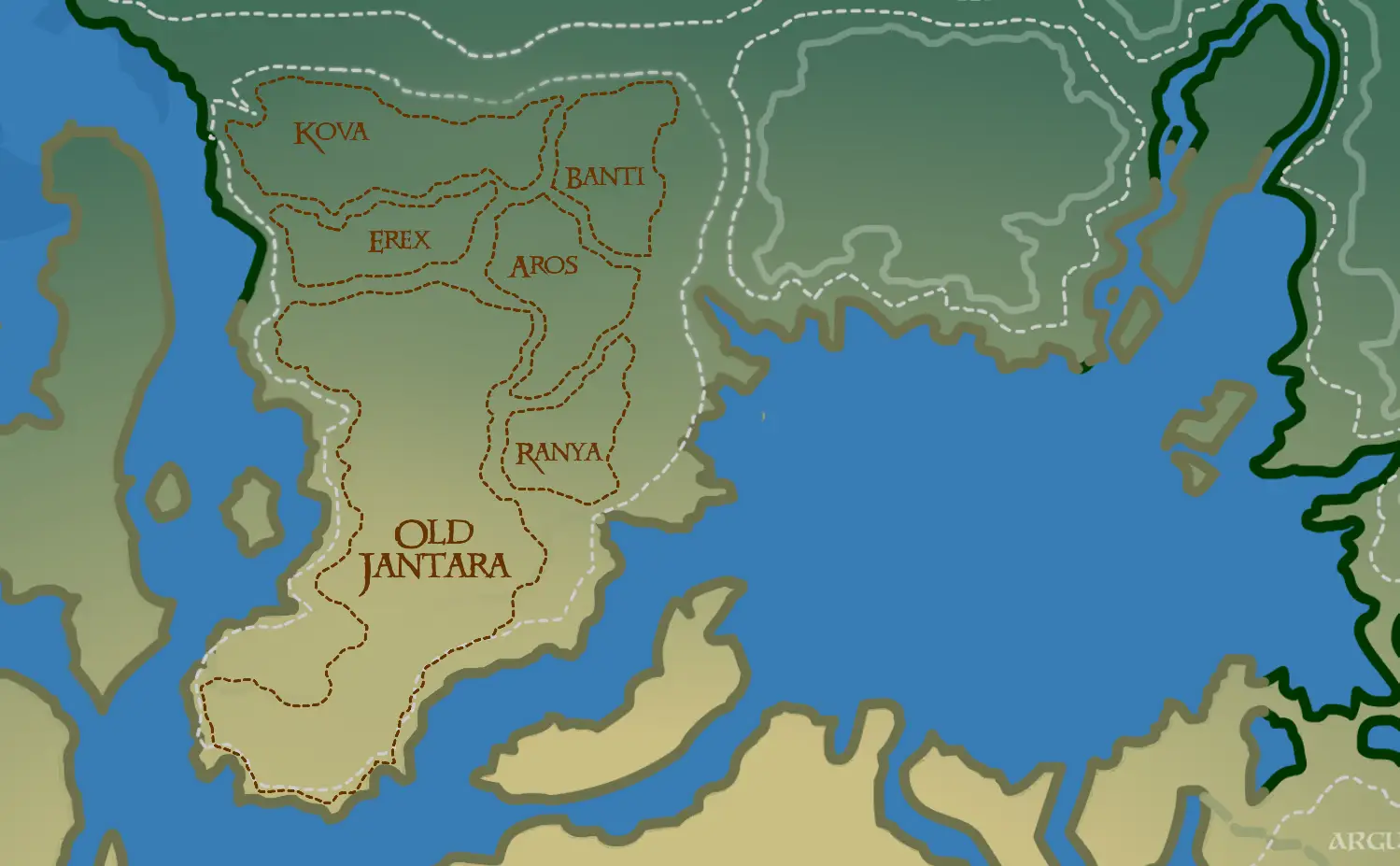
In the last centuries of Old Jantara’s rule, the region was divided between five subject realms:
Kova, Erex, Aros, Banti, and Ranya. These were not allies, nor even stable rivals, but desperate neighbors—each doomed in their own way as the jackal lords tightened their grip and the machinery of oppression ground out every last ounce of resistance or hope.
Kova had been the first to fall. Once a loose alliance of three small kingdoms, its leaders failed to unite against the oncoming jackal hosts. Jackal armies overwhelmed them in less than a year. The leaders of Kova were slaughtered, their resistance shattered, and their people cast into servitude or scattered to the wind.
Erex collapsed next, and not by force of arms, but through treachery. Its ruling council, promised mercy in exchange for surrender, capitulated—only to be burned alive in public squares, their families chained and sent south to serve as living reminders of jackal “leniency.” The betrayal of Erex became a lesson repeated in Dogfolk stories for generations: every promise from a jackal lord was a noose.
Aros did not fall in battle, but through famine. Jackal governors poisoned wells, burned stores, and blockaded the valleys until hunger drove the defenders to submission. Even then, those who surrendered were offered no clemency. The armies of Aros, mustered as a show of fealty, were ambushed and slaughtered; their homes, already emptied, were burned behind them.
Ranya stood longest in the south, a land of fortified valleys and river towns held together by desperation. The folk of Ranya endured repeated assaults, losing ground village by village until, at last, the survivors were hunted down or driven out. Their names and stories survived only in the genealogies of later Dogfolk clans, and in the ruins they left behind.
Banti was the outlier, the last and most stubborn of the northern realms. Backed quietly by the Ruseloni beyond the border, Banti’s people waged a persistent, bloody resistance, using their forests and hills as shelter for generations. Some claimed Banti never truly surrendered, and that it remained a thorn in the jackal’s side, the heart of Dogfolk defiance, even as the rest of the region fell to ruin.
As these kingdoms fell, the jackal conquerors did not simply absorb their lands. They relocated and broke apart entire populations—not by lineage, but by labor needs and convenience. Folk from every subkingdom found themselves uprooted, resettled in tent cities, makeshift camps, and squalid shantytowns. The old ties of kin and place unraveled, replaced by a new, shared identity built on the trauma of dispossession.
These grim settlements were the cradle of what would become the Northern Doglands: a land of exiles and survivors, ruled not by law but by the logic of necessity. The traditions of Kova, Erex, Aros, Ranya, and Banti endured only in fragments—songs half-remembered, rituals practiced in secret, grudges passed down with each telling. In time, these broken peoples forged a kind of solidarity, not through shared history, but through the stubborn will to outlast their oppressors.
The era known as Old Jantara marks the true moral nadir of jackal rule.
This was not a continuation of the ancient league, nor a legitimate successor state. It was a slaver kingdom formed by the bastard remnants of failed usurpers, ruling for nearly a thousand years through degradation alone. It is here that Jantara became a curse word among jackals themselves.
Old Jantara’s economy was built on enslavement, with dogfolk as its primary victims. The jackals of this age took particular cruelty in subjugating dogs, not merely for labor but for sport. New canine breeds were discovered, catalogued, and abused. Rebellion was answered with starvation, mutilation, and public degradation.
A grim biological fact shaped this cruelty: black jackals could not reproduce with female dogs. To the jackals, this was a missed opportunity. To the enslaved females, it was a narrow mercy. Better an unwilling plaything than a forced breeder to monsters.
Physically, the jackals of Old Jantara towered over their captives, averaging over six feet, while keeping subjugated races deliberately stunted through malnutrition. Power was enforced not just with chains, but with size, spectacle, and ritualized humiliation.
It was during this era that the Bantos Rebellions began.
There was no music in the Doglands that night, only the wind working through broken shutters, shivering the filth in the alleyways, and the slow splatter of rain against the cracked sign above “Red’s Hot & Mean”—the wind and the years had erased the letters, left only a streak of angry paint and the stink of badger rotgut strong enough to eat the enamel off your teeth. Inside, the tavern was a cave of sweat and sour smoke, sticky with spilled liquor and old fear.
Sir Petyr of Aros, once of the old order, now just Pete to the drunks and orphans, hunched alone at a corner table, nursing a bottle he could barely afford, his sword at his boot, his name already half-forgotten. A rebel’s night had never been darker. The last rally had broken beneath him like old bone, another butchered band left bleeding in the dusk outside the gates, and the jackals were coming.
The Barswine had warned as much, he knew. Everyone knew. That was the order of business. Fight back, fail, die trying. Stubborn old ‘Pete’, This one. The only other recognizable fighter in the area was there to guard the Jackals theft through tax, and even he had warned the old dog to sleep it off. “Seek tunnels, get lost, If you can walk the alleys then go, dog.”.
“Not a chance.”
Besides, it was too late for that now; They entered with the scent of oil and dust, half a dozen in all, in layered silks already muddy, their teeth bright, their eyes slits. Hacksbar and Vindurga took the lead—nobles by birth, predators by trade, each one bristling with knives, hooks, grenades, a few blackmarket pistols stuck in faded sashes. The room fell silent but for the rain. Aros had no more fighters, no more banners—only Pete, old and out of luck, drinking himself toward legend or oblivion. Hacksbar’s voice was all amusement, dripping with the false gentility of a merchant offering poisoned dates.
“Sir Pete,” he said, letting the title hang like a noose, “it’s over. You know this. We can gut you here or give you an ending. Choose.”
On the battered tabletop, they placed a brass cup. Poison, swirling oily and black, the same color as the rain that trickled down from Jantara’s rooftops, the same stink that haunted every ruined alley where the last resistance bled out. Pete watched the cup as if it were a mirror, as if he could see his old self in its surface.
“Are you a knight?” he asked himself, aloud or not even he could tell. His mind, empty for months, finally answered back—a rasp of laughter, a pulse beneath the scarred ear.
“No clue,” it said. “Let us find out.”
He drank. The taste was nothing, just a flicker of rot behind the smoke and badger liquor in his throat. A hush followed, the jackals grinning with cruel expectation. The townsfolk huddled in corners, eyes fixed to their boots, praying not to be noticed, praying not to be next. Pete let his shoulders sag, let his head hang. Then, as if to chase down death itself, he grabbed the nearest bottle of Red’s Hot & Mean, sloshed half of it down his gullet, and felt the world tip. Fire in the gut, poison on the tongue, his heart kicked against his ribs like a dying stallion. But some old fire—the last coal of Aros—caught. He did not fall.
Instead, he rose.
There was a hush, then a table kicked aside, and the first jackal’s face split open in a rictus of shock as Pete’s broadsword, snatched from its resting place, crashed across his jaw. The blade was old, notched, broad as a shovel, but still murder in steel. Blood spat across the floor, red and black, and the tavern’s stink turned sharper. Pete was moving—no thought, just rage and the memory of younger days, hands and feet remembering the weight of war. Another jackal lunged, dagger flashing, but Pete’s left hand, still clutching the neck of the badger bottle, drove it into the dog’s teeth with a crunch and a shriek. Glass, blood, and spirits gushed over the table. A third came from behind—too late. Pete’s boot cracked a knee, spun him against the bar, and a second bottle of Hot & Mean, flung with perfect spite, shattered across his snout. The fire caught. Spirits, blood, and spit burned on the wooden counter, and in the sudden guttering light Pete saw Hacksbar closing in, scimitar drawn, eyes gone mean as a pit viper.
Pete grinned—a broken thing, all jaw and shadow, Townshend’s own sneer born on a mongrel’s muzzle. He ducked the blade, twisted in, and the sword rose in his grip. The old steel was heavy, but Pete’s arms remembered the weight of banners lost, of fields surrendered. The flat of the blade smashed Hacksbar’s wrist, the scimitar dropped, and Pete drove the sword up—hard, pitiless—into the jackal’s groin. Hacksbar howled, white foam at his lips, as Pete shoved him backwards through a shower of glass, up onto the sill, and, with a final curse, pitched him bodily through the window.
The street beyond was slick and shining. Hacksbar landed hard, bones shattering. He fumbled for his belt, clawing for a grenade—one of the old lion-make types, cobbled from scrap and cruelty—and as he yanked the pin, the wet fuse fizzed. In the next breath, the grenade and Hacksbar became a single red blossom, spraying shards across the cobbles. Two of his lieutenants, racing to help, caught the blast and folded, dying with their master. The crowd outside—silent, watching—staggered back.
Inside, Vindurga tried to run, but Pete was already there. Poison, liquor, and old hate burned him hollow, but something in his spine kept him upright. He cut Vindurga across the arms, both wrists pinioned to the bar with twin daggers stolen from fallen jackals. The slaver-duke spat curses, writhing, but Pete, half-mad, tore a barstool from its place, swung it overhead, and with a roar drove it through the jackal’s skull, pinning him to a ceiling beam. Blood ran in a lazy spiral down Vindurga’s muzzle, his legs kicking, his eyes already swimming in another world.
The townsfolk gaped—first in terror, then in awe, then in a strange, half-drunken elation. Pete, now more myth than hound, staggered back, hacking bile and blood onto the floor, the poison and Red’s Hot & Mean fighting for supremacy in his gut. He vomited green-black, dropped to one knee, then forced himself up with a snarl. In the corner, a barkeep whimpered. Pete raised a fist, sword still clutched, voice guttural as thunder. “Well? Who the hell are you?!” The people stared. Then, one by one, the axes and the shovels came out. Someone yelled his name, not “Petyr”, but “Sir Pete,” and the chant caught.
“Sir Pete! Sir Pete! Sir Pete!” The call grew, swelled, battered the beams, swept through the streets as the news of Hacksbar’s death, Vindurga’s spectacle, and the ruin of the jackal enforcers caught fire. The failed rebellion—the one Pete had fought and lost and wept for—snapped into fury, the dam finally broken. The uprising began not in plan, not in law, not even in hope, but in a burst of tavern violence, an old dog’s last stand, and a moment when every soul in Aros remembered they still had teeth.
Pete, already sagging, was hustled out the back, body wracked by poison, blood, and the last fumes of his badger liquor. He collapsed in the arms of a pair of healers, who dragged him off as the town exploded in riot and bloodshed. By dawn, the streets were awash with corpses and hope alike, and the jackal banners smoldered atop burning wagons.
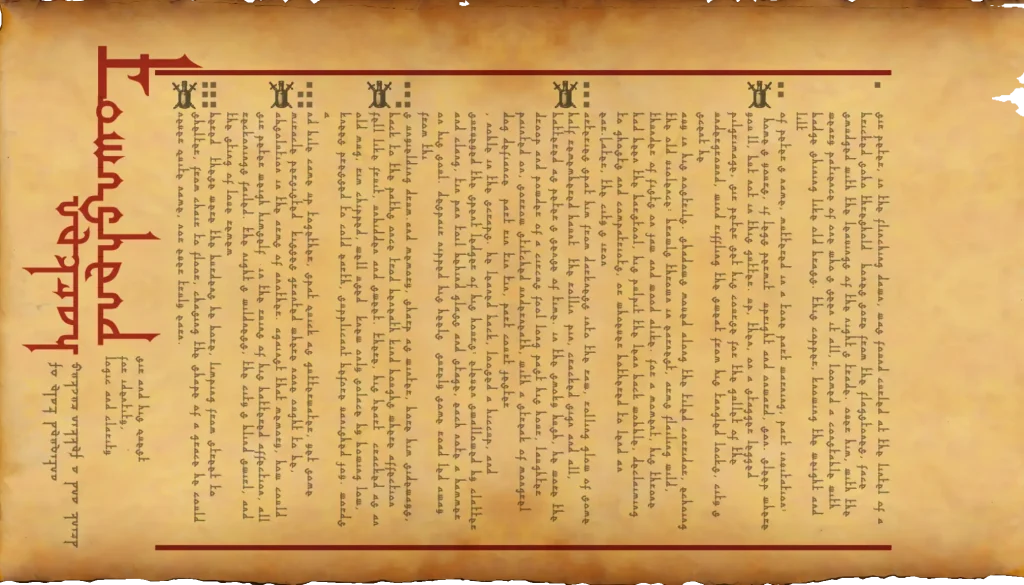
For a week, Pete drifted in fever, neither living nor dead, as the town he’d saved bled and crowned itself in fresh law. He woke once, to find himself swinging a club at raiders who’d tracked him to the healing house, then blacked out again, deeper than ever. When at last he came up for good, the Uprising was over. Calbara was being born in the ashes, and the bard’s scroll—half-written, half-burned—marked the beginning of Bantos, though Pete’s own name was already fading from the pages. He would pass into legend, his deed half-remembered, half-disbelieved, a question ringing out into the blood-soaked dawn.
The Later Jantaran Union was a kingdom in name only, ruled for nearly sixteen centuries by the so-called Pheryn Dynasties—cold, calculating warlords and sorcerers who claimed lineage from Elder Jantara without possessing its discipline, doctrine, or restraint. They adopted the symbols of the old league but not its substance, wearing masks as intimidation rather than ritual, hoarding gold instead of circulating it.
This was a civilization of ledgers and lies. Its histories were self-authored, exaggerated, and mutually contradictory. Guilds recorded grievances instead of laws. Faith was replaced with mysticism weaponized for control. Its end came abruptly.
In a single mass poisoning—still unexplained—half a city died in one night. Thrones fell together. Rulers, courtiers, and priests collapsed in confusion and terror. The aftermath was not revolution, but slaughter. What followed was carved obsessively into frescoes for two centuries: betrayal, fire, beheading, and ritual humiliation of the dead.
Yet even this did not birth Bantos.
The usurpers who followed clung to the carcass of the Union for another three hundred years, until they too failed. Their fall left behind a vacuum, not a successor. For centuries after, the lands of ancient Jantara were little more than caravan corridors—crossed, exploited, and ignored by Zhuru’s wider powers.
By this point, even the jackals themselves admitted the truth: Elder Jantara had been real. What came after were not heirs, but parasites.