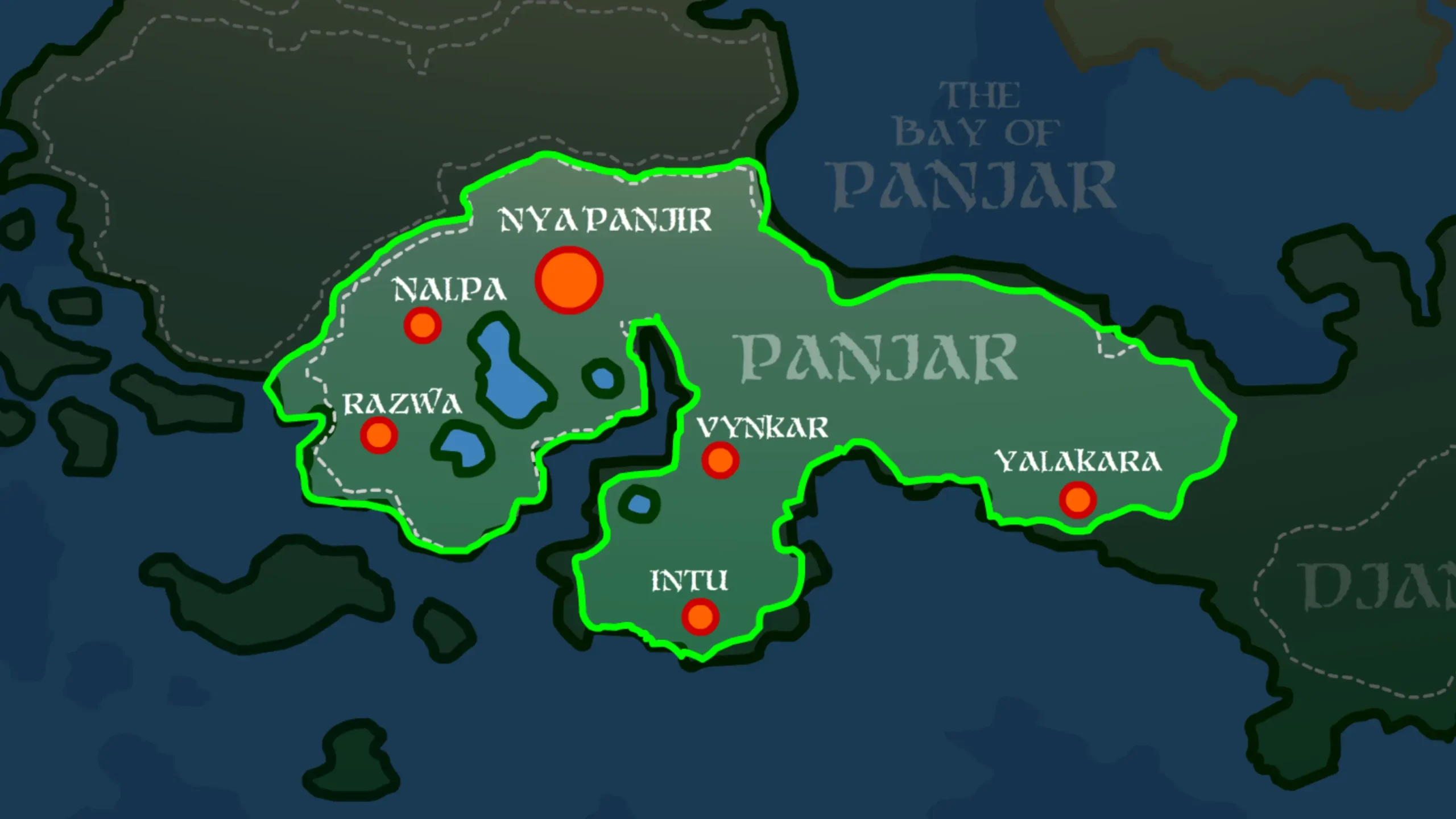
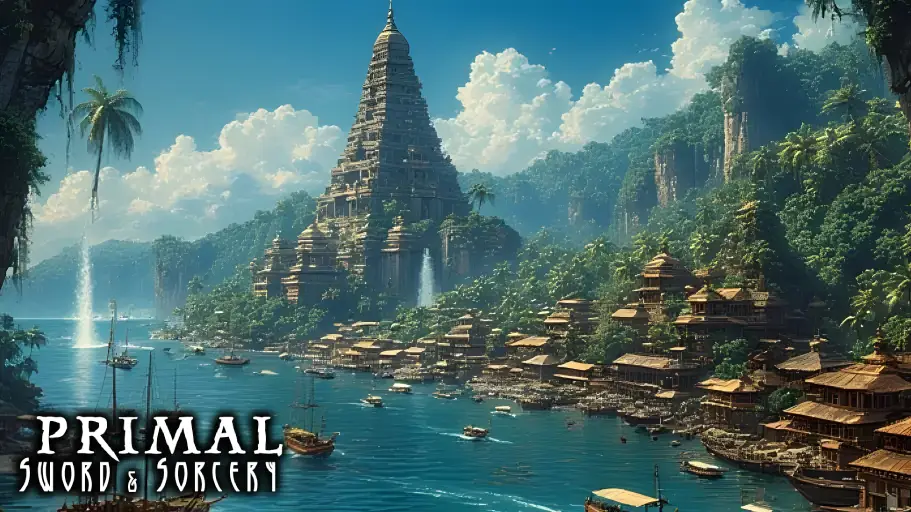
Panjar rises in sharp ascent, its highlands standing shoulder to shoulder with Yir in height. The land is a labyrinth of forest and marsh, where bamboo thickets grow dense as walls and poison-forests writhe with venomous growth. Rivers swell into marshlands that drown the east in swamp.
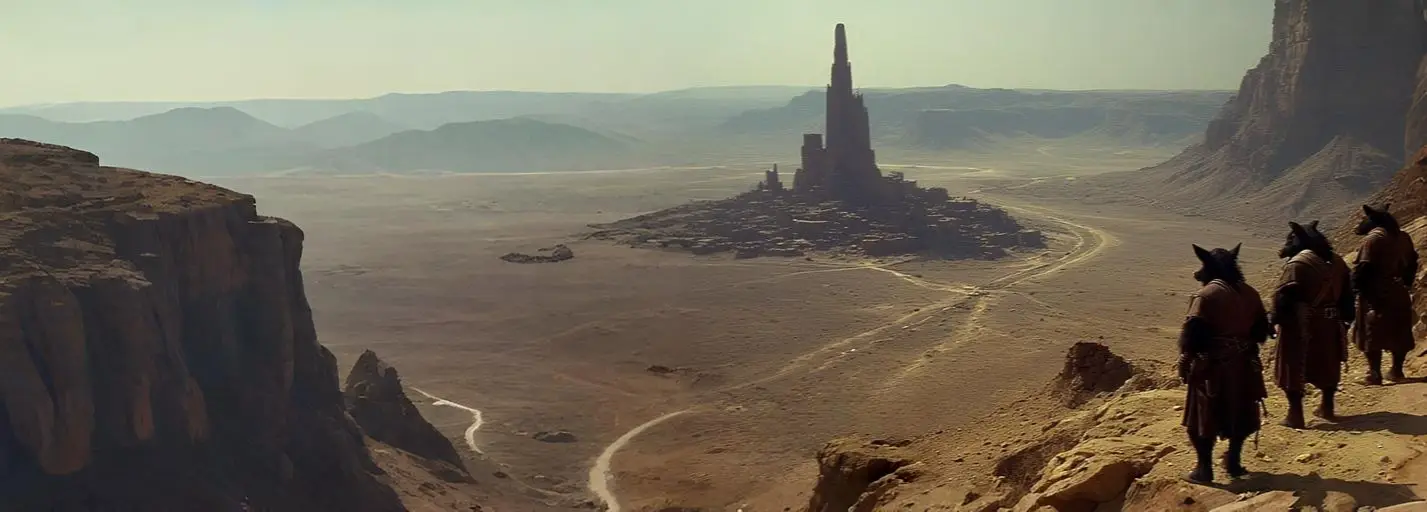
Its folk are no scattered tribes—they are one of Zhuru’s rare organized powers. Mongoose, jaguars, bears, and eagles dominate here, their claws and talons united against the serpents that infest their lands. The Panjari see themselves as born to strangle snakes, and their very culture is defined by this struggle: swift, merciless, unyielding.
Panjar’s civilization is startlingly well-ordered. Timber flows from its forests, its navy patrols the seas that bear its name, and its armies march as disciplined hosts. The Panjari export wood, resin, and spices, but what they truly trade is fear: the knowledge that theirs is a people whose blades are sharp, whose walls are high, whose ships command the straits.
Once, Panjar’s domain stretched further east, out into lands now claimed by the sea. From this wound comes their fierce naval tradition: they will not lose another inch of coast.
Conflict is constant, but on their terms. Rich and defensive, they sharpen their blades against Bruwa’s lions to the west and against the shadow of Drael across the straits. In a continent of ruins, deserts, and scavenger states, Panjar is something rare: a land that has its house in order, and the will to keep it that way.