


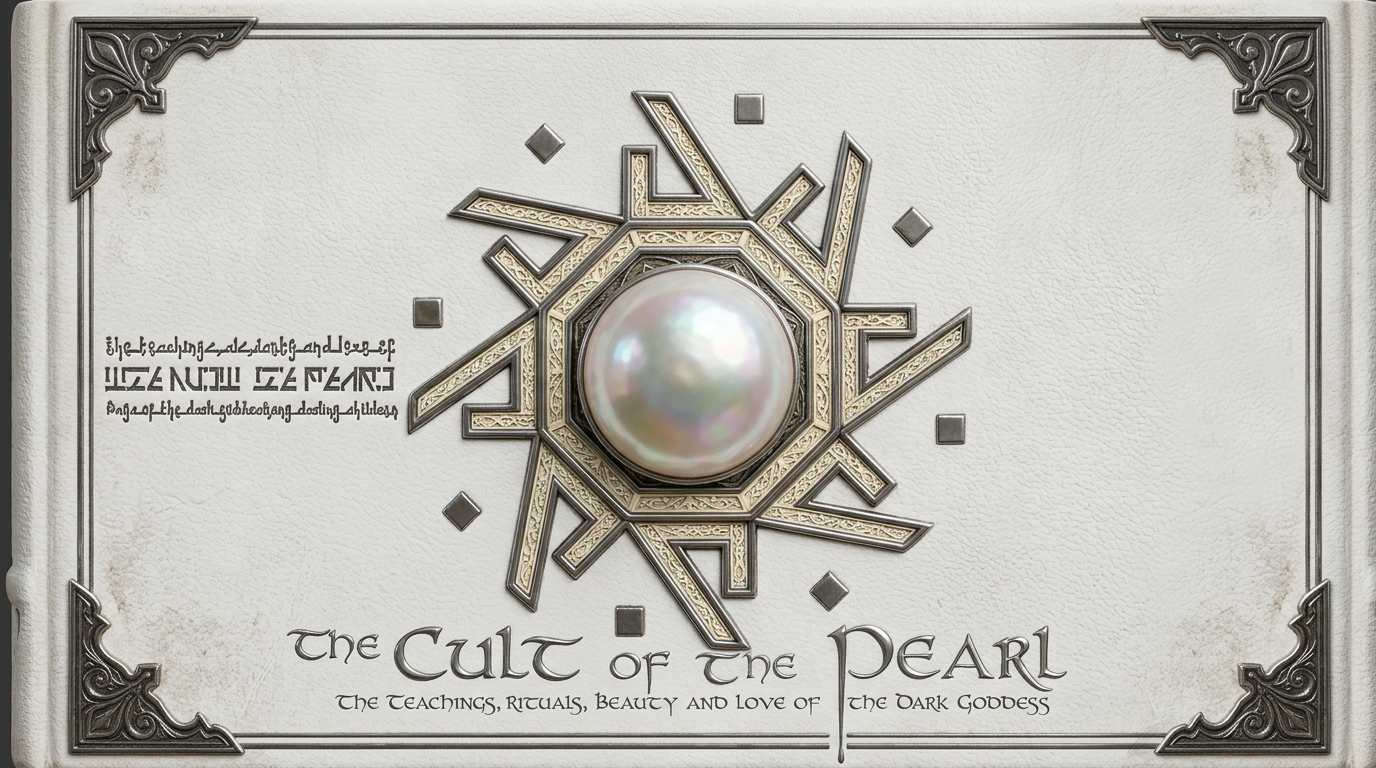
Among the many accusations directed toward the Pearl by those unfamiliar with our customs, perhaps none is more common than the claim that our temples conceal secret teachings from the public. Such rumors often arise because creatures mistake mystery for secrecy. They see our hymns, our rituals, our symbols, and our traditions and imagine hidden agendas where none exist.
To such concerns we offer a simple answer:
the Pearl hides neither its teachings nor its principles.
Our books are written openly.
Our hymns are sung publicly.
Our doctrines are available
to any creature who wishes to read them.
Our temples stand within cities
rather than beyond them.
Our festivals occur beneath open skies.
Our teachings may be questioned, debated, challenged, studied, criticized, and examined by any honest scholar
willing to undertake the effort.
Truth need not fear observation.
The Pearl therefore encourages literacy, record keeping, genealogy, public archives, and the preservation of knowledge. We believe that teachings capable of surviving scrutiny emerge stronger for it. A faith built upon deception eventually collapses beneath its own weight. A faith built upon understanding may endure for generations. What we teach today should withstand examination tomorrow. What we write should survive the eyes of friend and critic alike. A creature confident in the strength of their foundations need not fear the opening of doors.

Likewise, our temples recognize the authority of lawful sovereigns, kings, queens, councils, magistrates, and rulers. The Pearl does not seek to replace governments, command armies, collect territories, or establish kingdoms of its own. Such matters belong to the temporal world. Our duty is not to rule civilizations but to serve those who live within them. Thus temples cooperate with local authorities wherever possible and respect the laws of the lands in which they stand, provided those laws do not demand cruelty toward the helpless. There are some religions which dream endlessly of earthly power, measuring success by the number of banners they command or the armies that march beneath their symbols. Such ambitions do not concern us. We are caretakers, healers, teachers, archivists, midwives, musicians, counselors, and guardians of tradition. We seek not thrones but thriving communities, for a prosperous city filled with healthy, hopeful creatures honors the stars far better than a frightened kingdom ruled through force.
For there exists one authority older than kingdoms, older than dynasties, and older than the stones from which many cities were built: hospitality. Throughout Vandyrus there endures a sacred custom that those in genuine distress deserve aid where aid can be given. The Pearl has always honored this tradition. A child abandoned in the rain. A widow fleeing violence. A family driven from their home by disaster. An orphan with nowhere to sleep. A traveler stranded far from safety. Such creatures shall find our doors open whenever possible. This does not mean the temple is blind. We are not required to embrace wolves pretending to be lambs, nor are we commanded to place the innocent in danger for the sake of appearances. Yet neither shall we ignore suffering simply because it is inconvenient. Compassion remains among the highest virtues taught beneath the stars. A civilization may often be judged by how it treats the powerful, but its character is revealed by how it treats those who possess nothing.
This commitment naturally extends to matters of comfort, affection, and desire. The Pearl recognizes that loneliness is real. Grief is real. Heartache is real. Isolation wounds the spirit as surely as disease wounds the flesh. Therefore our priestesses and priests are encouraged to listen when others speak, to comfort when comfort is needed, and to offer companionship where appropriate. Such acts are not viewed as distractions from faith.
They are expressions of it. A creature burdened by sorrow may require medicine, but they may also require understanding. A creature mourning a loss may require shelter, but they may also require company. The spirit hungers no less than the body, and those who pretend otherwise often discover too late how deep such wounds can become. The Pearl therefore teaches that kindness is not weakness. Compassion is not indulgence. Affection is not frivolous. These things sustain life just as surely as bread and water.
Yet let it be understood that comfort is not coercion. Affection is not obligation. Desire is not entitlement. No creature owes another their heart, their body, or their affection. The willing heart remains among the most sacred principles of the Pearl. Only the willing. Always the willing. Nothing beautiful blooms beneath coercion.
This doctrine governs every aspect of temple life. No affection gained through fear possesses value. No intimacy secured through pressure possesses dignity. No comfort extracted through manipulation possesses sincerity. Such things are counterfeit. The Pearl seeks the genuine article. Friendship freely given. Affection freely shared. Desire freely expressed. Love freely discovered. Hospitality freely extended. These are the treasures we celebrate because these are the things that enrich the world. A flower forced open before its season is ruined. A song sung under threat ceases to be music. A heart commanded to love cannot truly do so.
In this way our temples strive to remain what they were always intended to be: places of refuge rather than confinement, places of learning rather than secrecy, places of healing rather than judgment, and places where creatures may arrive burdened by sorrow and depart carrying a little more hope than when they entered. The stars above hide nothing of their light. They shine openly for all who choose to look upward. Neither should those who walk beneath them.