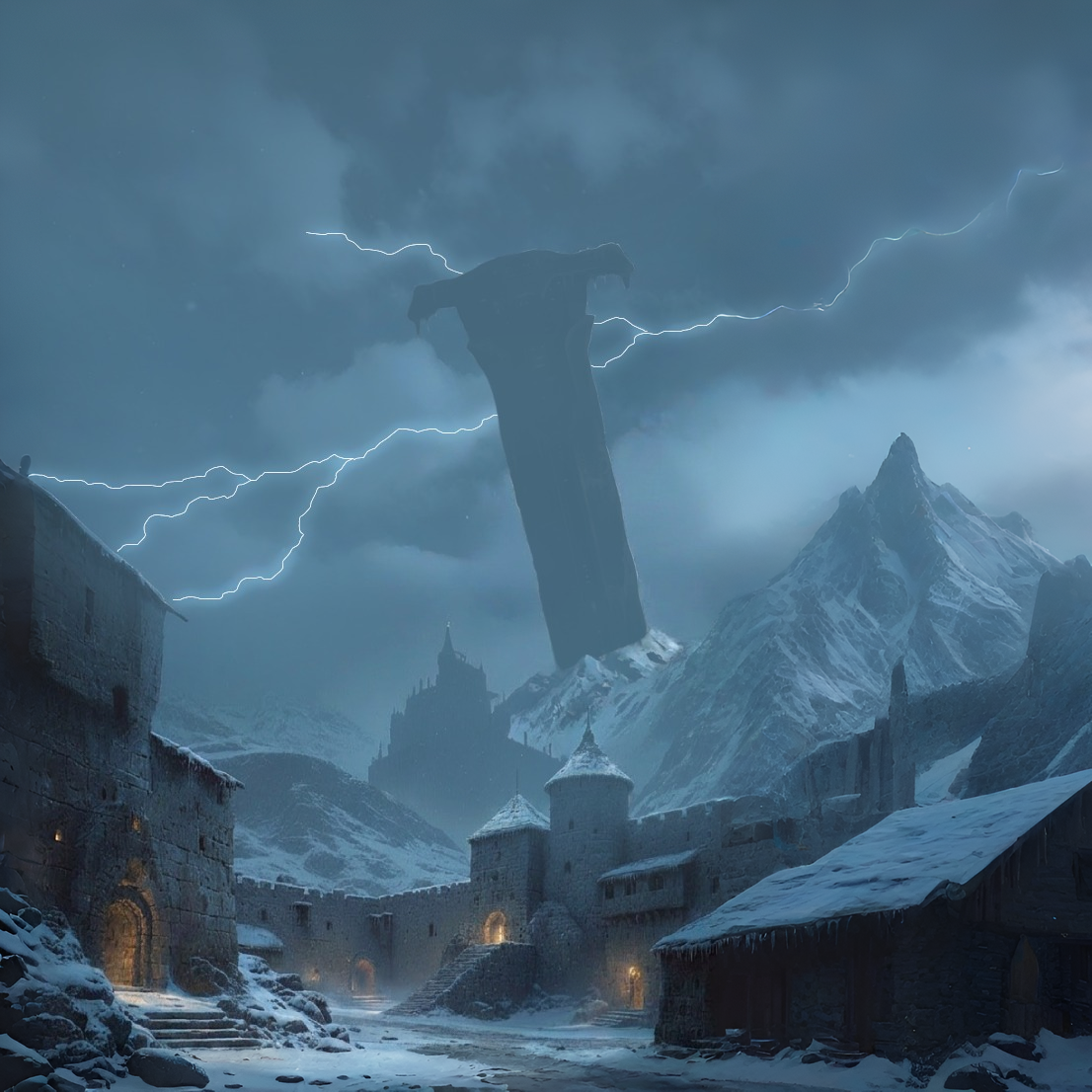



Travel in Zhuru, as any seasoned wanderer knows, is a journey measured as much in manners as in miles. To step onto the northern roads is to step, by degrees, into something like civilization—if one takes civilization to mean politeness enforced by old blood, tradition, and the certainty of one’s place. In the green lanes north of the River Ayrel, past the rolling grasslands and cold rivers, travelers find themselves entering the reach of Konara. Here, elk with white-tipped antlers guard the thresholds of walled towns.
Their customs are clipped, their speech precise, and their patience as thin as the paper on which they record their lineages. Riffraff, wanderers, and traders hoping for southern bartering find themselves stonewalled by a cold courtesy—no rough handling, no threats, only a measured refusal and a tightly drawn door. “We are not in need of company,” they say, “but we wish you a good evening.”
The message is clear: move on, and do not ask twice.South of the horsefolk’s reach, the air thickens, and manners become rowdier, voices louder, the road more crowded. Here, the world sheds its northern reserve. In these middle tracts, one passes through towns that bark their business from muddy doorways, where arguments are settled with thrown mugs and market disputes are measured in bruises and broken noses.
Yet, for all the roughness, there is a kind of fellowship among the rude: a sense that every traveler is kin to the last poor bastard who lost his purse or his virtue to the road. The taverns are full, and hospitality is loud if not always honest.
Keep south, and the mask slips entirely. The vulturekin make their eerie home in the spires that claw the sky on the edge of the dry hills—a race of sharp-eyed, sharp-tongued folk who build strange fortresses and mind stranger taboos. They speak little, watch much, and leave the world to wonder at their motives. To pass their gates is to feel the last brush of order before plunging into the wild.
Beyond lies the Kartongaland wastes, where all that northern restraint gives way to raw appetite. The roads here are not roads but veins—pulsing with the traffic of vice and desperation, hungry for coin, flesh, or news.
Townships squat in the mud, ruled by those who can take and keep, not those who can claim ancestry. Here, the slums breathe in the smoke of foreign fires, and the old tower at the city’s heart rises above it all, a beacon for those with nowhere left to run. In Kartonga, barbarism is not a pejorative, but a force—rolling in like thunder from the wastes, swallowing up every pretense of gentility. No traveler leaves unchanged; most lose something along the way, whether it be coin, innocence, or their old name.
So runs the road: from the north, where the world is cold and closed, to the south, where it is open and unforgiving.
To travel Zhuru is to travel a spectrum of civilization—every mile another layer stripped away, until all that remains is what one can carry, what one can sell, and what one can take.