


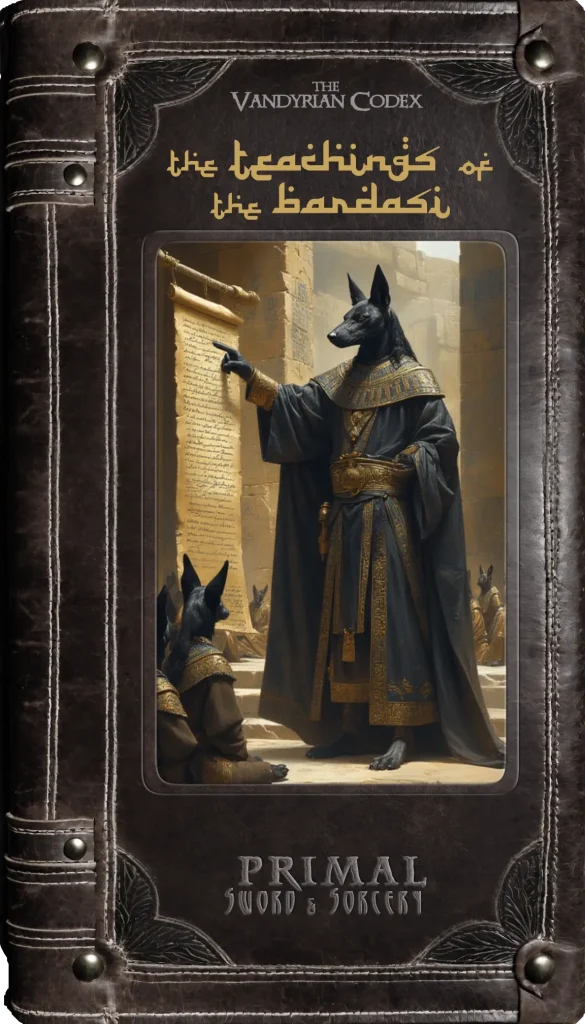
The Teachings of The Bardasi
INDEX
BY ESSAY
- A Hierarchy of Merchant Scholars
- Lessons in Matters of Consequence
- Teachers of Philosophy & Civilization
- The Bardasi
AUDIOBOOK
COMPLETE
The Bardasi
Bardasi or Baru’Audahsi;
Meaning “Teacher of ‘Philosophy” & “Civilization”‘
in Elder Jantaran Common
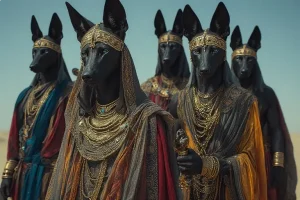
The Jantaran Bardasi were not merely merchants, nor philosophers in the later, toothless sense that the word acquired after the fall. They were a caste, formally trained, ritually bound, and socially insulated, whose function was to move between realms without ever belonging to them.

To be Bardasi was to be trusted precisely because one was never fully at home anywhere. Elder Jantara understood something most civilizations learn only after collapse: that trade is not the exchange of goods, but the exchange of assumptions.
The Bardasi existed to test those assumptions, to strain them without breaking them, to learn where honor bent and where it snapped. Their caravans carried salt, dyes, metals, manuscripts, and spices, but these were incidental. What they truly transported was Jantaran order, compressed into custom, etiquette, contract, and silence.
Children entrusted to the Bardasi were not treated as hostages, nor as guests. They were apprentices in worldview. A youth traveling under a Bardasi seal was stripped of birth-rank the moment they crossed into the caravan’s authority. A prince was addressed as cub. A merchant’s daughter carried the same burdens as a shepherd’s son.
The jackals believed hierarchy was real but situational, and nowhere was this enforced more ruthlessly than on the road. The youths learned accounts by firelight, languages by insult and correction, and ethics by observing what happened when bargains were honored, broken, or renegotiated under threat. No lesson was explained that could be demonstrated. No rule was taught that could not be violated at cost.
The Bardasi worldview balanced profit with restraint not out of kindness, but out of long calculation. Elder Jantara had already discovered what later jackal regimes forgot: that maximum extraction invites maximum retaliation. A Bardasi caravan never emptied a market. It never humiliated a local lord by overpaying. It never revealed full inventories.
They practiced deliberate incompleteness, leaving value on the table as proof of confidence. This cultivated dependence without resentment, a subtle art neighboring realms mistook for generosity. It was neither. It was dominance practiced quietly, the way a blade dominates a throat without cutting.
Civic duty, for the Bardasi, was inseparable from commerce. Every contract was archived. Every insult was recorded. Every favor was remembered longer than a grudge. The Bardasi carried scrolls not merely of trade, but of precedent.
When a dispute arose between foreign houses, a Bardasi could often resolve it by unrolling a record of what that same bloodline had agreed to generations earlier, under different banners, in a different land. This was the true source of their authority. They did not threaten armies. They threatened memory. And memory, in a world of short-lived rulers and shifting borders, was power no steel could contest.
Teachers of Philosophy & Civilization
Within the Bardasi caste, instruction was not an adjunct to trade but one of its primary instruments. The caravans were universities in motion, and the teachers who walked among them were neither tutors nor caretakers, but custodians of formation.
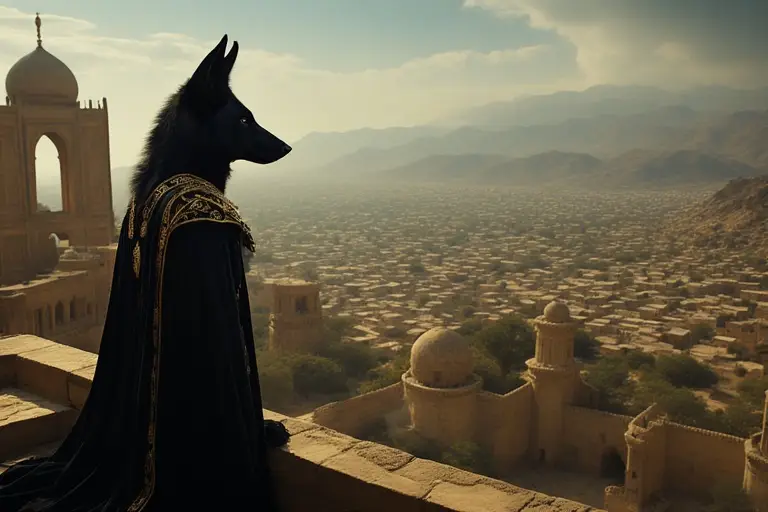
A youth assigned to a Bardasi instructor did not merely accompany the caravan; they were absorbed into its internal discipline.
Within Jantaran society such students were treated well, but never indulged. Comfort was permitted only insofar as it did not dull perception.
Respect was granted, but never deference.A student’s value lay not in who they were, but in how quickly they learned to see.
Beyond the borders of the Jantaran Union, the status of these students changed markedly. They were no longer merely apprentices but living collateral, entrusted to the caravan under conditions approaching ritual sanctity. Reputable caravan lords and merchant-kings—those with the wealth, stability, and standing to bear such responsibility—accepted them as one might accept custody of sacred gems. They were housed deep within the safest folds of the caravan, protected not only by guards but by reputation itself. To harm a Bardasi student was to declare oneself unfit for future trade, memory, or record. In this way, whole trade networks became strange, rolling academies of coin and wisdom, bound together by the shared understanding that knowledge outweighed plunder.
The teachers themselves were carefully chosen. Not for warmth, nor for gentleness, but for evenness. A Bardasi instructor was expected to speak to youth without softening truth, to correct without humiliating, to permit failure without allowing collapse. They were often individuals who had mastered restraint until it became instinct. Their authority came not from volume or severity, but from consistency. Students learned quickly that these jackals did not lie, did not bluff, and did not repeat themselves. A correction given once was never given again. The cost of misunderstanding was borne by the student alone.
Lessons in Matters of Consequence

Pedagogically, the Bardasi rejected abstraction. A lesson was valid only if it could be tested on the road. Arithmetic was taught through loss and gain. Language through insult, negotiation, and apology. Ethics through exposure to consequence. A teacher might allow a student to misprice a good, offend a local official, or misjudge a rival merchant—so long as the error did not endanger the caravan as a whole. The resulting damage, whether economic or social, was never repaired on the student’s behalf. It was observed, recorded, and addressed later, often days after the event, when emotion had cooled and memory had sharpened.
A Hierarchy of Merchant Scholars
Within the Bardasi hierarchy, teacher was a tiered position, difficult to attain and not lightly bestowed. One did not become a teacher merely by age or experience, but by surviving review.
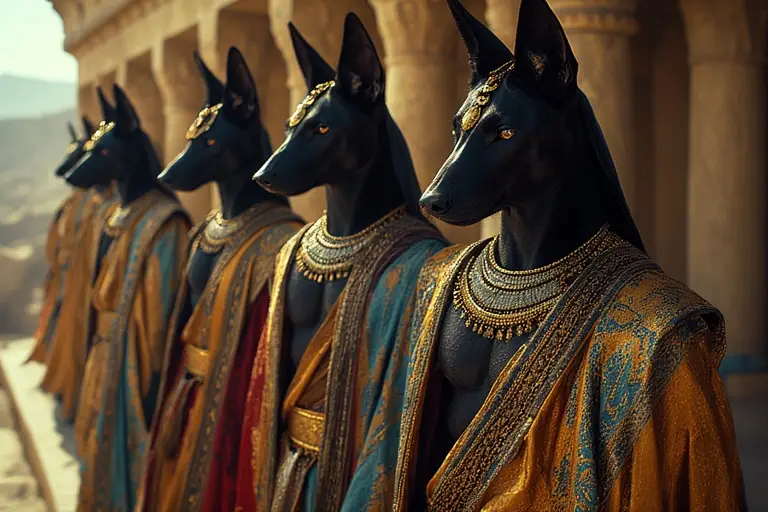
Teachers were evaluated by their students’ later conduct, not by affection or loyalty. Above them stood professors, responsible not for instruction but for doctrine—the articulation of Jantaran commercial philosophy across generations.
Above them again were adjudicators, empowered to resolve disputes between Bardasi, students, and foreign authorities alike, often with rulings that carried weight across borders. At the summit stood the civil proclamators, rare figures whose role was not to teach individuals, but to formalize Jantaran position in moments of crisis, transition, or foundational accord.
This structure ensured that the Bardasi did not merely produce clever traders, but shaped minds capable of operating without homeland, without sentiment, and without illusion. The student who completed such an apprenticeship did not return home wiser in the comforting sense. They returned sharper, quieter, and harder to deceive.
That other realms once accepted this transformation—once entrusted their offspring to jackal hands knowing they would not come back the same—is not a curiosity of the past. It is the measure of what Elder Jantara once was.
That such trust no longer exists is not mystery.
It is judgment.
Tales From The History of Jantara