
Tyvexian Geography
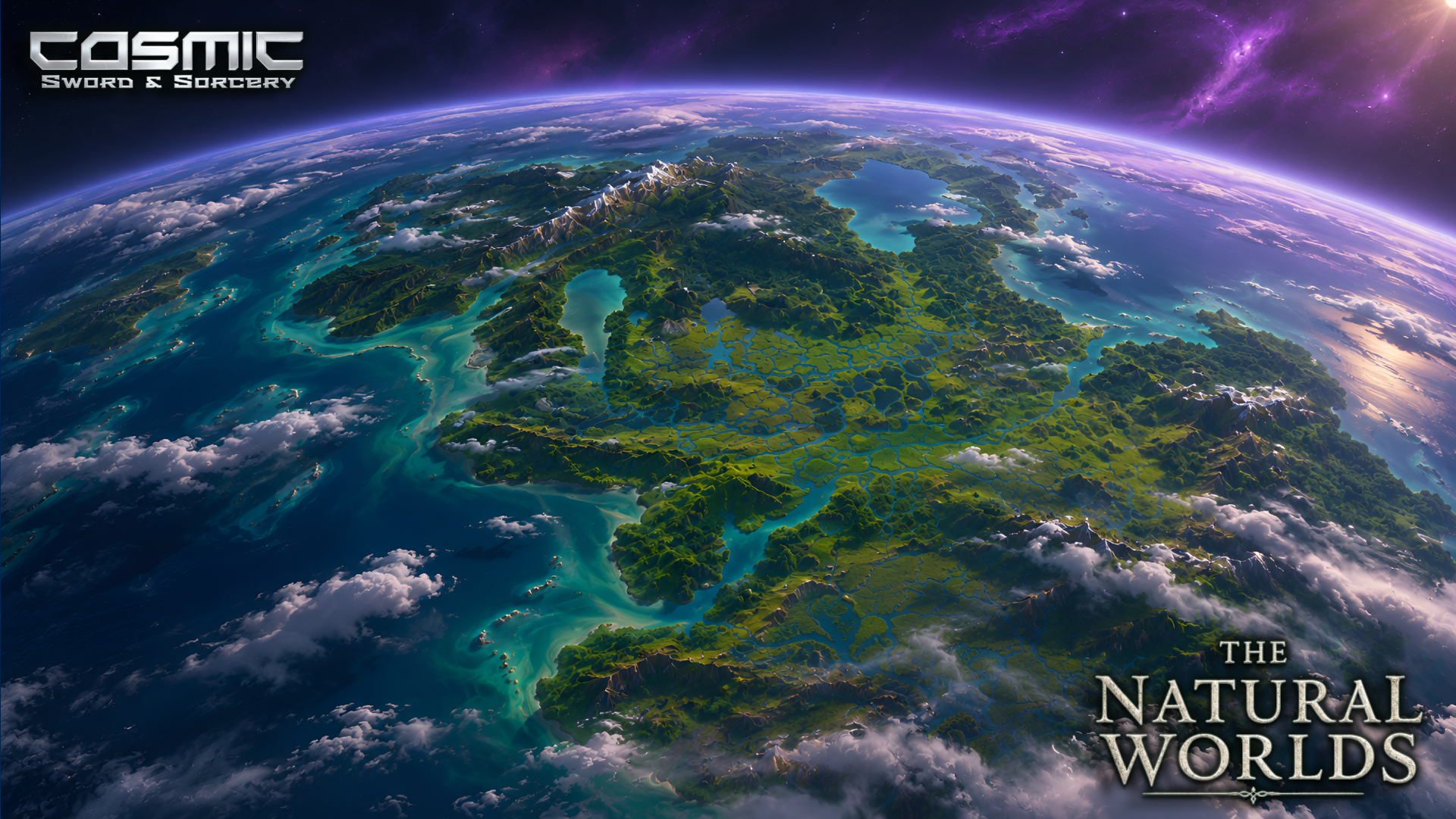
Together, the three supercontinents demonstrate the considerable environmental variation concealed beneath Tyvex’s widespread reputation as a predominantly marshland world. Vylanth preserves the geological legacy of ancient planetary impact and upheaval alongside extraordinarily productive forests and biologically hazardous wetlands; Cyolir sustains vast, seasonally changing freshwater networks and extensive northern forest systems; while Kruma encompasses rugged tropical environments and the planet’s singular cold desert. Between these continental regions, the shallow oceans and island chains provide additional habitats and opportunities for biological dispersal, ensuring that Tyvexian life is distributed through a complex arrangement of terrestrial, aquatic, and transitional environments.
The resulting planetary biosphere is neither uniform nor static, but an interconnected collection of ecological systems shaped by geological antiquity, climatic variation, and the continuing interaction of life with its surroundings.
It is within this greater geographical framework that the numerous organisms examined in the following surveys must be understood, their particular adaptations reflecting the distinct environmental conditions under which their respective lineages have developed. Beneath much of the continental surface, extensive subterranean networks support additional biological communities, some existing in relative isolation from the environments above. Together, these regions constitute one of the most productive and ecologically diverse planetary systems presently documented within Imperial territory.
Water remains the principal unifying influence upon Tyvexian ecology, shaping not only the distribution of life but the atmospheric and geological conditions under which its ecosystems have developed. The planet’s shallow oceans moderate continental temperatures, while its extensive forests and wetlands contribute to hydrological cycles that sustain biological productivity across widely separated latitudes. This environmental continuity has permitted numerous evolutionary lineages to diversify into highly specialized forms, ranging from immense marine reptiles and amphibious predators to arboreal xenocanids, extraordinary avian megafauna, and the great marsupial herbivores of the continental grasslands.
Particularly notable is the frequency with which organisms have adapted to transitional environments, occupying ecological niches along the boundaries between forest and marsh, land and water, or open grassland and wooded terrain. Such habitats support complex relationships between predator and prey, while seasonal flooding, biological competition, and the movement of organisms between regions contribute to the continuing development of local ecosystems.