

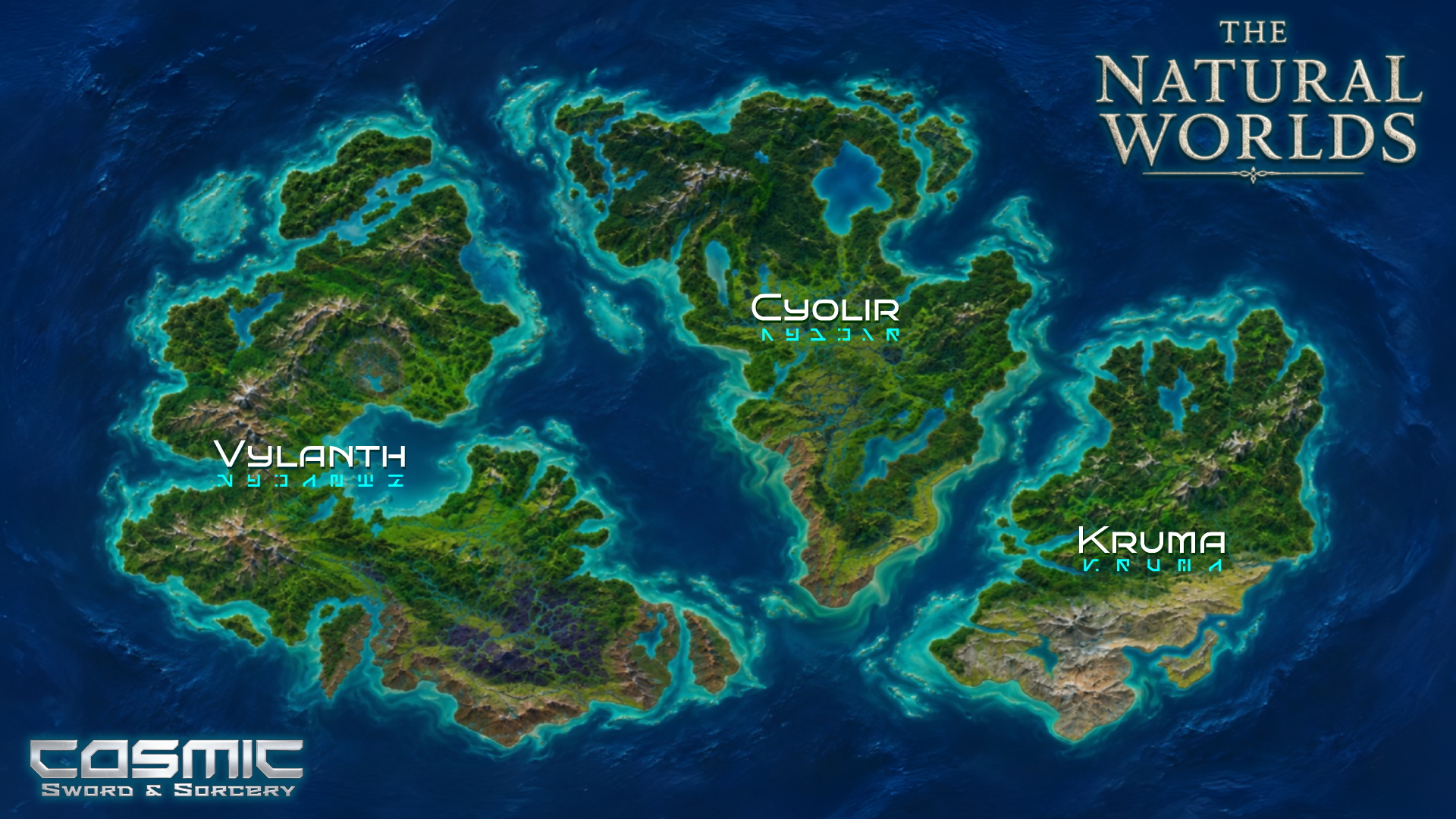
The Three Supercontinents of Tyvex
Despite their geographical separation, the continents remain closely connected through planetary hydrological cycles, seasonal atmospheric circulation, and the continuing migration of organisms between coastal and island environments. Their respective ecosystems range from ancient tropical jungles and highly productive grasslands to immense marshlands, northern ultrapine forests, mountainous interiors, and the unusual cold desert regions of the southern hemisphere. This distribution has produced three markedly different centers of biological diversification, each contributing to the remarkable ecological abundance for which Tyvex is recognized throughout the Imperial record.
VYLANTH
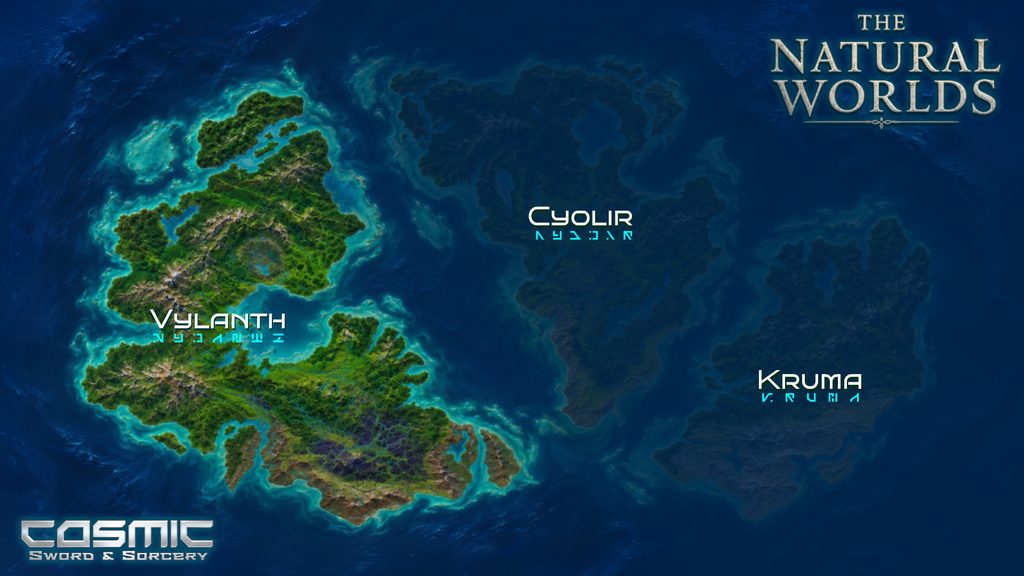
Commonly known as the Fractured Realm, bears the geological evidence of an immense impact event occurring many millions of years before the present age. Although subsequent erosion, sedimentation, and biological recolonization have substantially altered the original terrain, the ancient disturbance remains visible in the mountainous formations and extensive grasslands surrounding its surviving boundaries. These regions preserve a complex arrangement of broken uplands, weathered escarpments, and broad terrestrial habitats whose geological origins continue to influence local drainage patterns and ecological distribution.
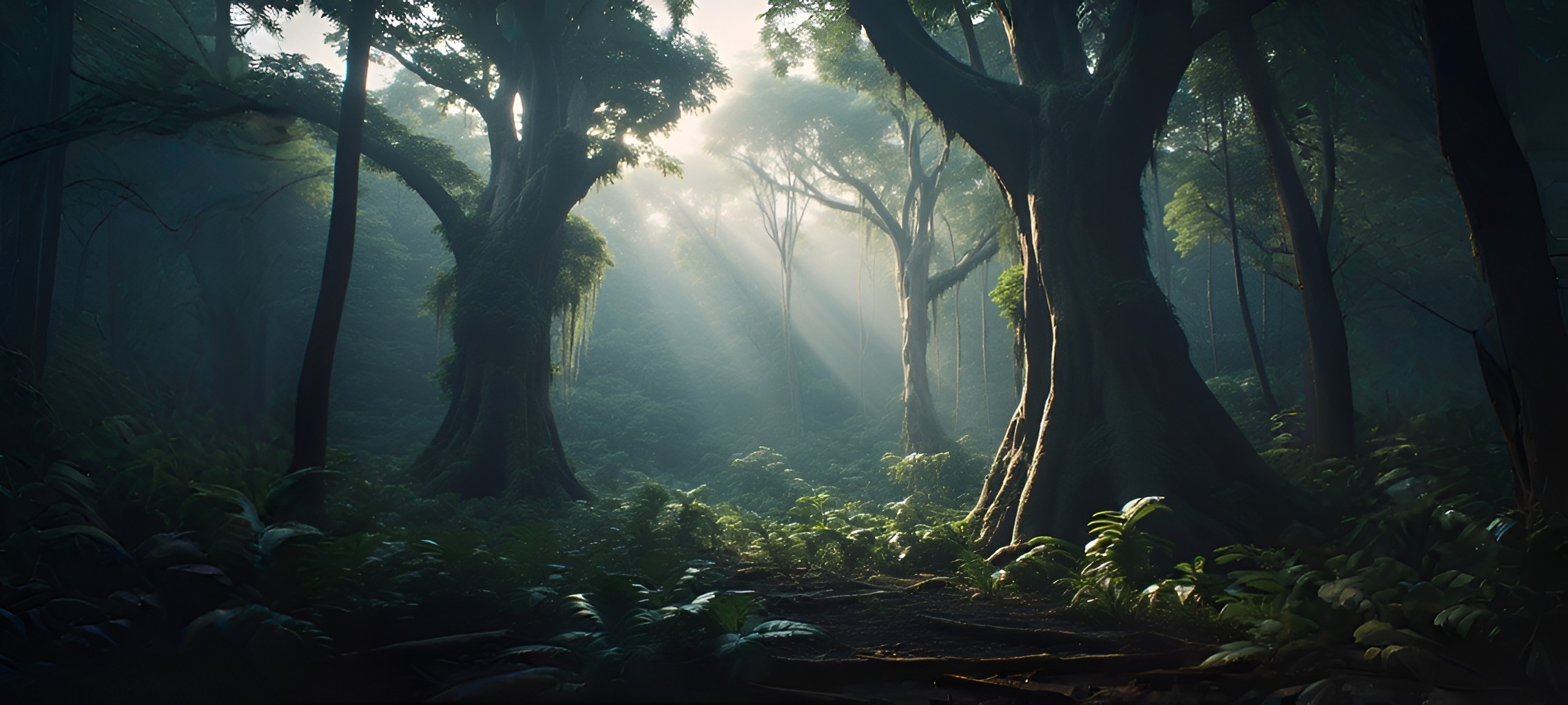
Farther North, vast jungles dominate the landscape, their dense vegetation supporting an extensive variety of arboreal, terrestrial, and amphibious organisms.
The Southern reaches present a considerably different environment, descending into expansive swamplands and the notorious viral spore bogs, where persistent humidity, saturated organic deposits, and intense microbial and fungal activity have produced exceptionally complex biological communities.
These southern wetlands are particularly notable for their abundance of pathogenic organisms, parasitic relationships, and specialized lifeforms adapted to environments of considerable biochemical competition. Vylanth consequently presents an extraordinary contrast between the exposed geological remnants of ancient catastrophe and the dense biological systems that have developed across the intervening ages.
CYOLIR
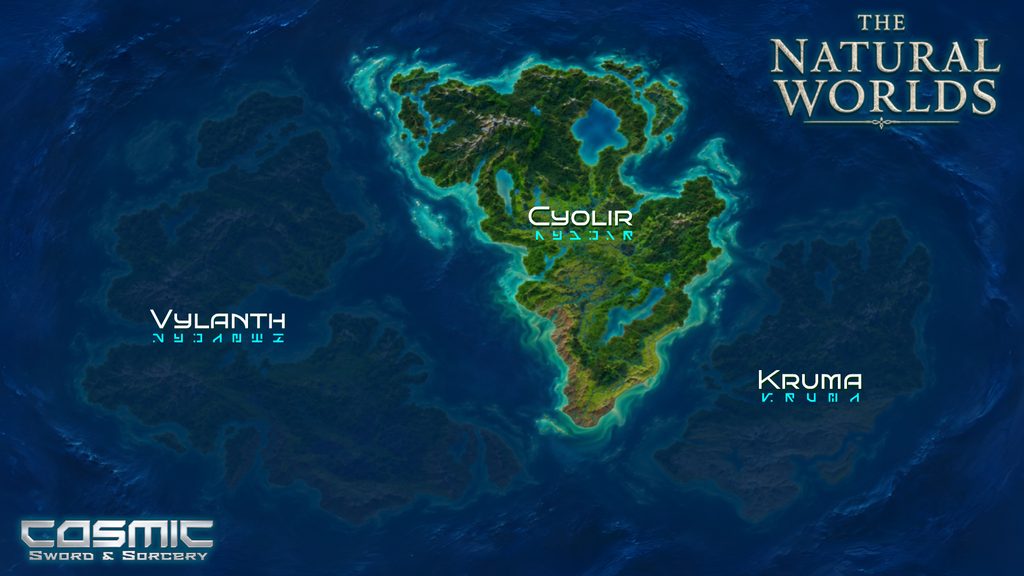
The central supercontinent, is distinguished above all by the extraordinary extent of its freshwater environments and the seasonal instability of its internal waterways. Immense marshlands occupy much of the continental interior, intersected by rivers, flood channels, shallow basins, and several substantial inland seas.
During the recurring flood seasons, the distribution of these waterways changes considerably, with established channels overflowing, temporary lakes emerging, and entire stretches of lowland becoming submerged beneath expanding sheets of freshwater.
As the waters subsequently recede, new drainage routes are exposed, wetlands contract, and organisms redistribute themselves across the altered terrain. This continual transformation has produced extensive ecological communities adapted to periodic inundation, seasonal migration, and the shifting boundaries between aquatic and terrestrial habitats.
The northern regions of Cyolir differ markedly from its central marshlands, supporting immense ultrapine forests and colder upland environments where snowfall is periodically observed. These northern ecosystems contribute to the continent’s broader hydrological conditions, while the numerous rivers and inland basins maintain biological connections between otherwise widely separated habitats. Cyolir thus represents one of the most extensive and continuously changing freshwater ecological systems presently documented within the Ran Star System.
KRUMA
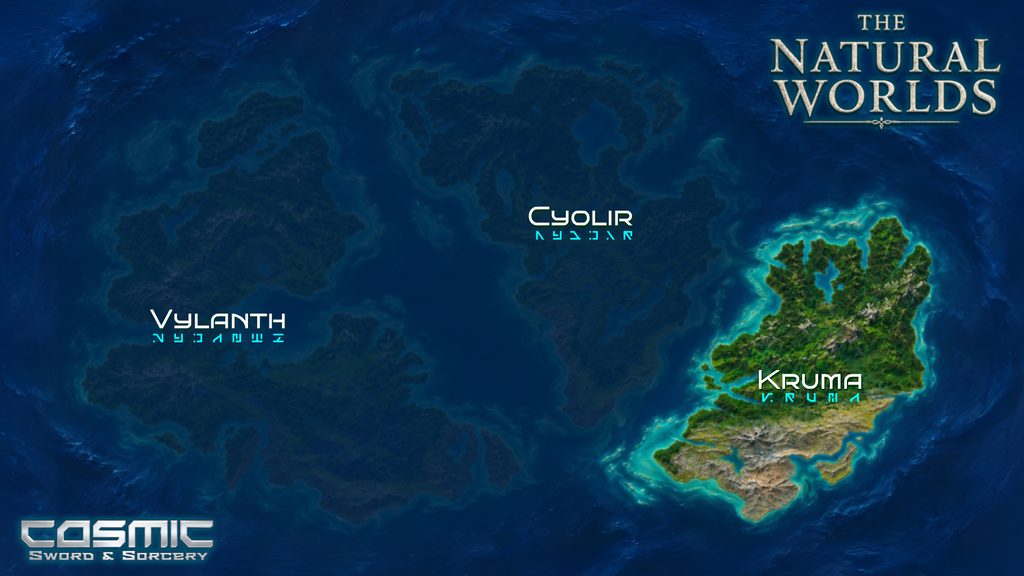
The eastern supercontinent, possesses a more rugged geological character, with extensive rocky terrain supporting dense jungle environments across much of its northern and central regions.
The uneven landscape, broken elevations, exposed stone formations, and heavily vegetated uplands distinguish its forests from the broader lowland environments characteristic of Cyolir and portions of Vylanth. Such terrain supports complex and frequently isolated habitats, where differences in elevation, moisture retention, and geological composition influence the distribution of vegetation and animal life.
Toward the southern extremities, however, the jungles gradually diminish, giving way to the remarkable tundra rock desert that constitutes the only major desert environment presently recognized upon Tyvex. Unlike the arid tropical deserts familiar from other Imperial worlds, this region is characterized by cold conditions, extensive exposed stone, sparse vegetation, and comparatively limited biological productivity.
Organisms inhabiting these southern wastes must contend with environmental pressures substantially different from those prevailing throughout the planet’s wetter continental regions. The resulting contrast between dense northern jungle and austere southern desert makes Kruma one of Tyvex’s most geographically distinctive landmasses, preserving ecological conditions rarely encountered elsewhere upon the planet.