



Introduction
The jungles of Thanator stretched across much of the small moon’s surface, a vast and ancient wilderness of towering trees, tangled vegetation, and steaming valleys where the perpetual struggle for survival had continued for millions of years. Beneath the sprawling canopy, enormous reptiles moved through the undergrowth, while great predatory birds circled above the treetops, their distant cries mingling with the incessant chorus of insects and unseen creatures. Here, beneath the dense foliage, monstrous subterranean arthropods burrowed through the damp earth, while immense horned chameleons concealed themselves among the trunks and branches, their watchful eyes following the movements of passing animals. The jungle was a place of extraordinary abundance, its immense botanical diversity sustaining an equally formidable population of predators, scavengers, and lesser creatures.
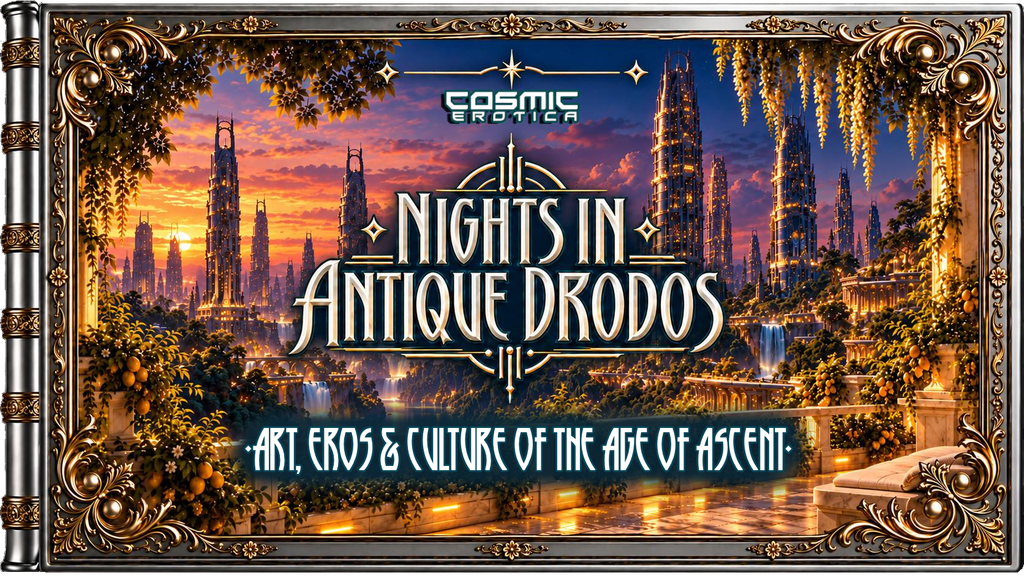
Great rivers wound through the interior, disappearing beneath curtains of foliage before emerging into broad, sunlit basins where the forest opened briefly to the sky. Yet above this seemingly endless green wilderness, something altogether different rose upon the horizon. Far beyond the mist-shrouded canopy, three immense spires of polished alloy, reinforced stone, and glittering glass reached toward the heavens, their towering silhouettes visible long before the sprawling structures at their foundations could be discerned. These were the ancient towers of Drodos, among the oldest works of engineering upon Thanator, constructed millions of years before the arrival of the colonists who now called them home.
As the jungle gradually gave way to the cultivated outskirts of the settlement, the true magnitude of Drodos became apparent. The three completed spires rose from an immense complex of interconnected foundations, terraces, enclosed thoroughfares, and fortified platforms, each tower possessing the dimensions of a city in its own right. Their colossal façades reflected the golden sunlight, while vast expanses of exceptionally resilient glass revealed the gardens, galleries, and inhabited levels within. Broad architectural bands encircled the towers at intervals, supporting landscaped terraces where flowering vines, carefully tended trees, and productive agricultural plots flourished hundreds of feet above the forest floor.
Elevated passages linked sections of the complex, while the lower approaches were protected by successive layers of defensive barriers, controlled entrances, and security installations intended to keep the surrounding wilderness firmly beyond the inhabited precincts. Beyond the three completed towers, two additional spires were slowly taking shape against the distant sky, their unfinished frameworks rising above enormous construction platforms. Great mechanical assemblies moved along their exposed structures, continuing the ancient architectural program that had already given Drodos its extraordinary skyline. Though incomplete, these two rising giants promised to enlarge the city considerably, their immense skeletal forms standing in stark contrast to the finished brilliance of the original three.
Within the protective embrace of the completed spires, Drodos presented a remarkable contrast to the untamed world beyond its walls. The roar of the jungle diminished beneath the hum of machinery, the distant passage of aerial transports, and the innumerable sounds of a growing colonial population going about its daily affairs. Sunlight poured through the great transparent façades, illuminating residential galleries, cultivated terraces, public concourses, and gardens suspended high above the surrounding wilderness. Along the elevated walkways, residents passed between commercial establishments and private dwellings, while far below, the great agricultural and industrial systems of the city continued their tireless work.
The three towers formed the living heart of Drodos, each an immense self-contained refuge whose strength and sophistication had proved indispensable to the earliest generations of settlers. Yet the wilderness had never entirely surrendered its claim upon the heights. Beyond the thick glass and reinforced parapets, great winged predators still passed between the towers, and the enormous horned chameleons of Thanator occasionally scaled the exterior structures in search of exposed prey.
For all its beauty, prosperity, and ancient engineering, Drodos remained a fortified island of civilization rising above a world that had possessed its own savage dominion long before the first colonists arrived, while the two unfinished spires beyond stood as monumental evidence that the city, and the civilization growing within it, had only begun to ascend.