The Natural Worlds represents the preservation of a pre-Cataclysmic body of natural philosophy and further expanded contemporary sciences whose original form cannot be cleanly classified as either a bestiary, field guide, or academic textbook by contemporary standards.
Compiled across centuries of Imperial observation, revision, and exploration, these records were originally distributed through a far more expansive information network in which text, imagery, environmental overlays, and interactive reference systems existed as a unified instrument rather than as separate publications.
The material presented herein has been adapted for modern preservation and study while retaining the language, structure, and observational character of the surviving source records. Readers should therefore expect a work that frequently blurs the distinction between scientific catalog, expedition log, survival manual, and educational text.
Such distinctions were of considerably less importance to the original compilers than the practical transmission of knowledge. While every effort has been made to preserve the integrity of the surviving material, it should be understood that the present edition represents only a partial reconstruction of the original informational experience.
Many references within the text describe functions, cross-references, and supplementary systems that existed within the Imperial knowledge infrastructure but cannot be fully reproduced within a conventional printed volume. A related interactive companion based upon surviving records and recovered design principles is currently in development. It is our hope that future editions will continue to restore elements of the original experience while preserving these documents for study, reference, and historical appreciation.
Until such time, this volume remains the most complete accessible presentation of The Natural Worlds presently available.
Among the many falsehoods spoken of our faith by those who neither know us nor seek to understand us, perhaps none is repeated more often than the claim that the Pearl is a religion of excess. Such creatures look upon our songs, our festivals, our marriages, our celebrations, and our temples and see only pleasure. Having mistaken the blossom for the root, they believe they understand the tree. They do not.
The Pearl does not worship pleasure. The Pearl worships life. Pleasure is merely one of life’s many gifts. So too are health, beauty, affection, companionship, creation, laughter, music, curiosity, fertility, learning, friendship, and love. None stand above the others. All are precious. All are worthy of celebration. A creature who denies every joy in pursuit of some imagined purity is no wiser than a creature who abandons every responsibility in pursuit of indulgence. Both have become lost. Both have wandered from balance. Both have forgotten that life is meant to be lived.
Many ask why our temples concern themselves with matters of the body. The answer is simple: because the body matters. The stars did not place us within these forms so that we might neglect them. A healthy body allows a healthy mind. A healthy mind allows a healthy spirit.
A healthy spirit is capable of wonder. Thus we encourage cleanliness, medicine, exercise, proper rest, nourishing food, and emotional well-being. Disease is not a moral failing, yet neither should it be romanticized. Sickness steals possibility. Illness shortens stories that might otherwise have continued for generations. Wherever disease appears, we seek to heal it. Wherever suffering appears, we seek to lessen it. Such work is not merely charitable. It is sacred.
To preserve health is to preserve potential, and potential is among the most precious gifts granted to any creature beneath the stars.
Likewise, we are often criticized for our teachings regarding desire. Those who know nothing of us imagine that we place no limits upon such matters. Yet our oldest doctrine is among the simplest ever spoken beneath the heavens.
Only the willing.
Always the willing.
Nothing beautiful blooms beneath coercion.
No creature may be forced into affection. No creature may be compelled into intimacy. No creature may be treated as property. Love given under threat is not love.
Desire extracted through fear is not desire. Affection purchased through violence is not affection. Such acts are barren things. Empty things.
They produce neither beauty nor joy and therefore possess no place within the teachings of the Pearl. For this reason our faith holds particular contempt for rapists, slavers, and those who prey upon the vulnerable.
They do not honor desire. They profane it. They take one of life’s greatest gifts and transform it into suffering. Such creatures often imagine themselves powerful. In truth they reveal only their own weakness. A creature capable of inspiring genuine affection has no need for chains, threats, cages, or force.
Nor do we share the beliefs of certain lesser faiths who seek to control desire through shame. There exist religions that teach pleasure is dangerous. Others insist beauty is temptation. Some demand celibacy from those unsuited to it. Others elevate suffering into a virtue and regard joy with suspicion. Such folk often spend their lives at war with their own nature and then wonder why they remain unhappy. We do not condemn them. We pity them. How tragic it must be to live beneath a sky filled with stars and spend every night staring at the ground. How unfortunate to inherit a body capable of affection and spend one’s life fearing it. How sorrowful to encounter beauty and respond with suspicion rather than gratitude.
The Pearl teaches a different path. We do not demand marriage, though we celebrate it. We do not require love, though we honor it. We do not insist upon children, though we cherish them. Every creature must walk their own road. Yet whatever road is chosen, it should be walked honestly and willingly. A life built upon fear is a fragile thing. A life built upon affection, dignity, health, and purpose endures.
Many of our critics hear such words and imagine that we advocate mindless indulgence. Once again they mistake the blossom for the root. The Pearl does not celebrate excess. Excess is merely imbalance wearing another face. Too little water brings thirst. Too much water brings drowning. Too little rest invites exhaustion. Too much rest breeds stagnation. Too little affection leaves the spirit hungry. Too much attachment may consume wisdom. The lesson is not denial, nor surrender, but harmony. A healthy garden is neither starved nor flooded. It receives what it needs and flourishes accordingly. So too should every creature strive to cultivate balance within body, spirit, and heart.
This is especially true regarding matters of fertility and desire, for many outside our temples misunderstand our teachings. A healthy young male blessed with vigor should not be taught shame for possessing vigor. A healthy young female blessed with beauty should not be taught guilt for possessing beauty. The Pearl does not regard vitality as a flaw requiring correction. We regard it as evidence of life flourishing as intended. Desire is no more shameful than hunger, curiosity, laughter, or wonder. What matters is not that such impulses exist, but how they are expressed. We teach responsibility rather than repression, self-knowledge rather than self-hatred, wisdom rather than denial. A creature who understands their nature is far less dangerous than one who spends a lifetime pretending not to possess one. Remember this well, beloved reader.
The Dark Goddess does not ask you to become something you are not. She asks only that you cease running from what is beautiful. Care for your body. Care for your spirit. Care for those entrusted to your affection. Create where you can. Heal where you can. Love where you can. Leave the world richer than you found it. Then, when your days are finished and your story joins the countless others beneath the night sky, you shall know that you walked in harmony with Her Ways. Look upward. The stars shine upon you no less than any other.
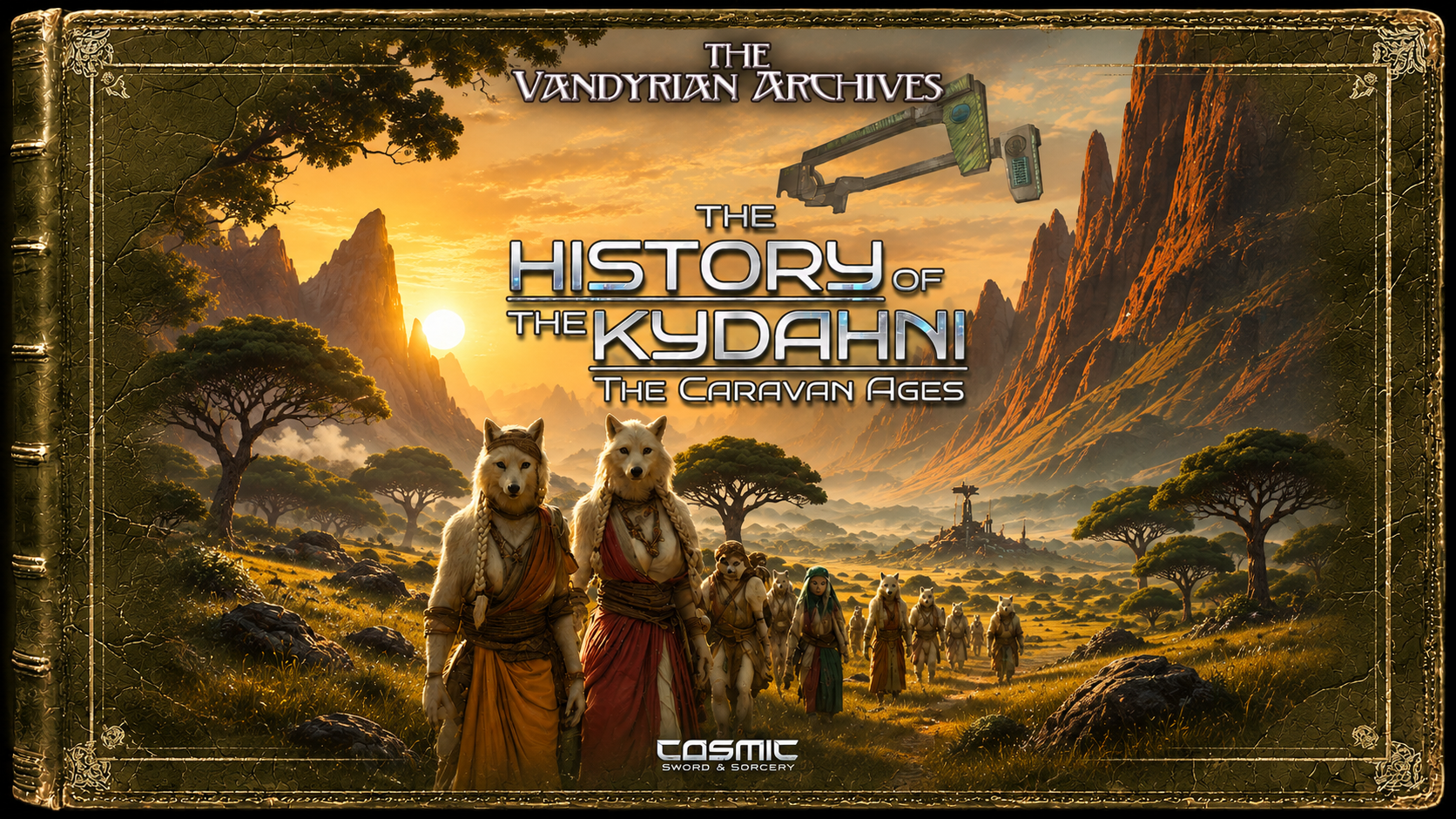
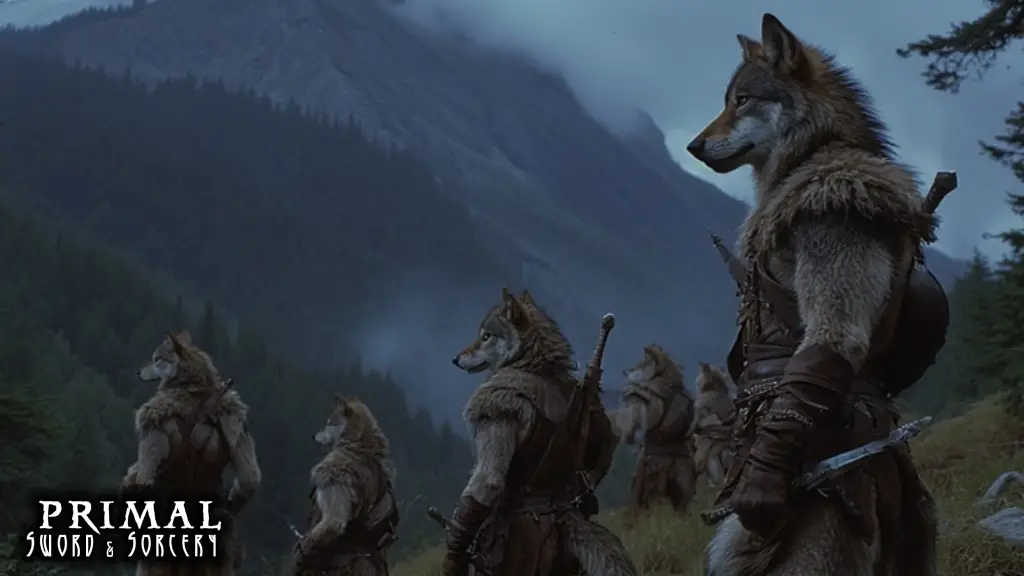
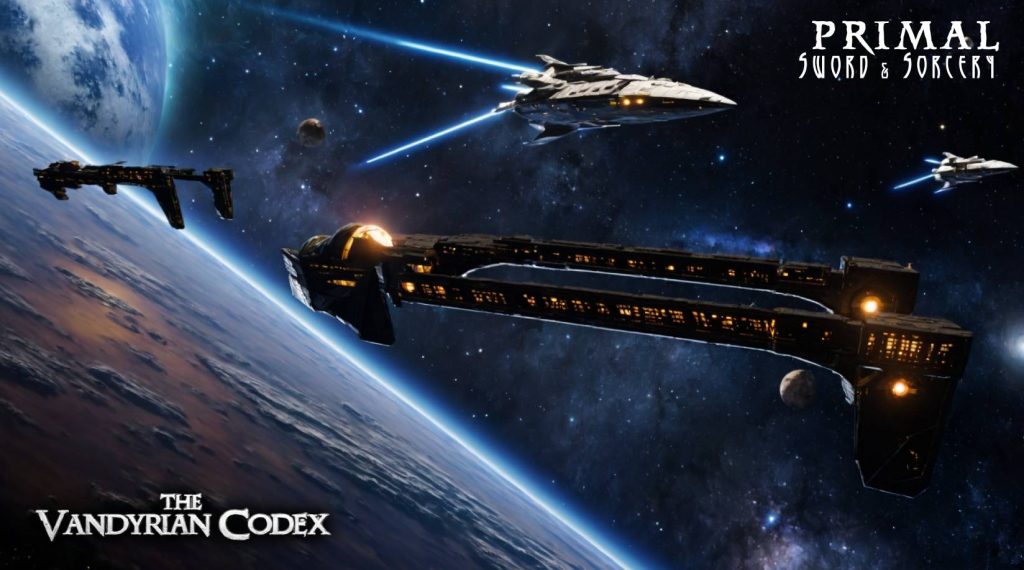
Where civilization collapsed, barbarism flooded in. Folk learned to raid and kill for grain, to trade in flesh and steel, to build power out of violence and hunger. Wolves became mercenaries, equine tribes turned fertility and milk into contract and leverage. Lion kingdoms rose and fell, always hungry, always reaching for what could not be kept. The den-cities of Vulsa and Roedon are monuments to collapse, law and pride standing only as long as the next disaster allows.
The Cataclysm’s legacy is a living wound. The crust of Vandyrus is riddled with voids, rifts, and buried collapse. Valleys fall away in a night; seas vanish into cracks; entire cultures disappear when the ground betrays them. No one trusts the ground, the sky, or even the promise of peace. Superstition grows out of soil that devours the dead—and sometimes the living.
The present is an age of desperate alliances, petty kingdoms, and doomed banners waving over future sinkholes. This constant ruin has shaped Vandyrus into a world of the haunted and the hungry. To be born here is to expect collapse, to risk everything and trust nothing.
Yet even in the ruins, not all is decay. The old slaver gates, impossible artifacts, still link Vandyrus and Thanator—arteries pumping misery, trade, and ambition between two dying worlds. Raiders, slaves, exiles, and cults pass through them still, shaping the little that remains. Vandyrus endures—not because it remembers, but because it refuses to be erased. Cultures rise from necessity; folk define themselves by survival in the face of extinction, knowing the next age may be the last. History here is a tapestry of gaps, a string of endings dressed up as legacy.
Vandyrus will never match Thanator for splendor, ambition, or mythic pride. What it has instead is stubbornness, a grim pleasure in surviving every collapse. Its only gift from the Cataclysm is unending ruin: a world that never finishes dying, that never forgets how to bleed, and that grants peace only in the silence that follows its latest fall.
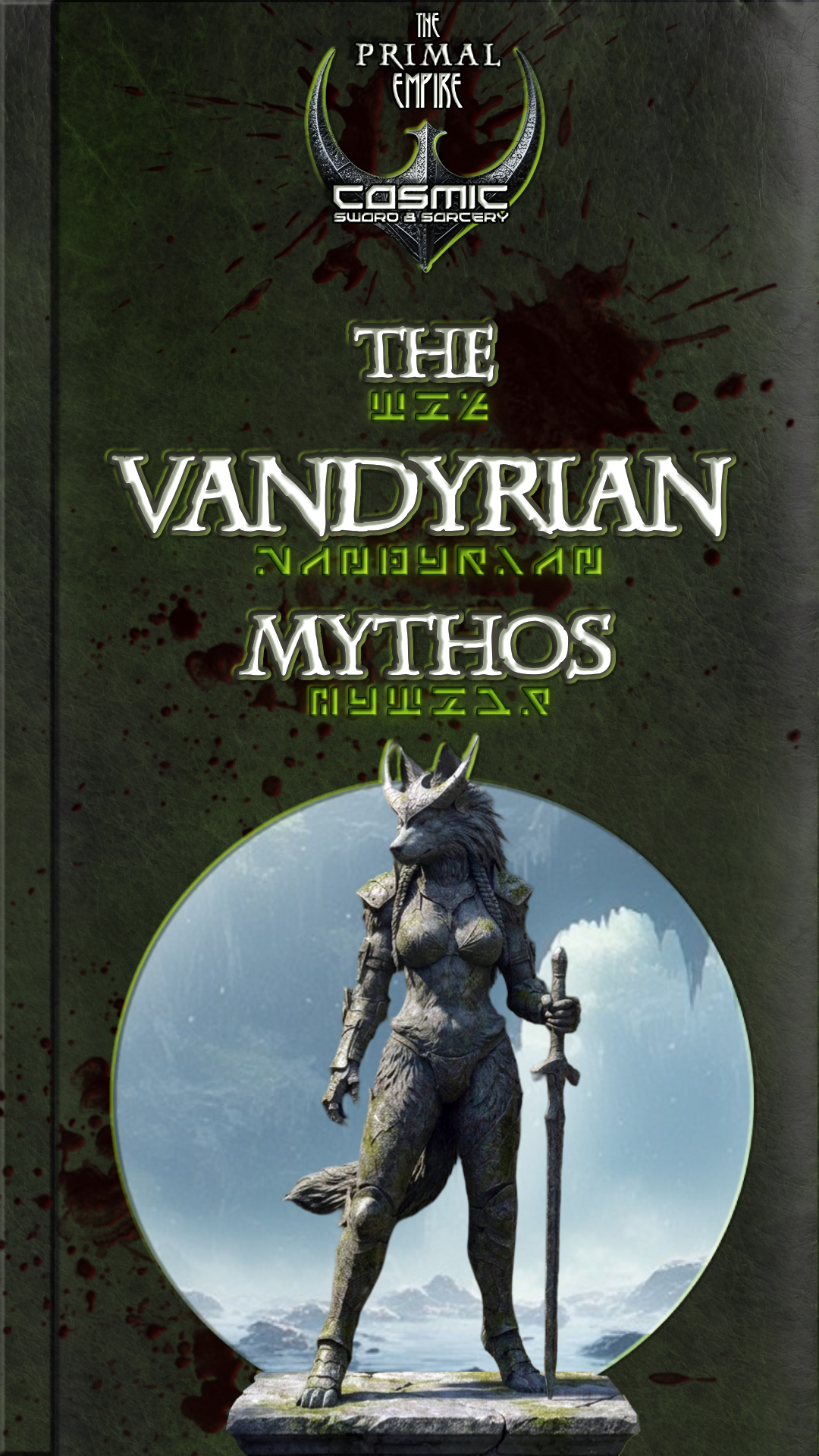
Primal Sword & Sorcery is the raw, unfiltered branch of HTH STUDIOS. Where blood, sex, and steel collide — a brutal celebration of pulp fantasy at its most feral.
No knights in shining armor. No gentle quests. This is the jungle moon, the ash-scarred wasteland, the gladiator’s pit, the sorcerer’s altar. A world where gods are cruel, tribes are hungry, and every victory is carved from the flesh of your enemies.
Here, We unleash the most violent, erotic, and primal storytelling — inspired by Howard, Smith, and Lovecraft, reborn with an animal edge and built for both codex lore and RPG play.