Category: TERRA PRIMAL

  • The Gondwanan Territories

    The Gondwanan Territories

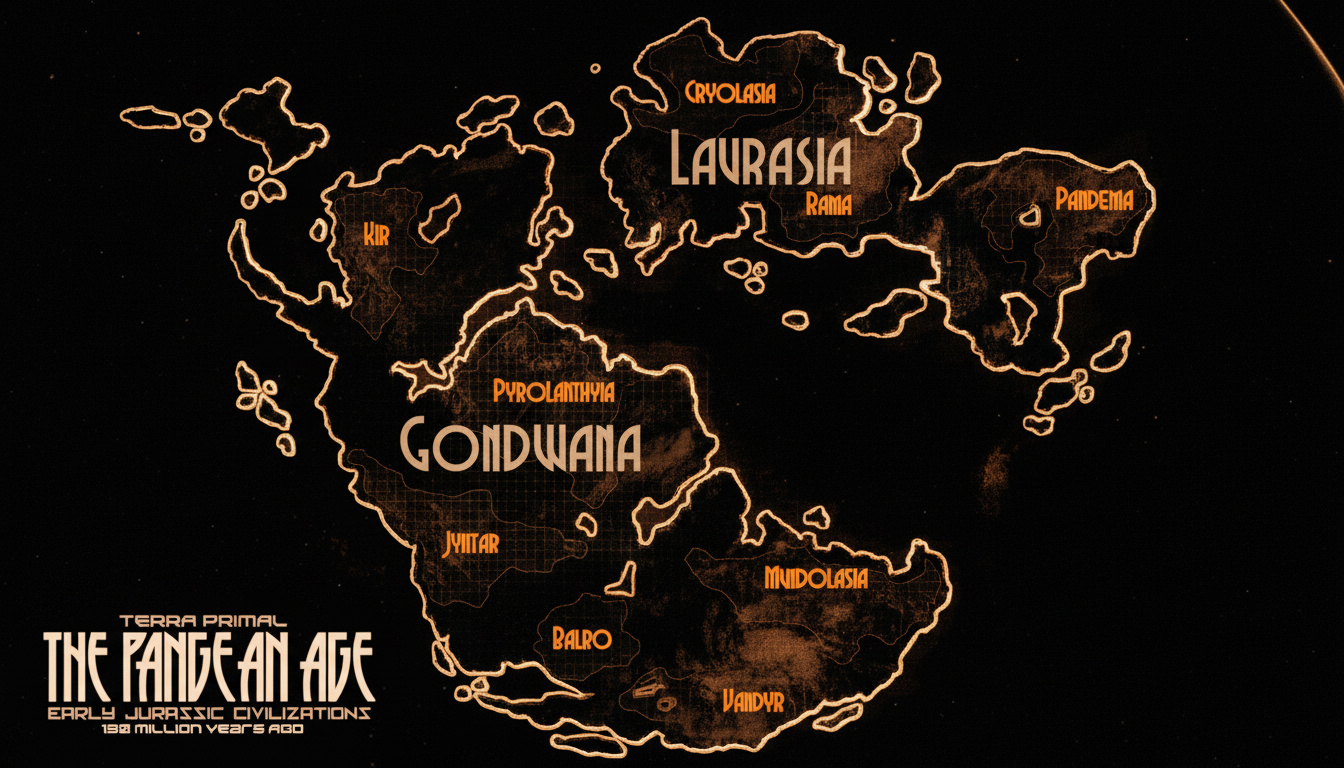
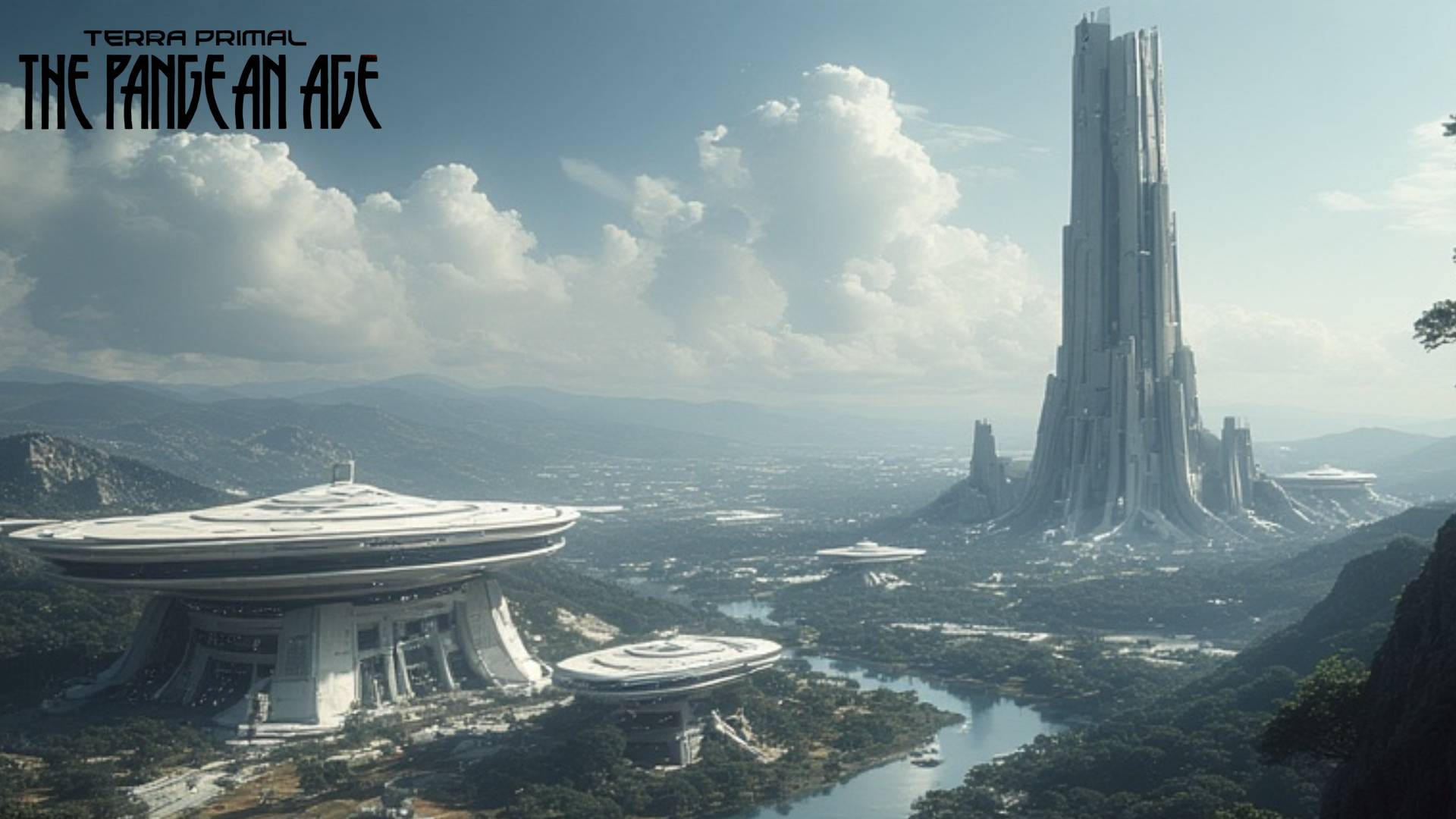
    In the southern dominion, Tellus did not establish an outpost; it inherited a machine:

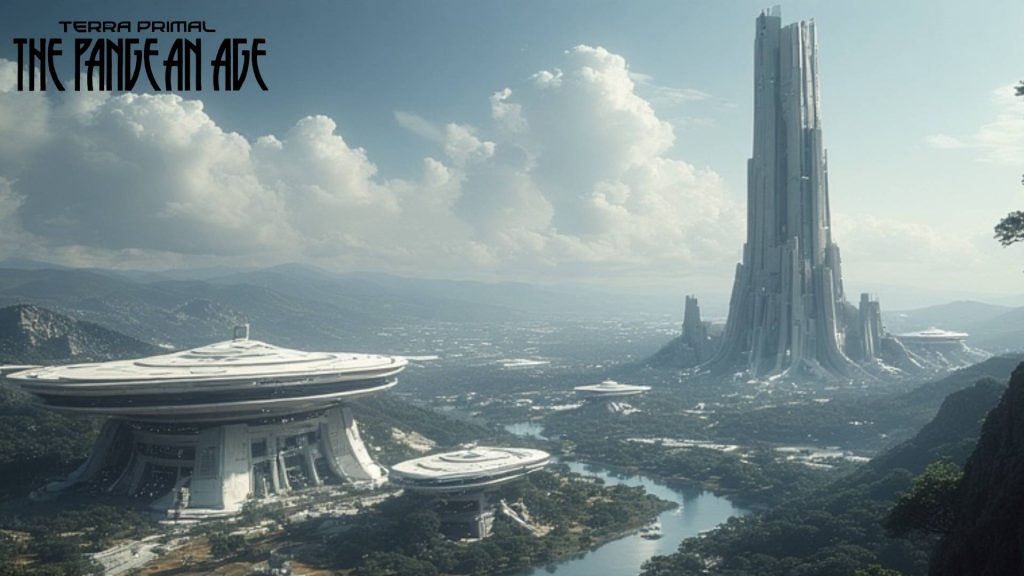
    Jyntar had risen not as a city but as a spiraling web of black archology towers fused by skybridges and subterranean transit veins. It functioned less as capital than processor—an interlocked lattice of ministries, weapons directorates, compliance tribunals, and orbital uplinks tracing lineage to offworld benefactors whispered to have emerged from Saturnian collectives. Authority had not centralized there; it had circulated. Decrees were not announced but compiled. Expansion registered as adjustment. Leadership, when glimpsed at all, appeared as silhouette and transmission artifact—never singular, never fully embodied.

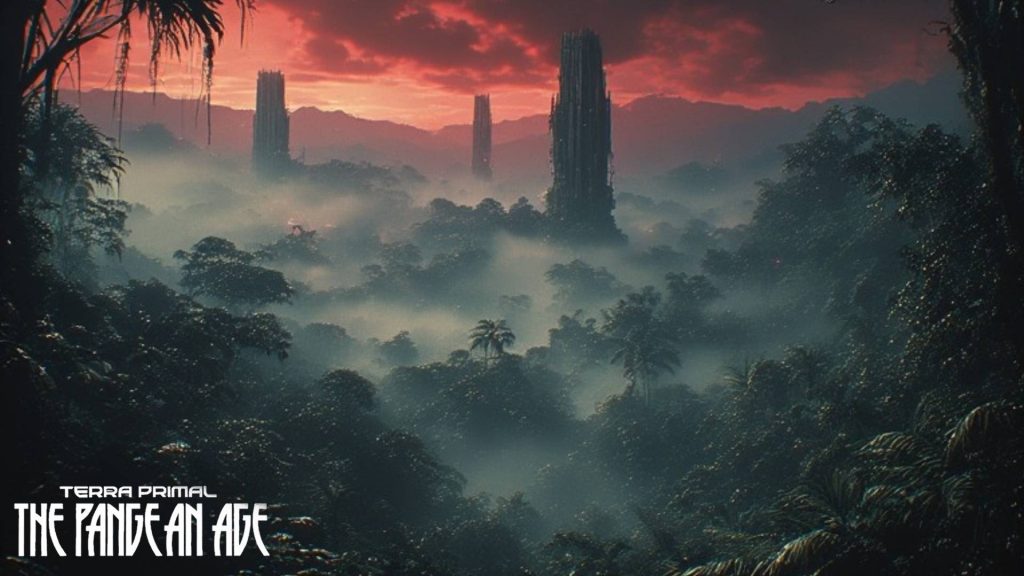
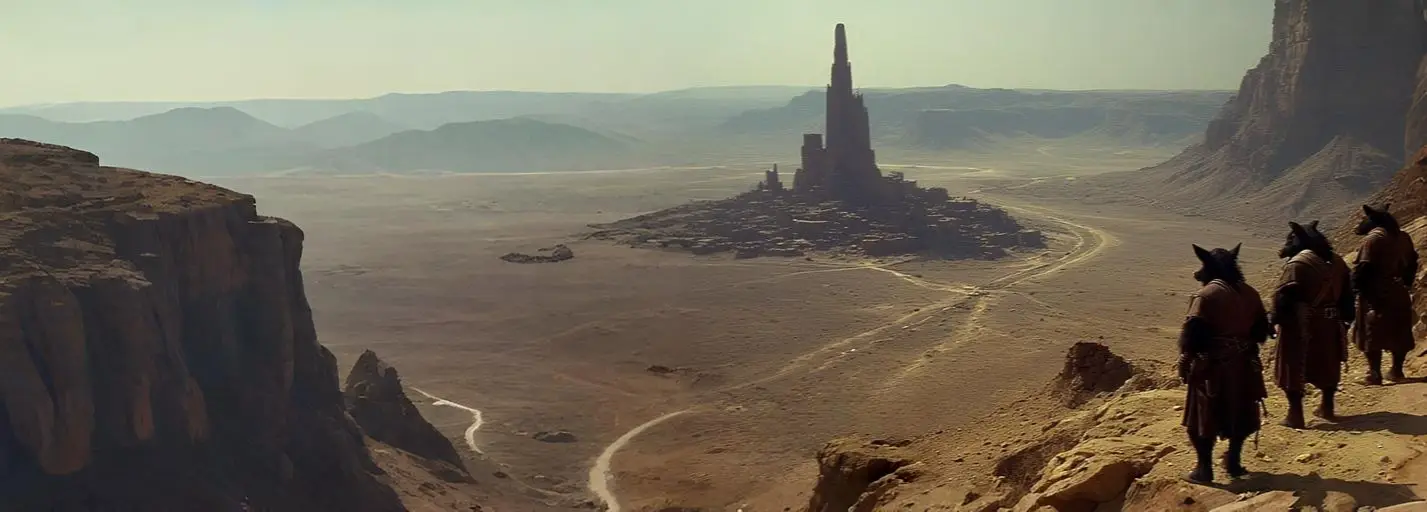
    South of Jyntar lay Pyrolanthia—the wasteland border and the true crucible of Gondwana. The ocean crossing had been trivial; Pyrolanthia had been punishment. Once an industrial corridor of reactors and transit lines, it had collapsed into a field of oxidized megastructures and ruptured hulls scavenged by whatever endured the attrition cycles of prior eras. Towers leaned like broken fangs across irradiated plains. Buried systems discharged intermittent surges, lighting the horizon in irregular pulses. What lived there did not rebuild—it consumed. Those who wandered unshielded did not disappear into myth; they were catalogued as loss.


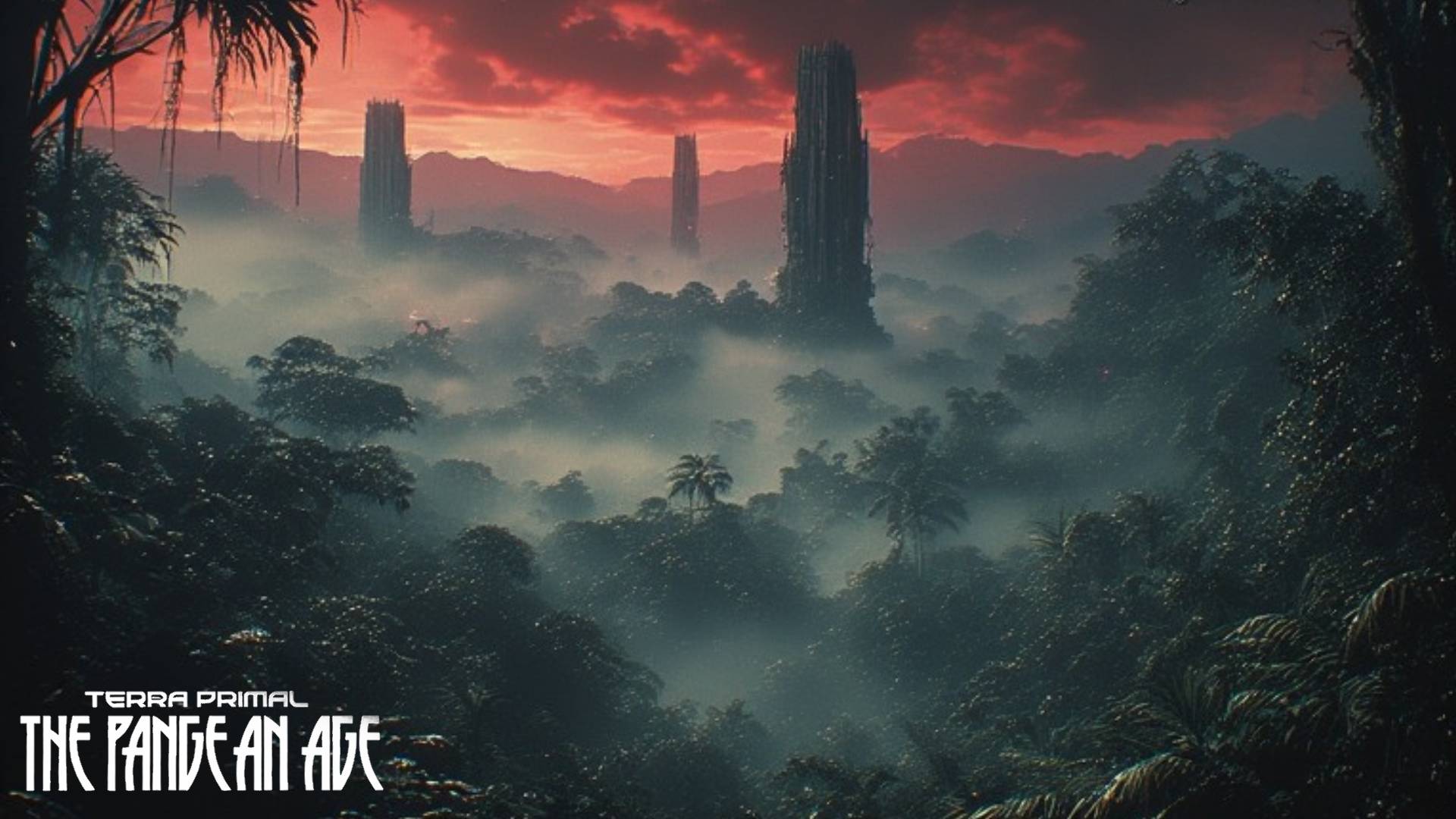
    To the north, beyond elevation breaks and containment grids, Kir had festered into a protomutational hell-jungle. Bioengineered growth had breached protocol generations earlier and run feral. River systems choked under hypertrophic canopy. Predatory clades reproduced without equilibrium. The grid had held—for a time—separating ordered territory from uncontrolled bloom, but projections had marked Kir as eventual contagion. Without decisive intervention, spread had been inevitable. Kir was not rebellion; it was entropy made vegetal.


    Balro had operated in deliberate contrast: open, regulated, weaponized. It served as the primary testing ground for Tellus’s armament programs—atmospheric suppression arrays, long-range deterrents, and platform-scale annihilation systems. Explosions had been scheduled. Catastrophes rehearsed. Terra Proxima had targeted Balro as a priority for infiltration, and the sector had been guarded accordingly—sensor fields buried beneath agricultural facades, strike divisions embedded within logistics infrastructure. Every prototype had departed under escort. Every failure had been reduced to data and ash.


    Mundolasia had remained an anomaly. Dense jungle and deliberate neutrality shielded its populations—herbivores, Gaianist sectarians, and exiles from both megacorporate blocs. They had facilitated rather than fought, trading passage, intelligence, and sanctuary without permanent allegiance. Survival had been doctrine. Neither Terra nor Tellus had claimed them fully; both had relied upon them. Their forests had harbored unspoken accords and temporary alignments, dissolving as quickly as they formed.


    Vandyr had persisted as the wound beneath the southern order. Former host to the Greater Vandyrian Empire, its reactor infrastructure had lingered in long-rim decay, output diminishing while risk indices remained elevated. Entire districts had been abandoned to structural collapse. Residual surges and containment breaches rendered reclamation costly. Tellus had maintained skeletal oversight, extracting stabilized yield while sealing off the irreparable. VandyR had not been asset nor relic; it had been liability too potent to discard.

    Across Gondwana, governance had expressed itself not through spectacle but through endurance. When a sector destabilized, it had been isolated. When a region failed, it had been sealed. Pyrolanthia had rotted yet held the line. Kir had mutated yet remained partitioned. Balro had detonated yet advanced. Jyntar had compiled, recalibrated, and continued. If serpent-folk operatives had existed within these territories, their presence had manifested as gaps in audit trails and anomalies in predictive models. They had been calculated as variables rather than myths. No command architecture had been complete without its ghosts.


    Each prior cycle had left residue—rusted corridors in Pyrolanthia, unstable cores in Vandyr, feral canopy in Kir. Tellus had not erased residue; it had built through it, over it, and when necessary, around it. Destiny there had not been conquest nor spectacle. It had been persistence under diminishing returns. Systems failed; archives endured. Sectors collapsed; quarantines followed. When the age had turned, the objective had not been triumph. It had been continuity. Power had not burned bright. It had settled deep, waited out collapse, counted losses, and prepared for recalibration in the silence that followed.

  • The Laurasian Frontier

    The Laurasian Frontier

    Upon the Laurasian frontier, Proxima established the headquarters of her operational entrypoint: UNCI-Maka HQ: raised from white stone and black-encased spire upon the rocks of Rama. That city’s story is itself a ledger of expendability: founded not by citizens, but by the prisoner-slaves of the first corporate wave, those bred and delivered to build, to haul, to die in the dust beneath machinery.

    Caste was not accident, but design—each cohort tailored for purpose, each life cycle engineered for function, then redundancy. Some augmentations broke protocol, escaping into the sector’s northern wilds, where they established their own logic of violence. These feral strains are not legend, but statistical fact—recorded in the casualty rolls of six suppressions, the cost in overseer blood and unprocessed ore indexed at 11,231 units lost per cycle.

    Rama’s caste—the reptilian hybrids of the mining generation—endured not because they were strong, but because they were invisible to record. Those who survived the first crucible became the new overseers, a lesson in recursive authority that remains empire doctrine. The breakaway populations on the southern coast, denied armament but not cunning, are a living reminder that Vandyrian descent is not a shield against regression. Barbarism and empire are not opposites here; they are points along the same parabola, each accelerating as the core withers.


    North of Rama, Cryolasia, the landing site of the Proxima front line, is a region of cold without snow, merely driving icy rain and sleet, broken by waves of dense lightning and sporadic heat. The atmosphere generator—damaged and starting to die—will take eons to cycle down. Only then can repairs begin; the empire, no longer able to send commands from on high. The population is overworked and wears cloth. Labor cycles here run at 1.7x coreworld average, with a 37% overexertion fatality among conscripted troops—diverted south for the endless brushfire wars. The numbers are not a mystery; they are the policy.


    Pandameia is the exo-sector, like all regions under Proxima’s jurisdiction, subcontracted and sectored; these, from some collective offworld about the Saturnian orbit, bioengineered by their guru, the Seedking, a strangeling from another world. He is mysterious and unseen; this ‘Giy’ they speak of in hushed, sweaty tones.The exo-sector Pandameia, always a statistical outlier, remains the empire’s tolerated unknown.

    Governed by subcontract, populated by collectives from the Saturnian diaspora, Pandameia’s political economy is less a chain of command than a shifting network of alliances and experimental hierarchies. Bioengineering is their only doctrine, and its high priest—the Seedking, known only as ‘Giy’—is referenced in no less than 417 intercepted comms, always in the idiom of awe or threat. His origins are irrelevant; his effect is measurable. Crop yields, splicing metrics, and resistance to imperial oversight are all above baseline, but so is the incidence of espionage, sabotage, and unsanctioned genetic drift.


    Though not allied, these forces are hardly conspiratorial. Cryolasia, gated in by imperial necessity. Rama, the beachhead. Pandameia, the constant X-factor.


    Inside the subcontracted area is believed to be a base of serpent-folk espionage. The serpent-folk, if they exist, are not merely rumor; they are the calculus of imperial anxiety. No command structure is complete without its ghosts.

    Throughout the operational history of Terra Proxima, one trend is immutable: extraction, depletion, and attrition run together, a triple helix in the empire’s DNA. Every resource tallied is a life diminished; every day the atmosphere generator stutters is a day closer to ecological collapse. In the records of the outpost, the dichotomy of home and hell is not rhetorical. It is the arithmetic of existence at the threshold of empire, where the only certainty is that every gain is temporary, and every loss is permanent.

    Destiny, in the empire’s codex, is not prophecy, but record. Proxima stands as both memorial and forecast—a tabulation of will, loss, and the final truth that even the greatest machine runs down. Those stationed here do not dream of the core; they recite the casualty rolls, rebuild what burns, and wait for the next rotation—knowing the only certainty is that the age of decline will claim every stronghold, every faction, every myth, until nothing is left but the data, and the silence that follows.


    The Latest From

    • Then…

      Then…

      Our People arrived…

      …and with them the corporate war at the empire’s outer frontier. during “the age of decline”. when the collapse of the core worlds finally began to take down the greater polities and ruling factions of “this”. the time known, as The Pangean Age.


      The event horizon of the Pangean Age is charted not by the slow procession of dynasties, but by the fracture lines at the empire’s furthest rim—where beings and beasts alike are forged and spent in the machinery of decline. Proxima stands as the imperial threshold and the sovereign directive: the photonic mind behind every order, the first and last arbiter as hope gave way to systemic loss.

      It was here, at the outer edge of The Laurasian Frontier, that our people—agents of the greater project, bearers of both the imperial will and its contradictions—arrived, and with them the epochal corporate war that finally broke the back of imperial pretense.


      At the hour Proxima raised her banners over the ROC—the so-called Region of Concern, that third world circling an amber, low-yield star—imperial authority was already a simulation. This was not the luminous blue-white of axium-class Vandyrian cores, but a dull, suffocating light that revealed only scarcity, not abundance. Proxima never chose this world; she calculated it, read it as asset and risk, cursed in its selection and in every metric that followed.

      The skies—once blue, now the ochre of chemical night—ran thick with smog and vented ruin, the cost of extraction measured not in credits, but in survival odds and atmospheric decay.


    • PRIMER: The Natural World

      PRIMER: The Natural World

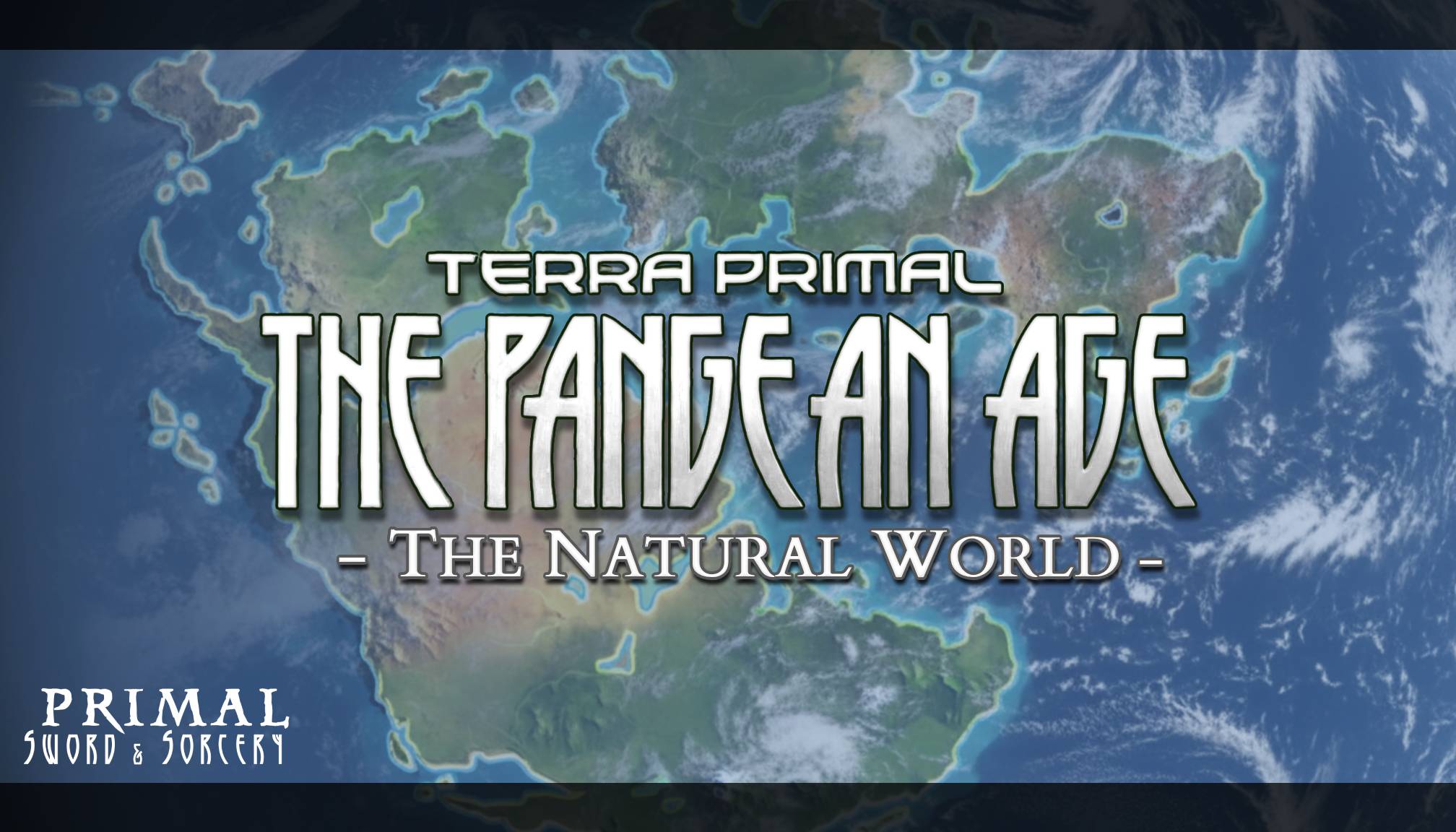
      Here an unnamed world existed in an age without memory:

      The land’s surface unbroken by wall or road, its air dense with green mist made from drifting spores. Thick with the heat of an ancient relentless sun. The land in its entirety ran together in a continent so vast that river and mountain were swallowed in the sweep of forests and open floodplain. All the world was motion—rain hammering leaf, thunder rolling down valleys, roots splitting stone, fire chasing the horizon.

      Life was restless. Swamps heaved with armored bodies; plains shivered beneath the passage of beasts heavy as storms, their hides a tapestry of scars, horns, bony plates. Jaws snapped in silence; shadows waited for weakness. Hunger shaped every day. Ferns and towering horsetails choked the light, fighting skyward for a taste of the sun, while predators drifted between the trunks—some quick and clever, some enormous and slow, all bound to the rhythm of need. All breeding without mercy.

      Yet here even giants were hunted, and the smallest creatures clung to life in the mud, in bark, in pools left behind by vanished floods. Eggs waited in silence beneath layers of rot and wet earth, while the air trembled with the wingbeats of reptiles gliding from one ancient tree to another, eyes catching light in colors no mammal would ever see. The rivers stank of silt, packed with teeth and armor; the nights echoed with the low voices of monsters claiming territory, of flesh warning flesh away.

      There were no stories, no witnesses. The land changed itself daily: lakes vanished, forests burned, mountains bled new stone. Ash would settle, rain would return, and life would push up through the ruin, hungry, armored, uncaring. No pattern held. No age lasted long. The strongest fell to drought, to famine, to wounds that never healed; the swift became the slow, the hunted the hunter. Everything that lived was both ancestor and experiment.

      These endless wilds bore no names—only the unending process of being: living, devouring, enduring, vanishing. Sometimes a tree would fall, and the crash would echo for miles, answered only by the startled stampede of a hundred horned backs through the fog. Sometimes the dawn would rise on a plain made silent by fire, ash mixing with the dew, nothing left but bone and the blackened trunks of ancient ferns.

      Above it all, the sky glowed. Red in the lowlands, emerald where the clouds gathered in the north. The sun burned close, unfiltered, bleeding heat and color across the continents. Night brought chill, mist, and the heavy drift of stars across a horizon broken only by volcanoes and the silhouettes of creatures whose bones would never be found.

      This was a world complete in itself, ruled by no order but change. Life thrived and ended by law older than bone. No eye watched, no mind remembered, and nothing called out except the wind and the voices of living hunger. The world was what it had always been: a stage for the next survivor, indifferent to all but the moment.