To speak of the Vandyrian is to step onto a faultline older than memory, where every word fractures under a burden it was never shaped to bear. The question—what is a Vandyrian?—seems innocent, almost scholarly, until one begins to answer it.
For the Vandyrian is not a folk, nor a lineage, nor a culture, nor even a single empire in the paltry sense that lesser ages use the term.
The Vandyrian is a continental shadow cast across the galaxy, a residue left upon tens of millions of worlds, a design philosophy written into the very bones of every species that breathes beneath the Ran system’s suns.
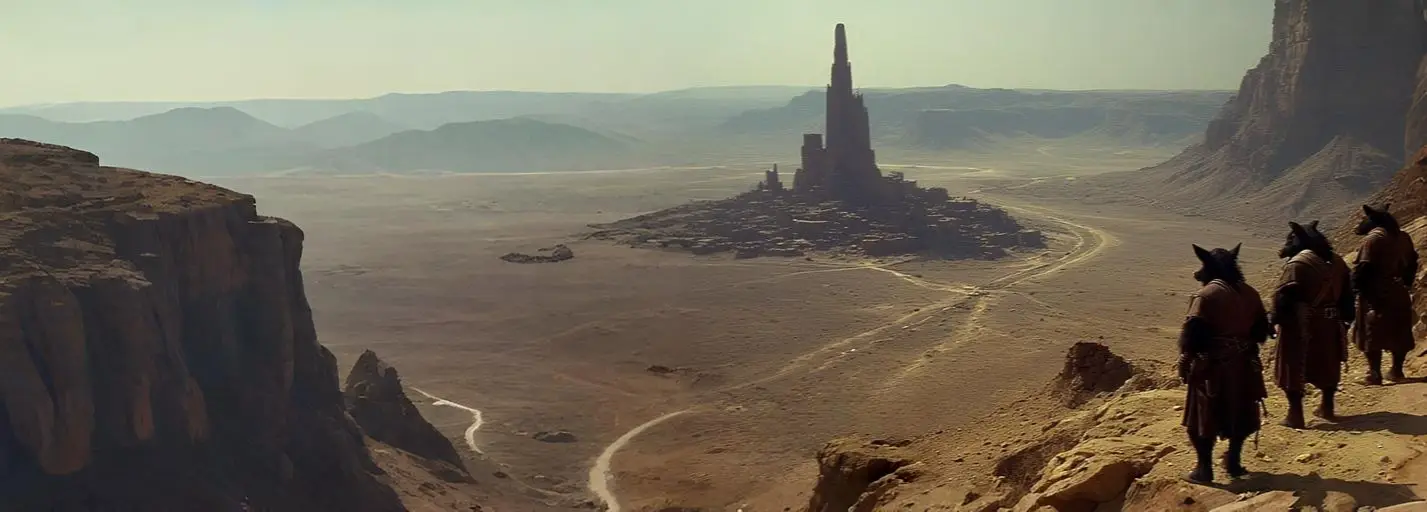
Lion and wolf, ram and bear; horsefolk of Zhuru, dogfolk of Vulsa, jackals of the wastes; otter, mouse, and every scaled carnivore that stalks the ash or surf—all bear the unmistakable signature of hands that once shaped, culled, reformed, redeployed, and finally abandoned them.
To ask what a Vandyrian is, then, is to ask why the ruins scattered across Vandyrus, Thanator, Kydahn, and their sister worlds share identical geometries, identical power-laws, identical genetic scaffolds; why the peoples themselves mirror one another’s instincts, hierarchies, and neural architectures; why war, order, stratification, and controlled brutality arise again and again as if imprinted not by culture but by inheritance.