Category: The Vandyrian Codex

  • Old Kartong – The Untamed City

    Old Kartong – The Untamed City

    Location

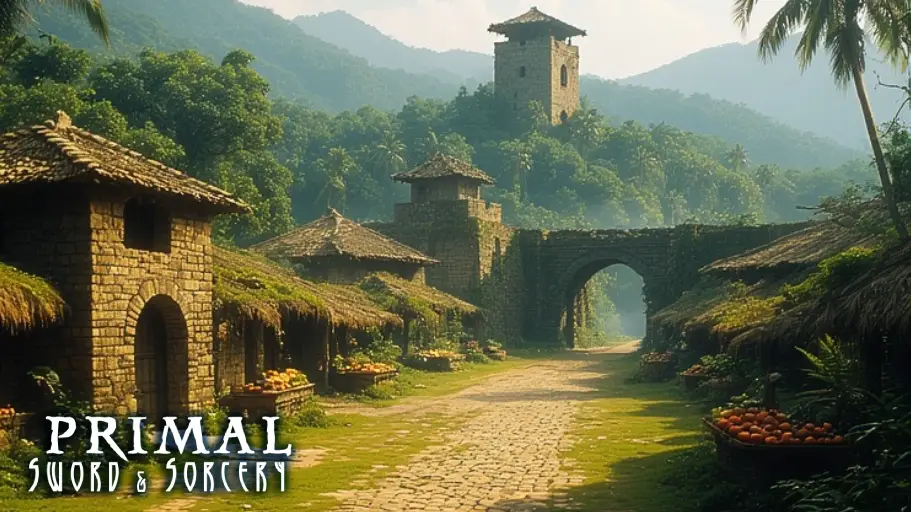
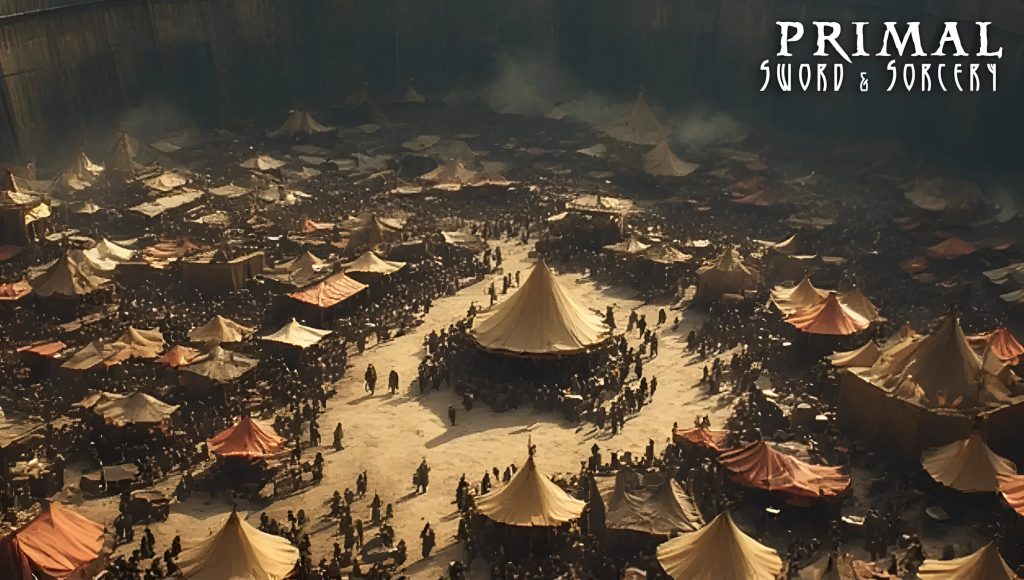
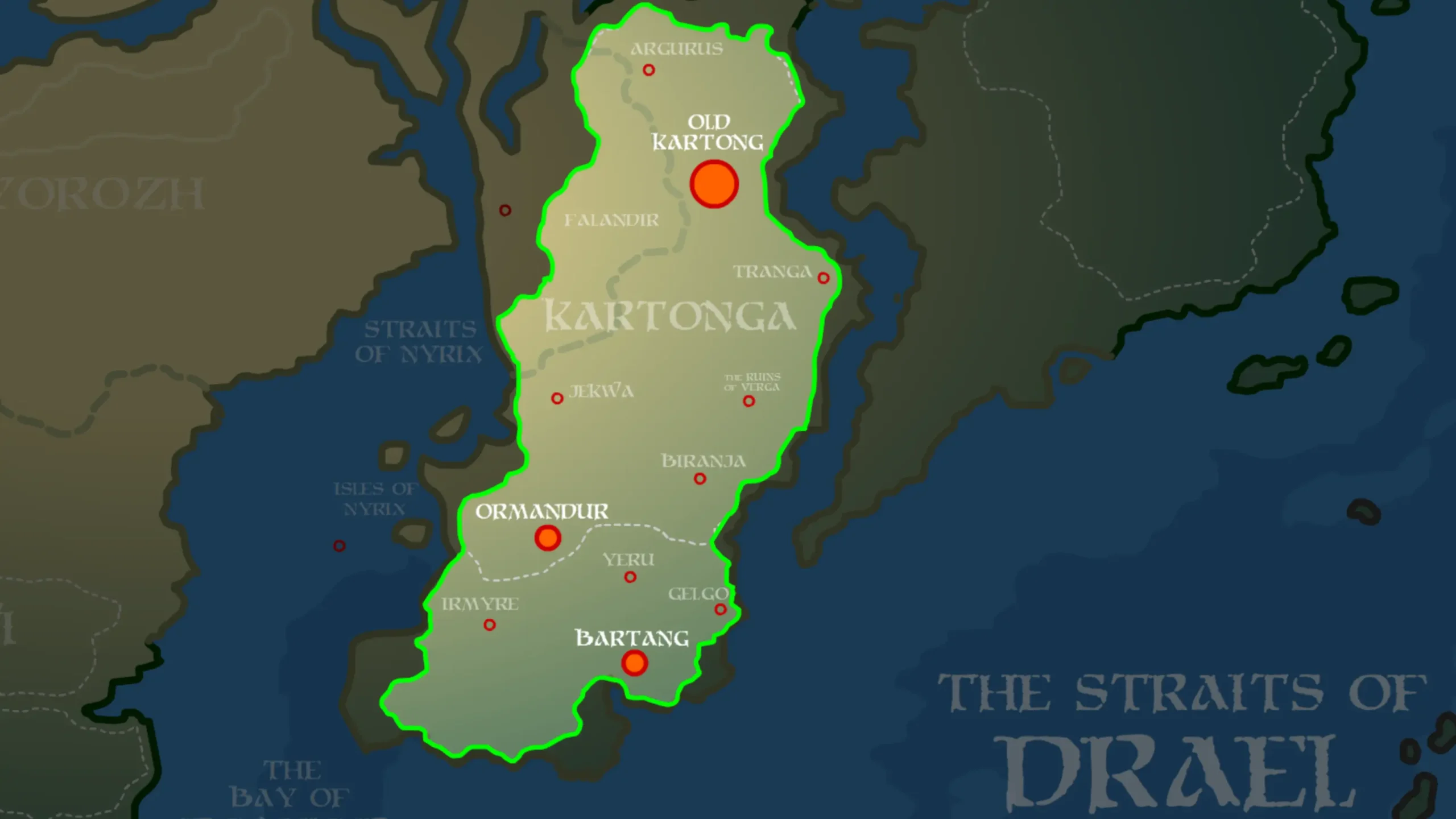
    Old Kartong rises in the central wastelands of Zhuru, east of the Yorozhian Hell Desert and south of the Crater Sea. Its position at the throat of caravan routes makes it impossible to ignore. Merchants, raiders, smugglers—all who cross the desert or skirt the sea must pass near Kartong’s shadow.

    Overview

    On a land that should command trade and dominion, Kartong festers instead. It should be a jewel of commerce: it lies astride the arteries that bind the grasslands of Rakwi, the kingdoms of Izhura, and the savannas of Varduun. Yet Kartong is no jewel. It is a scar, a wound that never heals, a ruin forever gnawed by predators who cannot keep it.

    The Tower

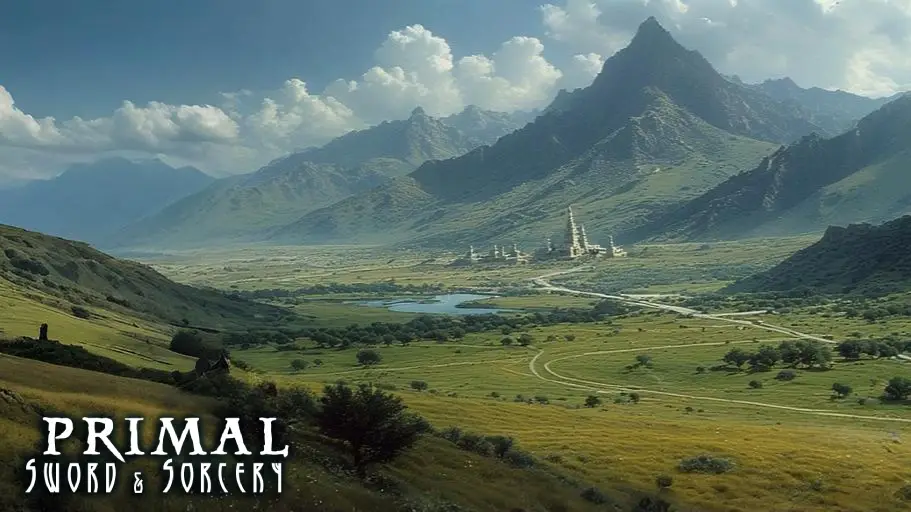
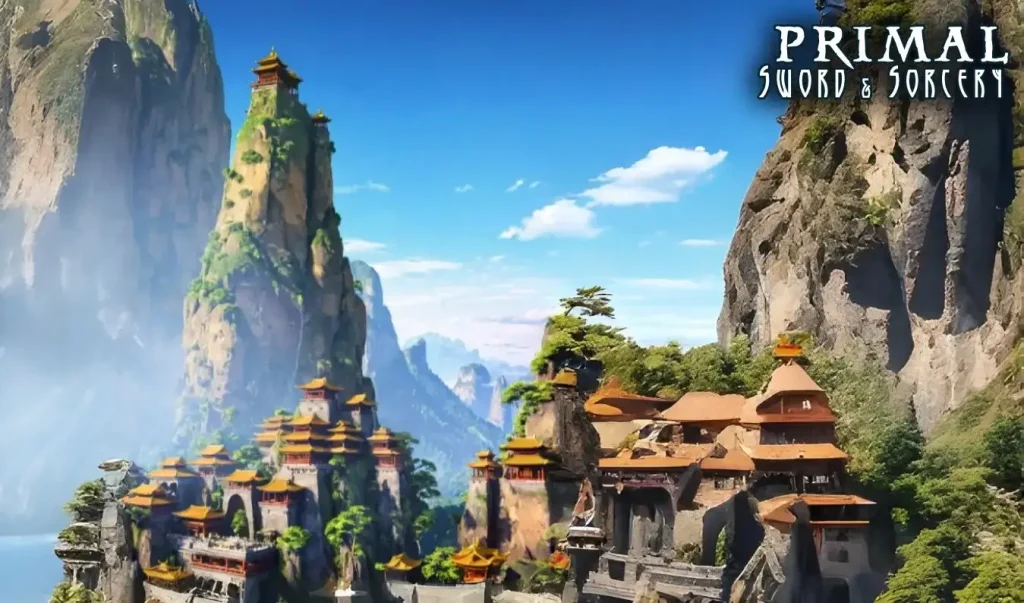
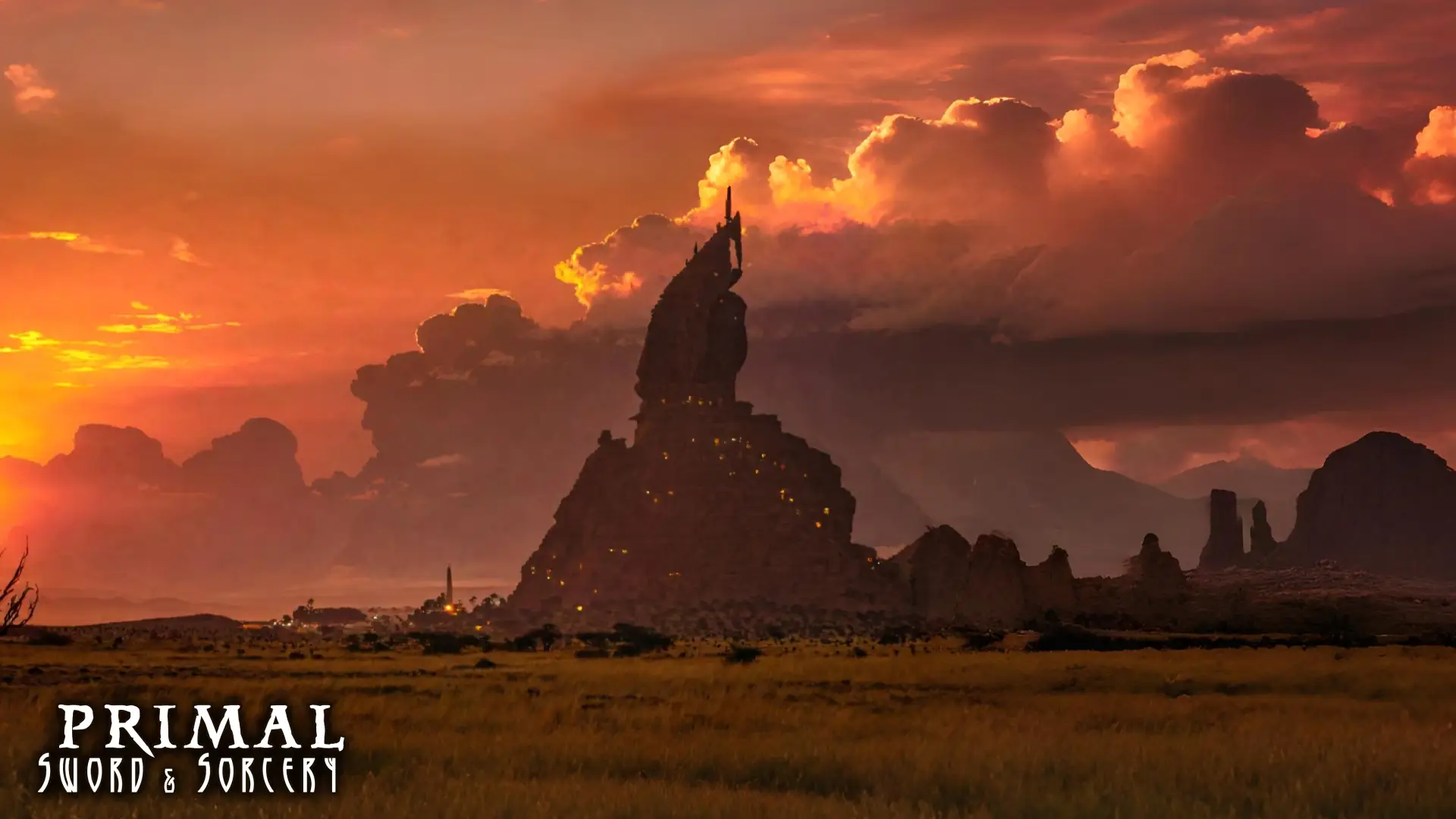
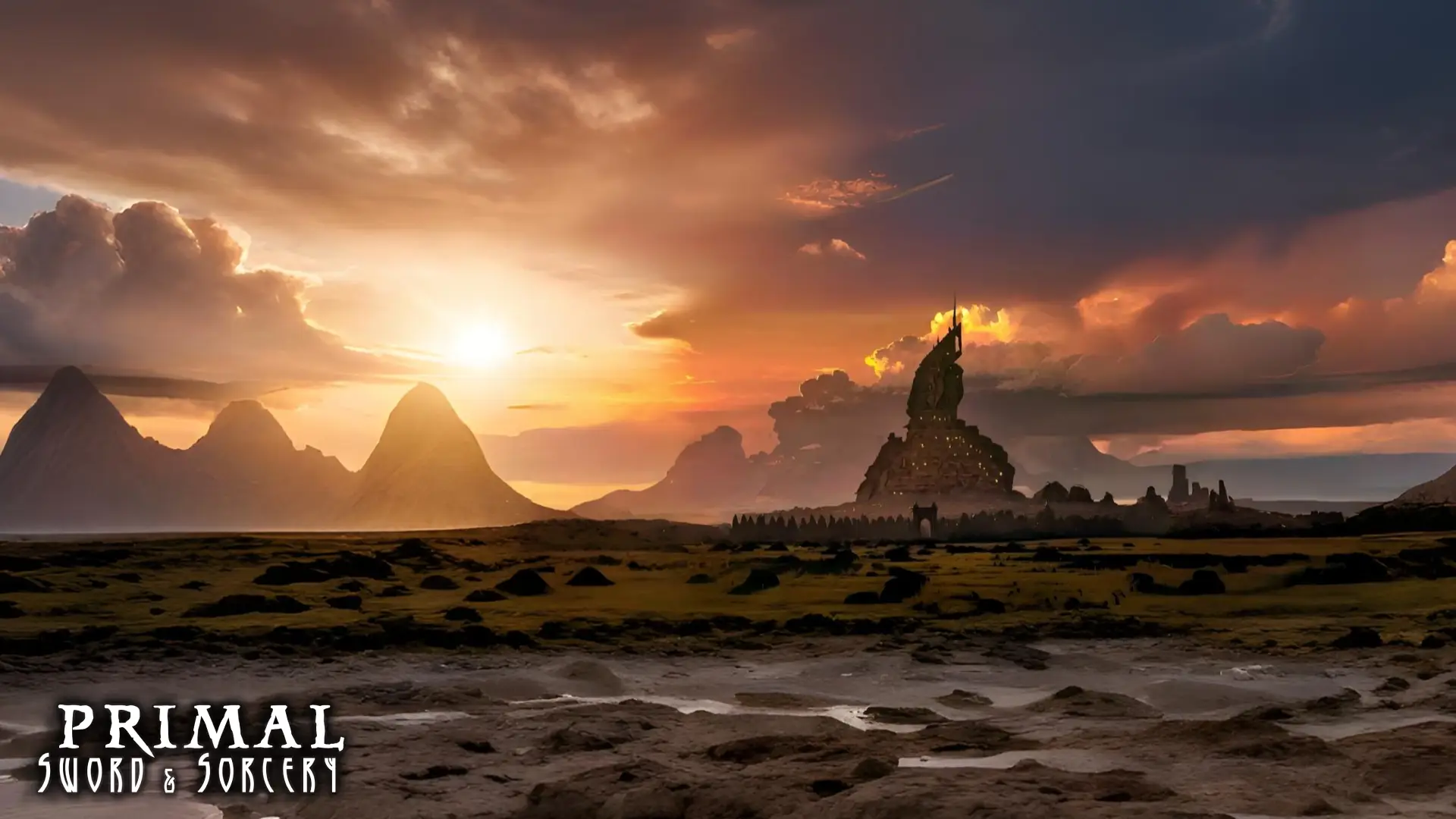
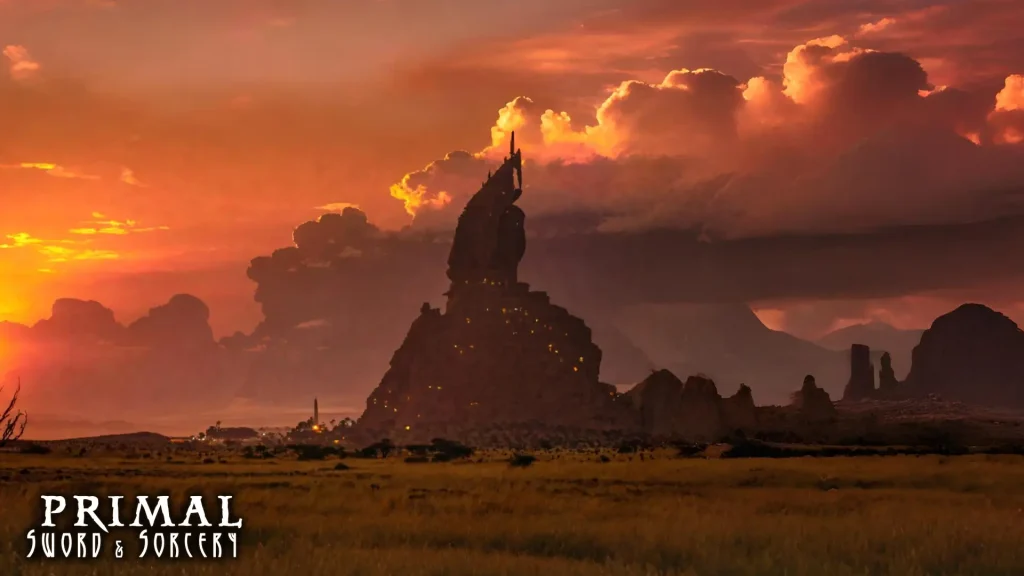
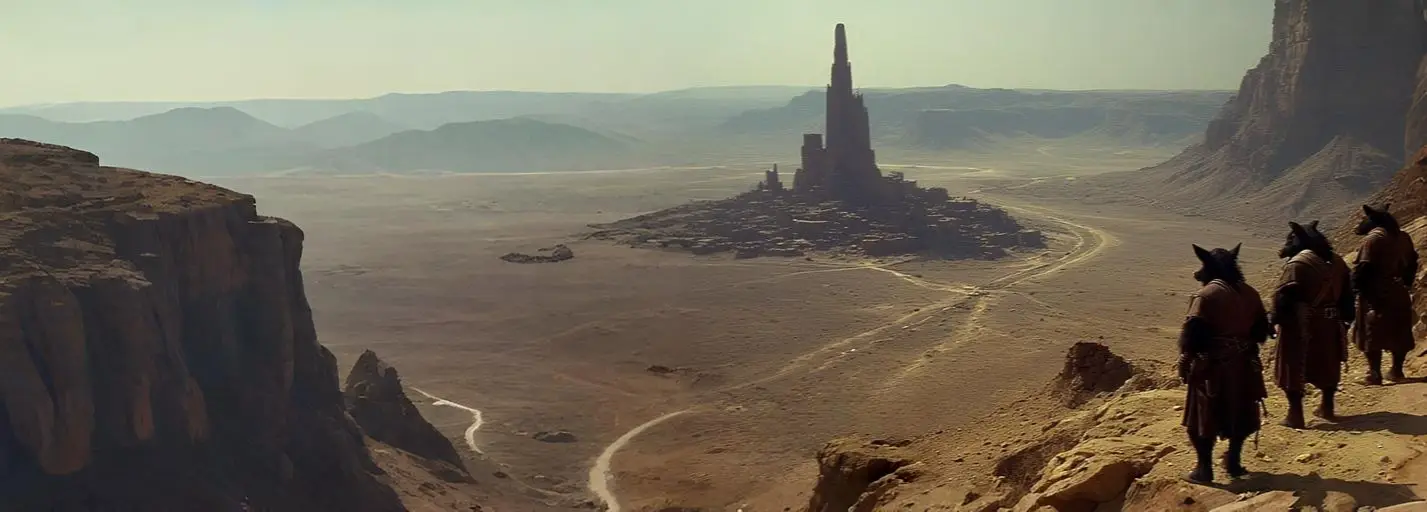
    Kartong does not sprawl—it climbs. The city’s foundations rise out of a black desert outcrop, and above them thrusts the ancient tower: a spiral of stone and steel older than the clans who squabble beneath it. Its angles are strange, its height defiant. No lion, no hyena, no gazelle remembers who raised it. The tower predates their chronicles. Some whisper of an elder folk drowned by cataclysm, others of god-folk who bled stone into the desert.

    Whatever its origin, it remains—an accursed spire sneering across the horizon, a beacon no caravan can ignore. When the desert ends and grass begins, it is the first sight, black against the sun, commanding the throat of the land. Even those who skirt it bow their heads, unwilling to meet its gaze.


    A History of Ruin

    Every folk has tried to hold Kartong. All have failed.

    • When the lions held it, the hyenas poisoned its wells until the streets stank of rot.
    • When the hyenas ruled, the lions marched in fury and left its towers burning.
    • When the gazelles dreamed of governing, they were robbed in daylight by hyenas and dragged screaming into lion dens by night.

    So it has gone for generations: conquest, collapse, conquest, collapse. No flag endures. No crown survives. Old Kartong always reverts to its natural state—feral, lawless, ruled only by hunger.

    The Maw

    At the city’s gutted heart sprawls The Maw, Toa Zokuda’s den of debts. Half gambling pit, half brothel, half execution-ground, the Maw is Kartong in miniature. Here stolen princesses are chained for sport, debts are collected in flesh, and cruelty itself is currency. What the desert sun does by day—burn, wither, strip bare—the Maw does by night.

    The Law of Old Kartong

    There is no king, no clan, no crown. The city is ruled by those who can hold a den for a night, a street for a week, a quarter for a season. Debt is its only law. Cruelty its only justice.

    Reputation

    Old Kartong is spoken of in whispers, half warning, half dare. Rogues praise its wealth: caravans always pass near, smugglers always dock. but no one leaves clean. Mercenaries grow rich there, then die there. Predators thrive because prey walks in willingly, thinking to cheat the cycle, but Kartong devours them all in the end.


    RELATED

  • Tymere – The Gilded Mire

    Tymere – The Gilded Mire

    Tymere stands as a land that mistakes endurance for stability. It was never broken as Vulsa was, nor cursed as Roedon became—its wounds were not cataclysmic, but septic. The earthquakes still come, rattling the ground with a kind of weary persistence, but they no longer shape the land as much as they remind its people that the gods once cared enough to strike it. The true rot lies not beneath the soil, but within its courts and coin houses. Tymere has been rich for too long without ever learning how to be wise. It is a nation of inheritance without understanding, of empires that have forgotten the weight of conquest, content to measure their worth in gold rather than glory.

    On the surface, it gleams, a realm of silken trade routes, perfumed courts, and narrow marble streets that lead to terraces overlooking endless green. It boasts wealth, art, and armories of fine steel, but this splendor is false light glinting off stagnant water. The money moves in circles, enriching the same dozen houses that own the land, the roads, and the very right to move between them. A traveler is taxed for breathing the air too long in one duchy, fined for crossing into another without the proper sigil. Corruption is no longer a crime—it is the bloodstream of the realm.


    The northern lands of Tymere are breathtaking, if one can see them through the mists. Towering forests, steep mountains with ribbons of mist flowing through their ravines, and rivers that gleam like molten silver beneath the sun.

    These are lands where the air still feels holy, where the soil hums faintly with old magic. Villages cling to the roots of cliffs, and shepherds speak of spirits in the rain that whisper of better times. But this beauty is cut by fear—the law ends where the road fades, and the road always fades sooner than one expects.


    The cities are another matter entirely: decadent, cruel, and self-absorbed. Great stone citadels overlook sprawling slums, and within their walls, courtiers trade assassination for affection, bribes for titles, flesh for privilege. The noble houses—bloated and interbred—pretend at unity when a foreign ambassador visits, but tear at one another’s throats the moment his ship leaves the harbor. They plot endlessly—against each other, against Vulsa, even against their own kin.


    Tymere’s hatred of Vulsa is old and bitter. To the Tumerians, the wolves of the north represent everything they fear: discipline, faith, and strength unbent by gold. They will never admit it, but they dread Vulsa’s shadow. They see in the wolves what they once were, before decadence set in, before their borders became lines of taxation instead of defense.

    Beyond the gilded cities lie the rural stretches—villages of wood and mud, more loyal to their local strongmen than to any crown. Farmers till poisoned soil near the southern edges, where volcanic breath still seeps from the wounds of the earth. The skies there are copper-red, and the nights smell of sulfur. These southern coasts bear eerie resemblance to the ruined continents beyond the sea—Drael’s broken sisterlands, where glassy plains of ash still shimmer from ages-old fire.

    In Tymere’s heart, however, the people still live as if nothing is wrong. They feast, they fuck, they bribe, they sing. They build statues of themselves and call it civilization. Yet the dogs of war gather on their borders—Vulsan scouts in the mountains, Roedan raiders watching the trade roads, even the mercenaries within their own cities waiting for a chance to carve out kingdoms of their own. Tymere stands not as a dying empire, but as a drunk one—laughing, staggering, unaware of the cliff’s edge behind its laughter.

  • The Kartonga – The Wastes of Old Kartong

    The Kartonga – The Wastes of Old Kartong

    The Kartonga is a wound within Zhuru, a land so dry and desolate it rivals the worst of the world’s deserts. The ground is scarred with craters, the sky forever hazed with dust. At its heart looms Old Kartong, the spire-city, a jagged fang of stone carved into impossible angles. No one agrees whether it was built or grown, whether it belonged to beasts, reptiles, or something that came before them all. Some whisper of the insect races—the pre-mammalian lords of a hellish epoch, long vanished yet never truly dead. The spire is not ruin but scar, proof that something vast and wrong once ruled the continent.


    The Kartonga is not a kingdom but a midden. Outcasts and refuse from every other nation crawl here when all else has failed them. Thieves, mercenaries, warlords, and heretics congregate amid its shattered craters. Loose alliances form and dissolve in blood, for nothing is sacred, and betrayal is the only constant. Here there is no culture beyond survival. Honor is a lie, loyalty a fleeting bargain. Outsiders enter Kartonga at their peril, for here even the idea of law is mocked, drowned in skullduggery and backstabbing.


    RELATED

  • The Post-Cataclysmic Age

    The Post-Cataclysmic Age

    Where civilization collapsed, barbarism flooded in. Folk learned to raid and kill for grain, to trade in flesh and steel, to build power out of violence and hunger. Wolves became mercenaries, equine tribes turned fertility and milk into contract and leverage. Lion kingdoms rose and fell, always hungry, always reaching for what could not be kept. The den-cities of Vulsa and Roedon are monuments to collapse, law and pride standing only as long as the next disaster allows.

    The Cataclysm’s legacy is a living wound. The crust of Vandyrus is riddled with voids, rifts, and buried collapse. Valleys fall away in a night; seas vanish into cracks; entire cultures disappear when the ground betrays them. No one trusts the earth, the sky, or even the promise of peace. Superstition grows out of soil that devours the dead—and sometimes the living.

    The present is an age of desperate alliances, petty kingdoms, and doomed banners waving over future sinkholes. This constant ruin has shaped Vandyrus into a world of the haunted and the hungry. To be born here is to expect collapse, to risk everything and trust nothing.

    Yet even in the ruins, not all is decay. The old slaver gates, impossible artifacts, still link Vandyrus and Thanator—arteries pumping misery, trade, and ambition between two dying worlds. Raiders, slaves, exiles, and cults pass through them still, shaping the little that remains. Vandyrus endures—not because it remembers, but because it refuses to be erased. Cultures rise from necessity; folk define themselves by survival in the face of extinction, knowing the next age may be the last. History here is a tapestry of gaps, a string of endings dressed up as legacy.

    Vandyrus will never match Thanator for splendor, ambition, or mythic pride. What it has instead is stubbornness, a grim pleasure in surviving every collapse. Its only gift from the Cataclysm is unending ruin: a world that never finishes dying, that never forgets how to bleed, and that grants peace only in the silence that follows its latest fall.

  • Vandyrian Lexicon

    Vandyrian Lexicon

    The Following Terms are of Vandyrus and its greater connected strata and may be useful to understand certain documents, passages or even common phrases:


    Ereth – An obscure and rather archaic Vandyrian word, Meaning something akin to existential essence or a “greater foundational spiritual purpose“, such as in The Ro’Edyne Cycle’s:

    • “weaving new blood into Roedon’s ereth”

    Grundy – Slang: Meaning something fundamentally true on a gut level even if aetheric or elusive:

    • Physics, for all it’s mad witchcraft be the grudy basics of natural order.”

    Wrathian – Describing institutional cultural cruelty:

    • “Don’t get caught, lest ye’ find yerself mired in Wrathian tortures!

    Perforated – Common slang for being shot with a rifle or a smaller slug leaving a hole:

    • “Ka’s blood! Damn raven sniper near got me perforated!”

    Boogy – Bad Loot; The opposite of booty or ‘good/worthwhile Loot’. Often meant to describe junk or folly filler:

    • You’ve got nothin’ to gamble with, mere scrap & boogy!”

    Sko’Gore – An engine that burns composited waste through alchemical means:

    • “Aye! We have a chassis, just need guns and a mean Sko’gore”

    Ul’Dyne – Very ancient, Pre-civilizational, pre-historic:

    • “Amidst the sparse and ul’dyne spires of the Kartongan wastes”

    Alchetanger – A sealed glass tank with a metal cap, often kept in vaults of shrines:

  • Vulsa – The Kingdoms of Steel

    Vulsa – The Kingdoms of Steel

    The North of Vulsa, looking out over the Fangs of the North

    Vulsa lies in the east of Vandyrus, a continent of black rock and silver snow, where the mountains seem to breathe fire beneath the ice. It is vast, its northern crown large enough to swallow whole nations. High above the laws of civilization stretch the Fangs of the North, serrated, ice-sharpened ridges that divide the continent’s ruined core from its more habitable south. The ascent through those peaks is lethal. The wind cuts skin like knives, avalanches roar without warning, and the air itself freezes the blood. Wolves dwell in those highlands, taciturn, self-contained, but not cruel, and the few who cross the passes into their domain seldom return unchanged.


    The Ruination of the Central Kingdoms is the stuff of Dark Legend

    Below the Fangs lies central Vulsa , a land forever broken. When the world buckled in the Cataclysm, its heart was torn open, and the scars never closed. Whole ranges sank, rivers changed direction. What was once a broad interior now sinks by degrees into frozen black marshes, fissures of ice, and deep, killing snows where the remnants of old kingdoms drown a little more each year. Villages drift southward on rafts of half-frozen mud, while ruined keeps stand like teeth above the mire. Even the wind moves slowly, heavy with ash and memory.


    The nations of the Southern Kingdoms are by no means warm, Snow is replaced with driving rain, Endless cold by infinite grey and Frostbite with rot & rust

    South of the wastelands, the land softens into the civilized forges of Volsa, its snow giving way to black volcanic soil and the strange, shimmering craft of the Vulsan smiths.

    Here stands the last light of their civilization. The continent’s interior remains wild, much of it unmapped. Ancient craters from the Cataclysm pock the landscape, many believed to be sites where skymetal once fell. Settlements cling to trade rivers or to the smoldering forges themselves, leaving vast tracts of wilderness where only wolves, spirits, and scavenger bands roam. Culturally, Vulsa sits between ruin and revelation. It is a land that remembers the gods’ wars in its ore and carries both the genius and the madness of creation in its veins.

    To outsiders, it is a kingdom of cold mercenaries and unbreakable metal. To those born beneath its ash-stained skies, it remains the crucible of the world, where craft and sorcery, memory and metal are one and the same.

    Combined with Roedon and Tymere, the Kingdoms of Vulsa make up what the rest of Vandyrus refer to as the Triskelion nations.


    RELATED

  • Library, Librarian & Librarium

    Library, Librarian & Librarium

    A library is a structure—physical, bounded, and mortal—built to house collections of books, scrolls, and treatises. Within its walls, knowledge is organized, preserved, and protected against the encroachment of time and ignorance. The library is the world’s memory, fragile and incomplete, a fortress of ink and parchment against the flood of forgetting.

    A librarian is the steward of the library’s order, a keeper of its ledgers and guardian of its peace. Some are mere catalogers, others fierce defenders of the written word; all are servants of the archive, sworn to balance access with preservation. The librarian stands between the world’s hunger and the vulnerability of knowledge.

    A librarium is another thing entirely: not a structure, but an internal and often interdimensional space, whose true extent is measured not in walls or floors but in the reach of its nexus. Within a librarium, the local rules of size and space may dissolve; a single doorway may open upon endless stacks, forgotten vaults, or entire realities of script and secret. Some libraria are alive with their own will; others are crossroads to libraries lost or unborn. The guardianship of a librarium is never simple stewardship—it is a pact with the archive itself, whose price and promise no wise folk ever take lightly.

    Thus:
    Library: The physical house of books.
    Librarian: Its steward and keeper.
    Librarium: The boundless, ritual nexus where all libraries, and all their dangers, converge.


  • Roedon – Broken Crown of the West

    Roedon – Broken Crown of the West

    Once the western mirror of Vulsa’s greatness, Roedon now lies in half-light and ruin. Its keeps are black with smoke and lichen, its folk live amid cracked pillars and moss-eaten vaults where kings once feasted. The wind from the Drael coasts carries the stench of raids, and from the north come the wolves of Zhuru, burning and stealing the few young left to enslave.

    The *Roedans are a hard folk—thick-furred, grim-eyed, and proud in their suffering. They remember the age when Roedon and Vulsa were twin realms of iron and ice, bound by shared blood and rivalry. But while Vulsa endured through faith and fury, Roedon broke beneath its own winters. The priests fled, the citadels fell silent, and now each valley shelters its own chieftain, each ruin its own petty god.

    Unlike the sunken reaches of the Vulsan marshlands, Roedon has not drowned—but it is freezing, bleeding, and starving. The raids from Drael never cease, the Zhurians press from the frost, and even the dead seem restless, wandering the moors in packs. Yet in the ruins of Thryne and the haunted markets of Den’Rydan, old blades are still traded, and old tongues still whisper of the Day of Return—when Roedon’s warriors shall ride again, howling beneath banners stitched from wolf hide and sea salt.

    *Roedans – An archaic term meaning both Northern Ro’Edyne & Southern Roedoni immigrant populations.


    NOW IN PRODUCTION


    RELATED

  • The History of Roedon

    The History of Roedon

    This is the record kept in stone and ink, not song or sigh. Here is the unvarnished account—lineage, war, migration, and law—presented in the sober manner of those who must remember, not simply believe.

    Compiled from the earliest surviving fragments through the great succession wars of 5747 AC, this history aims for clarity, chronology, and the unromantic burden of fact. It is the Roedani scholar’s answer to legend: a ledger of what can be proved, traced, and disputed by the living, however dim the dawn from which it rises.


    The History of Roedon

    I. The Founding of The Northern Halls

    ••••

    II. The Cull of the Kinslayer

    •••

    III. Reckoning The White Witch

    ••

    IV. The Fearless

    •••••••••••••••••••

    V. The Fall of Valbara

    ••••••

    Vi. Legend of The Cystalkalibur

    ••••••••••••

    VII. A Hall of Myth and Legend

    viii. The little Tymerean War

    ••••••

    IX. Trade Hell from Varduun

    •••

    X. That Cold Northern Attrition

    ••••••

    XI. Beware Bleak Mundaynum


    I. The Founding of The Northern Halls

    After a wager of skill and reason was won against the elder-beards of the Londorai—whether by clever tongues, crooked dice, or the hand of fate itself—there was struck a common and good deal in the wake of a war whose name is lost. History forgets the weak and the petty, and the Londorai remember only victories, yet Roedon sings that the bargain was sealed not by crowns but by laughter, not by oaths but by necessity. Some say it was done together, shoulder to shoulder.

    Others mutter that it was the work of Rowes of Dayne alone, that queer hero of half-remembered tale, who in one telling bested the sky-king Arynn at arm-wrestle, and in another struck him blind and mocked him while the folk of Roedon learned to stand as one. There are songs where Arynn is made drunk on his own thunder, waking certain he had won, while Rowes stayed behind turning meat upon a spit and swearing all was as the sky-king remembered. Roedon prefers both versions and sees no need to choose.

    Thus it was that the silver-frozen halls of Londoraia, with their ermine thrones and star-bright gold, sent their giants south to carve a city from mountain bone, long, long ago—before the hill that would one day crown the heights of Den’Rydan had yet learned its name. These Londorai giants were of kin, tall and boisterous, and they walked the sea itself, wading deep through black water to drag the old rowendyre ships ashore, hauling whole peoples with them from the Eld’Hal, that ancestral north now lost to ice and oath alike.

    Liars and lions will tell you these works are Vandyrian dirt, relics of some dead empire, but they have yet to tilt a true rowendyre without snapping it like kindling. Here stand the northern forts, halls born of ships—wood of the sea set into living stone, not by spellcraft but by hand and law. Blocks taller than any stronghold were torn free and crushed until diamonds lined the great central terrace, the labor of the strongest Londorai males, while the towering wee girls pressed rubies from the same ruinous weight. The oldest halls were dug naked into the mountain, ships slid within them like bones into flesh, and the strongholds locked fast by giant swords driven deep—not as threat, nor as boast, but as covenant.

    For the vow was plain: if Londorai ever returned to make war, it would be against the enemies of the world, and Roedon would stand back to back with them. The giants drank, and the mirth of it shook the rafters of heaven and the highest halls on high. Then horns sounded from the frozen west. In less than nine days they had built what others would call a world, and after the revel they went stone-faced to answer that call. They were never seen again, for into myth they strode, and Roedon remembers them only by what they left standing.

    The females of the Londorai remained. It is said they stayed knowingly, and gave themselves to the males who had fought and lost for them, trusting that their own would one day return the favor. These were no dire giants, but a lesser, equally majestic kind of wolf—still tall, still proud, still enough that their blood runs thick in Roedon to this day, though few will admit it aloud.


    The Bard’s Song


    More Tales To Tell

    More Tales From The History of Roedon & The Ro’Edyne Cycle
    are in the process of being translated, archived, restored and preserved.

    Treat this page as an ongoing serial and check back for updates….


    Explore The Archives of The Vulsan Noble Owls
    An Ongoing Archival Series
    Enter The Realms of Roedon
  • Varduun – The Hyenalands

    Varduun – The Hyenalands

    Varduun is a land cursed twice. Once by fire, when Drael fell and split the earth, vomiting up vents, ash rivers, and poisoned plains. Again by its folk, for the hyenas claimed the land and made it theirs.

    It is a land of cracked savannah, fever-swamps, scorched plains, and wasted rivers. Disease prowls through its camps as easily as raiders do. Unwanted pregnancies, miscarriages, and deaths in childbirth are common; the alleys swarm with half-starved pups and abandoned ferals. Life here is cheap, short, and cruel—and the hyenas laugh at the cruelty not because it is funny, but because it is all they know.

    The Hyenalands are no kingdom, no empire. They are a trinity of strongholds and hordes—Gorzanth, Zarnack, and Krothuum—locked in endless rivalry. Only when all three are threatened at once do they bare their teeth outward, and then the savannah burns.

    And always, on the horizon, the whisper of a fourth city—Old Kartong, not theirs, not of Varduun, but a ruin that mocks them all.