

UPCOMING FEATURES:

  • Galleries
  • Behind The Scenes

Category: Histories & Accounts

  • A Hierarchy of Merchant Scholars

    A Hierarchy of Merchant Scholars

    Within the Bardasi hierarchy, teacher was a tiered position, difficult to attain and not lightly bestowed. One did not become a teacher merely by age or experience, but by surviving review. Teachers were evaluated by their students’ later conduct, not by affection or loyalty. Above them stood professors, responsible not for instruction but for doctrine—the articulation of Jantaran commercial philosophy across generations. Above them again were adjudicators, empowered to resolve disputes between Bardasi, students, and foreign authorities alike, often with rulings that carried weight across borders. At the summit stood the civil proclamators, rare figures whose role was not to teach individuals, but to formalize Jantaran position in moments of crisis, transition, or foundational accord.

    This structure ensured that the Bardasi did not merely produce clever traders, but shaped minds capable of operating without homeland, without sentiment, and without illusion. The student who completed such an apprenticeship did not return home wiser in the comforting sense. They returned sharper, quieter, and harder to deceive.

    That other realms once accepted this transformation—once entrusted their offspring to jackal hands knowing they would not come back the same—is not a curiosity of the past. It is the measure of what Elder Jantara once was.

    That such trust no longer exists is not mystery.

    It is judgment.


    The History of Jantara

  • Lessons in Matters of Consequence

    Lessons in Matters of Consequence

    Pedagogically, the Bardasi rejected abstraction. A lesson was valid only if it could be tested on the road. Arithmetic was taught through loss and gain. Language through insult, negotiation, and apology. Ethics through exposure to consequence. A teacher might allow a student to misprice a good, offend a local official, or misjudge a rival merchant—so long as the error did not endanger the caravan as a whole. The resulting damage, whether economic or social, was never repaired on the student’s behalf. It was observed, recorded, and addressed later, often days after the event, when emotion had cooled and memory had sharpened.

  • Teachers of Philosophy & Civilization

    Teachers of Philosophy & Civilization

    Within the Bardasi caste, instruction was not an adjunct to trade but one of its primary instruments. The caravans were universities in motion, and the teachers who walked among them were neither tutors nor caretakers, but custodians of formation. A youth assigned to a Bardasi instructor did not merely accompany the caravan; they were absorbed into its internal discipline. Within Jantaran society such students were treated well, but never indulged. Comfort was permitted only insofar as it did not dull perception. Respect was granted, but never deference. A student’s value lay not in who they were, but in how quickly they learned to see.

    Beyond the borders of the Jantaran Union, the status of these students changed markedly. They were no longer merely apprentices but living collateral, entrusted to the caravan under conditions approaching ritual sanctity. Reputable caravan lords and merchant-kings—those with the wealth, stability, and standing to bear such responsibility—accepted them as one might accept custody of sacred gems. They were housed deep within the safest folds of the caravan, protected not only by guards but by reputation itself. To harm a Bardasi student was to declare oneself unfit for future trade, memory, or record. In this way, whole trade networks became strange, rolling academies of coin and wisdom, bound together by the shared understanding that knowledge outweighed plunder.

    The teachers themselves were carefully chosen. Not for warmth, nor for gentleness, but for evenness. A Bardasi instructor was expected to speak to youth without softening truth, to correct without humiliating, to permit failure without allowing collapse. They were often individuals who had mastered restraint until it became instinct. Their authority came not from volume or severity, but from consistency. Students learned quickly that these jackals did not lie, did not bluff, and did not repeat themselves. A correction given once was never given again. The cost of misunderstanding was borne by the student alone.


    The Teachings of The Bardasi

  • The Teachings of The Bardasi

    The Teachings of The Bardasi

    💎

    Index

    By Essay:

    The Teachings of The Bardasi [COMPLETE]

    The Bardasi

    Bardasi or Baru’Audahsi;

    Meaning “Teacher of ‘Philosophy” & “Civilization”‘
    in Elder Jantaran Common

    The Jantaran Bardasi were not merely merchants, nor philosophers in the later, toothless sense that the word acquired after the fall. They were a caste, formally trained, ritually bound, and socially insulated, whose function was to move between realms without ever belonging to them.

    To be Bardasi was to be trusted precisely because one was never fully at home anywhere. Elder Jantara understood something most civilizations learn only after collapse: that trade is not the exchange of goods, but the exchange of assumptions.

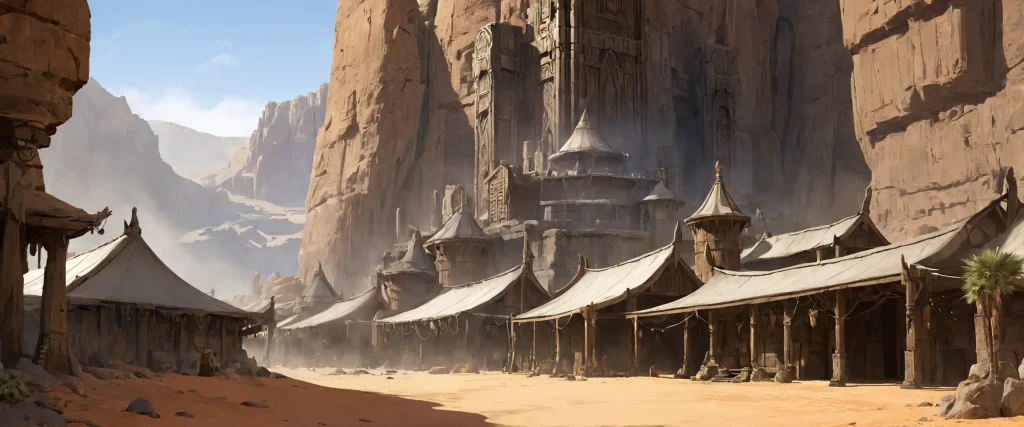
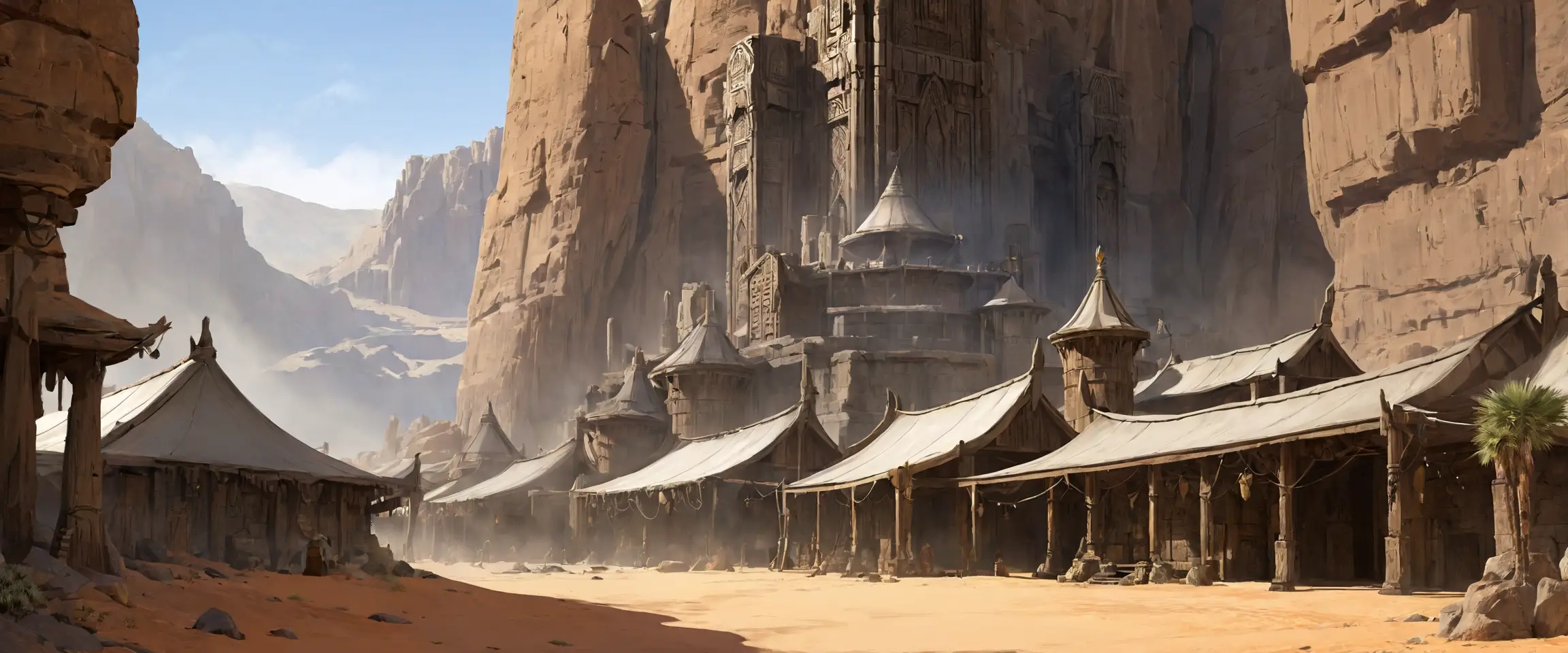
    The Bardasi existed to test those assumptions, to strain them without breaking them, to learn where honor bent and where it snapped. Their caravans carried salt, dyes, metals, manuscripts, and spices, but these were incidental. What they truly transported was Jantaran order, compressed into custom, etiquette, contract, and silence.

    Children entrusted to the Bardasi were not treated as hostages, nor as guests. They were apprentices in worldview. A youth traveling under a Bardasi seal was stripped of birth-rank the moment they crossed into the caravan’s authority. A prince was addressed as cub. A merchant’s daughter carried the same burdens as a shepherd’s son.

    The jackals believed hierarchy was real but situational, and nowhere was this enforced more ruthlessly than on the road. The youths learned accounts by firelight, languages by insult and correction, and ethics by observing what happened when bargains were honored, broken, or renegotiated under threat. No lesson was explained that could be demonstrated. No rule was taught that could not be violated at cost.

    The Bardasi worldview balanced profit with restraint not out of kindness, but out of long calculation. Elder Jantara had already discovered what later jackal regimes forgot: that maximum extraction invites maximum retaliation. A Bardasi caravan never emptied a market. It never humiliated a local lord by overpaying. It never revealed full inventories.

    They practiced deliberate incompleteness, leaving value on the table as proof of confidence. This cultivated dependence without resentment, a subtle art neighboring realms mistook for generosity. It was neither. It was dominance practiced quietly, the way a blade dominates a throat without cutting.

    Civic duty, for the Bardasi, was inseparable from commerce. Every contract was archived. Every insult was recorded. Every favor was remembered longer than a grudge. The Bardasi carried scrolls not merely of trade, but of precedent.

    When a dispute arose between foreign houses, a Bardasi could often resolve it by unrolling a record of what that same bloodline had agreed to generations earlier, under different banners, in a different land. This was the true source of their authority. They did not threaten armies. They threatened memory. And memory, in a world of short-lived rulers and shifting borders, was power no steel could contest.


    Teachers of Philosophy & Civilization

    Within the Bardasi caste, instruction was not an adjunct to trade but one of its primary instruments. The caravans were universities in motion, and the teachers who walked among them were neither tutors nor caretakers, but custodians of formation.

    A youth assigned to a Bardasi instructor did not merely accompany the caravan; they were absorbed into its internal discipline.

    Within Jantaran society such students were treated well, but never indulged. Comfort was permitted only insofar as it did not dull perception.

    Respect was granted, but never deference.A student’s value lay not in who they were, but in how quickly they learned to see.

    Beyond the borders of the Jantaran Union, the status of these students changed markedly. They were no longer merely apprentices but living collateral, entrusted to the caravan under conditions approaching ritual sanctity. Reputable caravan lords and merchant-kings—those with the wealth, stability, and standing to bear such responsibility—accepted them as one might accept custody of sacred gems. They were housed deep within the safest folds of the caravan, protected not only by guards but by reputation itself. To harm a Bardasi student was to declare oneself unfit for future trade, memory, or record. In this way, whole trade networks became strange, rolling academies of coin and wisdom, bound together by the shared understanding that knowledge outweighed plunder.

    The teachers themselves were carefully chosen. Not for warmth, nor for gentleness, but for evenness. A Bardasi instructor was expected to speak to youth without softening truth, to correct without humiliating, to permit failure without allowing collapse. They were often individuals who had mastered restraint until it became instinct. Their authority came not from volume or severity, but from consistency. Students learned quickly that these jackals did not lie, did not bluff, and did not repeat themselves. A correction given once was never given again. The cost of misunderstanding was borne by the student alone.


    Lessons in Matters of Consequence

    Pedagogically, the Bardasi rejected abstraction. A lesson was valid only if it could be tested on the road. Arithmetic was taught through loss and gain. Language through insult, negotiation, and apology. Ethics through exposure to consequence. A teacher might allow a student to misprice a good, offend a local official, or misjudge a rival merchant—so long as the error did not endanger the caravan as a whole. The resulting damage, whether economic or social, was never repaired on the student’s behalf. It was observed, recorded, and addressed later, often days after the event, when emotion had cooled and memory had sharpened.


    A Hierarchy of Merchant Scholars

    Within the Bardasi hierarchy, teacher was a tiered position, difficult to attain and not lightly bestowed. One did not become a teacher merely by age or experience, but by surviving review.

    Teachers were evaluated by their students’ later conduct, not by affection or loyalty. Above them stood professors, responsible not for instruction but for doctrine—the articulation of Jantaran commercial philosophy across generations.

    Above them again were adjudicators, empowered to resolve disputes between Bardasi, students, and foreign authorities alike, often with rulings that carried weight across borders. At the summit stood the civil proclamators, rare figures whose role was not to teach individuals, but to formalize Jantaran position in moments of crisis, transition, or foundational accord.

    This structure ensured that the Bardasi did not merely produce clever traders, but shaped minds capable of operating without homeland, without sentiment, and without illusion. The student who completed such an apprenticeship did not return home wiser in the comforting sense. They returned sharper, quieter, and harder to deceive.

    That other realms once accepted this transformation—once entrusted their offspring to jackal hands knowing they would not come back the same—is not a curiosity of the past. It is the measure of what Elder Jantara once was.

    That such trust no longer exists is not mystery.

    It is judgment.


    The History of Jantara

  • The Bardasi

    The Bardasi

    Bardasi or Baru’Audahsi;

    Meaning “Teacher of ‘Philosophy” & “Civilization”‘
    in Elder Jantaran Common

    The Jantaran Bardasi were not merely merchants, nor philosophers in the later, toothless sense that the word acquired after the fall. They were a caste, formally trained, ritually bound, and socially insulated, whose function was to move between realms without ever belonging to them.

    To be Bardasi was to be trusted precisely because one was never fully at home anywhere. Elder Jantara understood something most civilizations learn only after collapse: that trade is not the exchange of goods, but the exchange of assumptions. The Bardasi existed to test those assumptions, to strain them without breaking them, to learn where honor bent and where it snapped. Their caravans carried salt, dyes, metals, manuscripts, and spices, but these were incidental. What they truly transported was Jantaran order, compressed into custom, etiquette, contract, and silence.

    Children entrusted to the Bardasi were not treated as hostages, nor as guests. They were apprentices in worldview. A youth traveling under a Bardasi seal was stripped of birth-rank the moment they crossed into the caravan’s authority. A prince was addressed as cub. A merchant’s daughter carried the same burdens as a shepherd’s son.

    The jackals believed hierarchy was real but situational, and nowhere was this enforced more ruthlessly than on the road. The youths learned accounts by firelight, languages by insult and correction, and ethics by observing what happened when bargains were honored, broken, or renegotiated under threat. No lesson was explained that could be demonstrated. No rule was taught that could not be violated at cost.

    The Bardasi worldview balanced profit with restraint not out of kindness, but out of long calculation. Elder Jantara had already discovered what later jackal regimes forgot: that maximum extraction invites maximum retaliation. A Bardasi caravan never emptied a market. It never humiliated a local lord by overpaying. It never revealed full inventories.

    They practiced deliberate incompleteness, leaving value on the table as proof of confidence. This cultivated dependence without resentment, a subtle art neighboring realms mistook for generosity. It was neither. It was dominance practiced quietly, the way a blade dominates a throat without cutting.

    Civic duty, for the Bardasi, was inseparable from commerce. Every contract was archived. Every insult was recorded. Every favor was remembered longer than a grudge. The Bardasi carried scrolls not merely of trade, but of precedent.

    When a dispute arose between foreign houses, a Bardasi could often resolve it by unrolling a record of what that same bloodline had agreed to generations earlier, under different banners, in a different land. This was the true source of their authority. They did not threaten armies. They threatened memory. And memory, in a world of short-lived rulers and shifting borders, was power no steel could contest.


    The Teachings of The Bardasi


    The History of Jantara

  • The Rise of Bantos

    The Rise of Bantos

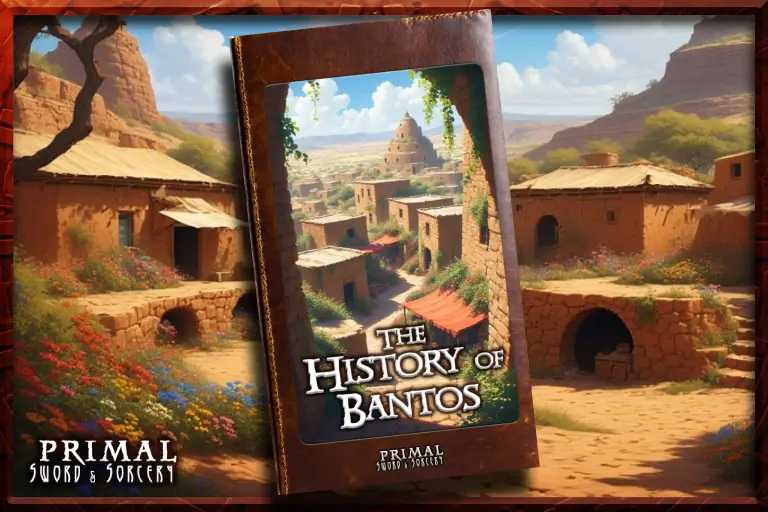
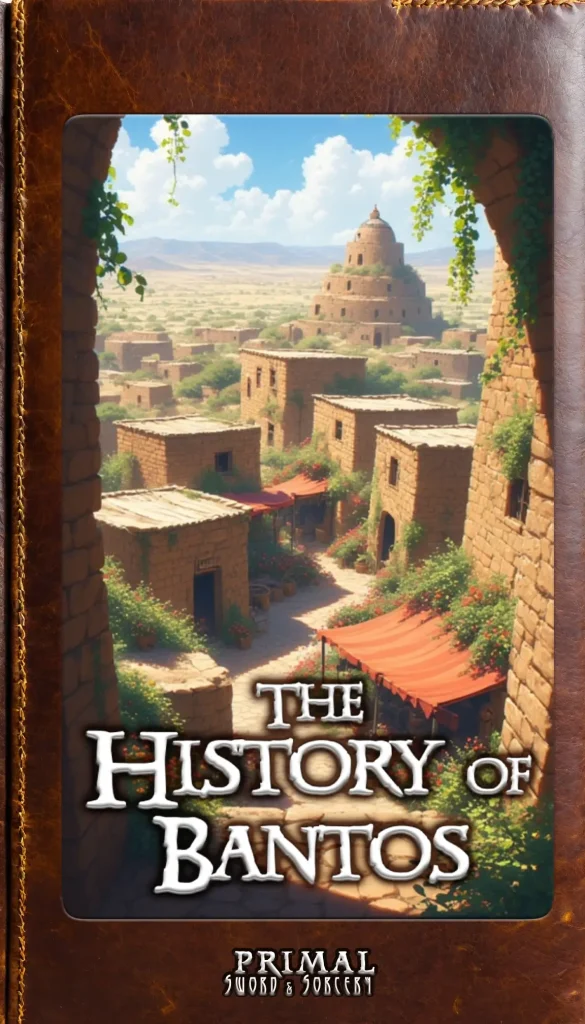
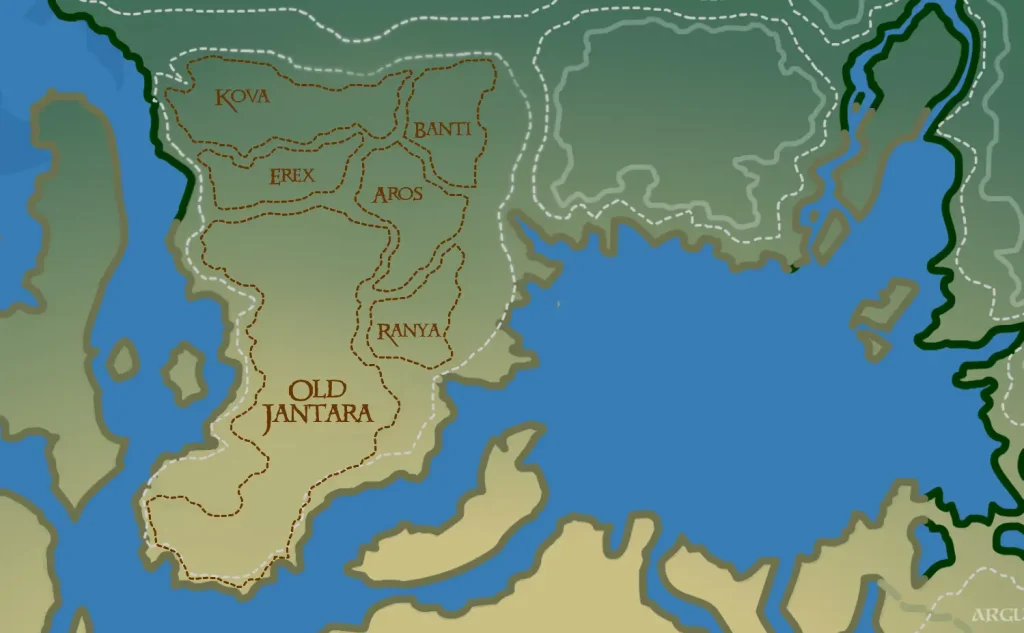
    Bantos did not wait for revolution to succeed elsewhere—it moved first. As the jackal order broke, the folk of Banti struck south, seizing the borderlands even before the old regime fully collapsed. Banti itself, hollowed by corruption and famine, fell in a matter of hours—its jackal rulers slaughtered almost to a one, their citadels emptied by their own flight and the ruthless efficiency of the rebels. Couriers and riders from the first outbreak at Aros had already crossed into Izhura, rallying kin and allies along the border before the first day’s violence had ended.

    The next weeks saw the region transformed. Fortifications sprang up overnight, not only by local hands but with open support: Allies in Elder Rusalon furnished weapons and coin, Izhura lent horses and muscle. These debts have never been forgotten. To this day, Bantos comes to the aid of both the strongholds of Elder Rusalon and crosses into Izhura with formal blessing when the old banners are called—by land or by sea.

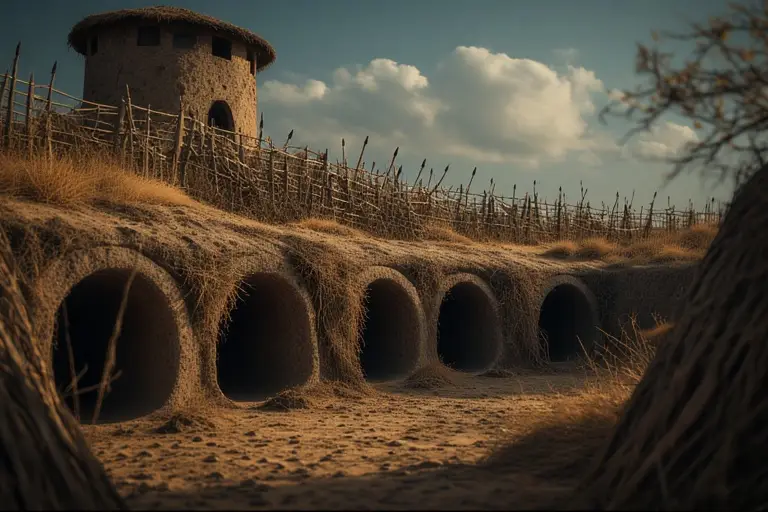
    While civil war consumed the streets of the Jantaran capital, the rebellion swept steadily south. By the time the dogfolk arrived at the heart of Old Jantara, the city was already a slaughterhouse. They burned it to the ground, and—significantly—did not build anew atop its bones. The site was left empty, its ruins erased by time and disuse. Instead, the similarly named Janta remained hidden, central to the new Bantos but never permitted to become a monument to old power.

    The first capital rose at Calbara, in old Banti, but after a century the seat of power shifted to the center of the realm for practical reasons. Expansion continued steadily southward. In time, Ajong began to rival Tar’Rypa for dominance, each city staking a claim to greatness: Tar’Rypa insisted it remained the spiritual heart of the land, while Ajong’s boosters argued that real civilization required a city folk would actually travel to.


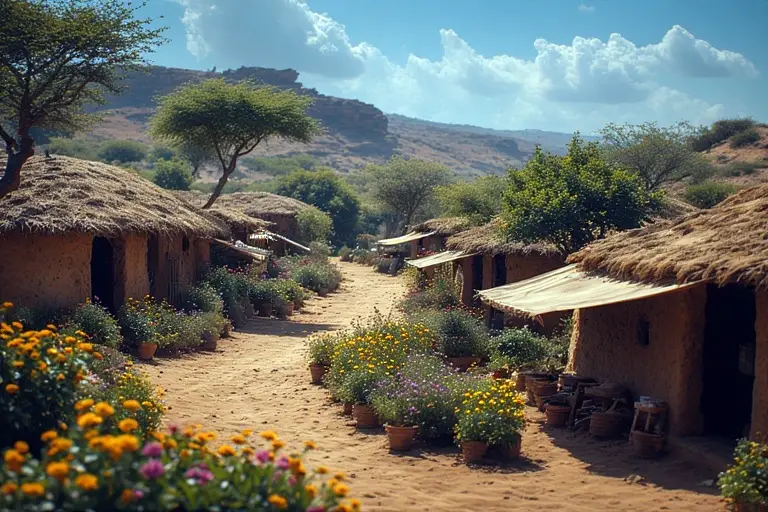
    Bantos today stands as a tightly interwoven republic of three major city-states: Calbara, Tar’Rypa, and Banzel. with Ajong being a newly integrated city-state of ourland origins. There is no king. Rule falls to an elected council: six members in peacetime, nine in wartime, and up to twelve when including foreign advisors. The capital remains in Tar’Rypa by law, though rivalry with Ajong is ongoing. Currency is silver for standard trade, copper and mead by the barrel for local exchange, and bacon—five strips to the pack, clean-wrapped—for daily barter.

    Laws are as direct as the region’s history:

    • Slavery is illegal.
    • Slavers are hanged.
    • Trials are mandatory, though justice is swift.
    • The army is volunteer-only; there has never been conscription.
    • Usury is forbidden.
    • The council is fair, but makes mistakes.

    There are no city walls—only the “Bantos Wall,” meaning the militia lines at:

    • Calbara in the north or
    • Ajong and Banzel in the south.

    A vital warning stands at every border: “Do not go to Nyakava.” This outland city, isolated on a marsh spire south of Bantos, is notorious as a haven for traffickers and reavers. Those who flee toward Bantos seeking freedom are told plainly: escape means Bantos, not Nyakava. Those unlucky enough to fall into Nyakava’s grasp may find themselves lost forever, or sold back to the slavers and bandits of Kartonga—often just a day’s journey from safety, and a lifetime from rescue.

    Bantos did not erase the scars of its past. It built its law and customs on the memory of oppression, the debts of alliance, and the lessons of a rebellion that left no monument but freedom itself. Its cities still rival one another, its council still argues, but beneath it all is the grim pride of a people who survived ruin, refused tyranny, and never forgot who bought their first dawn.


    Related

    • Bantos
    • The Jackalands of Yorozh
    • New Jantara
  • The Fall of Jantara

    The Fall of Jantara

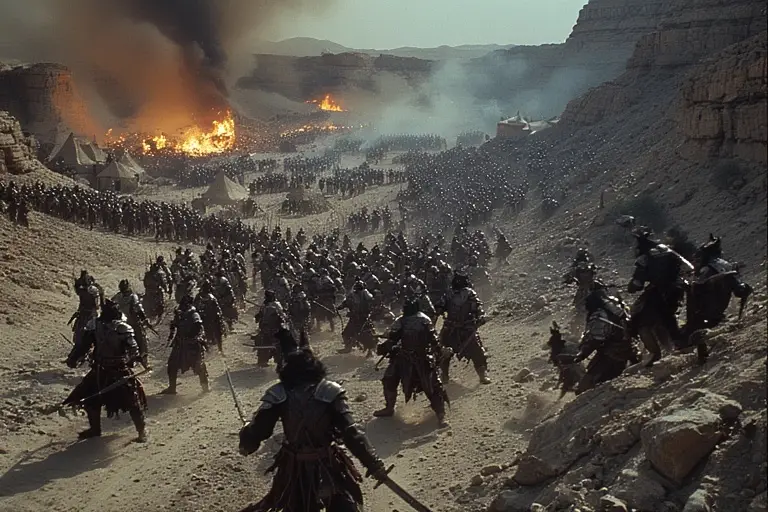
    After their rout from the heartlands, the jackals were not butchered, but they were expelled with totality. Small holdouts were crushed or run off; Bantos tolerated no enclaves, no survivors to sow the seeds of return. The few who made it south found no sanctuary. Pushed across the crossing to the isle of Nykava, they were met not with welcome but massacre—Nykava’s rulers made sport and example of them, cutting down any who thought to dig in, driving the remainder further still.

    Those who survived that passage staggered on, only to be pushed to the edges of the Yorozhian desert—a region already infamous as a screaming hell of sand, starvation, and predation. There, the jackals stagnated, their numbers withering to madness, disease, and despair. They found themselves unwelcome in every neighboring realm, haunted by their own extinction and ruled by petty tribal lords—each one a pale shadow of the weakest old Jantaran slavers.

    Bantos made a ritual of hanging any jackal caught crossing back—never a mistake, never a wrongful execution. The line between jackal and “black dog of civilization” was never blurred. Bantos’ scouts and marshals took pride in it, and the certainty of the policy sent a message to all who might doubt the resolve of the new order.

    The fate of the Yorozh jackals was fitting in the eyes of those who had suffered under them. In Kartonga and the Varduun wastes, the jackal outcasts became sport and prey—a living warning. Kartonga’s cruelest found joy in hunting them for bounty or amusement. Varduun’s arenas turned their suffering into entertainment, pitting the starved jackals against monsters for the pleasure of their most sadistic enemies. Those not slain outright found only madness in the lotus haze, their bodies consumed by the same vultureworms and hyena-born curses their ancestors had once spread. In the end, it hardly mattered if the jackals fell to monsters, disease, or to one another. The world no longer cared.

    The average jackal knew the truth: extinction was not a possibility, it was a sentence already half-executed. They existed only as a memory of what they had lost, and as prey for the very races and beasts they once despised.

    The jackals themselves speak of the past in low tones. They once possessed a realm twice the size of what now lies beneath their feet, its southern half fertile and rich with pasture. But they built nothing that endured. Their towns were camps, their strongholds carved from rock and sand, their wealth stored in caravans that never stopped moving. When the war came, there were no walls to hold, no fields to feed them, no foundries to arm their sons.

    The dogs came with iron, timber, and a will to settle. The jackals had only teeth and pride. Their defeat was absolute. The southern half of their world—the heart of their domain—became the Doglands, the single greatest territorial loss of any people in Zhuru’s postwar age. It was not simply a shift of borders; it was a replacement of civilizations. Every city that stands there now was raised by dogfolk, brick upon brick, on jackal graves.

    The canals that run from the highlands bear Doglord names. The shrines, the market towers, even the roads—none are of jackal make. If the jackals were to reclaim what was theirs, they would inherit only the monuments of their conquerors. To restore their own culture, they would have to destroy everything the dogs have built.

    This is the curse of the Jackalands: a land they cannot reclaim without erasing the only structures that could sustain them. They lack the numbers, the beasts of burden, the ironworks, and the sheer labor power to rebuild what war and time erased. A full generation has grown since their last serious campaign. Those born now know no homeland beyond the sand. They dwell in ruins that predate them, carving out a thin existence along the northern marches where the soil begins to fail and the wind carries the dust of Kartonga.