Category: Short Stories

  • “A Decadent Bargain”

    “A Decadent Bargain”

    “East of Kartonga, the so-called border with Varduun is a fiction, an absence of warning, law, or meaningful transition. The Kartongan wastes, for all their hazards; swaggering slavers, bravos with naked steel, the constant commerce of suffering, are still lands of barter and bravado, ruled by appetite but anchored in something resembling a code. Varduun is the antithesis. There is no frontier, no fort, no marker or ancient stone to signal entry into the Hyena Lands. One stumbles across, or is taken across, and the realization comes too late: all rules, even those of predation, become unreliable.

    In the wastes, a lion may keep his sword sharp, his mind keener, and negotiate his way out of trouble or into power, but these old games die in Varduun. The hyenas eat everything—body, mind, and custom. Some bands are slavers, trading wretched lives to whatever kingdom or caravan will pay; others are feral packs, utterly mad, snapping up even their own kin. Some are simply monstrous: sick with parasites, flesh warped, drooling, cackling, and yet keen enough to sense the scent of an outsider, to know how to bait and break a traveler. There is no shortage of fresh horrors in Varduun. Hyenas rut and feast without conscience or law, their alliances shifting, their minds as fractured as their bodies. Nothing survives long that is not hyena, and even that is no certainty.

    The catastrophe is not just ecological but spiritual. No one warns you. No post stands, no trader utters a caution, no scent changes in the wind. The hyenas know, and they wait. Kartonga knows, and does not care. For any lion, indeed, for any outsider, caught on hyena ground, there is only one wisdom: stay armed, keep poison handy, and pray you are never taken alive. To fall into their claws is to be remade as prey, as plaything, or simply as meat for the next sunrise. The only paradise east of the wastes is the one you do not enter, and the only warning is that there are no warnings at all.”

    —Travel in the Kartonga


    The fire was coaxed low, a red eye half-lidded with ash. Beyond it, the Zheru grasslands stretched in shadow—not yet the hyena city-states, but closer than lions liked to be. The jungle beyond listened. The jungle always listened.

    Tull groaned, body tensing as he emptied himself into the warmth of a most willing lioness. She arched beneath him, coins clattering in her braids, mouth parted in a voiceless cry. For a long heartbeat, the fire’s breath seemed to rise with his, the whole clearing pulsing in rhythm, until he rolled off with a satisfied grunt. His seed trickled down her thigh, catching the glow. She laughed low in her throat—smug, satisfied, a queen paid in full.

    Next to them, a second lioness sprawled on her side, bosom heavy, paw stroking lazily across her companion’s belly, as if to remind her: the bargain had been honored.

    Tull lay between them, chest heaving, mane damp with sweat, the perfume of both females clinging to him like incense. He wore no coins. He wore the night and a grin, softened by fatigue.

    The first lioness crawled slow between his thighs and lapped the trickling seed from his shaft, wrapping her lips around his girth and sucking, unwilling to waste a drop.

    They were lionesses of the Southern courts—vast pale-gold manes braided with stones and coin, chiming as they moved. Their hides glistened with oil. Their breasts rose and fell in smug unison. They were idols, poured and polished—and tonight, they sprawled victorious beside the barbarian who had carried them here.

    The wineskin drifted across his chest. One queen drank, lips wet, then tipped it to her sister, who swallowed and let the kohl at her lashes smudge into a wicked frame. They giggled softly, careless, too full of themselves to hear the silence pressing close beyond the fire.

    “We bought well,” murmured the queen with the heavier braids. She smoothed her companion’s mane and kissed it into place. “Do you feel it? How the world grows smaller when a strong male sleeps in reach?”

    Her companion, curvier, bit her lip and glanced toward the dark where grass met trees. “I heard hyenas. They follow laughter.”

    “Hyenas always call,” the first said, still slurping greedily at his post-coital dripping. “They call for scraps. We are not scraps.”

    Tull chuckled without opening his eyes. His broad hand slid across a waist and stayed there—heavy, warding. “No pack dares my camp,” he said, voice blurred with fatigue and pride. “Ask the vultures at the river raid.”

    The fretful queen shivered but stayed close, tracing the scars across his ribs as if they might answer for her.

    Coins were tangled in their manes, a few scattered across the pallet like bright seeds after the storm of their rutting. The queens purred, teasing one another with indulgent little touches. One stroked his balls absently, squeezing them with lazy ownership. The other leaned forward, mane spilling, and kissed his sack, while her sister suckled the head of his cock—tongue swirling with wet, playful greed that made him grunt even as he pretended to doze. They laughed and traded places, taking turns like it was a game.

    “Tomorrow,” the fretful one murmured, lifting her head long enough to break the spell. “We’ll be on the road. If we’re quiet, the jungle will forget us.”

    Tull cracked one eye, then closed it again, smirking. “When we wake, you’ll forget shrines and remember gratitude. The road waits for a proper farewell.”

    They both laughed, coins chiming, and bent back to him. One kissed his chest, bosom pressed against him, lips hungry. The other straddled him boldly—thighs slick, braids whispering—as she began to ride him with slow, teasing patience. Their giggles turned to purrs, to sighs, to the unhurried rhythm of females who had already taken what they wanted once and meant to take more.

    A twig clicked once somewhere beyond the fire.

    The fretful queen’s ear flicked, but her body betrayed her with a moan as Tull’s hands gripped her hips and pulled her down harder. The sound poured away like water into soil. She let herself be kissed back into silence.

    Coins chimed in quieter voices, gossiping over the contest of queens competing for the same spoils. They kissed each other for the taste of what they had taken, pressed their breasts against his chest, laughed into his mouth, then bent lower again, sharing him without shame. They licked wine from each other’s lips, licked him as well, and let the night spin around their careless indulgence.

    The deerskin creaked. Bangles rattled. The fire breathed in. The fire breathed out.

    Tull rolled back atop the second queen and began to thrust again.


    Wine circled again. Lips drank. Then lips drank from lips. They moved in long repeated shapes: breath, touch, hush; breath, touch, hush.

    At last the fretful one softened, her vigilance melting into something gentler. She studied Tull’s face—the tiredness at the corners of his eyes, the stubborn humor tugging at his mouth, the shadow of wounds twitching across his brow. She smoothed his mane with the reverence of a priest anointing a victor.

    “Bought well,” she whispered, not to be heard.

    Somewhere beyond, something padded with the care that makes no sound at all. A bough sighed. The listening changed tone, the way a hall does when a hidden door swings open.

    Court-taught queens obeyed their lessons: ignore what does not announce itself. They let their eyes close—smug and sated.

    Tull’s hand sagged across a waist, twitching once near the blade within reach. He was warm. He was tired. He had been fed with wine, flattered with laughter, stroked by two perfumed females who had paid for his strength and taken their due twice over.

    Even a wary male drinks stillness when it is offered.

    He drank.

    Coins settled. Wine breathed. The embers turned. The vines hung like banners without wind. The trunks stood like pillars without temple.

    The jungle kept listening.

    It is very good at that.


    The fire was a carcass of embers when the queens stirred. Their braided manes clinked with the tired music of coins as they shifted, stretching against the furs, breasts heavy with the drowse of sleep. Pale light crept into the clearing in thin blades, painting the hides of the two lionesses as if carved from dusk-gold.

    Between them lay Tull, bulk sprawled lazily, mane mussed, chest rising and falling with slow, ponderous rhythm. His warmth still anchored them to the belief that no harm could come while his shadow was theirs.

    The first queen yawned, a regal cat, lashes heavy, and pressed her bosom against his chest. Her paw wandered down without thought, brushing the old familiar prize she expected to find. It was there. Her lips curved in smug satisfaction. She nudged her companion awake with a sly look: See? Even dawn bends to us.

    The second groaned softly but obeyed, sliding closer, licking lazily at Tull’s chest before her hand joined the first’s. The air thickened with the sweet musk of their indulgence. They giggled, they kissed, whispering like conspirators about how gratitude must be shown once more before the day’s march.

    Tull did not speak.

    He was a brute of action, not chatter. His silence was power—the silence of a lion who knew the world quaked at his presence.

    They caressed him regardless, murmuring court-teases, half-mocking, half-reverent. Their tongues trailed across his skin. Their ornaments rattled. Their hips shifted with the instinctive restlessness of females who knew that the body was both gift and weapon.

    The first queen bent, her mane falling forward, lips brushing lower, trailing kisses like a worship path. She lingered—lips parting, braids swaying. Her black mouth gleamed against his pale heat. She hummed, pleased with her own craft.

    The second watched, thighs pressing together, hunger stirring. The fire caught the moisture of her lips and made them shine. She shoved forward, eager, jealous, pressing her companion aside to taste what was hers by right of the bargain.

    The first swatted at her shoulder in protest. Their laughter rose again, soft and shameless.

    Then the second queen’s eyes flicked up. Just for a moment.

    But something in his face made her breath hitch. The laughter froze raw in her throat.

    She blinked, as if vision lied.

    Dawn was cruel.

    Her hand lingered on his chest, unsure.

    The first queen looked up too—annoyed at first, then curious.

    They saw it together.

    The grin that had so charmed them was stiff now—a rictus stretched by rigor, lips parted in a soundless snarl. His mane was stiff with clotted dark. And jutting between his eyes—obscene as a crown—was the thick black shaft of a crossbow bolt, sunk so deep the fletching brushed his brow.

    Their warmth curdled into ice.

    The twitch they’d mistaken for virility was just death jerking the last nerves of a carcass.

    The first queen gagged, falling back, braids jangling like funeral bells. The second screamed, hands clawing at her thighs as though she could scrape away what she had just touched—what she had just tasted.

    The corpse lay between them, obscene in its false life, chest still rising on trapped air, cock still iron with the blind stubbornness of death’s last grip.

    The jungle, which had listened all night, laughed back.

    Figures stood at the edge of the firelight—hyenas, lean and painted with war ash. Their yellow eyes gleamed with hunger, with sport. Their teeth shone as they grinned. Their chuckles echoed across the clearing—mocking, triumphant.


    The queens shrieked, manes whipping as they scrambled from the pallet—naked, dripping.

    Their coins and ornaments were no armor now, only bright markers for the hunt.

    They fled into the wastes, bosoms and rumps jiggling with panic.

    Behind them, the hyenas followed laughing, knowing full well:

    What they chased could not be sought.

    And would never escape.

    RELATED

  • Titan of the Ornithane Halls

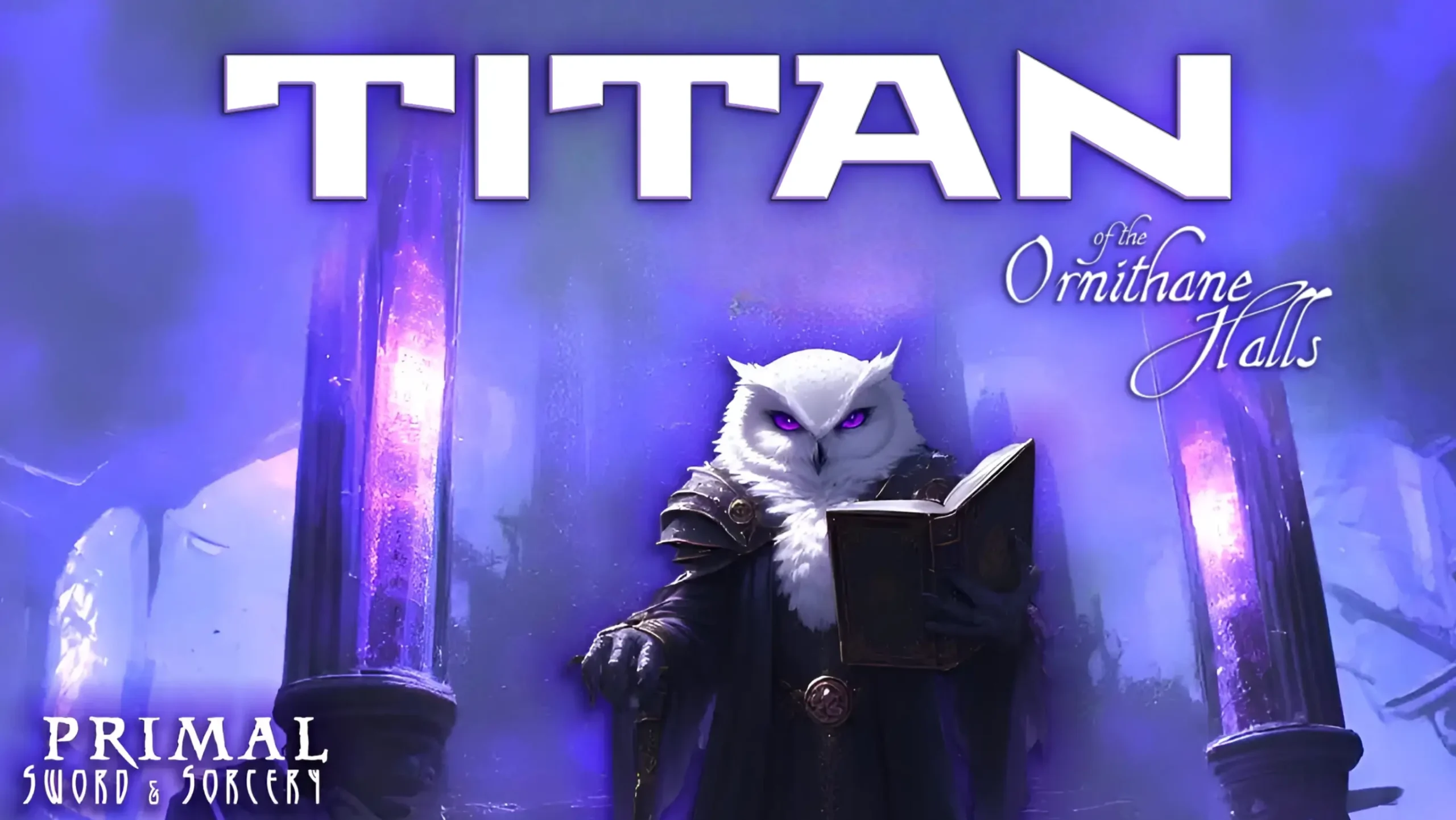
    Titan of the Ornithane Halls

    The crest of the Vulsan highlands gave way to the ice-wraithing peaks of razor white and endless brutal cold, through which a snow leopard girl ran barefoot through the frozen hellscape of northern Vulsa. Though born to the cold, she had never known it like this. The wind flayed her skin raw. Ice bit her pads until blood streaked the stone behind her. Her arms were crossed tight over her bared breast , not from modesty but to shield what little warmth remained.

    Behind her came laughter.

    Rats. Hounds. Masked raccoon handlers. Chains clinked. Knives rang. They had chased her through the night, chained her, broken her, and worse. Now they ran her for sport, calling out between laughs, savoring the way she stumbled and slipped.

    She ran until her lungs burned and her legs shook, until the land itself seemed to end.

    At the crown of a peak she stopped, stunned, sobbing, and saw it.

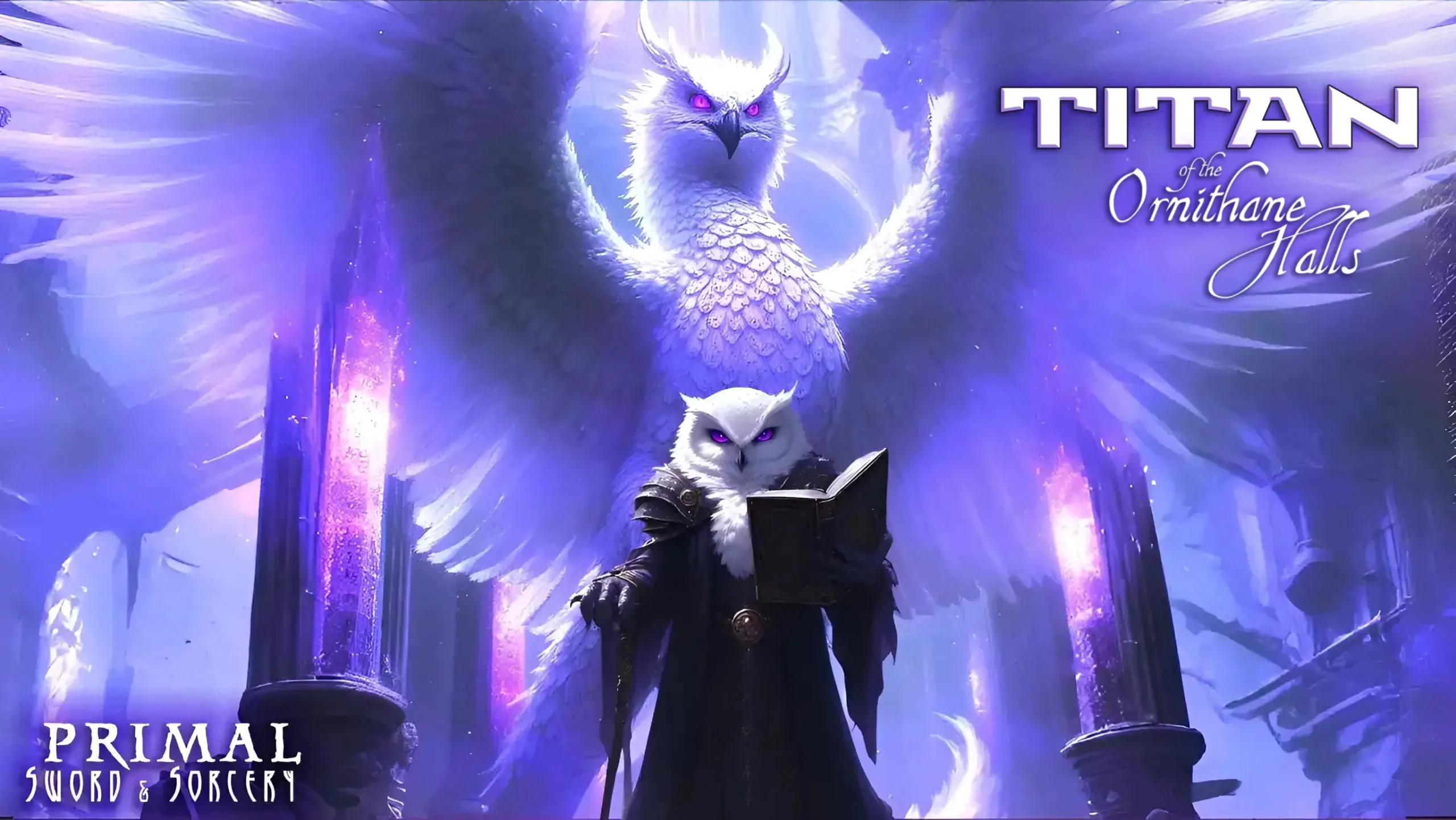
    A great tower of shimmering crystal stood there, impossibly tall, its facets catching moonlight like frozen fire. At its base, before doors larger than a temple gate, stood an old owl. He tottered. He muttered. He fumbled with a ring of keys, squinting as though locked out of his own home.

    She had nowhere else to go.

    She staggered to him, trembling, violated, desperate, and fell to her knees.
    “Sanctuary, sir,” she cried. “Please.”

    The old owl cocked his head.
    “Sanctuary?” he said mildly. “Oh no, not here. Far too cluttered, methinks.”

    He did not seem threatened. He did not seem to register her terror at all.

    “They’re coming,” she sobbed. “Slavers. My tribe is gone. I’m alone. They want to—”
    Her voice broke. She could not finish.

    The owl blinked and peered past her, into the snow and empty wind.
    “I see no one.”

    “They’re coming,” she said again, voice cracking. “Please.”

    “Well, if you’re not in need of a book,” he replied, distracted, “I’m afraid I cannot help you with—oh feathers, I’m terribly sorry, what did you say you were looking for in the index?”

    “No,” she cried. “Sanctuary. Please. I beg you.”

    “ ‘No Sanctuary,’ ” the owl murmured thoughtfully. “Hmm. Can’t say I’ve heard of that one. Sounds like a dire yarn.”

    Behind her, laughter carried on the wind.

    The owl leaned closer and whispered, not unkindly,
    “I’m sorry, my dear, but I am only the guardian of this librarium. The sum of all libraries and the Librarium entire. If you have need of a book, there are countless others inside who can help you.”

    She finally understood.

    She turned, and now she could see them—shapes moving fast over the ice, teeth flashing, voices raised.

    “Oh,” she said softly. “I wouldn’t trouble you… for anything but a recommendation.”

    The owl’s face brightened with relief.
    “Ah,” he said. “Why didn’t you say so?”

    The massive doors opened without him touching them, wider than mercy should allow.

    “Top floor,” he said. “Ask for Beatryx of Whondor, the all-seeing—if she hasn’t spotted you already.”
    He wrapped his scarf around her shoulders, covering her shaking body, and ushered her inside as the scoundrels closed in.

    She walked inside, looking back as the doors framed the pack of slavers closing in on the little owl steward, obliviously still chattering away with that knowing smile. He winked at her.
    “Oh,” he added pleasantly, “there is tea and cakes, if you desire—”

    “OLD BIRD!” a voice barked. “You’ve got something that belongs to us!”

    The doors slammed shut.

    The owl turned.

    “If you seek a book request,” he said calmly, “you’ll need to speak with old Julius, and I rather doubt he takes orders barked by riffraff.”

    “Fek off, owlette,” sneered a rat, twirling a hooked knife beneath a vulgar scrap of mustache.

    “We saw her go in,” growled the hound. “Now you bring her out, or we start getting violent.”

    “Oh dear,” the owl said, smacking his lips. “I don’t think that will work.”

    “I’m warning you,” the dog snarled. “Fetch the bitch or we kick in that door, nail her to the floor, Rape her what she’s worth, and burn this place to the ground with you muttering inside. Clear enough?”

    The owl smiled.

    “Perfectly.”

    With a sudden, ear-shattering screech—far louder than anything thrice the size of the old owl could make—he erupted in sheer, irrational defiance. The doors burst open—not outward, but inward, dragged by a force like gravity reversed. Shadows lashed out. Five screams became one.

    An ashen white gust pulled them in. The owl himself was drawn back into the shadows of the hall as though they had all been cast into the bellows of some ornate hell meant to confound both helion and heathen alike.

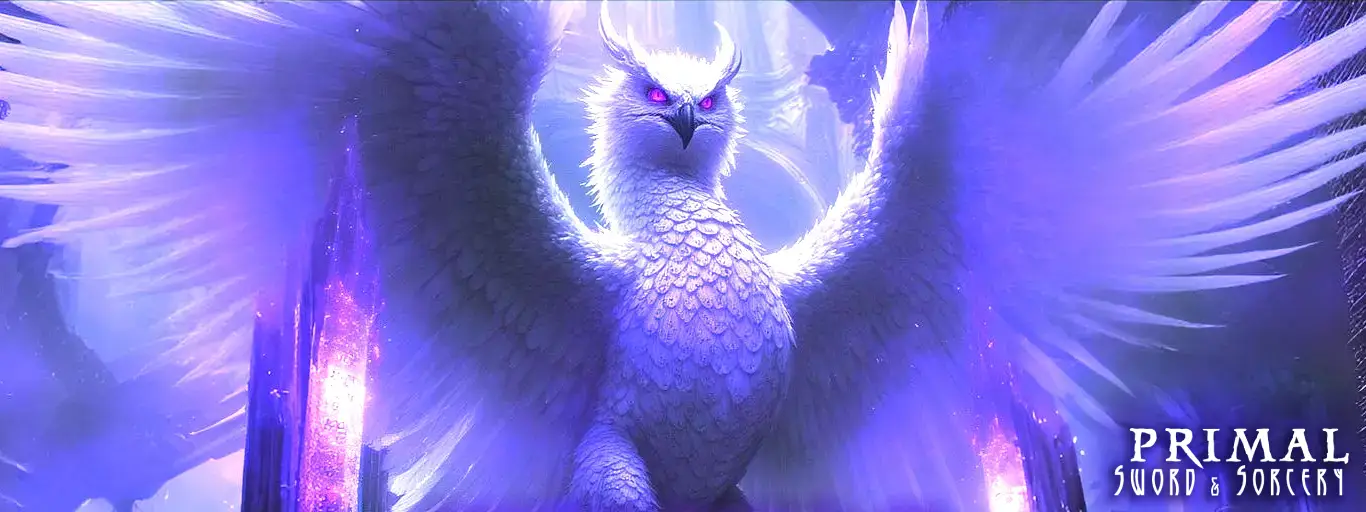
    Then, they saw what had come from somewhere far beyond to join them. In place of the steward now stood a horrible titan of a thing, for where the owl had stood moments before now towered a terror vast enough to dwarf the hall itself: a white dragonbird, horned, feathered, scaled, one eye ruined, the other burning violet with judgment. Its breath pulled the slavers from their feet as if they were dust—a beast known only to pre-cataclysmic lore as a Tytotitanus Voremithadrax.

    A roar shattered the nature of both the situation and reality itself. Where there had been a tottering old owl moments before now stood a terror already towering over them, standing atop the ruin of the largest hound and already swallowing the gurgling half of the other who had been pulled into the massive beast’s mouth when it had breathed them into the shadows of the hall. The rat screamed, and deep inside something snapped and countless ancestors recoiled in terror as the scale of verminous rodent to a beast of an owl matched that all-natural scale of silent predator and moist, shrieking prey.

    His ordeal did not last long; snatched from squealing, the rat was thrown into the air, then caught by the owl-dragon’s massive tongue—snakelike and covered in sharp, writhing, dark red tendrils that hissed with their own hunger—tendrils that sliced, split, silenced, and snapped back into the owl-dragon’s mouth in a second.

    By now, fear had taken the remaining two, but they both tripped on blood. They did not have time to attempt getting back up. A sweep of wings longer than a bridge sliced the boar into four even slabs of armored ham hock, while the wolf—now ended at the knees—shrieked as he was caught in mid-run, his torso crunched and he spat a chest-worth of blood as his head was pulled into the beast’s mouth, eyes darting as his mind raced for solutions that yielded only darkness and digestion most unkind—which I will not trouble you with here.

    From the tower above, the snow leopard girl watched with shaking hands as the doors slammed shut once more.


    Three days later, she left clothed, healed, provisioned, with a map leading her back toward Vulsan civility and far from coastal raiders: and the guardian slept in the loft study beneath a purple fez, tea cooling on a small table beside him.

    The Librarium endured.


  • A Tale of ‘The Bantos Uprising’

    A Tale of ‘The Bantos Uprising’

    There was no music in the Doglands that night, only the wind working through broken shutters, shivering the filth in the alleyways, and the slow splatter of rain against the cracked sign above “Red’s Hot & Mean”—the wind and the years had erased the letters, left only a streak of angry paint and the stink of badger rotgut strong enough to eat the enamel off your teeth. Inside, the tavern was a cave of sweat and sour smoke, sticky with spilled liquor and old fear.

    Sir Petyr of Aros, once of the old order, now just Pete to the drunks and orphans, hunched alone at a corner table, nursing a bottle he could barely afford, his sword at his boot, his name already half-forgotten. A rebel’s night had never been darker. The last rally had broken beneath him like old bone, another butchered band left bleeding in the dusk outside the gates, and the jackals were coming.

    The Barswine had warned as much, he knew. Everyone knew. That was the order of business. Fight back, fail, die trying. Stubborn old ‘Pete’, This one. The only other recognizable fighter in the area was there to guard the Jackals theft through tax, and even he had warned the old dog to sleep it off. “Seek tunnels, get lost, If you can walk the alleys then go, dog.”.

    “Not a chance.”

    Besides, it was too late for that now; They entered with the scent of oil and dust, half a dozen in all, in layered silks already muddy, their teeth bright, their eyes slits. Hacksbar and Vindurga took the lead—nobles by birth, predators by trade, each one bristling with knives, hooks, grenades, a few blackmarket pistols stuck in faded sashes. The room fell silent but for the rain. Aros had no more fighters, no more banners—only Pete, old and out of luck, drinking himself toward legend or oblivion. Hacksbar’s voice was all amusement, dripping with the false gentility of a merchant offering poisoned dates.

    “Sir Pete,” he said, letting the title hang like a noose, “it’s over. You know this. We can gut you here or give you an ending. Choose.”

    On the battered tabletop, they placed a brass cup. Poison, swirling oily and black, the same color as the rain that trickled down from Jantara’s rooftops, the same stink that haunted every ruined alley where the last resistance bled out. Pete watched the cup as if it were a mirror, as if he could see his old self in its surface.

    “Are you a knight?” he asked himself, aloud or not even he could tell. His mind, empty for months, finally answered back—a rasp of laughter, a pulse beneath the scarred ear.

    “No clue,” it said. “Let us find out.”

    He drank. The taste was nothing, just a flicker of rot behind the smoke and badger liquor in his throat. A hush followed, the jackals grinning with cruel expectation. The townsfolk huddled in corners, eyes fixed to their boots, praying not to be noticed, praying not to be next. Pete let his shoulders sag, let his head hang. Then, as if to chase down death itself, he grabbed the nearest bottle of Red’s Hot & Mean, sloshed half of it down his gullet, and felt the world tip. Fire in the gut, poison on the tongue, his heart kicked against his ribs like a dying stallion. But some old fire—the last coal of Aros—caught. He did not fall.

    Instead, he rose.

    There was a hush, then a table kicked aside, and the first jackal’s face split open in a rictus of shock as Pete’s broadsword, snatched from its resting place, crashed across his jaw. The blade was old, notched, broad as a shovel, but still murder in steel. Blood spat across the floor, red and black, and the tavern’s stink turned sharper. Pete was moving—no thought, just rage and the memory of younger days, hands and feet remembering the weight of war. Another jackal lunged, dagger flashing, but Pete’s left hand, still clutching the neck of the badger bottle, drove it into the dog’s teeth with a crunch and a shriek. Glass, blood, and spirits gushed over the table. A third came from behind—too late. Pete’s boot cracked a knee, spun him against the bar, and a second bottle of Hot & Mean, flung with perfect spite, shattered across his snout. The fire caught. Spirits, blood, and spit burned on the wooden counter, and in the sudden guttering light Pete saw Hacksbar closing in, scimitar drawn, eyes gone mean as a pit viper.

    Pete grinned—a broken thing, all jaw and shadow, Townshend’s own sneer born on a mongrel’s muzzle. He ducked the blade, twisted in, and the sword rose in his grip. The old steel was heavy, but Pete’s arms remembered the weight of banners lost, of fields surrendered. The flat of the blade smashed Hacksbar’s wrist, the scimitar dropped, and Pete drove the sword up—hard, pitiless—into the jackal’s groin. Hacksbar howled, white foam at his lips, as Pete shoved him backwards through a shower of glass, up onto the sill, and, with a final curse, pitched him bodily through the window.

    The street beyond was slick and shining. Hacksbar landed hard, bones shattering. He fumbled for his belt, clawing for a grenade—one of the old lion-make types, cobbled from scrap and cruelty—and as he yanked the pin, the wet fuse fizzed. In the next breath, the grenade and Hacksbar became a single red blossom, spraying shards across the cobbles. Two of his lieutenants, racing to help, caught the blast and folded, dying with their master. The crowd outside—silent, watching—staggered back.

    Inside, Vindurga tried to run, but Pete was already there. Poison, liquor, and old hate burned him hollow, but something in his spine kept him upright. He cut Vindurga across the arms, both wrists pinioned to the bar with twin daggers stolen from fallen jackals. The slaver-duke spat curses, writhing, but Pete, half-mad, tore a barstool from its place, swung it overhead, and with a roar drove it through the jackal’s skull, pinning him to a ceiling beam. Blood ran in a lazy spiral down Vindurga’s muzzle, his legs kicking, his eyes already swimming in another world.

    The townsfolk gaped—first in terror, then in awe, then in a strange, half-drunken elation. Pete, now more myth than hound, staggered back, hacking bile and blood onto the floor, the poison and Red’s Hot & Mean fighting for supremacy in his gut. He vomited green-black, dropped to one knee, then forced himself up with a snarl. In the corner, a barkeep whimpered. Pete raised a fist, sword still clutched, voice guttural as thunder. “Well? Who the hell are you?!” The people stared. Then, one by one, the axes and the shovels came out. Someone yelled his name, not “Petyr”, but “Sir Pete,” and the chant caught.

    “Sir Pete! Sir Pete! Sir Pete!” The call grew, swelled, battered the beams, swept through the streets as the news of Hacksbar’s death, Vindurga’s spectacle, and the ruin of the jackal enforcers caught fire. The failed rebellion—the one Pete had fought and lost and wept for—snapped into fury, the dam finally broken. The uprising began not in plan, not in law, not even in hope, but in a burst of tavern violence, an old dog’s last stand, and a moment when every soul in Aros remembered they still had teeth.

    Pete, already sagging, was hustled out the back, body wracked by poison, blood, and the last fumes of his badger liquor. He collapsed in the arms of a pair of healers, who dragged him off as the town exploded in riot and bloodshed. By dawn, the streets were awash with corpses and hope alike, and the jackal banners smoldered atop burning wagons.

    For a week, Pete drifted in fever, neither living nor dead, as the town he’d saved bled and crowned itself in fresh law. He woke once, to find himself swinging a club at raiders who’d tracked him to the healing house, then blacked out again, deeper than ever. When at last he came up for good, the Uprising was over. Calbara was being born in the ashes, and the bard’s scroll—half-written, half-burned—marked the beginning of Bantos, though Pete’s own name was already fading from the pages. He would pass into legend, his deed half-remembered, half-disbelieved, a question ringing out into the blood-soaked dawn.

    Related Media

    “Who Am I?!”

    Behind The Scenes

    ‘The Border War,
    ‘Quest For Identity’
    & ‘Sir Pete’s Uprising’
    Inspired by:
    ‘Who Are You’
    by The Who

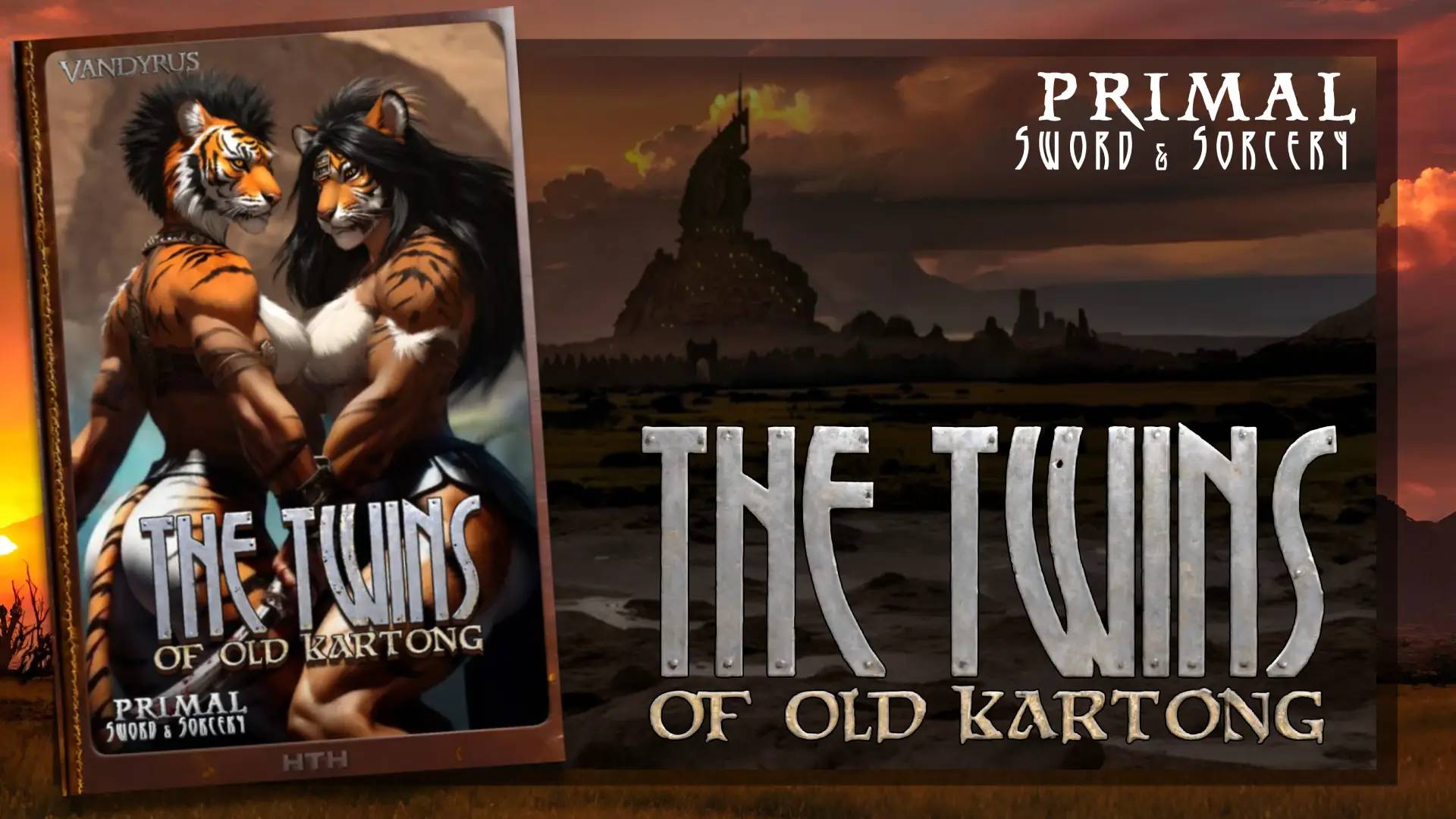
  • The Twins of Old Kartong

    The Twins of Old Kartong

    To view this content, you must be a member of HTH’s Patreon at $10 or more
    Already a qualifying Patreon member? Refresh to access this content.
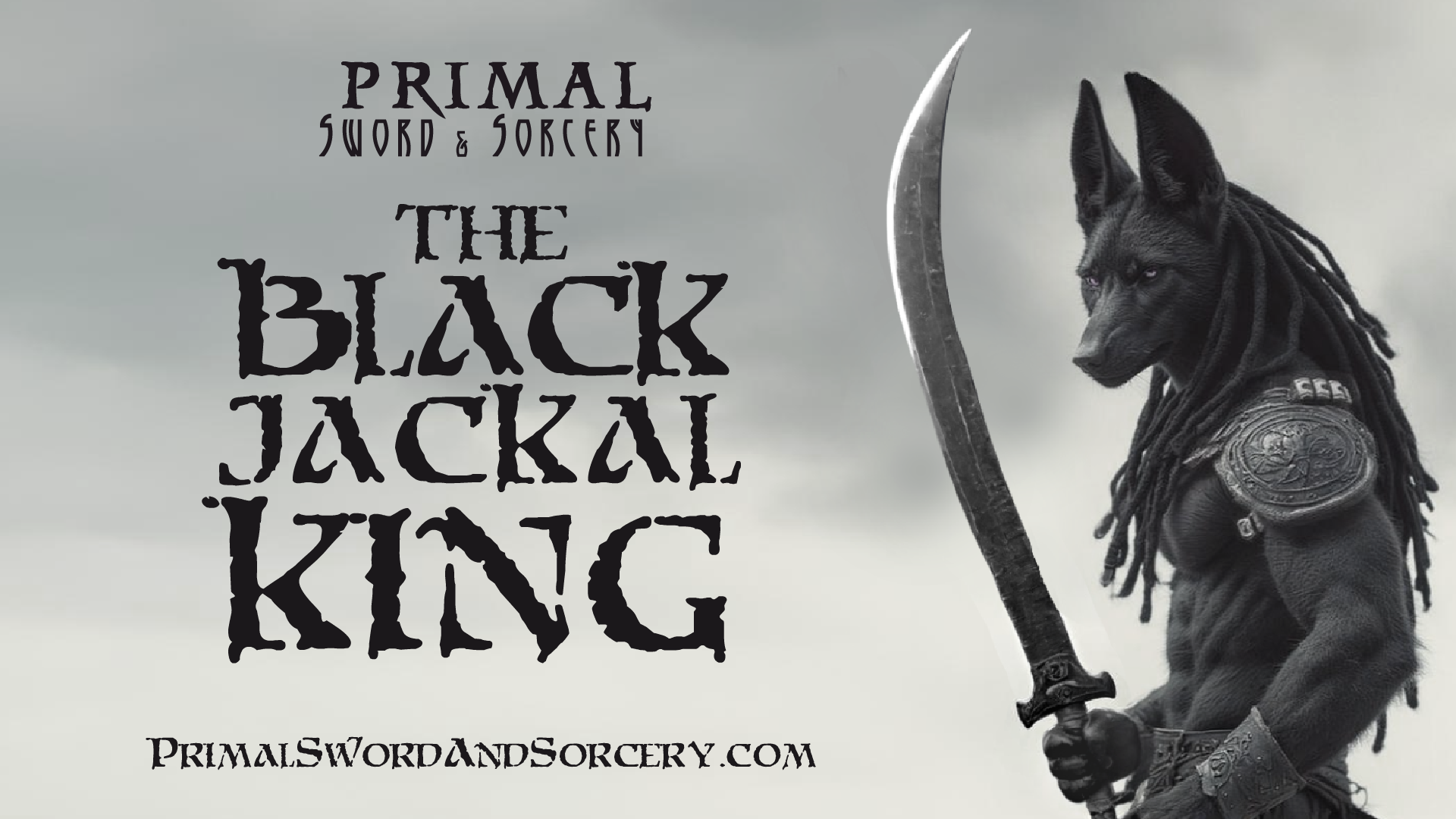
  • Throne of the Jackal King

    Throne of the Jackal King

    To view this content, you must be a member of HTH’s Patreon at $10 or more
    Already a qualifying Patreon member? Refresh to access this content.
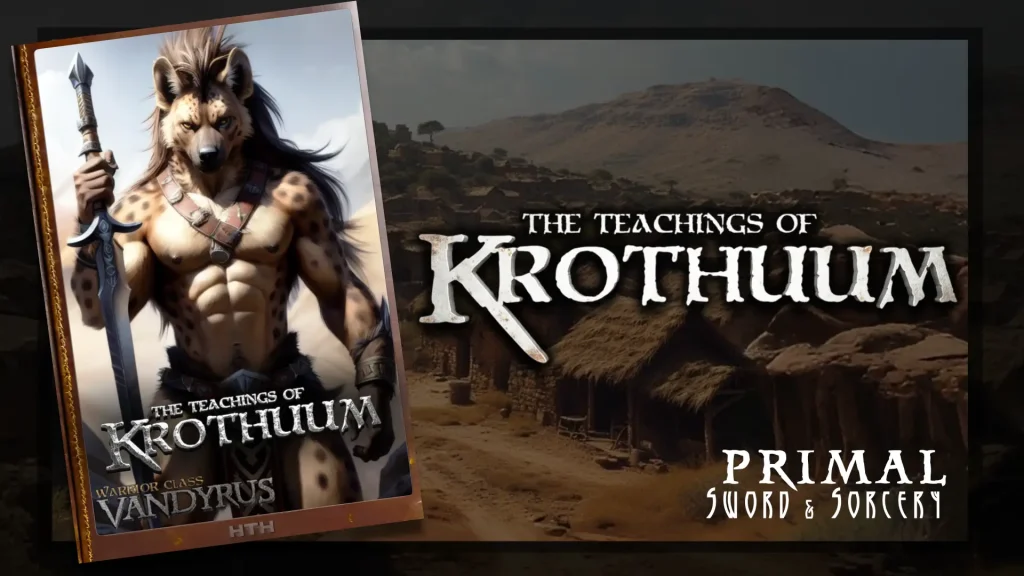
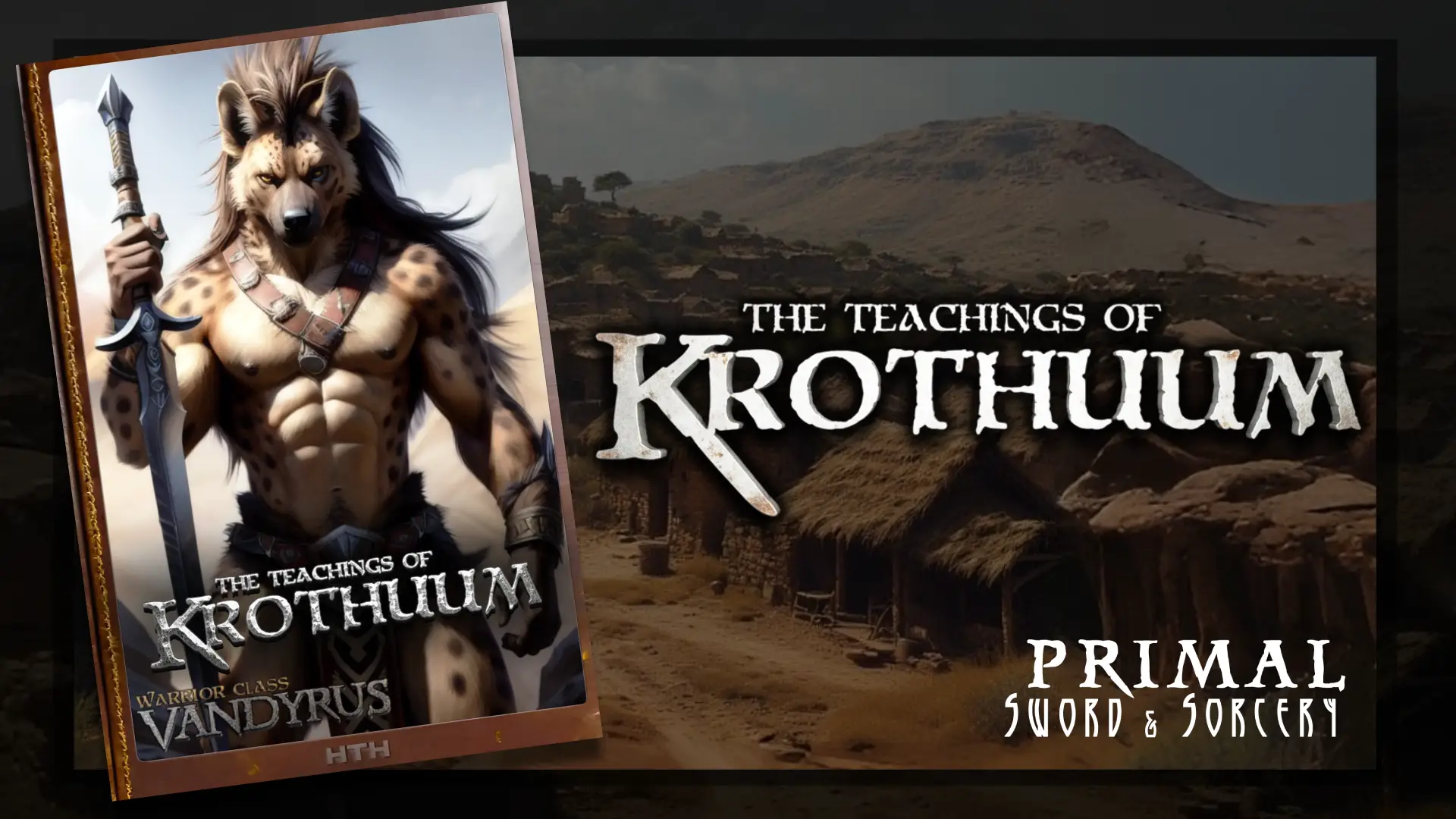
  • The Teachings of Krothuum

    The Teachings of Krothuum

    Krothuum was a scar of stone and dust on the southern grasslands of Zhuru. Its walls were low, cracked things, more a mark of pride than a bulwark, and the gates gaped like broken teeth. Smoke clung above the city, not the holy incense of temples but the choking reek of coal-pits and forges, of fat burning on anvils, of oil dumped into the gutters.

    The city lived on steel and mockery. Every forge was a rival, every hammer-strike a jeer against the smith across the alley. Hyenas laughed at each other across the streets, the cackling rolling through Krothuum like thunder. It was a city that thrived on humiliation — and where shame was remembered longer than blood spilled.

    Into this dust-choked maze strode a she-wolf of the northern tribes, black of pelt, broad of shoulder, and proud of stride. Her amber eyes burned beneath the sweat-clumped locks of her mane, and her arms — thick with the sinew of war — bore scars that spoke of raids across mountains and the razing of caravans. She was not soft like the courtesans of Zarnack, nor sly like the thieves of Kansubar. She was barbarian stock: raw, bold, made for the clash of steel and the bite of blood.

    Yet for all her strength, she had come to Krothuum weakened — stripped not of her coin, but of her sword.

    It had been promised ready at dawn. She had paid for it with gold and a raided caravan’s worth of loot. A northern blade, reforged in the hyena-smith’s coals, tempered for the blood-feast she intended to unleash when she crossed the straits toward Drael. But dawn had passed, then noon, then dusk, and now the day waned while her temper flared.

    She shoved her way through the market, scattering fox-hawkers and goat-wives alike, until she came to the forge of Rathgur the Smith — a thick-shouldered hyena with soot-blackened fur, known for his laugh and his treachery in equal measure. His rivals claimed he spent more time mocking than hammering, yet he never lacked for customers. For in Krothuum, the louder a smith’s laughter, the more certain folk seemed that his steel would not bend.

    The wolf planted her hands on his counter, claws clattering against the iron-rimmed wood.
    “Where is my blade?” she snarled. “You swore it would be ready. You swore it with oath and coin both.”

    Rathgur did not look up at once. He worked the bellows, smoke curling around his muzzle. Only when the forge flared red did he glance at her — a slow, toothy grin spreading across his muzzle.
    “Not here,” he said. His voice was rough, each word dripping with the slothful amusement of one who knows he holds power. “Perhaps you misplaced it.”

    “Misplaced?” Her voice was a growl, low and trembling. “You think me a pup, hyena? You think I forget where I lay my steel?”

    He shrugged, the grin never leaving his muzzle. “Perhaps you forget many things. Where you leave your weapons. Where you leave your coin. Where you leave your legs, after drink and whoring.”

    The forge-hands laughed. A cruel, barking chorus. The wolf’s claws dug into the wood, carving furrows. Pride swelled in her chest, mingling with desperation. Her sword was not just iron — it was her name, her survival, her right to stride as a warrior. Without it, she was no more than a lost bitch wandering a city of jackals.

    And in that desperate moment, her tongue betrayed her.

    “Who,” she spat, her voice sharp enough to cut the smoke, “do I have to rutt with to find my sword!?”

    The words hung in the air like a curse. The forge fell silent, save for the crackle of coals. Hyena ears pricked. Jaws spread in grins. Then the laughter came — harsh, howling, rolling through the smithy until it seemed the very walls shook with it.

    Rathgur’s eyes gleamed. “Ah,” he said, drawing the word like a blade across her pride. “So that is the bargain you offer.”

    The wolf’s face burned beneath her dark fur. She opened her mouth to curse him, to call him heathen, thief, and crook — but the laughter was already binding her, wrapping her in mockery. In Krothuum, a word spoken in desperation was as binding as an oath.

    And Rathgur, hyena that he was, would not let it pass.


    The headboard rattled like a war drum, a cracked plank nailed crooked against the stone wall of Rathgur’s forge-room. Every thrust set it hammering, every laugh of his made it echo louder. The noise carried through the thin walls into the market beyond, so that all of Krothuum’s dust-choked streets could hear the she-wolf’s shame.

    Her claws dug splinters into the board, her amber eyes squeezed shut as sweat matted the fur at her temples. She cursed through clenched teeth, the words breaking apart into gasps and sharp yelps as the hyena’s bulk drove against her. His cock was thick, cruel, stretching her in ways that were no pleasure, only pain. He knew it, and he reveled in it.

    “Bitch,” Rathgur snarled, punctuating the word with a slap across her haunch, the crack of palm to fur echoing like a blacksmith’s strike. “You thought you’d strut in here, north-blood, tossing your pride like coin. You thought you could mock me, eh? Tell me where my steel lies? Ha!”

    His laughter rolled like thunder. His paw closed on her tail, yanking it back as he drove himself deeper, forcing a cry from her throat that no curse could hide. She trembled with fury, with helplessness, with the gnawing ache that each thrust drove into her belly.

    “Curse you!” she spat, though it came out broken, half a whimper, half a growl. “Curse you, hyena cur! Heathen crook—”

    Her voice snapped into a squeal as his thumb shoved rudely into her tailhole, pressing past clenched muscle. Her whole body jolted, shame burning hotter than the coals outside. He barked laughter, the cruel, barking kind that only hyenas could muster, and it shook the rafters.

    Outside, the forge-hands and passersby heard everything. The rhythm of the rattling board, the hyena’s laughter, the wolf’s strangled cries. Krothuum thrived on spectacle, and today’s spectacle was the barbarian bitch who had demanded her sword. Already wagers were whispered, jokes flung back and forth — who would finish first, her pride or his seed.

    She wanted to scream, to thrash, to claw his throat open. Yet the grip on her tail, the weight of his body, the cruel shove of his cock left her pinned and trembling. Her bosom pressed against the splintered board, her thighs shook with the strain of holding herself up. She tried to spit venom, to call him filth, to swear vengeance — but every word was broken by gasps and yelps.

    And worst of all, she could feel her pride crumbling with each thrust. Not arousal — never that — but the bitter, soul-deep regret of a warrior undone. She thought of her sword, her steel, her lifeblood. Without it she was nothing in this city. Without it she could not walk the caravan roads, could not raid, could not fight. Without it she had no power.

    And so she endured. Teeth grit, eyes burning, heart pounding not with lust but with rage and shame. She endured, even as his thumb worked cruelly in her tailhole, even as his palm cracked against her flank again and again, even as he laughed like a jackal feasting.

    “North-blood bitch,” he jeered, his breath hot against her ear. “Regretting your adventures now, eh? Regretting your big mouth? You’ll think twice before you wag your tongue in Krothuum again.”

    His thrusts grew harder, faster, each one shaking the board, each one driving her claws deeper into splinters. Her tail jerked in his grip, her body jolted against his weight. She tried to curse him one last time, but it broke into a strangled yelp as he shoved himself deep and spilled into her, the hot flood of seed sealing her shame.

    He laughed again, louder than ever, the sound rolling out into the street so all could hear. He slapped her haunch once more, as if to mark her, then pulled free. She collapsed against the rattling board, chest heaving, bosom slick with sweat, fury and shame burning her amber eyes.

    And still he laughed.

    “On your feet, bitch,” Rathgur said, buckling his belt as if nothing had happened. “I’ll show you your precious sword.”

    Her breath hissed through her teeth, her pride torn raw. Yet she dragged herself up, tail low, fury trembling in every limb. She needed her sword. She needed it more than she needed her pride.

    And so she followed him, half-dressed, into the daylight of Krothuum, where the crowd was already gathering, already laughing, already hungry for the next stroke of her humiliation.


    The forge-door creaked wide, and daylight cut across the soot and smoke. The she-wolf staggered into the street behind Rathgur, her mane damp with sweat, her chest heaving. Her fur clung to her body where his seed still dripped, her tail limp, her pride raw. She had not bothered to dress, only clutched her loin-wrap against her hips as if to guard what little modesty she had left.

    But modesty was nothing in Krothuum. The laughter had already spread.

    Hyenas lined the alleys, forge-hands leaned from doorways, merchants paused mid-bargain to jeer. Even the mongrels and half-breeds of the market were grinning, for nothing in Krothuum drew a crowd faster than shame. They had heard the board rattle, the wolf squeal, the hyena laugh — and now they saw the proof stumble into the dust.

    “Show me,” she hissed, dragging Rathgur by the arm. Her claws dug into his soot-stained hide. “Show me my blade, you bastard! Now!”

    The hyena only grinned wider, throwing a look to the crowd. His laughter was louder than the forge-bellows. “Aye, I’ll show you. But perhaps you’ll wish I hadn’t.”

    He turned, slow as a priest delivering judgment, and lifted a paw to point across the street.

    There, standing smug in the doorway of his own smithy, was his rival — a thick-armed hyena of equal girth, holding a longsword aloft in one hand. The wolf’s longsword.

    “There you are, wench!” the rival bellowed, his voice carrying over the dust and din. “Your sword’s been ready for hours! And here you are — fucking around like a common whore while I waited!”

    The crowd roared. Hyenas doubled over, their laughter sharp as knives. A pair of foxes howled and slapped each other’s backs. Even the slaves hauling coal grinned as they trudged past.

    The wolf’s face burned hot beneath her fur. She wanted to scream, to deny, to kill. Instead, she turned on Rathgur and struck him hard across the back with the flat of her paw. The blow cracked like a whip, but he only threw his head back and howled with laughter.

    Her rage boiled over. She charged across the street, snatched her sword from the rival’s paw, and lifted it high. Its weight steadied her, its steel cooled her trembling. At last she felt whole again — at last she felt like herself.

    She spun back, amber eyes blazing, and stormed toward Rathgur’s forge with murder written in every stride. The crowd parted, eager to see blood, eager to see the story end in violence. She raised her blade, teeth bared, ready to carve his head from his shoulders—

    —when the heavy door slammed in her face.

    The clang of iron bolts drove home her defeat. Behind the shuttered timbers came Rathgur’s laughter, louder than ever, echoing through the alleys like a curse.

    The wolf froze, sword in hand, fury quaking in her chest. The crowd laughed on. Some mocked her with barks, others with obscene gestures. None offered pity.

    For this was Krothuum, dustiest of Varduun’s cities. Here, humiliation was currency, shame was spectacle, and the tale of the black she-wolf who rutted away her pride would be told in taverns from Gorzanth’s barracks to Zarnack’s brothels.

    She clenched her sword until her knuckles ached, then turned away, vowing vengeance. But vengeance is long in coming, and laughter travels fast.

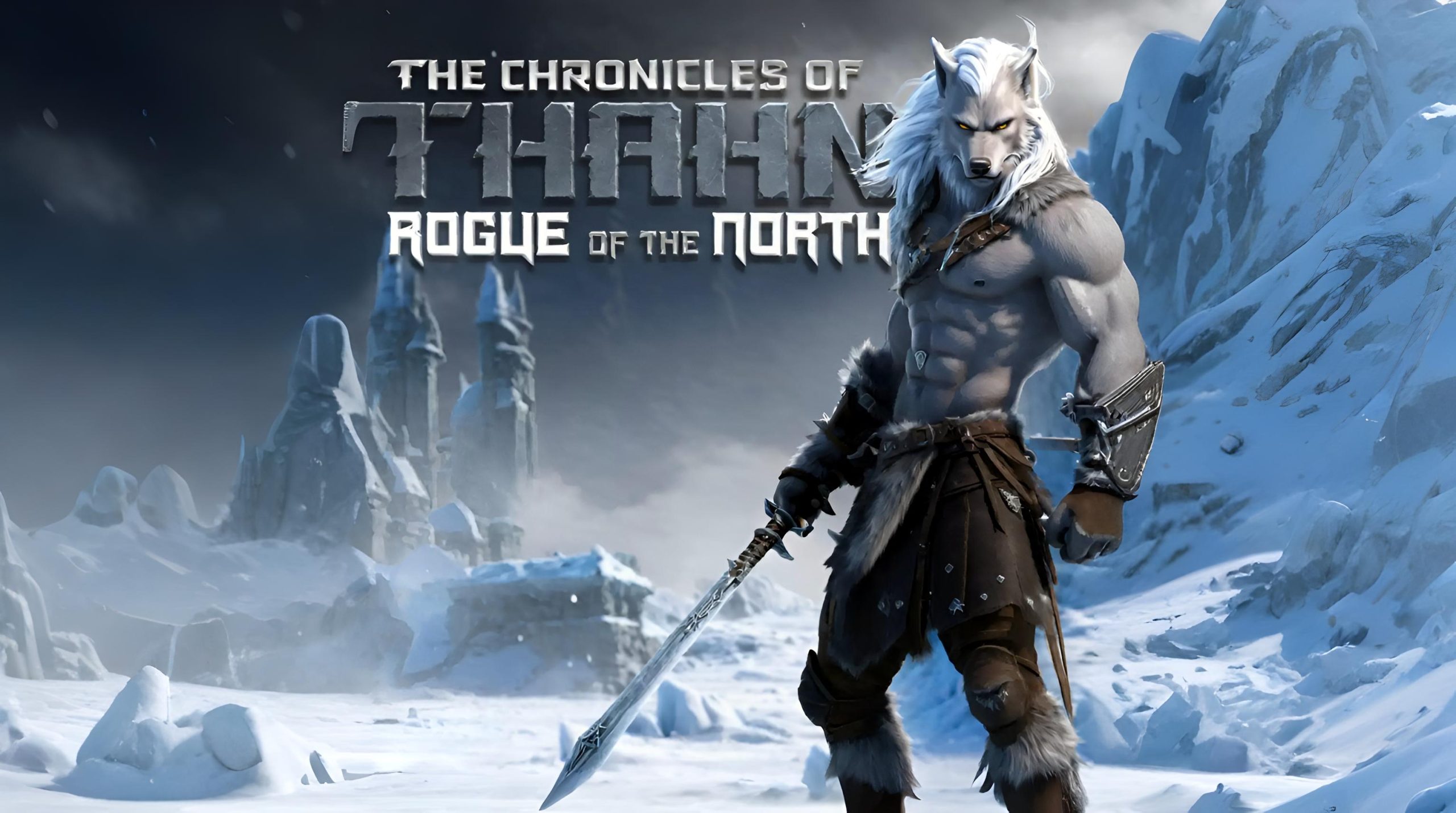
  • Rogue of the North

    Rogue of the North

    Prologue

    During the destructive and costly campaign through the northern Roedon territories, the imperial host of Zhuru came into direct conflict with the snow leopard peoples—native to the high valleys and glacier-fed passes.

    These leopards, though scattered and loosely bound by clan and oath, proved more than capable of resisting the organized military formations of the empire. Blood was matched for blood. In time, the defenders not only held their ground but pressed back in key sectors.

    Facing a grinding stalemate, Volko Khan—white wolf of the elder Zhurian dynasties—resorted to employing local mercenaries. Often drawn from exile bands or lowborn outlanders, these fighters were used with reckless cruelty, their lives spent cheaply to “catch and hold enemy arrows,” as one report noted. This policy, while expedient in theory, was strategically flawed. It fostered resentment, encouraged disorder, and betrayed a fundamental misunderstanding of the cultures he sought to dominate. Wasteful. Arrogant. Shortsighted.

    Volko was already a despot in his own homeland—reviled, politically cornered, and denied broader legitimacy by rival courts. He had not come to Roedon in conquest, but rather in voluntary exile, having fled the shifting alliances of Zhuru’s central provinces. His campaign was not a march of imperial expansion but an attempt to supplant peoples, to build a new order from the bones of the north.

    And so the wolves of Vulsa—disciplined, fierce, and obedient—bled out under his banners. Not for home. Not for duty. But for the arrogance of a soured dynast drunk on exile and borrowed war

    With one exception.


    I

    Tantos and Lozh, warrior-grey wolves of Vulsa, lay dying beneath the forest boughs.

    Lozh writhed, still breathing—barely. His body had been nailed to the forest floor: arrows through his chest, neck, knee, and groin. He fought to stay calm. He did not want his master, still bleeding out nearby, to cross into Zarhanda hearing the wailing of a sniveling pupil. But still—he called out.

    “Master…” Lozh spat blood. “We can’t lose. Not like this.”

    No answer.

    “Ka’s blood, this hurts!” he hissed.

    Tantos didn’t speak. He was pinned to a tree by fewer arrows, but two were through the lungs, and one was deep in the heart. Every breath came wet.

    Then he shifted—slow, painful—turning his bloodied muzzle toward the misty wood.

    “Boy,” he growled through the rattle in his throat. “Where be your brother Thahn? Or have we lost him to rumor, too?”
    Lozh whimpered. He looked around the clearing, dazed, breath shallow. “He’s… he’s not here.”

    A long silence.

    Then Tantos began to laugh. Grim. Dry. Cold with Vulsan knowing. The kind of laugh that has already seen the end and accepts it.
    “Why are you laughing?” Lozh gasped. “Master—we’re dying.”
    “Aye,” barked the old wolf, coughing blood down his chest. “But he lives.”

    They died there, beneath the shadowed green of the Roedon woods.

    Their hearts ceased.

    Their lungs emptied.

    But the great bird-serpent lord, Ka, god of death, it’s said, had to pause before collecting their lights—for their laughter echoed too long. It stayed in the trees, in the blood-soaked moss, in the arrows that still trembled in bark and bone.

    And far from that place, a third figure ran north. Not with fear. But with guile, and vengeance, and a mind already stripped of all civilization or barbarism. A wolf with nothing left to lose—except the chance to do something audacious. Something ruefully transgressive to the thrones of the Western Highlands.


    II

    The fortress of Dengan loomed high in the forested crags where the steppe gave way to the broken coast. Perched between frost-slick ridgelines and groves of old bamboo, it squatted like a wolf at rest—timbered jaws wide, torchlight flickering in its teeth. Walls of dark pine and charred stone formed its spine. Arrow slits glowed. Smoke curled from the chimneys of the great hall.

    Within, the daughter of Volko Khan moved like an ornament between rooms. White silk. Thin anklets. Surrounded by guards. Her laughter was light but hollow, guarded by six in each wing, all of them nervous from the morning’s slaughter. They whispered of ghosts. Of vengeance. Of a grey bastard with white hair.

    The banners above the main tower barely moved. The frost had frozen them stiff.

    From above, one could trace the keep’s order: the outer garden with its knotwood trails, the map-room near the east flank, the hollowed belly of the assembly hall, the narrow armory tucked beside it. Then the training ring, strewn with hay and broken shields. The meadhall, still lit from below. A private chamber beyond. And near the far corner—almost hidden from the inner court—a side door, half-covered by a fallen lintel beam.
    That door shook.

    A guard braced against the side door, breath fogging the timber, both arms straining to keep the hinges shut. He could not scream. A knife had already punched into his throat. A wet, gargled plea leaked from him as the blade drew back, then drove in again—opening him from shoulder to jaw. Blood spattered the lintel. His body slid down the frame.

    Something massive pressed through the gap: a grey-furred arm, slick with ash and blood. The hand clamped around another guard’s neck before he could draw. Bones cracked. The smaller wolf’s eyes bulged; he clawed at the wrist, snapping his own fingers against the iron grip.

    Two more guards came running—one shouting as he stabbed at the invader’s arm. His dagger found purchase once, sank into the forearm, and twisted—but the arm did not release. It only tightened. The sound that followed was wet and final.

    Then came the sword.

    It didn’t merely breach the door—it split it. The broadsword punched through the upper planks, through the lock, through the ribcage of the third guard in a single violent shove. The blade withdrew with a howl of tearing wood, then swept down—shearing the handle, bolt, and hinge clean off before the door itself caved inward. A splintered shard caught one wolf across the eye; he went down shrieking, pawing at his face. The other slipped in his own blood and fell back, tail curling under him in terror.
    A Massive grey wolf entered. White haired, amber-eyed, fangs gleaming white.

    The Vulsan ‘s massive shadow filled the doorway, shoulders heaving, breath steaming in ragged bursts. His eyes caught the firelight like hellfire imprisoned in a dark and rueful forge. He stepped over the crawling guard, yanked his knife from the corpse’s flank, and without slowing, crushed the survivor’s skull beneath his heel. Bone gave way with a muted pop.

    The body twitched once, then stilled.

    The chamber reeked of pine smoke and blood. Somewhere deeper in the keep, a voice cried alarm.

    The Vulsan slayer rolled his shoulders, flicked the gore from his sword, and moved on.
    He did not halt.

    Two more surged from the shadows, blades drawn. The first overextended; the figure moved like smoke, slashing once—clean at the elbow—and caught the falling sword mid-air. The second had time to shout. The Grey slayer turned not on him, but on the brazier.

    One swing.

    Ash exploded in the guard’s face. Fire bloomed in his beard and hair. He screamed as he stumbled backward and fell over the balcony rail, vanishing in a hiss of flame and bone.
    The others rushed him.

    “Where is your Khan?” the Vulsan snarled, voice dry as bark. Steel flashed. Another guard burst through the side door and took a sword to the gut before he could speak. Then silence.
    Stepping over the bodies, he began to climb.

    The upper paths were narrower, ringed with lattice railings and brittle ivy. He moved quickly now—up toward the raised garden—but two more stood in his way: a grey wolf, young and keen-eyed, and a Londorian brute with heavy shoulders and brown pelt. Both trained. Both armed.

    The three met in a flurry of sparks. Steel rang. The grey wolf struck low. The Invader parried, turned him with a shove—straight into the Londorian’s rising thrust. The brown wolf faltered. Too slow. The Vulsan twisted the blade from his hands, drove it up beneath his chin, and left him twitching against the wall.
    Now seen in full light, the intruding Vulsan slayer’s fur was thick with gore. His chest rose like a bellows. His eyes took in the keep like prey yet to be bled.

    He kicked in the next door. A guard sat playing cards. His head came off before he could look up. Another at the table rose to draw. Too late. The gut spilled hot across the board. Dice clattered in blood. The Grey-wolf slayer took the larger blade from the second one’s corpse. A heavier sword—lion-forged, still warm from use. He slid the new dagger into his belt.

    The next door shattered. Inside, a snow leopard slave girl lay gasping beneath a mounted guard, her face turned from the wall, legs pinned. She whimpered. Her arms bore bruises. Neck rings. Gold bangles. The male looked back—snarling.

    The feral grip of the Vulsan slayer pulled him off mid-thrust, jammed his own sword through the bastard’s mouth, and nailed his skull to the back of the chamber door. The leopard stared in shock as the blood ran. She sat up, naked, shivering, fur matted, paint smeared from her cheeks. When The Slayer stepped forward, she flinched.

    He raised his sword—then knelt. One stroke. The chain fell free from her collar. He opened the door and held it. For a long moment, she didn’t move. Then she looked into his face. Saw what had been done. Saw the bodies. She gasped, once. Nodded. Then ran barefoot down the corridor. As she vanished, she pointed—up the stair—and her eyes thanked him.

    The slayer climbed. The top floor was quiet. A corridor of red paper lamps and polished wood. No guards. No sound.
    He kicked the final door wide. The Khan’s daughter sat inside. Not Frightened. Not hiding.

    She looked up—and lit with a mischeivious joy. She crossed the chamber in three steps, silk fluttering behind her. She didn’t ask How he had escaped. She didn’t ask what had happened outside. She kissed him. He did not kiss back.

    But she growled—a low, wicked thing—and ran her hand up his chest. Her fingers found his bulge beneath the blood-wet sash. She bit her lip. Moaned, just barely.

    No words passed.

    None were needed.


    III

    The hooves of ten steeds thundered across the wide steppe, a storm of dust and fury beneath the blood-red sun.

    At their head rode Volko Khan, lord of the horselands, his teeth clenched around a curse, sword bare and gleaming in the dusk. His face, scarred and cruel, was more wolf than male, and his left eye—seared milky by an old wound—blazed with a sick, unholy fire.

    His mouth dripped red where the young bastard they now pursued had struck him, splitting lip and tooth alike. That wild-born grey dog. Volko spat blood and loosed a roar that made his own line recoil—horses shying, riders stiffening. Behind him, his nine sworn riders bent low in their saddles—black shapes who feared their master more than death itself.

    They had been scouring the wastes since morning, chasing shadows across the dying grasslands. The trail belonged to one who should have died with his kind. For Volko had loosed the northern dogs—those grey-furred mercenaries, bred in cold and famine—to butcher his enemies. And butcher they did: cut down to the last, their carcasses left to rot beneath the sun.

    But one had not fallen.

    One had survived.

    And worse than survival—he had laid hands upon the Khan’s own blood.
    Now, cresting the rise, they beheld a sight that drove Volko to bellowing madness.

    Against the flaming disc of the sinking sun stood a lone figure—a grey-furred wolf, his mane of long white hair streaming in the wind. His chest heaved with the savage joy of a battle lived through. His laughter carried like a war-drum beat.

    Before him sprawled the Khan’s daughter. Her slender frame trembled, silks in tatters, her maiden’s flush betrayed by the sweat upon her thighs. His haunches pounded into her. Mocking. Ejaculating. Usurping.

    Even as the Khan’s roar split the heavens, the wolf pulled free with a wet, vulgar pop, slapping her round haunch with a barbarous hand. She arched beneath him, lips parted not in terror—but in the swoon of awakening.

    He had spilled seed into her womb. The wet gleam of his doing mocked her father’s rage.

    The mercenaries had died at arrow-flight behind him. A hundred corpses still bled into the dust. Yet this nameless wolf—this bastard survivor—had seized from the world a prize none had dared dream.

    Volko’s riders shrieked and spurred. Their mounts foamed.
    But the wolf only laughed louder.

    His balls swung as he ran, slapping against his thigh, leggings half-drawn with a mocking grin. His strength undiminished. His spirit ablaze.

    Spurred on by confidence only granted to one who is alive when all others lie dead.

    The wolf-lord’s daughter swooned, even as her father stood over her—aghast. The white sheen dripping from her thighs shamed him more than any blade ever could.

    Without a word, without a glance, she mounted the spare horse they had brought. Its ivory tack caught the dying sun.

    Volko stood frozen. Shaken. Beyond rage—but impotent.

    He watched his riders stumble, trample, and fail—utterly fail—to reach the grey bastard son of a whore before he vanished into the dark line of forest shadow.

    The Roedon Blackwoods swallowed him whole. A moment passed.
    Then another.

    The Khan’s men looked to their lord, terrified—for his gaze was a blade that cut flesh from bone.

    Then—from the treeline—a final insult. Not laughter. Not the howl of triumph.

    But words.

    The bastard dared speak:
    “Let this be the last time you underestimate Thahn of Vulsa… you most regal and noble son-of-a-bitch.”

    Then came the laughter. Deep. Resonant. As if the forest itself laughed with him—concealing him, honoring him, birthing him into legend.

    Volko stood red-faced, lip split, helmet flung to the dust. He howled—a bloody, primal wail that sent crows shrieking from the sky.

    And behind him, his favorite wife’s daughter—her body still raw from the wolf’s touch—smirked from her saddle, cheeks pink with the memory of conquest.


    Epilogue

    And so it was that Volko Khan’s realm ceased to be his own—not by siege, nor treaty, but by failure of measure. In seeking to dominate the northern reaches, he had failed to recognize the quiet erosion of power from within. By the time his riders reached the coast, the damage was done.

    This bastard, rogue of the north that he was had shattered more than discipline. He had broken deals, undone alliances, and left the once-feared wolf-lord disgraced. The promised virgin, meant for the princely dowry of a key ally, had been defiled. Worse, she had not been taken—she had gone. Of her own will.

    Among the dead left strewn across the keep were not only guards and gatemen, but the core of Volko’s inner circle. His vizier Yipan, his alchemist Vuzhul, his spymaster Zalfathang—all silenced. Of the guards who lay among them, Many were found in compromising death: cocks wet, dice still in hand, throats open. A quiet shame.

    By the time Volko turned back toward his seat, the fortress of Dengan had become a ruin. Its gates left ajar. The black mountains whispered. Roedon watched. And all knew that he had been undone not by horde, nor empire,

    but by a single grey Rogue who now ran free.


    Next Time:

    With blood on his hands and water up to his neck, Thahn escapes the grim, dark coasts of Vulsa, only to run afoul of bloodthirsty corsairs on the high seas.