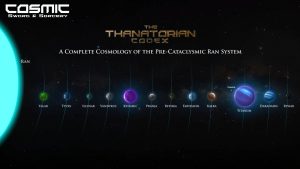
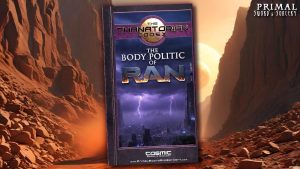
The COSMIC Sword & Sorcery imprint heralds a new chapter in mythic brutality and dream-forged legend. Born from the esoteric depths of The Thanatorian Codex, this imprint distills the ancient lore of the Vandyrian Archives into a living, breathing saga of steel and stars.
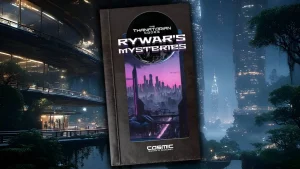
“The Thanatorian Codex is not merely a narrative volume but a foundational archive in construction — a long-form, accumulating record of an entire civilizational epoch. As a book, its purpose is to codify the structure of Thanator: its ages, doctrines, metaphysics, imperial mechanics, and ideological architecture, rendered in a form that reads as recovered record rather than authored fiction.
It is designed to function as a master reference. As it expands, it becomes the spine for expanded works: adventures, modules, audio dramas, companion essays, and future volumes. It establishes the calendar, the cosmology, the political tensions, the technological thresholds, and the mythic constants against which all High Thanator stories operate.”
Within The Thanatorian Codex
Ultimately, the Codex serves three roles at once:
Archival canon, creative engine, and systemic framework. It preserves a long-forgotten age in structured form while simultaneously enabling new stories to be written inside its architecture without contradiction.
COMING SOON
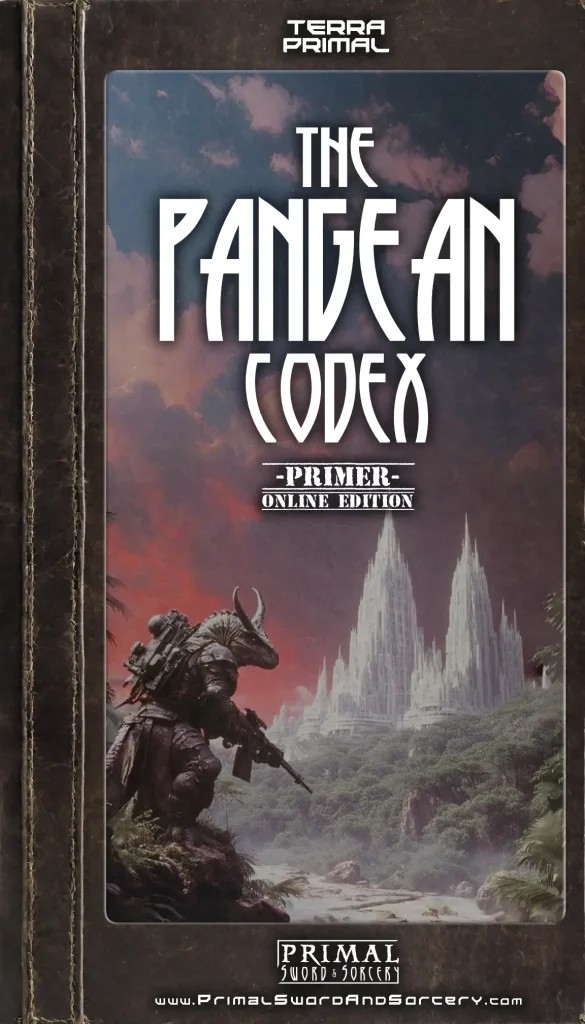
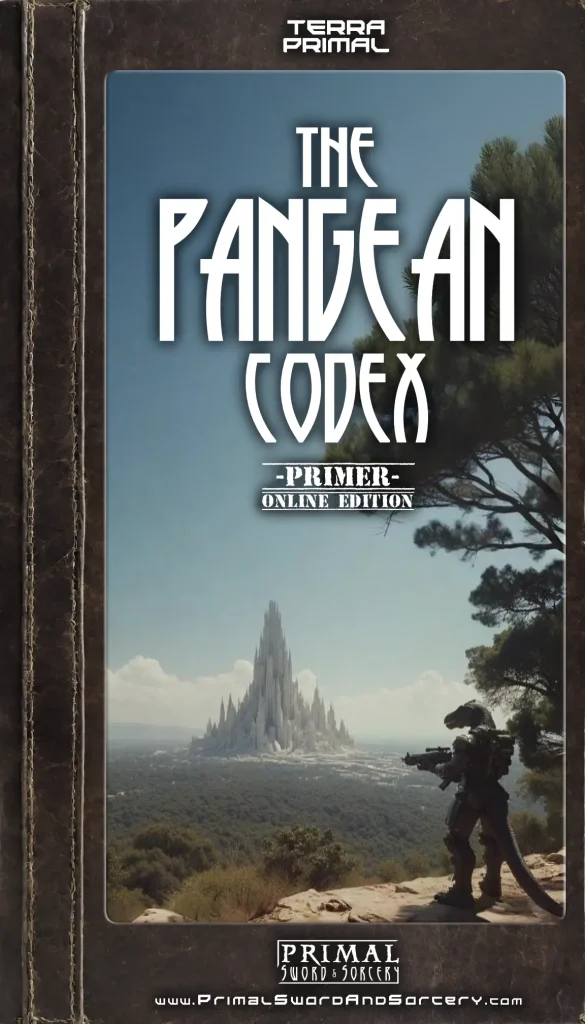
As it is constructed, it becomes less a single book and more a governing document. A scaffold upon which the Age of Dreams, The Pangean Codex, and all related works can reliably stand.
This Is No Mere Fantasy
This is the Myth made flesh, The Cycle made steel.
A resurrection of bold, mythic storytelling across time and genre.
Sword & Sorcery, Sci-Fi, and Savage Worlds collide in reconstructed cycles of lost history and raw imagination.
Radial Lore exists because “pulp” is no longer an accurate word for what is being built here, either in practice or in intent. Pulp was a material condition before it was an aesthetic: cheap paper, rapid turnaround, disposable culture, and a brutal economy of attention. Writers operated under hard constraints—word counts, editorial mandates, market churn—and what is now remembered as pulp coherence was largely accidental, emerging over time through repetition, rivalry, and shared cultural pressure. To call Radial Lore “pulp” would be dishonest. It is not constrained by paper, shipping, rack space, or the economics of five-cent magazines, and it is not improvising blindly in the hope that meaning eventually accretes. It is being built deliberately, with tools pulp authors never had, toward ends they often only gestured at.
The need for a new name is structural, not cosmetic:
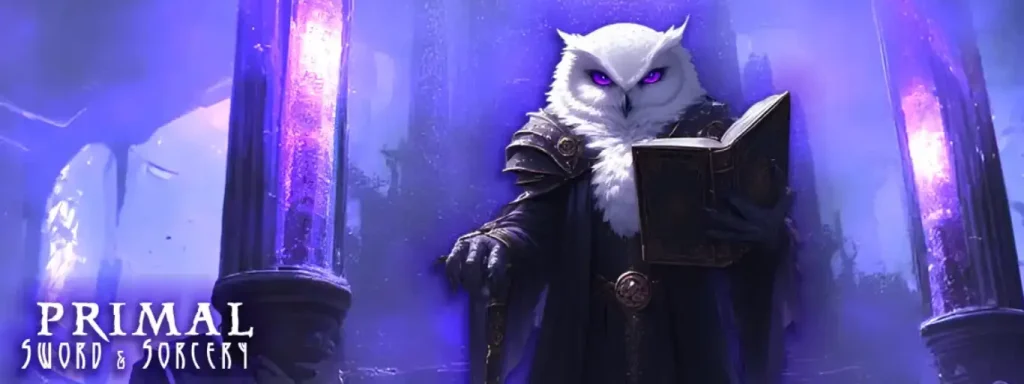
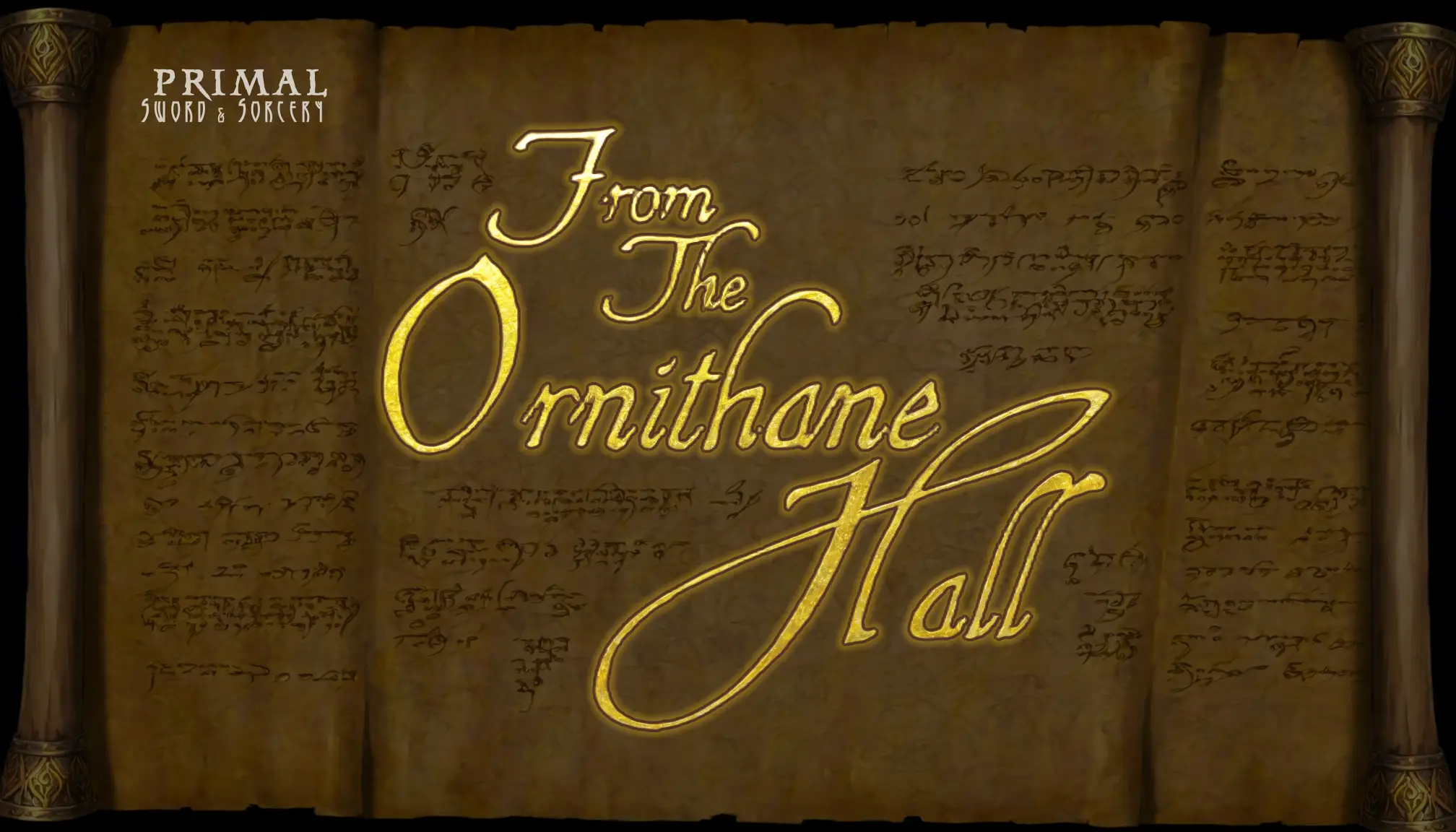
READ – Tales from the Ornithane Halls
“Pulp” implies ephemerality, linear consumption, and cultural disposability. Radial Lore implies architecture. It names a method rather than a genre: a way of constructing fiction that assumes longevity, cross-pollination, and re-entry. This is not an attempt to abandon pulp’s legacy, but to complete what pulp began and could not finish. Where pulp gestured at myth, Radial Lore engineers myth. Where pulp relied on accumulation, Radial Lore relies on design.
“Radial” is descriptive, not poetic fluff:
Radial Lore is organized around a central mythic engine—a shared cosmology, logic of power, and symbolic grammar—from which stories extend outward like spokes. These stories are not sequels in a chain and not entries in a closed series. They are nodes. Each stands on its own, yet gains additional meaning through proximity to others. A rumor in one text may be a foundational event in another. A footnote becomes a setting. A minor antagonist becomes a god, or a corpse. The straight line is rejected in favor of orbit, echo, and recurrence.
This is where Radial Lore most sharply diverges from historical pulp:
Pulp universes accreted; they were not designed. Continuity was often accidental, contradictory, and repaired retroactively by readers rather than authors. That chaos produced energy, but it also produced fragility. Radial Lore is planned—not through rigid outlines or locked canon, but through foundations laid first: geography, metaphysics, cultural logic, historical fault lines. Stories are written to stress those foundations, not overwrite them. Contradictions, when they exist, are diegetic—products of bias, propaganda, mythic distortion, or lost history—not editorial negligence.
Audio is not an adaptation layer in this system; it is a primary weapon:
Pulp was trapped in text because it had to be. Radial Lore has no such excuse. Every work is conceived with voice in mind: cadence, breath, rhythm, silence. Audio editions are parallel manifestations of the same material, capable of carrying authority, menace, or scale that prose alone cannot. Narration, sound design, and music function as lore-bearing elements. A spoken line can confer legitimacy. A recurring motif can operate like a sigil. This is the reclamation of myth’s oral dimension, something pulp could only approximate on the page.
The world itself is not a backdrop but a load-bearing structure:
Setting precedes plot. Cultures, economies, and belief systems exert pressure whether or not the narrative foregrounds them. This is why Radial Lore aligns naturally with magazine-style releases rather than monolithic novels. Magazines enforce density. They privilege fragments, codices, essays, side tales, and experimental forms. Each release is a cross-section, not a chapter, exposing different layers of the same underlying mass.
Radial Lore is neither nostalgic nor futurist. It is post-pulp:
It retains the excess, immediacy, and aesthetic violence that made pulp dangerous, while discarding the industrial limits that made it brittle. It replaces linear inheritance with radial expansion, disposable reading with revisitable structure, and solitary consumption with layered engagement across text, sound, and artifact. The goal is not to recreate a lost era, but to build something that could not have existed within it.
This system is not closed, and it is not precious:
Radial Lore is designed to expand over time, not only through official releases but through structured contribution. The Homebrew Gaming Initiative exists to allow others to write into the radial field without fracturing it: new nodes, cultures, and stories that obey the same foundational logic while stressing it in unfamiliar ways. This is not disposable fan fiction; it is participation inside a living mythos.
To support that expansion, Radial Lore includes internal guides:
Books within the various series that function as manuals on worldbuilding, tone, power structures, and myth construction. These texts teach the method as much as the material, explaining how coherence is maintained, how contradictions are handled, and how new elements can be introduced without collapse.
Not everything is meant to be surfaced cleanly:
Some texts are designed to be found. Hidden books and embedded artifacts—Jantaran Sapphires, Ornithane Scrolls, and others—serve as structural pressure points, revealing deeper strata of the world to those already inside it.
All of this prepares the ground for further forms, including modular TTRPG material. These modules do not treat the setting as static scenery but as a volatile system players can disrupt, exploit, or break. Expansion is not an afterthought in Radial Lore. It is the point.
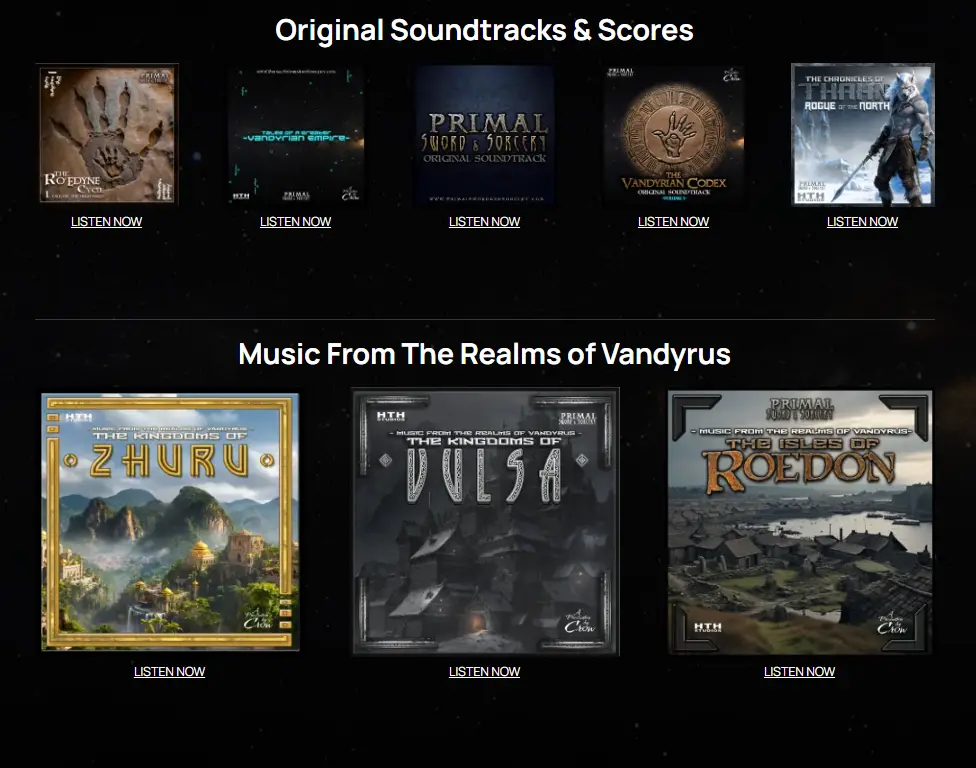
At present, The Vandyrian Codex—alongside other projects under the banner of Primal Sword & Sorcery—remains in active early development.
The Codex is a living archive. Its realms will expand, fracture, and deepen over time.
Each volume, whether written by calloused hand or ink-stained scholar, serves as a stone laid in the long road from myth to memory. Here, the passing of empires is recorded without flourish; the migrations, conflicts, bargains, and betrayals of peoples inscribed in forms meant to endure, not seduce.
These books are not the domain of poets, nor the refuge of folk legend. They are a reckoning—plainspoken, methodical, and relentlessly grounded in what endures after rumor fades.
is proud to present:
The Histories and accounts, myths and legends, Chronicles and logs of long lost misty tales in the oral, elder crystalline and high psychic tradition, All…..
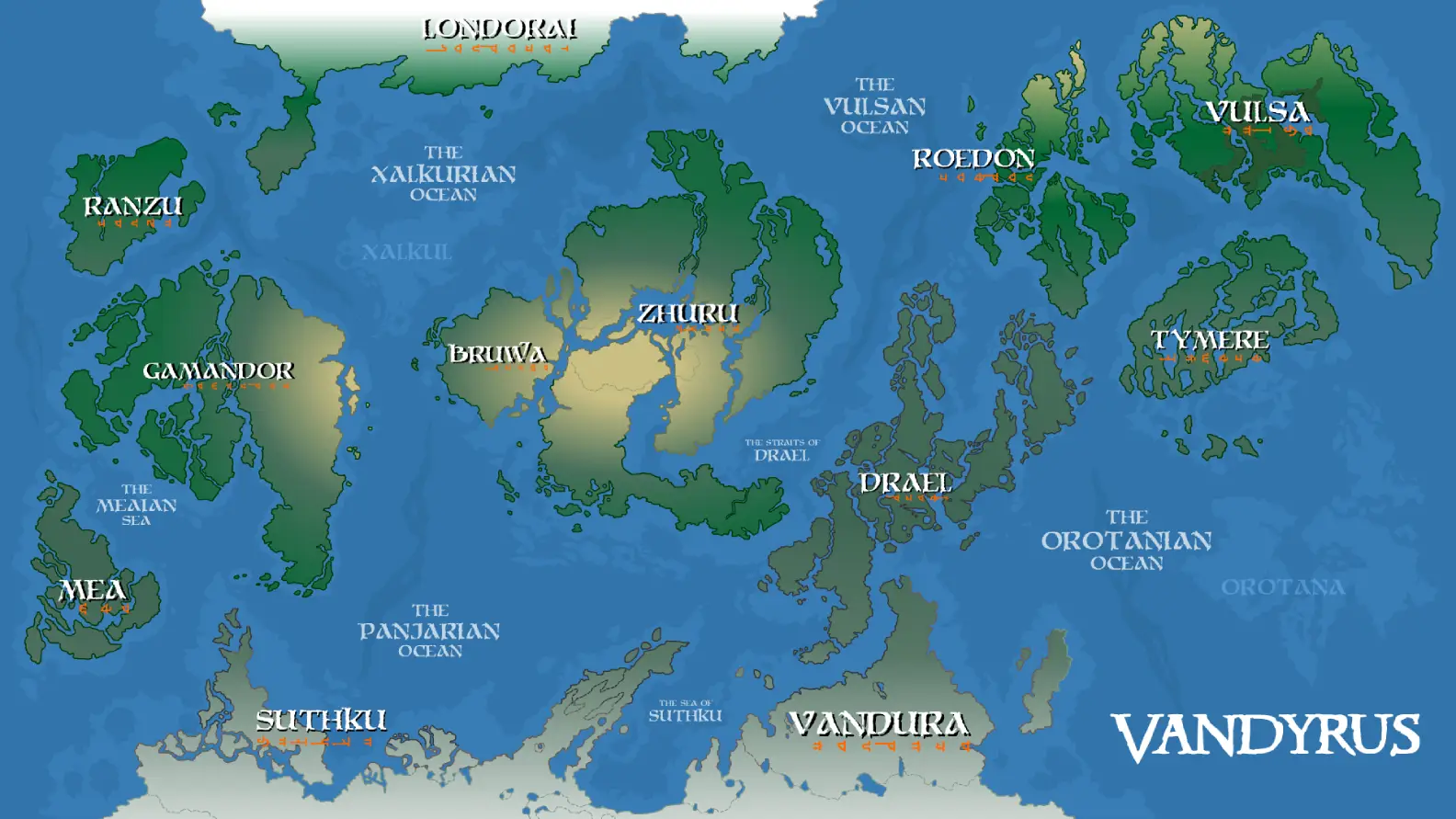
The Vandyrian Atlas is finally starting to come online. This wing of the project is massive by design, and it will continue to grow for years as we add new regions, maps, and features you can use directly in your own tabletop campaigns and roleplay adventures.
We’re beginning with Zhuru, the vast and scarred heart-continent of Vandyrus. Over time, you’ll see its fractured realms come into focus through high-resolution maps, regional breakdowns, and long-form essays that dig into its kingdoms, border wars, trade routes, and haunted ruins. As each new area of Zhuru is detailed, it will be woven directly into both the Atlas and the Codex, so you can zoom from a continent-wide view down into a single city, coastline, or battlefield and then straight into the lore behind it.
The Atlas and the Codex are built to work together, but they stand on their own just fine. The Codex uses the Atlas for regional context, while the Atlas regularly quotes and links back into Codex entries for deeper lore. As you explore the map, you’ll be able to move seamlessly into history, cultures, and myth; as you read the Codex, you’ll be able to jump straight back out into the wider world and see where it all lives.
All of this is part of the long-term push toward the Unity-powered version of the Codex. What you’re seeing now is the groundwork: a living atlas and a structured lore archive, side by side, built to give you the clearest possible view into the world of Vandyrus.
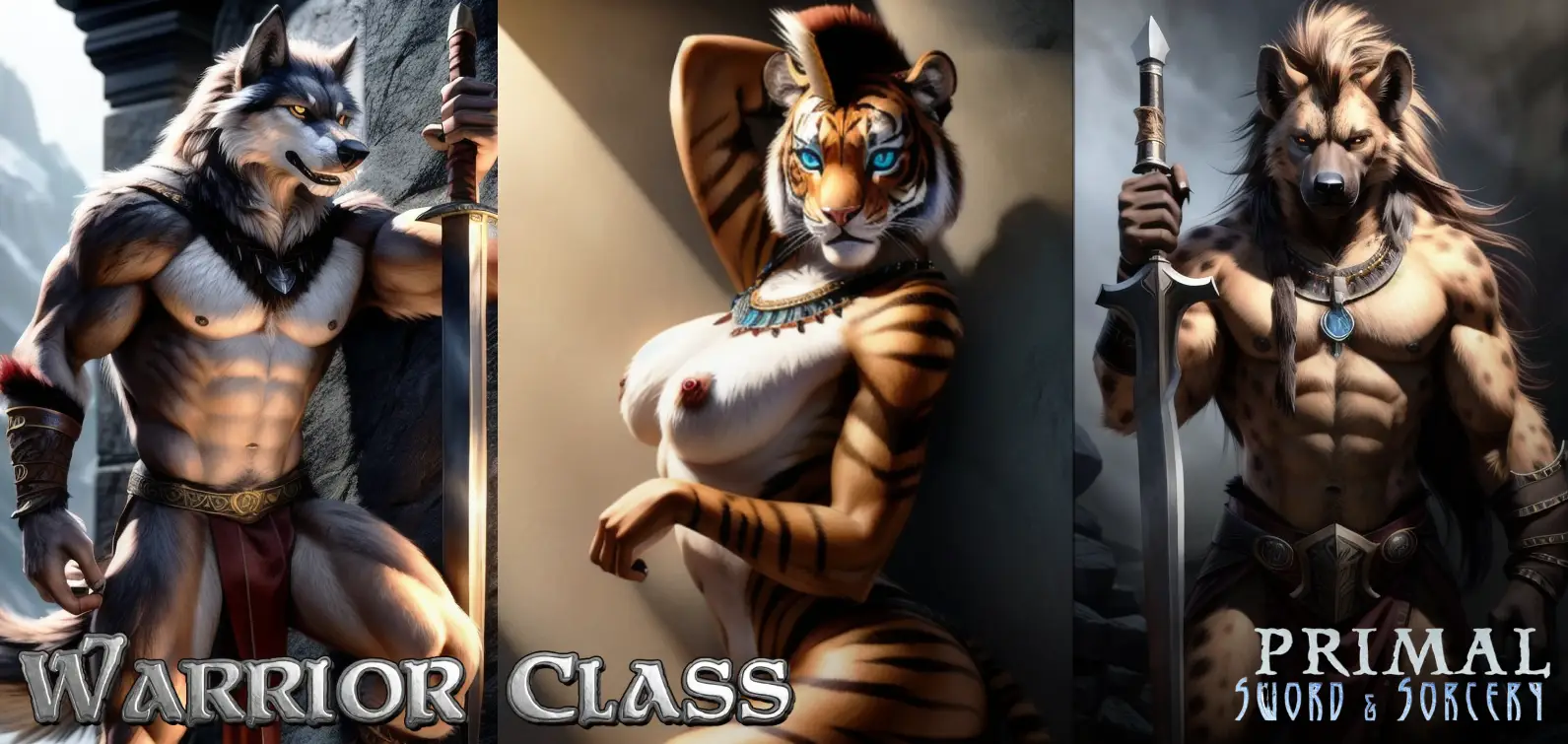
The beating heart of Primal Sword & Sorcery — a brutal RPG experience where survival, lust, and violence are woven into every choice.
Players step into a world of tribes, tyrants, and dark gods, forging their legend with bloodied steel and raw desire. It is both game and saga, an interactive codex of feral storytelling where every path is earned through conquest.
The full Warrior Class title is still a ways off — but the world of Primal Sword & Sorcery is already alive and growing. We’re opening the vaults now, releasing codex lore, maps, and mythic fragments that you are free to explore, adapt, and bring to your own tabletop.
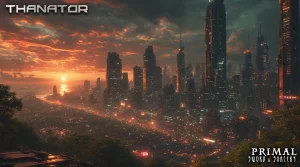
Whether you’re a Dungeon Master hungry for new settings, a storyteller looking for inspiration, or a player eager to taste the blood-soaked world of Vandyrus and the jungle moon Thanator, this lore is yours to wield.