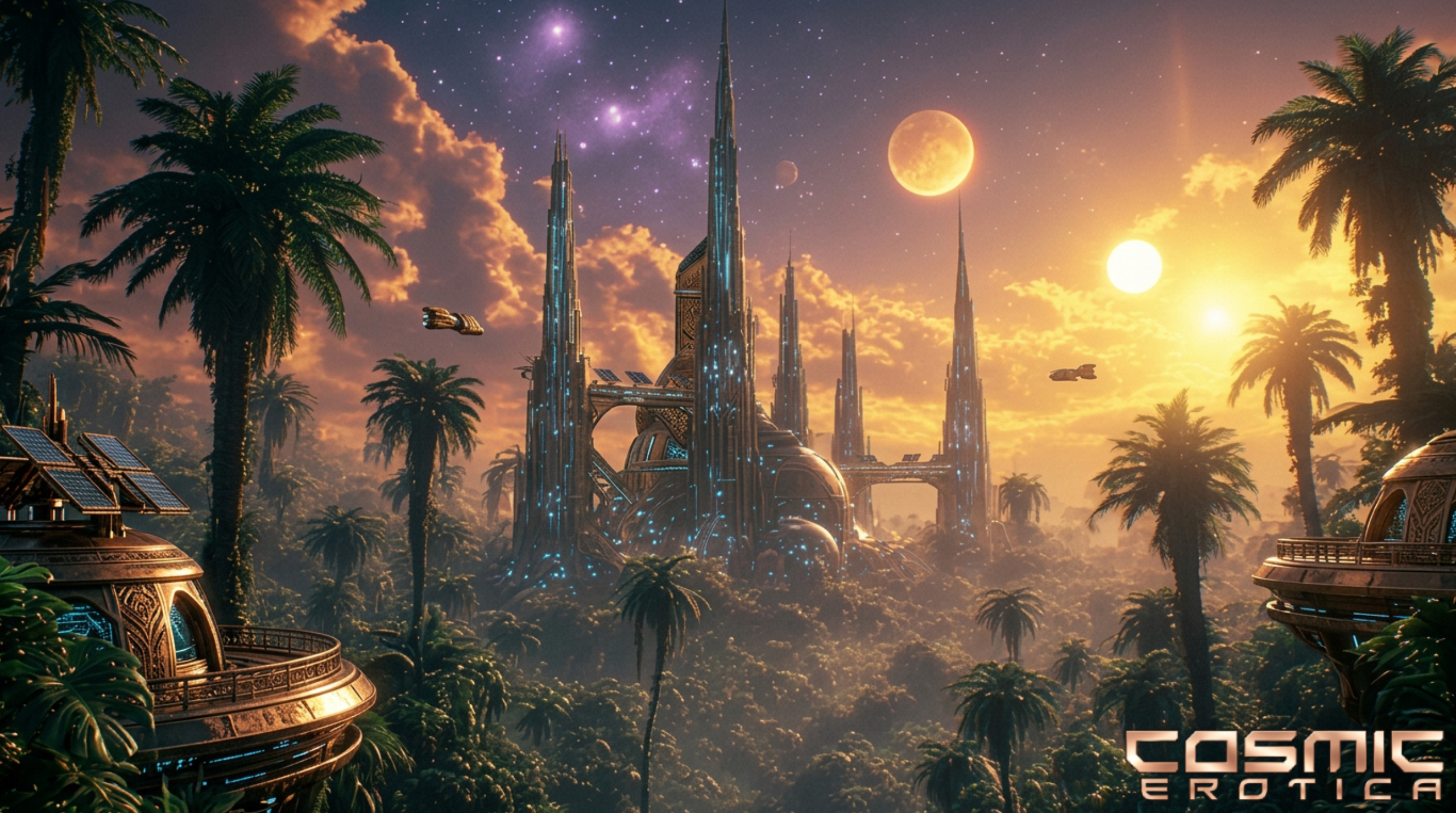
Category: Ren-Sector Lore

  • Travel Among the Sectors

    Travel Among the Sectors

    The Renaissance Sectors have acquired a reputation within contemporary travel culture that extends well beyond the romance traditionally associated with distant territory. They are neither an untouched frontier nor a collection of relics waiting to be rediscovered, but inhabited, prosperous, complicated societies whose appeal comes from the fact that they continued developing throughout their long separation and now meet the wider Empire on their own accumulated terms.

    Their hotels, universities, ports, markets, beaches, museums, estates, entertainment districts, wilderness reserves, restaurants, commercial exchanges, and historic cities belong to living cultures rather than reconstructed antiquity, and visitors are as likely to encounter something newly fashionable as something impossibly old.

    The great pleasure of traveling through the Renaissance Sectors is therefore not the sensation of leaving civilization behind, but discovering just how many forms civilization has taken beyond the familiar horizons of the Core. For an Imperial traveler accustomed to believing the galaxy already well catalogued, few destinations offer a stronger reminder of how much remains to be seen.


  • Across the Renaissance Sectors

    Across the Renaissance Sectors

    Travel within the Renaissance Sectors has consequently developed around exploration rather than any single celebrated circuit. The major transit corridors provide access to an expanding network of established destinations, while regional connections lead outward toward smaller systems whose reputations may rest upon a particular university, market, coastline, festival, architectural tradition, ecological preserve, or local industry. Luxury travel is abundant, particularly around the wealthier Covenant worlds, but it represents only one part of a much broader visitor culture encompassing historical tourism, academic exchange, wilderness expeditions, commercial travel, culinary routes, archaeological excursions, pilgrimage, entertainment, and the simple pleasure of seeing worlds that remained names on old Imperial charts for ages beyond ordinary comprehension. The Renaissance Sectors reward the traveler willing to remain longer than a single port call, for neighboring worlds can differ dramatically even where their populations share ancient historical connections. One may cross from cosmopolitan financial centers into landscapes where settlement remains sparse, from intensely cultivated pleasure districts into preserved wilderness, or from cities reconstructed according to contemporary Imperial standards into quarters whose street plans preserve the geometry of civilizations otherwise known only through archives.


  • Civilizations Beyond the Core

    Civilizations Beyond the Core

    For travelers arriving from the Core Worlds, much of the attraction lies precisely in this combination of familiarity and difference. Imperial currency, transit standards, commercial protections, navigational conventions, and increasingly extensive public infrastructure make movement through the principal routes comparatively straightforward, yet the worlds encountered along those routes rarely feel interchangeable with their Core counterparts.

    Local architectural schools remain prominent, regional languages and dialects are commonly heard alongside established Imperial tongues, and customs that disappeared elsewhere billions of cycles ago may survive beside technologies and institutions thoroughly adapted to the present age.

    Visitors accustomed to the great metropolitan worlds of the interior frequently find the scale equally impressive but the character markedly different: financial districts rising from tropical wetlands, ancient academic institutions dispersed across mist-covered landscapes, immense forest settlements built around lakes and continental wilderness, and commercial cities in which imported Imperial fashions share streets with traditions whose histories developed almost entirely beyond direct Core influence.

    Even where the infrastructure is unmistakably modern, the cultural landscape remains intensely local, and many destinations have deliberately preserved that distinction rather than allowing renewed contact to erase it.